Connect with us
Anglostratits

Energy

Mozambique Oil Industry Withdraws from London Africa Energies Summit Over Local Content Concerns

Published

on

African Energy Chamber

Home to come of the continent’s largest gas discoveries, Mozambique is emerging as an increasingly more prominent voice on the global gas stage

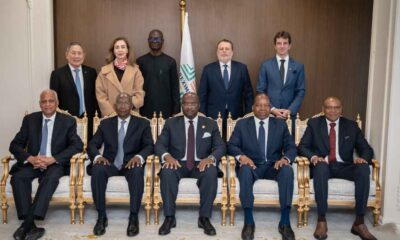
LONDON, United Kingdom, March 17, 2026/APO Group/ –Mozambique’s oil and gas industry has announced that it will withdraw from participating at the Africa Energies Summit – hosted by Frontier Energy Network in London this May – citing concerns over the treatment of Black professionals and broader local content issues linked to the event’s organizers. The decision reflects mounting frustration among Mozambican and African industry stakeholders who argue that platforms claiming to represent Africa’s energy sector must reflect the values of inclusion, fairness and local participation that increasingly shape the continent’s energy agenda.


The decision to withdraw was driven by concerns that the Summit’s leadership has failed to address repeated calls to improve diversity and transparency around hiring practices. African Energies Summit earns most of its revenues from Africa, yet its pattern of discrimination amounts to an intentional lock-out of Black professionals. Gayle Meikle from Ireland and Daniel Davidson from Scotland have resisted calls to disclose workforce diversity data and have also refused to end the policy of not hiring Black professionals and set out a plan for diversity.

“In 2026, this is not the behavior that we expect from anyone who uses the name Africa and our oil and gas sector. The behavior of Gayle Meikle and Daniel Davidson towards the hiring of Black professionals is something that many Mozambicans and Africans find offensive. Our members will not be going to London,” stated Florival Mucave, President of the Mozambique Energy Chamber.

The withdrawal carries particular weight given Mozambique’s rising influence in the global gas market. The country is home to some of the largest natural gas discoveries in recent decades and is rapidly emerging as one of Africa’s most prominent voices in the LNG industry. Despite delays, Mozambique’s biggest projects are now returning to the development pipeline.

We don’t want environments where young Mozambicans will be discriminated upon solely based on their skin color and not on their qualifications or merits from experience

The TotalEnergies-led Mozambique LNG project achieved a full restart across its onshore and offshore activities in January 2026, following the lifting of force majeure in 2025. Construction activities has now resumed, with over 4,000 workers – 3,000 of which are Mozambican – mobilized. First LNG production is on track for 2029, with $4 billion contracts awarded to Mozambican companies. Force majeure for the ExxonMobil-led Rovuma LNG project was also lifted in 2025. The 18-million-ton-per-annum (mtpa) project is now advancing toward FID in 2026.

“Mozambique understands all too well what it means when citizens are not happy with the oil and gas sector. We saw a response with the uprising in the north that stalled major gas projects. Our country is experiencing big debates around local content and community involvement,” stated Mucave.

These milestones come as major offshore projects make headway. Following the start of operations at the Eni-led Coral Sul FLNG facility in 2022, the company is now advancing the Coral Norte FLNG project. In 2025, Coral Norte reached FID, with the 3.4 mtpa facility on track to begin operations in 2028. Project advancements reflect the country’s commitment to addressing the challenges that delayed projects.

“At a time when we are restarting mega gas projects and pushing for drilling and action from our politicians, the message about the oil industry should not be about regression on local content – it should be about addressing the unfortunate ideology of African energy events that Black professionals are seemingly not good enough for. We have worked with the oil and gas industry to promote STEM education and it is working. We don’t want environments where young Mozambicans will be discriminated upon solely based on their skin color and not on their qualifications or merits from experience,” Mucave added.

Mozambique’s gas sector is entering a decisive period as LNG projects return to the development pipeline and exploration activity gains momentum across the Rovuma Basin. For industry leaders, ensuring that the sector remains inclusive and supportive of African professionals will be critical not only for Mozambique’s success but also for the credibility of Africa’s broader energy narrative.

“Failure to maintain an oil and gas industry culture that fosters innovation, collaboration and inclusion in Africa will only disrupt gas operations, create doubts about the industry and adversely affect our industry as well as our future success both for Mozambicans and Africans. The oil industry should not destroy the goodwill Africans have shown to them over the last few years by supporting platforms that Africans see as insulting to their children,” concluded Mucave

Distributed by APO Group on behalf of African Energy Chamber.

Business

New Final Investment Decisions (FID) Propel Africa’s Mining Sector as Investors Eye $8.5T Untapped Potential

Published

on

Energy Capital

The 2026 edition of African Mining Week will highlight recent and upcoming FIDs, alongside key projects and investment opportunities

CAPE TOWN, South Africa, April 8, 2026/APO Group/ –Australian mining company Resolute Mining has approved a $516 million Final Investment Decision (FID) for its Doropo Gold Project in the Ivory Coast. The FID advances the project into the construction phase, with first production of 500,000 ounces per annum expected by 2028, strengthening the country and Africa’s position as major gold producers. Similarly, Toubani Resources approved a $216 million FID for the Kobada Gold Project in Mali, enabling the project to enter construction. Designed to produce approximately 162,000 ounces of gold per annum, Kobada supports Mali’s strategy to expand gold output beyond the current 60 tons per annum.


Such approvals signal growing capital inflows into Africa’s mining sector, as developers advance projects toward production to meet rising global mineral demand while the continent seeks investment partners to unlock its estimated $8.5 trillion in untapped mineral resources.

Rising FIDs Drive New Phase of Growth for African Mining

As more mining projects reach FID stage, Africa’s mining industry is entering a new phase of expansion, with the capital strengthening the continent’s role in global supply chains while driving infrastructure development, job creation and long-term economic growth.

With global demand for critical minerals expected to triple by 2030, FID announcements across Africa are set to accelerate, underpinned by the continent’s 30% share of energy transition metal reserves. The expanding pipeline of FIDs underscores the strong momentum building across the sector.

Rio Tinto approved a $473 million investment decision to extend the life of the Zulti South Project to 2050, strengthening South Africa’s position as a long-term supplier of mineral sands including zircon and ilmenite, which are essential inputs for construction, ceramics and advanced manufacturing industries. Meanwhile, Tharisa approved a $547 million FID for an underground expansion at its Bushveld Complex operations. The project is expected to deliver over 200,000 ounces of platinum group metals (PGMs) annually alongside more than two million tons of chrome concentrate, reinforcing the country’s position as the world’s leading supplier of PGMs.

Beyond these projects, a broader pipeline of developments is advancing toward investment decisions across the continent. Major projects including the Manono Lithium Project in the Democratic Republic of Congo, the Gorumbwa Platinum Project in Zimbabwe, the Diamba Sud Gold Project in Senegal and the Kabanga Nickel Project in Tanzania are progressing toward potential FIDs as investors position themselves to capture rising demand for battery minerals and critical metals.

Investment Momentum Ahead of African Mining Week

This growing pipeline of investment decisions and project developments will be a key focus of the upcoming African Mining Week 2026, taking place October 14–16 in Cape Town. The event will connect investors, project developers and government regulators to explore partnership opportunities and investment prospects across Africa’s mining value chain. Through high-level discussions and project showcases, the conference will examine how rising FIDs are driving production growth, strengthening infrastructure development and advancing Africa’s strategy to transform its mineral wealth into long-term economic value.

Distributed by APO Group on behalf of Energy Capital & Power.

Continue Reading

Energy

Can Equatorial Guinea Reposition as West Africa’s Gas Hub?

Published

on

Energy Capital

As Equatorial Guinea advances third-party gas agreements and infrastructure plans, its hub ambitions will be showcased at the Invest in African Energy Forum, with Minister Antonio Oburu Ondo and senior industry leaders confirmed to attend

PARIS, France, April 7, 2026/APO Group/ –Equatorial Guinea is moving from strategy to execution in its bid to become a regional gas hub. A series of agreements signed in early 2026 – covering cross-border supply, upstream participation and infrastructure utilization – are positioning the country to monetize gas through existing assets and regional aggregation.


This agenda will take center stage at the Invest in African Energy (IAE) Forum in Paris, where Equatorial Guinea will feature in a dedicated Country Spotlight session led by Antonio Oburu Ondo, Minister of Mines and Hydrocarbons. With participation from key industry players, including Panoro Energy and Perceptum, EG Ronda bid round organizer, the forum will provide a platform to outline the country’s gas sector repositioning and where investors can engage.

Momentum behind this model has accelerated in recent months. In February 2026, Equatorial Guinea and Cameroon signed a unitization agreement to jointly develop the cross-border Yoyo-Yolanda gas fields, estimated to hold around 2.5 trillion cubic feet of gas. Production from the project is slated to feed directly into Equatorial Guinea’s Punta Europa complex, reinforcing the country’s hub strategy without requiring standalone export infrastructure.

Simultaneously, the government strengthened domestic supply through a Heads of Agreement with Chevron to expand the Aseng gas project, increasing GEPetrol’s stake from 5% to over 30%. This not only stabilizes production but also secures additional feedstock for downstream processing, linking upstream development directly to the hub model.

Rather than focusing on new LNG developments, Equatorial Guinea is aggregating domestic and regional gas volumes to maximize existing infrastructure. At the core of this approach is the Punta Europa complex on Bioko Island, one of sub-Saharan Africa’s most advanced gas processing hubs, with LNG, methanol and LPG facilities already in place. The current challenge is securing reliable feedstock as output from legacy fields such as Alba declines.

The Gas Mega Hub initiative offers a faster, more cost-effective route to monetization. By processing third-party volumes from Cameroon, and potentially Nigeria, the country can leverage existing facilities while avoiding the risks and capital intensity of greenfield LNG projects. This approach opens a spectrum of investment opportunities across gas aggregation, transport, processing and downstream integration, often structured through commercially aligned frameworks that reduce execution risk.

Policy and regulatory support are central to this transition. The Ministry of Mines and Hydrocarbons has prioritized regulatory alignment and cross-border cooperation, recognizing that successful hub development depends as much on enabling frameworks as on physical infrastructure. The recent agreements reflect growing clarity and investor confidence.

For the global investment community, IAE 2026 offers a strategic opportunity to engage directly with government and operators shaping the hub model. The participation of both policymakers and companies active in the sector reinforces the credibility and immediate relevance of Equatorial Guinea’s strategy.

Equatorial Guinea is no longer waiting for new discoveries to drive growth. By leveraging existing infrastructure, securing regional supply and building flexible commercial models, the country is positioning itself as a critical node for gas monetization in West Africa. Success here could extend the life of its assets while establishing a platform for regional energy trade.

IAE 2026 (https://apo-opa.co/41nyEZQ) is an exclusive forum designed to connect African energy markets with global investors, serving as a key platform for deal-making in the lead-up to African Energy Week. Scheduled for April 22–23, 2026, in Paris, the event will provide delegates with two days of in-depth engagement with industry experts, project developers, investors and policymakers. For more information, visit www.Invest-Africa-Energy.com. To sponsor or register as a delegate, please contact sales@energycapitalpower.com.

Distributed by APO Group on behalf of Energy Capital & Power.

Continue Reading

Energy

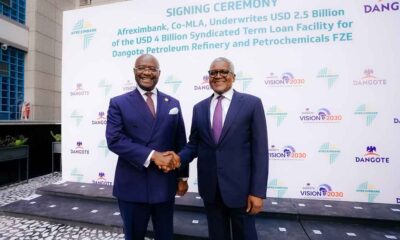
Afreximbank Partners with African Energy Week 2026 to Drive Africa-Led Energy Deals

Published

on

African Energy Chamber

With a new $8 billion South Africa program, expanded Caribbean financing and Africa Energy Bank initiative, Afreximbank is deepening its role in financing the continent’s energy sector ahead of African Energy Week 2026

CAPE TOWN, South Africa, April 7, 2026/APO Group/ –The African Export-Import Bank (Afreximbank) has been confirmed as a Partner of African Energy Week (AEW) 2026, taking place October 12–16 in Cape Town. Its participation underscores the event’s role as a premier investment platform, positioning the bank at the center of deal-making across oil, gas, power and energy infrastructure.

Ahead of AEW, Afreximbank has expanded its global footprint by raising its financing cap for the Caribbean Community (CARICOM) to $5 billion. The increase builds on more than $750 million already deployed and a pipeline exceeding $2 billion, targeting infrastructure, tourism, agro-processing and financial services while strengthening Africa–Caribbean trade and investment corridors.

Afreximbank’s partnership with AEW 2026 reflects a key shift in how Africa is financing its energy future

The bank reached a recent milestone with South Africa joining as its 54th member state, completing full continental coverage. This accession unlocks an $8 billion country program focused on energy, manufacturing and trade, alongside a $3 billion Transformation Fund aimed at supporting black-owned businesses and SMEs while advancing industrial development and regional value chains. In recent years, the bank has also bolstered its capital base, including a $25 billion increase in authorized capital, enhancing its capacity to finance large-scale energy and infrastructure projects across Africa.

Afreximbank’s expanding role extends directly into project financing through the Africa Energy Bank, a joint initiative spearheaded by Afreximbank and the African Petroleum Producers’ Organization. Designed to address a financing gap left by international lenders’ retreat from upstream oil and gas, the bank aims to mobilize African capital for African energy projects, with initial funding targets in the billions and operations set to begin in 2026. Together with Afreximbank’s strengthened balance sheet, this initiative signals a broader shift toward African-led capital structures capable of underwriting large-scale upstream, midstream and infrastructure developments – positioning the continent not just as a capital recipient, but as a capital originator.

“Afreximbank’s partnership with AEW 2026 reflects a key shift in how Africa is financing its energy future,” said NJ Ayuk, Executive Chairman of the African Energy Chamber. “We’re moving beyond reliance on external capital to a model where African institutions are structuring, financing and driving projects from the ground up. As investment accelerates across oil, gas and renewables, players like Afreximbank are not only supporting deals, but helping define the market.”

At African Energy Week 2026, Afreximbank is expected to play a central role in advancing financing discussions, supporting project origination and strengthening partnerships between governments, developers and investors. Its participation highlights a broader shift toward African-led capital in energy development, reinforcing the event’s position as a catalyst for bankable projects, regional integration and long-term energy security.

Distributed by APO Group on behalf of African Energy Chamber.

Continue Reading

Trending