Connect with us
Anglostratits

Business

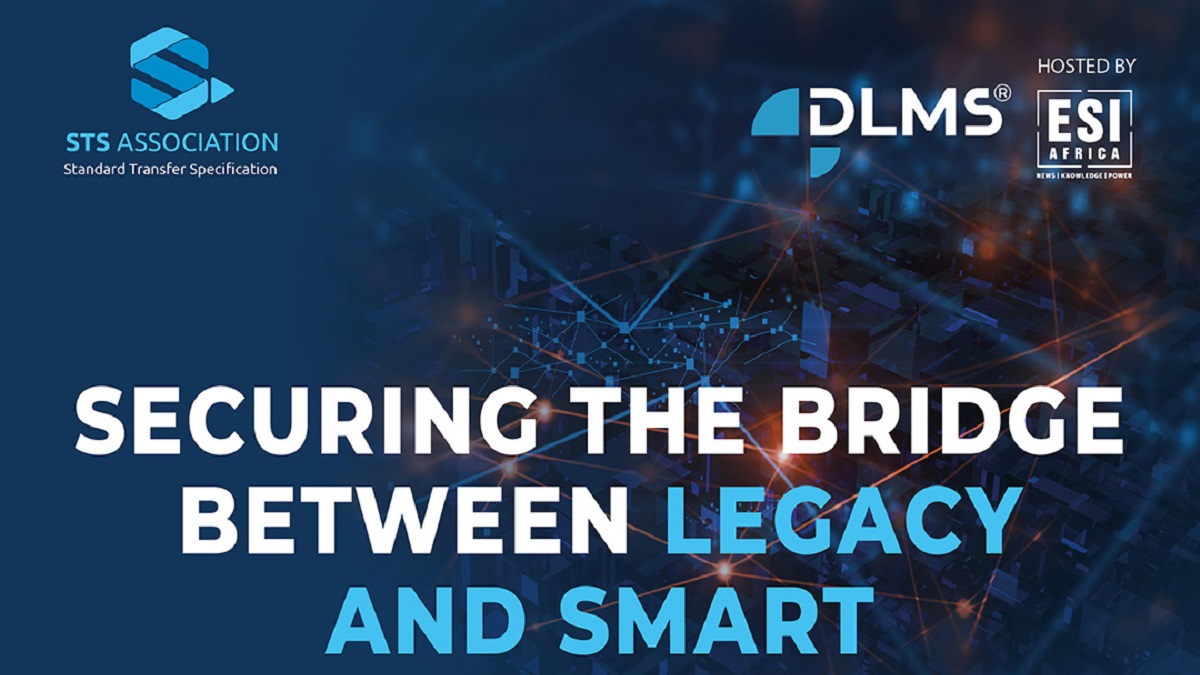
Metering experts call for secure bridge between legacy and smart systems

Published

on

Smart Metering

The on-demand webinar, “Securing the Bridge Between Legacy and Smart Metering”, brings together leading metering specialists to unpack how interoperability, standardisation and secure data exchange are shaping the next phase of smart utility infrastructure

CAPE TOWN, South Africa, May 14, 2026/APO Group/ –Utilities modernising their metering infrastructure must avoid treating legacy prepayment systems and smart metering platforms as competing technologies, industry experts said during a recent webinar hosted by ESI Africa, part of VUKA Group (www.WeAreVUKA.com), in partnership with STS Association and DLMS User Association.


The on-demand webinar, “Securing the Bridge Between Legacy and Smart Metering”, brings together leading metering specialists to unpack how interoperability, standardisation and secure data exchange are shaping the next phase of smart utility infrastructure.

The recording is freely available here: https://apo-opa.co/4dHSwOc

The discussion featured Lance Hawkins-Dady, STSA Board Chairman, Sergio Lazzarotto, DLMS UA President and Franco Pucci, STSA Technical Consultant. The session was moderated by Nicolette Pombo-van Zyl, Editor-in-Chief of ESI Africa.

Opening the session, Pombo-van Zyl said the webinar would explore how strategic alignment between STS and DLMS supports secure token transport, interoperability and coordinated roadmaps for smart metering.

Hawkins-Dady said the collaboration reflects the need for utilities to balance trusted legacy systems with modern smart infrastructure.

“STS remains a secure, reliable mechanism for prepaid revenue collection. This strategy supports a practical, structured transition, avoiding disruptive changes,” he said.

He noted that more than 80 million STS-enabled devices remain active worldwide, making backward compatibility and investment protection critical for operators planning future metering strategies.

“There may be a perception in parts of the sector that, as smart metering advances, technologies like STS will naturally become obsolete,” Hawkins-Dady said. “What this liaison accomplishes is that it removes the notion of competition between standards and replaces it with coordination and synergy between different standards.”

Lazzarotto drew parallels between today’s metering transition and the standardisation journey in the personal computer sector, where common technologies such as USB and Bluetooth helped create more interoperable ecosystems.

“We were still miles away from this concept of interoperability,” he said, reflecting on early smart metering deployments. “What I am trying to do is push for standardisation that is at the service of manufacturers.”

He said proprietary systems have created long-term operational risk for utilities, particularly when suppliers exit markets or discontinue support. Standardisation allows utilities to reduce vendor lock-in while enabling manufacturers to scale products more efficiently across regions.

“There is something known in the IT sector called plug-and-play,” Lazzarotto said. “I plug it and it plays. I don’t have to take care about how it works.”

Interoperability takes centre stage

It’s about protecting what already works while enabling what comes next

Much of the discussion focused on interoperability and the technical integration of STS token technology into the DLMS/COSEM framework.

Pucci explained that the STS token itself has not changed. Instead, the token is now encapsulated within a DLMS object for transmission through smart metering networks.

“An STS token is still an STS token,” he said. “The only difference now is that you need to wrap it up in a DLMS COSEM object.”

He added that this approach gives utilities operational flexibility by maintaining both keypad entry and remote token delivery options.

“You now have essentially two paths to take your token to the meter,” Pucci said. “If a network is down, you can still type in your token at your meter and get your credit.”

Cybersecurity also emerged as a priority during the discussion. Lazzarotto warned that the increasing digitalisation of utility infrastructure requires stronger collaboration between standards bodies.

“We are speaking about strategic infrastructure,” he said. “We cannot play with that.”

He added that future work between the two organisations would focus heavily on secure architecture for electricity, water and gas applications.

The panel also highlighted the need for regional flexibility, particularly in Africa, where utilities operate under different regulatory and infrastructure conditions.

Lazzarotto said DLMS is working closely with regional standardisation organisations to accommodate country-specific requirements without fragmenting the broader framework.

“One thing is for sure,” he said. “There will be regional specificities and country specificities.”

The panellists repeatedly returned to the importance of open standards for utilities planning long-term smart metering rollouts.

“Do not get locked into a supplier,” Pucci warned during his closing remarks. “Use a system that you can purchase from as many suppliers as you wish.”

Hawkins-Dady said the collaboration ultimately gives utilities a lower-risk route into modernisation.

“It’s about protecting what already works while enabling what comes next,” he said. “Ultimately bringing a more connected, flexible and future-ready metering ecosystem.”

The on-demand recording is relevant for utilities, municipalities, metering specialists, revenue managers, manufacturers, system integrators and decision-makers responsible for smart metering procurement, infrastructure upgrades and digital transformation strategies.

Watch the webinar recording here: https://apo-opa.co/4dHSwOc

Distributed by APO Group on behalf of VUKA Group.

Business

West African Development Bank (BOAD) and PROPARCO Launch a Landmark €200 Million Cross-Financing Operation to Boost the Private Sector in the West African Economic and Monetary Union (WAEMU) Region

Published

on

BOAD

This structure directly addresses current challenges related to reforming the global financial architecture by introducing an innovative and catalytic financial instrument

Together with BOAD, we are reaching a major milestone in our commitment to boosting financing for African economies, particularly within the WAEMU region

NAIROBI, Kenya, May 14, 2026/APO Group/ –On the sidelines of the Africa Forward summit, the West African Development Bank (BOAD) (www.BOAD.org) and PROPARCO, a subsidiary of the AFD Group, announced the signing of an unprecedented €200 million financing agreement (equivalent to approximately CFAF 131 billion). Structured by Galite as a cross-currency transaction between the euro (EUR) and the CFA franc (XOF), this operation is a global first in both its nature and ambition.


This structure directly addresses current challenges related to reforming the global financial architecture by introducing an innovative and catalytic financial instrument. It enables:

More efficient allocation of resources through expanded access to the XOF market, helping diversify financing options for local businesses;

Greater stability through support for the WAEMU region’s foreign exchange reserves, ensuring stronger macroeconomic resilience;

Direct impact through the financing of transformative private-sector projects, a key driver of job creation in the region.

Françoise Lombard, Chief Executive Officer of PROPARCO, stated:

“Together with BOAD, we are reaching a major milestone in our commitment to boosting financing for African economies, particularly within the WAEMU region. This initiative is fully aligned with the momentum to reform the development finance architecture by providing a tangible solution to increase the mobilization of local-currency resources in support of the private sector and local economies.

I am delighted by this partnership, which embodies a truly win-win approach and reflects our shared determination to act with ambition and pragmatism to sustainably support the development of the private sector across WAEMU economies, particularly our clients in the region, to whom we will be able to offer more loans denominated in CFA francs.”

Serge Ekué, President of BOAD, stated:

“The partnership between BOAD and PROPARCO reflects the quality and depth of our strategic cooperation.

Through this initiative, BOAD is reaffirming its role as a mobilizer of resources by attracting additional investment for the benefit of the region. Expanding the range of available financing tools is essential to sustainably support the transformation of WAEMU economies.

This transaction marks an important milestone in our collective ability to channel greater financing toward projects delivering strong economic and social impact across Africa.”


Distributed by APO Group on behalf of Banque Ouest Africaine de Développement (BOAD).

Continue Reading

Business

Governor of the Central Bank of Egypt and President of Afreximbank Hold a Press Briefing on Egypt’s Ongoing Preparations to Host the 33rd Afreximbank Annual Meetings in Alamein

Published

on

Central Bank

The briefing underscored the strong strategic partnership between Egypt and Afreximbank, while highlighting the Bank’s support for key sectors, including financial services, trade, industrial infrastructure, manufacturing, oil and gas, telecommunications, power, and construction

H.E. Mr. Hassan Abdalla, Governor of the Central Bank of Egypt (CBE), and Dr George Elombi, President and Chairman of the Board of Directors of Afreximbank (www.Afreximbank.com), held a joint press briefing at the CBE’s headquarters on 13 May 2026 to address preparations for 33rd Afreximbank Annual Meetings (AAM2026). The AAM2026 will be held under the patronage of H.E. President Abdel Fattah El-Sisi, President of the Arab Republic of Egypt, in Alamein city from 21 to 24 June 2026.

Attended by over 100 local and international media representatives, both in person and virtually, the briefing provided updates on preparations for AAM2026, expected participation, and Egypt’s role as host country for one of Africa’s leading annual gatherings focused on advancing the continent’s economic transformation.


In his remarks, H.E. Mr. Hassan Abdalla, Governor of the Central Bank of Egypt, reaffirmed Egypt’s commitment to the successful hosting of the AAM2026 and emphasised the country’s readiness to host the event as well as its long-standing partnership with Afreximbank to support Africa’s economic development, trade and investment.


Mr Abdalla said: “Egypt is honoured to host the 33rd Afreximbank Annual Meetings in Alamein, reflecting our continued commitment to supporting Africa’s economic integration, trade expansion, and sustainable development.”

He also noted that these Meetings represent a high-level platform for dialogue and the exchange of views on the future of African economic and financial cooperation.

He added: “The Meetings extend beyond conventional discussions to advance key continental priorities, including trade finance, regional integration, and the pressing need to reform the global financial architecture to better reflect the development needs of emerging economies.

Dr. George Elombi, President and Chairman of the Board of Directors of Afreximbank, expressed his appreciation to H.E. Mr. Hassan Abdalla for his strong support and commitment to hosting AAM2026 in Alamein and for the efforts by all relevant institutions in coordinating these meetings in Egypt.


“Egypt and Afreximbank share a common vision to accelerate Africa’s economic development, industrialisation, and widespread economic prosperity across the continent.


“AAM2026 will provide a valuable opportunity to strengthen partnerships, unlock investment opportunities, and advance discussions on intra-African trade, Africa’s financial sovereignty, and its economic resilience in an increasingly complex global environment”.

Egypt and Afreximbank share a common vision to accelerate Africa’s economic development, industrialisation, and widespread economic prosperity across the continent


Dr Elombi added that “Through our Annual Meetings, Afreximbank aims to identify priority projects and actionable programmes that will accelerate the transformation of Africa’s trade infrastructure. Africa’s pace of growth will be driven by industrialisation and intra-African trade, and achieving this will require significant improvements in processing, logistics, and importantly, policy support from governments.”


The briefing underscored the strong strategic partnership between Egypt and Afreximbank, while highlighting the Bank’s support for key sectors, including financial services, trade, industrial infrastructure, manufacturing, oil and gas, telecommunications, power, and construction.


Additionally, the press briefing outlined the significant opportunities associated with Egypt hosting AAM2026, including enhancing the country’s position as a regional financial and business hub, supporting the Meetings, Incentives, Conferences and Exhibitions (MICE) sector, creating new opportunities for Egyptian businesses, investors and the broader private sector, as well as providing a major boost to tourism in Alamein.


Dr Elombi said that the Bank has provided approximately US$9.5 billion in financing to Egypt over the past three years. He also referenced the groundbreaking of the Afreximbank African Trade Centre (AATC) in New Administrative Capital in December 2025, noting that the landmark US$250 million development will strengthen Egypt’s role as a regional hub for trade facilitation, payments, logistics, and SME development.


Dr Elombi further outlined plans for the proposed pan-African Gold Bank, an initiative designed to formalise Africa’s gold value chains, strengthen central bank reserves, and reduce the continent’s dependence on offshore refining and external trading centres.


Over the years, Afreximbank’s Annual Meetings have become one of the leading platforms for shaping dialogue on Africa’s economic future and advancing intra-Africa trade. The 33rd Afreximbank Annual Meetings are expected to bring together Heads of State, government ministers, central bank governors, business leaders, academics, entrepreneurs, private sector investors, and development partners. They will deliberate on the key issues shaping Africa’s economic future and trade agenda, while advancing practical solutions for the continent.


The AAM2026 programme will offer policy discussions, plenary sessions, business and investment forums, deal-signing ceremonies, major announcements, networking events, bilateral meetings, and forums on intra-African trade and the African Continental Free Trade Area (AfCFTA). It will also feature presentations on trade finance, industrialisation, energy, infrastructure, and digital transformation.

Distributed by APO Group on behalf of Afreximbank.

Continue Reading

Business

DHL Express Sub-Saharan Africa (SSA) celebrates its 53rd Transported Asset Protection Association’s (TAPA) Facility Security Requirements (FSR) certification

Published

on

DHL Express

DHL Express SSA is the most TAPA certified company in the Region and was the first company in the TAPA EMEA Region to attain multi-site certification for a Region

LAGOS, Nigeria, May 14, 2026/APO Group/ —

  • Increases TAPA certifications across the Region, total of 53 sites across Sub-Saharan Africa
  • DHL Express the most TAPA-certified company in SSA
  • Lekki contributes to DHL Express surpassing the 500 facility milestone in TAPA certifications worldwide
  • Part of global €250 million investment in world-class security infrastructure by DHL Express


DHL Express (www.DHL.com) has announced that its Service Center in Lekki (Nigeria) has officially been certified according to the Transported Asset Protection Association’s (TAPA) Facility Security Requirements (FSR). This certification contributes to the over 500 TAPA certified sites globally and increase the certifications across Sub-Saharan Africa to 53 sites across 19 countries as part of a multi-site certification.


As the world’s most TAPA-certified logistics provider, DHL Express continues to set the benchmark for world-class supply chain security. The certification of 53 facilities in SSA strengthens a network that has already exceeded 500 TAPA-certified facilities globally, supported by a worldwide EUR250 million investment in advanced, industry-leading security technologies and processes. DHL Express SSA is the most TAPA certified company in the Region and was the first company in the TAPA EMEA Region to attain multi-site certification for a Region.


Anthony Beckley, VP Network Operations and Aviation at DHL Express SSA said: “Security is a cornerstone of DHL’s operations and a critical enabler of trade across Sub‑Saharan Africa. By continuously strengthening security standards at our facilities across the region, we help protect our customers’ shipments while building confidence in the supply chains that connect Africa to the world. As African businesses expand their reach into global markets, they rely on trusted, resilient, and world‑class logistics partners. We are proud to support this growth through industry‑leading security practices, underscored by our achievement of 500 TAPA certifications worldwide.”

Security is a cornerstone of DHL’s operations and a critical enabler of trade across Sub‑Saharan Africa


TAPA (Transported Asset Protection Association) certification is a comprehensive process of membership, verification, and auditing designed to ensure the security of customer shipments throughout the supply chain. It is based on rigorous standards such as FSR (Facility Security Requirements) and TSR (Transport Security Requirements), which can be achieved through independent audits or, for Level 3 (basic), via self-certification by a registered Authorised Auditor (AA), followed by submission of documentation to TAPA for validation and issuance of a certificate typically valid for three years. The Security Requirements established by the Association are recognised worldwide as industry benchmarks, making TAPA certification an essential mark of excellence for customers seeking the highest levels of reliability and protection.


This achievement not only affirms DHL Express as the global leader in secure logistics but also highlights Nigeria’s strategic contribution to the company’s security excellence in SSA.


Adrian Whelan, SVP and Head of Global Security at DHL Express, commented: “The TAPA certification of Lekki and the 53 sites TAPA certified across the SSA Region highlights DHL Express’ commitment to providing our customers in Africa with world-class security infrastructure. Customers want to ship their valuable goods through a secure and resilient supply chain, and DHL Express provides the most secure and resilient supply chain, not only in SSA but globally”.


The TAPA FSR certification is a central element of the broader security strategy of DHL Express. As global supply chains become increasingly complex, certified operations ensure consistent protection, risk mitigation, and resilience across the entire DHL network.


The achievement of the TAPA FSR certification was formally celebrated on May 13 during an event hosted at the DHL Express Lekki facility in Lagos, Nigeria. The event brought together private and public sector partners who share the aim of building resilient, transparent, and high-standard logistics ecosystems across SSA.

Distributed by APO Group on behalf of DHL Express.


Continue Reading

Trending