Connect with us
Anglostratits

Business

Kaspersky uncovers sophisticated deception campaign using DeepSeek AI as bait

Published

on

Kaspersky

Kaspersky’s Threat Research and AI Technology Research have jointly identified a sophisticated deception campaign exploiting the rapid growth and public interest surrounding DeepSeek AI

JOHANNESBURG, South Africa, March 10, 2025/APO Group/ –Security researchers at Kaspersky (www.Kaspersky.co.in/) have revealed how cybercriminals used geofencing, compromised business accounts and coordinated bot networks to distribute malware disguised as DeepSeek AI software, generating over 1.2 million views on X.

Kaspersky’s Threat Research and AI Technology Research have jointly identified a sophisticated deception campaign exploiting the rapid growth and public interest surrounding DeepSeek AI — a popular generative AI chatbot — in order to distribute malware through fraudulent websites.

In their investigation, Kaspersky researchers revealed that cybercriminals established deceptive replicas of the official DeepSeek website, using domain names like “deepseek-pc-ai[.]com” and “deepseek-ai-soft[.]com.” A distinctive feature of this campaign was its use of geofencing technology, where malicious websites examine each visitor’s IP address and dynamically alter content presentation based on geographic location, enabling attackers to fine-tune their approach and reduce detection risks.

“This campaign demonstrates notable sophistication beyond typical social engineering attacks,” explained Vasily Kolesnikov, senior malware analyst at Kaspersky Threat Research. “Attackers exploited the current hype around generative AI technology, skillfully combining targeted geofencing, compromised business accounts and orchestrated bot amplification to reach a substantial audience while carefully evading cybersecurity defenses.”

This campaign demonstrates notable sophistication beyond typical social engineering attacks

According to Kaspersky’s analysis, the campaign’s primary distribution channel was the social media platform X. Attackers strategically compromised the social media account of a legitimate Australian company to widely disseminate fraudulent links. This single malicious post drew significant attention, reaching approximately 1.2 million impressions and generating hundreds of reposts. Researchers determined that these reposts largely originated from coordinated bot accounts — evident due to their similar naming conventions and profile characteristics — indicating a deliberate amplification of the malicious content.

Visitors lured to the fraudulent websites were directed to download a fabricated DeepSeek client application. Instead of the authentic software, these sites delivered malicious installers using the Inno Setup installation platform. Once executed, these compromised installers attempted to contact remote command-and-control servers to retrieve Base64-encoded PowerShell scripts. These scripts subsequently activated Windows’ built-in SSH service, reconfigured it with attacker-controlled keys and enabled full remote unauthorised access to compromised systems.

All malware payloads connected to this campaign are proactively identified and blocked by Kaspersky security products such as Trojan-Downloader.Win32.TookPS.* variants.

To remain secure, Kaspersky advises people to do the following:

  • Check URLs meticulously. Fraudulent AI websites often use domain names that closely resemble legitimate services but contain subtle differences. Before downloading any AI software, verify that the website URL exactly matches the official domain with no additional words, hyphens or spelling variations.
  • Use comprehensive security protection. Deploy a robust security solution like Kaspersky Premium on all devices to detect and block malicious installers and websites before they can compromise your system.
  • Keep all software updated. Many security vulnerabilities exploited by malware can be addressed by installing the latest versions of your operating system and applications, particularly security software.

Read more on Securelist.com and Kaspersky Daily blog (https://apo-opa.co/4iDjGFt).

Distributed by APO Group on behalf of Kaspersky.

Energy

Cape Town Prepares for African Mining Week 2026 as Draft Program Reveals Continent’s Mineral Drive
Published

on

Energy Capital

African Mining Week returns for its 2026 edition with an expanded three-day program, bringing together African mining leaders and global partners to shape the future of the continent’s mining sector

CAPE TOWN, South Africa, March 24, 2026/APO Group/ –Global economic trends – from record-breaking commodity prices to intensifying geopolitical competition for resources – are reshaping the strategic importance of Africa’s mineral wealth. As global countries race to secure supply chains for energy transition metals – which are expected to triple by 2030 – Africa is positioning its 30% share of the world’s critical minerals as a key pillar of economic growth. African governments are modernizing mining codes, developing industrial corridors and investing in mineral processing facilities to support local beneficiation, job creation, workforce development and regional mineral markets.


Against this backdrop, the upcoming African Mining Week (AMW) Conference & Exhibition – Africa’s premier gathering for mining stakeholders – has launched the draft program for its 2026 edition {https://apo-opa.co/3NneKLj}. Scheduled to take place October 14–16 in Cape Town, the event provides a platform where policymakers, global investors, project operators, technology providers, academia and mining service companies examine Africa’s mining opportunities, challenges and long-term strategic direction.

Under the theme ‘Mining the Future: Unearthing Africa’s Full Mineral Value’, the three-day, multi-track agenda reflects the growing urgency among African markets to strengthen value addition across the mining value chain.

Regional Cooperation and Policy Alignment in Focus

A key feature of the agenda is the Ministerial Forum, where African mining ministers will provide updates on regulatory reforms and policy alignment initiatives aimed at unlocking greater value from the continent’s mineral resources. Discussions will examine how harmonized regulatory frameworks and regional cooperation can accelerate investment flows and strengthen Africa’s position in global mineral supply chains.

The inclusion of regional policy integration reflects a growing continental push to leverage frameworks such as the African Continental Free Trade Area (AfCFTA) to enhance cross-border mineral cooperation and trade.

We are acting to enhance regional integration through frameworks such as the African Mining Vision and the Africa Mineral Strategy Group

“Africa’s integration is not only a political objective but a strategic economic vision,” stated Emmanuel Armah-Kofi Buah, Ghana’s Minister of Lands and Natural Resources, in remarks reported by Energy Capital & Power – organizers of AMW – in February 2026. “Our natural resources require coordinated policies. Isolated legal frameworks cannot fully unlock their value. Through integration and initiatives such as the ECOWAS [Economic Community of West African States] Mining Code and the African Mining Vision, we can build a stronger and more competitive mineral economy.”

Nigeria’s Minister of Solid Minerals Development, Henry Alake, echoed this emphasis on regional cooperation and beneficiation.

“We are acting to enhance regional integration through frameworks such as the African Mining Vision and the Africa Mineral Strategy Group,” he stated. “We must develop mineral corridors that connect resources, infrastructure and markets across the continent. Our goal is not to simply export raw materials, but to develop industrial hubs that create jobs and value across borders.”

Connecting Global Investors with African Opportunities

Strategic roundtables and Country Focus sessions form a key part of the AMW 2026 program, connecting African mining jurisdictions with international partners from the U.S, Europe, the Middle East and China. These sessions will provide African stakeholders with a platform to showcase exploration opportunities and project pipelines across the mining value chain.

Meanwhile, technical workshops and the exhibition floor at AMW 2026 will provide a platform for equipment manufacturers, technology providers and engineering firms to showcase innovations designed to enhance operational performance across mining operations.

By combining high-level policy dialogue with technical expertise and investment matchmaking, AMW 2026 positions itself as a critical marketplace where Africa’s mineral potential converges with global capital, technology and strategic partnerships – helping shape the next phase of growth for the continent’s mining sector.

AMW serves as a premier platform for exploring the full spectrum of mining opportunities across Africa. The event is held alongside the African Energy Week: Invest in African Energies 2026 conference from October 12-16 in Cape Town. Sponsors, exhibitors and delegates can learn more by contacting sales@energycapitalpower.com.

Distributed by APO Group on behalf of Energy Capital & Power.

Continue Reading

Business

Tony Elumelu Foundation Selects Seven North African Entrepreneurs in 2026 Cohort
Published

on

entrepreneurs

Seven North African entrepreneurs in technology, education, professional services and agriculture selected from 265,000 applications at historic Abuja ceremony
Hope is not just a feeling — it is a system we can build

ABUJA, Nigeria, March 24, 2026/APO Group/ —

  • 7 North African entrepreneurs selected from Morocco, Tunisia and Egypt
  • 51% of the 2026 cohort are women, all selected purely on merit, without any quota in place
  • 3,200 total entrepreneurs selected from 265,000+ applications across 54 African countries
  • USD 5,000 in non-refundable seed capital for each selected entrepreneur
  • Selection conducted independently by Ernst & Young


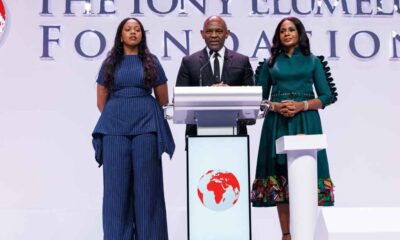
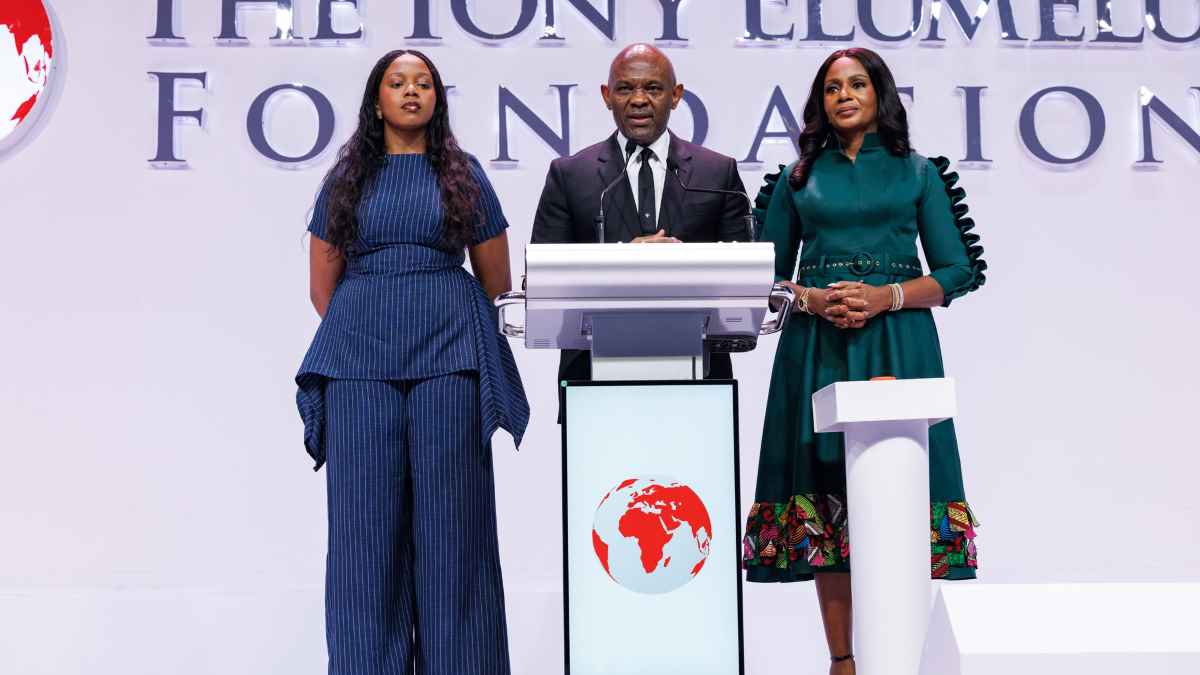
The Tony Elumelu Foundation (TEF) (www.TonyElumeluFoundation.org), the leading philanthropy empowering young African entrepreneurs, announced on Sunday, 22 March 2026 the 12th cohort of the TEF Entrepreneurship Programme at a ceremony held at the Transcorp Hilton, Abuja. The announcement was made by Founder Tony O. Elumelu, C.F.R.


Among the 3,200 entrepreneurs selected from 265,000 applications received from all 54 African countries: seven from North Africa. Three from Tunisia, two from Morocco, two from Egypt. Spanning technology, education, professional services and agribusiness, they represent a generation of North African founders building businesses that address the urgent needs of their communities. Their selection, which was conducted independently by Ernst & Young, places them among the most rigorously assessed young entrepreneurs on the continent.


This year’s cohort carries a historic signal: 51 percent of the 2026 entrepreneurs are women. They were selected purely on merit, without quota. Across hundreds of thousands of applications, women distinguished themselves through the strength of their ideas, the clarity of their business models and the ambition of their vision.


In 2026, the Foundation is empowering a total of 3,200 entrepreneurs across all its entrepreneurship programmes:


  • 1,751 entrepreneurs through Heirs Holdings Group: Heirs Energies, Transcorp Power, Transcorp Hotels, and United Capital;
  • 1,049 entrepreneurs in partnership with the European Commission, OACPS, BMZ and GIZ;
  • 100 entrepreneurs in partnership with Sèmè City Development Agency;
  • 100 entrepreneurs in partnership with DEG, the German Development Agency;
  • 100 entrepreneurs in partnership with the IKEA FoundationUNICEF’s Generation Unlimited and the Dutch Government; and
  • 100 entrepreneurs in partnership with UNDP and the Rwandan Ministry of Youth and Arts.


Each selected Tony Elumelu Entrepreneur will receive USD 5,000 in non-refundable seed capital, access to world-class business management training on TEFConnect, one-on-one mentorship, and entry into a powerful network of investors, partners and fellow entrepreneurs.


In his annual letter (https://apo-opa.co/4uOFepM), “A Story of Hope,” Tony O. Elumelu, C.F.R., Founder of the Tony Elumelu Foundation, shared a powerful message to the new cohort:


“For a long time, I believed luck was something that simply happened to you. Then I came to understand: luck can be engineered. Opportunity can be democratised. Hope is not just a feeling — it is a system we can build.” — Tony O. Elumelu, C.F.R., Founder, Tony Elumelu Foundation — 2026 Annual Letter


The Tony Elumelu Foundation has empowered over 2.5 million young Africans with access to business management training on TEFConnect (https://TEFConnect.com), and disbursed over USD 100 million in seed capital to more than 24,000 selected entrepreneurs.


Collectively, these entrepreneurs have generated USD 4.2 billion in revenue and created more than 1.5 million direct and indirect jobs. Through its support for African entrepreneurs, TEF has lifted 2.1 million Africans above the poverty line and positively impacted more than 4 million African households, with 46% of supported entrepreneurs being African women. Eighty percent of TEF-supported businesses survive and scale, against a global average of ten to twenty percent.


The announcement ceremony was broadcast live in English (https://apo-opa.co/3PWLiML), French (https://apo-opa.co/3PWLiML), Portuguese (https://apo-opa.co/4t4Y7Da) and Arabic (https://apo-opa.co/4bYHlQl).


Distributed by APO Group on behalf of The Tony Elumelu Foundation.


Continue Reading

Business

African Petroleum Ministers Snub Africa Energies Summit, Citing Local Content as Priority for Africa

Published

on

African Energy Chamber

The decision comes amid concerns over local content and inclusion by the summit’s organizer Frontier Energy Network, with African petroleum ministers reinforcing local content as a non-negotiable priority for the continent’s oil industry

JOHANNESBURG, South Africa, March 24, 2026/APO Group/ –African Petroleum Ministers have declined to participate in the upcoming Africa Energies Summit (AES) taking place on May 12–14, 2026 in London, citing serious concerns around local content, representation and the broader direction of the platform’s agenda. The decision sends a strong signal from the continent’s oil-producing nations that local content remains a core priority for Africa’s energy future and that industry platforms operating under the banner of African energy must reflect the continent’s values and development objectives.


“By boycotting AES in London, the African oil industry is showcasing that local content is a priority. The message is clear: if Gayle and Daniel Davidson change their policy to be more inclusive, many Africans will work with them. The exclusionary policies are not reflective of our values and that of the oil industry. Frontier has an incredible opportunity to do the right thing,” states NJ Ayuk, Executive Chairman, African Energy Chamber.

Across the oil and gas sectors, both emerging and established markets are integrating local content policies within their broader project fundamentals as a way to catalyze job creation, local participation and broader skills development. Regulation has served as a launchpad for local content development. Policies such as the Nigerian Oil and Gas Industry Content Development Act (NOGIC) and Angola’s Local Content Law have provided a strong foundation for local content implementation – and many projects are taking the lead.

A lot of Africans feel that all the progress and gains made by our oil industry on local content are constantly being stomped on by groups like Frontier

The Greater Tortue Ahmeyim (GTA) project in Senegal and Mauritania not only designates a portion of gas for each domestic market but features a multi-pronged local content strategy focusing on supply chain, workforce development and social investment. In the development stage, the project offered an online portal where local suppliers registered their interest and engagement opportunities with the procurement team, while over 47 trainees participated in a multi-year program in preparation for offshore work. The project partners engaged in extensive community outreach, including health, education, economic development and environmental awareness. GTA exported its first cargo in 2025 and is working toward full-scale operations in 2026.

Similarly, the EG LNG project in Equatorial Guinea is a major local content driver. Operating since 2007, the project has placed emphasis on local workforce development and integration through several initiatives that promote participation and broader economic support. In addition to prioritizing local vendors and contractors, the Punta Europa plant and associated infrastructure employs over 1,400 people, with the larger Gas Mega Hub project – of which EG LNG is a central part – set to increase this figure to 3,000 people. Nigeria’s LNG plant also actively promotes local content through policies on Nigerian manpower development, technology acquisition and utilizing local contractors. The implementation of the NOGIC saved the LNG project $2 billion across its EPC stage for the seventh train.

Emerging oil and gas producers such as Mozambique, with three large-scale LNG projects underway, Namibia, which eyes first oil production by 2029, and The Gambia have all integrated local content regulations within their energy frameworks. This approach demonstrates a commitment to Africa, making companies like Frontier that much more disappointing. The African oil industry – as well as companies operating in seismic, services and policy – must take the local content lead.

“A lot of Africans feel that all the progress and gains made by our oil industry on local content are constantly being stomped on by groups like Frontier. We believe in Drill Baby Drill and local content, and we’re being told that there’s something wrong with it, that we should be ashamed of it in some way and that it needs to be replaced with discrimination. Many people are just sick of it. We’ve had enough, and we don’t want our whole oil industry stripped down to where we have no semblance of that sort of nostalgic African oil and gas culture that we cherish,” Ayuk adds.

The recent boycott by these ministers reflects a broader belief by the continent that local content must be an integral part of oil and gas operations. This includes discussions on the current and future state of the continent’s hydrocarbon industry.

“Gayle and Daniel Davidson are essentially marketing to a clientele that doesn’t exist, Let’s be clear: the oil industry does not and will not defend discrimination against black professionals. It’s not who we are. They both need to come clear and denounce this. This virtue signaling to a certain crowd does not help our goals for an inclusive oil industry,” concludes Ayuk.

Distributed by APO Group on behalf of African Energy Chamber.

Continue Reading

Trending