Connect with us
Anglostratits

Energy

Isa, Wunti, Irune, Iledare, Katagum Lead Nigeria’s Return to World Energy Council

Published

on

Oando

The governing board of the World Energy Council’s Nigerian Member Committee was inaugurated in Abuja on 7 August, formally restoring Nigeria’s participation in the global body

LAGOS, Nigeria, September 14, 2026/APO Group/ –When Nigeria first joined the World Energy Council in April 1960, the country was months away from independence, and its modern energy industry was still taking shape. More than six decades later, Nigeria has returned to the organisation as a Member Committee at a moment when both the country’s energy sector and the global conversation it is rejoining look markedly different.


The governing board of the World Energy Council’s Nigerian Member Committee was inaugurated in Abuja on 7 August, formally restoring Nigeria’s participation in the global body. The committee is chaired by Abdulrazaq Isa, co-founder of Waltersmith Petroman Oil Limited, while Bala Wunti, formerly Chief HSE Officer at NNPC Limited, serves as Chief Executive Officer. Its board brings together figures from policy, academia, energy institutions and private enterprise, including Professor Wumi Iledare, Dr Mustapha Abdullahi, Mrs Aisha Farida Katagum, Dr Emmanuel Okon, Dr Victor Ekpenyong, Dr Imamuddeen Talba and Dr Ainojie Alex Irune, Managing Director of Oando Energy Resources and Executive Director of Oando PLC.

The Nigeria returning to the Council is substantially different from the country that first joined it. Over the intervening decades, Nigeria has developed into one of Africa’s largest oil and gas producers, built a significant domestic energy industry and seen indigenous companies move from relatively limited participation in the upstream sector to acquiring and operating substantial portfolios previously controlled by international oil companies.

That evolution has accelerated over the last decade as international majors have reshaped their Nigerian portfolios and local companies have assumed greater responsibility for producing assets. The composition of the new WEC Nigeria board reflects some of that history.

Isa has spent nearly three decades building Waltersmith, while other members bring experience across government, petroleum economics, engineering, renewables and energy operations. Irune, 45, represents another part of the indigenous energy story, having built much of his career during the period when Nigerian companies significantly expanded their upstream ambitions.

His career has unfolded alongside that transformation. A computer scientist with a doctorate from the University of Nottingham, Irune began in technology and automotive research in the United Kingdom before returning to Nigeria. At Oando, his career moved through corporate communications, strategy and upstream operations as the company itself evolved into a significant indigenous upstream player.

He was involved in the organisational transition following Oando’s $1.5 billion acquisition of ConocoPhillips’ Nigerian upstream business in 2014 and subsequently served as Group Chief Strategy and Corporate Services Officer during a period of restructuring. A decade later, as Managing Director of Oando Energy Resources, he led the completion of Oando’s $783 million acquisition of Nigerian Agip Oil Company from Eni.

In many respects, Irune’s career has become a microcosm of what has happened to the Nigerian energy industry over the last decade-plus: greater indigenous participation gave way to greater ownership, and ownership has increasingly brought responsibility for operatorship, investment and institution-building.

Nigeria’s return to the World Energy Council is taking place against an equally significant change in the global energy conversation. Energy security and affordability now sit alongside the challenge of reducing emissions, while emerging economies continue to argue that transition pathways must account for different levels of development and energy access.

For Nigeria, those tensions are immediate. The country possesses substantial hydrocarbon resources while facing significant domestic energy and infrastructure needs. It is seeking greater investment in its energy sector while also navigating the implications of a global transition towards lower-carbon energy systems. Nigeria’s renewed participation in the Council will therefore depend on the experience and perspective it brings to that debate.

Irune has increasingly argued that Africa’s energy transition must be grounded in the continent’s economic realities, with greater energy access and industrialisation central to its approach. He has also made the case for gas as an important development fuel and for indigenous companies to retain more of the value created from African resources. Those arguments will now sit within a broader Nigerian contribution.

More than six decades after first joining the World Energy Council, Nigeria returns with considerably more operating experience of its own, a larger indigenous energy industry, and a different set of questions about what its resources should deliver for its economy.

Distributed by APO Group on behalf of Oando PLC.


Business

African Energy Chamber (AEC) Applauds Afreximbank President George Elombi as Billions in Financing Drive Africa’s Industrial Growth

Published

on

African Energy Chamber

Since assuming leadership in October 2025, Dr. George Elombi has overseen major financing commitments across Africa’s energy, mining and industrial sectors

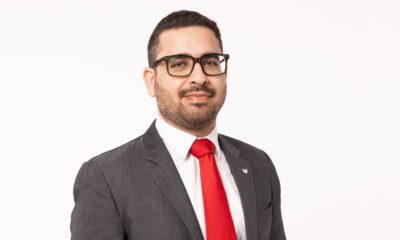
JOHANNESBURG, South Africa, October 26, 2026/APO Group/ –The African Energy Chamber (AEC) (https://EnergyChamber.org/) has commended Dr. George Elombi, President and Chairman of the Board of Directors of the African Export-Import Bank (Afreximbank), for his decisive leadership in advancing African industrialization, energy security and economic integration. Since succeeding Professor Benedict Oramah in October 2025, Dr. Elombi has overseen a series of landmark financing commitments spanning oil and gas, critical minerals, infrastructure and manufacturing, demonstrating the growing capacity of African financial institutions to mobilize capital for the continent’s development.


“I was privileged to attend the inauguration of Dr. George Elombi in October 2025 as Afreximbank President and Chairman, succeeding Professor Benedict Oramah. Since that day, I have watched a man of few words keep the promises he made not with grand speeches, but with practical action. At this crossroads in our history, Dr. Elombi understands that leadership is not about occupying the moment. It is about shaping the future,” states NJ Ayuk, Executive Chairman, AEC.

A cornerstone of Dr. Elombi’s commitment to Africa’s energy sector is the establishment of the Africa Energy Bank (AEB) alongside the African Petroleum Producers Organization. Designed to finance large-scale energy and infrastructure projects across the continent, the AEB will use a corridor approach, prioritizing projects that deliver regional economic development across four pillars: export infrastructure, domestic infrastructure, clean cooking and power. The bank is expected to become operational within weeks and begin financing projects at the start of 2027.

At this crossroads in our history, Dr. Elombi understands that leadership is not about occupying the moment

Dr. Elombi’s work is reflected in a series of milestones reached by Afreximbank in recent months as the bank moves to advance intra-African trade, mobilize capital and bring new countries into its mission. In April 2026, South Africa acceded to the Establishment Agreement of the bank, marking the entry of one of the continent’s biggest economies into the bank’s membership. With the move, Afreximbank launched major financial interventions in the country, including a $8 billion Country Program designed to deepen economic growth. According to Dr. Elombi, South Africa’s membership builds on a strong pipeline of Afreximbank-led projects in the country, exceeding $6 billion and spanning healthcare, energy, manufacturing, financial services and mining.

Beyond South Africa, Afreximbank continues to advance financing for strategic projects across a myriad of sectors. Notable transactions include a $3.8 billion agreement with Gabon to support manganese and gold trading as well as energy development and rail infrastructure; a $25 million facility for Lilium Gold to support operations at the Boungou and Wahgnion mines in Burkino Faso; and a $1.75 billion syndicated receivables-purchase facility for Angola’s national oil company Sonangol. In Nigeria, the bank announced a $2.5 billion underwriting commitment – part of a $4 billion syndicated facility – for Dangote Petroleum and Petrochemicals as well as a $750 million reserve-based lending facility for Heirs Energies, supporting indigenous African energy capacity.

The bank was also responsible for the first-recorded Southern African energy sector transaction through the Africa Trade Gateway – a one-stop digital trade ecosystem developed by Afreximbank and the African Continental Free Trade Area. The transaction features a $5.3 million cross-border gasoil trade involving Zimbabwe. One of the most significant developments

Afreximbank’s mandate transcends energy. The bank continues to mobilize capital for infrastructure that can connect African markets, supporting continent-wide industrialization and job creation. In healthcare, the African Medical Center of Excellence in Ajuba, a landmark 170-bed specialty healthcare center developed by Afreximbank, has set a new standard in healthcare in the country. The facility treats more than 5,000 patients from over 20 countries, with plans to expand to 500 beds in the near-term.

“This is more than a list of transactions; it is a practical expression of economic sovereignty, financing African businesses, moving African commodities, developing African infrastructure and keeping more value on the continent,” Ayuk said. “Dr. Elombi is running his race. He is not chasing applause; he is building momentum. He knows that Africa’s future will be secured by institutions that are bold enough to invest, disciplined enough to deliver, and confident enough to believe in Africa’s own capacity.”

Distributed by APO Group on behalf of African Energy Chamber.


Continue Reading

Energy

Libya Energy & Economic Summit (LEES) 2027 Places Infrastructure at the Center of Libya’s Energy Expansion with Dedicated Forum

Published

on

From gas processing and ports to downstream infrastructure and regional pipelines, LEES 2027 will examine the infrastructure required to support Libya’s next phase of energy growth

TRIPOLI, Libya, October 26, 2026/APO Group/ –Libya’s push to expand oil and gas production is creating a parallel requirement for investment in the infrastructure needed to process, transport and commercialize additional energy supplies. With more than $20 billion committed to the Waha concessions alone and major gas, industrial and logistics projects advancing, infrastructure integration is emerging as a key component of the country’s investment agenda.


Against this backdrop, the Libya Energy & Economic Summit (LEES) 2027, taking place January 23–25 in Tripoli, will feature a dedicated Infrastructure and Integration Forum. The forum will examine how Libya can convert its growing resource base into productive domestic infrastructure and stronger regional ties.

As Libya seeks to process more hydrocarbons domestically and capture greater value from refined products, the country’s National Oil Corporation (NOC) is pursuing refinery modernization and expanded petrochemical manufacturing. That strategy is being reinforced by upstream expansion, including a more than $20 billion, 25-year Waha development deal with TotalEnergies and ConocoPhillips targeting up to 850,000 barrels per day (bpd) of additional capacity.

Meanwhile, the National Development Agency has signed 13 agreements with Chinese companies for projects at the 1,000-hectare Magroun Industrial Zone, covering industrial chemicals, advancing manufacturing and construction materials. The Ministry of Industry’s 100-Day Plan is supporting the country’s wider development push through infrastructure and digital reforms aimed at improving industrial investment.

Gas provides another major infrastructure opportunity set to be showcased at LEES 2027. Eni’s $8 billion Structures A&E project is designed to move offshore gas to the Mellitah treatment plant, with infrastructure targeting 750 million cubic feet per day (mmscf/d) in 2027. The project follows the successful start-up of the Sabratha Compression Project in June 2026. Led by Eni in partnership with the NOC – through the Mellitah Oil & Gas joint venture – the project has an overall compression capacity of 440 mmscf/d.

On the maritime side, the $2.7 billion Misurata Port expansion is set to transform the facility into a major Mediterranean logistics hub, with planned capacity of 4 million containers annually and 8,400 direct jobs. The project also incorporates local supplier development, linking maritime expansion with efforts to build domestic supply chains.

Beyond domestic infrastructure Libya is strengthening its connections to regional neighbors. The country is advancing negotiations with Egypt for an 800-km Tobruk-Alexandria crude pipeline, estimated at $1.5 billion–$2 billion and targeting initial capacity of 150,000–250,000 bpd. The NOC is also working to maximize the 11-billion-cubic-meter annual capacity of the GreenStream pipeline, connecting coastal facilities in Libya to European markets via Sicily.

Taken together, these projects show an increasingly integrated Libyan investment agenda – connecting upstream production with downstream industry, gas infrastructure, logistics and cross-border energy markets. LEES 2027’s Infrastructure and Integration Forum will bring those investment opportunities together in one platform, highlighting the NOC and Ministry-led push to build the infrastructure required for Libya’s next phase of economic growth.

For more information about LEES 2027, please visit https://LibyaSummit.com/​.

Distributed by APO Group on behalf of Energy Capital & Power.


Continue Reading

Business

Society of Petroleum Engineers (SPE) Libya Builds Youth Pipeline as Energy Sector Prepares for Growth

Published

on

Etu Energias

SPE Libya’s young professionals and student networks are building technical expertise and industry connections as the country prepares for increased exploration and upstream investment ahead of LEES 2027

TRIPOLI, Libya, October 23, 2026/APO Group/ –Libya’s efforts to increase oil and gas production are putting renewed attention on the technical expertise and workforce capabilities needed to support exploration, drilling and field development. The Society of Petroleum Engineers (SPE) Libya Section is contributing to that effort through its Young Professionals activities and engagement with university students.


SPE Libya’s Young Professionals network provides early-career members with opportunities for technical and professional development and links them into the wider SPE community. Ali Abu Ikhzam, founder and Young Professionals Chair of the SPE Libya Section, has also contributed to SPE’s international Young Professionals network and technical publications, with his work covering areas including digitalization and automation.

University-based SPE student chapters provide another route into the profession, giving students opportunities to engage with technical subjects, industry professionals and the wider petroleum engineering community. Such networks can provide an early connection between university training and the technical requirements of Libya’s upstream sector.

The focus on workforce development comes as Libya seeks to attract fresh investment into exploration. The National Oil Corporation’s general bidding round offered 22 exploration blocks, including 11 offshore blocks, as part of an effort to increase exploration activity and develop the country’s oil and gas reserves. The NOC said the round was designed to attract international companies into exploration and drilling while creating opportunities for local businesses and employment. The round has since concluded with international companies awarded investment opportunities.

These issues will feature at the Libya Energy & Economic Summit (LEES) 2027, where SPE International – Libya Section is an official supporting organization. The summit will take place in Tripoli from January 23–25, with SPE hosting a Technical Conference as part of the event’s program. The summit’s Knowledge Hub will also address upstream technologies, operational excellence, workforce development and project execution.

SPE Libya is also involved in the Energy JEEL initiative, a Ministry of Oil and Gas-led program focused on developing young Libyans through energy-related training and knowledge sharing. The initiative has trained more than 900 young people and is intended to build a pipeline of engineers, technicians and other energy professionals as Libya develops its oil, gas and broader energy sectors.

Youth development will also form part of LEES 2027’s In-Country Value Forum on January 24. The program is set to examine youth and women in energy, AI, workforce development and pathways for the next generation of Libyan energy professionals.

For SPE members, the summit provides access to operators, service companies, policymakers and international technical specialists in one setting. For students and young professionals, it also offers exposure to the projects, technologies and industry contacts that will become increasingly relevant as Libya develops new exploration opportunities and invests in existing assets.

LEES 2027 takes place in Tripoli from January 23–25. For more information visit https://LibyaSummit.com. To sponsor or participate as a delegate, contact sales@energycapitalpower.com.

Distributed by APO Group on behalf of Energy Capital & Power.


Continue Reading

Trending