Connect with us
Anglostratits

Health

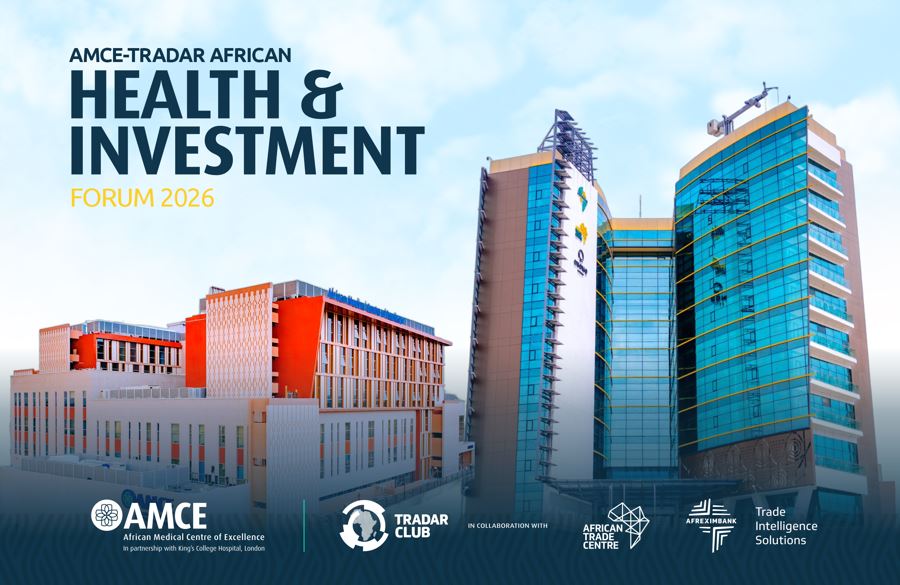
Investing in Africa’s Health Future: African Medical Centre of Excellence (AMCE) and Afreximbank’s TRADAR Club to host Healthcare Investment Forum in Abuja

Published

on

The Forum will explore opportunities to mobilise healthcare investment, advance clinical innovation and strengthen partnerships to improve access to specialist medical care across Africa

ABUJA, Nigeria, November 26, 2026/APO Group/ –The African Medical Centre of Excellence (AMCE) Abuja, in partnership with the African Export-Import Bank’s (Afreximbank) (www.Afreximbank.com) Trade Intelligence Solutions (TRIN) department, through its TRADAR Club, will host the AMCE–TRADAR Club Joint Health & Investment Forum on Friday, 4 December 2026, at the Afreximbank Africa Trade Centre (AATC-Abuja). The Forum will bring together healthcare leaders, investors and policymakers from across Africa to explore opportunities for expanding investment in the continent’s healthcare sector.


Held under the theme, “Advancing Clinical Excellence and Healthcare Investment in Africa: Accelerating Growth through Research, Innovation and Strategic Partnerships,” the one-day Forum is expected to convene 350–400 delegates, representing a broad cross-section of stakeholders committed to strengthening Africa’s healthcare ecosystem through collaboration, innovation and investment.

The Forum will explore opportunities to mobilise healthcare investment, advance clinical innovation and strengthen partnerships to improve access to specialist medical care across Africa. Discussions will focus on healthcare financing, advanced therapies, research and sustainable healthcare delivery.

The event will also highlight AMCE Abuja’s milestones since opening in June 2025, including its expanding capabilities in oncology, haematology and cardiovascular care, and the delivery of complex procedures such as open-heart surgery, advanced cardiac interventions, stereotactic body radiation therapy for lung cancer, stem cell transplantation and red blood cell exchange for sickle cell disease.

Healthcare is both a social imperative and a significant economic opportunity for Africa

Commenting on the upcoming Forum, Brian Deaver, Chief Executive Officer of AMCE, said: “Over the past year, AMCE has made significant progress in expanding access to advanced specialist healthcare in Nigeria and across the region. Our clinical achievements demonstrate what is possible when investment in medical infrastructure is matched with specialist expertise, research and international partnerships. This Forum provides an important opportunity to bring together healthcare leaders, investors and policymakers to explore how we can build on this progress, strengthen Africa’s healthcare systems and ensure that more patients can access the specialised care they need closer to home.”

The Forum will also feature the planned launch of a special edition of the 2026 TRIN Pharmaceuticals and Healthcare Industry Outlook, highlighting the role of trade intelligence and market insights in identifying investment and business opportunities across Africa’s healthcare and pharmaceutical sectors.

Also, speaking on the upcoming Forum, Dr Yemi Kale, Group Chief Economist and Managing Director of Research, Afreximbank said: “Healthcare is both a social imperative and a significant economic opportunity for Africa. Our research shows growing demand for specialist care, pharmaceuticals and medical technologies, alongside significant gaps in local production, financing and market accesss. Through TRIN and TRADAR Club, we want to help turn these gaps into opportunities by providing the market intelligence businesses and investors needed to identify where demand exists, understand markets and make informed trade and investment decisions. The Forum takes this a step further by bringing the evidence together with manufacturers, healthcare providers, investors, financiers and policymakers, creating a practical platform to forge partnerships and move viable opportunities forward.”

Beyond the Forum, TRIN will continue to support businesses, investors and institutions with intelligence, advisory solutions and access to relevant networks to help identify and advance healthcare trade and investment opportunities across Africa.

Alongside the discussions, the programme will include business-to-business meetings, investor engagements, exhibitions and networking opportunities, as well as a tour of AMCE’s specialist medical facility and an anniversary gala.

The Forum will feature an impressive lineup of distinguished speakers, including Professor Muhammad Ali Pate, Coordinating Minister of Health and Social Welfare, Federal Republic of Nigeria; Professor Benedict Oramah, GCON, Chairman of the Board, AMCE; Dr. Tunji Alausa,  Honourable Minister of Education, Federal Republic of Nigeria; Dr. Yemi Kale, Group Chief Economist and Managing Director of Research, Afreximbank; Dr. Zainab Shinkafi-Bagudu, Founder and CEO of Medicaid Cancer Foundation and President of the Union for International Cancer Control (UICC); and Dr. Narbeh Melikian, Consultant Interventional Cardiologist, among other prominent healthcare leaders, policymakers and industry experts.

The Forum reflects a shared commitment to strengthening collaboration between healthcare providers, investors and industry stakeholders to support medical innovation, expand access to specialist care and advance the development of Africa’s healthcare sector.

Distributed by APO Group on behalf of Afreximbank.


Business

Regionalized Vaccine Manufacturing Collaborative (RVMC) Launches Five-Year Strategy to Optimise Regionalised Vaccine Manufacturing Ecosystems

Published

on

RVMC

Ahead of the 2028–2032 implementation period, RVMC will continue to deliver on its current strategy while working with regional partners to plan implementation, including setting shared priorities and measures of success for the next phase

ADDIS ABABA, Ethiopia, November 24, 2026/APO Group/ —

  • With a $35 million budget over five years, the strategy provides an operational framework to optimise the regionalised manufacturing ecosystem as production capacity and capability expand.
  • The strategy advances vaccine equity, regional health security, and sovereignty by anchoring production in routine immunisation, keeping facilities commercially viable and ready to meet needs during outbreaks.
  • RVMC provides independent implementation support to help regional partners strengthen manufacturing ecosystems and sustain production over the long term.


Today at the 5th International Conference on Public Health in Africa (CPHIA 2026), the Regionalized Vaccine Manufacturing Collaborative (RVMC) (www.RVMC.net) launched its 2028–2032 Strategy: Optimising Regionalised Vaccine Manufacturing. The five-year roadmap outlines four strategic initiatives designed to ensure that regionalised manufacturing is supported by the political commitment, market structures, regulatory frameworks, and financing conditions required for long-term sustainability. The strategy also marks a shift in RVMC’s role: from building the evidence and consensus for regionalised manufacturing to working alongside governments, regional bodies, and manufacturers on the decisions and actions that make it viable.

While capital and production capacity have expanded significantly, findings from RVMC’s ecosystem status report, Towards Regionalised Vaccine Manufacturing, showed that as of 2023, regional manufacturers were supplying just 1% of vaccine demand in Africa, 25% in Latin America and the Caribbean, and 29% in Southeast Asia. Only three regional manufacturers were producing five or more vaccines at scale, with none located in Africa. The report underscores that regional health resilience depends on enabling policies, streamlined regulatory approaches, and predictable demand to meet everyday healthcare needs, while maintaining the operational capacity to surge during crises.

Progress is real, but uneven, and factories alone cannot deliver health security

“Latin America and Southeast Asia have built strong foundations, and Africa has created ambitious plans and frameworks. Progress is real, but uneven, and factories alone cannot deliver health security,” said Dr Frederik Kristensen, Managing Director of RVMC. “Our focus must now shift from simply building more plants to optimising the broader regionalised vaccine manufacturing (RVM) system. To us, optimisation means governments, regulators, industry, and investors working together so that RVM is financially sustainable, locally driven, regionally coordinated, and globally connected. When regional facilities are equipped to reliably protect their own populations every day, and better placed to respond to outbreaks, global health security is truly enhanced.”

To translate this vision into action, the 2028–2032 Strategy provides an operational framework, backed by a $35 million budget, focused on four integrated initiatives:

  • Insights Initiative: Strengthens the evidence base, bringing the most comprehensive data together in one place and putting targeted analysis in the hands of decision-makers.
  • Regional Pathways Initiative: Supports regions in developing investable pathways for RVM that enable partners to align with regional priorities.
  • Collaborative Support Initiative: Delivers targeted advisory support to countries, manufacturers and funders, to de-risk projects.
  • Inter-regional Cooperation Initiative: Provides a platform for tackling shared challenges, speaking with a collective voice in global discussions, and advancing market opportunities across Africa, Latin America and the Caribbean, and Southeast Asia.

The full strategy document, Optimising Regionalised Vaccine Manufacturing 2028–2032, and the baseline RVM ecosystem status report, Towards Regionalised Vaccine Manufacturing, are available at www.RVMC.net.

Speaking at CPHIA, Dr Jean Kaseya, Director-General of Africa CDC and RVMC Executive Committee member, emphasised that continental self-reliance requires a healthy manufacturing ecosystem: “Africa has committed to producing 60% of the vaccines it needs by 2040. We know what it will take to get there. We need stronger manufacturing capacity, reliable markets, access to technology and the right financing. Through PHAHM, we are working with our Member States and partners to put these conditions in place. We also have much to learn from the experience of Latin America and Southeast Asia, and much to share. The RVMC Strategy provides an opportunity to work together on the challenges we face and ensure that regional vaccine manufacturing is sustainable. Ultimately, our goal is for Africa to be able to produce the vaccines its people need, both in normal times and during health emergencies.”

Underscoring the link between regionalised manufacturing and rapid response, Dr Richard Hatchett, CEO of CEPI, which hosts the RVMC Secretariat, and RVMC Executive Committee member, said: “RVMC has built critical momentum—establishing the evidence, setting a shared vision, and bringing partners together around a common agenda. Real pandemic preparedness depends on the trust and operational experience built through routine manufacturing. Developing vaccines at speed only results in global health security if all regions have the capacity to manufacture and deliver them; by grounding operations in routine production and credible market intelligence through the Insights Initiative, the 2028–2032 Strategy provides the foundation needed to vaccinate equitably when an outbreak strikes.”

Ahead of the 2028–2032 implementation period, RVMC will continue to deliver on its current strategy while working with regional partners to plan implementation, including setting shared priorities and measures of success for the next phase. This work will build the operational foundation and partner alignment required to begin the optimisation work in 2028—moving the global community closer to a world where life-saving vaccines are reliably produced and equitably delivered everywhere.

Distributed by APO Group on behalf of Regionalized Vaccine Manufacturing Collaborative (RVMC).


Continue Reading

Health

Water constraints become a defining economic and infrastructure risk

Published

on

health

The volume examines water security through operational, environmental and financial lenses

CAPE TOWN, South Africa, October 7, 2026/APO Group/ –Water resources, when left unchecked, are a constraint on economic growth, public health and social stability. For utilities, municipalities, industry and investors, the implications extend beyond resource availability to infrastructure performance, revenue, financing and long-term operational continuity.


These issues are examined in ESI Africa’s Water Security & Infrastructure Industry Insights Volume, published in partnership with Conlog and the STS Association. ESI Africa, a long-standing media brand within VUKA Group, brings together analysis of the pressures changing how water is managed, financed and valued.

Download the Water Security & Infrastructure Volume (https://apo-opa.co/4dr8xYs)

From water crisis to system risk

The volume examines water security through operational, environmental and financial lenses. Its content considers whether the hydrological chain is breaking, how intensive water users are exposed to risk and how demand from data centres is adding another dimension to competition for available resources.

It also addresses:

  • the connection between non-revenue water and blended finance,
  • the influence of tariff politics on water security, and
  • the role metering can play in improving how existing supplies are managed.

Together, these subjects point to a central industry concern. New supply and large infrastructure projects remain necessary, but stronger management of existing resources, networks and revenue is equally significant.

The volume’s argument is grounded in the principle that the smartest litre may be the one already available within the system.

Technology must support service outcomes

Smart infrastructure can improve visibility, measurement and operational decision-making, but technology must be linked to service delivery and climate resilience.

The ESI Africa webinar Smart infrastructure for climate resilient water service develops this theme by considering how infrastructure and digital capabilities can support more robust water services.

Watch Smart infrastructure for climate resilient water service (https://apo-opa.co/4jHVVjs)

Agro-industrial futures: Scaling alternative water solutions in agriculture examines alternative approaches for a sector in which water availability is closely linked to production and food security.

Watch Agro-industrial futures on-demand (https://apo-opa.co/4hK0F5r)

Water resilience for private sector business: The business case for water security considers why organisations need to treat water as an operational and commercial concern.

Watch the business case for water security (https://apo-opa.co/4j3VUGn)

Taking the discussion from analysis to implementation

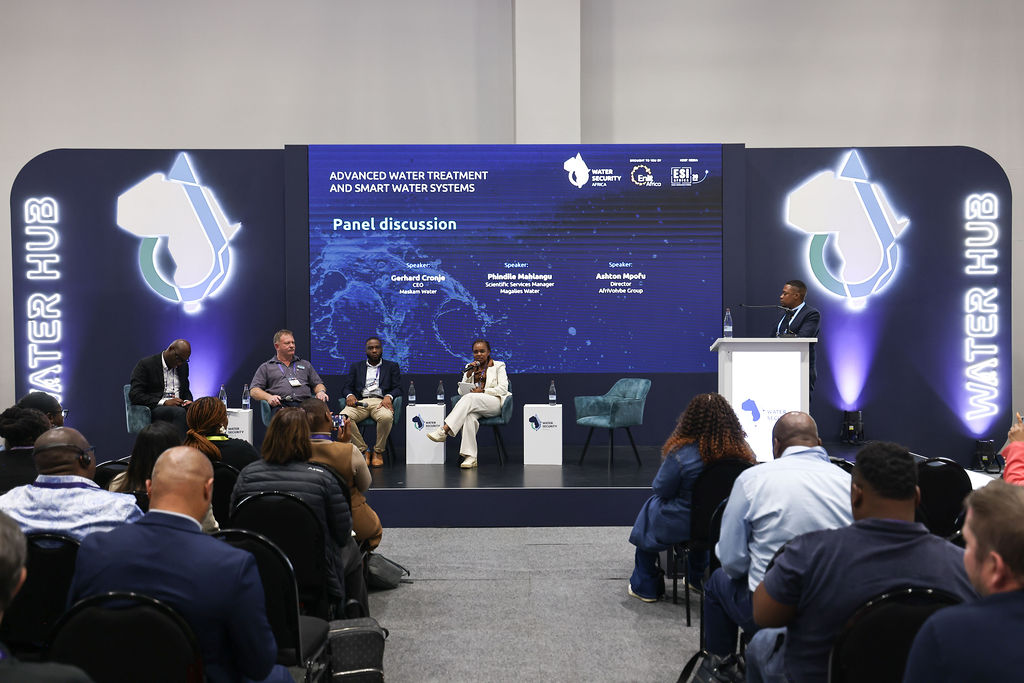
Water Security Africa provides an in-person continuation of the discussion. The Johannesburg platform focuses on industrial water resilience, while Water Security Africa at Enlit Africa brings water and energy stakeholders together at the CTICC in Cape Town from 11 to 13 May 2027.

Explore Water Security Africa (https://apo-opa.co/4hQiDDv)

Projects will also play a central role in improving water security. The Project & Investment Network, in partnership with the African Infrastructure Elites: Projects and People annual print magazine, connects project owners with investors, financiers and solution providers around opportunities that require capital, partnerships and support to move towards implementation.

Submit a project to the Project & Investment Network (https://apo-opa.co/4e0ia0n)

Continuing the water security conversation

The next Water Security & Infrastructure Volume 2027 will continue examining the infrastructure, policy, technology and investment decisions affecting the sector.

The volume’s content is relevant to public and private stakeholders because water risk cuts across municipal services, agriculture, mining, manufacturing, data infrastructure, public health and wider economic development.

Future progress will depend on linking resource management with accountable operations, viable projects and the capital required to deliver them.

Join the Water Security & Infrastructure Volume 2027 waiting list (https://apo-opa.co/3TFdPcb)

Distributed by APO Group on behalf of VUKA Group.


Continue Reading

Business

Harvestfield Strengthens Nigeria’s Healthcare Manufacturing Capacity with Local Production of Next-Generation Mosquito Nets

Published

on

Harvestfield

Operations at the company’s manufacturing facility in the Harvestfield Free Trade Zone, Ogun State, commenced on 13 September 2026, with the facility already supplying a World Bank-funded programme reaching 31 states

LAGOS, Nigeria, September 30, 2026/APO Group/ –Harvestfield Healthcare FZE (www.HarvestfieldHealthcare.com) has commenced commercial production of Synera DuoForte, a next-generation insecticide-treated nets in Nigeria, marking a new phase in the country’s capacity to manufacture a critical malaria prevention intervention locally.


Operations at the company’s manufacturing facility in the Harvestfield Free Trade Zone, Ogun State, commenced on 13 September 2026, with the facility already supplying a World Bank-funded programme reaching 31 states.

The facility is the first of its kind in Nigeria to be wholly Nigerian-owned and manufactures dual active ingredient long-lasting insecticidal nets of the pyrethroid-chlorfenapyr class. Harvestfield manufactures the nets under a manufacturing agreement with GDM Health Products, producing Synera DuoForte, a dual active ingredient long-lasting insecticidal net developed and owned by GDM.

Unlike conventional insecticide-treated nets that rely primarily on pyrethroids, these nets combine a pyrethroid with a second insecticide that works through a different mode of action.

The distinction is significant as mosquito populations across much of Nigeria have developed resistance to pyrethroid insecticides. While conventional nets can continue to provide a physical barrier, resistance can reduce their insecticidal effect. Dual active ingredient nets are designed to remain effective in areas where pyrethroid resistance has taken hold, and the World Health Organisation recommends this class of net for areas with established pyrethroid resistance.

Synera DuoForte is a WHO-prequalified product, developed and held under prequalification by GDM Health Products. The Harvestfield manufacturing site in Ogun State is also included as an approved manufacturing location under that prequalification, and the facility is separately certified by the National Agency for Food and Drug Administration and Control (NAFDAC) and ISO certified. These standards provide the foundation for manufacturing nets for national malaria programmes and other health interventions requiring internationally recognised quality systems.

Jon Bastow, a representative of GDM Health Products, said: “GDM is pleased to strategically partner with Harvestfield to bring Synera DuoForte to Nigeria, the country with the biggest global malaria burden, and support the prequalification of Harvestfield’s Ogun State manufacturing facility to make Synera DuoForte.”

Building the capacity to manufacture our own health products is central to Nigeria’s health security

Commenting on the development, the Coordinating Minister of Health and Social Welfare, Professor Muhammad Ali Pate, said:

“Building the capacity to manufacture our own health products is central to Nigeria’s health security. A Nigeria-based facility producing next-generation insecticide-treated nets to international standard, and already supplying programmes across thirty-one states, is the kind of capability the Renewed Hope agenda was created to build.”

For Harvestfield, the move into manufacturing builds on more than two decades of experience in Nigeria’s vector control sector. The Harvestfield group has operated in Nigerian vector control for 26 years, delivering more than 42 million insecticide-treated nets across all 36 states and serving as an exclusive national distribution partner for WHO-prequalified nets since 2018.

The transition from distribution to manufacturing also strengthens the domestic supply chain for insecticide-treated nets. Producing locally reduces dependence on overseas supply schedules and the 45 to 60-day ocean journey associated with imported nets, while creating greater capacity to respond as malaria control needs and insecticide resistance patterns evolve.

Commenting on the role of local manufacturing in strengthening Nigeria’s healthcare value chain, Dr Abdul Mukhtar, Presidential Initiative for Unlocking the Healthcare Value Chain (PVAC), said:

“PVAC exists to move Nigeria from importing its health products to making them. What matters is not only that a factory exists, but that it meets the standards international buyers accept and can supply at national scale. A facility based in Nigeria doing both is precisely the outcome this initiative was created to unlock.”

The investment also creates local manufacturing, technical, quality and regulatory capabilities that can support the production of other health products over time. For Harvestfield, the net manufacturing facility represents the first platform in a broader effort to build healthcare manufacturing capability in Nigeria.

This development is aligned with the Federal Government’s focus on strengthening domestic production of health products under the Renewed Hope agenda for health, the Presidential Initiative for Unlocking the Healthcare Value Chain (PVAC), and the Nigeria First procurement policy.

www.HarvestfieldHealthcare.com

Distributed by APO Group on behalf of Harvestfield Healthcare FZE.


Continue Reading

Trending