Connect with us
Anglostratits

Energy

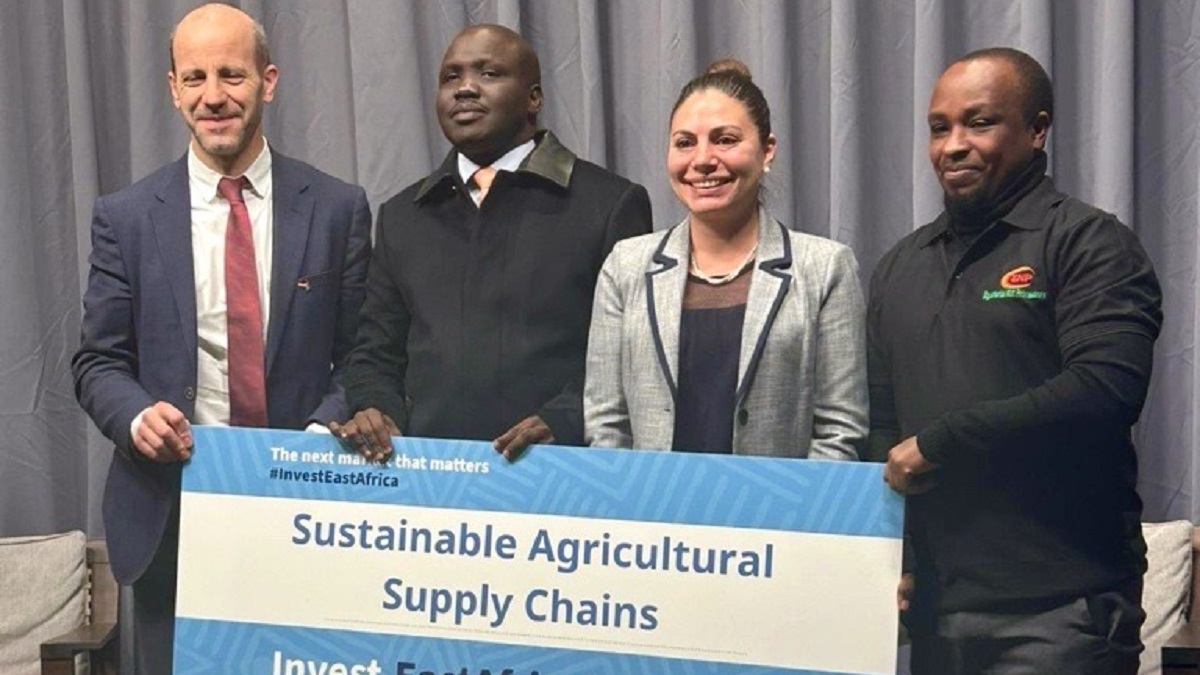
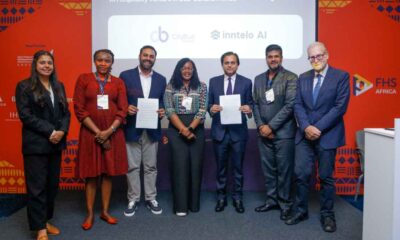
Invest.EastAfrica! – Business and Investment Forum concluded with five new business partnerships to boost economic ties between Germany and East Africa

Published

on

Investment

Participants explored concrete cooperation opportunities in joint investment priority areas, such as agri-business, pharmaceuticals, AI, carbon credits as well as tourism

BERLIN, Germany, January 30, 2026/APO Group/ –The “Invest.EastAfrica! – Business and Investment Forum” concluded at the GIZ (www.GIZ.de/de) Representation in Berlin, launching five new business partnerships by leading European companies such as Bayer, Melitta and ofi with their East African partners. The partnerships are designed to accelerate sustainable trade, stronger value chains and inclusive growth — from digital business models and artificial intelligence to coffee and cashew processing, entrepreneurship, and venture building.

Parliamentary State Secretary to the Federal Minister for Economic Cooperation and Development, Bärbel Kofler“The five partnerships between German and East African private sector actors and the BMZ presented today send a clear message: Germany and the EAC are driving a form of private sector cooperation that delivers economic growth while creating tangible benefits for people. The BMZ will continue its close collaboration with the East African Community to strengthen regional integration and improve reliable investment framework conditions.”

Over three days, companies moved from initial interest to structured project pipelines—agreeing next steps and timelines on a foundation of trust

Over the course of the forum, more than 350 representatives of German companies met a delegation of 60 East African businesses across a three-day programme in Frankfurt am Main and Berlin. Participants explored concrete cooperation opportunities in joint investment priority areas, such as agri-business, pharmaceuticals, AI, carbon credits as well as tourism.

East Africa is fast consolidating its positions as Africa’s economic powerhouse with inter-regional trade expanding by more than 12 percent. At the same time, the East African Community is reviving their efforts to finalise the EAC-EU Economic Partnership Agreement—a timely step, given that the EU currently ranks only as the region’s fourth-largest trading partner. Against this backdrop, the forum—hosted in the State of Hesse, one of Germany’s economic powerhouses—aimed to deepen German-East African economic ties and diversify both regions trade and investment portfolios in an era of mounting geopolitical challenges.

“At a time when the world is once again turning to isolation, we are sending a clear signal for open trade and the diversification of our economic relations. East Africa, with its more than 320 million inhabitants, is an important future market for Hessian companies—dynamic, innovation-strong and strategically relevant,” says Manfred Pentz, Hessian State Minister for International Affairs.

In the same spirit—moving from political intent to practical delivery—Christoph Kannengießer, CEO of the German-African Business Association Afrika-Verein, emphasizes: “Invest.EastAfrica! shows how purposeful dialogue can translate into concrete cooperation. Over three days, companies moved from initial interest to structured project pipelines—agreeing next steps and timelines on a foundation of trust. Diversifying markets is a shared strategic objective, and this forum helps turn it into practical, investable collaboration.”

Building on the momentum of the first edition, the event partners — including Afrika-Verein, the State of Hesse, German Development Cooperation (GIZ), IHK Frankfurt & Friedberg and Berlin, BVWM, as well as the East African Community and the East African Business Council (EABC) — will support the development of ten additional business cooperations to be launched at next year’s forum. These projects are expected to target an estimated 500 million EUR in investment volume and involve German companies such as Deutsche Bank, Commerzbank, ODDO Bank, Lufthansa, Fresenius alongside their East African partners such as Cassava, Bedi Investment, Hormuud and Equatorial Nuts. “As business community of East African we are welcoming the rich results of the business forum and are ready to implement these agreed cooperation projects and more to boost economic ties with Germany.”, concluded Jaswinder Bedi, Vice-President of the East African Business Council.

Distributed by APO Group on behalf of GIZ.


Energy

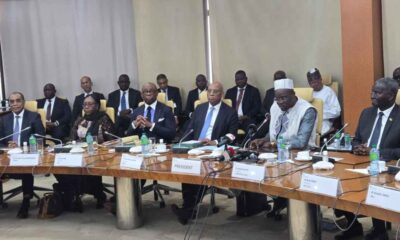
High-Level Minister Roundup to Headline African Energy Week 2026

Published

on

African Energy Chamber

African Energy Week 2026 will convene ministers from Algeria, Ghana, Senegal, Zambia and Niger to spotlight oil, gas expansion, reforms and investment opportunities continentwide

CAPE TOWN, South Africa, March 13, 2026/APO Group/ –A high-level ministerial roundup will take center stage at this year’s African Energy Week (AEW) 2026 – taking place in Cape Town from 12–16 October –, convening some of the continent’s most influential energy leaders at a defining moment for Africa’s oil, gas and power sectors. As hydrocarbon expansion converges with accelerating energy transition strategies, the gathering is set to spotlight real-time project execution, regulatory reform and cross-border infrastructure that are actively reshaping Africa’s energy future.


Confirmed ministers to date include Algeria’s Minister of Energy and Renewable Energies Mourad Adjal, Ghana’s Minister for Energy and Green Transition Dr. John Abdulai Jinapor, Senegal’s Minister of Energy, Petroleum and Mines Birame Soulèye Diop, Zambia’s Minister of Energy Makozo Chikote and Niger’s Minster of Petroleum Hamadou Tinni.


Fresh from a March OPEC+ decision to lift output to 977,000 barrels of oil per day (bpd), Algeria enters AEW 2026 amid a $60 billion sector transformation. The country is also advancing a 500-well exploration drive and accelerating its 1.48 GW “Project of the Century” solar rollout. Gas exports to Europe remains central to the country, supported by hydrogen corridor planning and refinery expansion aimed at boosting capacity to 50 million tons by 2029.


Following license extension for Jubilee and TEN to 2040 and the late-2025 restart of the Tema Oil Refinery, Ghana is pushing a $3.5 billion upstream reinvestment plan while settling $500 million in gas arrears. A 1,200 MW state thermal plant and expanded gas processing at Atuabo anchor its gas-to-power shift, alongside a renewed upstream push in the Voltaian Basin.

The participation of these distinguished ministers underscores the scale of opportunity unfolding across Africa’s energy landscape and the urgency of aligning policy with capital


Senegal’s delegation comes on the back of strong production momentum, with the Sangomar oil field delivering 36.1 million barrels in 2025, outperforming forecasts, while the Greater Tortue Ahmeyim LNG development ramped up to 2.9 million tons per annum following first gas. Dakar is now prioritizing domestic gas through refinery upgrades at the SAR refinery and preparations for Sangomar Phase 2 to push output beyond 100,000 bpd.


Zambia is redefining its power mix after drought-induced hydro shortfalls. New solar capacity – including the 200 MW Chisamba expansion and 136 MW Itimpi Phase 2 – is part of a broader 2,500 MW diversification drive. Cabinet has approved major regional fuel pipelines, while the Energy Single Licensing System fast-tracks approvals. Lusaka targets 10 GW generation by 2030, with solar and wind rising to one-third of supply.

Niger’s presence reflects its emergence as a serious oil exporter, with the fully operational 1,950-km Niger-Benin pipeline now moving up to 90,000 bpd to international markets. Alongside uranium expansion and renewed cooperation with Algeria on upstream assets, Niamey is advancing digital oversight reforms and reinforcing energy sovereignty amid evolving geopolitical dynamics.


“The participation of these distinguished ministers underscores the scale of opportunity unfolding across Africa’s energy landscape and the urgency of aligning policy with capital,” says NJ Ayuk, Executive Chairman, African Energy Chamber. “Their leadership reflects a continent moving decisively from strategy to execution, creating a platform where investors can engage directly with the policymakers shaping Africa’s next wave of oil, gas and energy growth.”


At AEW 2026, this ministerial cohort will be well-positioned to offer investors direct insight into Africa’s most dynamic energy markets – where new barrels, new pipelines and new megawatts are reshaping regional growth trajectories in real time.

Distributed by APO Group on behalf of African Energy Chamber.

Continue Reading

Business

North African Power Could Be Europe’s Next Energy Lever

Published

on

Energy Capital

As Europe seeks diversified and lower-carbon energy supplies, emerging electricity interconnections and gas infrastructure across North Africa – including Libya’s grid ambitions – are drawing investor attention ahead of the Invest in African Energy Forum in Paris

PARIS, France, March 19, 2026/APO Group/ –For decades, Europe’s energy relationship with North Africa has centered primarily on hydrocarbons – Algerian pipeline gas, Libyan oil and LNG shipments from the Mediterranean basin. At the same time, another energy link is gaining momentum: electricity. With growing renewable capacity, expanding transmission networks and new cross-Mediterranean interconnectors under development, North Africa’s power sector is emerging as a strategic complement to Europe’s energy system.


The trend is already visible in major infrastructure projects linking the two regions. The ELMED interconnector, a planned high-voltage subsea cable connecting Tunisia to Sicily, will allow bidirectional electricity flows between the African and European grids when it comes online later this decade. The project will transmit up to 600 MW of power through a 220-km cable, helping integrate North African electricity markets with Europe and enabling exports when surplus generation is available.

Libya’s Untapped Electricity Potential

Libya’s electricity sector remains largely domestically focused today, but the country sits at the center of a potential North African power corridor. Discussions between Libya, Algeria and Tunisia have already explored an “electric corridor” project linking their grids, a step that could eventually connect with broader Mediterranean power systems feeding into Europe.

Such initiatives would allow electricity generated in North Africa – whether from gas-fired plants, renewables or hybrid systems – to flow across borders and ultimately toward European markets. For Libya in particular, electricity exports could complement its longstanding role as a hydrocarbon supplier to Europe.

The country already holds substantial gas resources and power-generation capacity, much of which is fueled by domestic natural gas. With targeted investment in grid modernization, renewable integration and regional transmission infrastructure, Libya could evolve into a flexible power exporter within a wider Mediterranean electricity market.

Complementing LNG With Power

Electricity trade does not replace Africa’s LNG expansion – it complements it. Across the continent, gas developments in countries such as Mozambique, Senegal-Mauritania and Nigeria are strengthening Africa’s position in global LNG supply chains.

North Africa’s electricity ambitions add another layer to this energy relationship. Gas-fired generation can provide stable baseload power for export through cross-Mediterranean cables, while renewables help reduce emissions intensity and align with Europe’s decarbonization targets.

For European buyers facing volatile energy markets and geopolitical supply risks, this hybrid model – LNG imports paired with electricity interconnections – offers diversification across both fuels and delivery systems.

New Opportunities for Energy Investors

These developments are set to inform discussions at the upcoming Invest in African Energy Forum (IAE) in Paris, where government officials, utilities and infrastructure investors will assess emerging cross-border energy opportunities. Participation from the Renewable Energy Authority of Libya, including Chairman Dr. Abdulsalam Elansari, signals growing Libyan interest in positioning the country within this evolving regional power landscape.

For investors, the appeal lies not only in generation projects but also in the infrastructure connecting them: high-voltage transmission lines, subsea cables, storage systems and grid modernization.

Electricity trade between North Africa and Europe remains at an early stage, but the foundations are forming rapidly. As Europe accelerates its search for diversified and lower-carbon energy sources, North Africa’s combination of gas resources, solar potential and geographic proximity could transform the region into a strategic electricity partner.

If the current wave of interconnectors and regional grid initiatives succeeds, the Mediterranean may soon carry not only pipelines and LNG tankers – but high-voltage power as well. And for investors gathering in Paris, that emerging electricity corridor could become one of the most compelling energy stories linking Africa and Europe.

IAE 2026 (https://apo-opa.co/40Fn8sA) is an exclusive forum designed to connect African energy markets with global investors, serving as a key platform for deal-making in the lead-up to African Energy Week. Scheduled for April 22–23, 2026, in Paris, the event will provide delegates with two days of in-depth engagement with industry experts, project developers, investors and policymakers. For more information, visit www.Invest-Africa-Energy.com. To sponsor or register as a delegate, please contact sales@energycapitalpower.com

Distributed by APO Group on behalf of Energy Capital & Power.

Continue Reading

Energy

Amapá’s Strategic Push into Caribbean Energy: Brazil’s Northern Frontier in Spotlight at Caribbean Energy Week (CEW) 2026

Published

on

Caribbean

At Caribbean Energy Week in Paramaribo, the Amapá Economic Development Agency – led by President Wandenberg Pitaluga Filho – will outline how Brazil’s northern state is building ports, logistics and exploration capacity to connect with regional energy investment flows

PARAMARIBO, Suriname , Marc 19, 2026/APO Group/ –The Amapá Economic Development Agency will bring Brazil’s northern frontier into Caribbean energy conversations at Caribbean Energy Week (CEW) 2026, where Wandenberg Pitaluga Filho, the agency’s president, is set to address delegates on strategic investment, logistics and cross‑border energy opportunities.


Amapá’s interest in the energy sector has grown alongside federal exploration initiatives in Brazil’s Equatorial Margin – a deepwater frontier stretching along the northern Atlantic coast that includes the offshore area north of the state. In October 2025, Brazilian state‑owned oil firm Petrobras received an environmental operating license from the country’s environmental regulator IBAMA to drill an exploratory well in Block FZA‑M‑059, located roughly 175 km off the coast of Amapá. The operation, focused on gathering geological data, marks a significant milestone for northern Brazil’s entry into frontier exploration.


This milestone reflects broader efforts by Amapá to tie its economic development strategy to emerging energy opportunities. The state government and the Amapá Economic Development Agency have actively engaged with industry players and engineering firms on logistics and port infrastructure planning, including feasibility studies for offshore support facilities that could serve oil and gas operations. In late 2025, Amapá officials held technical meetings with DTA Engenharia Portuária to evaluate possible offshore port locations between Santana and Calçoene – a project aimed at creating dedicated logistics capacity for offshore energy activity.


For Caribbean energy stakeholders, Amapá’s combination of exploration progress and infrastructure planning shows how subnational actors can turn geographic proximity and federal initiatives into regional linkages. With offshore developments in Suriname and Guyana ramping up to the north, Amapá’s emerging ports, logistics hubs and service‑support capacity could become a key bridge for integrating Brazilian capabilities into the Caribbean energy value chain.


Brazil itself remains a heavyweight in the energy landscape. As Latin America’s largest oil producer with deep technical expertise and a robust oilfield services ecosystem, the country’s industrial and logistics networks could complement Caribbean basin operations, offering scale and synergies for complex offshore campaigns.


Through its participation at CEW 2026, the Amapá Economic Development Agency will present these opportunities to international investors and regional policymakers, with discussions expected to focus on strengthening cross‑border trade, expanding port infrastructure, and fostering collaboration between Brazilian companies and operators active in the Guyana–Suriname basin.

With offshore exploration ramping up along Brazil’s northern coast and growing investment in Guyana and Suriname, regional collaboration is increasingly central to the Caribbean energy landscape. Amapá’s participation at CEW positions the state as a practical partner in connecting production, services and investment across borders, integrating Brazil’s northern frontier into the emerging Caribbean energy corridor and demonstrating its role in building the infrastructure and partnerships that will shape the region’s next wave of development.

Join us in shaping the future of Caribbean energy. To participate in this landmark event, please contact sales@energycapitalpower.com.

Distributed by APO Group on behalf of Energy Capital & Power.

Continue Reading

Trending