

Business
Introducing Samsung Galaxy Z Flip4 and Galaxy Z Fold4: Samsung’s Most Versatile Devices
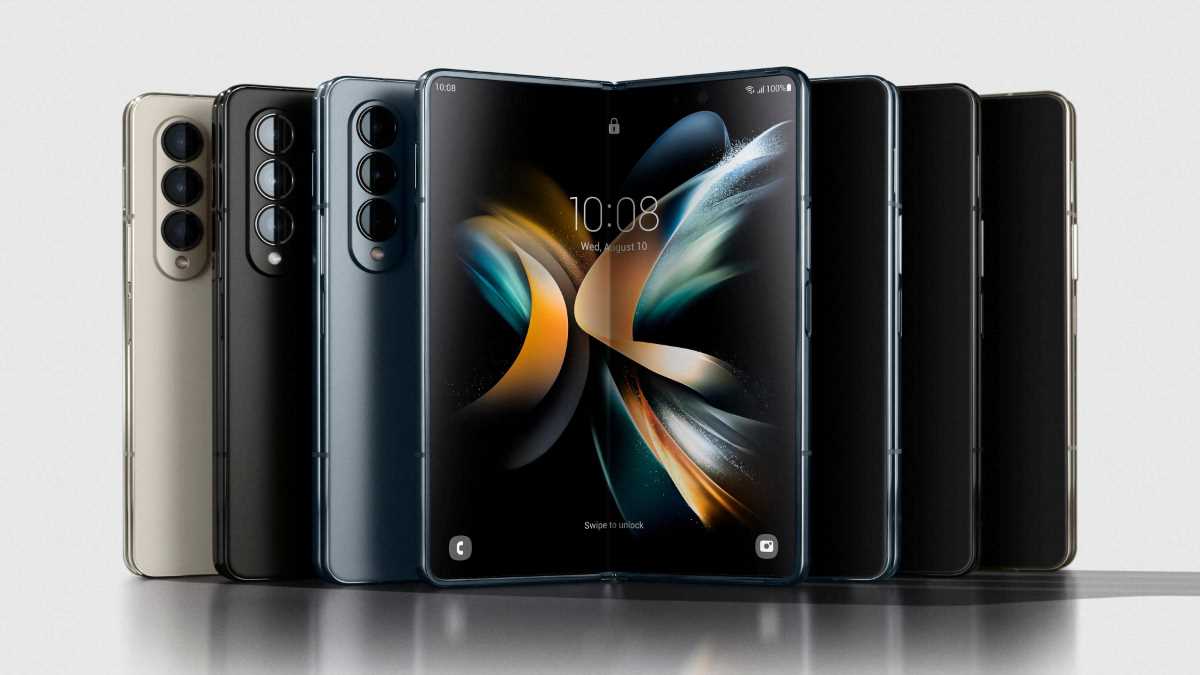
Samsung pushes the boundaries of smartphone versatility with its fourth-generation foldables, providing enhanced productivity, customisation capabilities, and FlexCam experiences
JOHANNESBURG, South Africa, August 11, 2022/APO Group/ —
Samsung (www.Samsung.com) has announced the next generation of ground-breaking foldable smartphones: Galaxy Z Flip4 and Galaxy Z Fold4. Both devices feature customisable form factors, tailored experiences, and upgraded performance. Now in its fourth generation, Galaxy Z series continues to break from convention to deliver new, impactful interactions that enhance everyday life.
“Samsung Galaxy foldables are built on the foundation of our openness philosophy, enabling new possibilities with complete customisation both inside and out. Created in collaboration with our world-class partners, the next foldable devices offer unparalleled mobile experiences that meet the needs of our most dynamic users,” said Dr. TM Roh, President and Head of Mobile eXperience Business at Samsung Electronics. “Through our unwavering focus, excitement for the foldables continues to grow. We’ve successfully transformed this category from a radical project to a mainstream device line-up and enjoyed by people worldwide.”
As a testament to Samsung’s dedication to superior craftsmanship, every component in both form factors has been thoroughly analysed to deliver a truly optimised experience to ensure that every consumer has a device to fit their needs. The Galaxy Z Flip4 builds on the success of Samsung’s iconic form factor, adding key features, including an upgraded camera experience, a larger battery [1] and expanded customisation, while maintaining its ultra-compact design. The Galaxy Z Fold4 opens up new possibilities for users by delivering Samsung’s most comprehensive smartphone experience to-date, offering shape-shifting design, immersive displays and PC-like multitasking features, in addition to advanced camera technology and powerful mobile processors.
Galaxy Z Flip4, the Ultimate Self-expression Tool Inside and Out
The Galaxy Z Flip4 enhances our users’ favourite features, making it the ultimate tool for self-expression. Its compact clamshell design offers unique experiences, so you can shoot hands-free video or capture full group selfies at various angles by partially folding Z Flip4 to activate FlexCam [2]. These can even be enjoyed on users’ favourite apps [3]. Thanks to Samsung’s partnership with Meta, FlexCam is optimised for popular social platforms, including Instagram, WhatsApp and Facebook. Do more than ever with Z Flip4 by taking high-quality selfies right from the Cover Screen by leveraging the main camera with the upgraded Quick Shot. Start high-quality video recording in Quick Shot mode and then seamlessly switch to Flex mode to continue recording hands-free without stopping the video – ideal for content creators and vloggers. The users are now able to take selfies in Portrait Mode and see preview in actual photo ratio when using Quick Shot. With an upgraded camera equipped with a 65 percent brighter sensor[4] powered by the Snapdragon® 8+ Gen 1 Mobile Platform, photos and videos are crisper and more stable – day or night.
Z Flip4 is crafted to go truly hands-free – doing more without ever opening the phone. Make calls, reply to texts, unlock the car [5] and even control the SmartThings Scene widget [6], all from the Cover Screen.
Galaxy Z Flip4 can capture, watch and connect longer between charges with the expanded 3,700mAh battery [7]. With Super-Fast Charging, now supported on Z Flip4, charge up to 50 percent in around 30 minutes [8], keeping users connected when they’re running low.
With the slimmer hinge, straightened edges, contrasting hazed back glass and glossy metal frames, the design is our most refined yet. The users can fully customise the Z Flip4 inside and out, with Galaxy Themes on both Cover and Main Screen to complement their style with custom fonts, icons and designs. Plus, users can create their own Cover Screen with new clock designs and backgrounds in various formats such as images, GIFs and even video[9].
Galaxy Z Fold4, a Multi-Tasking Powerhouse with Ultimate Performance
The Galaxy Z Fold4 is the result of Samsung Galaxy’s enduring smartphone innovation and our most powerful smartphone yet. Z Fold4 combines Samsung’s collective mobile technology expertise to create a device with increased functionality whether opened, closed, or in Flex mode[10]. Furthermore, it is Samsung’s first device to ship with Android 12L, a special version of Android created by Google for large-screen experiences, including foldables.
Multitasking on Z Fold4 is easier than ever, so users can get more done on the move. The new Taskbar [11] provides a layout similar to your PC, offering access to your favourite and recent apps. Multitasking is also more intuitive, thanks to new swipe gestures [12]. Instantly switch full-screen apps to pop-up windows or split your screen in half for more ways to multitask [13].
Samsung’s partnerships with Google and Microsoft take multitasking to the next level. Google apps, including Chrome and Gmail now support drag-and-drop, allowing users to quickly copy and paste links, photos and more from one app to another. With Google Meet, users can now connect with more people while enjoying virtual co-activities, including co-watching videos on YouTube or playing games together on a video call [14]. Microsoft’s full Office suite and Outlook take advantage of the foldable display, providing more information on the screen and faster ways to interact with the content. The multitasking experience is complete with S Pen [15] functionality, enabling on-the-go drawing and notetaking with streamlined storage inside the Standing Cover with Pen case [16].
Galaxy Z Fold4 takes stunning photos and videos with an upgraded 50MP wide lens and 30x Space Zoom [17] lens. A variety of camera modes, including the larger Zoom map activated on Capture View Mode, Dual Preview, and Rear Cam Selfie are custom-built to take advantage of the unique form factor for increased capturing flexibility. And with the larger pixel size, a 23 percent brighter sensor [18], and enhanced processing power, users can capture clear images even at night.
Content is even more immersive and distinctive on the 7.6-inch Main Screen [19], with a brighter screen, a 120Hz adaptive refresh rate [20], and a less visible Under Display Camera (UDC) featuring a new scatter-type sub-pixel arrangement. Popular social media apps like Facebook are optimised for the large-screen experience to make content more enjoyable. Or open your favourite streaming entertainment service apps like Netflix [21] and watch hands-free with Flex mode. For non-optimised apps, users can even control the device without disrupting the content with the new Flex Mode Touchpad [22], offering accuracy while pausing, rewinding, and playing videos, or zooming in and out of content while the device is in Flex mode.
Games are snappier too thanks to the powerful Snapdragon® 8+ Gen 1 Mobile Platform and hyper-fast 5G [23]. With a slimmer hinge, lighter weight, and even narrower bezels, the wider screen enables easier one-handed interactions while using the Cover Screen [24].
Samsung continues its barrier-defying innovation journey to deliver the level of durability consumers expect, both in and out. With our Armour Aluminium frames and hinge cover along with exclusive Corning® Gorilla® Glass Victus®+ on the Cover Screen and rear glass, Z Flip4 and Z Fold4 are our toughest foldables ever. Durability of the Main Screen panel is also enhanced thanks to the optimised layer structure, helping to reduce damage from external shock. In addition, both Z Flip4 and Z Fold4 are equipped with IPX8 [25] water resistance, so users can worry less if they get caught in the rain.

Galaxy Buds2 Pro, Premium Design with the Ultimate Listening Experience
Joining the Galaxy Z series are Galaxy Buds2 Pro – Samsung’s new top-of-the-line earbuds that provide Samsung’s most immersive wireless audio experience with a new, compact design, and seamless connectivity that is perfect for any aspect of your everyday life.
Appreciate every musical interlude with superior Hi-Fi 24bit Audio [26], which offers high-dynamic range helping you feel connected to the content you’re listening to with crystal-clear resolution. With the new Samsung seamless codec [27] (SSC HiFi), quality music is enabled to transfer without a pause, and the new coaxial 2-way speaker makes those sounds richer than ever.
The new compact, ergonomic design is 15 percent smaller [28], with a secure fit that is engineered to prevent rotation, making it the perfect fitness companion. Take calls on-the-go with powerful ANC [29] to eliminate outside noise. The new Buds2 Pro allows users to escape into their own world and simultaneously stay connected to their life.
When you need to answer an urgent call while enjoying a gaming session or a movie on your tablet, the Buds2 Pro can seamlessly switch the audio connection to your phone with a touch of a finger. The Buds2 Pro now features Auto Switch [30] to provide effortless transition from your favourite TV Show to take a call from your loved ones.
And if you happen to misplace your Buds2 Pro on your commute SmartThings Find now makes locating them fast and easy whether they’re inside their cradle or not.
Galaxy for the Planet
Since the launch of the Galaxy S22 series, Samsung has incorporated recycled materials not just in our packaging, but also in the hardware of our new products. These are the first steps in our Galaxy for the Planet initiative, which includes our continued incorporation of recycled plastics and the creation of new materials in partnership with sustainability partners. As we continue to pursue innovations in sustainable manufacturing, we are proud to announce that more than 90% of the new Galaxy Buds2 Pro is made with recycled materials [31]. The new Galaxy Z series also incorporates ocean-bound plastics into key components and 100 percent recycled paper for its packaging. We also reduced volume of the packaging up to 58% [32] compared to the first-generation Galaxy foldables. This equates to an avoidance of approximately 10,000 tons of carbon emissions from transportation this year [33].
Availability
Galaxy Z Flip4 complements users’ styles with premium designs in legacy colours: Bora Purple and Graphite and new colours: Pink Gold and Blue [34]. The Galaxy Z Fold4 and Standing Cover with Pen [35] case are offered in refined colours that include Grey Green, Beige and Phantom Black.
The Galaxy Z Flip4 will be made available at a recommended retail price of R21 999 and Galaxy Z Fold4 for R37 999 [36]. Both devices will also be accessible on 24 or 36 months’ contracts from network operators. Customers who pre-order either Galaxy Z Flip4 or Galaxy Z Fold4 from 11 August to 31 August will get the newly launched Galaxy Watch5 for only R29 pm. With the Samsung trade-in program customers who trade-in their old devices can receive R10 000 cashback or R400 off their contracts and 1-year free Samsung Care Plus screen protection valued at R1 999. [37]
For more information about Galaxy Z Flip4 and Z Fold4, visit https://bit.ly/3JP2NaE, https://bit.ly/3zQxaJu or https://bit.ly/3bNeYZa.
| Galaxy Z Flip4 | ||
| Main Screen | 6.7-inch FHD+* Dynamic AMOLED 2X Infinity Flex Display (2640 x 1080, 22:9) 120Hz adaptive refresh rate (1~120Hz) *Measured diagonally, Galaxy Z Flip4’s Main Screen size is 6.7-inch in the full rectangle and 6.6-inch with accounting for the rounded corners; actual viewable area is less due to the rounded corners and camera hole. | |
| Cover Screen | 1.9-inch Super AMOLED Display* 260 x 512 *Measured diagonally, Galaxy Z Flip4’s Cover Screen size is 1.9-inch in the full rectangle and 1.8″ with accounting for the rounded corners; actual viewable area is less due to the rounded corners. | |
| Folded | 71.9 x 84.9 x 17.1mm (Hinge) – 15.9mm (Sagging) | |
| Unfolded | 71.9 x 165.2 x 6.9mm *The thickness of Galaxy Z Flip4 when unfolded does not include the frame of the Main Screen. | |
| Weight | 187g | |
| Front Camera | 10MP Selfie Camera F2.4, Pixel size: 1.22μm, FOV: 80˚ | |
| Rear Dual Camera | 12MP Ultra Wide CameraF2.2, Pixel size: 1.12μm, FOV: 123˚ | |
| 12MP Wide-angle Camera Dual Pixel AF, OIS, F1.8, Pixel size: 1.8μm, FOV: 83˚ | ||
| 4㎚ Octa-Core Processor | ||
| 8GB RAM with 256GB internal storage *Availability may vary by market or channel. Actual storage space may vary by market, model, file size and format. | ||
| 3,700 mAh (typical) dual battery *Typical value tested under third-party laboratory condition. Typical value is the estimated average value considering the deviation in battery capacity among the battery samples tested under IEC 61960 standard. Rated (minimum) capacity is 3595mAh. Actual battery life may vary depending on network environment, usage patterns and other factors. | ||
| Super-Fast Charging*: Up to 50% charge in around 30mins with 25W adapter** or higher Fast Wireless Charging 2.0*** Wireless PowerShare**** *Wired charging compatible with QC2.0 and AFC. Results from internal Samsung lab tests, conducted with 25W Travel Adapter while it has 0% of power remaining, with all the services, features and screen turned off. Actual charging speed may vary depending on the actual usage, charging conditions and other factors. **25W Power Adapter sold separately. Use only Samsung-approved chargers and cables. ***Wireless charging compatible with WPC ****Wireless PowerShare is limited to Samsung or other brand smartphones with WPC Qi wireless charging, such as Galaxy Z Fold4, Z Flip4, S22 series, Z Fold3 5G, Z Flip3 5G, S21 FE 5G, S21 series, Z Fold2, Note20 series, S20 series, Z Flip, Note10 series, S10 series, S9 series, S8 series, S7 series, S6 series, Note9, Note8, Note FE, Note5, and wearables such as Galaxy Buds2 Pro, Buds2, Buds Pro, Buds Live, Watch5, Watch5 Pro, Watch4, Watch4 Classic, Watch3, Watch Active2, Watch Active, Gear Sport, Gear S3, Galaxy Watch, and Galaxy Buds. May not work with certain accessories, covers, or other brand devices. May affect call reception or data services, depending on your network environment. | ||
| IPX8 *IPX8 is based on test conditions for submersion in up to 1.5 meters of freshwater for up to 30 minutes. Not advised for beach or pool use. Not dust-resistant. | ||
| Android 12 One UI 4.1.1 | ||
| 5G*, LTE**, Wi-Fi 802.11 a/b/g/n/ac/ax, Bluetooth® v5.2 *5G services are only supported in 5G network enabled locations. Requires optimal 5G connection. Actual speed may vary depending on market, carrier, and user environment. **Availability of LTE model varies by country and carrier. Actual speed may vary depending on market, carrier, and user environment. | ||
| Capacitive Fingerprint sensor(side), Accelerometer, Barometer, Gyro sensor, Geomagnetic sensor, Hall sensor, Proximity sensor, Light sensor | ||
| Samsung Knox, Samsung Knox Vault | ||
| One Nano SIM* and one eSIM** *SIM card sold separately. Availability may vary depending on market and carrier. **eSIM availability may vary depending on software version, region and carrier. Check with your carrier if your mobile network plan supports eSIM. | ||
| Bora Purple, Graphite, Pink Gold, Blue Frame(Silver/Black/Gold) * Availability may vary by market. |
| Galaxy Z Fold4 | ||
| Display | Main Screen | 7.6-inch QXGA+* Dynamic AMOLED 2X Infinity Flex Display (2176 x 1812, 21.6:18) 120Hz adaptive refresh rate (1~120Hz) *Measured diagonally, Galaxy Z Fold4’s Main Screen size is 7.6-inch in the full rectangle and 7.4-inch with accounting for the rounded corners; actual viewable area is less due to the rounded corners. |
| Cover Screen | 6.2-inch HD+ Dynamic AMOLED 2X Display(2316 x 904, 23.1:9) 120Hz adaptive refresh rate (48~120Hz) *Measured diagonally, Galaxy Z Fold4’s Cover Screen size is 6.2-inch in a full rectangle and 6.1-inch accounting for the rounded corners. The actual viewable area is smaller due to the rounded corners and camera hole. | |
| Dimension & Weight | Folded | 67.1 x 155.1 x 15.8mm(Hinge) ~ 14.2mm(Sagging) |
| Unfolded | 130.1 x 155.1 x 6.3mm | |
| Weight | 263g | |
| Camera | Cover Camera | 10MP Selfie CameraF2.2, Pixel size: 1.22μm, FOV: 85˚ |
| Under display camera | 4MP Under Display Camera F1.8, Pixel size: 2.0μm, FOV: 80˚ | |
| Rear Triple Camera | 12MP Ultra Wide Camera F2.2, Pixel size: 1.12μm, FOV: 123˚ 50MP Wide-angle Camera Dual Pixel AF, OIS, F1.8, Pixel size: 1.0μm, FOV: 85˚ 10MP Telephoto Camera PDAF, F2.4, OIS, Pixel size: 1.0μm, FOV: 36˚ *30X Space Zoom includes 3x Optical Zoom and 30x digital zoom with AI Super Resolution technology. Zooming in past 3x may cause some image deterioration | |
| AP | 4㎚ Octa-Core Processor | |
| Memory | 12GB RAM with 1TB internal storage 12GB RAM with 512GB internal storage 12GB RAM with 256GB internal storage *Availability may vary by market or channel. Actual storage space may vary by market, model, file size and format. | |
| Battery | 4,400mAh (typical) dual battery* *Typical value tested under third-party laboratory condition. Typical value is the estimated average value considering the deviation in battery capacity among the battery samples tested under IEC 61960 standard. Rated (minimum) capacity is 4275mAh. Actual battery life may vary depending on network environment, usage patterns and other factors. | |
| Charging | Super-Fast Charging* : Up to 50% charge in around 30mins with 25W adapter** or higher Fast wireless charging 2.0*** Wireless PowerShare**** *Wired charging compatible with QC2.0 and AFC. Results from internal Samsung lab tests, conducted with 25W Travel Adapter while it has 0% of power remaining, with all the services, features and screen turned off. Actual charging speed may vary depending on the actual usage, charging conditions and other factors. **25W Power Adapter sold separately. Use only Samsung-approved chargers and cables. ***Wireless charging compatible with WPC ****Wireless PowerShare is limited to Samsung or other brand smartphones with WPC Qi wireless charging, such as Galaxy Z Fold4, Z Flip4, S22 series, Z Fold3 5G, Z Flip3 5G, S21 FE 5G, S21 series, Z Fold2, Note20 series, S20 series, Z Flip, Note10 series, S10 series, S9 series, S8 series, S7 series, S6 series, Note9, Note8, Note FE, Note5, and wearables such as Galaxy Buds2 Pro, Buds2, Buds Pro, Buds Live, Watch5, Watch5 Pro, Watch4, Watch4 Classic, Watch3, Watch Active2, Watch Active, Gear Sport, Gear S3, Galaxy Watch, and Galaxy Buds. May not work with certain accessories, covers, or other brand devices. May affect call reception or data services, depending on your network environment. | |
| Water Resistance | IPX8 *IPX8 is based on test conditions for submersion in up to 1.5 meters of freshwater for up to 30 minutes. Not advised for beach or pool use. Not dust-resistant. | |
| OS | Android 12L One UI 4.1.1 | |
| Network and Connectivity | 5G*, LTE**, Wi-Fi 6E*** 802.11 a/b/g/n/ac/ax, Bluetooth® v5.2 *5G services are only supported in 5G network enabled locations. Requires optimal 5G connection. Actual speed may vary depending on market, carrier, and user environment. **Availability of LTE model varies by country and carrier. Actual speed may vary depending on market, carrier, and user environment. ***Wi-Fi 6E network availability may vary by market, network provider and user environment. Requires optimal connection. Will require a Wi-Fi 6E router. | |
| Sensors | Capacitive Fingerprint sensor (side), Accelerometer, Barometer, Gyro sensor, Geomagnetic sensor, Hall sensor, Proximity sensor, Light sensor | |
| Security | Samsung Knox, Samsung Knox Vault | |
| SIM Card | Up to two Nano SIM* and one eSIM** *SIM card sold separately. Availability may vary depending on market and carrier. **eSIM availability may vary depending on software version, region and carrier. Check with your carrier if your mobile network plan supports eSIM. | |
| Colours | GreyGreen, Phantom Black, Beige [Samsung.com Exclusive] Burgundy * Availability may vary by market. |
| Galaxy Buds2 Product Specifications | |
| Colour | Graphite, White, Bora Purple*Available colours may vary by market, carrier or retailer. |
| Dimensions & Weight | Earbud: 19.9 x 21.6 x 18.7 mm, 5.5gCharging Case: 50.1 x 50.2 x 27.7 mm, 43.4g |
| Speaker | Custom Coaxial 2-way (Tweeter + Woofer) Speaker |
| Sound Quality | 24bit Hi-Fi*360 Audio with Direct Multi-Channel***24-bit Hi-Fi sound requires Samsung Galaxy devices running OneUI 4.0 or higher and Galaxy Buds2 Pro. 24-bit Hi-Fi sound support may vary depending on the application.**Direct Multi-channel is supported with Android One UI version 4.1.1 or later, 360 Audio Supports One UI 3.1 or later. |
| ANC & Ambient Sound | ANC*+High SNR Microphone (2 outer + 1 inner)** Ambient Sound Voice Detect*****With 3 high SNR (Signal to Noise Ratio) microphones, Galaxy Buds2 Pro can eliminate small noises by capturing lower level sounds.***Galaxy Buds2 Pro can distinguish between noise and human voices. When you speak, it switches temporarily to Ambient mode and reduces media volume so that you can hear conversations without taking out your earbuds. |
| Battery Capacity | Earbuds: 61mAh (typical)Charging Case: 515mAh (typical)** The typical capacity has been tested under third party laboratory conditions. The typical capacity is the estimated average capacity considering the deviation in battery capacity among the battery samples tested under the IEC 61960-3 standard. The rated capacity is 58mAh (earbuds), 500mAh (charging case). Actual battery life may vary depending on the network environment, usage patterns, and other factors. |
| Play Time | Up to 5 hours / Total up to 18 hours (ANC on)Up to 8 hours / Total up to 29 hours (ANC off)*Earbuds provide up to 5hrs play time with ANC on (up to 8 hrs with ANC off), while the case provides up to 18 hours of battery life (up to 29 hours with ANC off) when the case and earbuds are charged to 100%. Based on internal testing. Audio playback time tested by pairing a pre-production Galaxy Buds2 Pro to a recently released Galaxy smartphone with default settings** including ANC on. Actual battery life may vary and depend on usage conditions, settings, number of times charged, Bluetooth signal strength, and other factors** Default setting refers to the original setting for the Galaxy Buds2 Pro when it was first released, simply with the power turned on. |
| Talk Time | Up to 3.5 hours / Total up to 14h (ANC on)Up to 4.0 hours / Total up to 15h (ANC off)*Earbuds provide up to 3.5hrs voice call time with ANC on (up to 4 hrs with ANC off), while the case provides up to 14 hours of battery life (up to 15 hours with ANC off) when the case and earbuds are charged to 100%. Based on internal testing. Voice call time tested by pairing pre-production Galaxy Buds2 Pro to a recently released Galaxy smartphone with default settings including ANC on. Actual battery life may vary and depend on usage conditions, settings, number of times charged, Bluetooth signal strength, and other factors. |
| Connectivity | Bluetooth® 5.3, Auto SwitchingCodec: Samsung Seamless Codec HiFi (Samsung Proprietary)AAC, SBC |
| Sensor | Accelerometer, Gyro, Proximity, Hall, Touch, Voice Pickup Unit (VPU) |
| Compatibility | Android 8.0 or higher with more than 1.5GB of RAM*Some features may not be available on non-Samsung devices. Availability may vary by market, operator or connected device. |
| Water Resistance | IPX7*IPX7 is based on laboratory test conditions for submersion in up to 1 meter of fresh water for up to 30 minutes. Not advised for beach or pool use. Charging case is not water resistant. If the earbuds are damaged, they are not guaranteed to be water resistant. If the earbuds or your hands are wet, they must be dried thoroughly prior to handling or placing into the charging case. |
[1] Compared to Galaxy Z Flip3 5G.
[2] FlexCam refers to camera experience using Flex mode. Flex mode supported at angles between 75° and 115°.
[3] Compatibility may differ by application.
[4] Compared to Galaxy Z Flip3 5G.
[5] Feature available on Samsung Wallet. Samsung Wallet availability and launching of specific features may vary by market and user’s device model and are subject to change. Digital Automobile Key services available on select markets and device models.
[6] SmartThings Scene must be enabled in the SmartThings application.
[7] Compared to Galaxy Z Flip3 5G. Typical value tested under third-party laboratory condition. Typical value is the estimated average value considering the deviation in battery capacity among the battery samples tested under IEC 61960 standard. Rated (minimum) capacity is 3,595mAh. Actual battery life may vary depending on network environment, usage patterns and other factors.
[8] Super-Fast Charging available when using 25W or higher adapter. Results from internal Samsung lab tests, conducted with 25W Travel Adapter while it has 0% of power remaining, with all the services, features and screen turned off. Actual charging speed may vary depending on the actual usage, charging conditions and other factors. Travel Adapter sold separately. Use only Samsung-approved chargers and cables.
[9] For video, resolution from 176×144 (qCIF) to 1920×1080 (FHD), up to 15 seconds playback time and maximum 100MB size is supported.
[10] Flex mode supported at angles between 75° and 115°.
[11] Taskbar feature supported on the main screen only.
[12] Requires activation of Labs in Settings.
[13] Certain applications may not support Multi Active Window or App Pair.
[14] Availability and supported apps for Live sharing may vary by country and device. Users may need to update YouTube and Google Meet to its latest version. Some of Live sharing supported apps may require specific subscription conditions.
[15] S Pen sold separately. Only Z Fold4 Main Screen has S Pen capability. Compatible only with the S Pen Fold Edition and S Pen Pro. All other S Pens or stylus pens not designed for Z Fold4(including those by other manufacturers) may damage the screen.
[16] S Pen Fold Edition is included in the Standing Cover with Pen case. Accessories sold separately.
[17] 30X Space Zoom includes 3x Optical Zoom and 30x digital zoom with AI Super Resolution technology. Zooming in past 3x may cause some image deterioration.
[18] Compared to Galaxy Z Fold3 5G.
[19] Measured diagonally, Z Fold4’s Main Screen size is 7.6” in the full rectangle and 7.4” when accounting for the rounded corners; actual viewable area is less due to the rounded corners.
[20] Screen refresh rate varies depending on the app used, and certain apps may not support up to 120Hz.
[21] Netflix streaming membership required.
[22] Requires activation of Labs in Settings.
[23] 5G speeds vary and require optimal network and connection (factors include frequency, bandwidth, congestion); see carrier for availability.
[24] Compared to Galaxy Z Fold3 5G.
[25] IPX8 is based on test conditions for submersion in up to 1.5 meters of freshwater for up to 30 minutes. Not advised for beach or pool use. Not dust-resistant.
[26] Samsung Galaxy device with One UI 4.0 or higher is required. 24-bit audio support may vary depending on the application.
[27] Samsung Galaxy device with One UI version 4.0 or higher is required.
[28] Compared to the dimensions of Galaxy Buds Pro.
[29] Cancellation performance has improved 40% compared to Galaxy Buds Pro (50-1kHz average)
[30] Auto Switch feature for Samsung TV is only available on Samsung TVs launched Feb 2022 or later after getting a firmware update from Jul 2022. Auto Switch with TV is only available for making and receiving phone calls.
[31] More than 90% of all the plastic components of Galaxy Buds2 Pro, in weight, are made of recycled materials. 29 grams of plastics are used in the Galaxy Buds2 Pro in total, and it includes more than 27 grams recycled materials. Each of these components contains at least 20% of either discarded fishing nets (ocean-bound plastic) or post-consumer materials. Recycled fishing nets are used in three internal components of the cradle case in its bracket deco front, bracket battery holder and bracket-PCB. Post-consumer recycled materials are used in eight exterior components. Four components in both Buds in its case front left/right, case rear left/right. And four components in the cradle case in its deco front, case-upper, case-upper inner, and case-lower.
[32] The package volume of Galaxy Z Fold4 and Galaxy Z Flip4 has been reduced 58.2% and 52.8% respectively compared to the Galaxy Fold and Galaxy Z Flip.
[33] Calculated based on ISO 14040:2006 and 14044:2006 standard, using Ecoinvent 3.8 database for transportation of SM-F700F, SM-F721B, SM-F900F and SM-F936B models from Korea to Europe.
[34] Available colors may vary by market, carrier and retailer.
[35] Accessories sold separately.
[36] Recommended retail price. Prices may vary per retailer.
[37] Terms and conditions apply. The value of the trade-in is based on the condition of the phone traded in and on qualifying phone
Samsung Care+ coverage, service type and redemption may vary by country (region) and deductibles (service fee) may apply. For detailed Samsung Care+ information, please visit https://bit.ly/3Qxw64t. Samsung Care+ must be activated within 30 days of purchase.











Business
SLB commissions new fluids systems plant in Pemba to support Mozambique’s offshore energy development

Business
South African Energy Storage Association (SAESA) welcomes 4,600 MW battery storage prioritisation and calls for integrated energy planning

Business
Afreximbank welcomes launch of Africa Credit Rating Agency as an important step in strengthening Africa’s financial architecture
-

 Business5 days ago
Huawei and Qualcomm Announce Broad Patent License Agreement
-

 Business4 days ago
Cautious optimism returns to agency-side strategy as influence with clients grows
-

 Energy5 days ago
Malawi, Kenya, Eswatini Bring State Ambitions to African Mining Week (AMW) 2026’s National Mining Companies Forum
-

 Business5 days ago
African Energy Chamber (AEC), Ground State Market Solutions Sign Memorandum of Understanding (MoU) to Advance Canadian LNG, LPG Supply to Africa
-
Business5 days ago
Liberia Petroleum Regulatory Authority (LPRA) to Showcase Liberia’s 2026 Offshore Licensing Round in Cape Town
-
Business4 days ago
Africa’s Biggest Energy Movement Returns to Cape Town Next Week
-

 Events4 days ago
“Future Resonance — ShanghaiEye Night” Brings Shanghai to Washington, Fosters People-to-People Exchange Across the Pacific
-
Energy4 days ago
Kosmos Energy Chief Executive Officer (CEO) Andrew Inglis to Receive Mohammed S. Barkindo Lifetime Achievement Award at African Energy Week (AEW) 2026