Connect with us
Anglostratits

Business

Intra-African trade reaches $213.8bn while only 15% of the continent’s trade stays within Africa, Starks’ report finds

Published

on

Starks Associates

Banks’ share of African trade has fallen from 40% to 23%, and a shortage of foreign currency is the constraint they cite most often

ADDIS ABABA, Ethiopia, November 26, 2026/APO Group/ —

  • Instant payments across Africa have more than tripled to 64.6 billion transactions a year, while gaps in currency, identity and data keep that growth largely within national borders


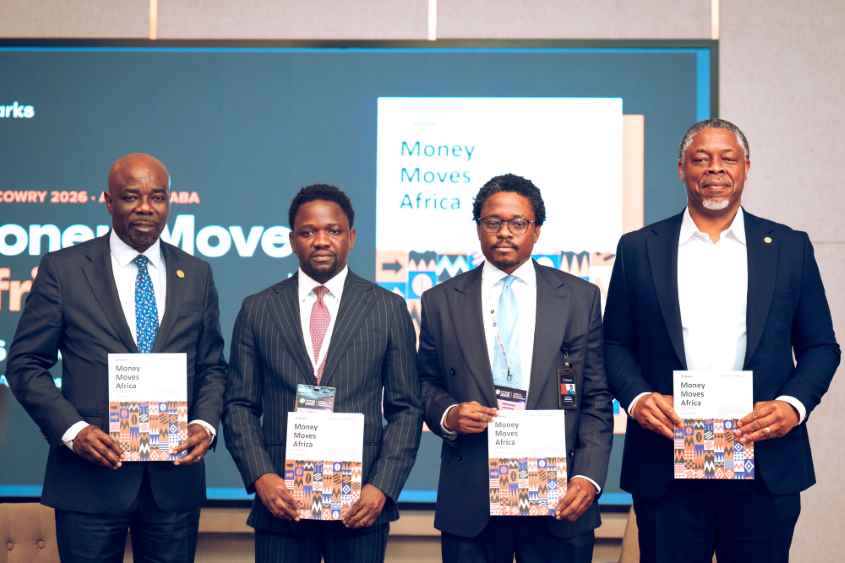
Starks Associates (www.StarksAssociate.com) today released How Money Moves Across Africa at PAPSS COWRY 2026, a report on how payments between African countries work and what holds them back. Drawing on Afreximbank (www.Afreximbank.com) data, the report finds that trade between African countries reached $213.8 billion in 2025 and still accounts for only about 14.6% of the continent’s total trade.

Instant payment systems within African countries handled 64.6 billion transactions worth $1.98 trillion in 2024, more than three times the 2020 volume, according to AfricaNenda (www.AfricaNenda.org). Payments across borders have not kept pace. A business in Lagos paying a supplier in Accra needs cedis in the right amount, a rate its bank can execute and a bank that can verify the counterparty, and the report finds shortfalls at each step.

Of the banks surveyed by the African Development Bank (www.AfDB.org), 36% cited limited foreign currency liquidity as their main constraint on trade finance, and banks’ share of African trade fell from 40% between 2011 and 2019 to 23% between 2020 and 2024. Where no direct market exists between two African currencies, banks route payments through the US dollar, which means two conversions and two spreads.

We have published our desk prices so that treasurers, banks and regulators can work from the same numbers

Identity checks add further friction. Nigeria had only 541 active Legal Entity Identifiers (www.GLEIF.org) in September 2025, which leaves banks to verify most corporate counterparties from scratch for each cross-border payment.

Starks Associates supplies the foreign currency and settlement liquidity that, according to the report, decides whether a cross-border payment goes through, converting African currencies directly into one another without a dollar leg. It is a liquidity partner to PAPSS (www.PAPSS.com).

With no public price series for business payments of this size, the report includes indicative quotes from the Starks desk. A naira to cedi payment costs 0.80% at $10,000 and 0.64% at $250,000. Naira to Kenyan shilling payments cost 0.72% and 0.58%, and Mozambican metical to Botswana pula payments 0.49% and 0.40%.

“Moving money across Africa has always needed three things: a currency people accept, someone they trust to honour it, and a safe route for it to travel,” said Oreoluwa Adeyemo, Co-CEO of Starks Associates. “The route is far stronger than it was five years ago. Our role is to make sure the currency is available when a business needs it, so that a supplier in Accra or Nairobi is paid in its own currency.”

Adewole Adedeji, Co-CEO of Starks Associates, said: “We have published our desk prices so that treasurers, banks and regulators can work from the same numbers. A business paying a supplier in another African country should know what that payment will cost before it sends it, and we would welcome other providers sharing their prices too.”

The report calls on banks to quote rates they can execute, on corporate treasurers to compare providers on the amount the supplier receives, on regulators to make access to foreign currency for trade predictable, on payment system operators to publish indicative costs, and on development finance institutions to provide guarantees and local-currency liquidity lines.

Starks plans to act on several of the report’s findings in 2027. The company intends to extend its liquidity to more African payment corridors, expand its Private Credit product for businesses that trade across borders, and work more closely with central banks, payment system operators, banks and development finance institutions on the gaps the report identifies. Its aim is to make trade between African countries as straightforward as trade within them.

PAPSS COWRY 2026 takes place in Addis Ababa on 26 and 27 November, co-hosted by PAPSS and the National Bank of Ethiopia (www.NBE.gov.et), which joined the system in October. Starks, a sponsor of the summit, joins its main-stage panel on foreign exchange, treasury and settlement on Friday 27 November. The full report, How Money Moves Across Africa, is available to download at https://apo-opa.co/4AZt0Nq.

Distributed by APO Group on behalf of Starks Associates.


Business

Afreximbank’s Creative Africa Nexus (CANEX) Creations Backs Global Release of FESTAC ‘77-Inspired Political Thriller

Published

on

Afreximbank

The investment will support the film’s completion, marketing and distribution, helping move the African-owned screen project from production to audiences in Africa and internationally

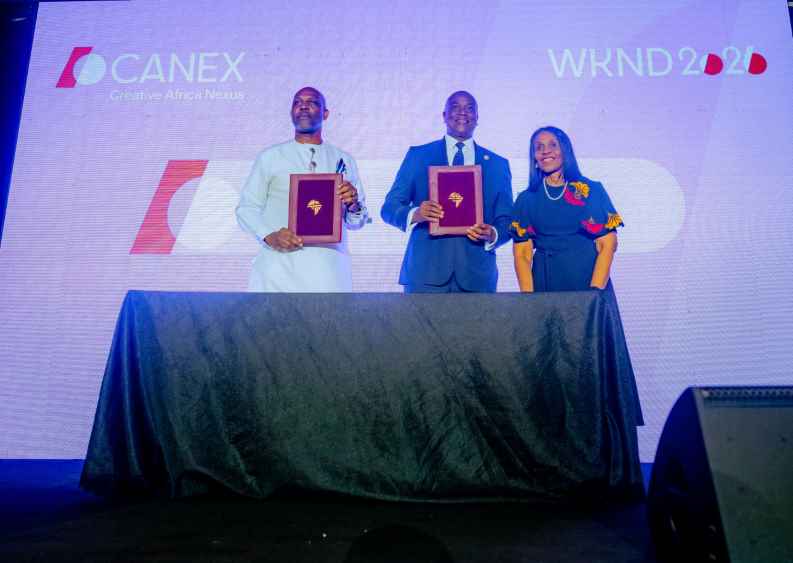
LAGOS, Nigeria, November 27, 2026/APO Group/ –CANEX Creations Inc., a subsidiary of Afreximbank’s (www.Afreximbank.com) Fund for Export Development in Africa (FEDA) established to invest in, develop and commercialise African intellectual property, has signed an agreement with Adonis Production Limited supporting the completion and global release of 77: The FESTAC Conspiracy, Adonis Production Limited’s FESTAC-inspired political thriller.


According to the agreement, signed during the CANEX WKND 2026 in Lagos, Nigeria on 6 November, the investment will support the film’s completion, marketing and distribution, helping move the African-owned screen project from production to audiences in Africa and internationally.

77: The FESTAC Conspiracy is a Nigerian historical drama and political thriller inspired by the events surrounding FESTAC ’77. It is a sequel to the acclaimed historical drama, 76, which was distributed on Netflix and received 14 nominations at the 2017 Africa Magic Viewers’ Choice Awards.

We are delighted to partner with CANEX Creations Inc. at this important stage of the film’s journey

The project reunites director Izu Ojukwu with returning cast members Ramsey Nouah, Rita Dominic and Ibinabo Fiberesima, and continues the journey of Joseph Dewa against the backdrop of FESTAC ‘77, one of the most significant pan-African cultural gatherings of the twentieth century.

Signing the investment agreement on behalf of CANEX Creations Inc. was Osahon Akpata, the Chief Executive Officer, while Prince Tonye Princewill, Executive Producer of the movie, signed for Adonis Production Limited.

Commenting on the significance of the investment, Osahon Akpata, Chief Executive Officer of CANEX Creations Inc., said:

“This project has the potential to contribute significantly to the visibility of African cinema and to demonstrate the commercial potential of African screen content. Our investment, therefore, reflects Afreximbank’s commitment, through CANEX Creations Inc., to supporting commercially credible African stories with the financing and market access needed to reach audiences. 77: The FESTAC Conspiracy revisits an important moment in our continent’s cultural history through African creative talent. Our support for the film’s completion, marketing and distribution helps strengthen the pathway from production to market.”

Highlighting that the agreement provides for dedicated resources for marketing and distribution, often critical constraints for African film projects, and promotes African ownership and international visibility of stories rooted in the continent’s history and cultural experience, Mr. Akpata said that CANEX Creations Inc. plays an important role in supporting the commercialization of African creative intellectual property.

Representing Adonis Production at the signing ceremony, Prince Tonye Princewill, Chairman of Adonis Production and Executive Producer of 77: The FESTAC Conspiracy, said, “FESTAC ’77 remains one of the most ambitious cultural moments in African history, and 77: The FESTAC Conspiracy uses that remarkable setting as the backdrop for an original political thriller that speaks to creativity, power and identity. We are delighted to partner with CANEX Creations Inc. at this important stage of the film’s journey. Their investment in the release campaign reflects a shared commitment to ensuring that bold African stories can reach wider audiences and compete successfully on the global stage.”

Distributed by APO Group on behalf of Afreximbank.


Continue Reading

Energy

South Sudan to Launch Five-Block Licensing Round to Boost Crude Output

Published

on

South Sudan

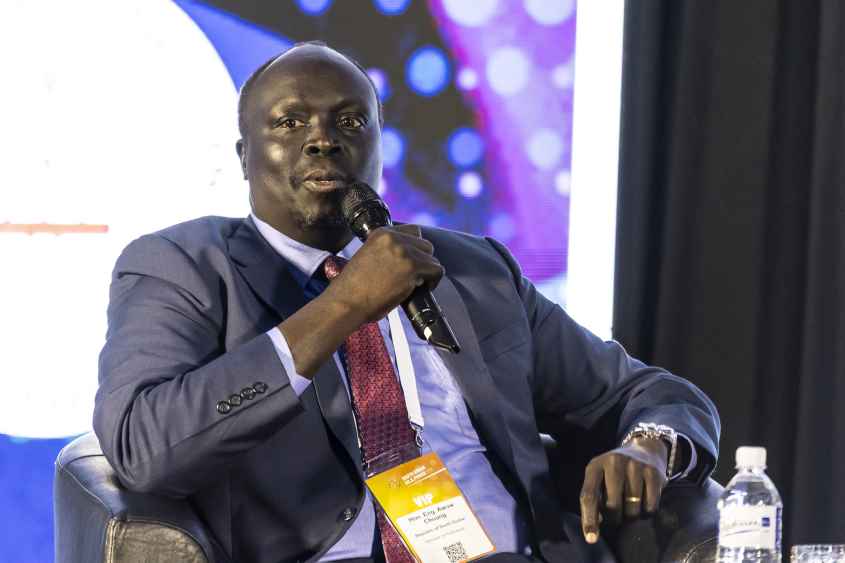
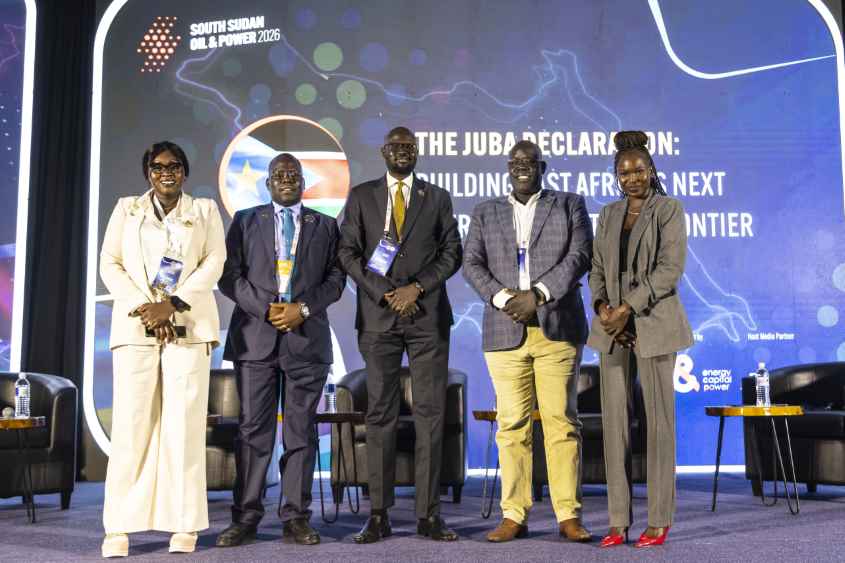
Hon. Eng. Awow Daniel Chuang, Caretaker Minister of Petroleum, announced plans to launch a licensing round during the opening of South Sudan Oil & Power 2026 in Juba

JUBA, South Sudan, November 26, 2026/APO Group/ –South Sudan plans to launch a new licensing round featuring five blocks as the country seeks to accelerate exploration, unlock greenfield potential and increase crude production, Hon. Eng. Awow Daniel Chuang, Caretaker Minister of Petroleum, announced during the opening of South Sudan Oil & Power 2026.


We are planning to have the first licensing round and, after two to three years, have another with five additional blocks and the last with more blocks

The upcoming round is part of a broader push to commercialize the country’s 14 available greenfield blocks and increase national crude output from just under 170,000 barrels per day (bpd) to 200,000 bpd within the next two to three years. According to the minister, preliminary technical studies on the initial five blocks were completed in 2020, but plans to launch the round were delayed by the COVID-19 pandemic.

“We are planning to have the first licensing round and, after two to three years, have another with five additional blocks and the last with more blocks,” stated Caretaker Minister Chuang.

Alongside new exploration, South Sudan is prioritizing the optimization of existing producing fields and brownfield assets to improve recovery rates, supporting the country’s longer-term ambitions of reaching 400,000 bpd. Technology will play a central role in this strategy.

“Moving to 400,000 bpd is an ambition but it is doable. We need to challenge ourselves to use the right technologies to enhance the recovery of oil,” Caretaker Minister Chuang said. He added that only 10-15% of the country’s acreage has been explored, highlighting a strategic opportunity for upstream companies.

Distributed by APO Group on behalf of Energy Capital & Power.


Continue Reading

Energy

South Sudan to Revise Block B2 Terms as Operators Call for Committed Investors

Published

on

SSOP 2026

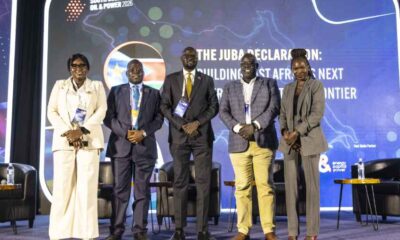
The closing session of SSOP 2026 drew together two days of production targets, project commitments and investor protections into one message for global capital

South Sudan will revise the exploration and production sharing agreement (EPSA) for frontier Block B2 and expects the South African National Petroleum Company (SANPC) to begin drilling or assessment immediately afterward, Eng. Lual Chol Dak, Director General of the Petroleum Authority, said on Wednesday at the closing session of South Sudan Oil & Power (SSOP) 2026 in Juba.


The session brought together the public and private-sector commitments made over the two days of the conference. It also laid out the contract terms, regulatory structure and financial conditions the government is offering to establish South Sudan as a secure destination for long-term capital. “I want you to be the first investor to encourage the others,” Dak told SANPC’s delegation.

The commitments presented at the close were made throughout SSOP 2026. Dar Petroleum Operating Company (DPOC) accepted a Ministry of Petroleum target of 120,000 barrels per day (bpd) by August 2027, while Sudd Petroleum Operating Company plans to reach 20,000 bpd in 2027. Greater Pioneer Operating Company reported three hydrocarbon discoveries in 2026, and Nilepet’s engineering subsidiary set out a three-year plan to build the capability to design and construct a refinery. Taken together, the commitments support the government’s goal of lifting national output beyond 200,000 bpd within two to three years.

We need real committed investors that can come and negotiate with us

Dak set out the protections the government is offering in return. Under the Petroleum Act 2012, policy sits with the Ministry of Petroleum, commercial participation with Nilepet and technical regulation with the Petroleum Authority. EPSAs run 25 to 37 years, subject to extension. Every upstream phase requires an environmental and social impact assessment. The ministry has pipeline, depot, refinery and central laboratory projects ready for negotiation. “We need real committed investors that can come and negotiate with us,” he said.

Dr. Jacob Dut Chol, Manager for Audit at DPOC, said the joint operating companies have internal audit and compliance systems in place, and the ministry reviews procurement awards and work program budgets.

“The JOCs are open for investment,” he said, adding that he expects a new joint operating company to emerge in the coming months.

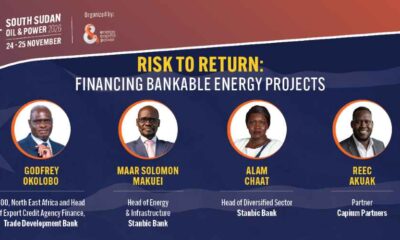
Alam Chaat Paul, Head of the Diversified Sector at Stanbic Bank, said regional financial integration and simpler rules for moving money in and out of South Sudan would make investment decisions easier. Henry Kissinger Silvio, Acting Director General for Planning, Training and Research at the Ministry of Petroleum, said South Sudan’s regulatory frameworks must stay competitive with those of Kenya, Uganda and Ethiopia.

The ministry plans to offer five of the country’s 14 open blocks in an initial licensing round, with five more two to three years later. Investors entering the round will be able to weigh the revised Block B2 terms and the production commitments made at SSOP 2026 before they bid.

Distributed by APO Group on behalf of Energy Capital & Power.


Continue Reading

Trending