Connect with us
Anglostratits

Business

International Energy Agency’s Deputy Executive Director Mary Burce Warlick to Drive Investment and Energy Transition Discussions

Published

on

Mary Burce

The African Energy Chamber is proud to announce that Mary Burce Warlick, Deputy Executive Director of the International Energy Agency will attend and participate at African Energy Week 2022, shaping discussions around energy policies, investment trends, the energy transition and gender inclusivity across the sector

CAPE TOWN, South Africa, October 4, 2022/APO Group/ — 

Mary Burce Warlick, Deputy Executive Director, of the International Energy Agency (IEA), will be coming to Cape Town to attend and participate at the African Energy Week (AEW) (https://AECWeek.com/) conference and exhibition – Africa’s premier event for the oil and gas sector which will take place from October 18 – 21. Under the theme, ‘Exploring and Investing in Africa’s Energy Future while Driving an Enabling Environment’, AEW 2022 will host Mary Burce Warlick in high-level panel discussions where the industry executive will shape serious conversations around Africa’s energy future and how the continent can improve the development of its entire resource base to make energy poverty history by 2030.

Representing an autonomous intergovernmental organization providing governments and industry players with policy recommendations and analysis in line with ongoing market trends, the participation and presence of Warlick at AEW 2022 will be crucial for driving dialogue around current energy market trends and policies, their impact on African energy developments and how Africa can address industry challenges, embrace opportunities as well fast-track and maximize resource exploitation to drive industrialization and ensure energy security.

The Chamber is proud to host Mary Burce Warlick at AEW 2022 where the industry leader will present the IEA’s latest energy market findings and forecasts to African policymakers

With significant experience in the energy and extractive industries – having worked as board member for the Extractive Industries Transparency Initiative and the IEA between 2014 and 2017, Warlick is well-positioned to drive dialogue around how Africa can address disruptions to its hydrocarbons industry by leveraging a combination of local practices and cooperation with global partners on innovation, financing, research and infrastructure development to accelerate energy market expansion.

Warlick has held a variety of senior leadership positions within the energy industry including serving as Acting Special Envoy and Coordinator for International Energy Affairs and as Principal Deputy Assistant Secretary, Bureau of Energy Resources with the U.S Department of State where she drove the department’s energy diplomacy initiatives and promoted energy security, energy access and governance across the globe as well as in Africa.

A recipient of the U.S Secretary of State’s Career Achievement Award, Award for Public Outreach, and Medal for Exceptional Public Service, Warlick is well-positioned to shape AEW 2022 conversations around how Africa can respond to global energy transition-related policies whilst tailor-developing its own roadmap to transitioning to clean sources of energy whilst correspondingly driving socioeconomic growth.

“The Chamber is proud to host Mary Burce Warlick at AEW 2022 where the industry leader will present the IEA’s latest energy market findings and forecasts to African policymakers, industry players and global partners. We believe that global institutions such as the IEA will be crucial for helping the African continent maximize the exploitation of all its energy resources including oil, gas, hydrogen and renewables through the provision of best practices to align energy policies with changing energy market dynamics, as well as by facilitating improved cooperation with global partners on technology research and development,” states NJ Ayuk, the Executive Chairman of the African Energy Chamber (AEC).

Warlick will participate in various AEW 2022 forums focusing on how the African continent can attract the investments required to boost development across the entire energy value chain. With AEW 2022 striving to making energy poverty history across the African continent by 2030, the event will Warlick’s participation in high-level meetings and networking sessions is set to only enhance dialogue around Africa’s energy future.

Distributed by APO Group on behalf of African Energy Week (AEW).

Business

Africa gains governance momentum in the 2026 Chandler Good Government Index, but sustaining progress is the real test

Published

on

Africa

Across Africa, average scores improved in six of the seven CGGI pillars over the past year, with the strongest gains in Helping People Rise and Financial Stewardship

This signals that stronger government capabilities are beginning to translate into tangible improvements in people’s lives

KIGALI, Rwanda, October 29, 2026/APO Group/ –Africa was the second best-performing region for governance progress in the 2026 Chandler Good Government Index (CGGI), with 71% of the African countries assessed in both 2025 and 2026 achieving higher overall scores. However, the continent remains the lowest-scoring region overall, highlighting the challenge of translating improvement in government capabilities into better outcomes for citizens.


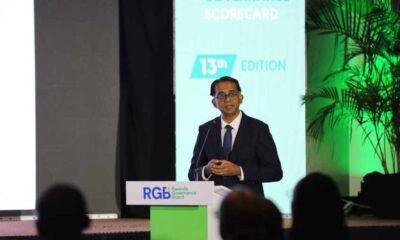
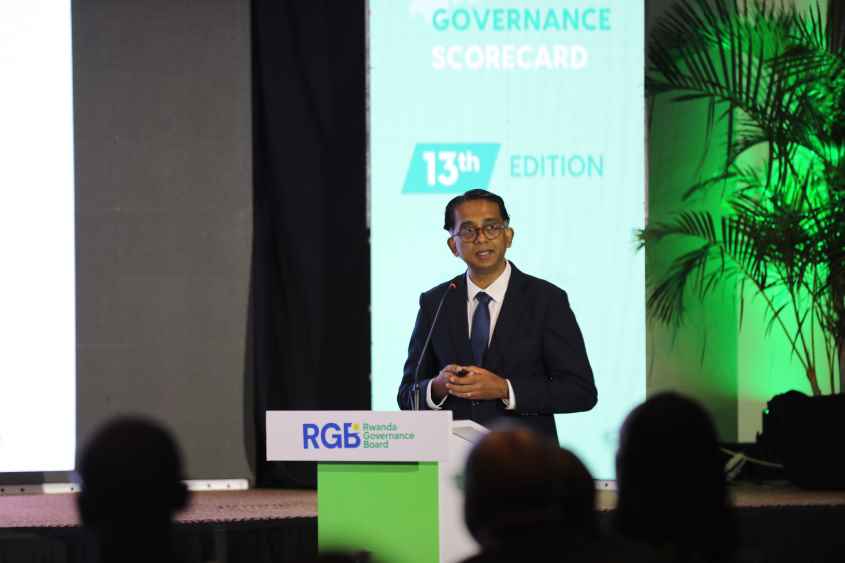
These findings were highlighted by the Chandler Governance Group (CGG) at a joint session with the Rwanda Governance Board (RGB) to launch the 13th edition of the Rwanda Governance Scorecard at the Kigali Serena Hotel on Thursday, 22 October 2026.

“This year, Africa’s strongest gains came in Financial Stewardship, followed by Helping People Rise, the CGGI’s outcomes pillar. This signals that stronger government capabilities are beginning to translate into tangible improvements in people’s lives, from access to quality education and healthcare to the public finances that fund them. The task now is to sustain that progress over the coming years,” says Dinesh Naidu, Director (Knowledge) at CGG.

Now in its sixth edition, the CGGI assesses government capabilities and effectiveness across 133 countries representing 94% of the world’s population, up from 120 countries in 2025. It measures 35 equally weighted indicators across seven pillars, providing governments with a framework to benchmark performance, identify gaps and learn from the experience of other countries.

Globally, the findings point to improving governance performance. Of the 120 countries assessed in both 2025 and 2026, 61% recorded higher scores, representing the highest annual share of countries improving since the Index launched in 2021. However, longer-term progress has been less consistent, with only 43% of the 104 countries tracked since 2021 recording an overall improvement.

Africa’s leading governments

Mauritius remains Africa’s highest-ranked country, placing 55th globally, followed by Rwanda (62nd), Botswana (70th), Morocco (79th) and Tanzania (80th). South Africa ranks sixth on the continent, in 85th place globally.

Rwanda features prominently in the discussion, ranking 11th globally for Leadership & Foresight and emerging as the highest-ranked low-income country in the Index. It ranks 61 places above where its income alone would predict. Across the Index, government capabilities track citizen outcomes more closely than national wealth does, suggesting that strengthening government capabilities matter in delivering better outcomes for citizens.

The joint session brings together the CGGI’s international benchmarks and the Rwanda Governance Scorecard’s assessment of governance in the Rwandan context, creating an opportunity to consider both global perspectives and country-specific priorities.

Progress across key governance pillars

Across Africa, average scores improved in six of the seven CGGI pillars over the past year, with the strongest gains in Helping People Rise and Financial Stewardship. These improvements point to progress in areas associated with public services, including healthcare and education, as well as the management of public finances.

Longer-term trends also highlight areas of progress. Between 2021 and 2026, nearly every African country assessed across the period improved its Data Capability score, with Morocco recording the largest gains. Ghana’s overall score improved in 2026, supported by stronger Financial Stewardship, while South Africa continues to show relative strength in Robust Laws & Policies, ranking 44th globally, and Attractive Marketplace, ranking 48th.

Despite these gains, the scale of the challenge remains clear. Africa’s regional average is still below its 2021 level, 23 of the 35 African countries in the 2026 Index rank outside the global top 100, and none is in the top 50. Seven African countries joined the Index this year: Chad, the Democratic Republic of Congo, Gambia, Guinea, Lesotho, Liberia and Togo.

“Rankings provide a useful starting point, but the broader value of the CGGI lies in helping governments understand where they are making progress and where further work is needed. Sustained improvements depend on the ability to strengthen institutions, manage resources responsibly and turn policy into meaningful outcomes for citizens,” says Naidu.

A tool for learning and improvement

The CGGI is designed as a practical diagnostic tool, helping governments identify gaps, track progress over time, and learn from peers facing similar constraints. The collaboration with the RGB brings international benchmarking together with locally grounded assessment.

“Every country faces its own governance challenges and is driven by varying priorities. Governments that are willing to take stock of the evidence and learn from peers to strengthen their institutions are well placed to achieve real improvements,” concludes Naidu.

Distributed by APO Group on behalf of Chandler Governance Group.


Continue Reading

Business

Spiro brings electric motorcycles and battery-swapping technology to Ghana, expanding its pan-African footprint

Published

on

Spiro

The integrated offering aims to reduce daily operating costs and minimise downtime, with battery swaps completed in just two minutes and potential savings of up to USD 2 per day compared with petrol-powered motorcycles

ACCRA, Ghana, October 29, 2026/APO Group/ —

  • Spiro’s entry into Ghana introduces the Ekon 450 M1 V3 electric motorcycle and its battery-swapping solution, bringing a new mobility option to commercial riders and delivery fleets.
  • The integrated offering aims to reduce daily operating costs and minimise downtime, with battery swaps completed in just two minutes and potential savings of up to USD 2 per day compared with petrol-powered motorcycles.
  • Test rides and product demonstrations across Greater Accra will support the rollout and help riders experience the benefits of electric mobility.


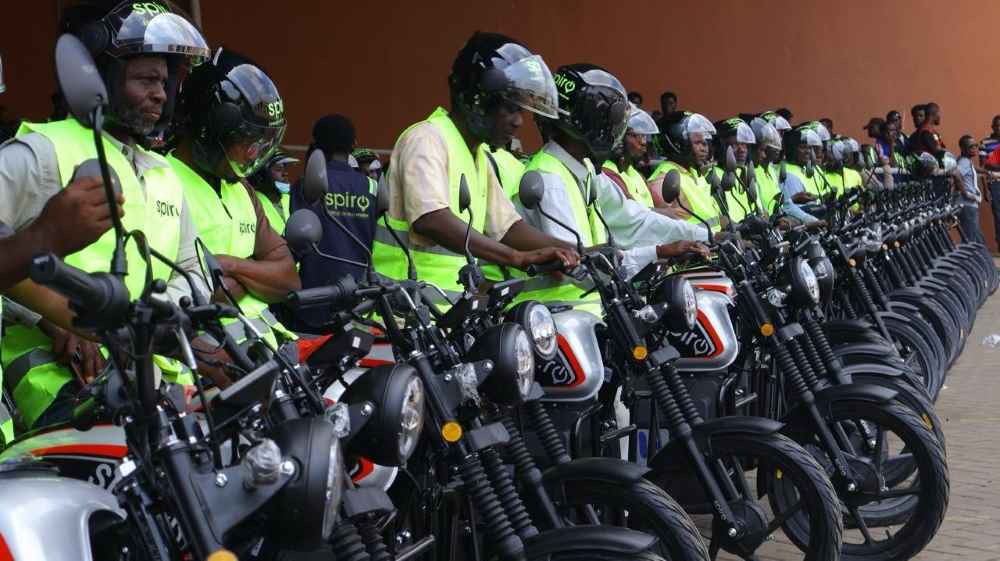
Spiro (www.Spironet.com), Africa’s largest electric mobility company, is expanding its footprint in Ghana with the introduction of the Ekon 450 M1 V3 electric motorcycle and its battery-swapping solution. Combining electric two-wheelers with access to charged batteries, Spiro aims to make everyday transport more affordable and practical for riders while supporting Ghana’s transition towards sustainable mobility.

For commercial riders and delivery fleets, fuel expenses and time spent off the road directly affect daily earnings. Spiro’s integrated offering addresses both challenges: riders can exchange a depleted battery for a charged one at a Spiro battery-swapping station in just two minutes, while potentially saving up to USD 2 per day in operating costs compared with conventional petrol-powered motorcycles.

Ghana represents a major opportunity for electric mobility, with a rapidly growing two-wheeler market and increasing demand from commercial riders and delivery fleets

Designed to meet the everyday mobility needs of African riders, the Ekon 450 M1 V3 offers an alternative to petrol-powered motorcycles. Supported by Spiro’s battery-swapping technology, it allows riders to get back on the road without waiting for their motorcycle to recharge.

Auroasish Choudhuri Managing Director Central and West Africa, commented: “Our entry into Ghana is an important step in strengthening Spiro’s presence in West Africa. Our focus is on building a local ecosystem that riders can rely on, combining electric motorcycles with convenient access to battery swapping. By working closely with local partners and listening to riders’ needs, we aim to support the long-term adoption of electric mobility in Ghana.”

Kaushik Burman, CEO Mobility of Spiro said: “Ghana represents a major opportunity for electric mobility, with a rapidly growing two-wheeler market and increasing demand from commercial riders and delivery fleets. By bringing the Ekon 450 M1 V3 together with our battery-swapping solution, we are addressing two key barriers to adoption: operating costs and access to charging infrastructure. Our ambition is to build a strong foundation for electric mobility to scale across Ghana.”

To support its rollout, Spiro is engaging with prospective customers through test rides, product demonstrations and live demonstrations of its battery-swapping technology across Greater Accra. These activities give riders the opportunity to experience the Ekon 450 M1 V3 and understand how battery swapping can fit into their daily routines.

Mr Maxwell Dodd, Managing Director of Spiro Ghana, said: “For riders in Ghana, the value of electric mobility lies in what it can deliver every day: lower operating costs, less downtime and more time on the road. Through the Ekon 450 M1 V3 and our battery-swapping solution, we want to make those benefits accessible and support riders as they make the transition to electric motorcycles.”

Ghana forms part of Spiro’s wider expansion across Africa. Building on its recent USD 270 million equity funding round and an additional USD 18 million in debt financing from the Africa Go Green Fund, the company is scaling its electric mobility ecosystem with the ambition of establishing a presence in 20 African markets. Spiro is also preparing to enter new countries, including Ethiopia, Malawi, Mali and the Democratic Republic of Congo.

Distributed by APO Group on behalf of Spiro.


Continue Reading

Business

Huawei Wireless Unveils Innovation Breakthroughs to Pioneer New Communications Networks

Published

on

Huawei

The innovation breakthroughs for pioneering new communications networks include RetinaMIMO, new materials, and OSCAR solution among other root technologies. By tackling coverage, energy consumption, and capacity challenges, the breakthroughs drive ubiquitous experience, simplified and green networks, and superior spectral efficiency. The breakthroughs have unlocked a wealth of new capabilities, including the world’s first commercial U6 GHz device VitaAAU, GigaGreen Plus series, and UBBPi series.
Huawei promotes A2A-T standards and drives commercial open-source OpenAN through extensive partnerships to build an open telecom agent ecosystem.


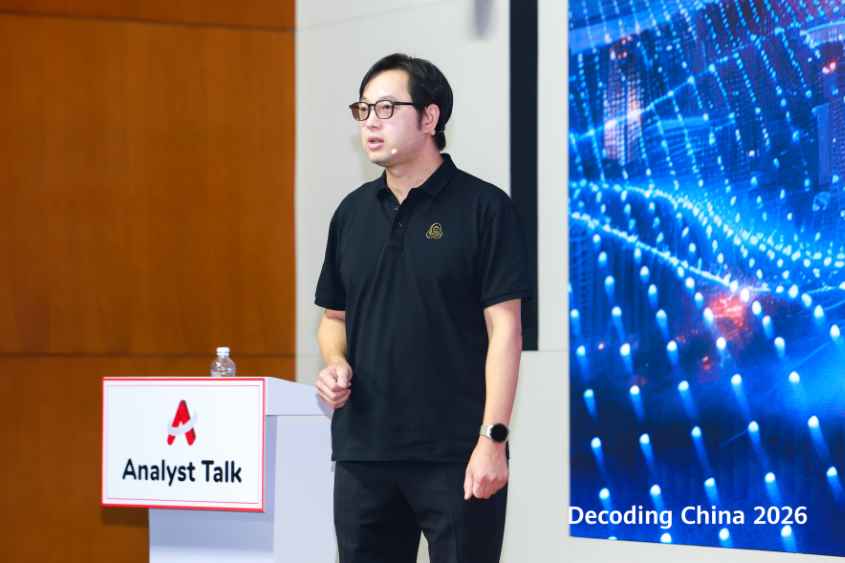
SHANGHAI, CHINA – Media OutReach Newswire – 29 October 2026 – At Huawei Decoding China 2026, Fang Xiang, Corporate Vice President and President of Wireless Network Solution of Huawei, unveiled a series of innovation breakthroughs to pioneer new communications networks. The innovation breakthroughs mark major leaps in root technologies focused on ubiquitous experience, simplified and green networks, and superior spectral efficiency. With the breakthroughs, Huawei has launched the world’s first commercial U6 GHz device VitaAAU, GigaGreen Plus series, and UBBPi series. Additionally featuring the new progress in open ecosystem for telecom agents, the breakthroughs will lay a solid foundation for new communications networks.

With booming intelligent devices and services, new devices, traffic, and applications are taking shape in the mobile industry. The new devices are expanding network connectivity from people to things and agents, increasing the number of connections by 100 times. Device-cloud synergy for intelligent services calls for stronger uplink capabilities to support training and inference, shifting network focus from downlink dominance to both uplink and downlink. With new applications, come a diversity of new interaction modes, calling for higher standards in experience and driving networks to support ubiquitous steady ultra-low latency with a high reliability.

As the world steps into an intelligent era, the value of connectivity is not only about quantity—it’s more about quality. This has been inspiring Huawei to convert cutting-edge breakthroughs into the commercial practices of new communications networks by focusing on root technologies for ubiquitous experience, simplified and green networks, and superior spectral efficiency.

Pioneering ubiquitous experience

RetinaMIMO is a new pioneering technology designed to solve the challenge of concurrent ultra-high bandwidth and ubiquitous coverage. It features the industry’s first Retina scanning system that allows RF link topologies to be reconstructed to eliminate coverage collapse in the vertical direction. It also adopts a reconstructed antenna array architecture to address the diminishing marginal gains as array elements (AEs) increase.

Based on RetinaMIMO, Huawei has launched the world’s first commercial U6 GHz device VitaAAU. Compared with similar products with 1024 AEs, VitaAAU widens coverage by about 30%, enabling U6 GHz to match C-band in both horizontal and vertical directions. This enables operators to deliver U6 GHz coverage for new communications networks on their C-band sites, minimizing overall TCO. To date, VitaAAU has seen commercial adoption in the UAE and other markets, with peak downlink speeds exceeding 10 Gbps, making ubiquitous premium experience a reality.

Pioneering simplified, green networks

Huawei’s pioneering EP power amplifier (PA) architecture capitalizes on new materials and technologies to solve the problem of energy efficiency decline on higher frequency bands, maximizing energy conversion efficiency. The industry’s first-ever multimode dielectric filters allow antennas to have small dimensions and low power consumption on multi-channel networks with high frequency bands. Powered by new materials, technologies, and architectures, VitaAAU antenna is reduced to 1.5 m in diameter while supporting “0 Bit 0 Watt 0 Loss”, delivering superior energy saving efficiency. These innovations enable Huawei’s GigaGreen Plus series products to achieve significant reductions in dimensions, weight, and power consumption, better positioned to power simplified and green networks.

Pioneering superior spectral efficiency

Multi-band, multi-cell, and multi-user interference is a major restrictive factor of capacity. The time scaling of the Tau (τ) law is introduced to base stations for the first time to realize optimal dynamic resource scheduling across all domains based on the OSCAR solution. With low-latency bus and high-speed interconnect technology, a high-speed architecture is built to enable the real-time exchange of massive data. Thanks to software and hardware synergy, new UBBPi series products improve average user experience by 1.3 times while reducing power consumption by approximately 40%, further improving spectral and energy efficiency.

Pioneering open-source autonomous networks

Autonomous networks have emerged as an inevitable choice to deal with the growing AI services and increasing network complexity. RANSpirit is another industry first from Huawei, implementing single-domain network autonomy based on the telecom foundation model and digital twins. To date, RANSpirit is serving more than 1.2 million cells across 25 networks around the world, providing assistance to more than 2,000 engineers.

Extensive agent collaboration relies on an open, win-win ecosystem. This galvanizes Huawei to join industry partners to develop ecosystem standards, communities, and industry alliances. In terms of standards, Huawei adapts to the TM Forum, building a cross-agent foundation on the A2A-T standard and framework agreed upon by the industry. In terms of communities, Huawei jointly promotes neutral open-source communities and donates open-source agent components to the Linux Foundation, driving global collaboration and innovation. With regard to industry alliances, Huawei has taken the initiative to pool ecosystem strengths to accelerate business implementation based on the GSMA industry platform.

Fang concluded with the reiteration of Huawei’s unswerving pursuit of dual-drive innovation to promote new breakthroughs in mobile networks and work with partners from around the world to deepen the OpenAN ecosystem, advancing new communications networks through technological innovation and open collaboration.

FAQs

Q1: Why is it challenging to balance ultra-high bandwidth and ubiquitous coverage?

Ultra-high bandwidth depends on higher frequency bands. As we know, a higher frequency leads to a greater propagation loss of electromagnetic waves and a weaker ability for them to penetrate obstacles, because high-frequency signals attenuate fast and have short coverage distances, while ubiquitous coverage requires signals to travel a long distance in complex environments. Inherently, the two priorities pull in sharply opposite directions.



Continue Reading

Trending