Connect with us
Anglostratits

Tech

Huawei releases world’s slimmest and largest foldable smartphone

Published

on

Mate XT 2

First smartphone to run HarmonyOS 7 and include chip design breakthrough LogicFolding
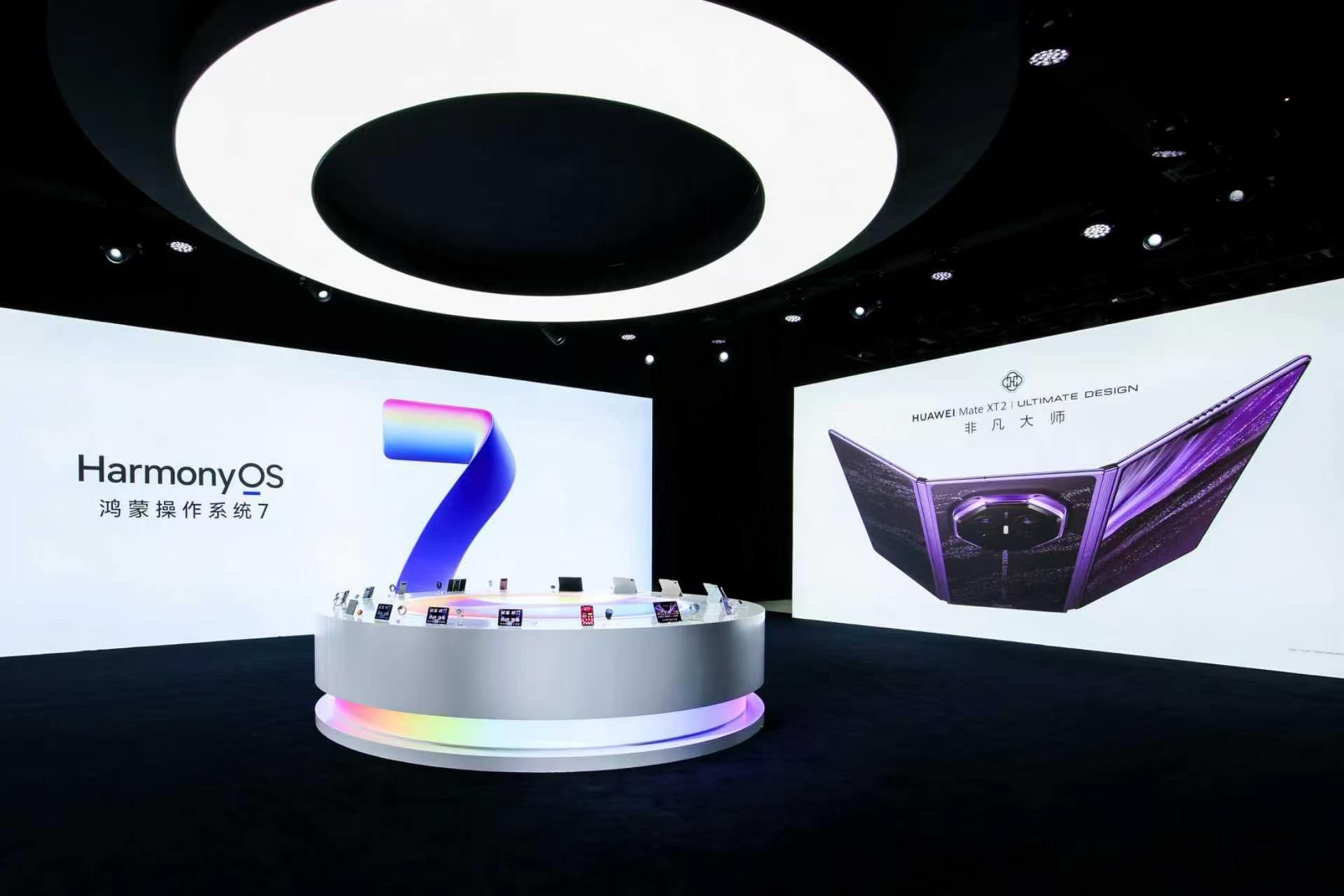
SHENZHEN, CHINA – Media OutReach Newswire – 28 September 2026 – Huawei released the HUAWEI Mate XT 2 | ULTIMATE DESIGN trifold smartphone on September 7. The phone is the first to run HarmonyOS 7, and is the slimmest and largest foldable smartphone in the industry. The Mate XT 2’s Kirin 9050 chip also includes a major breakthrough in semiconductor design. As the first smartphone to feature the LogicFolding Tau (τ) Chip, the Mate XT 2 marks the chip’s official entry into mass commercialization.


World-class engineering and design

The device is proving popular with consumers due to its foldable wing-like form, which means it can be opened up, transforming the phone into a tablet.

The engineering to make this possible is unprecedented. The glass screen must be tough enough to withstand daily use, whilst being able to fold thousands of times. The hinge to allow the screen to fold is the first of its kind. Once open, the handset is just 3.5mm thick. However, the screen is not the only remarkable folding technology in the device.

The first chip with semiconductor design breakthrough, LogicFolding

The Mate XT 2 Ultimate Design includes a major breakthrough in semiconductor design. The phone is the first to use Huawei’s LogicFolding Tau chip Kirin 9050 Pro. Designed by engineers in Huawei’s HiSilicon team, the chip offers a solution to the problem of geometric scaling.

With Moore’s law (the historical observation that the number of transistors on a microchip doubles approximately every two years) believed to be reaching its physical limit, making chips smaller is becoming more challenging and costly.

For Huawei, faced with external restrictions, the need to find a solution came sooner than expected.


In May this year, He Tingbo, President of Huawei’s HiSilicon division, unveiled a new way of designing and making chips, alongside a new law to measure their performance, the τ (Tau) Scaling Law. The work led to Ms He being recently named one of the world’s leading AI innovators by Time Magazine.

The point of shrinking transistors was never the smallness itself, it’s what the smallness delivered. Shoppers looking to buy the latest smartphone don’t care if the chips inside have 7, 5 or even 2-nanometer nodes, they care about the performance of the device in their hands. What matters to consumers is the time it takes for a task to be completed, a video to be shared or a game to load. The performance of the chip should be measured in the same way: by time, not size. This is why Huawei proposed τ (Tau) Scaling Law as an alternative to Moore’s Law.

Breaking through barriers to improve performance

The Kirin 9050 Pro uses 3D integration to boost performance. Traditional chip advancement focussed on packing more and more transistors into a linear plain by making each one smaller. LogicFolding uses 3D integration to reduce the distance between transistors by stacking them on top of one another, increasing the number of transistors whilst reducing the distance between them.

In fact, in the Kirin 9050 Pro transistor density has risen from approximately 155 to 238 million transistors per square millimetre. That’s an equivalent increase to what was achieved in the previous three years using geometric shrinking.

It was thought that stacking active transistors on top of each other and sealing them inside a solid mobile device would present an engineering challenge. Power turns into heat, which in a confined space would raise the temperature and ultimately break the device.

The key to the solution came in recognising that integrated chips have both transistors and circuits. As He Tingbo explains in her IEEE article, Huawei’s τ Chip Was Supposed to Melt?, the inner workings of a chip can be compared to an office worker’s day of work. Many office workers will use more energy on their commute to and from the office than they do at their desk because they are moving around more on the road. The ‘work’ part of their day is not the most energy intensive part as they are often seated at their desk.

The same is true for chips. The most energy intensive part of the process is the ‘commute’, moving data from point A to point B, not processing it. Integrated circuits use power in two main ways. The first is switching, flipping a transistor gate to change a bit from 0 to 1 and back. The second is the transmission of that data, moving the bits from one part of the chip to another.

This is important in mobile phones where a lot of performance requirements are asked of a single chip. Equally, however, in a large AI cluster 80% of the energy is used in the moving the data, not processing it. In both cases, LogicFolding reduces the space between transistors which in turn reduces the power used. The previous assumption that packing transistors on top of one another would increase the heat turned out to be false. In fact, even with a higher transistor density per millimetre, LogicFolding chips run cooler per unit of work. The result is Huawei’s most powerful smartphone ever.

The first phone to run HarmonyOS 7

The Mate XT 2 is the first smartphone to run HarmonyOS 7. Forty-two percent more powerful than the previous generation, it remains the slimmest and largest foldable display in the industry when open. The cover screen spans 6.5 inches, boosting the screen-to-body ratio from 86.4% to 92.8%. Enhanced with 70% better anti-reflection, the screen exhibits a deeper, cleaner black when off, and pure, crystal-clear transparency when lit.

The Huawei Mate XT 2 also introduces the world-first Smart Shield Privacy Screen on a foldable screen. Two independent pixel sets co-exist within the 10.2-inch display at a micro-pitch of just 9 μm. When Privacy Mode is activated, the screen seamlessly switches from a wide viewing angle to a narrow one while maintaining identical resolution and clarity, protecting your privacy in public spaces without compromising your view.

Industry first ECG analysis

Health tech is increasing important to consumers, and so the Mate XT 2 is the industry’s first smartphone to introduce ECG analysis. Capitalising on the innovative tri-fold form factor, users can simply hold both side frames with both hands while unfolded to capture a 30-second ECG signal. Paired with the medically certified analysis software, it generates detailed ECG reports to help identify Sinus Rhythm, Atrial Fibrillation, and Premature Beats.

The launch of the Mate XT 2 marks a significant moment in Huawei’s journey. The company’s R&D has delivered industry leading, and industry changing innovation. More than half of Huawei’s employees work in R&D. That’s over 100,000 people. The company currently holds 160,000 active patents worldwide. In the first half of 2026 alone, Huawei’s R&D investment was over RMB 121 billion, accounting for 25.94% of revenue, up 25.2% year on year.

The HUAWEI Mate XT 2 | ULTIMATE DESIGN starts at RMB 19,999 and is now available for purchase, along with a stylus set, following its official sales launch at 10:08 on September 12th.



Events

Optics Valley Launches Corporate International Communication Alliance to Empower Tech Companies’ High-Quality Global Expansion

Published

on

Optics Valley

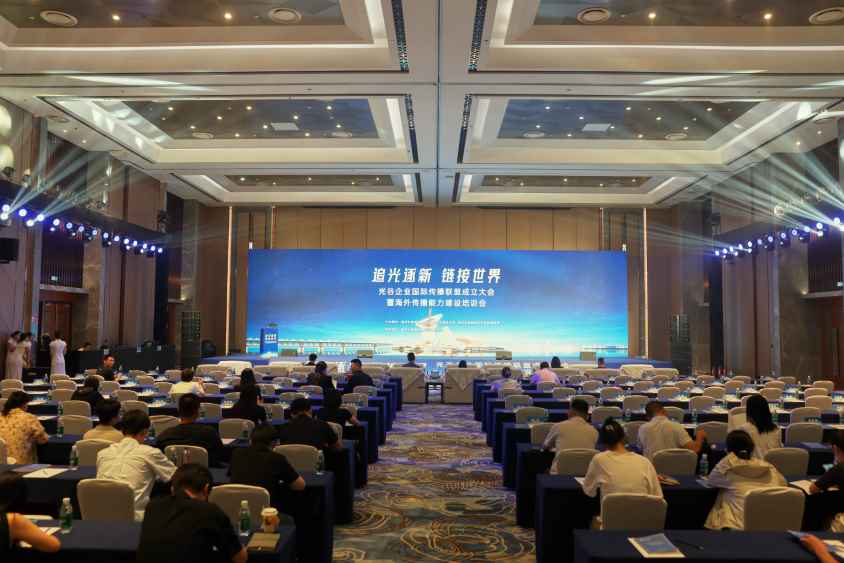
WUHAN, CHINA – Media OutReach Newswire – 17 September 2026 – On September 13, the inauguration ceremony of the Optics Valley International Communication Alliance was held. Representatives of 13 founding member companies — including FiberHome, China Construction Third Engineering Bureau, HGTECH, YHKT Entertainment, Huakang Clean and Shenglong Electric — and of more than 100 other Optics Valley enterprises attended the event.


The ceremony was held under the theme “Chasing the Light, Connecting the World.” In recent years, Optics Valley’s innovations have been reaching the world at an accelerating pace. The overseas social media matrix of “Optics Valley of China” has continued to attract attention, and “made in Optics Valley” products such as the Optics Valley Photon sky rail and driverless minibuses have been repeatedly applauded by spokespersons of China’s Ministry of Foreign Affairs, becoming a “calling card for China” in the eyes of overseas netizens. To help companies move from “product export” to “brand export,” Optics Valley has worked with the News & Information Service Center of Xinhua News Agency and other partners to establish the Optics Valley International Communication Alliance, opening international communication resources to Optics Valley companies and providing them with one-stop services such as overseas public opinion response and multilingual content production, so as to serve as a “navigator” for companies going global. As the national news agency of China, Xinhua News Agency has 184 overseas branches and has established cooperative links with more than 2,000 media outlets around the world.

Speaking as a representative of the founding members, Li Lei, vice president of FiberHome, said that FiberHome’s business now covers more than 100 countries and regions, with wholly owned subsidiaries in 36 countries and three overseas optical cable plants in Ecuador, Thailand and Hungary; at its Philippine subsidiary, locally hired employees account for more than 95 percent of the workforce. “We will stay committed to high-quality global expansion and to deepening localized operations, and, with the platform of the Optics Valley International Communication Alliance, we will not only export China’s advanced communication technologies and solutions, but also serve as a bridge for industrial cooperation and people-to-people connectivity between China and the rest of the world,” he said.

Huakang Clean, also a founding member, is a leading enterprise in China’s cleanroom industry. It has made going global a core strategy for the 15th Five-Year Plan period, completed its market layout in Southeast Asia, Central Asia, the Middle East, South America and Africa, and exported mature cleanroom technology solutions. It looks forward to deepening cross-border collaboration and strengthening brand building through the alliance platform.

At the ceremony, a think tank report was released — “Going Global, Competing Worldwide: How ‘Optics Valley of China’ Polishes Its International Calling Card in Service of Building a Strong Nation in Science and Technology — Practices and Insights,” written by Reference News Press · Reference Think Tank. According to the report, leading enterprises represented by the “Seven Stars of Optics Valley” have seen average annual growth in overseas revenue of more than 30 percent. The report sums up Optics Valley’s global communication path as “one strategic direction and ten keywords”: Optics Valley takes serving the building of a strong nation in science and technology as its strategic direction, and adheres to central-local coordination, AI empowerment, going global as a team, and tailored measures for different markets.

The report states that Optics Valley has witnessed and written the confidence and determination of a brand of a strong nation in science and technology going global, and that when the light of “Optics Valley of China” illuminates the global industrial landscape, it conveys the narrative of the times in which China takes part in global competition through technological self-reliance and self-strengthening and shares its opportunities with the world. The report suggests that, for Optics Valley to keep polishing its international calling card in service of building a strong nation in science and technology, three things need to be fully considered: first, elevating the Optics Valley story from “corporate behavior” to a “national narrative”; second, making full use of AI, a global knowledge-service infrastructure, to carry out global communication; and third, moving from “communication empowering industry” to “communication as an industrial capability.”

A training session on overseas communication capacity building was held alongside the inauguration ceremony, with David Wei, founder of Vision Knight Capital, and Cao Yang, deputy director of the International Communication Department of the News & Information Service Center of Xinhua News Agency, invited to give lectures.


Continue Reading

Business

RS South Africa Supports Next-Generation Edge Artificial Intelligence (AI) With NVIDIA Jetson Orin Nano 2

Published

on

NVIDIA

New compact robotics computer opens new possibilities for intelligent machines, robotics and vision AI

JOHANNESBURG, South Africa, September 21, 2026/APO Group/ –RS (https://apo-opa.co/4doxsf6) is supporting the NVIDIA Jetson Orin Nano 2 robotics computer, a new entry-level edge AI platform designed to deliver next-generation AI performance in a compact, power-efficient format. The platform is expected to become available in the first half of 2027.

The NVIDIA Jetson Orin Nano 2 delivers twice the inference performance of the NVIDIA Jetson Orin Nano Super while maintaining the same compact form factor and 40 W power envelope. It also consumes 40% less power at equivalent performance, making it well suited to applications where computing capability, energy efficiency and physical footprint are important considerations.


These capabilities have the potential to support the development of smarter, more autonomous equipment and systems for South African industrial and engineering organisations, particularly where real-time processing and decision-making are required at the edge.


More performance for intelligent machines

The NVIDIA Jetson Orin Nano 2 features improved Tensor Cores and higher memory bandwidth, delivering 78 TOPS of AI compute, 8 GB of memory and an eight-core Arm CPU. This combination enables a new generation of applications including delivery and inspection drones, robots and vision AI systems, with enhanced AI and video-processing capabilities. The platform is powered by NVIDIA’s open AI software stack, Jetson agent skills and a broad AI ecosystem, helping developers build and deploy AI-enabled applications more quickly.


Supporting South Africa’s AI and automation ambitions

This exciting product launch is a testament to the strong and successful partnership RS and NVIDIA have built since the introduction of the first Orin Nano™ in 2023

RS’s support for the NVIDIA Jetson Orin Nano 2 builds on its established relationship with NVIDIA and its role as a strategic global distribution partner. “As South African businesses increasingly explore how AI, robotics and automation can improve the way industrial systems operate, access to capable edge computing platforms will become increasingly important,” comments Erick Wessels, Sales Director, RS South Africa.


The NVIDIA Jetson Orin Nano 2 brings substantial AI performance into a compact and energy-efficient platform, giving local developers and engineering teams new opportunities to explore intelligent machines, robotics and vision-based applications. “We look forward to supporting customers in South Africa as they investigate the possibilities this technology can unlock,” adds Wessels.


“This exciting product launch is a testament to the strong and successful partnership RS and NVIDIA have built since the introduction of the first Orin Nano™ in 2023,” explains Richard Curtin, SVP, Global AIoT Suppliers and Design Solutions, RS.


“As a strategic global distribution partner, we are well positioned to help customers worldwide access and scale this latest AI innovation, and we encourage them to stay close to RS and RS DesignSpark for further announcements and early ordering opportunities,” says Curtin.


A platform for the next generation of edge AI

The NVIDIA Jetson Orin Nano 2 represents the next step in making high-performance AI computing accessible in a compact form factor. By combining increased inference performance with improved energy efficiency and an extensive AI software ecosystem, it is designed to help developers accelerate the transition from AI experimentation to practical deployment.


RS will support customers as they explore the opportunities presented by the platform, with further announcements and information on early ordering opportunities to follow ahead of its planned availability in the first half of 2027.

Distributed by APO Group on behalf of RS South Africa.


Continue Reading

Events

Huawei Cloud Rolls Out Enterprise AI Products Across the Board, Building an Open Agentic Cloud

Published

on

Huawei

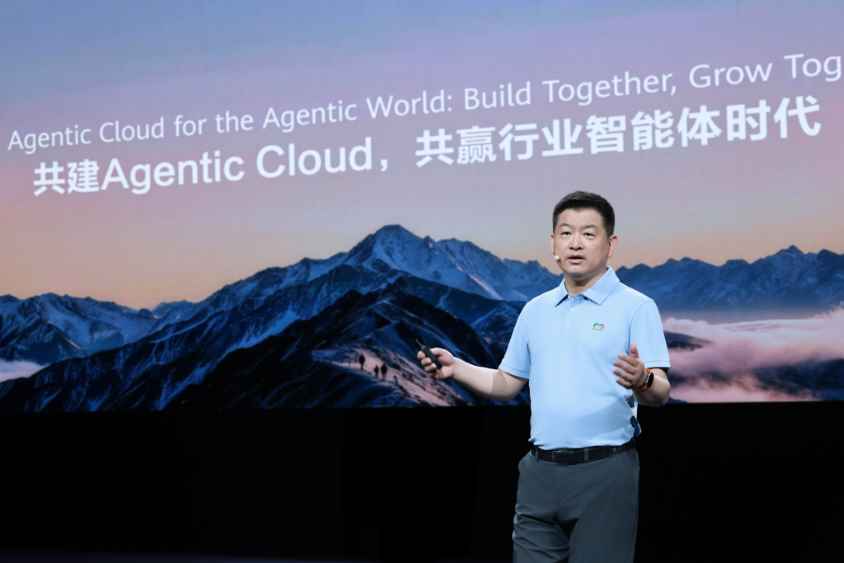
SHANGHAI, CHINA – Media OutReach Newswire – 18 September 2026 – On September 18, Dr. Peter Zhou, Director of the Board at Huawei and CEO of Huawei Cloud, delivered a keynote titled “The Agentic Cloud for the Agentic World: Build Together, Grow Together” at HUAWEI CONNECT 2026. He shared Huawei Cloud’s latest progress. He announced the global launch of the latest AI Cluster Service (AICS), a key step in Huawei Cloud’s strategy to strengthen the silicon bedrock on the cloud and reinforce the foundation for agentic AI. The keynote also highlighted the Agentic Model as a Service (MaaS) platform, which brings together diverse models to accelerate model capabilities as services at scale. The AgentArts enterprise-grade agent platform already serves over 100 enterprises. The Industry AI Foundry has accumulated more than 1,000 industry assets, with over 1,000 projects deployed. The Industry AI Foundry now includes two new zones, Smart Government Zone and AI Hardware Zone, to drive agents toward large-scale adoption. These efforts, taken together, are building a thriving AI ecosystem on the cloud.


Building Agentic Infra for agents
Dr. Peter Zhou also highlighted that in the agentic era, infrastructure no longer simply exists to provide compute. Instead, its purpose has expanded to making every token more efficient, coordinating general and AI compute, enabling models to keep learning, and, more importantly, running agents securely and reliably within real production environments. Huawei Cloud has defined Agentic Infra, a new paradigm around efficient tokens, enhanced memory, unified general & AI scheduling, and secure autonomy. To date, Agentic Infra has served over 3,500 customers.

The latest AICS is built on a five-level fast recovery mechanism with full-chain observability. It supports over 40 days of stable training on cloud and is capable of fault recovery within 10 minutes. Furthermore, supported by coordinated optimization across scheduling, cache, and algorithms, it delivers 20% higher token throughput than the previous generation of compute service. The latest AICS will be commercially available in China on September 30 and in markets outside China on November 30.
The Context Memory Storage (CMS) solution addresses the needs of long-horizon agent tasks for memory capacity and access efficiency. It provides a petabyte-scale memory space, twice the storage capacity of comparable industry products, and supports high-speed terabyte-scale memory reads with 50% higher performance than industry peers.
Agentic MaaS brings together diverse models, enabling developers to invoke state-of-the-art (SOTA) models from leading providers with just one click and no deployment required. At the event, MiniMax demonstrated its advanced multimodal model, which, combined with Huawei Cloud, delivers open, cutting-edge multimodal capabilities.

Building an enterprise-grade agent platform to help enterprises develop and use agents effectively
Huawei Cloud is advancing its enterprise-grade agent platform through a dual approach: commercial and open source. Built on AgentArts and its open-source edition openJiuwen, the platform opens up more than 5,000 general Model Context Protocol (MCP) assets and over 1,000 industry-specific MCP assets, making it easier for enterprises to develop, use, and manage agents. To date, the platform has served more than 100 customers, including the Shenzhen Longgang District Government, China Southern Power Grid, Guangzhou Laboratory, the University of Science and Technology of China, Kingsoft Office, Sichuan Yingu Carbon Sink Renewable Resources Co., Ltd., Changsha Thunder Cloud Network Technology Co., Ltd., and KingMed Diagnostics. At the event, Kingsoft Office shared its implementation practices based on Huawei Cloud’s agent platform. By deeply integrating the agent platform with the WPS 365 Document Center and WPS Comate, Kingsoft Office has built vertical office agents that are now deployed across multiple industries, including finance and government.

Huawei Cloud has announced that AgentArts will be commercially available in markets outside China on December 30. To date, the openJiuwen open-source community has surpassed 50,000 stars and 3.29 million downloads. Together with Chinasoft International, iSoftStone Group, and Beiming Software, Huawei Cloud has launched partner commercial editions and shared a broad market space, helping partners thrive on Huawei Cloud’s silicon bedrock.

Advancing the Industry AI Foundry to accelerate AI adoption at scale across industries
Through the Industry AI Foundry, Huawei Cloud brings together assets such as industry scenarios, models, data, knowledge, and agents, turning industry know-how from isolated project experience into reusable industry capabilities. It has built five industry-specific zones — Smart Healthcare Zone, Embodied AI Zone, AI for Science (AI4S) Zone, Smart Manufacturing Zone, and Smart Finance Zone — with over 1,000 industry-specific assets and more than 1,000 deployed projects.

Two new zones have been launched within the Industry AI Foundry: Smart Government Zone and AI Hardware Zone. The Smart Government Zone has already brought together 24 founding partners, covering a range of scenarios such as government office operations, public services, urban governance, and industry development. The AI Hardware Zone has onboarded 15 core partners, covering more than 20 device types, including AI glasses, AI toys, and AI recording cards, along with over 10 scenario templates and more than 110 scenario skills.

From infrastructure and enterprise-grade agent platforms to industry ecosystems, Huawei Cloud is committed to building an open agentic cloud, with open infrastructure to power AI, an open platform to support enterprises in effectively developing and using agents, and an open industry ecosystem to accelerate AI adoption at scale. Ultimately, Huawei Cloud looks to move forward with customers and partners to build and grow together in the agentic era.

Themed Advancing the Agentic World, HUAWEI CONNECT 2026 will delve into AI across three dimensions: strategy, technology, and ecosystems. You can expect an in-depth look at our latest strategic initiatives, and we’ll also be unveiling our all-new digital and intelligent infrastructure products, scenario-specific solutions for industries, and development tools. The event will run from September 17 to 19 at the Shanghai World Expo Exhibition & Convention Center and Shanghai Expo Center. For more information, please visit HUAWEI CONNECT 2026 online at www.huawei.com/en/events/huaweiconnect


Continue Reading

Trending