Connect with us
Anglostratits

Tech

Huawei Launches LUTERRA® S2, Redefining the Future of Residential Energy Systems with Three Ultimate Innovations

Published

on

Huawei

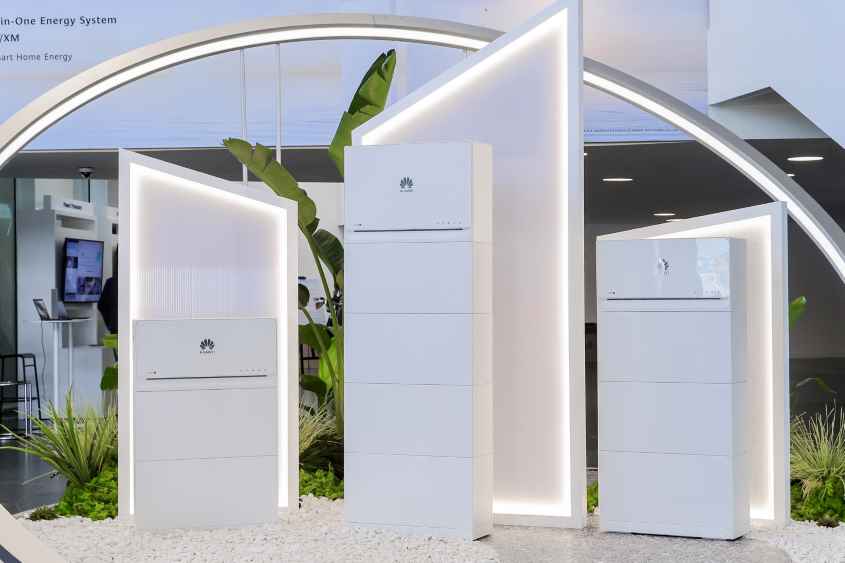
PALMA, SPAIN – Media OutReach Newswire – 11 November 2026 – Huawei announced the launch of HUAWEI LUTERRA S2, an all-in-one residential energy system that integrates a hybrid inverter, storage, and AI-powered energy management in one stackable unit. Designed for easy deployment, LUTERRA S2 can be installed and commissioned in minutes. Available in single-phase (3-10 kW) and three-phase (5- 20 kW) configurations, LUTERRA S2 is the industry’s first all-in-one residential energy system built on Huawei’s proprietary full-SiC (silicon carbide) architecture, delivering exceptional efficiency, power density, and reliability.


“We are thrilled to introduce HUAWEI LUTERRA S2, our next-generation all-in-one residential energy system,” said Steve Zhang, President of Huawei Distributed PV & BESS Business. “By combining full-SiC architecture, AI-driven energy management, and industry-leading safety, LUTERRA S2 is designed to be smaller, lighter, quieter, safer, smarter and more powerful than ever before.”

As solar, storage, EV charging, and home energy management continue to converge, homeowners are looking for solutions that go beyond power and capacity to deliver greater intelligence, efficiency, and safety.

To meet these evolving needs, Huawei introduces HUAWEI LUTERRA S2, a breakthrough residential energy system built on three defining pillars: Ultimate Experience, Ultimate Intelligence, and Ultimate Safety.

Ultimate Experience: From Core Technology to Everyday Experience

LUTERRA S2 combines high power density and compact design, delivering 20 kW-class power in a streamlined form factor. Powered by Huawei’s proprietary full-SiC architecture and ANPC topology, it achieves up to 99% efficiency. Built-in energy optimizers enable up to 5.0 MWh/kWh of lifetime usable energy and a design lifespan of more than 15 years.

Beyond technical performance, LUTERRA S2 is designed to integrate naturally into modern homes. Its art-inspired design, Red Dot Award-winning hardware, App 3.0, and intelligent breathing light create a seamless blend of technology and lifestyle.

The industry’s first 20 kW-class all-natural cooling design eliminates the need for external fans and maintains operating noise below 29 dB.

Ultimate Intelligence: From Automation to Active Decision-Making

Through the AI Energy Management 2.0 platform, LUTERRA S2 brings intelligence to energy planning, operation, and value optimization.

By integrating weather forecasts, electricity prices, household loads, and energy status, the platform intelligently coordinates photovoltaic systems, energy storage, EV charging, heat pumps, and virtual power plants (VPPs). This coordination maximizes the value of every kilowatt-hour generated, stored, and consumed.

For homeowners, the AI Assistant turns complex energy management into simple, conversational interactions, enabling users to make informed energy decisions with ease. For installers, AI 3D modeling simplifies planning and design by identifying roof structures and installation environments. AI-powered diagnostics and remote support further enhance operation and maintenance efficiency.

Ultimate Safety: From Cell-Level Protection to End-to-End Safety

Safety is built into every layer of LUTERRA S2, from battery cells to system-level operations.

Each battery cell incorporates an independent protective isolation structure, supported by Huawei-developed safety components and localized non-propagation design to help contain thermal risks. An intelligent smoke-duct design enables directional pressure relief, smoke evacuation, and cooling, while continuous AC and DC terminal temperature detecting provides proactive detection and protection of critical connections.

LUTERRA S2 has been validated against relevant EU Battery Regulation requirements and complies with key international standards, including IEC 63027 AFCI. It has also undergone TÜV Rheinland safety testing, including a cell thermal runaway test, a 20-minute fire test at 1,000°C, and a 20% hydrogen explosion test, as well as UL 9540A validation.LUTERRA S2 has received the highest-level Safety Mark certification from TÜV Rheinland, backed by the industry’s first cell-level thermal insulation design, safety venting design, and full-link terminal over-temperature protection.

Leading the Future of Residential Energy Systems

More than an energy storage system, LUTERRA S2 connects intelligent technology, enhanced quality of life, and sustainable living. Huawei is setting a new benchmark for next-generation residential energy and accelerating the transition toward a smarter, more sustainable future.

Technical highlights:

Inverter
Up to 3 inverters in parallel, 60kW (20*3) max
Battery
Up to 48 packs in parallel, 336kWh (4*4*3*7) max
Efficiency
Maximum efficiency of 99%
Backup
Switchover under 10 ms; up to 20 kW off-grid load
Cooling and noise
Fanless natural cooling; below 29 dB
Operating range
–25°C to +60°C; IP66; up to C5-M corrosion protection
Connectivity
EEBUS, SG-Ready, OCPP, Modbus-TCP
Safety validation
TÜV Rheinland testing; UL 9540A; AFCI to IEC 63027

More information is available at https://solar.huawei.com/en/products/luterra-s2-xl-xm/


Business

GITEX World RobotiX 2026 brings humanoid debuts and next-gen embodied Artificial Intelligence (AI) to Dubai

Published

on

GITEX

New launch showcase at GITEX GLOBAL advances the Physical AI phenomenon as global humanoid robot shipments surpass 22,000 in H1 2026

DUBAI, United Arab Emirates, November 10, 2026/APO Group/ –From interactive humanoids and intelligent machines undertaking industrial tasks to multilingual robot assistants and wearable exoskeletons, the latest advances in the Physical AI phenomenon will take centre stage at the world’s largest tech and AI event next month in Dubai.


GITEX World RobotiX, a new launch event at GITEX GLOBAL, will converge the world’s robotics pioneers and leaders in embodied AI from 8-11 December at Dubai Exhibition Centre, Expo City Dubai, to show how machines that perceive, reason and act in the physical world are transforming manufacturing, logistics, healthcare, hospitality and smart infrastructure. GITEX GLOBAL 2026 will kick off with the GITEX Summit on 7 December at Dubai World Trade Centre, ahead of the exhibition at Expo City Dubai.


The showcase arrives as robot demand surges; more than 22,000 humanoid robots were shipped globally in the first half of 2026, a 300 percent year-on-year increase (https://apo-opa.co/4kHlnGe), according to Counterpoint Research, with shipments expected to exceed 50,000 units by year-end. Dubai is also advancing its robotics ambitions through its Robotics and Automation Program, targeting the deployment of 200,000 robots over 10 years to 2032 (https://apo-opa.co/4j7b5y2).


Unitree, one of the world’s largest humanoid makers with 31 percent (https://apo-opa.co/4sNVwhW) global market share, spearheads participation this year, alongside other headliners including UBTECH, whose humanoids are deployed in car factories and being tested by Airbus; AiMOGA, Chery Auto’s embodied AI robotics brand; DEEP Robotics, a global leader in quadrupeds; and the UAE’s Micropolis Robotics, which provides autonomous patrol robots for Dubai Police.


Robots take on real-world tasks


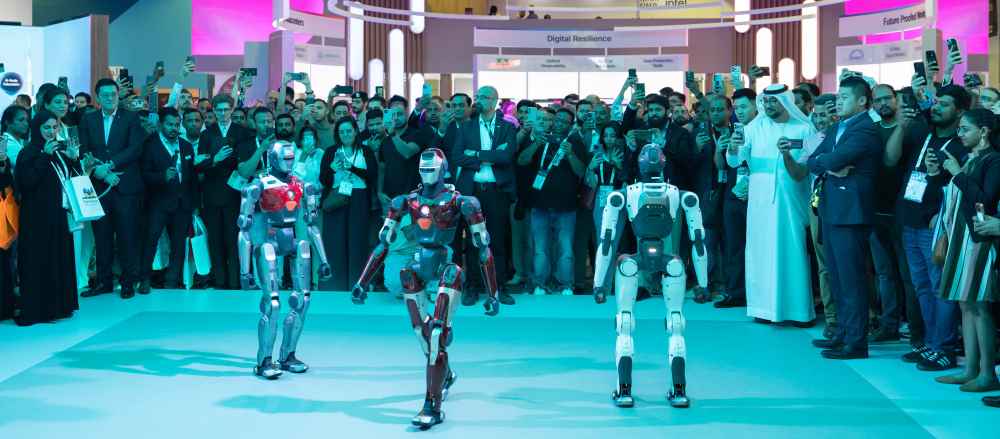
UAE-based Mangobot, a robotics solutions provider specialising in deploying and integrating intelligent machines, will present a robotic workforce featuring autonomous general-purpose robots, patrol robots, multilingual robot receptionists and live robotic performances. Visitors can also experience wearable exoskeleton technology firsthand. “It’s less ‘come look at robots’ and more ‘come see what working alongside robots actually feels like,’” said Mazen El-Kurdi, CTO of Mangobot.


Making its Middle East debut, MOS 2, developed by Chinese embodied intelligence innovator Lumos Robotics, is a wheeled ‘AI Worker’ with dual arms capable of handling payloads of up to 50 kg and operating for more than eight hours.


According to Lumos Robotics, its first-generation MOS robots completed over 1,000 hours of continuous, failure-free operation at Mitsubishi Electric’s Changshu factory, undertaking material handling, quality inspection and screwdriving tasks. The company will also showcase NIX S3, which will deliver a live dance performance demonstrating its 21 degrees of freedom, high-torque joints, agility and dynamic motion capabilities.


Cecile Wei, PR Director, Lumos Robotics, said: “Our demonstrations are designed to show the philosophy behind our products: robots need to do more than move. They need to perform useful tasks reliably in real environments.”


UAE-based Lootah Robotics, a robotics solutions and systems integration company, will showcase humanoid, quadruped, service, cleaning and telepresence robots from manufacturers including Unitree, AGIBOT, Pudu Robotics, UBTECH and EngineAI.


“We are not simply supplying individual robots; we are building an integrated robotics ecosystem,” said Hazem Ghazal, General Manager of Lootah Robotics. “Our stand will showcase how organisations can select different robots for different requirements while maintaining centralised visibility and control.”


The next frontier of embodied AI and human-robot interaction


Advances in embodied AI – where AI models are brought into a physical body or hardware system – are creating opportunities for robots to interact more naturally with people across consumer services, education, entertainment and domestic environments.

We are not simply supplying individual robots; we are building an integrated robotics ecosystem


China’s Light Origins, which develops humanoid robots and intelligent robotic systems, will make the first public appearance of its ‘bunny-shaped’ robot, with live demos of household scenarios offering visitors hands-on interaction. “We believe our bunny-shaped robot is ready to enter consumers’ homes,” said Tingxiang Fan, Co-founder and CTO, Light Origins.


Meanwhile, Raydiculous, a bionic robotics innovator from the Chengdu Humanoid Robot Innovation Centre, will make its Middle East debut with two innovations. Its TP01 humanoid, designed for commercial interaction and public services, can communicate in English and Arabic and perform synchronised movements. Alongside it, DINOBOT, described by Raydiculous as the world’s first intelligent bipedal walking bionic dinosaur, will demonstrate realistic movement and interactive capabilities.


Sandy Liu, Overseas Sales Manager, Chengdu Humanoid Robot Innovation Centre, said: “With its integrated capabilities of walking, interaction, performance, and education, our solutions turn Physical AI into a visible and usable business tool.”


Supporting future robotics talent, UAE-based technology and robotics education company Besomi will introduce six humanoid and mobile robots known as the ‘Besomi Rangers’. Unitree, Seeed Studio, Arduino and Qualcomm will be joining Besomi on the stand. The showcase will feature the latest humanoid robot from Unitree, a global leader in humanoid robotics. A live Robotics & AI Lab will allow visitors to explore how robots are engineered, programmed and trained, with hands-on engineering training using the latest Arduino VENTUNO platform, developed in collaboration with Qualcomm.


“We want young engineers and innovators to ask, ‘How does this work?’

and then go build the next generation of robotics technologies right here in the UAE. Showcasing the latest Unitree humanoid robot gives visitors a look at the forefront of robotics. Our hands-on training with Arduino and Qualcomm gives engineers practical experience to turn their own ideas into working robotics and AI applications. We are also pleased to welcome Seeed Studio to our stand as part of this focus on building engineering capabilities,” said Mohammad Hani, CEO, Besomi Robotics & AI.


Building the intelligence behind autonomous machines


JWIPC, a Chinese developer of AI computing hardware and industrial computing solutions, will launch robotic controllers built on NVIDIA’s Thor module, which the company says delivers up to 2,070 TFLOPS of FP4 computing performance. Designed for humanoids, robotic arms and autonomous mobile robots, the controllers enable AI processing and real-time decision-making.


“The NVIDIA Thor module provides a high-compute edge brain for embodied intelligence, running multi-modal models locally to integrate sensor fusion, task planning, and millisecond motion control,” said Nick Zhang, Regional Sales Manager, JWIPC.


Meanwhile, Physical AI software developer Songying Technology will demonstrate ORCA OS and ORCA Lab, integrating simulation, synthetic data generation, AI training, validation and deployment into a connected robotics development environment. Taiwan-based embedded computing specialist Vecow will unveil advanced, rugged Edge AI and robotics platforms powered by NVIDIA, Intel, AMD, Qualcomm, and NXP, while officially introducing its dedicated UAE team to accelerate mission-critical regional deployments


The 46th edition of GITEX GLOBAL, organised by inD, opens with The GITEX Summit at Dubai World Trade Centre (DWTC) on 7 December, before the four-day GITEX GLOBAL Expo begins at Dubai Exhibition Centre alongside Expand North Star, its startup and investor event.


The dual-blockbuster showcase converges 6,000-plus enterprise and startup exhibitors with tens of thousands of government leaders, C-suite executives, investors and buyers from 180 countries, reaffirming Dubai’s status as an epicentre of tech collaboration.


More information is available at www.Gitex.com and (https://apo-opa.co/4iyQ67d)

*Sources: https://apo-opa.co/4kHlnGe

https://apo-opa.co/4j7b5y2

Distributed by APO Group on behalf of GITEX Global.


Continue Reading

Business

2 million hacking tool detections in six months: Kaspersky reveals the most used lateral movement utilities

Published

on

For the period of 6 months, April to September 2026, the solution detected 2,171,513 hacking tool usage attempts

JOHANNESBURG, South Africa, November 9, 2026/APO Group/ –Recent statistics compiled from detection alerts within Kaspersky Anti Targeted Attack (KATA)* reveal the hacking tools most often used for lateral movement across enterprise infrastructures, highlighting the pressing need for reliable network security solutions to protect corporate environments.


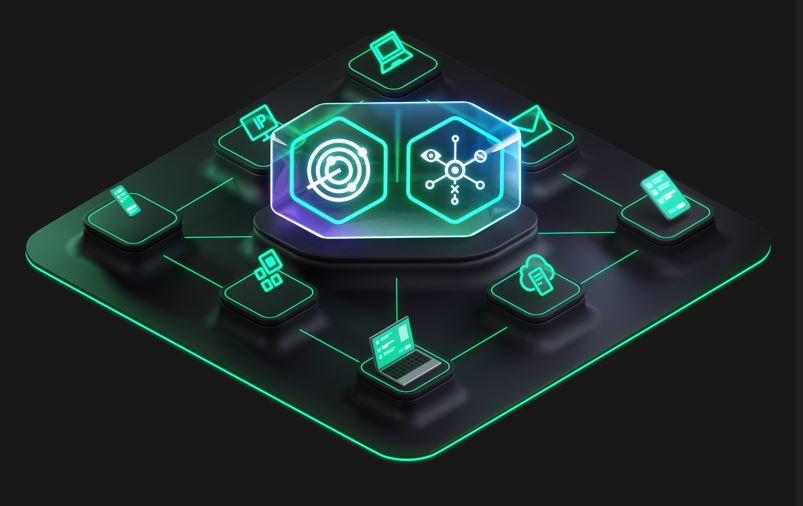
Recent investigations into cyber-espionage groups show that attackers increasingly avoid detectable malware, choosing instead to blend into legitimate corporate network traffic (https://apo-opa.co/4BWK3AY). By weaponising dual-use tools and administrative utilities already present in the system, they move laterally across the domain undetected to harvest credentials and locate high-value assets. In this era of silent intrusion, Kaspersky shares insights into the most frequently used hacking tools to help organisations defend their networks.

For a decade, KATA, Kaspersky’s mature NDR solution, has been delivering comprehensive anti-APT protection. It features advanced threat detection, in-depth network traffic analysis, and centralised incident response to ensure full visibility across the entire network. Equipped with nearly 12,500 network detection rules in its database, KATA detects an average of 312,705 potential attacks daily.

For the period of 6 months, April to September 2026, the solution detected 2,171,513 hacking tool usage attempts. The following types of tools were detected most frequently:

This year, we are proudly celebrating the 10th anniversary of KATA

HackTool.Cobalt – 136,084 detections. While designed for security assessments, Cobalt Strike is also frequently used by malicious actors across various attack stages, including post-exploitation, lateral movement, and similar activities.

HackTool.NetExec – 129,560 detections. NetExec is used for automated network security assessments and discovering poorly secured network services. Its capabilities can also be exploited by attackers for reconnaissance and gaining system access.

HackTool.SQLMap – 107,697 detections. The SQLMap tool is used to automate the detection and exploitation of SQL injection vulnerabilities, which can allow unauthorised access to databases via web applications.

“Since advanced hacking tools may bypass endpoint defences, deploying Network Detection and Response (NDR) solution is critical to exposing silent anomalies and neutralising advanced attacks,” says Aren Torosyan, Product Manager at Kaspersky. “This year, we are proudly celebrating the 10th anniversary of KATA. Over this decade of innovation, backed by deep infrastructure expertise and rigorous research, KATA has established itself as a highly effective solution, helping clients worldwide protect their environments from even the most advanced, hidden threats across networks and endpoints. With the transition to the Open Single Management Platform planned for next year, advanced NDR capabilities will become even more comprehensive and accessible to security teams”.

To get full information about Kaspersky Anti Targeted Attack and request a demo, please visit the website (https://apo-opa.co/4BStEgE).

*Statistics are based on detection alerts from Kaspersky products, collected from users who consented to provide statistical data to Kaspersky Security Network. Some of the detections may be attributed to authorised security assessments.

Distributed by APO Group on behalf of Kaspersky.


Continue Reading

Business

PhotonPay Strengthens North American Regulatory Footprint with Canada’s RPAA Registration

Published

on

PhotonPay

The registration reinforces PhotonPay’s regulatory foundation for payment activities in Canada, with requirements covering operational risk management, incident response and the safeguarding of end-user funds.
HONG KONG SAR – Media OutReach Newswire – 10 November 2025 – PhotonPay today announced that its Canadian operating entity, Photon Dance CA Inc., is now registered with the Bank of Canada as a payment service provider (PSP) under Canada’s Retail Payment Activities Act (RPAA). The entity was previously registered with the Financial Transactions and Reports Analysis Centre of Canada (FINTRAC) as a Money Services Business (MSB). The RPAA registration further strengthens PhotonPay’s regulatory foundation in Canada and supports its continued development of local financial services across North America.


The RPAA establishes a federal framework for the registration and supervision of PSPs conducting specified retail payment activities in Canada. Administered by the Bank of Canada, it sets requirements for operational risk management, incident response and regulatory reporting. PSPs that hold end-user funds are also required to implement measures to safeguard those funds, strengthening oversight and accountability across Canada’s retail payments ecosystem.

The Canadian registration adds to PhotonPay’s broader regulatory presence across North America. In the United States, PhotonPay is registered as a Money Services Business with the Financial Crimes Enforcement Network (FinCEN) and holds money transmitter licenses across multiple U.S. states. Across the Americas, Europe and Asia, PhotonPay holds 35 payment licenses, regulatory authorizations and registrations, reflecting the regulatory breadth behind its operations across key financial markets.

For PhotonPay, building a global financial operating system requires more than connecting payment capabilities across markets. It also means developing the local regulatory and financial infrastructure needed to support those capabilities in each jurisdiction. As businesses expand internationally, their financial operations increasingly span different account structures, payment systems, currencies and regulatory environments. Bringing these functions together requires infrastructure that can address local market requirements while giving businesses a more unified way to manage their global finances.

This is the vision behind PhotonPay’s next-generation Financial OS. Through an integrated, API-first architecture, PhotonPay brings together multi-asset wallets, local collections, global payouts, foreign exchange, card issuing and embedded finance. By supporting both fiat currencies and stablecoins within its broader financial infrastructure, the platform connects traditional payment rails with emerging digital-asset capabilities, helping businesses manage increasingly complex financial operations across markets.

“Global financial infrastructure must be designed around the realities of the markets it serves. Regulatory frameworks, payment systems and the responsibilities involved in handling funds differ across jurisdictions, and these differences need to be accounted for at the infrastructure level,” said JP Pi, Global Chief Compliance Officer at PhotonPay. “Our approach is to build a Financial OS that brings together global capabilities while respecting the regulatory and operational requirements of each local market. The RPAA registration is another step in putting that approach into practice, as we continue developing infrastructure to support businesses operating across an increasingly interconnected financial landscape.”


Continue Reading

Trending