Tech
Huawei Code4Mzansi Highlights Developers Building for South Africa’s Real Economy


Published
3 months agoon

Code4Mzansi highlights the growing strength of South Africa’s developer ecosystem and the role of youth-led innovation in shaping the country’s digital future
JOHANNESBURG, SOUTH AFRICA – Media OutReach Newswire – 26 May 2026 – South Africa’s emerging developers are building close to the ground, with many of the strongest solutions at the inaugural Huawei Code4Mzansi finals focused on systems people use every day: township retail, healthcare, energy, agriculture, payments and the creative economy.
The competition was held in partnership with the Department of Small Business Development. “The Code4Mzansi competition is not just a celebration of achievement, it is a launchpad for the future,” said Minister Stella Ndabeni, whose department co-hosted the event and delivered the closing address.
The finals revealed a clear shift from building abstract digital products to practical tools that help small businesses trade better, communities access services more easily, and local industries solve problems faster.
Four finalist teams focused directly on the township economy, with solutions covering food safety verification for spaza shops, offline point-of-sale systems built for load-shedding, WhatsApp-native marketplaces for informal retailers, and community credit systems for SASSA grant recipients.
Others addressed AI-driven healthcare access, electricity theft detection, smart agriculture, financial infrastructure for the creator economy, and AI-generated African music.
Held at Huawei Office Park in Woodmead, the finals brought together more than 100 attendees, including government representatives, academic partners, industry leaders and media.
“The quality of the finalist solutions demonstrated the potential of local innovation to respond to real market needs,” said Steven Chen, Cloud CEO of Huawei Technologies South Africa.
Academic partners included the University of Pretoria, the University of Johannesburg, the University of the Witwatersrand and the University of Cape Town.
“Small businesses are the backbone of our economy, and technology is their greatest accelerator. The participants here today are future entrepreneurs who will drive South Africa’s digital economy forward,” said Professor Thokozani Shongwe, Vice Dean of Postgraduate Studies, Research and Internationalisation at the University of Johannesburg’s Faculty of Engineering and the Built Environment.
Industry partner rain also attended. Leon Nortje, Principal and Senior Architect at rain, said the competition offered a strong view of the country’s emerging technology pipeline.
“It is always good to see new projects and new teams working on solutions that are valuable and industry-related. We will be looking out for potential new employees,” said Nortje.
The winners
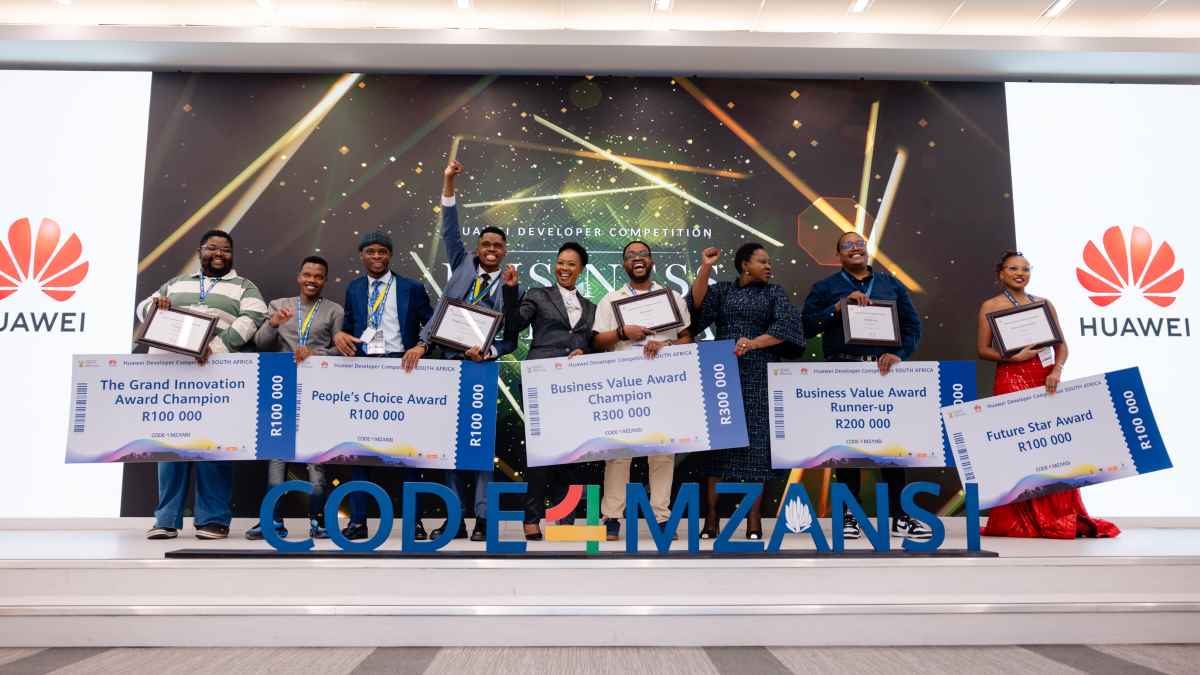
The finalists competed for a prize pool of R800,000. MAAT by SIMVAK was named the overall grand winner and received the Business Value Award, taking home R300,000. The platform addresses food safety and regulatory compliance in South Africa’s informal retail sector through AI agents, real-time product recall alerts, and counterfeit detection for the spaza shop ecosystem.
“The spaza network is the supply chain for most South African households,” said SIMVAK founder Shingirayi Mandebvu.
HealthHive by FTCK received second prize in the Business Value Award category, taking home R200,000, for its AI telemedicine platform that matches patients with the right medical practitioners based on their symptoms.
Auraa received the Grand Innovation Award for its AI music engine built to generate authentic African sound. The platform has been associated with an album that has crossed one million streams.
The Future Star Award went to e-Khadi, a community credit and stokvel platform giving SASSA grant recipients access to essentials at their local spaza shops, supported by AI-assisted credit scoring and fraud detection.
The People’s Choice Award, voted by the public on Huawei’s social media channels, went to DevRift, a semi-finalist in the competition, who took home R100,000.
Minister Ndabeni delivered the closing address, positioning Code4Mzansi within the government’s agenda for youth entrepreneurship, small business development and digital inclusion.
“Our task is to ensure that innovation does not remain a moment of applause, but becomes a pathway to enterprise creation, digital inclusion, and sustainable growth,” she said.
“Thank you to Huawei for being a perfect partner on the journey that we are travelling, and of course, those that matter most, the developers who dared to compete,” she said.
Code4Mzansi forms part of the global Huawei Cloud Developer Competition. In its inaugural edition, South Africa attracted more participants than any other country: 1,041 across 353 teams, including 176 enterprise teams, resulting in the highest enterprise participation rate among all competing markets. Twenty semi-finalists were selected before the top nine advanced to the final.
For the finalists, the work is just beginning. As Minister Ndabeni said, “Go home today proud. But tomorrow, wake up, build again.”
About Huawei
Founded in 1987, Huawei is a leading global provider of information and communications technology (ICT) infrastructure and smart devices. With 213,000 employees operating in over 170 countries, we serve more than three billion people worldwide.
Huawei is committed to bringing digital to every person, home, and organisation for a fully connected, intelligent world. In 2025, Huawei generated CNY880.9 billion in revenue, reinvesting 21.8% (CNY192.3 billion) into R&D, with about 53.7% of its employees working in R&D. As a private company fully owned by its employees, Huawei focuses on customer-centric innovation and open collaboration to create lasting value and drive technological breakthroughs globally.






CIT VERICASH Recognized as Best Digital Financial Services Platform of 2026 by Global Business Outlook


Comsol enters wholesale 5G home broadband market with backing from new shareholders


Electra Mining Africa: Showcasing the Technologies Shaping the Future of Industry


Transnet Freight Rail Chief Executive Officer (CEO) to Spotlight South Africa’s Rail Reform at African Mining Week (AMW) 2026


Mukuru Wallet Empowers Botswana Customers with Everyday Cashless Spending Power


How a Regional Company Beat a Global Competitor to a USD 170 Million Kenyan Contract (By Sharon Cheramboss)
Published
3 days agoon
August 24, 2026
The recognition marks the latest in a series of industry acknowledgements for the company, which in 2025 was awarded Best Digital Transformation Platform, Fintech Strategic Partner of the Year, and Best Financial Services Platform Africa
The recognition marks the latest in a series of industry acknowledgements for the company, which in 2025 was awarded Best Digital Transformation Platform, Fintech Strategic Partner of the Year, and Best Financial Services Platform Africa. For CIT VERICASH, the Global Business Outlook award extends the company’s growing international profile at a moment when digital financial services adoption across sub-Saharan Africa is accelerating at institutional scale.
Those numbers are difficult to dispute. A single deployment of the VERICASH platform currently powers the digital banking operations of a pan-African banking group across 22 countries, processing over 500 transactions per second, handling more than 30 million digital services per day, and maintaining more than 7 million active subscribers. In the client’s first five years of full digital platform operations, the results compounded: 5x growth in digital subscribers, 10x growth in monthly transactions, and 30x growth in monthly financial transaction value, translating directly into higher fee income and lower servicing costs.
Building the Backbone of African Digital Finance
CIT VERICASH, a division of CIT GLOBAL, draws on the parent company’s 30-plus years of system integration and software expertise since its founding in Toronto in 1993, delivering award-winning technology to clients across more than 50 countries.
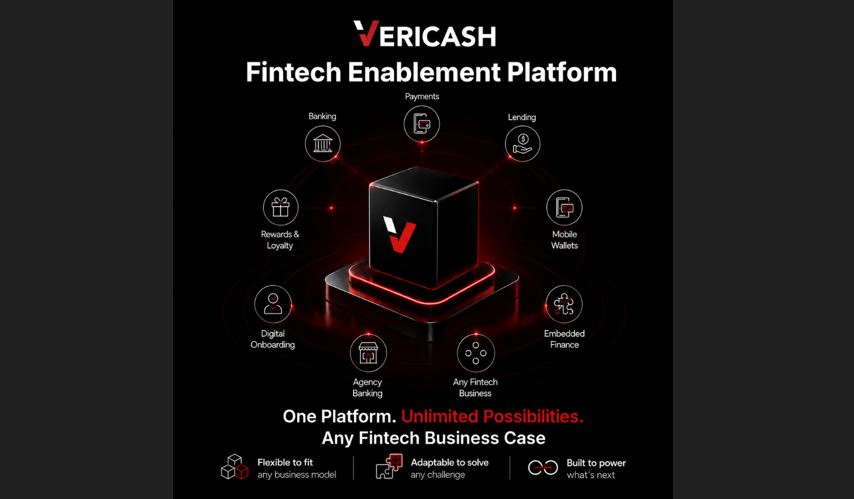
The cornerstone of the company’s performance is the VERICASH Fintech Enablement Platform, a centralized, integrated ecosystem designed to enable financial institutions to launch, operate, optimize, and continuously scale digital financial services through a single platform. Powered by an agile, low-code/no-code service builder, the platform allows commercial banks, digital banks, microfinance institutions, mobile money operators, and fintechs to rapidly deploy and evolve digital banking, agency banking, mobile wallets, payment ecosystems, lending, and other financial services while reducing complexity, accelerating time-to-market, and maximizing the value of existing infrastructure. Currently live in approximately 25 markets across Africa, the platform supports Tier 1 banks, digital banks, neobanks, and fintech operators with the technology, operational capabilities, and strategic enablement required to drive sustainable digital growth.
Global Business Outlook, in selecting CIT VERICASH for the 2026 award, pointed to the platform’s demonstrated ability to operate at institutional scale across fragmented regulatory environments, a challenge that continues to frustrate expansion-minded financial institutions across the continent.
Strategic Partnership That Goes beyond software delivery
To ensure sustainable, long-term client growth, CIT VERICASH anchors every deployment in a Strategic Partnership Model that extends far beyond traditional software delivery. Rather than acting as a technology vendor, CIT VERICASH operates as a long-term strategic partner, aligning technology, operational excellence, and business growth around shared success.
The partnership model combines a scalable fintech platform with dedicated Centres of Excellence, 24/7 operational monitoring, continuous platform optimization, development and customization capabilities, business intelligence and performance analytics, application quality support, and proactive fraud monitoring. Beyond technology operations, CIT VERICASH works alongside clients to evaluate business models, support licensing requirements, build operational teams, develop financial forecasts, and accelerate go-to-market execution for new digital service offerings.
Supported by a collaborative revenue-sharing model that aligns incentives between CIT VERICASH and its partners, this approach enables financial institutions to reduce technology risk, accelerate profitability, continuously evolve their digital capabilities, and unlock sustainable long-term growth.
This enterprise-grade approach has translated into critical long-term alliances. In East Africa, CIT VERICASH has formed a strategic alliance with Bluechip Technologies, combining the VERICASH platform with Bluechip’s localized market expertise to deliver agency banking, digital payments, and mobile wallets to banks, telcos, and fintechs. Further across the continent, a decade-long partnership with CWG PLC in West Africa that powers large-scale financial ecosystems.
A key differentiator shaping CIT VERICASH’s product direction is its approach to artificial intelligence. Rather than positioning machine learning as an optional layer, the company operates under a clear philosophy: “AI is not a feature. It is how the digital channel thinks, decides, and acts.” By embedding 360° AI-powered capabilities across retail, SME, and corporate banking, including personalized customer experiences, automated credit scoring, real-time transaction risk scoring, and proactive fraud prevention, the platform is built for the next generation of digital finance infrastructure, not the last.
A Pattern of Recognition
What distinguishes CIT VERICASH’s recent run of awards from standard industry noise is the consistency. Three industry recognitions in 2025, now followed by an international designation from Global Business Outlook in 2026, suggest a narrative that is beginning to cut through: a company that has spent years building infrastructure continues to be acknowledged because its clients are scaling profitable, inclusive digital services.
The timing is not incidental. Digital financial services adoption across sub-Saharan Africa accelerated sharply following the pandemic, and the institutions that emerged well-positioned were largely those that had invested in scalable ecosystems rather than attempting to build proprietary stacks. CIT VERICASH positioned itself on the right side of that structural shift.
Distributed by APO Group on behalf of CIT VERICASH.
Published
1 week agoon
August 20, 2026
Comsol aims to blanket South Africa with around 2,000 base stations, representing one of the country’s largest standards-based and highest-capacity 5G networks
Comsol (https://Comsol.co.za/), a South African fixed wireless connectivity and private network operator with a history spanning nearly three decades, is entering the home broadband market as a wholesale provider of 5G infrastructure. The move is backed by two new shareholders: Platform Investment Partners, which has made 10 founder-stage fibre investments across four geographies over the past decade, and Wimsey Capital, a privately held investment company.
The new shareholding follows the exit of Nedbank Private Equity, part of Nedbank CIB, from its investment in Comsol. Convergence Partners, a major shareholder and long-standing investor in the business, together with Solcon Capital, is investing additional growth capital. Founder and CEO Iain Stevenson (through Mactavish Investments) retains his stake and is also investing additional capital into the company. RMB arranged and provided an innovative and holistic funding solution that enabled the shareholder transaction and will support the business in its strategic capex roll-out plan.
The move gives South African internet service providers, mobile virtual network operators (MVNOs) and other potential partners access to a standalone 5G-Advanced* network purpose-built for fixed wireless access (FWA). Comsol owns and operates the network as an end-to-end wholesale product, while its partners control the customer relationship and go-to-market strategy, including branding, commercials and support.
One million households in Gauteng already covered
Comsol started building its network six months ago and already covers more than a million households in Gauteng. The company is targeting full coverage of Gauteng by March 2027. Expansion into the Western Cape, KwaZulu-Natal and major regional centres will follow in 2027 and 2028.
Comsol aims to blanket South Africa with around 2,000 base stations, representing one of the country’s largest standards-based and highest-capacity 5G networks. The network creates a new wholesale option for South African service providers, giving them more network capacity choice through new infrastructure, enhancing the competitive landscape to the benefit of the consumer.
“Comsol anticipates where the market is heading and builds ahead of demand,” said Stevenson. “This is why we were investing in licensed spectrum years before its strategic value was widely understood and building private 5G before the market had grasped what it would enable. We see 5G-Advanced for the home as a big growth opportunity.
“ICASA has allocated spectrum to network providers to expand broadband access and increase competition in the market. We believe the way to honour that mandate is to build wholesale infrastructure that extends high-speed broadband to new customer segments and creates a platform for more competition at the well-established service provider layer.”
Backed by investors with deep experience in telecom infrastructure
Comsol anticipates where the market is heading and builds ahead of demand
Shaun Clark, CEO of Platform Investment Partners, added: “We have spent years investing in the construction of open-access digital infrastructure in South Africa, and were founding investors in assets such as DFA, Conduct, Vumatel and N99. Our approach has always been to identify trends in technology adoption and invest behind them. We see fixed wireless as an important part of the connectivity market. Comsol is a natural fit with our portfolio of digital infrastructure businesses, which are all centred around a neutral host model.”
Richard Ladbrook, Director of Wimsey Capital, said: “We see a significant opportunity in 5G fixed wireless access to bring high-quality connectivity to more South African households. Comsol has a multi-decade track record of successfully building and delivering advanced wireless networks in diverse contexts. We are excited to back the business and partner with the world-class Comsol team as they build and scale this next phase of growth.”
Said Andile Ngcaba, executive chairman of Convergence Partners and chairman of the Comsol board: “Comsol is well positioned as the world transitions from 5G to 6G. The depth of its spectrum and nationwide network presence across all provinces creates a significant opportunity to serve South Africa’s enterprise, private and public sectors. Comsol’s platform is equally relevant to urban and rural markets, and to companies of all sizes.”
For Nedbank Private Equity this exit concludes a successful nine-year investment in Comsol. “We are proud to have supported the company’s growth, network rollout and value creation journey alongside management and our co-shareholders. The transaction positions Comsol strongly for its next phase of growth,” said Yougan Moodley of Nedbank Private Equity.
The commercial case for advanced home 5G
Comsol’s wholesale 5G-Advanced offering complements existing fibre networks, expanding consumer choice and the reach of home connectivity. Approximately 15% of South African households are connected to fibre, largely concentrated in dense metro areas where trenching costs are justified. This leaves a significant market adjacent to suburban markets where 5G FWA can be deployed quickly and at a substantially lower cost. The 5G-Advanced FWA network deployed by Comsol provides high capacity to support home broadband at scale, enabling entire towns to be covered in weeks.
Regulatory and technology developments in recent years have further strengthened the commercial case for 5G-Advanced FWA home connectivity. Comsol received its C-band spectrum licence from ICASA in 2022, providing investors with the certainty to fund the network rollout. The allocated spectrum supports speed-tiered plans with competitive pricing for consumers. Meanwhile, declining 5G chipset and CPE costs have lowered the upfront cost for consumers and ISPs entering the 5G FWA market. As a new entrant into the 5G wholesale market, Comsol also benefits from a modern 5G-Advanced standalone core, unencumbered by legacy technologies.
These advantages of 5G FWA are expected to drive significant growth over the next five years. ICASA data shows FWA subscriptions growing by roughly 39% year on year in 2025.** BMIT predicts that 5G may account for up to 67% of all residential FWA connections by 2029, up from 35% in 2024.***
Built differently
Comsol’s network is one of only two production 5G standalone cores currently live in South Africa. The network offers a level of ultra-low latency and dedicated capacity control that hybrid 4G/5G deployments cannot match, along with roughly double the uplink performance of typical 5G mobile operator networks.
Comsol’s implementation of 5G-Advanced is IMT-conformant, taking advantage of standards-based technologies that deliver significantly greater capacity at a lower cost per bit. Comsol’s network is purpose-built to deliver high-capacity 5G home connectivity at scale.
Advantages for partners
Comsol operates as a wholesaler and does not compete with its consumer-facing partners. ISPs and other partners retain ownership of their go-to-market strategies, including product commercials, packaging, billing and branding. Comsol’s API-driven platform enables partners to bring a branded 5G-Advanced FWA offering to market in weeks, while retaining a high degree of control over their products and customer engagement.
Comsol has designed the network to enable ISPs to reach new customer segments with connectivity geared towards streaming, video calls and smart-home use that make up the bulk of home broadband needs. Its API-driven architecture gives partners the flexibility to build differentiated packages for different customer segments and implement or adapt products within hours, enabling them to respond quickly to changing market demand.
Distributed by APO Group on behalf of Comsol.
Published
2 weeks agoon
August 14, 2026
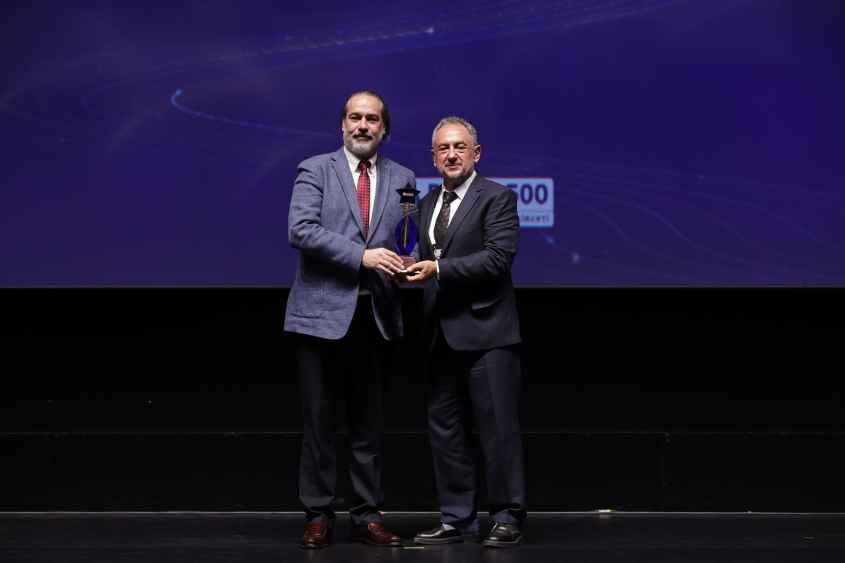
KoçSistem ranked first in ICT 500’s main system integrator category for an eighth consecutive year, while KoçSistem and KoçDigital recorded 10 category wins as KoçSistem expands its MENA operations through Dubai and Riyadh
The company announced that the eighth consecutive category lead, as well as 10 combined category wins for KoçSistem and KoçDigital, support its MENA growth through offices in Dubai and Riyadh.
“Securing this leadership for an eighth consecutive year in ICT 500 is a strong reference for our leadership position in Türkiye,” said Mehmet Ali Akarca, General Manager of KoçSistem. “It also supports our objective of growing in international markets. We are pleased to take the technology expertise and operational capabilities we developed over many years in Türkiye to the MENA region.”
Ten category wins across two companies
KoçSistem’s eight first-place results covered the main system integrator category and areas including consulting, cloud, hosting management, cybersecurity, managed services and data backup and storage hardware.
With over 80 years of experience, we aim to create long-term value for the region’s digital ecosystem
KoçDigital added two first-place results in data warehousing and business intelligence software, and artificial intelligence under the “Contribution to Türkiye’s Economy” category.
ICT 500 ranks Türkiye’s largest ICT companies
ICT 500 is BThaber’s annual ranking of Türkiye’s 500 largest ICT companies by revenue, with additional tables covering operating categories. The latest edition assessed 2025 data and marked the study’s 27th year.
The research reported that the combined 2025 revenue of the 500 ranked companies reached TRY 1.6 trillion, up 40 per cent from 2024.
MENA growth through Dubai and Riyadh
KoçSistem opened offices in Dubai and Riyadh in 2024 and continues to develop its MENA business in AI, cloud, cybersecurity, data analytics and managed services.
The offices extend a regional initiative outlined at GITEX Dubai 2024, when KoçSistem described Dubai as a base for developing customer and partner relationships across the Gulf and wider MENA markets.
“With over 80 years of experience, we aim to create long-term value for the region’s digital ecosystem,” Akarca concluded.
Distributed by APO Group on behalf of KoçSistem.
| Cookie | Duration | Description |
|---|---|---|
| cookielawinfo-checkbox-analytics | 11 months | This cookie is set by GDPR Cookie Consent plugin. The cookie is used to store the user consent for the cookies in the category "Analytics". |
| cookielawinfo-checkbox-functional | 11 months | The cookie is set by GDPR cookie consent to record the user consent for the cookies in the category "Functional". |
| cookielawinfo-checkbox-necessary | 11 months | This cookie is set by GDPR Cookie Consent plugin. The cookies is used to store the user consent for the cookies in the category "Necessary". |
| cookielawinfo-checkbox-others | 11 months | This cookie is set by GDPR Cookie Consent plugin. The cookie is used to store the user consent for the cookies in the category "Other. |
| cookielawinfo-checkbox-performance | 11 months | This cookie is set by GDPR Cookie Consent plugin. The cookie is used to store the user consent for the cookies in the category "Performance". |
| viewed_cookie_policy | 11 months | The cookie is set by the GDPR Cookie Consent plugin and is used to store whether or not user has consented to the use of cookies. It does not store any personal data. |