Connect with us
Anglostratits

Business

Hong Kong: future-proofing the financial system for long-term sustainability
Published

on

Hong Kong

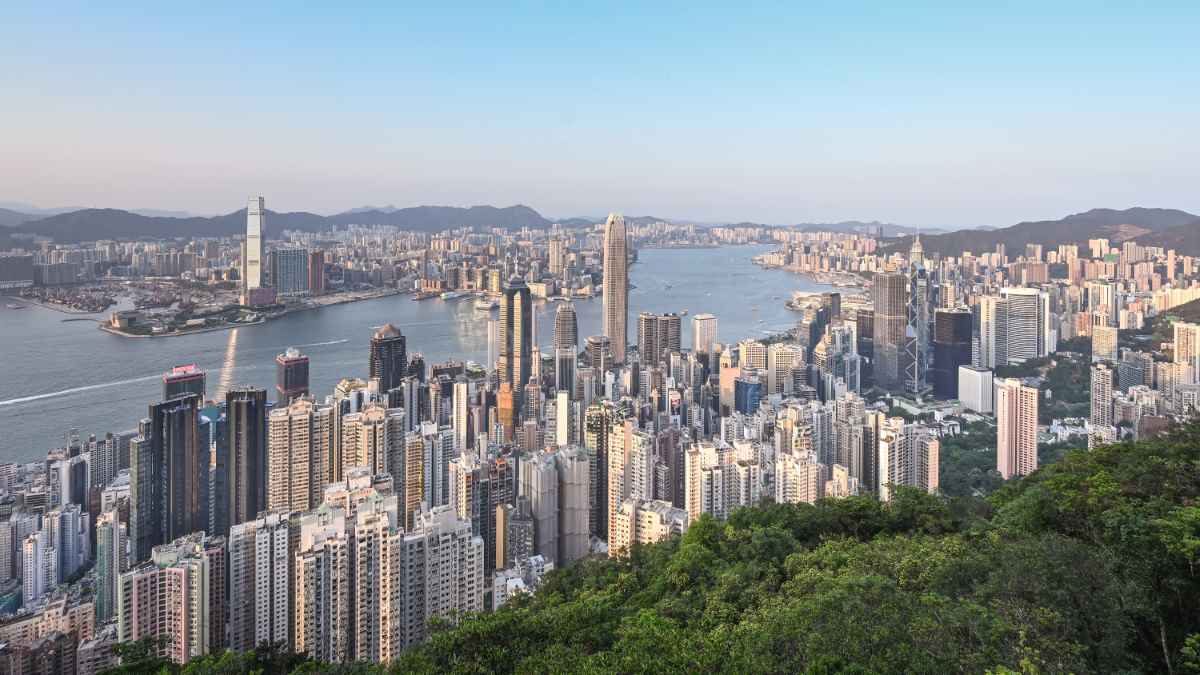
HONG KONG SAR – Media OutReach Newswire – 24 October 2024 – Paul Chan, Financial Secretary of the Hong Kong Special Administrative Region, is visiting the United States (October 22-24), where he delivered keynote speeches at the Bloomberg Global Regulatory Forum on the topic of financial sustainability (October 22) and at a business luncheon (October 23) in New York.

At the Bloomberg Global Regulatory Forum, Mr Chan highlighted how Hong Kong’s robust regulatory regime and international connectivity can play a role in building a future-proof financial system for long-term sustainability.

“Our strong fundamentals continue to be internationally recognised. Hong Kong ranks once again among the top three global financial centres, behind only New York and London,” Mr Chan said, adding that Canada’s Fraser Institute has again ranked Hong Kong the world’s freest economy.

These commendations are echoed by the global investor community, said Mr Chan. “Total banking deposits in Hong Kong, for example, have grown 5%, or US$100 billion, this year to date, reaching more than US$2 trillion. Our asset-and-wealth-management sector is also growing. We are managing over US$4 trillion in assets, and over half of that value was sourced from investors outside Hong Kong and the Chinese Mainland.”

Under “one country, two systems”, Mr Chan said international investors could be confident in Hong Kong’s future, thanks to advantages including the common law tradition; a judiciary that exercises powers independently; the free flow of goods, capital, talent and information; a currency pegged to the US dollar and business practices that align with the best international standards.

Elaborating on the dual mandate of Hong Kong’s financial regulators as both regulators and market enablers, Mr Chan said: “This requires the regime to respond to market and economic changes, embrace and empower technological innovation, and create the conditions for markets to thrive.”

Noting that innovation was reshaping the future of finance, Mr Chan shared two key development directions for Hong Kong: continuing to deepen the Connect Schemes between Hong Kong and Mainland China and strengthen the links and regulatory co-operation with Mainland and global capital markets; and embracing innovation, which includes enabling the responsible and sustainable development of digital assets.

Mr Chan added that Hong Kong was strengthening connections with other markets in ASEAN, the Middle East and the Belt and Road countries.

The Financial Secretary also attended a luncheon co-hosted by the Hong Kong Economic and Trade office in New York and the Hong Kong Association of New York (October 23). He told attendees from businesses, institutions, chambers of commerce and think tanks that Hong Kong would continue to play its unique role as a “super connector” and “super value-adder”, linking capital markets and investors of Mainland China and the global community to create value and opportunities for all.

He also introduced Hong Kong’s latest development strategies, particularly new initiatives in key areas such as finance and innovation and technology, attracting businesses and talent, and the increasingly close co-operation and collaborative developments with sister cities in the Guangdong-Hong Kong-Macao Greater Bay Area. 


Business

Africa’s Grid Constraints Come into Focus as Regional Markets Push Toward Integration

Published

on

Africa

Regional power pools are advancing and renewable pipelines are growing, but the regulatory and financial architecture needed to connect them remains the continent’s most critical infrastructure gap – an issue central to the Power Africa Today conference at AEW 2026

CAPE TOWN, South Africa, June 25, 2026/APO Group/ –Africa’s electricity demand is projected to nearly double to 2,291 TWh by 2050, requiring an estimated $30 billion in transmission and grid infrastructure investment to unlock and integrate new generation capacity. Yet across the continent, grid systems are struggling to keep pace with rapidly expanding supply pipelines and rising demand.

In Nigeria, repeated nationwide grid collapses as recently as February 2026 underscore the fragility of aging transmission infrastructure. In East Africa, tower failures along the 428 km Loiyangalani-Suswa line temporarily stranded output from Lake Turkana Wind Power – Africa’s largest wind installation. Meanwhile, demand growth pressures are accelerating across North Africa, where electricity consumption is expected to rise by around 50% by 2035, driven by urbanization, desalination projects, and climate-related temperature increases.

Despite these constraints, generation investment continues to accelerate across Africa, particularly in renewables, gas-to-power and hybrid systems. However, without equivalent investment in transmission and interconnection, much of this new capacity risks being underutilized or stranded. This growing imbalance between generation and grid capacity is driving a sharper focus on system-wide planning and regional market design – issues that will be central to the newly launched Power Africa Today conference at African Energy Week 2026. The platform will bring together policymakers, utilities, investors and developers to explore how regional interconnection, cross-border trading frameworks and financing structures can better align generation growth with grid expansion.

Power Markets Experiment with Reform

Alongside infrastructure challenges, Africa’s electricity sector is undergoing gradual – but uneven – market reform. Most countries still operate vertically integrated systems dominated by state utilities, but a growing number are introducing competitive frameworks to attract private capital and improve efficiency.

Zimbabwe opened its electricity market to full private participation across generation, transmission and distribution in 2025, targeting $9 billion in new investment. South Africa is advancing one of the continent’s most ambitious grid expansion programs, with plans for 14,500 km of new transmission lines and 133,000 MVA of transformer capacity by 2034, alongside mechanisms designed to crowd in private financing. Kenya, meanwhile, has introduced open access regulations enabling independent power producers to wheel electricity directly to multiple off-takers, reshaping how generation assets interface with the grid.

Interconnected electricity markets are the foundation of Africa’s industrial future

Regional Integration Remains Fragmented

Efforts to connect Africa’s fragmented power systems are progressing, though at different speeds across regions. In Southern Africa, the World Bank’s RETRADE SAPP program, approved in 2025, is deploying $12 million to strengthen renewable integration and transmission capacity across 12 member states. In East Africa, the Ethiopia–Kenya–Tanzania Electricity Highway is now in trial operations at up to 2,000 MW, marking a significant step toward a more interconnected regional grid.

West Africa is also moving toward deeper integration, with permanent synchronization of the West Africa Power Pool expected in 2026. Analysts, including the African Finance Corporation, argue that such synchronization is critical to unlocking large-scale hydropower potential and industrial demand across the region. Longer term, full synchronization between the Eastern and Southern African power pools – targeted for the end of 2026 – could create one of the world’s largest cross-border electricity trading corridors.

Building Bankable Financial Architectures

While interconnection is advancing, infrastructure alone is not enough to create investable electricity markets. Investors consistently cite the lack of standardized offtake structures, creditworthy counterparties, and cross-border payment guarantees as key barriers to scaling capital deployment.

New models are emerging to address these constraints. Africa GreenCo, operating across Zambia, Namibia and South Africa, is helping to aggregate independent power producers under a single creditworthy intermediary, standardizing power purchase agreements and reducing counterparty risk. At a broader level, AUDA-NEPAD estimates that Africa requires around $30 billion in additional investment to complete priority transmission corridors and establish three fully interconnected regional trading blocs by 2030.

“Interconnected electricity markets are the foundation of Africa’s industrial future,” said NJ Ayuk, Executive Chairman of the African Energy Chamber. “The question at Africa Energy Week is not whether integration is possible – the evidence is already there. The question is which regulatory frameworks and financial structures will get projects to financial close, and which markets will be ready when capital is looking to move.”

The Power Africa Today conference will run alongside AEW 2026, taking place October 12–16 in Cape Town, and will focus on the regulatory, financial and infrastructural architecture needed to build interconnected electricity markets capable of attracting institutional capital and delivering reliable, cross-border power at scale.

Distributed by APO Group on behalf of African Energy Chamber.

Continue Reading

Business

African Development Bank Group and La Francophonie Sign Partnership Agreement to Promote Youth Employment in Francophone Africa

Published

on

Remove term: African Development Bank African Development Bank

The agreement was signed during a meeting between the Secretary General of La Francophonie, Louise Mushikiwabo, and African Development Bank Group President, Dr Sidi Ould Tah in Paris, France

PARIS, France, June 25, 2026/APO Group/ –The African Development Bank Group (www.AfDB.org) and The International Organization of La Francophonie (OIF) on Wednesday entered a strategic partnership to strengthen digital skills, employability, and entrepreneurship of young people and women in five African countries: Benin, Cameroon, Guinea, the Democratic Republic of the Congo and Madagascar.


The agreement was signed during a meeting between the Secretary General of La Francophonie, Louise Mushikiwabo, and African Development Bank Group President, Dr Sidi Ould Tah in Paris, France. The agreement will address a major challenge faced by countries in the Francophone world and across Africa: providing young people with access to opportunities offered by the digital economy and fostering the emergence of a new generation of entrepreneurs.

The partnership calls for the implementation of training programs in digital professions and entrepreneurship, in fields such as web and mobile development, cybersecurity, artificial intelligence, and data analysis. Participants will also receive guidance toward employment and self-employment, as well as support for innovation and business creation, notably through training camps, prototyping activities, and partnerships with incubators and accelerators.

The African Development Bank Group and OIF will also work with national authorities in these five countries and training institutions to sustainably strengthen local capacities and promote ownership of the programs by national stakeholders. An initial pilot phase, lasting 12 to 24 months, will be rolled out in the five partner countries, followed by a gradual expansion to other member states depending on the results achieved.

The African Development Bank Group is pursuing a bold agenda based on “Four Cardinal Points” developed by Dr Ould Tah, the third of which is ‘Turning Demographics into a Dividend.’ This is about strategically converting Africa’s rapidly growing and youthful population into a decisive engine of inclusive growth, productivity, and innovation through large-scale investment in human capital—particularly youth and women.


It sees Africa’s growing young population not as a risk, but as a major asset. With the right policies and investments, this potential can create jobs, help small businesses grow, bring more informal businesses into the formal economy, and equip young people with the skills needed for the future. By investing more in education, science and technology, vocational training, entrepreneurship, finance, and digital tools, Africa can help its people drive economic transformation, stay competitive, and build lasting, resilient growth.

The OIF said the agreement marked the first concrete step in its initiative to mobilize innovative and additional funding for its most impactful projects.

Distributed by APO Group on behalf of African Development Bank Group (AfDB).

Continue Reading

Events

Paddles up! Hong Kong marks 50 Years of international dragon boat thrills

Published

on

Hong Kong

HONG KONG SAR – Media OutReach Newswire – 25 June 2026 – With top teams from around the world gearing up for the hotly contested Hong Kong International Dragon Boat Races this weekend (June 27-28), participants and spectators can expect a bumper programme of action, fun and entertainment along the Victoria Harbour waterfront in Tsim Sha Tsui – one of the city’s most vibrant districts known for its iconic skyline views and tourist attractions.

There is much to celebrate. This year marks the 50th anniversary of the Hong Kong International Dragon Boat Races as well as 35th anniversary of both the co-organiser, Hong Kong China Dragon Boat Association, and the sanctioning body, International Dragon Boat Federation (IDBF). The IDBF added to the occasion by announcing earlier this year the relocation of its headquarters back to Hong Kong.

Riding on the wave of excitement, the organiser, Hong Kong Tourism Board (HKTB), extended the annual Hong Kong International Dragon Boat Festival period to 13 days (June 19 – July 1), beginning on the historic Tuen Ng Festival (Dragon Boat Festival) and concluding on July 1, which is the 29th anniversary of the Establishment of the Hong Kong Special Administrative Region (HKSAR).

As the headline international flagship event of “Hong Kong Summer Fun”, Dr Peter Lam, Chairman of the HKTB, said the Festival not only ran over a longer period, but also featured a stronger race line-up and more vibrant entertainment programmes than in previous years, offering an experience found only in Hong Kong for locals and visitors, while showcasing Hong Kong’s position as the Events Capital of Asia.

More than 220 teams from 16 countries and regions will compete for top honours in the world‑renowned setting of Victoria Harbour. This year’s event also introduces the special 50th Anniversary Fishermen Invitational Cup and the 50th Anniversary Championship, paying tribute to the traditional spirit of dragon boat racing.

Visitors will be able to enjoy a series of thematic activities along the Avenue of Stars, including a 22-metre traditional wooden dragon boat, a dragon boat-themed installation in collaboration with the new film Minions & Monsters, live music performances and a line-up of intangible cultural heritage performances, including martial art Wing Chun, Chinese juggling diabolo, traditional musical instruments ruan and guzheng.

Highlighting Hong Kong’s reputation as the birthplace of modern international dragon boat racing, as well as its strengths as a global hub city, the IDBF has taken a significant step in its long‑term global strategy with the formal incorporation of International Dragon Boat Federation Limited in Hong Kong on 29 April 2026.

“Incorporation in Hong Kong is not a conclusion, but a beginning. It anchors our Federation in the city where our international story started and strengthens our ability to serve our members and the global dragon boat family,” said Claudio Schermi, President of the IDBF.

As part of this new chapter, the IDBF has applied for funding under “the Pilot Scheme to Strengthen the Presence of Hong Kong in Asian and International Sports Associations”, which was recently introduced by the HKSAR Government’s Culture, Sports and Tourism Bureau. The Pilot Scheme is an initiative designed to support Asian and international sports associations establishing their headquarters or regional headquarters in the city.

The Dragon Boat Festival has a long and colourful history dating back more than two thousand years. Held each year on the fifth day of the fifth lunar month, the day commemorates the patriotic poet Qu Yuan.

According to legend, Qu committed suicide for his beliefs by throwing himself into the Luo River. The villagers nearby raced out on their dragon boats, banging gongs and drums to scare away fish and other underwater creatures to stop them from eating Qu’s body. The tradition continues to this day, with dragon boat competitions taking place at locations across Hong Kong, each reflecting the unique characteristics of its neighbourhood.

Traditional dragon boat treats feature prominently during the festival, notably zongzi. These glutinous rice dumplings, traditionally wrapped in bamboo leaves and steamed or boiled, are widely available during the festive period.


Continue Reading

Trending