Connect with us

Business

Geneva International Cooperation Forum: African Development Bank Senior Vice President (SVP) Marie-Laure Akin-Olugbade outlines approach to humanitarian contexts

Published

on

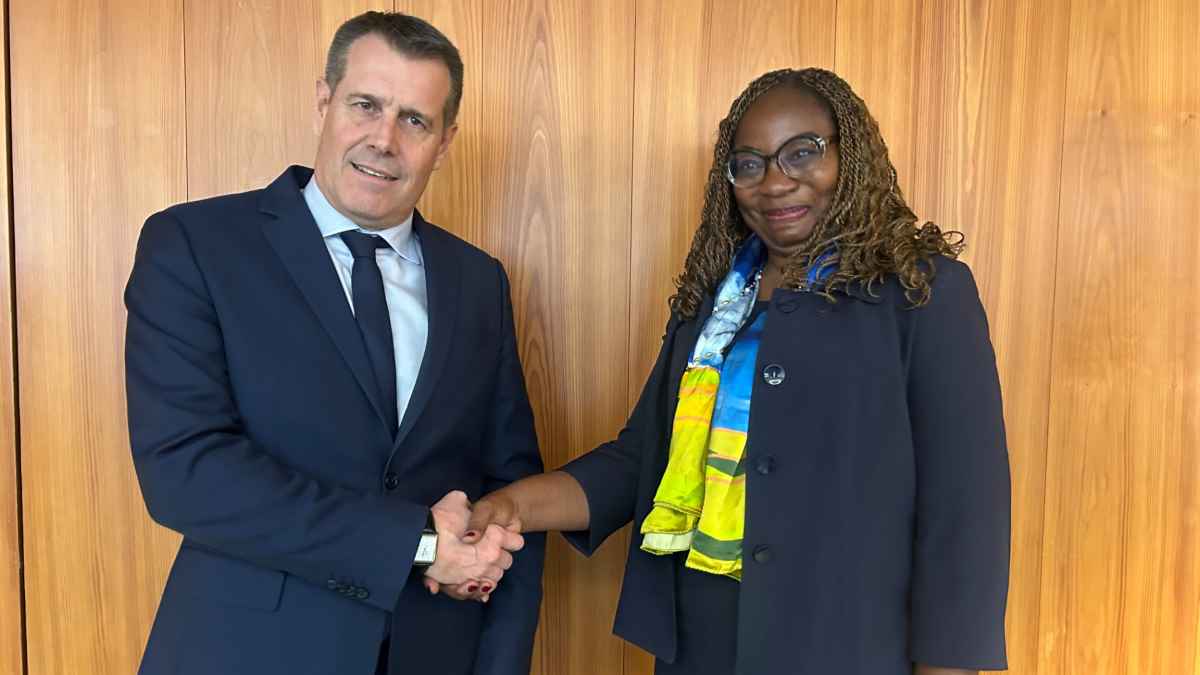
Akin-Olugbade

Ms Akin-Olugbade presented the Bank Group’s approach which is not to replace humanitarian actors, but to complement them by intervening at the right time and with the right instruments

ABIDJAN, Ivory Coast, March 11, 2026/APO Group/ –The fifth Geneva International Cooperation Forum (IC Forum) organised by the Swiss Federal Department of Foreign Affairs’ Agency for Development and Cooperation last month, saw the participation of African Development Bank Group (https://AfDB.org/) Senior Vice President, Marie-Laure Akin-Olugbade.

Akin-Olugbade joined a high-level panel on “Private-Sector Partnerships in Humanitarian Contexts” which took place during the forum held from 26 -27 February 2026 at the Geneva International Conference Centre in Switzerland. On the panel with the senior vice president were key actors from the private sector and experts

Ambassador Pietro Lazzeri, Head of the Economic Cooperation and Development Division at the Swiss State Secretariat for Economic Affairs (SECO), set out the terms of the discussion: “In a global context of declining resources, the financing and implementation of humanitarian aid must be expanded. But how do we get the private sector involved in the solutions?” he asked. Lazzeri, who serves as the Bank’s governor for Switzerland, moderated the session

For the participants, it was essential for the private sector to adhere to the principles of humanitarian response, based on a shared responsibility approach. They also stressed that cooperation with the private sector should not replace cooperation with states but strengthen it.

In a global context of declining resources, the financing and implementation of humanitarian aid must be expanded

Ms Akin-Olugabade added that “behind every crisis, there are collapsing markets and lost jobs.”

In Africa, where nearly 80% of the population works in the private sector, businesses are at the heart of crises, whether in terms of prevention, stabilisation or recovery. The panellists also called for more funding, provided that it is responsible and does not fuel conflicts.

Ms Akin-Olugbade presented the Bank Group’s approach which is not to replace humanitarian actors, but to complement them by intervening at the right time and with the right instruments.

In Madagascar, for example through the Transition Support Facility, more than 300 very small and medium-sized enterprises (VSEMEs) have gained access to previously unavailable bank financing. In Sudan, partnership with the DAL Group has helped to stabilise agricultural value chains in the nation despite the ongoing conflict. Also in the Sahel region, collaboration with the International Committee of the Red Cross (ICRC) illustrates how the Bank Group combines its financial instruments with humanitarian expertise on the ground.

These interventions, designed to complement the efforts of all stakeholders, aim to revive the local economy, restore essential services and reduce the risk of a relapse into crisis. According to Akin-Olugbade, it is this synergy between humanitarian actors, the private sector and multilateral development banks that is the key to a truly sustainable response.

In conclusion, participants unanimously agreed that the private sector cannot be reduced to the role of a mere donor: its expertise and capacity for innovation make it a full partner in humanitarian action, provided that this collaboration is structured, responsible and rooted in the realities on the ground.

Distributed by APO Group on behalf of African Development Bank Group (AfDB).

Events

Equatorial Guinea Launches Vision 2030 Malaria Elimination Strategy Following International Recognition at African Energy Week (AEW)

Published

on

One of the country’s biggest operators ConocoPhillips won the CSR Project of the Year at AEW 2025 for its contributions to the Bioko Island Malaria Elimination Project

JOHANNESBURG, South Africa, March 11, 2026/APO Group/ –Equatorial Guinea has launched its National Malaria Elimination Strategy – Vision 2030, marking a decisive step in the country’s public health agenda. The roadmap builds on two decades of sustained intervention on Bioko Island, reinforcing how partnerships between governments, global health organizations and energy companies can deliver measurable social impact. This next phase of the strategy strives to eradicate malaria nationwide by 2030, with a joint fund of $116 million allocated by government ($52 million) and international partners ($64 million) to achieve this goal.

The launch follows international recognition of the Bioko Island Malaria Elimination Project, supported for more than two decades by ConocoPhillips and global health partners. ConocoPhillips was recently honored with the Corporate Social Responsibility Project of the Year Award at African Energy Week (AEW) 2025 in South Africa, acknowledging the Bioko Island project’s long-term contribution to malaria reduction, stronger health systems and community well-being in Equatorial Guinea.


“Across Africa, energy producers are demonstrating that development must go hand in hand with social investment. The success of the Bioko Island Malaria Elimination Project shows how industry partnerships can transform communities. By combining long-term investment, strong government leadership and international collaboration, Equatorial Guinea is proving that Africa’s energy sector can drive both economic growth and public health progress,” states NJ Ayuk, Executive Chairman of the African Energy Chamber (AEC).

From Bioko Success to Nationwide Rollout

The success of the Bioko Island Malaria Elimination Project shows how industry partnerships can transform communities

Since its launch more than two decades ago, the Bioko Island Malaria Elimination Project has delivered measurable improvements in public health across the island. According to figures presented by Mitoha Ondo Ayecaba, Equatorial Guinea’s Minister of Health, Social Welfare and Health Infrastructure during the launch ceremony, malaria prevalence among children aged 2 to 14 years has fallen by 83%, while transmission rates have declined by 78%. In 2025, malaria prevalence on Bioko reached a historic low of 7.2%, underscoring the sustained impact of prevention programs, surveillance systems and targeted community interventions.

The program has also delivered broader health benefits. Infant mortality among children under five has fallen by 78%, while anemia among pregnant women has been reduced by 77%. At the same time, sustained vector control campaigns have eliminated two of the three primary malaria-transmitting mosquito species on the island.

These achievements have been made possible through long-term collaboration between the Equatorial Guinean government, MCD Global Health and energy sector partners such as ConocoPhillips. Over the past two decades, more than $130 million has been invested into malaria elimination programs on Bioko Island alone. With malaria now at historically low levels on the island, the government is scaling the model nationwide.

A Testament to the Role of Energy Partnerships

The Bioko Island Malaria Elimination Project is a clear example of how public-private partnerships in the energy sector can unlock more than just energy development. Home to some of the country’s biggest energy projects, the island showcases the value of responsible energy investment in strengthening social protection and improving the quality of life across energy-producing countries.

Bioko Island features the Punta Europa facility – a major regional energy hub operated by ConocoPhillips through its subsidiary Marathon E.G. The facility monetizes natural gas from both domestic and regional basins, featuring a 3.7 million-ton-per-annum LNG plant and a methanol plant. A central component of the country’s broader Gas Mega Hub strategy, Punta Europa is set to play an even greater role in increasing Equatorial Guinea’s energy exports, with a slate of new production sharing and cross-border agreements signed in 2026. ConocoPhillips signed production sharing contracts for offshore Blocks B/4 and EG-27 this year, unlocking $9 billion in capital to feed new volumes into Punta Europa. Equatorial Guinea also recently signed an agreement with Nigeria to develop infrastructure capable of transporting Nigerian gas to the Punta Europa facility, while an agreement signed with Cameroon paves the way for additional volumes.

As energy activity on Bioko Island continues to grow, the role of industry partnerships in supporting social development is becoming increasingly evident. The National Malaria Elimination Strategy highlights how energy investment can extend beyond infrastructure and production to deliver lasting improvements in public health and community resilience. Achieving the Vision 2030 target would mark a major public health milestone while reinforcing how responsible energy development can support broader progress across Africa.

Distributed by APO Group on behalf of African Energy Chamber.

Continue Reading

Business

Liquid C2 and CyberCoach partner to bring a safer digital environment to African businesses

Published

on

Liquid C2 and its Cloudmania channel ecosystem will distribute CyberCoach training across Africa, reaching enterprises, SMEs, public-sector institutions, and partners across the African footprint

JOHANNESBURG, South Africa, March 11, 2026/APO Group/ –Liquid C2, a business of Cassava Technologies, a global technology leader of African heritage, announces its partnership with CyberCoach, the only privacy-first AI and cyber security training and compliance platform. Through this partnership, Liquid C2 is further strengthening its cyber security portfolio with an AI-powered security awareness and training platform designed to help organisations reduce human risk.

Our approach complements Liquid C2’s focus on delivering innovative, dependable, and sustainable technology solutions that help businesses thrive responsibly

“The African digital transformation market is expected to reach 15.62% CAGR over 2026-2031 (http://apo-opa.co/4s07kwh). This statistic highlights the exponential growth the continent will see in the next few years; however, it also means that without the necessary cyber security guardrails in place, cyberattacks will grow unchecked. With a strategic partner like CyberCoach, LiquidC2 can help organisations roll out training programmes on interactive chatbot integrated platforms like Microsoft Teams, Slack or even web browsers of choice,” said Vinay Hiralall, Chief Commercial Officer at Liquid C2.

CyberCoach actively promotes a safe digital society by training and supporting all employees. Rather than “one-size-fits-all” content, these trainings are tailored learning paths based on an employee’s job function. Liquid C2 and its Cloudmania channel ecosystem will distribute CyberCoach training across Africa, reaching enterprises, SMEs, public-sector institutions, and partners across the African footprint.

“We are proud to collaborate with Liquid C2, whose scale, values, and commitment to digital empowerment in Africa align strongly with our mission to build a safer digital society through evidence-based learning of critical security and AI skills. Our approach complements Liquid C2’s focus on delivering innovative, dependable, and sustainable technology solutions that help businesses thrive responsibly,” says Maria Bique, CEO of CyberCoach.

According to the 2025 Interpol Africa report, 95% of respondents (http://apo-opa.co/40kXuZU) indicated that they lacked access to adequate training, resource constraints and specialised tools. The partnership between Liquid C2 and CyberCoach caters to the increasing need of African businesses to invest in training employees, thereby reducing the ‘human element’ risk in cyber security.

Distributed by APO Group on behalf of Liquid Intelligent Technologies.


Continue Reading

Business

The International Islamic Trade Finance Corporation (ITFC) and the Islamic Republic of Mauritania Sign US$ 1 Billion Framework Agreement to Strengthen Trade and Economic Development

Published

on

Under the agreement, ITFC will mobilize financing and technical support for priority sectors of the Mauritanian economy, particularly energy, banking, and private sector development

JEDDAH, Saudi Arabia, March 10, 2026/APO Group/ –The International Islamic Trade Finance Corporation (ITFC) (www.ITFC-IDB.org), a member of the Islamic Development Bank (IsDB) Group, signed a US$ 1.0 billion Five-Year Framework Agreement with the Islamic Republic of Mauritania covering the 2026–2030 period to strengthen cooperation and support the country’s economic development priorities through strategic trade finance and capacity-building initiatives.


The signing took place during the official visit of H.E. Dr. Abdallah O. Souleymane O. Cheikh-Sidia, Minister of Economic Affairs and Development and IsDB Governor, to the IsDB Group Headquarters in Jeddah. The agreement was signed at ITFC Headquarters by H.E. Dr. Abdallah O. Souleymane O. Cheikh-Sidia and Eng. Adeeb Yousuf Al Aama, Chief Executive Officer of ITFC, in the presence of H.E. Mohamed Lemine Dhehby, Governor of the Central Bank of Mauritania and IsDB Alternate Governor for Mauritania, as well as representatives from ITFC and members of the Mauritanian delegation.

The Framework Agreement reflects the strong partnership between ITFC and the Islamic Republic of Mauritania establishing a strategic framework to support the country’s socio-economic development and expand its trade capacity over the next five years.

Under the agreement, ITFC will mobilize financing and technical support for priority sectors of the Mauritanian economy, particularly energy, banking, and private sector development. The partnership will facilitate financing for the import of energy commodities, provide trade finance facilities and Confirmation Lines for Letters of Credit to local banks, and support small and medium-sized enterprises (SMEs). It will also include technical assistance programs to enhance agricultural productivity and promote trade facilitation in strategic sectors of the economy.

Speaking during the occasion, H.E. Dr. Abdallah O. Souleymane O. Cheikh-Sidia, Minister of Economic Affairs and Development of Mauritania, highlighted that the agreement will help mobilize critical financial resources to support national development priorities and foster sustainable economic growth.

Eng. Adeeb Al Aama, CEO of ITFC, noted that the agreement demonstrates ITFC’s continued commitment to supporting its member countries through trade-driven development and will help strengthen key sectors of Mauritania’s economy while expanding opportunities for trade and investment.

Since its inception in 2008, Mauritania has been a longstanding partner of ITFC, with cumulative approvals exceeding US$1.2 billion supporting key sectors of the economy and contributing to enhance the country’s trade and development capacity.

Distributed by APO Group on behalf of International Islamic Trade Finance Corporation (ITFC).

Continue Reading

Trending

Exit mobile version