Connect with us
Anglostratits

Business

FINCA and Jackfruit Finance Scale Education Financing Model in Tanzania and Uganda

Published

on

FINCA

A successful pilot demonstrated strong demand for tailored school financing, showing how fit-for-purpose financial products can help underserved schools upgrade facilities, retain staff, and create measurable benefits for thousands of students

NAIROBI, Kenya , July 14, 2026/APO Group/ –FINCA (www.FINCA.org) and Jackfruit Finance are expanding their education finance collaboration across East Africa following a successful pilot in Uganda that validated demand for tailored financing among underserved schools. The partnership has now launched in Tanzania while entering its next phase in Uganda under a commercial framework designed to prove the long-term sustainability of the operating model before broader expansion.


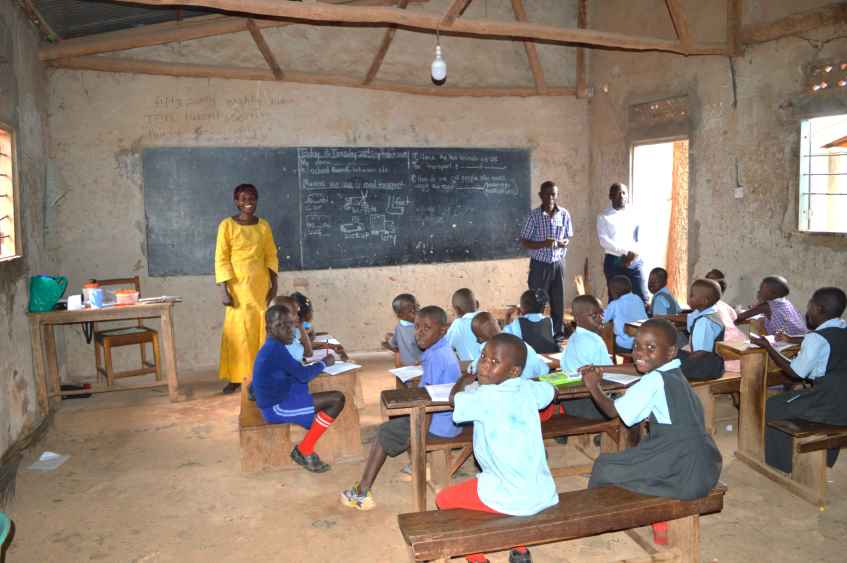
The collaboration builds on the successful initial pilot in Uganda, through which 42 schools, collectively serving approximately 10,000 children, accessed 184.5 million Ugandan shillings ($49,700 USD) in financing to strengthen operations, retain teachers, and improve school facilities. The pilot demonstrated strong demand for specialized education finance among schools with limited access to formal credit. To date, approximately 91% of the disbursed principal has been repaid.

Access to capital remains one of the greatest obstacles for schools serving low-income populations across Africa

The partnership was developed through FINCA’s Poverty Eradication Lab, which works with specialized partners to design and test financial solutions that address needs beyond traditional microcredit. By combining FINCA’s expertise in product development and human-centered design, lending infrastructure, and local regulatory presence with Jackfruit’s deep relationships in the education sector, the collaboration created a unique financing model tailored to the realities of low-fee private schools. Schools begin with working capital loans to support operations and teacher retention, with the opportunity to graduate to larger infrastructure loans that help expand classrooms, improve facilities, and increase student capacity.

“Access to capital remains one of the greatest obstacles for schools serving low-income populations across Africa,” said Jackfruit Finance CEO Robert Alhadeff. “By pairing Jackfruit’s education financing platform with FINCA’s reach and product innovation, we’re creating a model that gives schools the stability and resources they need to grow and deliver stronger learning outcomes.”

FINCA Uganda and Jackfruit have now moved to a revenue-sharing model designed to strengthen the program’s commercial sustainability as it enters its next phase of growth. Planned targets include reaching a total of 100 schools in Uganda, graduating eligible schools from working capital to infrastructure loans based on repayment history and assessed need, and launching a pilot targeting up to 70 schools in Tanzania.

“Innovation isn’t about creating more products; it’s about finding solutions that genuinely improve people’s lives and can be replicated at scale,” said Seth Spiro, Vice President and Chief Product Officer, FINCA. “Our partnership with Jackfruit has shown that education finance can strengthen schools, benefit students, and create a sustainable model that can reach many more communities.”

Distributed by APO Group on behalf of FINCA.


Business

Idris Elba’s Akuna Group launches free Artificial Intelligence (AI) filmmaking programme for creators in five African countries, in collaboration with Google

Published

on

Over fifty weeks, selected creators will move from a twelve-week academy into mentoring, pitching and production; Selected funded teams will make their films, which will be showcased in October 2027

Creators need a route from the classroom to the screen, and this programme carries them all the way, from their first application to a finished, funded film

FREETOWN, Sierra Leone, October 26, 2026/APO Group/ —An AI filmmaking programme for African creators opens today in Ghana, Kenya, Nigeria, Sierra Leone and South Africa. Applications are live at (https://AkunaLearning.com).

Akuna Learning, from The Akuna Group, chaired by Sir Idris Elba, today opened applications for From Script to Screen with AI, a free programme that equips eligible African creators to tell stories on screen leveraging artificial intelligence. Delivered in collaboration with Google and supported by US$1 million funding from Google.org, with curriculum developed by Curious Refuge, the programme is open to aspiring filmmakers in Ghana, Kenya, Nigeria, Sierra Leone and South Africa.


Applications are open now at (https://AkunaLearning.com) and close on 15 November 2026. The programme is free to apply and, for those selected, free to attend.

Over fifty weeks, selected creators will move from a twelve-week academy into mentoring, pitching and production. Selected funded teams will make their films, which will be showcased in October 2027. Creators will maintain control of their work, with no claim of ownership rights by the programme or partners running it.

From foundation to funded film

Every participant will complete a foundational course in AI filmmaking; then participants will be able to choose to specialise in one of five creative pathways:

  • Fiction: narrative filmmaking and scripted storytelling, from short film to series.
  • Documentary: real-world stories and factual filmmaking.
  • Animation: animated storytelling, motion design and visual world-building.
  • Advertising: branded storytelling, commercial content and creative campaigns.
  • Screenwriting: script development, dialogue and structure, writing from page to screen.

The programme is structured in five stages:

  1. Applications & Selection (October 2026 to January 2027). One open call across all five countries, closing on 15 November 2026, with review panels in each country and a final panel looking across all five.
  2. Learn & Get Certified (February to April 2027). Twelve weeks of online training with Curious Refuge, with weekly Akuna facilitation, in-person meet-ups in every country and certification at the end.
  3. Get Mentoring (April to June 2027). Graduates put forward their own one-page ideas. Shortlisted idea owners build teams, which then spend four weeks with mentors and subject experts.
  4. Pitch Your Film (June to July 2027). Mentor-endorsed teams pitch to panels drawn from Akuna, Google and the wider industry. Selected projects are funded.
  5. Produce Your Film (July to October 2027). Funded teams make their films with creative and technical support, then take them to festivals and showcases. The programme is for aspiring and emerging visual storytellers: filmmakers, screenwriters, animators, advertisers, digital content creators, photographers, designers, editors and visual artists. Applicants do not need AI experience, a film school qualification or a set number of years in the industry.


Sir Idris Elba, Chairman of The Akuna Group, said: “For me, this is about learning. This is about access to courses that help educate creators across the continent to tell their stories. Through Akuna Learning, we’re partnering with Google and Curious Refuge on ‘From Script to Screen with AI’, a remarkable training and mentorship programme teaching African filmmakers to use AI tools. Selected projects will receive production funding, and creators will retain control of their work. I’m looking forward to seeing the stories they choose, and how the education leads to employment and self-momentum, but helps shape the narrative of Africa.”

Khaled Gad, Chief Executive Officer of The Akuna Group, said: “Training on its own does not build an industry. Creators need a route from the classroom to the screen, and this programme carries them all the way, from their first application to a finished, funded film. It opens on the same day and runs to the same standard in all five countries. You do not need a film school background or any experience with AI to apply. You need finished work that shows what you can do, and your application in by 15 November.”

How to apply

Applications are submitted online at (https://AkunaLearning.com) between 26 October and 15 November 2026. Applicants must:

  • physically reside in Ghana, Kenya, Nigeria, Sierra Leone or South Africa;
  • be 18 or older on the date of application;
  • have access to a laptop, reliable internet and consistent power for the duration of the programme;
  • be able to commit fully to the twelve-week academy from February to April 2027, and to the later stages if they progress.

Applicants should include existing creative work, however modest, that shows their talent and commitment. Women are strongly encouraged to apply.

Distributed by APO Group on behalf of The Akuna Group.


Continue Reading

Business

African Energy Chamber (AEC) Applauds Afreximbank President George Elombi as Billions in Financing Drive Africa’s Industrial Growth

Published

on

African Energy Chamber

Since assuming leadership in October 2025, Dr. George Elombi has overseen major financing commitments across Africa’s energy, mining and industrial sectors

JOHANNESBURG, South Africa, October 26, 2026/APO Group/ –The African Energy Chamber (AEC) (https://EnergyChamber.org/) has commended Dr. George Elombi, President and Chairman of the Board of Directors of the African Export-Import Bank (Afreximbank), for his decisive leadership in advancing African industrialization, energy security and economic integration. Since succeeding Professor Benedict Oramah in October 2025, Dr. Elombi has overseen a series of landmark financing commitments spanning oil and gas, critical minerals, infrastructure and manufacturing, demonstrating the growing capacity of African financial institutions to mobilize capital for the continent’s development.


“I was privileged to attend the inauguration of Dr. George Elombi in October 2025 as Afreximbank President and Chairman, succeeding Professor Benedict Oramah. Since that day, I have watched a man of few words keep the promises he made not with grand speeches, but with practical action. At this crossroads in our history, Dr. Elombi understands that leadership is not about occupying the moment. It is about shaping the future,” states NJ Ayuk, Executive Chairman, AEC.

A cornerstone of Dr. Elombi’s commitment to Africa’s energy sector is the establishment of the Africa Energy Bank (AEB) alongside the African Petroleum Producers Organization. Designed to finance large-scale energy and infrastructure projects across the continent, the AEB will use a corridor approach, prioritizing projects that deliver regional economic development across four pillars: export infrastructure, domestic infrastructure, clean cooking and power. The bank is expected to become operational within weeks and begin financing projects at the start of 2027.

At this crossroads in our history, Dr. Elombi understands that leadership is not about occupying the moment

Dr. Elombi’s work is reflected in a series of milestones reached by Afreximbank in recent months as the bank moves to advance intra-African trade, mobilize capital and bring new countries into its mission. In April 2026, South Africa acceded to the Establishment Agreement of the bank, marking the entry of one of the continent’s biggest economies into the bank’s membership. With the move, Afreximbank launched major financial interventions in the country, including a $8 billion Country Program designed to deepen economic growth. According to Dr. Elombi, South Africa’s membership builds on a strong pipeline of Afreximbank-led projects in the country, exceeding $6 billion and spanning healthcare, energy, manufacturing, financial services and mining.

Beyond South Africa, Afreximbank continues to advance financing for strategic projects across a myriad of sectors. Notable transactions include a $3.8 billion agreement with Gabon to support manganese and gold trading as well as energy development and rail infrastructure; a $25 million facility for Lilium Gold to support operations at the Boungou and Wahgnion mines in Burkino Faso; and a $1.75 billion syndicated receivables-purchase facility for Angola’s national oil company Sonangol. In Nigeria, the bank announced a $2.5 billion underwriting commitment – part of a $4 billion syndicated facility – for Dangote Petroleum and Petrochemicals as well as a $750 million reserve-based lending facility for Heirs Energies, supporting indigenous African energy capacity.

The bank was also responsible for the first-recorded Southern African energy sector transaction through the Africa Trade Gateway – a one-stop digital trade ecosystem developed by Afreximbank and the African Continental Free Trade Area. The transaction features a $5.3 million cross-border gasoil trade involving Zimbabwe. One of the most significant developments

Afreximbank’s mandate transcends energy. The bank continues to mobilize capital for infrastructure that can connect African markets, supporting continent-wide industrialization and job creation. In healthcare, the African Medical Center of Excellence in Ajuba, a landmark 170-bed specialty healthcare center developed by Afreximbank, has set a new standard in healthcare in the country. The facility treats more than 5,000 patients from over 20 countries, with plans to expand to 500 beds in the near-term.

“This is more than a list of transactions; it is a practical expression of economic sovereignty, financing African businesses, moving African commodities, developing African infrastructure and keeping more value on the continent,” Ayuk said. “Dr. Elombi is running his race. He is not chasing applause; he is building momentum. He knows that Africa’s future will be secured by institutions that are bold enough to invest, disciplined enough to deliver, and confident enough to believe in Africa’s own capacity.”

Distributed by APO Group on behalf of African Energy Chamber.


Continue Reading

Energy

Libya Energy & Economic Summit (LEES) 2027 Places Infrastructure at the Center of Libya’s Energy Expansion with Dedicated Forum

Published

on

From gas processing and ports to downstream infrastructure and regional pipelines, LEES 2027 will examine the infrastructure required to support Libya’s next phase of energy growth

TRIPOLI, Libya, October 26, 2026/APO Group/ –Libya’s push to expand oil and gas production is creating a parallel requirement for investment in the infrastructure needed to process, transport and commercialize additional energy supplies. With more than $20 billion committed to the Waha concessions alone and major gas, industrial and logistics projects advancing, infrastructure integration is emerging as a key component of the country’s investment agenda.


Against this backdrop, the Libya Energy & Economic Summit (LEES) 2027, taking place January 23–25 in Tripoli, will feature a dedicated Infrastructure and Integration Forum. The forum will examine how Libya can convert its growing resource base into productive domestic infrastructure and stronger regional ties.

As Libya seeks to process more hydrocarbons domestically and capture greater value from refined products, the country’s National Oil Corporation (NOC) is pursuing refinery modernization and expanded petrochemical manufacturing. That strategy is being reinforced by upstream expansion, including a more than $20 billion, 25-year Waha development deal with TotalEnergies and ConocoPhillips targeting up to 850,000 barrels per day (bpd) of additional capacity.

Meanwhile, the National Development Agency has signed 13 agreements with Chinese companies for projects at the 1,000-hectare Magroun Industrial Zone, covering industrial chemicals, advancing manufacturing and construction materials. The Ministry of Industry’s 100-Day Plan is supporting the country’s wider development push through infrastructure and digital reforms aimed at improving industrial investment.

Gas provides another major infrastructure opportunity set to be showcased at LEES 2027. Eni’s $8 billion Structures A&E project is designed to move offshore gas to the Mellitah treatment plant, with infrastructure targeting 750 million cubic feet per day (mmscf/d) in 2027. The project follows the successful start-up of the Sabratha Compression Project in June 2026. Led by Eni in partnership with the NOC – through the Mellitah Oil & Gas joint venture – the project has an overall compression capacity of 440 mmscf/d.

On the maritime side, the $2.7 billion Misurata Port expansion is set to transform the facility into a major Mediterranean logistics hub, with planned capacity of 4 million containers annually and 8,400 direct jobs. The project also incorporates local supplier development, linking maritime expansion with efforts to build domestic supply chains.

Beyond domestic infrastructure Libya is strengthening its connections to regional neighbors. The country is advancing negotiations with Egypt for an 800-km Tobruk-Alexandria crude pipeline, estimated at $1.5 billion–$2 billion and targeting initial capacity of 150,000–250,000 bpd. The NOC is also working to maximize the 11-billion-cubic-meter annual capacity of the GreenStream pipeline, connecting coastal facilities in Libya to European markets via Sicily.

Taken together, these projects show an increasingly integrated Libyan investment agenda – connecting upstream production with downstream industry, gas infrastructure, logistics and cross-border energy markets. LEES 2027’s Infrastructure and Integration Forum will bring those investment opportunities together in one platform, highlighting the NOC and Ministry-led push to build the infrastructure required for Libya’s next phase of economic growth.

For more information about LEES 2027, please visit https://LibyaSummit.com/​.

Distributed by APO Group on behalf of Energy Capital & Power.


Continue Reading

Trending