Connect with us
Anglostratits

Business

European Union (EU)-funded Project EU4PSL for Private Sector Development in Libya Presents Results
Published

on

EU4PSL

An online portal to simplify the establishment of businesses, step-by-step guides for new entrepreneurs, business acceleration programmes and start-up grants for 90 young Libyan entrepreneurs, and a new link between the private sector and Libyan universities are among EU4PSL’s most important achievements since 2019. “E-NABLE”, a €5 million EU-funded follow-up programme, will continue to support private sector diversification, digitalization and financial solutions for businesses in Libya

TRIPOLI, Libya, December 8, 2022/APO Group/ — 

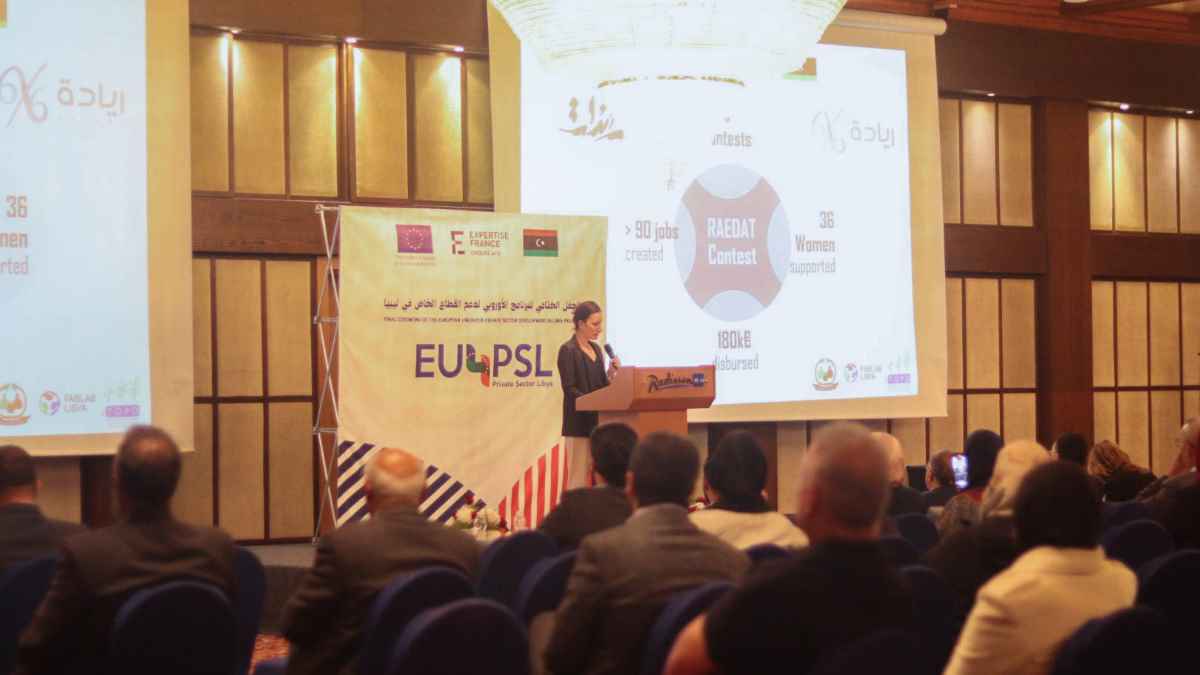
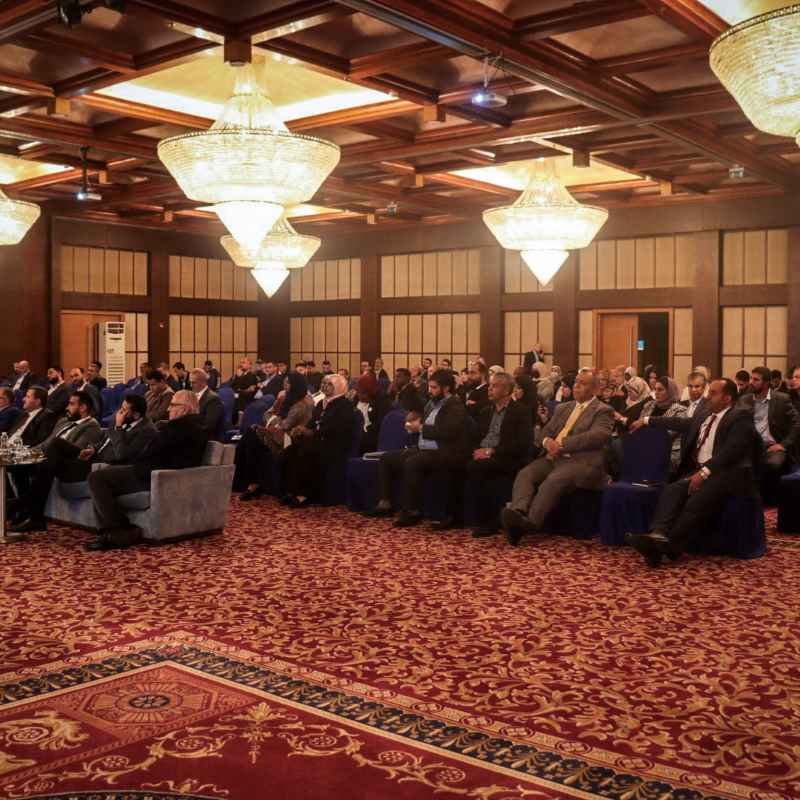
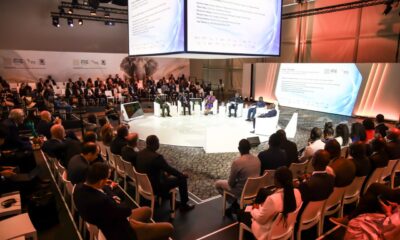
The European Union’s (bit.ly/3uCHRgC) EU4PSL project in support of private sector development in Libya presented its results in Tripoli. Over the past three years, the project contributed to a better business environment, and new job opportunities across Libya, in particular for the youth and women. In a closing ceremony in Tripoli, the EU and its EU4PSL implementing partner Expertise France (ExpertiseFrance.fr), presented key results to key stakeholders and beneficiaries.
Today, we celebrate the conclusion of the European program to support the private sector in Libya, and we all know that Libya has progressed towards economic development through its private sector. I thank the European Union Delegation, Expertise France and the Libyan experts in all sectors for their contribution to reaching the program’s goals. I stress the keenness and desire of the Ministry of Economy and Trade to continue working together for economic recovery, diversification and the development of Libyan competencies,” said Mohammed Al-Huweij, Minister of Economy and Trade in Libya.

The private sector is a crucial driver for innovation, new jobs and economic growth in Libya. This is why it is important to create an enabling business environment, encourage entrepreneurship and ensure favourable conditions for innovation, investment and trade. In Libya, the private sector needs new skills, instruments and opportunities to turn ideas into successful business ventures. With EU4PSL we were able to create new platforms to simplify access to economic institutions and to boost start-ups and young entrepreneurs,” said Francesca Cuccia, Programme Manager at the EU Delegation to Libya. “The EU will continue its support to Libya’s private sector also in the future.

“EU4PSL, is for us a flagship project that shows the relevance of supporting the development of the private sector in Libya. All the great achievements underline the full engagement of all the implicated Libyan stakeholders participating to a more efficient and supportive business environment, key for the private sector harmonious development” said Julien Schmitt, Country representative and programs director at Expertise France in Libya. “On behalf of Expertise France, we are very honoured for the trust of our national and international partners and we want to reaffirm once again our commitment to continue to support the economic development of Libya.”
Better institutional services and easy access to support for businesses

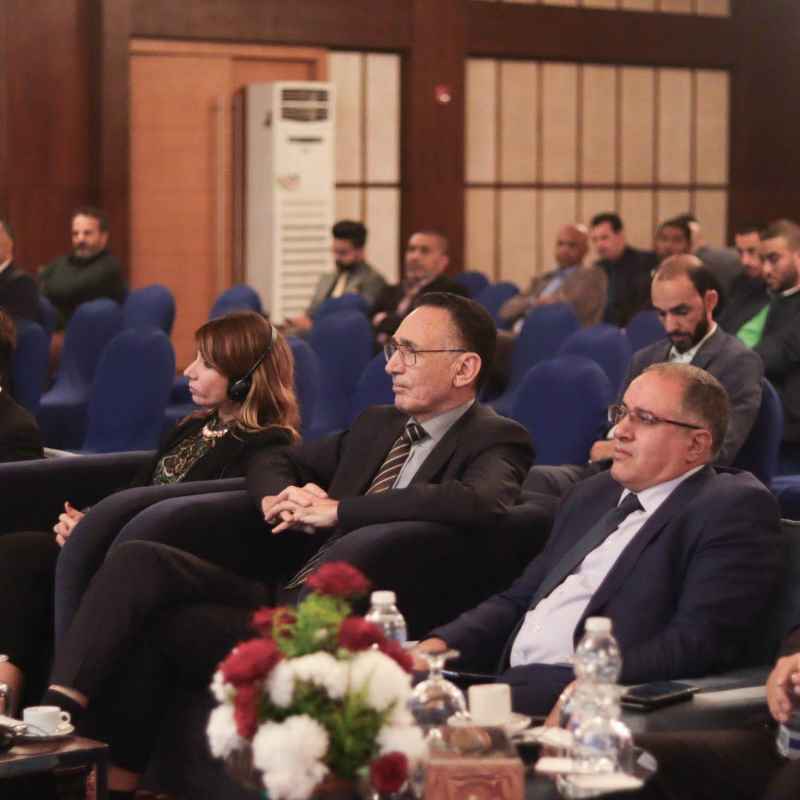
EU4PSL worked with the Ministry of Economy and Trade, chambers of commerce and other economic institutions to help create a supportive business environment in Libya.

A new online portal called eJraat (ejraat.gov.ly) simplifies business creation procedures and provides a step-by-step guide to administrative procedures and was launched in partnership with the United Nations Conference on Trade and Development (UNCTAD) (UNCTAD.org). The involved stakeholders are now taking it a step further by working with the General Commercial Registry on creating a single online window for business registration and other business services.

In partnership with the International Trade Centre (ITC), (InTraCen.org) Libya was integrated in the Euromed Trade Help Desk (bit.ly/3iPCc4d) portal for facilitating trade and investment in the EU and the Mediterranean region.

EU4PSL worked with the Chambers of Commerce and General Union of Chambers of Commerce to develop their advisory and advocacy functions. A large national survey (bit.ly/3FziC4S) identified the profiles and needs of Libyan enterprises in terms of business knowledge and support services, along with operational recommendations to help the government and international donors better shape their economic support to Libya.

The first Chambers of Commerce White Book lists the top common reform priorities identified by Libyan enterprises owners and managers with concrete proposals for improvement.
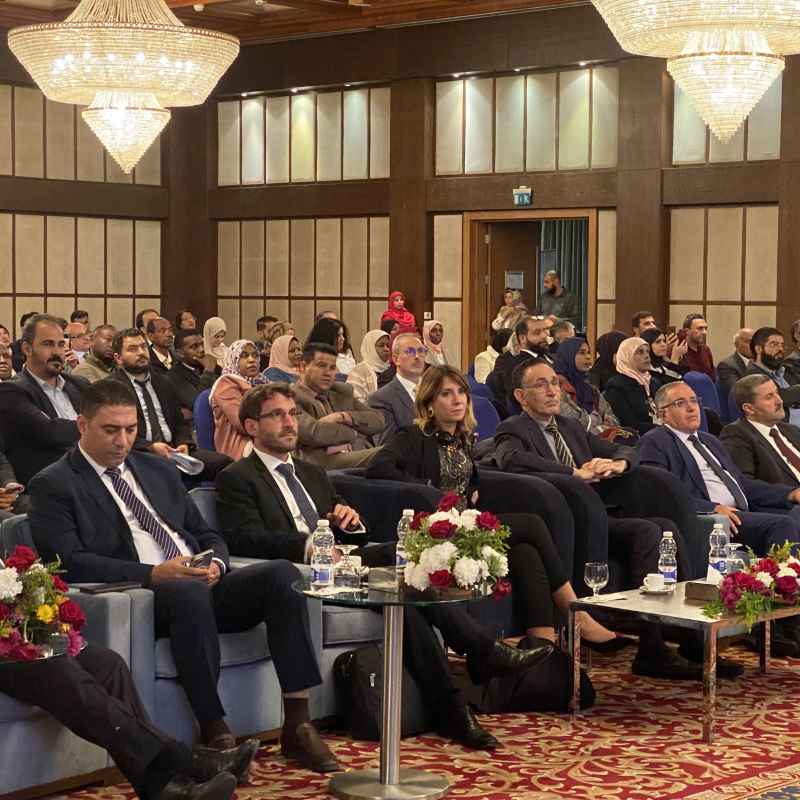
With EU4PSL we were able to create new platforms to simplify access to economic institutions and to boost start-ups and young entrepreneurs

Economic empowerment of women and youth

In partnership with local CSOs, EU4PSL held three national women entrepreneurs contests in which €120,000 of grants were disbursed to 36 winners; more than 90 jobs were created as a result of the development of the winning businesses.

The involved CSOs have also teamed up with universities to organise entrepreneurship training boot camps that were delivered to 360 of their students. Top innovative ideas were then selected to participate in 3 national student contests receiving significant financial awards from local sponsors.

A 6-month business acceleration program called Boost it mentored 19 emerging start-ups from 6 different Libyan cities. The participating start-ups received €153,000 in financial support. 84.6 % of them reported an increase in their revenue.

Improved access to finance for MSMEs and start-ups

EU4PSL worked with the Central Bank of Libya and several other financial institutions to support Libyan MSMEs to access finance.

With the support of the leading financial institution Adie France (Adie.org), two microfinance circulars were published by the Central Bank of Libya demanding banks to dedicate 10% of their portfolio to SMEs and adapt their services to meet the needs of micro and small enterprises, thus creating new fund-raising vehicles for business owners.

Six units dedicated to SMEs support were established within Libyan banks and Tadawul Group (bit.ly/3W1CoeR) supported to establish a Venture Capital fund to provide means of financing and investment for the start-up eco-system in Libya.

Entrepreneurship streamlined within education curricula

EU4PSL, together with Lyon 3 university (bit.ly/3Y4Dmc2), developed an accredited entrepreneurship module that is now being taught at 9 Libyan universities. The delivery of this module was made possible by training and coaching 44 professors across the country with the support of the South Mediterranean University (SMU) (SMU.tn) in Tunis.

Entrepreneurship and Innovation units were also created within 11 universities. The staff of these units were coached on how to run practical incubation programmes to support undergraduate students to upgrade their skills and begin their careers.
Eight Junior initiatives (Juniorenterprises.org) were created inside partner universities promoting entrepreneurial skills among students and closing the gap between their academic studies and the labour market.

EU4PSL has also initiated work with the Ministry of Higher Education and Scientific Research on a national roadmap for supporting entrepreneurship within higher educational institutions and bridging the gap between graduates and the labour market in collaboration with the Mediterranean Universities Union (UNIMED) (UNI-MED.net).

After the successful completion of the EU4PSL (2019-2022) and its preceding project, SLEISDE (2016 -2020), the European Union will continue to support private sector and economic development in Libya through the E-NABLE (E-NABLE.ly) project (2022-2025), implemented by Expertise France. E-NABLE will focus on economic diversity, sustainability, and digital governance in Libya.

Distributed by APO Group on behalf of Expertise France.
Business

20th Islamic Development Bank (IsDB) Global Forum on Islamic Finance to Convene in Azerbaijan

Published

on

IsDBI

Marking its 20th edition, the forum serves as a flagship platform for high-level dialogue, convening policymakers, regulators, development practitioners, academics, and industry leaders to advance innovation and development in Islamic finance

The Islamic Development Bank Institute (IsDBI) (https://IsDBInstitute.org/) will host the 20th IsDB Global Forum on Islamic Finance in Baku, Azerbaijan on 17 June 2026 under the theme “Achieving Sustainable Prosperity through Islamic Finance,” in conjunction with the IsDB Group Annual Meetings.


Marking its 20th edition, the forum serves as a flagship platform for high-level dialogue, convening policymakers, regulators, development practitioners, academics, and industry leaders to advance innovation and development in Islamic finance. This year’s forum will focus on strengthening regional integration and unlocking sustainable growth across IsDB member countries through Islamic finance solutions.

The forum will examine how Islamic finance can help address structural development challenges, including “development traps” that constrain inclusive growth and resilience. It will also highlight innovative Islamic social finance mechanisms, particularly Awqaf Free Zones, as tools for mobilizing sustainable resources to support food and energy security.

Key highlights of the forum include keynote speeches, launch of a new report on the prospects of Islamic Finance in Azerbaijan alongside other flagship publications, announcement of a memorandum of understanding between IsDBI and Labuan Financial Services Authority, distinguished panel discussion sessions, and unveiling of top achievers in the Applied AI in Islamic Finance Competency Challenge.

H.E. Taleh Kazimov, Governor of the Central Bank of the Republic of Azerbaijan, will deliver the first keynote speech, followed by Eng. Adeeb Yousuf Al Aama, Chief Executive Officer of ITFC, whose speech will be on behalf of the IsDB Group. Dr. Sami Al-Suwailem, Acting Director General of IsDBI, will deliver the welcome remarks.

The first panel session will explore how Islamic finance can help countries overcome development barriers and achieve sustainable economic transformation. The panelists include Mr. Shahin Aydin Mahmudzade, Executive Director, Central Bank of Azerbaijan; Mr. Adnan Zaylani, Deputy Governor, Bank Negara Malaysia; Ms. Mihoko Kumamoto, Director, Division for Prosperity, UNITAR; Dr. Bambang Brodjonegoro, Dean, Asian Development Bank Institute; and Dr. Areef Suleman, Chief Economist, IsDB Group. The session will be moderated by Mr. Mustafa Adil, Head of Islamic Finance, London Stock Exchange Group.

The second panel session will examine innovative approaches to mobilizing Islamic social finance, particularly through Awqaf Free Zones, to address global food and energy challenges. The speakers include Mr. Valeh Alasgarov, Chairman of the Board, AFEZ Authority, Azerbaijan; Dr. Mansur Muhtar, Chairman of the Board, Bank of Industry, Nigeria; Professor Emeritus Dato’ Dr. Azmi Omar, President & CEO, INCEIF University; and Mr. Orkhan Vidadi oglu Mammadov, Chairman, Small and Medium Business Development Agency of Azerbaijan (KOBİA). The session will be moderated by Mr. Yahya Rehman, Associate Manager, IsDBI.

The forum is expected to generate actionable recommendations, strengthen partnerships, promote stakeholder collaboration, and advance innovative, AI-enabled tools to support the growth of Islamic finance globally.

More information about the forum is available on IsDBI website here.

Distributed by APO Group on behalf of Islamic Development Bank Institute (IsDBI).

Continue Reading

Business

PROÁGUA Receives TXF Water Export Finance Deal of the Year 2025 Award

Published

on

PROÁGUA

Landmark €200 Million Financing for Angola’s National Water Infrastructure Program Recognized for Excellence in Export and Agency Finance

FRAUENFELD, Switzerland, June 11, 2026/APO Group/ –Mitrelli (https://Mitrelli.com), together with HSBC, Deutsche Bank, Bpifrance Assurance Export, SERV, and SUEZ, has been recognized with the TXF Water Export Finance Deal of the Year 2025 award for the complex financing structure supporting Angola’s PROÁGUA national water infrastructure program, developed in partnership with the Ministry of Finance of Angola. The award is one of the export and project finance industry’s most prestigious distinctions, recognizing excellence and innovation in structuring complex infrastructure financing solutions.


The award was presented at the annual TXF Global Export, Agency & Project Finance event on June 10, in Prague, Czech Republic, one of the leading gatherings of the global export and project finance community.

The award-winning €200 million financing structure reflects the close collaboration between Mitrelli and leading financial and industrial partners of HSBCDeutsche BankBpifranceSERVSUEZ, combining export credit support and commercial financing into a complex, innovative financing solution for critical water infrastructure at scale in Angola.

 We are proud to see PROÁGUA recognized by the global export finance community and to have worked alongside world-class partners

PROÁGUA is a national-scale water infrastructure program designed to expand access to clean and reliable water across Angola, supporting the country’s long-term development priorities and improving quality of life for millions of citizens.

Rodrigo Manso, CEO of Mitrelli, said: ” We are proud to see PROÁGUA recognized by the global export finance community and to have worked alongside world-class partners – HSBC, Deutsche Bank, Bpifrance Assurance Export, SERV, and SUEZ – and the Government of Angola. This award recognizes the sophisticated financing structure behind the project and demonstrates how collaboration across public and private sector stakeholders can unlock critical infrastructure at scale.”

Tzahi Malach, VP Structured Finance at Mitrelli, said: “This award reflects the depth of collaboration required to structure financing for national-scale infrastructure. PROÁGUA demonstrates how export credit support, commercial financing and strong partnerships can come together to deliver bankable solutions for projects with significant development impact.”

For Mitrelli, the recognition highlights the growing importance of financing as a catalyst for development. As countries pursue ambitious infrastructure agendas, innovative financing solutions are increasingly essential to aligning government priorities, development objectives, and commercial realities. PROÁGUA demonstrates how complex structured finance can transform national priorities into implementable projects with lasting social and economic impact.

Mitrelli extends its appreciation to the Government of Angola for its continued trust, and to all partners involved in advancing this landmark transaction.

Distributed by APO Group on behalf of Mitrelli Group.


Continue Reading

Business

Africa’s Business Heroes Unveils 2026 Top 100 Entrepreneurs Selected from Over 24,000 Applications Across Africa

Published

on

Africa’s Business Heroes

Expanded cohort reflects the scale, diversity, maturity, and economic impact of African entrepreneurship

KIGALI, Rwanda, June 11, 2026/APO Group/ –Africa’s Business Heroes (ABH) (www.AfricaBusinessHeroes.org), the flagship philanthropic initiative of the Jack Ma Foundation and Alibaba Philanthropy, has unveiled its 2026 Top 100 entrepreneurs, selected from more than 24,000 applications from all 54 African countries.

Download Infographic: https://apo-opa.co/4v3n7w5

For the first time in ABH’s history, the competition has expanded its first round of finalists from a Top 50 to a Top 100 cohort, creating more visibility and opportunity for entrepreneurs across regions, sectors, and business models. The expansion reflects the growing depth, competitiveness, and commercial maturity of African entrepreneurship as ABH approaches its 10-year milestone.

The 2026 Top 100 represents 27 countries, with an average founder age of 38 and an average business age of 6.5 years. Half of the cohort are returning applicants, underscoring the continued value entrepreneurs see in the ABH platform and the strength of its pan-African community.

This year’s applications came from every region of the continent. Women represented the highest share of entries since the competition launched in 2019 and there was also increased participation from emerging startup hubs such Angola, Burkina Faso, Chad, Libya, Madagascar, and Mozambique. ABH is grateful to the hard-working Round 1 judges who selected the Top 100 from more than 24,000 applicants, with strong representation from key sectors like AI, agriculture, fintech, health, and climate.

A Snapshot of Africa’s Entrepreneurial Momentum

The 2026 Top 100 cohort offers a strong picture of the diversity, resilience, and economic contribution of African entrepreneurs. Collectively, the Top 100 businesses generated USD 170 million in 2025 revenue, employed 6,200 people, and served 10 million customers. These figures underscore the role entrepreneurs are playing not only in building commercially viable companies, but also in creating jobs, widening access to essential products and services, and advancing inclusive growth across Africa.

The 2026 cohort tells an important story: African entrepreneurship is becoming broader, deeper, and more commercially mature

Top 100: By the Numbers

  • Operating Countries Represented: 27
  • Average founder age: 38
  • Average years in business: 6.5
  • Gender representation: 33% women founders; 67% men founders
  • Francophone/French-language representation: 13%
  • Returning applicants: 50%
  • Top operating countries: Egypt, Nigeria, and Kenya (15 entrepreneurs each), followed by Rwanda (9) and South Africa (6)
  • Leading sectors: Agriculture (21), Financial Services (12), Manufacturing (10), Healthcare (10), and Energy (9)

Key Sector Trends Driving the Cohort

The businesses represented address some of the continent’s most pressing challenges through scalable, regional solutions. The cohort also points to important shifts in the continent’s entrepreneurial landscape. Key trends include:

  • Agri-Tech Dominance: Comprising 21% of the cohort, agriculture has evolved beyond traditional farming into tech-enabled, value-added models.
  • Tech-Driven Financial Inclusion: As the second-largest sector (12%), Financial Services is leveraging machine learning and alternative data to provide paperless credit scoring for unbanked small businesses, resolving core frictions across markets
  • Recycling & Environmental Protection: 7% of the ABH Top 100 operate in this space, shifting toward high-margin circular economy models that combine profitability with social impact through value-added processing and emerging ESG/carbon credit monetization.
  • Decentralized Manufacturing Growth: Manufacturing accounts for 10% of the cohort and spans 9 diverse countries (including Cabo Verde, Namibia, and Ethiopia). This geographic spread indicates industrialization is accelerating beyond major economies, propelled by AfCFTA incentives, import substitution, and rising local demand.
  • AI as a Tool for Practical, Sector-Specific Innovation: 32 of the Top 100 entrepreneurs are integrating AI across 12 African countries to address concrete market challenges: improving low agricultural productivity through predictive crop and soil insights, expanding access to credit through alternative scoring, closing education gaps through personalized learning, easing healthcare shortages through triage and decision-support tools, and reducing logistics inefficiencies and supply chain waste through smarter routing and demand matching.

The full list of the ABH 2026 Top 100 entrepreneurs can be found here (www.AfricaBusinessHeroes.org).

Speaking on the significance of this year’s Top 100 cohort, Zahra Baitie-Boateng, Managing Director, Africa at ABH, said:

“The expansion from the Top 50 to the Top 100 reflects the extraordinary evolution of entrepreneurship across Africa. The 2026 cohort tells an important story: African entrepreneurship is becoming broader, deeper, and more commercially mature. These are not just promising ideas; they are real businesses operating across 27 countries, generating USD 170 million in annual revenue, employing 6,200 people, and serving 10 million customers. We are seeing strong innovation from established hubs as well as from emerging ecosystems that have often been underrepresented. By expanding the cohort, ABH is creating more opportunities for entrepreneurs to access visibility, recognition, community, and long-term support.”

Commenting on this year’s selection process, an ABH Round 1 Judge: Johan de Visser, Regional Manager, Africa at PUM & Founder of Africa Business Coaching, said:

“The quality of applications this year was exceptionally strong. What stood out was the level of innovation, clarity of vision, and deep understanding of local market challenges from founders across the continent. The Top 100 includes businesses that are already serving customers, creating jobs, and building scalable solutions across critical sectors, from agriculture and financial services to healthcare, manufacturing, energy, and climate. Expanding the cohort allows ABH to spotlight more of the entrepreneurs shaping Africa’s next phase of growth.”

Now in its 8th year, the ABH Prize Competition celebrates visionary leaders driving inclusive and sustainable growth across the continent. Since 2019, ABH has grown into one of Africa’s leading entrepreneurship platforms, directly awarding 70 entrepreneurs with funding, mentorship, global exposure, and ecosystem-building opportunities. ABH has also supported more than 5,000 entrepreneurs through programs including ABH ScaleUp and attracted more than 160,000 applicants to date.

The Top 100 will now advance to the next stage, where judges will evaluate the cohort to determine the Top 20 semi-finalists. The Top 20 will pitch live on August 21-22 in Nairobi, Kenya, competing for a place in the ABH Top 10 and a share of the USD 1.5 million grant prize.

Distributed by APO Group on behalf of Africa’s Business Heroes (ABH).


Continue Reading

Trending