Connect with us
Anglostratits

Business

Enterprise Singapore Joins as Strategic Partner for MSGBC Oil, Gas & Power 2023
Published

on

Enterprise Singapore

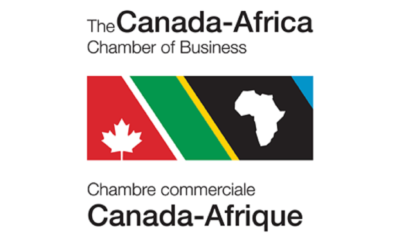
Enterprise Singapore has joined the highly anticipated MSGBC Oil, Gas & Power 2023 conference and exhibition as a strategic partner
NOUAKCHOTT, Mauritania, September 28, 2023/APO Group/ — 

Enterprise Singapore is the Singapore government agency championing enterprise development. It has joined the MSGBC Oil, Gas & Power 2023 conference and exhibition (https://apo-opa.info/465mpBO) as a strategic partner. – Enterprise Singapore will work closely with event organizer Energy Capital & Power (ECP) (www.EnergyCapitalPower.com) as the company strives to facilitate investment, drive cooperation and usher in a new era of energy and business developments in Africa.

We look forward to welcoming the Singaporean delegation and showcasing the many opportunities for collaboration and investment at the upcoming MSGBC Oil, Gas & Power conference

Enterprise Singapore works with companies to build capabilities, innovate and go global, supporting the growth of Singapore as a hub for global trading and startups with a robust pro-enterprise environment. The agency provides various programs and initiatives to help businesses start, grow and internationalize, including access to funding, market insights, capability development, and networking with other government agencies, industry associations, and international partners. Stepping into this picture, the partnership aims to foster cooperation in the energy sector and promote investment opportunities in Africa, with specific focus on the MSGBC region.

As a strategic partner, Enterprise Singapore will participate at the upcoming MSGBC Oil, Gas & Power conference from November 21-22 in Nouakchott, leading a delegation of Singapore business leaders to the event. The delegation consists of experienced entrepreneurs, and executives from a diverse range of service and solution providers for the Oil and Gas sector, all of whom are eager to explore new business opportunities in the region. The group will participate in various events and activities, including presentations, panel discussions, and networking sessions, connecting with potential partners and exploring investment opportunities.

Sandra Jeque, International Conference Director at ECP stated that, “This partnership represents a significant step forward in strengthening ties between Singapore and African nations, and we are excited to see the positive impact it will have on the energy industry in the region. We look forward to welcoming the Singaporean delegation and showcasing the many opportunities for collaboration and investment at the upcoming MSGBC Oil, Gas & Power conference.”

To register for the conference visit https://apo-opa.info/465mpBO

Distributed by APO Group on behalf of Energy Capital & Power.

Business

Africa’s Artisanal and Small-Scale Mining (ASM) Formalization Drive to Take Center Stage at African Mining Week (AMW) 2026

Published

on

Etu Energias

Representatives from Rand Refinery, Typhoon Greenfield Development, Makor Resources and the Uganda Chamber of Energy and Minerals will showcase how financing, technology, partnerships and policy are transforming artisanal and small-scale mining across Africa

CAPE TOWN, South Africa, August 5, 2026/APO Group/ –As global demand for minerals grows, African governments and industry are accelerating efforts to formalize artisanal and small-scale mining (ASM) through new regulations, digital platforms, financing mechanisms and cooperative models. These initiatives aim to increase government revenues, strengthen mineral traceability, curb illicit mining and attract responsible investment.


These reforms will take center stage at African Mining Week (AMW) 2026, taking place in Cape Town from October 14–16, through a dedicated Accelerating the Formalization of ASM panel, where policymakers, mining companies and industry leaders will examine the policies, partnerships and technologies driving ASM formalization across the continent.

The discussion comes as artisanal mining assumes an increasingly strategic role in the global minerals industry. ASM accounts for more than 20% of global gold and critical minerals production. The sector supports the livelihoods of more than 40 million people and indirectly benefits an estimated 150 million people across sub-Saharan Africa, yet between 70% and 80% of operations remain informal, highlighting a significant opportunity to drive economic growth through formalization.

Ghana is demonstrating how formalization can strengthen both production and investment. The country now sources more than 52% of its gold output from ASM operators and continues to formalize the sector through the Ghana Gold Board and expanded community mining programs. Typhoon Greenfield Development is supporting these efforts through an in-house initiative that provides technical assistance to neighboring artisanal miners. At AMW 2026, Kwaku Nsiah-Asare, CEO of Typhoon Greenfield Development, is expected to share insights into the company’s ASM integration model and how partnerships between industrial and artisanal miners can strengthen production while promoting sustainable sector development.

Meanwhile, Rand Refinery is supporting Ghana’s ASM formalization through a partnership with Gold Coast Refinery to strengthen local gold purchasing and beneficiation. By providing technical, operational and commercial oversight, the company is helping the refinery achieve internationally recognized assaying and refining standards for ASM gold. As African producers accelerate downstream mineral processing and value addition, Jason McPherson, Head of Sourcing and Business Development at Rand Refinery, will discuss the refinery’s regional expansion strategy and role in advancing Africa’s gold beneficiation industry.

Zambia is similarly expanding formalization initiatives as part of its strategy to diversify beyond copper and build a stronger domestic gold industry. Government-led programs such as the planetGOLD Zambia initiative and Community Artisanal and Small-Scale Gold Mining Committees are improving access to training, finance, cooperative structures and responsible mining practices for artisanal producers.

Complementing these efforts, Makor Resources has developed MineHive, a digital platform that provides artisanal miners with technical knowledge, community engagement tools and access to responsible mining practices. Makor Resources CEO Brooke Bibeault is expected to discuss how digital innovation can accelerate ASM formalization while improving productivity, environmental performance and investor confidence across the sector.

Uganda is also advancing reforms to unlock greater value from its artisanal mining industry. Approximately 500,000 artisanal miners operate across the country, including around 90,000 gold miners, with much of the sector still operating informally. To improve mineral traceability and strengthen domestic value capture, the Bank of Uganda has launched a national gold purchasing program designed to support artisanal miners while expanding the country’s official gold reserves.

The Uganda Chamber of Energy and Minerals, working alongside GIZ Uganda and the Ministry of Energy and Mineral Development, is also implementing the TENT Grant Initiative, a UGX 800 million program running through October 2026 that aims to formalize at least 20 artisanal mining cooperatives through improved market access. At AMW 2026, Chamber CEO Humphrey Asiimwe is expected to provide an update on Uganda’s formalization agenda and how the country is positioning its gold, graphite and rare earth sectors to meet rising global demand.

As governments and industry work to unlock greater value from artisanal mining, AMW 2026 will spotlight the partnerships, technologies and policy reforms shaping the sector’s transition into the formal economy.

Distributed by APO Group on behalf of Energy Capital & Power.

Continue Reading

Business

Oando’s Production up 16% in H1 2026, Company Reports Facility Uptime of 92%

Published

on

Oando PLC

The Company attributed this increase to its crude oil marketing and offtake programmes and increased sourcing from marginal field producers and remains focused on expanding its broader crude oil marketing and trading portfolio in the other half of the year

LAGOS, Nigeria, August 4, 2026/APO Group/ –Oando PLC (https://OandoPLC.com/), Africa’s leading indigenous energy solutions provider listed on both the Nigerian Exchange Ltd. and Johannesburg Stock Exchange, has published its unaudited results for the six months ended 30 June 2026. The Group posted a 20% revenue increase to ₦2.1 trillion, reflecting the results of the Company’s cost-optimisation initiatives, principally lower transport, logistics, service and ICT costs, alongside the benefit of higher production across a largely fixed field cost base. This stronger earnings performance is also reflected in the Company’s profit after tax, which rose 8% to ₦68.6 billion and gross profit, which rose 331% to ₦101 billion.

Oando’s upstream subsidiary reported a 92% facility uptime compared to 85% in 2025, resulting in a 16% increase in average production to 42,789 boepd from 36,836 boepd in H1 2025. This production number comprises crude oil production up by 19% to 12,358 bopd, gas volumes up 14% to 28,497 boepd, and NGL production up 16% to 1,935 boepd. The Company states these results were underpinned by a combination of factors: the successful drilling of new wells, the restoration of 12 previously shut-in wells, and sustained improvements in facility uptime across OMLs 60-63.

In its trading arm, the Group saw a 2.1% increase in trading volumes to 13.15 MMbbl. The Company attributed this increase to its crude oil marketing and offtake programmes and increased sourcing from marginal field producers and remains focused on expanding its broader crude oil marketing and trading portfolio in the other half of the year.


Group Chief Executive, Wale Tinubu CON, speaking on the half-year 2026 results, commented “The first half of 2026 marks an important inflection point in Oando’s journey. Over the past two years, our priority has been to successfully integrate one of the most significant upstream acquisitions in Africa and unlock the full value of our expanded portfolio. The progress achieved during the period demonstrates that we are now delivering the operational and financial outcomes expected from that transformation.


Operational efficiency underpinned our performance during the period as we strengthened asset integrity, improved facility reliability and reinforced security across our operating areas, resulting in average facility uptime of 92% while reducing production operating costs by 18% to US$16.83 per boe.”


“Our development programme also gathered significant momentum during the period as we successfully drilled and completed two land development wells, with an additional land well currently being drilled, while mobilising a second drilling rig to accelerate activity across our operated portfolio. In parallel, we continued an extensive programme of rig-less well interventions designed to restore production, sustain plateau output and mitigate natural field decline. Together, these activities increased average production to 42,789 boepd, representing 16% year-on-year growth.


Our focus is now on translating our significant opportunities into higher production, a stronger balance sheet and superior long-term returns for our shareholders

This translated into a stronger financial performance, with revenue increasing by 20% to 2.1 trillion, while the business generated 179.5 billion in operating cash, improving liquidity. Profit after tax also increased by 8% to 68.6 billion, reflecting the overall improvement in operating performance during the period.” He added.


Similarly, another independent, Seplat Energy Plc, also reported a 4% increase in average production in H1 2026 to 139,509 boepd, while Aradel Holdings Plc reported a 523% increase to 139.5 kboepd.


In 2026, Oando embarked on an extensive drilling programme across both the operated and non-operated portfolio. With this already yielding results in H1 within OMLs 60–63, the Company hopes to complete its seven-well programme with planned drilling across its assets in Idu T, Samabri A and Ogbanbiri. This is to be complemented by a rig-less programme of approximately 100 well intervention activities planned across the portfolio for the full year. Together, these activities are expected to add production, sustain plateau and offset natural field decline across the portfolio.


Addressing the Company’s outlook, Mr Tinubu stated, “Looking ahead in 2026, our priorities remain firmly centred on completing our seven-well drilling programme and portfolio-wide well intervention campaign while delivering production of circa 50,000 boepd. Beyond 2026, our identified inventory of 62 development wells, supported by 55 planned well interventions, provides a clear pathway towards our medium-term production ambition of approximately 100,000 boepd.


Furthermore, we shall execute an intensive fundraising and balance sheet restructuring programme to optimise our capital structure, strengthen our financial position, improve working capital, enhance financial flexibility and ensure the business is appropriately funded to accelerate growth and maximise long-term shareholder value


We have built a resilient operating platform and established a clear roadmap for growth. Our focus is now on translating our significant opportunities into higher production, a stronger balance sheet and superior long-term returns for our shareholders.”


The Company reaffirms full-year production guidance of 40,000–50,000 boepd, supported by a seven-well drilling programme across OMLs 60–63, of which two wells have been completed, with two more in progress. The trading arm has revised its guidance to 22–26 MMbbls following adjustments to a crude oil marketing programme. The Company also continues to advance the Rights Issue and its US$1.5 billion multi-instrument issuance programme and the expansion of its clean energy initiatives.

Distributed by APO Group on behalf of Oando PLC.


Continue Reading

Business

African Development Fund Grants $4.3 Million to Strengthen Integration of Natural Capital into Decision-Making in 13 African Countries

Published

on

African Development Bank

The project is scheduled for implementation between October 2026 and September 2029 and is expected to generate outputs in the areas of policy, statistics, institutions, and knowledge that will contribute to better integration of natural capital into development planning

ABIDJAN, Ivory Coast, August 4, 2026/APO Group/ –The Board of Directors of the African Development Fund (https://www.AfDB.org), the concessional window of the African Development Bank Group, has approved a grant of $4.23 million to implement the second phase of a project to integrate natural capital into development financing in Africa.


The project covers thirteen countries: Burundi, Cameroon, the Central African Republic, the Democratic Republic of the Congo, Ghana, Côte d’Ivoire, Kenya, Mozambique, Rwanda, Tanzania, Togo, Zambia, and Zimbabwe.

With in-kind contributions from partner institutions such as the World Wildlife Fund (WWF), the German public agency for international cooperation on sustainable development (GIZ), the African Union Development Agency—New Partnership for Africa’s Development, the Economic Commission for Africa and the United Nations Environment Programme, the project aims to foster an environment conducive to better utilization of natural capital and its integration into political and financial decision-making processes. The various participating countries will also play a part in contributions to the project/

This project is intended to contribute to development that is resilient to the effects of climate change, nature-friendly, and inclusive

The project is scheduled for implementation between October 2026 and September 2029 and is expected to generate outputs in the areas of policy, statistics, institutions, and knowledge that will contribute to better integration of natural capital into development planning.

The strategy aims to strengthen policy-making systems, statistical systems, institutional frameworks, and knowledge-generation mechanisms needed by the regional member countries participating in the project and the African Development Bank Group to assess natural capital and incorporate it into public policy-making.

The project will achieve this through an integrated set of measures, including policy support, technical assistance, assessments of statistical readiness, biodiversity financing tools, pilot projects to assess green wealth, capacity building, and peer learning.

“This project is intended to contribute to development that is resilient to the effects of climate change, nature-friendly, and inclusive, by enabling African countries to better identify, measure, and manage their natural wealth, while strengthening the evidence base that informs development financing, dialogue on sovereign policies, and the mobilization of green investments,” said Innocent Onah, Chief Natural Resources Officer at the African Development Bank Group.

He added: “In the long term, this could lead to tangible improvements in the development of the target countries in terms of gross domestic product (GDP) growth, increased foreign direct investment inflows, economic development, poverty reduction, improved employment, economic competitiveness, and financial and economic risk ratings.”

Distributed by APO Group on behalf of African Development Bank Group (AfDB).

Continue Reading

Trending