Connect with us
Anglostratits

Business

East Africa’s retail boom: a new opportunity for real estate

Published

on

retail brands

Rising consumer demand has led to the development of strong local retail brands and the emergence of international brands—all seeking to capitalise on this growing customer base

NAIROBI, Kenya, April 3, 2024/APO Group/ — 

Retail is emerging among the most vibrant sectors of the East African economy. Kenya’s capital city, Nairobi, has not only become an important retail market in its own right but a stepping stone into the rest of the country and wider East Africa. Nairobi is a rising regional shopping destination, the headquarters to many regional retail and food and beverage (F&B) businesses, and a launchpad for retail concepts into other East African areas.

It is believed that urbanisation, a growing middle class and the rise of digital connectivity are boosting the retail sector in Nairobi, according to a consensus of thought leaders participating in the 11th annual East Africa Property Investment (EAPI) Summit Retail Forum, which takes place on the second day of the event to be held on 17 and 18 April 2024 in Nairobi, Kenya.

Digitally savvy middle-class Kenyans are demanding local brand experiences that align with what they see regionally, continentally and internationally, and are boosting the retail sector in Nairobi. Rising consumer demand has led to the development of strong local retail brands and the emergence of international brands—all seeking to capitalise on this growing customer base.

As a key sector of the property industry, retail is crucial to the growth of a prosperous and thriving real estate market. For this reason, retail and F&B will take centre stage at the #EAPI2024 Retail Forum, hosted in Partnership with Village Market, Knight Frank and CBRE Excellerate. The unique platform for East Africa’s retail sector to meet and connect with the region’s leading landlords, brokers, financiers, advisory teams and more will play a part in shaping Africa’s most exciting retail market and exploring regional and global trends.

Ryan Pape, Country Manager at CBRE Excellerate Kenya, notes that Nairobi’s infrastructural improvements and private sector investment have opened the playing field to both local and international retailers and F&B chains.

“Nairobi’s infrastructural improvements and private sector investment has opened up the playing field to both local and international retailers and F&B chains. We see increased public and private investment into roads, rail, shopping malls, convenience malls, cold chains and distribution centres, to name just a few areas.”

Hooman Ehsani, Director of New Developments, Greenhills Investment Limited, which built the Village Market Shopping & Recreation Complex in Nairobi and took it through five expansions, including Tribe Hotel, believes that well-positioned brands with the right product mix would do well to open a store in Nairobi.

“The Nairobi F&B scene has become considerably more vibrant and appealing over the last couple of years, with the success of some newer entrants catalysing more creativity and energy, and encouraging more entrepreneurs to venture into the space. Similarly, on the retail side, we’ve seen a significant spike in interest as business owners aim to meet a growing appetite, especially for locally produced fashion, home furnishings and beauty services.”

Ehsani adds, “Nairobi is now achieving a level of comfortable balance between retail space in the right locations and better-quality retailers with the right products for the market. There is renewed confidence within the business community and increased optimism around stability and growth opportunities.”

Nairobi is now achieving a level of comfortable balance between retail space in the right locations and better-quality retailers with the right products for the market

Wambui Mbarire, CEO at RETRAK Kenya, reports that the biggest recent change in the market is the increased diversity of retail partners to rent the newly developed spaces. “Whereas historically, there were one or two potential tenants with the capacity to rent prime retail real estate, the growth of the sector has seen more options available to landlords.”

Mbarire notes that Nairobi, with its diversity and cosmopolitan nature, is a great place to test and tweak brands for launch into other Kenyan and East African towns and cities. “The urbanisation that we are seeing countrywide is also providing retail property players with additional locations outside of the traditional Nairobi, Mombasa and Kisumu axis. Good examples of this include Nakuru, Eldoret, Naivasha as well as Kajiado, Kitengela, Kiambu, Limuru, Thika and Ngong.”

Mark Dunford, CEO at Knight Frank Kenya, states, “Nairobi’s retail, food, and beverage sector is experiencing a dynamic growth surge, driven by the strategic expansion of both local and international retailers. This growth is a result of the city’s increasing urbanisation and consumer spending, which have been supported by private equity investments. The burgeoning retail landscape offers lucrative opportunities for both investors and retail brands. As Nairobi’s status continues to grow into a prominent hub, it offers investment prospects for stakeholders in the retail property sector and capital investors. This is largely attributed to a boost in investor confidence, fuelled by government-led infrastructure projects and the growing allure for international retail entities.

In today’s market, establishing a presence in Nairobi is exceptionally attractive for retail brands. The city’s upgraded infrastructure, combined with the robust growth of both local and multinational retailers, cements its position as one of the premier retail markets in Africa.

Murray Anderson-Ogle, GM of Marketing and Commercial at API Events, adds, “Kenya is a key market with many successful local homegrown retail brands, including those operating in the vibrant F&B arena, and it has the clear potential to be an African retail real estate powerhouse.”

All agree that the surging retail market requires a platform to connect with its real estate stakeholders, and the EAPI Retail Forum answers this need. #EAPI2024 Retail Forum is exclusively in-person at Radisson Blu, Upper Hill, Nairobi. 

“The understanding of this market’s changing needs that will be provided at the EAPI Retail Forum is beneficial to landowners, developers, investors, and property professionals alike,” highlights Pape.

“EAPI has been at the leading edge of the conversation around property trends in the region, and investment in retail and F&B operations has become a significant part of the investor interest,” says Ehsani.

Mbarire concludes, “This is the natural progression of the market, and establishing the EAPI Retail Forum now will ensure participation in one of the most vibrant sectors of the East African economy.”

The Retail Forum of the 11th East Africa Property Investment Summitt will take place on 18 April 2024 at Radisson Blu, Upper Hill, Nairobi, Kenya. For more information and to book to attend the EAPI Summit visit https://EAPISummit.com.

Distributed by APO Group on behalf of API Events.

Business

SLB commissions new fluids systems plant in Pemba to support Mozambique’s offshore energy development

Published

on

Mozambique

New facility expands in-country drilling and completion fluids capability, advancing the next phase of SLB’s growth in Mozambique

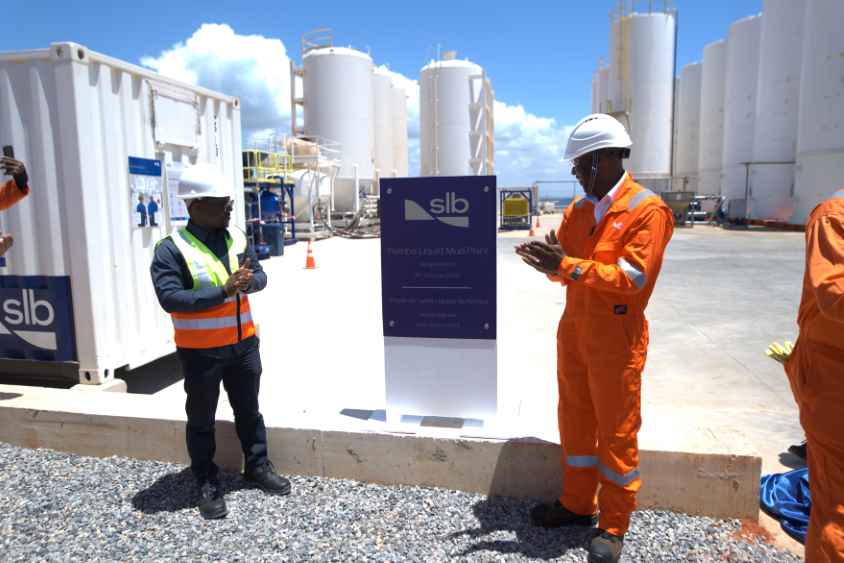
PEMBA, Mozambique, October 9, 2026/APO Group/ –SLB (NYSE: SLB) (www.SLB.com) announced the opening of a new fluids systems plant in Pemba, Mozambique. The new facility strengthens in-country capacity to prepare, store and deliver drilling and completion fluids for offshore operations, reinforcing the infrastructure needed as Mozambique’s offshore activity grows and its role as a strategic energy hub for East Africa continues to expand.

The commissioning of the plant, also known as a liquid mud plant, coincides with SLB marking 70 years of operations in Mozambique. It reflects the company’s long-term commitment to investing in people, infrastructure and capability that support the country’s long-term offshore energy development plans.


With an initial storage capacity of 21,000 barrels, the liquid mud plant provides a scalable platform for future growth, supporting multiple customers and rising offshore activity while improving logistics and enhancing operational flexibility.

As SLB marks 70 years in Mozambique, this investment reflects our confidence in the country’s future and our commitment to supporting its energy ambitions

“As SLB marks 70 years in Mozambique, this investment reflects our confidence in the country’s future and our commitment to supporting its energy ambitions,” said Miguel Baptista, Central, East and Southern Africa, Managing Director, SLB. The new liquid mud plant strengthens local energy infrastructure, expands opportunities for local content development, and enhances our ability to support customers as they deliver some of Africa’s most significant offshore energy resources.”

The liquid mud plant project was delivered with strong local participation and that momentum is expected to continue into operations. During project delivery, more than 100 jobs were created in Pemba with nationals representing 80% of the workforce, reflecting a focus on building local capability.

The project was delivered with a strong focus on safety, operational integrity, and quality, achieving more than 67,000 hours worked without a recordable safety incident.

This key infrastructure strengthens SLB’s ability to support consistent service quality and enhance supply chain readiness for increasing offshore activity across Mozambique, supporting customers execute safely and efficiently while developing local skills and expertise.

Key Points:

  • SLB has commissioned a new fluids system plant in Pemba, expanding in-country drilling and completion fluids capability for offshore operations.
  • With an initial storage capacity of 21,000 barrels, the facility provides a scalable platform to support growing offshore activity in Mozambique.
  • The investment marks the next phase of SLB’s growth in Mozambique, strengthening local capability and supporting long-term offshore energy development.

Distributed by APO Group on behalf of SLB.


Continue Reading

Business

South African Energy Storage Association (SAESA) welcomes 4,600 MW battery storage prioritisation and calls for integrated energy planning

Published

on

Battery energy storage systems (BESS) are becoming critical system infrastructure, supporting flexibility, reducing avoidable curtailment, shifting energy into periods of demand and strengthening security of supply

JOHANNESBURG, South Africa, October 9, 2026/APO Group/ –The South African Energy Storage Association (SAESA) (www.SAESA.org.za) welcomes the prioritisation of 4,600 MW of battery energy storage under the first Integrated Resource Plan (IRP) 2025 Section 34 determination.


The timing is significant. Recent Integrated Energy Plan (IEP) modelling and assumptions discussions highlighted a fundamental shift that South Africa’s energy planning now needs to capture: we cannot plan the future power system by counting megawatts of generation alone.

We must plan for when energy is available, where it is available, how it moves through a constrained grid and how it is stored and dispatched when the system needs it most.

The announcement reinforces that shift. Battery energy storage systems (BESS) are becoming critical system infrastructure, supporting flexibility, reducing avoidable curtailment, shifting energy into periods of demand and strengthening security of supply.

For SAESA, the message for the IEP is clear: storage, flexibility and system services must be modelled as integral components of South Africa’s future electricity architecture, with their contribution considered from the outset of generation planning.

“The IEP must plan the power system we are becoming, not simply model the power system we have inherited,” says SAESA.

The IEP must plan the power system we are becoming, not simply model the power system we have inherited

Partnership with C&I Energy + Storage Summit

SAESA is an association partner of the C&I Energy + Storage Summit, created by VUKA Group, taking place on 28–29 October 2026 at The Maslow Hotel, Sandton, Johannesburg.

The summit brings together commercial and industrial energy users, project developers, financiers, regulators and solution providers to explore practical approaches to energy security, procurement and storage deployment.

For businesses assessing how storage can support their operations, the event offers an opportunity to meet SAESA and engage with the wider energy community on the decisions shaping South Africa’s evolving electricity system.

Commercial and industrial energy decision-makers are invited to apply to attend as hosted buyers. Qualifying buyers receive complimentary summit access and curated opportunities to engage with industry partners.


Meet SAESA at C&I Energy + Storage Summit: Join the Hosted Buyer Programme

The Hosted Buyer Programme connects commercial and industrial energy decision-makers with solution providers shaping South Africa’s evolving private energy market.

Qualified energy buyers receive complimentary access to the summit and curated engagement with industry partners exploring energy procurement, storage deployment and project development.

Apply for the Hosted Buyer Programme (https://apo-opa.co/4ehLijJ)

Distributed by APO Group on behalf of VUKA Group.


Continue Reading

Business

Afreximbank welcomes launch of Africa Credit Rating Agency as an important step in strengthening Africa’s financial architecture

Published

on

Expanding credible rating coverage can improve the information available to investors and support the development of deeper domestic and regional capital markets

PORT LOUIS, Mauritius, October 8, 2026/APO Group/ –African Export-Import Bank (Afreximbank) (www.Afreximbank.com) welcomes today’s launch of the Africa Credit Rating Agency (AfCRA), an important milestone in strengthening Africa’s financial architecture and expanding the continent’s capacity to generate credible, independent analysis of African credit risk.


Credit ratings play an important role in determining access to capital, influencing investor perceptions and shaping the cost at which governments, institutions and businesses can finance development. It is therefore essential that assessments of African credit risk are independent, rigorous and evidence-based, while reflecting a complete understanding of the structures, institutions and economic realities being assessed.

The establishment of AfCRA adds an important African-led source of credit opinion to the market. Its value will not be measured by whether it produces more favourable ratings, but by the credibility of its analysis, the quality of its data and transparency of its methodology, and its ability to deepen understanding of African sovereigns, sub-sovereigns and corporate credit.

This is particularly important given that many African issuers remain unrated, while local-currency and sub-sovereign markets continue to have limited rating coverage. Expanding credible rating coverage can improve the information available to investors and support the development of deeper domestic and regional capital markets.

AfCRA must set a new benchmark for the continent, maintain its independence, and remain wholly owned and controlled by Africans

Alongside fellow members of the Alliance of African Multilateral Financial Institutions (AAMFI), Afreximbank has consistently maintained that African Multilateral Financial Institutions should be assessed on the basis of their fundamentals, performance, legal frameworks, mandates and operating models. Ensuring that these institutional characteristics are properly understood is essential to achieving informed, balanced and credible assessments of African risk.

Commenting on the uniqueness of the African market, and need for AfCRA’s rating methodology to reflect this, Mr Denys Denya, Senior Executive Vice President, Afreximbank, said: “The rating methodology AfCRA develops must recognise the uniqueness of our environment and its institutional structures. The Agency must set its own standards and not follow those set elsewhere — it must build a unique identity that conforms to an ‘African best practice.”

Highlighting the need for the autonomy of the Africa Credit Rating agency as it takes off, Mr Denya added: “Most importantly, AfCRA must set a new benchmark for the continent, maintain its independence, and remain wholly owned and controlled by Africans. We must all use it, and in return expect a complete assessment of where we (Africa) stand: the strengths the market has ignored, and the weaknesses we still need to fix.”

AfCRA should therefore be seen as complementary to existing international and regional rating agencies, broadening the range of credible analysis available to investors and issuers while strengthening competition, transparency and analytical capacity within Africa’s credit markets.

As Africa seeks to mobilise the scale of capital required for industrialisation, trade, infrastructure and economic transformation, credible African institutions that improve information, strengthen market confidence and deepen the continent’s financial markets will become increasingly important.

Afreximbank congratulates the African Union, the African Peer Review Mechanism (APRM) and all those involved in bringing AfCRA from concept to launch, and looks forward to the contribution the Agency will make to deeper, more transparent and more efficient African capital markets.

Distributed by APO Group on behalf of Afreximbank.


Continue Reading

Trending