Connect with us

Business

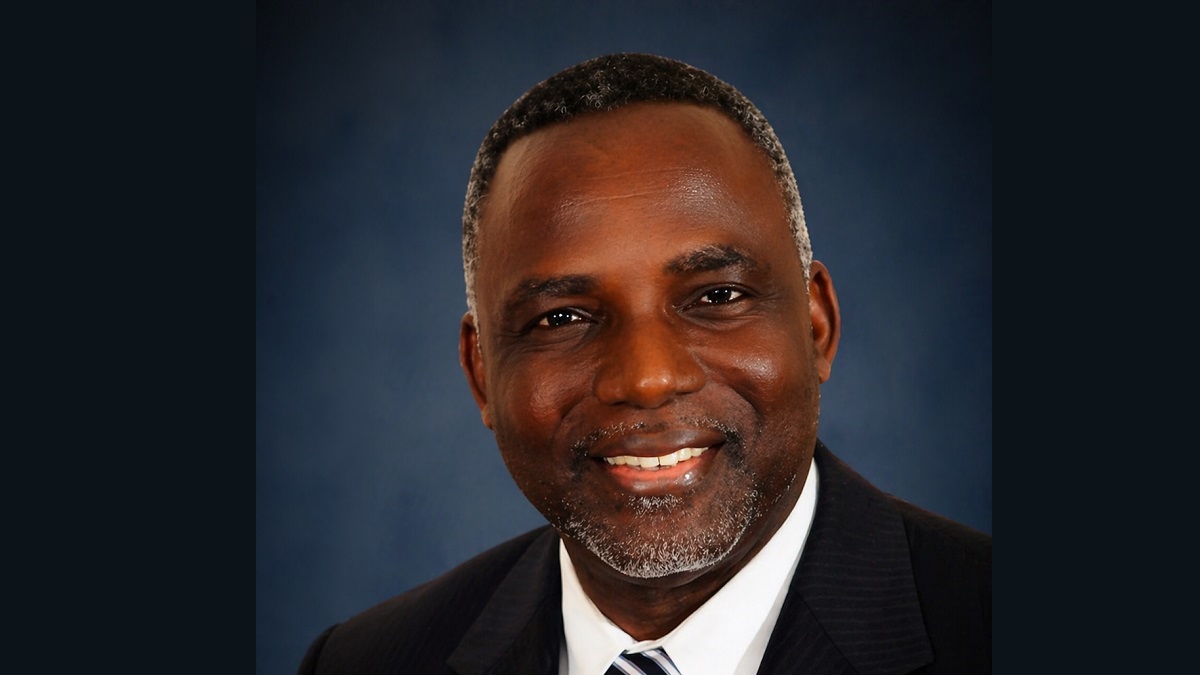
Driving Africa’s Fair Energy Transition Through Technology and Innovation (By Prof. Bart O. Nnaji)

Published

on

Africa

According to the International Energy Agency, Africa needs about $90 billion annually to achieve a successful energy transition, but current funding falls short

Africa must not embrace renewable energy primarily when they have abundance of fossil fuel for their industrialization

ABUJA, Nigeria, May 13, 2026/APO Group/ —By Prof. Bart O. Nnaji FAS, FA Eng. CON, NNOM – Founder/Chairman, Geometric Power Limited and former Nigerian Minister of Power.


Africa’s energy journey is often portrayed as a stark choice between climate responsibility and development. In reality, the continent faces a more nuanced challenge: finding a fair, gradual energy transition that matches its unique needs and ambitions. Technology and innovation can drive this change, helping secure affordable and sustainable energy for all.

In the coming decades, Africa’s population is expected to soar to nearly 2.5 billion. Cities will grow. Industries will expand. Digital connections will multiply. The demand for energy will increase significantly. Right now, expecting Africa to abandon fossil fuels overnight is neither realistic nor fair. In the near future, fossil fuels remain crucial for base power that is reliable, and affordable. In particular, natural gas is key transition fuel that will remain the base power solution for the next decade. Africa must not embrace renewable energy primarily when they have abundance of fossil fuel for their industrialization as other emerging and emerged nations have done. A just energy transition recognises these realities and seeks ways to build cleaner, more resilient systems over time.

Technology as the Enabler of Africa’s Energy Future

Exciting new technologies are already reshaping Africa’s energy landscape:

  • Decentralised solutions, like mini-grids, off-grid solar, and batteries, bring electricity to places traditional grids can’t reach. By 2030, these distributed renewables could provide most new connections in underserved communities.
  • Smart grids and AI-driven management can reduce waste. They help utilities serve people better.
  • Modern batteries ensure that solar and wind energy can be delivered steadily, even when the sun isn’t shining or the wind isn’t blowing.

Decentralised approaches are essential to Africa’s path toward universal energy access. While technology is not a fix-all solution, it is a crucial enabler of efficiency, resilience, and affordability, shaping Africa’s energy future.

African entrepreneurs are leading much of this change. They’re developing solutions that meet local needs, such as pay-as-you-go solar, community-run mini-grids, and mobile payment platforms. These innovations don’t just bring power; they create jobs, build skills, and reap economic benefits for the continent.

But innovation alone isn’t enough. Investment is critical. According to the International Energy Agency, Africa needs about $90 billion annually to achieve a successful energy transition, but current funding falls short. Governments can help by setting clear, supportive policies that attract investment and make projects more affordable. Organisations like the African Development Bank say grid investment must rise dramatically, and clean energy spending should double by 2030 to keep up with growing demand.

From Energy Access to Economic and Human Impact

Reliable energy is more than just a technical necessity – it’s what fuels industrial growth. Picture the continent’s factories buzzing with activity, transport networks connecting people and goods, and data centres powering a vibrant digital economy.

Expanding decentralised solutions brings light to places that have been left in the dark for too long. It’s about giving children a place to study at night, helping clinics store vaccines safely, and empowering entrepreneurs to launch new businesses.

Of course, none of this works in isolation. Supportive policies, strong regulations, and partnerships between governments and private companies are essential. When African countries harmonise their rules and work together, they can create bigger markets. This draws even more investment and innovation.

Ultimately, Africa’s energy transition must be shaped by Africans themselves. The path forward is about collaboration, pragmatism, and investing in homegrown solutions. Africa’s mobile phone revolution showed the world how quickly the continent can leapfrog old systems. The same can happen with energy; by embracing flexible, tech-driven models that serve today’s and tomorrow’s needs.

Now is the time to come together to act boldly and invest in Africa’s energy future. By uniting efforts, we can turn potential into progress, ensuring resilient, inclusive, and sustainable energy for generations to come. Let’s power Africa’s future, together.

Distributed by APO Group on behalf of Prof. Bart O. Nnaji.


Business

Global advertising spend surges 11.9% to $1.34trn this year despite consumer caution

Published

on

Social media is expected to record the strongest growth up 21.3% to $394.6bn
VOD (15.1%), retail media (14.3%), search (14.2%) and digital OOH (13.7%) are all set for double-digit increases
Technology and electronics (20.7%), travel and transport (19.3%) and automotive (17.8%) to be fastest growing product categories
Ad spend growth in 2027 expected to moderate (8.4%) to $1.46trn

WARC Media Global Ad Spend Forecast Q3 2026 update

8 October 2026 – Global ad spend is forecast to grow 11.9% to $1.34trn in 2026, according to the latest data from WARC Media. This comes on the back of strong 10.0% growth in 2024 and 2025.


Advertising investment continues to grow despite consumer pressure and geopolitical uncertainty, fueled by significant corporate AI investment and major events including the Olympics, FIFA World Cup, and US mid-term elections. While the economy has remained resilient to date, further escalations of global tensions pose potential downside risks.

Suzy Young, Head of WARC Media Data, says: “These are unusual times for advertising. Investment is accelerating even as many consumers face cost-of-living pressures and become more cautious with spending. This apparent contradiction reflects an increasingly uneven economy, where growth – particularly from the AI boom – is benefiting some companies, sectors and consumers more than others.”

Performance priority

Social media, search and retail media are three of the biggest channels for ad investment. Altogether they are expected to account for 66.4% of total global ad spend in 2026, rising to 70.0% in 2028.

Social media is set to register the strongest growth in ad spend this year, up 21.3% to $394.6bn, and is on course to exceed $500bn in 2028. Video on-demand (15.1% to $48.4bn), retail media (14.3% to $202.1bn), search (14.2% to $295.7bn) and digital OOH (13.7% to $21.7bn) will also see double-digit increases this year. Performance channels, which can adapt quickly to changing conditions, continue to benefit as uncertainty becomes the new norm.

Technology and electronics is forecast to be the fastest growing product category this year, rising 20.7% compared with 2025, followed by travel and transport (19.3%) and automotive (17.8%). Social media is expected to account for 40.2% of all tech and electronics spend in 2026.

2027 and 2028 ad spend outlook

Ad spend growth is expected to moderate in 2027, rising 8.4% to $1.46trn, reflecting tougher comparables and a normalisation from the exceptionally strong growth seen in recent years.

In 2028, ad spend will increase by a further 7.9% to $1.57trn – putting the market on course to be 2.3 times larger than it was a decade ago in 2019.

New AI destinations emerge

AI is driving advertising growth from multiple angles. New tech businesses are investing to acquire customers and build brands, while established companies spend heavily to compete in an increasingly crowded market. Simultaneously, AI tools are enhancing targeting, asset creation, and campaign optimisation – boosting ROI and fueling further investment.

AI is also opening new destinations for advertising. As generative search and AI assistants become gateways to product discovery and purchasing, ad dollars will follow – fundamentally reshaping where consumers encounter brands and where advertisers invest.

AI fuels ad triopoly

Alphabet, Amazon and Meta are set to take a combined market share of 59.7% of global ad spend (excluding China) this year – equivalent to $659.6bn. This is predicted to rise to 61.5%, or $804.1bn, in 2028.

Ad spend signals opportunity

Ad spend per capita vries dramatically across global markets. Developed economies like the US ($1395 per capita forecast for 2026), UK ($935), Austria ($850), and Switzerland ($825) show significantly higher advertising intensity, while China ($170), Brazil ($110), and India ($13) combine lower per-capita spending with massive consumer populations – highlighting substantial growth potential as these emerging markets mature.

WARC Media subscribers can read WARC’s global ad spend Q3 2026 update report in full.


Continue Reading

Business

Investors Back Platinum Credit Uganda: First Tranche Subscribed Nearly 2.5 Times

Published

on

The tranche is the first issuance under a UGX 70 billion Medium Term Note programme approved by the Capital Markets Authority (CMA)

KAMPALA, Uganda, October 7, 2026/APO Group/ –Platinum Credit Uganda this week listed its Medium Term Notes on the Uganda Securities Exchange (USE), after investors bid for almost two and a half times the amount on offer in the first tranche.


Download document: https://apo-opa.co/4rUcD15

Ugandan investors have given Platinum Uganda a strong vote of confidence

The first tranche of the private placement, with a base quantum of UGX 20 billion with a greenshoe option of UGX 10 billion, closed at a subscription rate of 246%, with investors applying for more than UGX 49 billion. Given the strong demand, Platinum Credit exercised the greenshoe option, and UGX 30 billion of notes was accepted. The tranche is the first issuance under a UGX 70 billion Medium Term Note programme approved by the Capital Markets Authority (CMA). The programme also includes a greenshoe option of UGX 30 billion, which takes the full programme to UGX 100 billion.

Investors could choose between three-, five- and eight-year notes, with interest paid quarterly. The notes were issued on 30 September 2026.

The company plans to use the new funding to grow its lending to the individuals and micro, small and medium enterprises (MSMEs) it already serves. At the end of 2025, Platinum Credit Uganda had over 30,000 active clients across Uganda. In the same year, small and medium businesses received more than UGX 71 billion in loans, helping them keep their cash flow steady and their operations running. In 2026, the company aims to put a further UGX 10 billion into Ugandan small businesses, prioritising those led by women and young people, and to expand its lending to smallholder dairy farmers.

Albert Abaasa, Managing Director of Platinum Credit Uganda, said: “We invited bids for UGX 20 billion and investors offered us nearly UGX 50 billion, which allowed us to exercise our greenshoe option and raise UGX 30 billion. That is a clear sign of trust in how we run this business and in where we are taking it. These funds will help us reach more customers across Uganda, and listing on the USE gives investors an opportunity to back a business that is expanding access to finance.”

Brett Sievwright, Chief Executive Officer of Platcorp Group, said: “Ugandan investors have given Platinum Uganda a strong vote of confidence. Raising long-term funding locally, in shillings, means the business can lend in the same currency its customers trade in. The strength of demand shows clear investor confidence in Platinum Uganda’s growth story. We thank the Capital Markets Authority, the Uganda Securities Exchange and our partners for their work in bringing these notes to market.”

Distributed by APO Group on behalf of Platcorp Group.


Continue Reading

Business

All Roads Lead to Namibia: The 7th Canada-Africa Business Conference Returns to Windhoek, 2–4 February 2027

Published

on

The Conference is anticipated to be the largest event the Chamber has convened on the African continent in its 33-year history

TORONTO, Canada, October 7, 2026/APO Group/ –The Canada-Africa Chamber of Business (www.CanadaAfrica.ca) is pleased to announce that the 7th Canada-Africa Business Conference will take place in Windhoek, Namibia, from 2–4 February 2027, under the headline sponsorship of B2Gold. The program opens with a site visit to B2Gold’s Otjikoto operations on 2–3 February, followed by a full conference day on Thursday, 4 February — in the days immediately preceding the Investing in African Mining Indaba in Cape Town. The Conference is anticipated to be the largest event the Chamber has convened on the African continent in its 33-year history.


During Africa Accelerating 2026, held in Toronto, a point was made that echoed throughout the program: all roads lead to Namibia for the next Canada-Africa Business Conference. “We are so delighted to be returning to Windhoek, and to be doing so with partners who continue to demonstrate what Canada-Africa collaboration can achieve,” said Garreth Bloor, President of The Canada-Africa Chamber of Business.

“Last year we welcomed over 50 Canadian company representatives among the hundreds of delegates – we’ve now doubled capacity for the next event, based on demand,” explained Bloor during the Africa Accelerating conference underway in Toronto this year.

Otjikoto has shown what is possible when a Canadian company and a Namibian community build together over the long term, in a country that is a gateway to the African continent

In remarks to the previous Canada-Africa Business Conference in Windhoek, the Prime Minister of Canada, the Right Honourable Mark Carney, recognized the Chamber “for convening leaders from across Canada and Africa” — commending its role in advancing investment, trade and partnership, and in connecting businesses and institutions to drive practical collaboration and shared growth.

“B2Gold is proud to support the Chamber’s largest event on African soil in its 33-year history, and proud that it is taking place in Namibia,” said John Roos, Managing Director of B2Gold Namibia. “Otjikoto has shown what is possible when a Canadian company and a Namibian community build together over the long term, in a country that is a gateway to the African continent. Welcoming business leaders to the mining operations, and to the investments in other sectors that have grown up around them, alongside the launch of the B2Gold Foundation in Windhoek, is our way of inviting others to see that partnership for themselves — and to consider what they might build here.”

Africa Accelerating, the Chamber’s flagship conference taking place in Canada this week, also featured a keynote address by Neil Reeder, Vice President, Government Relations at B2Gold, underscoring how vital B2Gold’s work is as a model for Canada-Africa trade and investment — and for deeper engagement between Canada and African markets.

Individuals who wish to find out more may visit the conference page here (https://apo-opa.co/4zjUsEH).

Registrants who wish to indicate their interest in joining the event may do so here (https://apo-opa.co/4hwRBlL).

Distributed by APO Group on behalf of The Canada-Africa Chamber of Business.


Continue Reading

Trending

Exit mobile version