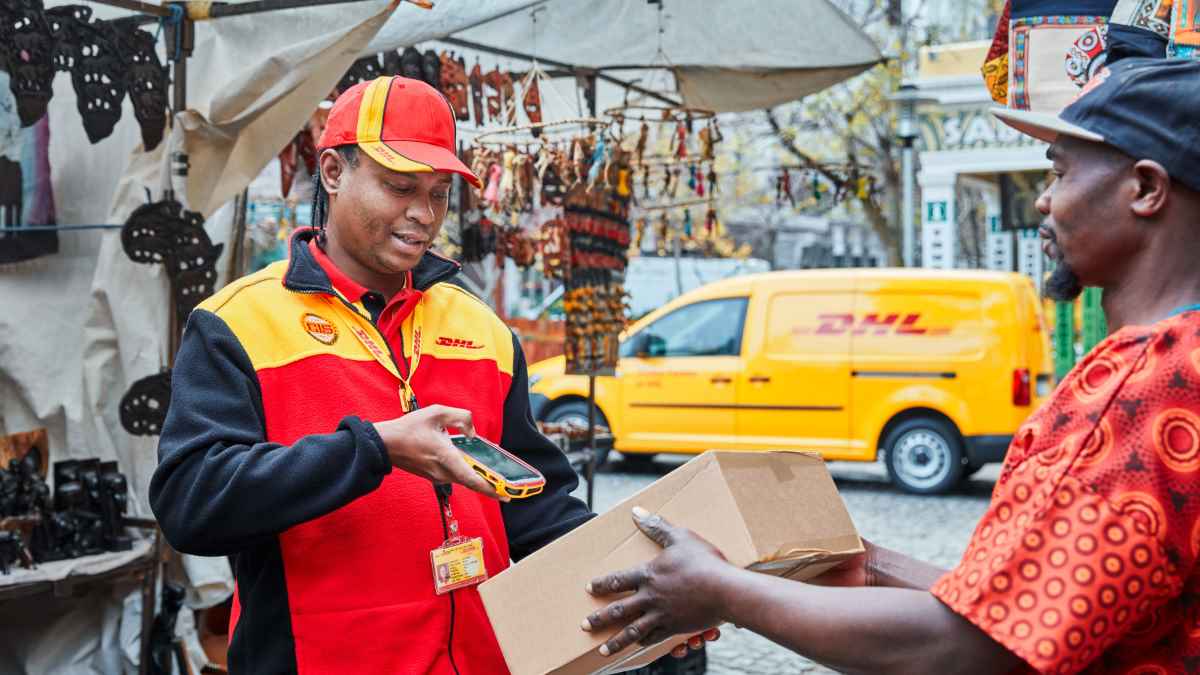
This investment underscores DHL’s commitment to Sub-Saharan Africa and supports AfCFTA’s goals to boost intra-African trade and strengthen Africa’s position in global markets
JOHANNESBURG, South Africa, October 15, 2025/APO Group/ –DHL Group (“DHL”) (www.DHL.com) today announced a €300+ million planned investment in Sub-Saharan Africa (SSA), reaffirming its long-term commitment to a region of growing strategic importance in global trade. The multi-year initiative will be deployed across DHL Express, DHL Global Forwarding, and DHL Supply Chain to expand infrastructure, enhance service capabilities, and unlock opportunities for businesses across key sectors including e-commerce, perishables, energy, and life sciences & healthcare.
Africa’s trade opportunity is rising as regional integration gathers pace. The African Continental Free Trade Area is creating a continental market that can deepen intra-African commerce and open new corridors with the rest of the world. Progress depends on continued improvements in infrastructure and trade facilitation, but cross-border flows have remained resilient and African enterprises are increasingly connecting to global value chains.
According to the latest update of the DHL Global Connectedness Tracker, Sub-Saharan Africa led all world regions in the first half of 2025 with a 10% year on year increase in trade value (in current US dollars), ahead of North America at 7% and South & Central America, Caribbean at 5%. Current forecasts as of September 2025 indicate the region’s trade volume will grow by an average of 4.3% per year over 2025 to 2029, the second-fastest globally behind South & Central Asia.
“Africa is at a pivotal moment in its trade journey,” said John Pearson, CEO of DHL Express. “Despite global volatility, the continent continues to show resilience and momentum. Our investment reflects confidence in Africa’s trajectory and DHL’s commitment to enabling the trade flows that drive inclusive growth. By strengthening our network and capabilities, we aim to make it easier for African businesses, from small and medium enterprises (SMEs) to large corporates, to compete on the world stage.”
Across DHL Express, the investment will include upgrading gateways, adding aviation uplift and extending time-definite coverage into second cities that are emerging as demand centres under AfCFTA. As the only integrator with a dedicated air network in Sub-Saharan Africa, Express will link these cities more tightly to Africa–Europe and Africa–Asia lanes, building on recent growth in Ethiopia and Nigeria.
Our investment reflects confidence in Africa’s trajectory and DHL’s commitment to enabling the trade flows that drive inclusive growth
Hennie Heymans, CEO, DHL Express Sub-Saharan Africa said, “Our focus is to be closer to customers and make cross-border shipping simpler and more reliable. As trade expands, businesses are asking for predictable transit times, consistent delivery performance and support that understands local conditions. By raising the bar on service and proximity, we will help more African companies trade efficiently and compete on a bigger stage.”
DHL Global Forwarding will focus its investment on strengthening key industry solutions that are driving Africa’s trade growth. The division is expanding its capabilities in energy and industrial projects, supporting Africa’s role in the global energy transition; enhancing cold-chain and perishables logistics for agriculture and horticulture exporters; and scaling its expertise in life sciences and healthcare with specialized temperature-controlled transport. These enhancements build on DHL’s established freight forwarding network and customs expertise across major African trade lanes connecting the continent with Europe, Asia and the Middle East.
Amadou Diallo, CEO of DHL Global Forwarding Middle East & Africa, added: “Customers are navigating shifting trade patterns and tighter regulatory requirements, so reliability and visibility matter more than ever. We are strengthening forwarding solutions with deeper local expertise and enhanced digital tools, giving clients clearer control of their shipments from origin to destination. The goal is straightforward: keep goods moving predictably and help customers capture growth where demand is emerging.”
DHL Supply Chain will add capacity and transport-led solutions with a clear focus on the transporter sector and life sciences & healthcare, including additional temperature-sensitive capability to support critical healthcare flows and fast-moving fulfilment as supply chains mature, particularly as demand for third party logistics services continues to grow in the core South African market.
Orkun Saruhanoglu, CEO, DHL Supply Chain Middle East & Africa, said: “DHL Supply Chain is expanding in South Africa as the economy gains momentum and supply chains become more sophisticated. We are seeing growing demand for specialised, outsourced logistics, particularly in life sciences and healthcare and across the transporter sector. By adding capacity, strengthening transport-led solutions and applying our contract logistics expertise, we will help customers improve service quality, manage risk and scale with confidence.”
DHL is investing in programs that extend participation in trade and support sustainable growth. Through its GoTrade initiative, the company provides SMEs with training and customs expertise to access international markets. In addition, the business is piloting renewable energy and alternative fuel projects across its facilities in Sub-Saharan Africa and advancing digitalization through AI-enabled monitoring, route optimization, and digital customs tools to reduce friction in cross-border trade.
With unrivalled coverage across all African markets, DHL Group remains uniquely positioned to connect the continent to the world and enable the next chapter of its growth.
Distributed by APO Group on behalf of DHL Express.
400 decision-makers gathered in Cotonou to accelerate access to insurance and contribute to doubling insurance penetration by 2040
DAKAR, Senegal, June 23, 2026/APO Group/ –Faced with a major paradox representing nearly 19% of the world’s population while accounting for less than 1% of global insurance premiums African insurance stakeholders are mobilizing.
From July 6 to 8, 2026, the Federation of African National Insurance Companies (FANAF) will organize the General Assembly on Insurance for All at the Sofitel Hotel in Cotonou, Benin, a major pan-African gathering dedicated to inclusive insurance.
The event will bring together nearly 400 African decision-makers from governments, regulatory and supervisory authorities, insurance and reinsurance companies, financial institutions, development banks, technical and financial partners, as well as professional organizations from across the continent.
The ambition is clear: to foster a shared vision and concrete commitments aimed at accelerating access to insurance for African populations while strengthening the sector’s contribution to the continent’s economic and social development priorities.
The discussions will culminate in the adoption of the Pan-African Pact for Insurance Inclusion and a 2026–2030 Strategic Action Plan, designed to structure collective action around an ambitious objective: contributing to the doubling of insurance penetration across the FANAF region by 2040.
An Economic, Social and Development Imperative
Within the CIMA zone, insurance penetration remains below 1% of GDP, compared to more than 6% globally.
As a result, millions of households, farmers, entrepreneurs, SMEs and informal sector actors remain deprived of essential protection mechanisms against health, climate, economic and social risks.
For FANAF, this reality now constitutes a major development challenge.
Africa cannot build sustainable growth without strengthening protection mechanisms for its populations, businesses and investments
“Africa cannot build sustainable growth without strengthening protection mechanisms for its populations, businesses and investments. The Cotonou General Assembly must mark the starting point of a new continental ambition for African insurance and its role in the continent’s economic transformation,” said Mamadou Koné, President of FANAF.
Beyond Insurance: A Driver of Continental Transformation
For FANAF, insurance is no longer merely a risk coverage mechanism. It is also a strategic lever for economic resilience, savings mobilization, investment security, SME financing, support for climate transitions and the strengthening of financial inclusion.
Through this General Assembly, FANAF seeks to reposition insurance as a key stakeholder in Africa’s economic, social and financial transformation.
A Pact to Accelerate Action
The conclusions of the General Assembly will lead to the adoption of the Pan-African Pact for Insurance Inclusion, a reference framework intended to mobilize governments, regulators, market players, financial institutions and development partners around shared objectives.
The Pact will be accompanied by a 2026–2030 Strategic Action Plan defining priority intervention areas, coordination mechanisms and monitoring arrangements for the commitments undertaken.
A broad mobilization of public, private and financial partners will support its implementation in order to translate commitments into tangible results for African populations and economies.
Cotonou 2026: Building a Shared Vision
Beyond the insurance sector, the General Assembly aims to create an unprecedented platform for dialogue between governments, regulators, investors, financial institutions, technical partners and market actors in order to identify the levers needed to accelerate insurance inclusion across the continent.
Holding this event in Benin reflects the country’s broader economic and financial transformation momentum and illustrates the collective determination of African stakeholders to develop solutions tailored to the continent’s realities.
Through this initiative, FANAF intends to make Cotonou 2026 a defining moment for the future of African insurance and the starting point of a lasting continental mobilization in favor of insurance inclusion.
Distributed by APO Group on behalf of Fédération des Sociétés d’Assurances de Droit National Africaines (FANAF).
Flat6Labs and International Finance Corporation (IFC) Launch StartAlgeria, a Capacity-Building Program Designed to Empower the Organizations Progressing Algeria’s Startup Ecosystem
StartAlgeria comes at a key moment for Algeria’s entrepreneurship landscape, shifting the focus toward improving how the ESOs operate by providing them with international best practices
ALGIERS, Algeria, June 23, 2026/APO Group/ –Flat6Labs (www.Flat6Labs.com) and IFC in collaboration with the Ministry of Knowledge Economy, Startups and Micro-Enterprises are launching StartAlgeria, a capacity-building program that puts Entrepreneur Support Organizations (ESOs) at the forefront of Algeria’s ecosystem future. The program is designed to equip Algerian ESOs reinforcing pre-seed and seed-stage startups with the expertise, frameworks, and networks needed to contribute to a stronger, more competitive entrepreneurship ecosystem in Algeria and expand into global markets.
StartAlgeria comes at a key moment for Algeria’s entrepreneurship landscape, shifting the focus toward improving how the ESOs operate by providing them with international best practices adapted to each organization’s needs, a community-driven approach that focuses on peer learning, and facilitating connections with investors, policymakers, and key stakeholders.
Algeria’s entrepreneurial community is among the most dynamic and vibrant in the region, and the potential is not just real, it is ready to scale
StartAlgeria will pilot a first cohort focusing on incubators in the capital, Algiers. Following a call for application, the selected ESOs will go through a structured program comprising workshops and masterclasses covering key areas such as startup selection, program design and delivery, and investment readiness. In addition to the core program, participating ESOs will benefit from 6months of post-program mentorship, focusing on areas such as fundraising strategy, partnership development, financial sustainability, and program improvement. This sustained engagement’s goal is to provide a lasting impact in how Algerian ESOs operate and what they’re able to offer the startups they champion.
Yehia Houry, CEO of Flat6Labs, shares “Algeria’s startup ecosystem is demonstrating remarkable potential and a rapidly growing level of maturity, driven by an ambitious new generation of founders, increasing institutional support, and a strong national commitment to innovation and entrepreneurship. The opportunity today lies in further empowering entrepreneurship support organizations to match this momentum by strengthening their ability to identify and nurture high-potential startups, deliver impactful and results-driven programs, and create stronger connections between entrepreneurs and sources of capital. With the right support structures in place, Algeria is well positioned to become one of the leading innovation hubs in the region.”
“Algeria’s entrepreneurial community is among the most dynamic and vibrant in the region, and the potential is not just real, it is ready to scale. Through StartAlgeria, we are committed to ensuring that the organizations standing behind founders are equipped with the tools, frameworks, and expertise to take them from early ideas to investment-ready ventures. This program is a direct expression of IFC’s long-term confidence in Algeria’s private sector and in the ecosystem’s capacity to produce the next generation of high-impact companies.” underscored Cemile Hacibeyoglu Ceren, WBG Resident Representative in Algeria.
“The launch of StartAlgeria marks an important step in reinforcing Algeria’s startup support ecosystem. By strengthening the capabilities of Entrepreneur Support Organizations, we are investing in the long-term growth, resilience, and international competitiveness of Algerian startups. This initiative reflects our shared ambition to build a dynamic innovation-driven economy and create new opportunities for entrepreneurs across the country,” said H.E Mr. Noureddine Ouadah, Minister of Knowledge Economy, Startups and Micro-Enterprises.
This IFC program is implemented in partnership with the Government of the Netherlands.
HONG KONG SAR – Media OutReach Newswire – 23 June 2026 – Led by Chief Executive of the Hong Kong Special Administrative Region (HKSAR), John Lee, a high-level delegation visit to Kazakhstan and Uzbekistan (May 31 – June 5) is already paying dividends, forging fresh opportunities to deepen ties between Central Asia, Hong Kong and the Chinese Mainland.
The business delegation comprised over 70 representatives from Hong Kong and Mainland enterprises of various sectors.
During the visit, 96 bilateral memoranda of understanding and agreements were reached, including a total of 15 co-operation documents at the government level between Kazakhstan and Uzbekistan respectively.
“The examples of agreements and co-operation are just so abundant that they range from the service sector to heavy industries such as mining and infrastructure development,” Mr Lee said. “I think the sky is the limit.”
The multiple outcomes achieved during the trip demonstrate Hong Kong’s role as a functional platform for the Belt and Road (B&R) Initiative, as the city actively plays its roles as a “super connector” and “super value-adder” to promote broader and deeper co-operation between the two places and establish a hub-to-hub co-operation model.
“Kazakhstan is an important commercial and logistics hub connecting China and Europe. It is also the place where the Belt and Road Initiative was first proposed, and is Hong Kong’s largest trading partner in Central Asia. There are broad prospects for further co-operation,” Mr Lee said, adding that a lot of B&R projects are also being pursued in Uzbekistan.
“For example, Uzbekistan sits in the heart of the corridor of Asia and Europe, so logistical development, railway development, and also how we can complement and supplement each other in cargo handling will be an area for a very wide range of co-operation.”
The Chief Executive also encouraged companies in Central Asia to leverage Hong Kong’s advantages under the “one country, two systems” principle.
“Under this unique principle, Hong Kong has its own economic, social, legal, legislative and judicial systems. We are the only common law jurisdiction in China. We have our own currency, with no capital or foreign exchange controls. We are, as well, a separate customs territory,” Mr Lee said.
Building on the positive outcomes from the delegation’s mission to Central Asia, Mr Lee welcomed the Deputy Prime Minister of Kazakhstan, Kanat Bozumbayev, to Hong Kong (June 10) and they both attended the Alatau City Investment Round Table (June 11).
Speaking at the event, Mr Lee said Hong Kong could contribute to the future success of Kazakhstan’s innovative, high-tech Alatau City in three concrete ways: as a gateway to global capital; a gateway to the Chinese Mainland and the Greater Bay Area; and as a partner in talent and technology.
“We share a development vision with Alatau City and Kazakhstan,” Mr Lee said, “Today, right here, right now, is a golden opportunity to bring our two economies closer together.”
He looked forward to Hong Kong and Kazakhstan achieving complementary advantages and co-ordinated development across different sectors and welcomed enterprises in Kazakhstan to make good use of Hong Kong’s premier financial and innovation and technology platforms, as well as its world-leading professional services, to explore more business opportunities.
We use cookies on our website to give you the most relevant experience by remembering your preferences and repeat visits. By clicking “Accept”, you consent to the use of ALL the cookies.
This website uses cookies to improve your experience while you navigate through the website. Out of these, the cookies that are categorized as necessary are stored on your browser as they are essential for the working of basic functionalities of the website. We also use third-party cookies that help us analyze and understand how you use this website. These cookies will be stored in your browser only with your consent. You also have the option to opt-out of these cookies. But opting out of some of these cookies may affect your browsing experience.
Necessary cookies are absolutely essential for the website to function properly. These cookies ensure basic functionalities and security features of the website, anonymously.
Cookie
Duration
Description
cookielawinfo-checkbox-analytics
11 months
This cookie is set by GDPR Cookie Consent plugin. The cookie is used to store the user consent for the cookies in the category "Analytics".
cookielawinfo-checkbox-functional
11 months
The cookie is set by GDPR cookie consent to record the user consent for the cookies in the category "Functional".
cookielawinfo-checkbox-necessary
11 months
This cookie is set by GDPR Cookie Consent plugin. The cookies is used to store the user consent for the cookies in the category "Necessary".
cookielawinfo-checkbox-others
11 months
This cookie is set by GDPR Cookie Consent plugin. The cookie is used to store the user consent for the cookies in the category "Other.
cookielawinfo-checkbox-performance
11 months
This cookie is set by GDPR Cookie Consent plugin. The cookie is used to store the user consent for the cookies in the category "Performance".
viewed_cookie_policy
11 months
The cookie is set by the GDPR Cookie Consent plugin and is used to store whether or not user has consented to the use of cookies. It does not store any personal data.
Functional cookies help to perform certain functionalities like sharing the content of the website on social media platforms, collect feedbacks, and other third-party features.
Performance cookies are used to understand and analyze the key performance indexes of the website which helps in delivering a better user experience for the visitors.
Analytical cookies are used to understand how visitors interact with the website. These cookies help provide information on metrics the number of visitors, bounce rate, traffic source, etc.
Advertisement cookies are used to provide visitors with relevant ads and marketing campaigns. These cookies track visitors across websites and collect information to provide customized ads.