Connect with us
Anglostratits

Business

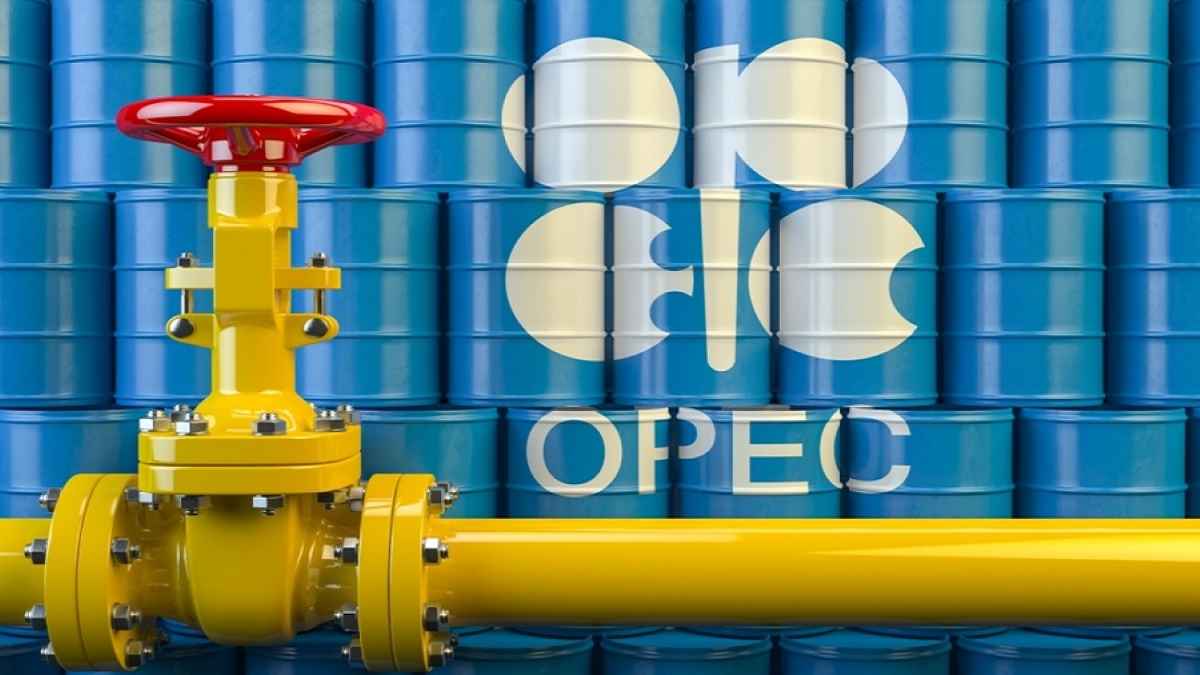
Delayed Organization of the Petroleum Exporting Countries (OPEC) Cuts Mean Opportunity for African Members (By NJ Ayuk)

Published

on

OPEC

A united effort to awaken more investor interest in African oil should start now

JOHANNESBURG, South Africa, September 1, 2023/APO Group/ — 

By NJ Ayuk, Executive Chairman, African Energy Chamber (http://www.EnergyChamber.org)

Quota-related decisions made at OPEC’s 35th meeting last June in Vienna delivered a call to action for African member states to step up production through the remainder of the year and into 2024.

Many of OPEC’s African member states had been struggling to produce enough crude to meet the targets set for them last year. As a result, they found themselves accepting even lower quotas this year.

Decisions regarding production cuts for African members Algeria, Angola, Congo, Equatorial Guinea, Gabon, and Nigeria are summarized in the African Energy Chamber’s (AEC) newly released outlook report (https://apo-opa.info/44yiHiC), “The State of African Energy Q2 2023.”

Our report also notes easing of the civil unrest that resulted in the exclusion of member state Libya from OPEC cuts for the time being.

OPEC’s meeting, which included OPEC+ oil-exporting countries as well, resulted in a Declaration of Cooperation that delays further cuts to production targets until 2024 and continues voluntary cuts by nine member states until the end of 2023. Algeria and Gabon are the two African members among those volunteers.

The 2024 Targets and Expected African Production

OPEC’s signed declaration calls for a significantly lower cumulative production target for African member states: about 4.33 million barrels per day (MMbbls/d) of crude oil.

A look at the targets of OPEC’s two leading African oil producers — Nigeria and Angola — shows considerable reductions from the 2023 quotas set at the 33rd OPEC and non-OPEC Ministerial Meeting (ONOMM). Nigeria’s 2024 target, 1.38 (MMbbls/d), represents a reduction of 360,000 barrels per day (bpd), and Angola’s quota went down by 175,000 bpd to 1.28 MMbbls/d.

Despite these reduced quotas, it is not anticipated that either country will reach theirs in 2024; Nigeria is expected to hit 95% of its target, Angola 75%. Nigeria, although estimated to be capable of producing 2.2 MMbbls/d, has faced challenges (https://apo-opa.info/45WYAvH) such as oil theft, sabotage, and technical issues. Angola, despite increased oil and gas activity in 2023, has still strained (https://apo-opa.info/45WYAvH) in recent months to produce more than 1.1 MMbbls/d, far short of its current 1.46 MMbbls/d target from OPEC.

Congo is also expected to fall short of its production target, at about 10% less than allowed, while Equatorial Guinea and Gabon will likely produce slightly over their target numbers of 70,000 bpd and 177,000 bpd respectively, avoiding compliance as in the past. Of the members in sub-Saharan Africa, only Gabon has achieved its target this year.

African governments need to create the kind of positive, enabling climate that will encourage greater exploration and production

Algeria in the north is another high achiever, with production capacity that exceeds its 2024 OPEC target of 959,000 bpd. It has agreed to cut output by 96,000 bpd to comply. Meanwhile, its next-door neighbor, Libya, achieved an average of 1.26 MMbbls/d for 2023 after recovering from drastic production outages during 2022 civil disturbances. OPEC cuts for 2024 have not been set for Libya, allowing the country to use oil reserves to assist with reconstruction efforts.

Crude production in several African nations has been stymied by lack of adequate investment, political unrest, and technical issues associated with older wells.

Following an assessment of the Declaration of Cooperation by IHS, Wood Mackenzie, and Rystad Energy, the 2024 targets for Nigeria and Congo may be revised based on their anticipated levels of production.

Strategies for a Better-Than-Expected 2024 and Beyond

The delayed OPEC production cuts clearly showcase an urgent need for African countries to up their current production numbers and prove that higher quotas are warranted, which would also increase African negotiating sway at future meetings.

The possibility of target modification “to equal the average production that can be achieved in 2024,” particularly for Congo and Nigeria, was raised in a June OPEC announcement that followed the meeting. Angola was also mentioned as having production plans “subject to verification…before the end of 2024.”

Acknowledging both the opportunity and the urgency, the head of geopolitics for London-based research firm Energy Aspects, Richard Bronze, stated that the deal “certainly creates an incentive for these three countries (Angola, Congo, and Nigeria) to try and demonstrate they can raise production before year-end, but we think they are unlikely to be able to manage it.”

The time is now for African OPEC members to prove that they can achieve the higher output capability that warrants higher baselines.

The calls for government action that I and the AEC have stressed in recent years are more urgent than ever: African governments need to create the kind of positive, enabling climate that will encourage greater exploration and production. Good financial policies will help in that effort, as will ethical, transparent, and efficient governance.

Prioritizing speedy adoption and execution of measures to achieve these goals will bring what is most needed to boost African production numbers — increased interest from international oil companies and investors.

A united effort to awaken more investor interest in African oil should start nowas should cooperation among African members to present a more unified voice when the 36th OPEC meeting is held in November, 2023. The OPEC – Africa Roundtable at the African Energy Week in Cape Town, will ensure Africa specific issues are addressed and as well as global energy security issues.

As S&P Global noted, this strategy would be “taking a page from their Middle East counterparts, who typically align their positions before contentious negotiations through pre-meeting consultations.”

I encourage Africa’s member nations to do what it takes to increase investment, production, and their influence at the OPEC table. You are stronger together.

To download a copy of “The State of African Energy 2Q 2023,” visit https://apo-opa.info/45BahZg.

Distributed by APO Group on behalf of African Energy Chamber.

Energy

African Mining Week (AMW) 2026 to Position Junior Miners at the Forefront of Africa’s Mineral Evolution

Published

on

Energy Capital

The upcoming African Mining Week 2026 conference will unpack best practices to address financial, infrastructure and operational challenges as African junior miners scale their operations

CAPE TOWN, South Africa, May 14, 2026/APO Group/ –Africa’s estimated $8.5 trillion in untapped mineral wealth is increasingly being positioned as a junior miner-led opportunity, with smaller, more agile players playing a key role in unlocking the continent’s mining deposits. As governments and investors recalibrate exploration strategies, junior mining companies are emerging as the primary vehicles for converting underexplored resources into bankable projects.


Against this backdrop, the African Mining Week 2026 Conference and Exhibition will convene regulators, financiers and operators to examine how partnerships, capital access and execution models can shift juniors from the margins to the center of the continent’s mineral development strategy.

Taking place from October 14 – 16 in Cape Town, the event will feature a dedicated panel titled Collaboration for Growth: Unlocking Finance and Scale for Junior Miners. The session will highlight how governments are leveraging Public-Private Partnerships (PPP) to address high upfront capital requirements, limited infrastructure access and gaps in technical expertise constraining junior mining development.

The need for innovative financing solutions across Africa is increasingly apparent, with the continent’s share of global mineral exploration spending declining from 16% in 2004 to just 10.4% in 2024. In South Africa, exploration expenditure totaled R781 million in 2024, down sharply from a peak of R6.2 billion in 2006, underscoring the importance of stronger collaboration between governments and the private sector. In response, mineral-rich African countries are increasingly partnering with global investors to mobilize capital for exploration while supporting local content and beneficiation strategies.

One of the continent’s most prominent PPP models is the Junior Mining Exploration Fund (JMEF) launched by the Industrial Development Corporation of South Africa in partnership with the Department of Mineral Resources and Energy. In February 2026, the fund expanded to R2 billion, with Anglo American committing R600 million, demonstrating how coordinated public-private initiatives can strengthen financing for early-stage mining projects. Increased support through the fund has contributed to growth in South Africa’s junior and emerging mining sector, which recorded nearly 20% income growth in 2025.

Meanwhile, Zambia has introduced the Artisanal and Small-Scale Mining Fund following the enactment of the Geological and Minerals Development Act of 2025, aimed at expanding financing access for junior and small-scale miners. In 2026, the government allocated K449.5 million towards the fund, from a total K1.2 billion mining sector budget. The fund is expected to support junior miners as the country pursues its goal of increasing copper production to three million tons annually by 2030.

Similarly, the Democratic Republic of the Congo is strengthening partnerships with private sector investors, including Phoenix Capital and Eurasian Resources Group, to finance junior and artisanal mining operations as part of a broader strategy to unlock an estimated $24 trillion in untapped mineral resources.

Stepping into this picture, the AMW 2026 panel will explore the impact of PPP financing models, providing a platform for governments, investors and mining companies to develop solutions that scale exploration investment and accelerate the discovery of Africa’s next generation of mineral projects.

AMW serves as a premier platform for exploring the full spectrum of mining opportunities across Africa. The event is held alongside the African Energy Week: Invest in African Energies 2026 conference from October 12-16 in Cape Town. Sponsors, exhibitors and delegates can learn more by contacting sales@energycapitalpower.com

Distributed by APO Group on behalf of Energy Capital & Power.

Continue Reading

Energy

African Mining Week (AMW) 2026 to Examine Energy-Mining Nexus as Africa Prioritizes Reliable Power

Published

on

The upcoming African Mining Week conference will bring together industry players and global investors to explore investment and partnership opportunities emerging at the intersection of energy and mining

CAPE TOWN, South Africa, May 14, 2026/APO Group/ –Mining is rapidly becoming a driver of power market development in Africa, as energy supply constraints reshape how projects are financed and executed. From renewables and storage to fuel logistics and transmission, operators are increasingly securing integrated energy solutions to sustain output and manage risk.


Against this backdrop, the African Mining Week (AMW) Conference and Exhibition – taking place October 14–16, 2026, in Cape Town – will convene global investors, energy developers and mining stakeholders to examine pathways for strengthening power infrastructure to support mining activities across the continent. The event will feature a dedicated panel titled Accelerating Mineral Production: The Energy-Mining Nexus, bringing together policymakers, utilities and mining companies to discuss investment, infrastructure challenges and strategies for scaling production.

The discussion comes at a time when energy availability is becoming the defining constraint – and enabler – of mining growth across Africa. As a result, many companies are partnering with energy providers to secure power deals.

One of the clearest examples of this is EDF power solutions – a joint venture (JV) between mining company Anglo American and energy company EDF. The JV is advancing a portfolio of renewable energy projects to power mining operations across South Africa. In mid-April, the company commissioned the 140 MW Umsobomvu facility as part of the broader 520 MW Koruson 2 cluster, following the earlier delivery of approximately 480 MW under the Koruson 1 cluster in early April. These projects are contributing to the decarbonization of mining operations by displacing coal-based grid electricity for miners such as Valterra Platinum, Kumba Iron Ore and De Beers.

Sibanye-Stillwater is also turning to renewable energy to optimize its operations. The company is advancing a 725 MW renewable energy portfolio secured via long-term power purchase agreements with developers including NOA Group, Red Rocket and Sola Group. These developments align with South Africa’s strategy to generate 40% of its electricity using renewables by 2030, a move aimed at lowering electricity costs and improving energy security for energy-intensive sectors such as mining.

Similar case studies are being seen across other mineral-rich provinces in Africa. In Zambia, First Quantum Minerals is advancing a 430 MW renewable energy project alongside Total Eren and Chariot Limited. The project will strengthen energy supply to the company’s mines, enabling First Quantum to contribute to a national target to increase copper output to three million tons by 2031.

Meanwhile, Eurasian Resources Group is investing in transmission infrastructure and cross-border power solutions between Zambia and the Democratic Republic of the Congo to stabilize energy supply for cobalt operations.

While renewables are scaling rapidly, mining companies are also reinforcing energy security through fuel agreements. In February 2026, Valterra Platinum signed a three-year fuel supply deal with TotalEnergies for its South African operations. Puma Energy and BHL Group have also launched a five-year fuel transport agreement moving supply between Namibia’s Walvis Bay and Zambian mining hubs.

As such, AMW 2026 comes at a pivotal time when energy and mining are no longer parallel sectors, but deeply interconnected growth engines. From renewables and transmission to fuel logistics and financing, the continent is witnessing a structural shift toward integrated energy–mining ecosystems. The AMW 2026 panel will spotlight how innovative partnerships, blended financing models and private-sector participation are accelerating both energy deployment and mineral production – positioning Africa to meet rising global demand while advancing its own industrialization agenda.

Distributed by APO Group on behalf of Energy Capital & Power.

Continue Reading

Business

Trafigura Eyes $900M Aluminium Smelter as Egypt Accelerates Mineral Beneficiation Drive

Published

on

Energy Capital

African Mining Week 2026 will spotlight Egypt’s rapidly expanding mining value chain as the country accelerates a shift from raw mineral exports toward large-scale downstream industrialization and value addition

CAPE TOWN, South Africa, May 14, 2026/APO Group/ –Multinational commodities trader Trafigura, together with the Egyptian Aluminium Company and Metallurgical Industries Holding Company, has entered exclusive negotiations to co-finance and develop a major new aluminium complex in Egypt, marking one of the country’s most significant downstream metals investments to date.


The proposed project, valued between $750 million and $900 million, includes a 300,000-ton-per-annum aluminium smelter and a 150,000-ton-per-annum anode plant. It is designed to position Egypt more competitively in global aluminium supply chains at a time when geopolitical fragmentation and industrial realignment are pushing countries to localize and secure critical materials processing capacity.

Beyond serving international demand, the project aligns directly with Egypt’s industrial strategy to increase the mining sector’s contribution to GDP from around 1% today to 5-6% over the medium term, underscoring a clear policy shift toward value-added production rather than raw mineral exports.

The aluminium deal is also part of a wider acceleration in Egypt’s beneficiation strategy, with new partnerships emerging across phosphates, fertilizers and industrial minerals.

In April 2026, Misr Phosphate Company signed an agreement with Indorama Corporation to supply phosphate feedstock for a $525 million fertilizer complex in the Suez Canal Economic Zone at Sokhna. The first phase of the project is expected to produce around 600,000 tons annually, strengthening Egypt’s position in global fertilizer supply chains while increasing domestic processing capacity.

In parallel, El Sewedy Industrial Development and China’s Kunming Chuan Jin Nuo Chemical are developing a $1 billion integrated phosphate complex in the Sokhna Industrial Zone, further expanding Egypt’s downstream chemical and fertilizer ecosystem.

Chinese industrial group Xingfa Group has also outlined plans to invest up to $2 billion across phosphate exploration, extraction and chemical manufacturing in Egypt, reinforcing international confidence in the country’s industrial minerals strategy.

At the same time, Egypt is moving to strengthen its position in precious metals and refining. The Central Bank of Egypt, alongside the African Export-Import Bank, is advancing plans for a Pan-African Gold Bank initiative aimed at expanding local gold refining capacity, formalizing artisanal and industrial supply chains and reducing dependence on external refining hubs.

These projects signal a broader structural shift: Egypt is transitioning from a raw commodity exporter to a vertically integrated minerals and industrial processing hub, with downstream value creation at the center of its economic strategy.

Egypt’s accelerating beneficiation agenda will be a key focus at African Mining Week (AMW) 2026 – The Most Influential Mining Conference in Africa – where the country will feature through a dedicated Country Spotlight.

The forum brings together government representatives, regulators, global investors, mining companies, project developers and financiers to explore opportunities across Egypt and Africa’s expanding mining and industrial value chain.

As the country scales its downstream ambitions across aluminium, phosphates, fertilizers and gold, AMW 2026 will serve as a key platform for translating policy momentum into investment partnerships and project execution.

Distributed by APO Group on behalf of Energy Capital & Power.

Continue Reading

Trending