Connect with us
Anglostratits

Business

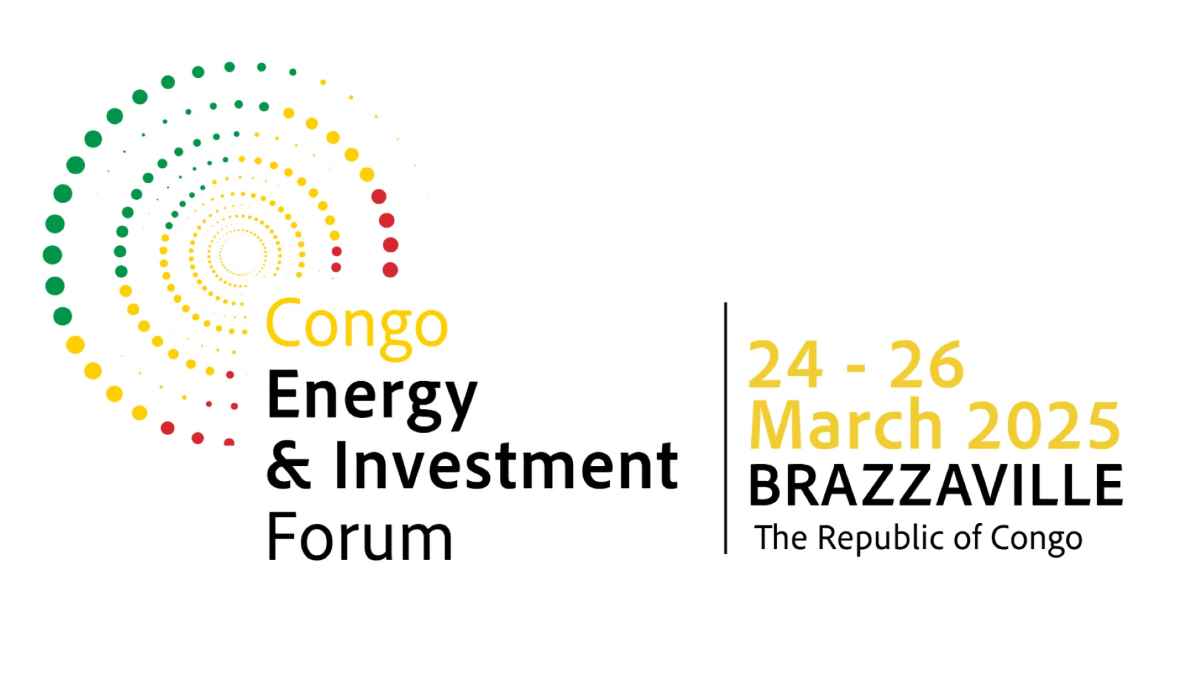
Congo Energy & Investment Forum (CEIF) 2025 Set to Drive Investment, Growth with Business Management Participation

Published

on

CEIF

The Congo Energy & Investment Forum, set for March 24-26 in Brazzaville, will feature the participation of Cabinet Gomes, Colibri Business Development and Royal Triangle Energy Solutions

BRAZZAVILLE, Congo (Republic of the), March 6, 2025/APO Group/ –As part of a strategy to spur energy investment and socioeconomic development, the Republic of Congo has initiated a number of strategies to drive resource monetization, project development and local capacity building. As such, the nation has attracted a wave of international companies across its energy value chain, leading to a series of recent acquisitions and project developments in the country.

In light of Congo’s favorable legislative and fiscal landscape, the inaugural Congo Energy & Investment Forum (CEIF), taking place from March 24-26, 2025, in Brazzaville, will feature a strong lineup of legal firms and business management companies. This year’s conference will feature the participation of Louis-Raymond Gomes, Managing Attorney at Cabinet Gomes; Ileana Ferber, CEO and Local Content Expert at Colibri Business Development; and Eric Williams, President and Principal Consultant at Royal Triangle Energy Solutions.

The inaugural Congo Energy & Investment Forum, set for March 24-26, 2025, in Brazzaville, under the patronage of President Denis Sassou Nguesso and supported by the Ministry of Hydrocarbons and Société Nationale des Pétroles du Congo, will bring together international investors and local stakeholders to explore national and regional energy and infrastructure opportunities. The event will explore the latest gas-to-power projects and provide updates on ongoing expansions across the country.

The exchange of knowledge and expertise is vital to unlocking the full potential of Congo’s natural resources

Serving as one of the country’s foremost legal service companies, Cabinet Gomes offers services in labor law; banking and finance; hydrocarbons and mining law; and mergers and acquisitions. Earlier this year, oil and gas company Trident Energy finalized its acquisition of energy majors Chevron and TotalEnergies’ interests in operational fields in Congo. Set to add approximately 30,000 barrels of oil per day to Congo’s production capacity, this acquisition highlights the country’s immense potential for international companies to meet the country’s development goals.

Meanwhile, the participation of Colibri Business Development at CEIF 2025 is expected to show a unique insight into how international companies can participate in Congo’s burgeoning hydrocarbons sector. The country will launch its 2025 licensing round at CEIF 2025, offering onshore, offshore and marginal acreage to potential investors and developers while aligning with national efforts to increase output.

Set to showcase how Congo’s regulatory framework and fiscal regime can accelerate monetization of the country’s natural resources, Royal Triangle Energy Solutions’ experience in the African market has the potential to empower businesses with effective change management skills and knowledge for participating in Congo’s energy sector. The Congolese government is also set to release its Gas Master Plan at CEIF 2025, which will serve as a roadmap to Congo’s gas resources for both domestic consumption and export.

“The exchange of knowledge and expertise is vital to unlocking the full potential of Congo’s natural resources, driving economic growth and positioning the country as a key player in the global energy market. The participation of Cabinet Gomes, Colibri Business Development and Royal Triangle Energy Solutions at CEIF 2025 underscores the immense opportunities the country offers for international investment and collaboration,” states Sandra Jeque, Events and Project Director, Energy Capital & Power.

Distributed by APO Group on behalf of Energy Capital & Power.

Energy

Mining Chambers to Highlight Africa’s Next Wave of Investment Opportunities at African Mining Week (AMW) 2026

Published

on

Etu Energias

Representatives from chambers of mines across Zimbabwe, Zambia, Mali, Uganda, South Africa, Liberia and the DRC will showcase investment opportunities emerging from regulatory reforms and sector expansion at African Mining Week 2026

CAPE TOWN, South Africa, July 13, 2026/APO Group/ –As African countries advance reforms to unlock new mineral discoveries and strengthen mining investment, chambers of mines are playing an increasingly important role in connecting governments, investors and industry. Through policy advocacy, regulatory engagement and investment promotion, these organizations are helping shape the continent’s next phase of mining development.


That growing role will be on display at African Mining Week (AMW) 2026, taking place in Cape Town from October 14–16, where chamber executives will highlight the policies, partnerships and investment opportunities driving growth across Africa’s mining sector.

Zimbabwe offers a prime example of this expanding role. The Chamber of Mines of Zimbabwe has become an increasingly influential voice in addressing production constraints, including power shortages and foreign exchange challenges. Its recommendations align with recent government initiatives to expand coal-fired power generation, increase coal production and achieve 10% mining sector growth in 2026. At AMW 2026, CEO Isaac Kwesu will outline investment opportunities emerging as the country implements reforms to strengthen mining competitiveness.

In South Africa, the Minerals Council South Africa continues to advocate for improvements to rail, port and electricity infrastructure while supporting the implementation of the Mineral Resources Development Bill and measures to stimulate exploration. These priorities complement government initiatives such as the Junior Mining Exploration Fund and a broader strategy to mobilize R2 trillion in mining investment over the next five years. CEO Mzila Mthenjane will discuss efforts to revitalize exploration and unlock opportunities across the country’s platinum group metals, manganese and critical minerals sectors.

In Zambia, the Zambia Chamber of Mines has helped shape the Geological and Minerals Development Act of 2025, legislation designed to stimulate mineral exploration as the country works toward increasing annual copper production to three million tons by 2031. Zambia has already reached a key milestone in its nationwide geological mapping program, completing 55% of the survey, while the recent launch of the National Spatial Data Infrastructure Policy and Geoportal is improving investor access to geological data. At AMW 2026, CEO Sokwani Chilembo is expected to showcase investment opportunities as Zambia expands exploration and diversifies beyond copper.

As countries increasingly position mining as a driver of economic diversification, Fousseni Togola, President of the Mali Chamber of Mines, will present opportunities in the country’s gold and lithium sectors, highlighting how Mali’s 2023 Mining Code is supporting investment into emerging minerals.

In Uganda, Humphrey Asiimwe, CEO of the Uganda Chamber of Energy and Minerals, told AMW that the chamber will use the event to promote investment opportunities in gold, graphite and rare earths. The country’s mining sector forms a cornerstone of Uganda’s strategy to increase GDP from $59.3 billion to $500 billion by 2040.

Meanwhile, Amara Kamara, President of the Liberia Chamber of Mines, is expected to highlight reforms aimed at attracting new exploration investment, including plans to establish a national mining company as Liberia targets more than $3 billion in annual mining and energy revenues by 2029.

Regional collaboration will also feature prominently during AMW 2026. Thierry Naweji, Executive Chairman of the SA-DRC Chamber of Commerce, is expected to discuss opportunities to strengthen cooperation between South African and Congolese mining companies as both countries work to build more integrated regional mineral value chains.

With regulatory reforms gathering pace across the continent, AMW 2026 will highlight how chambers of mines are helping translate policy ambitions into investment opportunities, reinforcing their growing role in Africa’s mining development.

Distributed by APO Group on behalf of Energy Capital & Power.

Continue Reading

Business

Franc Mouzabakani Takes the Helm of the Republic of Congo’s Upstream Petroleum Sector

Published

on

African Energy Chamber

Franc Mouzabakani Kiesse’s appointment as Congo’s upstream petroleum chief highlights his leadership as the country accelerates oil production and upstream development

JOHANNESBURG, South Africa, July 13, 2026/APO Group/ –Franc Mouzabakani Kiesse has been appointed Director General for of the Upstream Petroleum Sector for the Republic of Congo. Appointed by presidential decree on June 18 and officially installed on July 9, Kiesse assumes one of the country’s most important energy leadership positions as Congo works toward increase crude production while expanding investment across its oil and gas sector.


Working alongside Minister of Hydrocarbons Stev Simplice Onanga, Kiesse will play a central role in translating the government’s upstream ambitions into execution. His appointment brings together the Ministry’s strategic vision with decades of technical, commercial and institutional experience, strengthening the government’s ability to work closely with operators, investors and the SNPC to accelerate project delivery and unlock new opportunities across the sector.

Kiesse has outlined clear strategic agenda centered on protecting national interests while improving the competitiveness of the Congolese upstream sector. His priorities include strengthening government oversight of exploration and production activities, tightening project monitoring and strengthening the auditing of petroleum development costs submitted by operators. He also pledged to maximize the state’s returns from upstream projects through stronger regulatory oversight. Kiesse emphasized promoting local content by expanding opportunities for Congolese companies and skilled professionals throughout the oil and gas value chain. He also identified the continued development of the SNPC as a priority, with the aim of building a stronger and more competitive national oil company.

These priorities come at a pivotal time for Congo’s upstream sector as the country pursues one of Africa’s most ambitious upstream expansion programs. The government has established a production target of 500,000 barrels per day (bpd) over the coming years, supported by new offshore discoveries, brownfield redevelopment programs, legislative reforms and increased investment in natural gas infrastructure. Achieving this objective will require close collaboration between government institutions and international operators while ensuring projects are delivered efficiently and generate maximum value for the Congolese economy.

Congo has no shortage of resources or investment opportunities – the priority now is execution

With a professional journey that has provided experience across every level of Congo’s upstream sector, Kiesse is well positioned to support these efforts, having built a career that spans engineering, project development, government relations and commercial strategy. He spent more than a decade with TotalEnergies, progressing from Field Operations Engineer to Lead Process Engineer at the company’s Paris headquarters before returning to Congo to lead process studies, manage deepwater development projects and oversee joint ventures and government relations. In these roles, he worked closely with major partners including SNPC, Eni, Chevron and Woodside Energy while supervising production sharing contracts, joint venture negotiations and regulatory engagement.

Kiesse later joined Perenco Congo as a Director of Joint Ventures and Government Relations, where he managed strategic partnerships and negotiations with government authorities before becoming Director of Business development and Institutional Relations at AMMAT Global Resources. Across these positions, he developed extensive experience working with both international operators and national institutions, giving him a comprehensive understanding of the commercial, technical and regulatory dynamics shaping Congo’s petroleum industry.

An electrical engineer trained at the Ecole National Supérieure Polytechnique in Brazzaville, he also holds a Master’s degree in Economics and Management from the Università di Corsica Pasquale Paoli and an MBA From DGC Congo.

His appointment comes as investment activity continues to accelerate across the country. TotalEnergies is advancing a $500–$600 million drilling campaign following the Moho G discovery, while development progresses under the $23 billion Bango Kayo, Holmoni and Cayo agreement. Independent operators, including Perenco, Trident Energy and PetroNor, continue to expand production through new infrastructure and brownfield optimization, supporting the government’s long-term production objectives.

A major step toward strengthening upstream governance, the African Energy Chamber (AEC) welcomes this appointment as a core, strategic milestone in reinforcing the country’s position as one of Africa’s leading oil and gas investment destinations.

“We at the African Energy Chamber are hopeful that Franc Mouzabakani Kiesse’s appointment marks the beginning of an even closer partnership between government and industry,” says NJ Ayuk, Executive Chairman, AEC. “Congo has no shortage of resources or investment opportunities – the priority now is execution. With Minister Onanga setting the strategic direction and experience leaders like Kiesse driving implementation, the country is well-positioned to unlock its next phase of upstream growth.”

The Chamber believes Kiesse’s combination of technical expertise, private sector experience and government relations will strengthen the implementation of Congo’s upstream strategy. By supporting Minister Onanga’s agenda, advancing local content, fostering closer cooperation between government and industry, and maintaining an attractive investment environment, his leadership is expected to play an important role making Congo an even more attractive destination for energy investment.

Distributed by APO Group on behalf of African Energy Chamber.

Continue Reading

Business

African Economic Conference Launches Continental Network of Chief Economists to Strengthen Continent’s Policy Leadership

Published

on

Afreximbank

The establishment of the ACE-Network reflects growing recognition that African countries need stronger coordination among their leading economic thinkers as policymakers navigate increasingly interconnected global crises

ABIDJAN, Ivory Coast, July 13, 2026/APO Group/ –African policymakers, development institutions and leading economists on Sunday launched the African Chief Economists Network (ACE-Network), a continent-wide platform designed to strengthen evidence-based policymaking and provide coordinated African solutions to increasingly complex global economic challenges.

The launch, one of the principal outcomes of the 2026 African Economic Conference (AEC), comes as African countries face mounting geopolitical tensions, global trade fragmentation, climate shocks, rising debt pressures, and a rapidly evolving international financial and development architecture.

Hosted by the African Development Bank Group in partnership with the United Nations Development Programme (UNDP) and the Organisation for Economic Co-operation and Development (OECD), the three-day conference brought together ministers, central bank officials, chief economists, academics, development practitioners, private-sector leaders and researchers from across Africa and beyond.

The event, held under the theme “Strengthening Africa’s Geopolitical Agency and Trade Resilience in a Multipolar World,” concluded with more than 4,000 participants connected virtually over the three days, reflecting growing interest in Africa’s search for stronger, home-grown policy responses to a rapidly changing global economy.

Speaking on behalf of African Development Bank Group President Dr Sidi Ould Tah, Senior Vice-President Marie-Laure Akin-Olugbade described the launch of the ACE-Network as a landmark achievement that would strengthen Africa’s capacity to develop practical, evidence-based policy solutions.

She noted that the broad participation and engagement of stakeholders across diverse sectors and institutions demonstrate the timeliness, relevance and importance of this year’s theme for Africa’s future. She urged members of the new network to translate research into policies and actions that improve the lives of Africans.

“This is a big responsibility on your shoulders, and we expect to see clear results in the form of very effective decisions and, therefore, actions that really move the needle for the men and women of this beautiful continent of ours,” Akin-Olugbade stressed.

Responding to a changing global economy

The establishment of the ACE-Network reflects growing recognition that African countries need stronger coordination among their leading economic thinkers as policymakers navigate increasingly interconnected global crises.

The network aims to fill that gap by creating an informal, invitation-only community of chief economists and senior policy advisers to exchange evidence, coordinate research, identify emerging risks, and jointly develop policy recommendations for African governments.

Members will include chief economists from African development finance institutions and multilateral organisations, chief economic advisers to African presidents and prime ministers, deputy governors of central banks responsible for economic policy, heads of leading think tanks, deans of economics faculties, and senior private-sector economists.

Rather than establishing another formal institution, the network will operate as a collaborative platform, meeting annually alongside the African Economic Conference and holding quarterly virtual sessions and rapid-response meetings during major global or regional economic shocks.

Strengthening Africa’s knowledge sovereignty

No country, regardless of its size or resources, can effectively navigate this environment alone

Presenting the network’s strategic vision, African Development Bank Group Chief Economist and Vice-President for Economic Governance and Knowledge Management, Prof Kevin Urama, said Africa must strengthen its knowledge systems if it is to shape the emerging global financial and economic order.

He argued that Africa has only a limited window to influence reforms to the international financial architecture and that stronger coordination among African economists would help governments make better-informed decisions amid unprecedented uncertainty.

Among the network’s priorities are strengthening Africa’s knowledge sovereignty, increasing investment in research and innovation, improving policy coordination, reducing duplication across institutions, enhancing early-warning systems for emerging risks, and ensuring that economic analysis better reflects African realities.

Urama also called for greater investment in what he described as “soft infrastructure”—research, data systems and knowledge institutions—to complement the continent’s growing investment in transport, energy and other physical infrastructure.

Bridging research and policymaking

UNDP Regional Bureau for Africa Chief Economist Dr Raymond Gilpin described the network as “a unified powerhouse of African intellectuals” capable of narrowing the gap between economic research and public policy.

He said the initiative would help African countries mobilise domestic capital, strengthen implementation of the African Continental Free Trade Area (AfCFTA), develop innovative responses to climate and fiscal challenges, and convert Africa’s demographic growth into a driver of long-term prosperity.

“The Africa Chief Economists Network will be an engine room that designs creative solutions necessary for Africa to attain the Sustainable Development Goals and the African Union’s Agenda 2063,” Gilpin said.

United Nations Economic Commission for Africa (UNECA) Deputy Executive Secretary and Chief Economist Dr Hanan Morsy said increasingly interconnected crises demanded stronger collective economic intelligence across Africa.

“No country, regardless of its size or resources, can effectively navigate this environment alone,” she said, adding that the network’s success would ultimately be measured by whether it improves policymaking, strengthens resilience and contributes to faster, more inclusive growth across the continent.

Representing the OECD, Ida McDonnell, head of the Development Research Unit, noted that current global challenges required integrated approaches to trade, debt, climate finance, industrial policy and investment, rather than treating each issue separately.

She added that the new ACE-Network would help reduce duplication while strengthening African contributions to global policy debates.

Over three days in the Ivorian capital, delegates examined how Africa can strengthen its geopolitical influence while improving trade resilience, mobilising domestic resources, expanding regional value chains, accelerating industrialisation and attracting greater investment in an increasingly multipolar world.

Sessions also explored the future of development finance, public investment efficiency, artificial intelligence, digital transformation, climate resilience, regional integration and institutional reforms needed to position Africa as a stronger actor in global economic governance.

Participants agreed that Africa possesses major comparative advantages—including the world’s youngest population, abundant renewable energy resources, critical minerals, expanding digital markets and the world’s largest free trade area under the AfCFTA—but that stronger institutions, better policy coordination and higher-quality economic analysis will be essential to convert those assets into sustained growth.

Distributed by APO Group on behalf of African Development Bank Group (AfDB).

Continue Reading

Trending