Connect with us

Tech

Closing Digital Literacy Gap Could Unlock Trillions of Dollars in Global GDP Growth

Published

on

GSMA

New report, authored by GSMA Intelligence in partnership with Huawei, released at UNESCO’s Digital Learning Week
Digital literacy – not coverage – is the main barrier keeping 3.1 billion people offline.
AI could potentially widen the digital literacy gap.
Bridging the usage gap could boost global GDP by $3.5 trillion from 2023 to 2030.
Citing Huawei’s Skills on Wheels initiative, the report urges policymakers, telcos, and tech vendors to treat AI literacy as critical infrastructure.
PARIS, FRANCE – Media OutReach Newswire – 10 September 2026 – More than one in three (38%) people remains offline despite being covered by mobile broadband – and a lack of digital literacy skills is often to blame, according to new research published today.


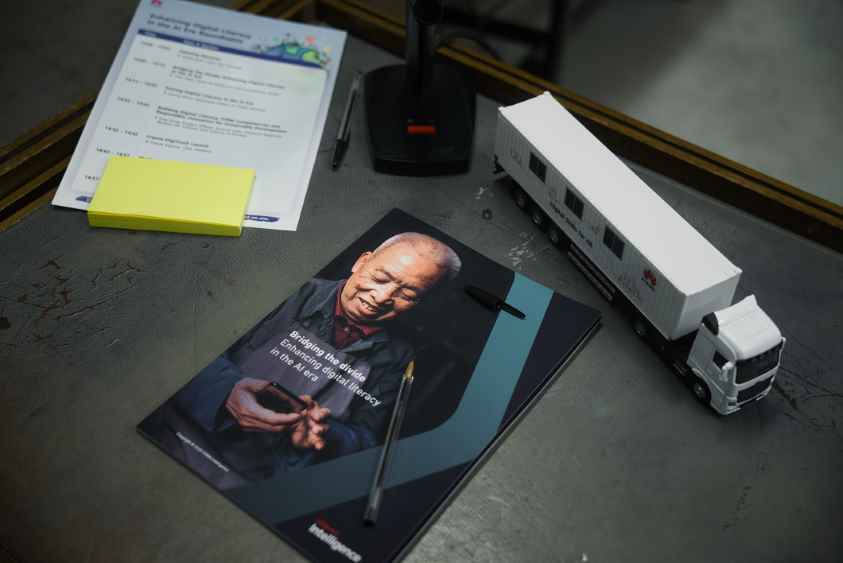
The new report, “Bridging the Divide: Enhancing Digital Literacy in the AI Era,” authored by GSMA Intelligence and produced in collaboration with Huawei, identifies a digital divide impacting 3.1 billion people caused by a shortage of digital skills, user trust and AI literacy.

AI raises both access and risk

Existing industry projections suggest closing the capability gap could add around $3.5 trillion to global GDP by 2030, with more than 90% of those gains flowing to low- and middle-income countries (LMICs). Physical mobile broadband coverage currently reaches 96% of people worldwide.

The report, unveiled at UNESCO’s Digital Learning Week, suggests artificial intelligence could act as both a bridge and a barrier for underserved communities. AI-powered voice assistants and applications that work with images, audio and video can all help low-literacy users bypass the need to input text. At the same time, they raise the security and critical-thinking standards required to participate safely. However, the study warns that users must now be able to understand data privacy and identify risks such as fraud and deepfakes.

The research cites World Bank statistics that GenAI literacy represents the highest-value skill category, with wage premiums up to 36%, far exceeding returns for both digital and traditional AI skills.

Without targeted interventions in basic digital training, the authors warn, rapid AI adoption risks entrenching existing inequalities even in areas with full network coverage.

Mobile classrooms build skills in remote areas

Digital inclusion initiatives typically target those most at risk of digital exclusion, including rural and remote communities, children and teachers in rural schools, older people, and women and girls.

The report emphasizes the need for community-based delivery models, citing Huawei’s Skills on Wheels initiative as a field-tested example — particularly its solar-powered DigiTruck mobile classrooms, which bring hardware, rural connectivity and hands-on training, including AI literacy, to off-grid regions.

Since 2019, training courses delivered by Skills on Wheels projects have reached more than 130,000 people across 21 countries, with more people benefiting indirectly. DigiTruck trainers encourage trainees to share their new skills, which is shown to occur in practice. A report on DigiTruck by Kenya’s Ministry of Information, Communications and Digital Economy shows that 79% of DigiTruck trainees surveyed had passed on their newly acquired digital skills to family members and peers.

Policymakers urged to treat AI literacy as core infrastructure

To bridge the usage gap, the report urges policymakers, telecom operators and technology vendors to work together and focus on four priorities:
Treating practical AI awareness, online safety and information verification as a baseline national qualification.
Adopting multilingual voice and conversational interfaces across public services to minimise user-side technical hurdles.
Scaling up mobile learning units through cross-sector partnerships that combine operator connectivity, vendor technology and local NGO networks.
Measuring performance by independent task completion and fraud resilience rather than trainee numbers.
“Digital literacy can no longer be defined by static thresholds,” said Tim Hatt, head of research and consultancy at GSMA Intelligence. “Connectivity alone is insufficient — capabilities, system design and trust must evolve together. To capture this multi-trillion-dollar opportunity, stakeholders must integrate layered AI literacy directly into daily livelihoods through trusted community channels.”

“Mobile classrooms have demonstrated immense value in helping underserved populations break through physical and psychological barriers to technology,” said Gavin Allen, Executive Editor-in-Chief at Huawei. “We will continue working alongside local governments and industry partners to drive digital literacy, ensuring that no one is left behind as we transition into the AI economy.”

A new DigiTruck program will launch in France this autumn, covering several cities in the Île-de-France region and targeting low-income and underserved communities with digital skills training.

The full report is available on the GSMA Intelligence research portal:
https://www.gsmaintelligence.com/research/bridging-the-divide-enhancing-digital-literacy-in-the-ai-era

FAQ

Q1: What is the main purpose of this report?
A: The report analyzes the critical importance of enhancing digital skills in the AI era, highlighting digital literacy as a layered and evolving capability. It calls on all stakeholders to collaborate in accelerating global digital inclusion and skill development.

Q2: What does it mean for policymakers to treat “AI literacy as core infrastructure”?
A: It means shifting policy focus from just building physical base stations to funding human capabilities. The report urges governments to integrate baseline AI awareness, online security, and media verification into national qualification frameworks, treating digital skills as an essential public utility alongside electricity and broadband.


Business

Cassava Technologies becomes an authorised reseller of Claude on Amazon Bedrock

Published

on

The agreement allows Cassava to give organisations across Africa another route to access these capabilities, helping them adopt AI technology more easily as they prepare for future growth

LONDON, United Kingdom, October 27, 2026/APO Group/ –Cassava Technologies (www.CassavaTechnologies.com), a global technology leader, has become authorised to resell access to Anthropic’s Claude models through Amazon Bedrock.

Claude is Anthropic’s state-of-the-art large language model, offering features like advanced reasoning, vision analysis, code generation, and multilingual processing. The agreement allows Cassava to give organisations across Africa another route to access these capabilities, helping them adopt AI technology more easily as they prepare for future growth.


Our goal is simple, advanced AI within reach of every business, government, researcher, entrepreneur and university across the emerging markets globally

“What matters to our customers is being able to use AI in their business, and that starts with access to the best models. Bringing Anthropic’s Claude to them through Amazon Bedrock delivers on this need, which is supported by the infrastructure, partnerships and services African businesses need to adopt them responsibly and take a greater part in the digital economy. Our goal is simple, advanced AI within reach of every business, government, researcher, entrepreneur and university across the emerging markets globally,” said Hardy Pemhiwa, President and Group CEO of Cassava Technologies.


Through Amazon Bedrock, organisations can access Anthropic’s Claude models and incorporate them into their own applications and services. Cassava’s authorised reseller status gives African customers a way to access Claude through a local partner focused on serving businesses across the continent.


Through its digital ecosystem, which encompasses connectivity, cloud, cyber security and AI solutions, along with a continent-wide data centre footprint, Cassava is investing in the infrastructure and solutions needed to support the wider adoption of artificial intelligence across Africa.

Distributed by APO Group on behalf of Cassava Technologies.


Continue Reading

Business

Idris Elba’s Akuna Group launches free Artificial Intelligence (AI) filmmaking programme for creators in five African countries, in collaboration with Google

Published

on

Over fifty weeks, selected creators will move from a twelve-week academy into mentoring, pitching and production; Selected funded teams will make their films, which will be showcased in October 2027

Creators need a route from the classroom to the screen, and this programme carries them all the way, from their first application to a finished, funded film

FREETOWN, Sierra Leone, October 26, 2026/APO Group/ —An AI filmmaking programme for African creators opens today in Ghana, Kenya, Nigeria, Sierra Leone and South Africa. Applications are live at (https://AkunaLearning.com).

Akuna Learning, from The Akuna Group, chaired by Sir Idris Elba, today opened applications for From Script to Screen with AI, a free programme that equips eligible African creators to tell stories on screen leveraging artificial intelligence. Delivered in collaboration with Google and supported by US$1 million funding from Google.org, with curriculum developed by Curious Refuge, the programme is open to aspiring filmmakers in Ghana, Kenya, Nigeria, Sierra Leone and South Africa.


Applications are open now at (https://AkunaLearning.com) and close on 15 November 2026. The programme is free to apply and, for those selected, free to attend.

Over fifty weeks, selected creators will move from a twelve-week academy into mentoring, pitching and production. Selected funded teams will make their films, which will be showcased in October 2027. Creators will maintain control of their work, with no claim of ownership rights by the programme or partners running it.

From foundation to funded film

Every participant will complete a foundational course in AI filmmaking; then participants will be able to choose to specialise in one of five creative pathways:

  • Fiction: narrative filmmaking and scripted storytelling, from short film to series.
  • Documentary: real-world stories and factual filmmaking.
  • Animation: animated storytelling, motion design and visual world-building.
  • Advertising: branded storytelling, commercial content and creative campaigns.
  • Screenwriting: script development, dialogue and structure, writing from page to screen.

The programme is structured in five stages:

  1. Applications & Selection (October 2026 to January 2027). One open call across all five countries, closing on 15 November 2026, with review panels in each country and a final panel looking across all five.
  2. Learn & Get Certified (February to April 2027). Twelve weeks of online training with Curious Refuge, with weekly Akuna facilitation, in-person meet-ups in every country and certification at the end.
  3. Get Mentoring (April to June 2027). Graduates put forward their own one-page ideas. Shortlisted idea owners build teams, which then spend four weeks with mentors and subject experts.
  4. Pitch Your Film (June to July 2027). Mentor-endorsed teams pitch to panels drawn from Akuna, Google and the wider industry. Selected projects are funded.
  5. Produce Your Film (July to October 2027). Funded teams make their films with creative and technical support, then take them to festivals and showcases. The programme is for aspiring and emerging visual storytellers: filmmakers, screenwriters, animators, advertisers, digital content creators, photographers, designers, editors and visual artists. Applicants do not need AI experience, a film school qualification or a set number of years in the industry.


Sir Idris Elba, Chairman of The Akuna Group, said: “For me, this is about learning. This is about access to courses that help educate creators across the continent to tell their stories. Through Akuna Learning, we’re partnering with Google and Curious Refuge on ‘From Script to Screen with AI’, a remarkable training and mentorship programme teaching African filmmakers to use AI tools. Selected projects will receive production funding, and creators will retain control of their work. I’m looking forward to seeing the stories they choose, and how the education leads to employment and self-momentum, but helps shape the narrative of Africa.”

Khaled Gad, Chief Executive Officer of The Akuna Group, said: “Training on its own does not build an industry. Creators need a route from the classroom to the screen, and this programme carries them all the way, from their first application to a finished, funded film. It opens on the same day and runs to the same standard in all five countries. You do not need a film school background or any experience with AI to apply. You need finished work that shows what you can do, and your application in by 15 November.”

How to apply

Applications are submitted online at (https://AkunaLearning.com) between 26 October and 15 November 2026. Applicants must:

  • physically reside in Ghana, Kenya, Nigeria, Sierra Leone or South Africa;
  • be 18 or older on the date of application;
  • have access to a laptop, reliable internet and consistent power for the duration of the programme;
  • be able to commit fully to the twelve-week academy from February to April 2027, and to the later stages if they progress.

Applicants should include existing creative work, however modest, that shows their talent and commitment. Women are strongly encouraged to apply.

Distributed by APO Group on behalf of The Akuna Group.


Continue Reading

Business

Canon Central & North Africa Strengthens Morocco Channel Strategy Through ‘Power to Move: Partnering for Growth’

Published

on

Casablanca engagement brings channel partners together around a market-specific partner approach, new imagePROGRAF and imageFORCE technologies, and opportunities for B2B growth across key Moroccan sectors

CASABLANCA, Morocco, October 26, 2026/APO Group/ –Canon Central & North Africa (CCNA) (https://en.Canon-CNA.com/) has brought together its channel partners in Morocco for a dedicated business and technology engagement aimed at strengthening local partnerships, expanding market reach and unlocking new opportunities across the country’s fast-evolving business landscape.


Under the platform “Power to Move: Partnering for Growth,” the Casablanca event reflects Canon’s approach of moving closer to its partners and customers by combining local market insight, a strong channel ecosystem and an expanding portfolio of business imaging and print technologies.

Morocco is an important market within CCNA’s regional growth strategy. Canon recognises the country’s development priorities, with sustained national investment in transport, aviation, maritime infrastructure, healthcare, education and renewable energy creating new demand for productivity, digitalisation and more efficient, secure ways of working, and with it, opportunities for technology partners who understand local requirements.

Central to the engagement is a market-specific approach to partner collaboration, developed to support partners across Canon’s B2B portfolio. It focuses on strengthening partner capabilities, joint planning and closer commercial engagement, providing a framework better aligned with local market opportunities and customer requirements.

Morocco’s investment in infrastructure, healthcare, education and renewable energy is creating real demand for technology that helps organisations work more productively

The event also introduced Canon’s latest technology developments to the Moroccan channel, including the new imagePROGRAF large-format printing solution and imageFORCE, enabling partners to experience the latest additions to Canon’s portfolio and explore their relevance across different customer applications and business environments.

These technologies are linked directly to real business requirements, from office and large-format printing for infrastructure projects, to scanning and document management that digitise and manage information in healthcare, education and public institutions, and to streamlining document-intensive workflows across businesses of all sizes.

The Casablanca engagement therefore goes beyond product introduction. Discussions with partners covered upcoming projects, customer needs and potential areas for collaboration, creating a platform for Canon and its partners to exchange market insights, align joint planning and bring a broader range of imaging, print and workflow solutions closer to end users. The focus now is on what Canon and its partners can achieve together: turning these discussions into joint plans, stronger partner capabilities and new business opportunities across Morocco’s priority sectors.

The initiative also reflects CCNA’s ICE strategy – Innovation, Customer Experience and Employee Experience. In practice, this means pairing new technology with closer engagement with customers and partners, so that Canon can respond more effectively to the specific requirements of individual markets and support sustainable business growth.

Tushar Vashnavi, Business Unit Director, B2B, Canon Central & North Africa, said: “Morocco’s investment in infrastructure, healthcare, education and renewable energy is creating real demand for technology that helps organisations work more productively. Unlocking that demand starts with understanding the market locally and working closely with the partners who are closest to our customers. Our approach is not simply about introducing new technology. It also means strengthening service network readiness through local partner capabilities, technical training and access to Canon’s expertise, so customers have the support they need beyond installation. By bringing together the right portfolio, knowledge and service capabilities, we can extend our reach and create greater value for customers across Morocco.”

The Morocco engagement forms part of a broader approach by Canon Central & North Africa to deepen channel engagement across its markets. Through closer collaboration, market-specific partner strategies and access to its evolving B2B portfolio, Canon aims to strengthen its partner ecosystem and create new pathways for shared growth.

Distributed by APO Group on behalf of Canon Central and North Africa (CCNA).


Continue Reading

Trending

Exit mobile version