Connect with us
Anglostratits

Energy

Central Africa Pushes Ahead with Multi-Billion-Dollar Gas Expansion

Published

on

African Energy Week

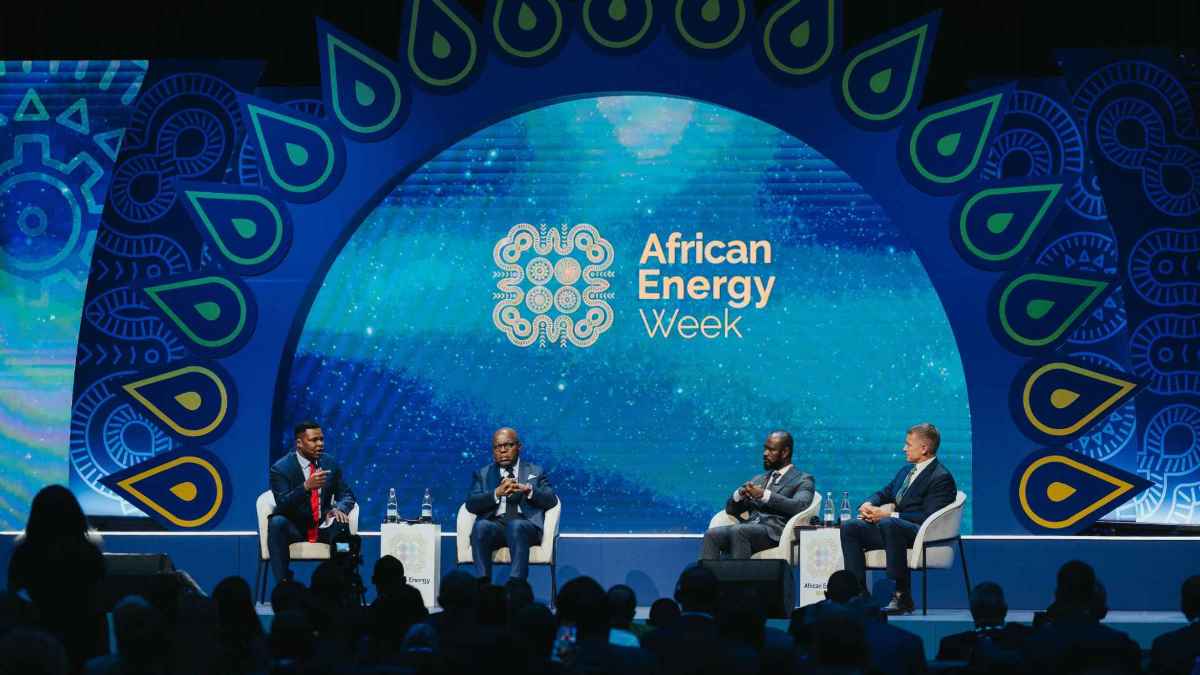
Equatorial Guinea and the Republic of Congo highlighted major gas initiatives at African Energy Week 2025: Invest in African Energies, amid rising energy demand and growing emphasis on asset security across the region

CAPE TOWN, South Africa, October 2, 2025/APO Group/ –Equatorial Guinea has signed new multi-billion-dollar agreements to sustain its Gas Mega Hub over the next two decades, as Central African leaders outlined ambitious gas projects and discussed measures to safeguard energy assets and meet rising regional demand.

Speaking on a panel at African Energy Week 2025: Invest in African Energies, Antonio Oburu Ondo, Minister of Hydrocarbons for Equatorial Guinea, highlighted the latest deals, including a multi-billion-dollar Heads of Agreement for a phase of the Gas Mega Hub and a multi-million-dollar agreement with Chevron for the Aseng gas project. “The Gas Mega Hub aims to ensure that the Punta Europa Gas Complex survives over time,” he said. “It is a constant fight to make sure we tap into new gas resources to guarantee the survival of the gas complex.”

Ondo also stressed Equatorial Guinea’s investor-friendly approach. “We have been very successful with our open door licensing policy, and announced our new EG Ronda licensing round yesterday. Our aim is to be one of the top countries in terms of regulation,” he said.

It is a constant fight to make sure we tap into new gas resources to guarantee the survival of the gas complex

Bruno Jean-Richard Itoua, Minister of Hydrocarbons for the Republic of Congo, echoed the region’s focus on gas, emphasizing domestic energy access before exports. “Every drop of oil and gas counts. We have decided to make gas a priority. We will only export once we cover the needs of the country. The target is to provide electricity access to all Congolese people in the next five years, especially clean cooking gas,” he said, noting that national projects will produce LNG, LPG, butane and propane.

Erik Prince, founder of Blackwater, framed energy development across the continent, and in the Gulf of Guinea in particular, as inseparable from strategic security. “Because precision is now so cheap, it has greatly increased the threat envelope… There is a lot of private sector capability available to help governments maintain their sovereignty and restore their border integrity.”

Prince also highlighted the role of AI and data centers in driving global energy demand. “The demand signal for energy production for the world is rapidly accelerating. Invest accordingly, prepare accordingly logistically. It’s going to be an all-fronts effort to get it done.”

Distributed by APO Group on behalf of African Energy Chamber.

Home  Facebook

Business

Ghana, Seychelles and São Tomé to Spotlight Energy Investment Pipelines at Power Africa Today 2026

Published

on

African Energy Chamber

Energy ministers from Ghana, Seychelles and São Tomé and Príncipe will outline national power sector investment pipelines spanning generation, grids, renewables and supporting infrastructure at Power Africa Today during AEW 2026

CAPE TOWN , South Africa, July 6, 2026/APO Group/ –Ghana, Seychelles and São Tomé and Príncipe are advancing distinct but converging energy transition pathways, as governments shift from policy design to execution-ready infrastructure and investable project pipelines. These national strategies will be presented at the Power Africa Today conference during African Energy Week (AEW) 2026 in Cape Town from October 12–16.


At the center of the dialogue, Ghana’s Minister of Energy and Green Transition, Dr. John Abdulai Jinapor; Seychelles’ Minister for Environment, Climate, Energy and Natural Resources, Marie-May Jeremie; and São Tomé and Príncipe’s Minister of Infrastructure and Natural Resources, Nelson Cardoso, will outline how their respective countries are mobilizing investment across hydrocarbons, renewables and infrastructure.

In Ghana, the delivery of Jubilee crude to the Sentuo Oil Refinery in Tema marks an early step toward strengthening domestic refining capacity and reducing import dependence, supporting broader energy security and industrial fuel supply. This downstream integration is being complemented by an upstream recovery program anchored by a $3.5 billion investment drive, including a $1.5 billion agreement with Eni and a $2 billion framework with Jubilee Partners aimed at stabilizing production and ensuring reliable hydrocarbon supply for both export revenues and domestic energy needs, including gas-to-power development.

Investors are responding in kind, backing clearly structured, bankable energy projects that are ready to deliver impact at scale

At the same time, Ghana is addressing structural grid challenges through a $182 million efficiency and transmission upgrade program led by the Electricity Company of Ghana, alongside tariff adjustments aimed at stabilizing the power sector. Together, these reforms reflect a broader strategy that integrates upstream recovery, downstream expansion and grid reform within a just transition framework focused on industrialisation and job creation.

Seychelles is advancing a small-island energy transition model anchored in its Renewable Energy Accelerated Program, targeting 15% renewable penetration by 2030 through grid modernization and de-risked investment structures. Complementary reforms within the Public Utilities Corporation, including upgrades to the Roche Caiman generation facility, support broader efforts to strengthen energy resilience and diversify the island economy through blue economy initiatives.

In São Tomé and Príncipe, macroeconomic stabilization under an IMF Extended Credit Facility is enabling a more structured infrastructure investment environment. This is being reinforced by a $24.5 million African Development Bank grant, part of a broader clean energy investment package aimed at accelerating the country’s transition from diesel-based generation toward renewable energy and improved grid reliability. Recent renewable integration efforts, including small-scale solar deployment and hybrid generation systems, are supporting grid stability as the country works to reduce reliance on imported fuels and strengthen system performance.

Alongside a €72 million AfDB-supported portfolio, planned hydroelectric concessions along the Adabe River and solar development at Água Casada are being structured to attract private capital through de-risked public-private partnership frameworks, supporting efforts to expand reliable electricity access and build a more resilient power system.

“Across Africa, governments are moving decisively from policy design to implementation, turning ambition into execution on the ground,” says NJ Ayuk, Executive Chairman of the African Energy Chamber. “Investors are responding in kind, backing clearly structured, bankable energy projects that are ready to deliver impact at scale. The Power Africa Today conference at AEW 2026 reflects this shift, bringing together governments and investors focused on moving projects from concept to execution.”

As African energy markets continue shifting from policy ambition toward execution-driven, investable project pipelines, Power Africa Today at  AEW 2026 will provide a platform for governments and investors to engage directly on strategies that can accelerate project delivery and unlock new capital flows across the continent.

Distributed by APO Group on behalf of African Energy Chamber.

Continue Reading

Business

Angola’s Upstream Reform Offers a Blueprint for South Africa’s Emerging Hydrocarbon Market

Published

on

African Energy Chamber

South Africa’s recent regulatory steps echo Angola’s reform playbook at a moment when global exploration interest demands follow-through

JOHANNESBURG, South Africa, July 6, 2026/APO Group/ –South Africa has entered a critical phase in its upstream development. With new petroleum legislation in place, a national petroleum company established and the Karoo shale gas moratorium lifted, the country has taken important steps toward unlocking its oil and gas potential. The key question now is whether South Africa can translate policy momentum into investment, and Angola’s reform experience provides a practical roadmap for doing so.


In Crude Oil: Power, Turnaround and Transformation in Angola, NJ Ayuk, Executive Chairman of the African Energy Chamber, documents how coordinated legal, fiscal and structural reform reversed years of production decline in the country. The two countries operate in different contexts: Angola reformed a mature producing sector while South Africa is working to establish one. There is, however, a transferable lesson in the sequencing and institutional commitment that made Angola’s reforms effective.

Angola Prioritized Structural Reform
When President João Lourenço took office in 2017, his administration conducted a 30-day sector review that led to sustained regulatory change. The newly-established National Agency for Petroleum, Gas and Biofuels (ANPG) took over upstream regulation, a function previously housed within state oil company Sonangol alongside its commercial portfolio. This coincided with the creation of a dedicated downstream regulator, Instituto Regulador dos Derivados do Petróleos, strengthening governance across the entire hydrocarbon value chain.

On a policy front, the 2018 Natural Gas Law gave Angola its first standalone framework for gas exploration and commercialization across an estimated 11 trillion cubic feet of reserves. The Permanent Offer Regime, introduced in 2021, opened acreage for negotiation on a rolling basis rather than through periodic bid rounds, resulting in 27 block awards. Following that, the Incremental Production Law came into effect in November 2024 and targets recovery of an estimated 500 million barrels from mature assets while extending their productive life by as much as 20 years.

These reforms offer critical lessons for countries such as South Africa

These reforms quickly yielded strong results. Foreign direct investment rose by $2.59 billion in the same year Angola improved from 167th to 146th on Transparency International’s Corruption Perceptions Index. Hydrocarbon production has now been sustained above one million barrels per day, while $70 billion in planned upstream investments signal rising international confidence in Angola’s oil and gas opportunities.

“Angola’s regulatory reforms demonstrate that political will, matched with clear fiscal and legal frameworks, can transform an upstream sector within a single policy cycle. These reforms offer critical lessons for countries such as South Africa, which has the opportunity to be a first-mover in establishing a strong regulatory environment,” states Ayuk.

South Africa’s Regulatory Window is Open
South Africa has begun moving in a similar direction. The Upstream Petroleum Resources Development Act (UPRDA) was enacted in late 2024, consolidating upstream licensing and establishing a 20% mandatory carried interest for the state. The South African National Petroleum Company (SANPC) launched in May 2025, merging PetroSA, iGas and the Strategic Fuel Fund. In October 2025, the government lifted a 13-year moratorium on shale gas exploration in the Karoo Basin – estimated to contain up to 300 trillion cubic feet of shale resources.

The challenge for South Africa is implementation. Environmental litigation has blocked or delayed offshore exploration by TotalEnergies and Shell since 2022. In August 2025, the Western Cape High Court rescinded the environmental authorization for Block 5/6/7 off the southwest coast. The Brulpadda and Luiperd gas-condensate discoveries in the Outeniqua Basin, which an FTI Consulting analysis estimates could contribute up to R25 billion per year to the balance of payments, remain undeveloped.

Angola’s experience suggests that legislative reform alone does not produce investment outcomes. The country’s upstream investment trajectory followed from how quickly and consistently those reforms were applied – from the ANPG’s operational launch through to the rolling award of blocks under the Permanent Offer Regime.

With the UPRDA, the SANPC and the Karoo moratorium lift, South Africa has put its own legislative foundation in place. Whether it can match that pace of execution will determine if the current wave of exploration interest in southern Africa’s offshore basins finally extends south of the Namibian border.

Distributed by APO Group on behalf of African Energy Chamber.

Continue Reading

Energy

Reserve Bank of Zimbabwe (RBZ) Deputy Governor Joins African Mining Week (AMW) 2026 as Zimbabwe Seeks to Optimize Mining Capital Flows

Published

on

Etu Energias

Innocent Matshe, Deputy Governor of the Reserve Bank of Zimbabwe, is expected to highlight the central bank’s role in mobilizing investment across Zimbabwe’s mining value chain

CAPE TOWN, South Africa, July 6, 2026/APO Group/ –Dr. Innocent Matshe, Deputy Governor of the Reserve Bank of Zimbabwe (RBZ), has been confirmed as a speaker at African Mining Week (AMW) – Africa’s Most Influential Mining Conference, taking place from 14–16 October 2026 in Cape Town. His participation comes as African central banks assume an increasingly important role in financing mining projects, supporting mineral value addition and creating investment-friendly monetary frameworks to attract private capital.


Dr. Matshe will participate in the Central Bank Governors, Finance and Investor Roundtable, where policymakers, financial institutions and investors will explore strategies to mobilize the capital needed to unlock Africa’s estimated $8.5 trillion in untapped mineral wealth. The session will examine innovative financing mechanisms, public-private partnerships and monetary policies that can accelerate investment across the continent’s mining sector.

As Zimbabwe  targets gold production of 55 metric tons in 2026 – up from 50.6 metric tons in 2025 and 38.6 metric tons in 2024 – the RBZ has expanded its support for the sector through its reserve-building gold purchase program. The initiative provides financing to mining companies while advancing the formalization of the artisanal and small-scale mining (ASGM) sector. To address foreign currency constraints, the central bank also pays ASGM producers – who account for more than 60% of Zimbabwe’s gold production – directly in foreign currency, enabling miners to purchase equipment, improve productivity and sustain operational growth.

Dr. Matshe will also speak during the Unlocking Refining Investment panel, where industry leaders will discuss financing strategies to accelerate investment in mineral processing and downstream beneficiation projects across Africa. His participation aligns with Zimbabwe’s efforts to strengthen domestic mineral value addition and attract investment into processing infrastructure.

The government is targeting approximately $1 billion in lithium processing investments ahead of its planned January 2027 ban on lithium concentrate exports, a policy designed to encourage in-country beneficiation and increase export value. At the same time, Zimbabwe is expanding its gold refining capacity through the approval of a new refinery in Bulawayo, supporting the country’s ambition to process a greater share of its mineral production domestically.

At AMW 2026, Dr. Matshe is expected to outline how the Reserve Bank’s monetary policies, foreign exchange reforms and financing initiatives are supporting mining sector expansion while creating a more attractive investment environment across Zimbabwe’s mining value chain, from exploration and production to refining and mineral processing.

Distributed by APO Group on behalf of Energy Capital & Power.

Continue Reading

Trending