Canon’s new tools give broadcasters and filmmakers enhanced camera functionality and the flexibility to create high-quality 4K content, within streamlined workflows
DUBAI, United Arab Emirates, September 12, 2022/APO Group/ —
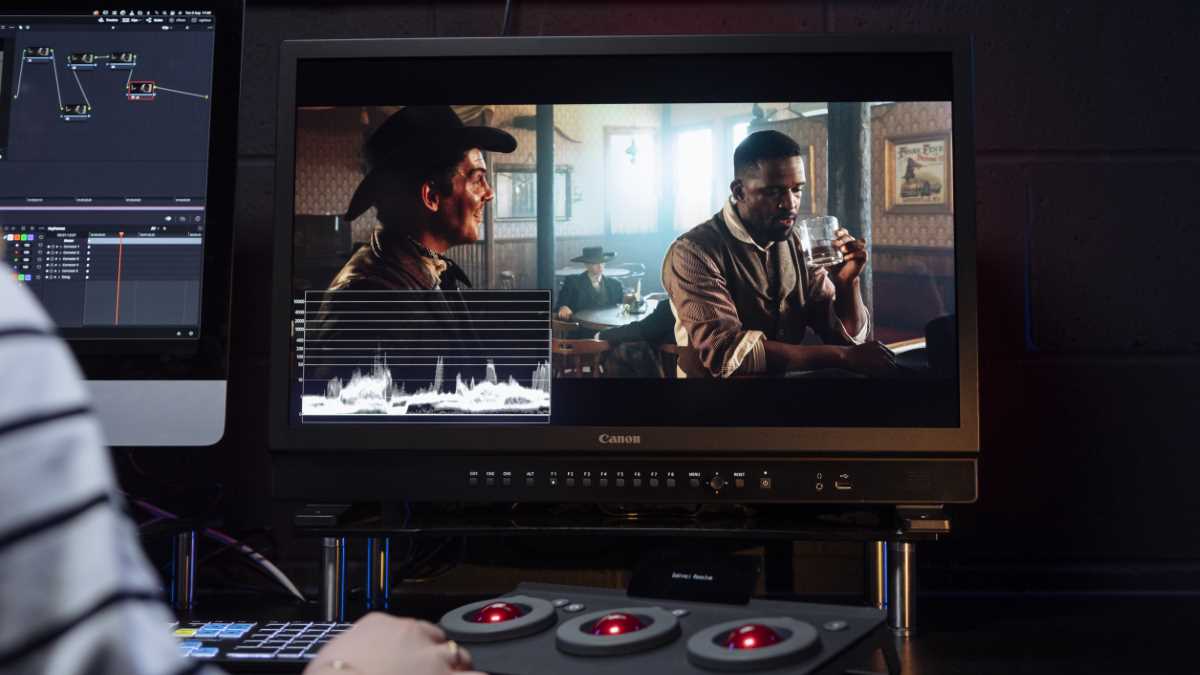
Canon (www.Canon-CNA.com) today strengthens its cinema and broadcast offering, in line with user needs, with a suite of products – including the CN8x15 IAS S E1/P1, Canon’s latest Cine-Servo lens for a broad range of productions, the EU-V3 – a modular expansion unit for the EOS C500 Mark II and EOS C300 Mark III, a Cinema EOS firmware update, and the DP-V2730, a 27-inch 4K professional reference display that seamlessly fits into workflows of broadcasters and filmmakers.
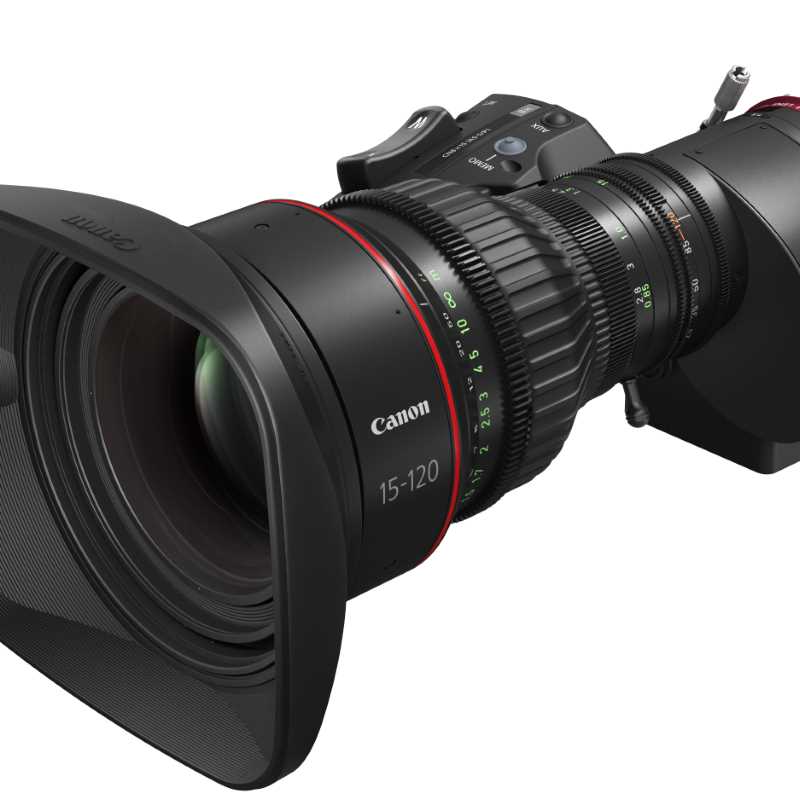
Capture the world cinematically: CN8x15 IAS S E1/P1
With a superb combination of focal range, compact size, and light weight, the CN8x15 IAS S E1/P1 supports Super 35mm cameras, making it ideal for a range of cinema and broadcast productions. With its versatile focal range from a wide 15mm, up to an impressive telephoto range of 120mm, the CN8x15 IAS S E1/P1 can further extend up to 180mm via the built-in 1.5x extender whilst offering full frame sensor coverage. To support future productions, the 8K optical performance can be maintained across the full focal length, which guarantees consistently high image quality across the entire frame.
Designed with consistent results in mind, the CN8x15 IAS S E1/P1 features Canon’s renowned warm colour science, matching the existing range of Canon’s cinema lenses – and an 11-blade aperture, producing a beautiful, smooth bokeh. Offering outstanding optical performance – and breath-taking image quality for HDR, 4K and 8K productions – the CN8x15 IAS S E1/P1 supports EF mount communication, advanced metadata capture with support for Cooke /i Technology™ and is also the first Cine-Servo lens to enable ZEISS eXtended Data™ (XD) communication when using the PL Mount. Featuring the same 16-bit encoder found in Canon’s broadcast and existing Cine-Servo lenses, which provides accurate lens position, zoom, focus and iris metadata, the information and communication functions between the CN8x15 IAS S E1/P1 and camera are paramount for VFX, virtual and cinema productions.
The high-end Cine-Servo CN8x15 IAS S E1/P1 is available in both EF and PL mount, featuring a powerful and removable servo motor drive unit. This provides broadcast-friendly shoulder operation for ENG/EFP and documentary style shooters and access for accessories needed for cinema productions.
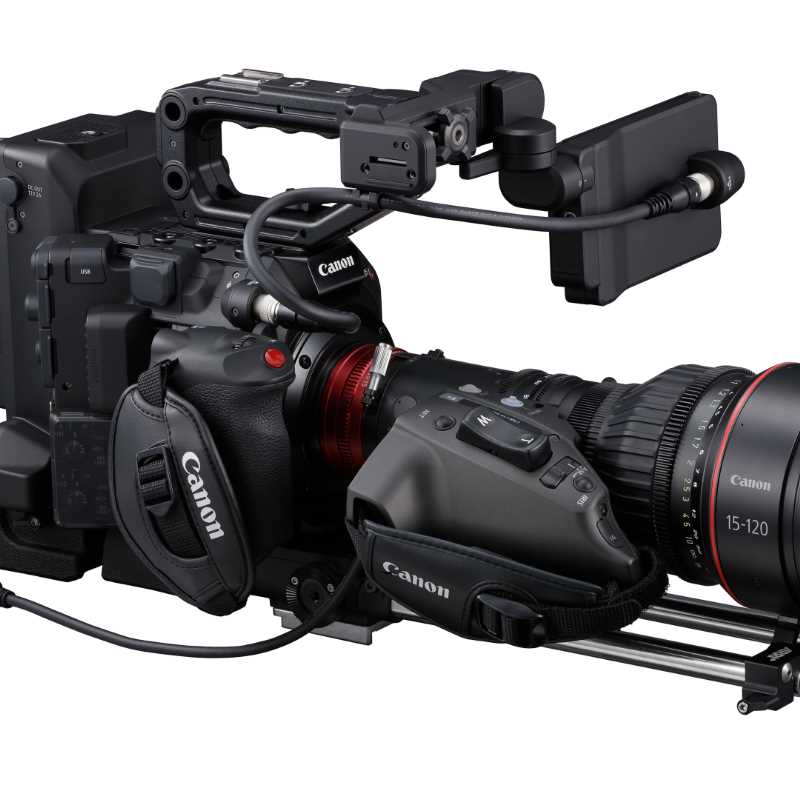
EU-V3: Modular expansion unit for live production, compatible with the EOS C500 Mark II and EOS C300 Mark III
With the increased move towards large format sensor cameras for broadcast, events and live sports production – providing viewers with a unique perspective when watching their favourite teams play – Canon has listened to user requirements with the EU-V3 expansion module for both the EOS C500 Mark II and EOS C300 Mark III. Building on both cameras’ modular design, it expands and supports specific functionality for multi-camera and live productions.
The EU-V3 offers an exclusive SDI return feature, allowing real-time monitoring of a live broadcast feed from a production switcher. The return output destination can be selected from the VIDEO, EVF-V50, MON/HDMI and SDI-OUT terminals. The EU-V3 also enables Tally support via Ethernet, using XC protocol – when the extension unit receives a Tally signal, lights on the camera body can be utilised, a Tally On-Screen display is shown, and it can relay the signal to an external device via Hirose 4-pin. Both the SDI Return and Tally functions are essential for informing camera operators of when their camera feed is live and the current status of the production.
The lens focus position can also be displayed on-screen when using the EU-V3 – with compatible broadcast and Cine-Servo lenses via 12-pin communication. The Focus Position Meter, which users can choose to display along the top or right side of the screen, allows users to register multiple focus positions on a distance scale and highlights when focus is achieved during manual operation – such as when selecting the finish line for a race.
The EU-V3 can be combined with the CN8x15 IAS S E1/P1, on both the EOS C500 Mark II and EOS C300 Mark III.
Cinema EOS Firmware: expanding horizons
A new Cinema EOS Firmware update is being introduced to strengthen the capabilities for the Live and mid-to-low end broadcast market, for both the EOS C500 Mark II and EOS C300 Mark III – enabling both cameras to be used within live environments and workflows. Key updates include:
Implementing XC protocol: integration into multi-camera solutions, supporting direct control via RC-IP100 and ethernet connections.
Strengthening of AF features: 120p / 100p AF support, alongside face detection during Slow and Fast Shooting Mode.
Audio 4ch display: the audio level display will show all four audio channels when this mode is selected.
New accessory and lens support: allowing the EOS C500 Mark II and EOS C300 Mark III to work perfectly with both the CN8x15 IAS S E1/P1 and EU-V3, as well as support for the Flex Zoom series of lenses.
DP-V2730: 4K HDR display for the new generation
An advanced professional 4K HDR monitor, the DP-V2730 has a 4K UHD panel and 1,000 cd/m² full screen peak brightness, with Canon’s local dimming technology giving an ultra-low black level of 0.001 cd/m². A great option for both filmmakers and broadcasters, the DP-V2730 has a 27-inch screen that achieves high brightness with minimal noise which is ideal for both on-set and postproduction environments. Canon’s cutting-edge brightness, detailed shadows and wide colour gamut across the entire screen achieves Dolby Vision certification and Grade1A in EBU TECH3320 standards [i]. The DP-V2730 features a suite of award-winning monitoring tools such as a waveform monitor, histogram, frame luminance monitor, RGB parade and much more – all driven by Canon’s latest processing platform for class-leading performance. The display is a great companion for broadcast and filmmaking, delivering high-end 4K HDR performance for on-set studios, OB Vans and post-production editing, VFX and colour grading.
The DP-V2730 has a HDMI input and 12G-SDI Terminals (4x Inputs and 5x Outputs) capable of delivering 4K60P 4:2:2 10-bit or 4K30P 4:4:4 12-bit signals, ideal for seamless integration into multiple workflows. The DP-V2730 can also easily be linked to a computer, tablet or smartphone plus multiple Canon Displays (via a LAN connection) with the Remote Control Web UI. This touch-optimised interface provides live image viewing, detailed signal information and direct control over inputs, monitoring tools and settings [ii]. Users can also access 4-way SDI input switching via a paid upgrade that supports various workflows, such as sending an output feed to a director’s monitor, external recorder or live steaming solution.
Strengthened products across the Pro AV portfolio
Launching alongside the suite of products today, is Canon’s latest PTZ camera – the CR-N700 (https://bit.ly/3U0bOTc) – and the XA65, XA60, XA75, XA70 and Canon LEGRIA HF G70. The CR-N700 is a 4K60P 4:2:2 10-bit PTZ camera with 12G-SDI connectivity, designed for high-end broadcast production. Canon’s new compact 4K camcorders, the XA65 (https://bit.ly/3L8vOic), XA60 (https://bit.ly/3L3xTfD), XA75 (https://bit.ly/3L67Xji), XA70 (https://bit.ly/3RuzMnT) and Canon LEGRIA HF G70 (https://bit.ly/3qsNTyf) are designed to meet the demand for live sharing content with new UVC compatibility.
To find out more about the products launched today, you can find Canon at IBC from 9 – 12th September in Hall 11, Stand C45. To find out more about the CN8x15 IAS S E1/P1 visit: https://bit.ly/3qykUJn To find out more about the DP-V2730 visit: https://bit.ly/3xfwkp5 To find out more about, and to download the firmware update visit: https://bit.ly/3xg71mZ
CN8x15 IAS S E1/P1 key features:
Wide angle 15-120mm, with 8x magnification
Built-in 1.5x extender – providing reach up to 180mm
Full frame sensor coverage (with extender engaged)
High quality optics for HDR, 4K and 8K capture
Modular design with a removable drive unit
Interchangeable lens mount from EF to PF
First Cine-Servo lens to support ZEISS eXtended Data (XD)
EU-V3 key features:
Return SDI Signal Input
Remote B (RS-422)
Ethernet
Tally Signal Support
V-mount battery plate (with D-TAP)
12-pin Lens Terminal
DC OUT 12V-2A
Cine EOS firmware update:
XC protocol support
120p / 100p AF support
Face detection during Slow and Fast Mode Shooting
Audio 4ch display
Flex Zoom Series and CN8x15 IAS S E1/P1 lens support
DP-V2730 key features:
27” 4K UHD HDR Display
1000 cd/m2 brightness and 0.001 cd/m2 black levels
Award winning monitoring tools
Achieves Dolby Vision and Grade 1A EBU TECH3220 standards
Dual/Quad display with 8K Support
12G-SDI and HDMI connectivity
[i] Grade 1A rating achieved for contrast ratio, peak luminance, black level, luminance uniformity and delay time. [ii] A paid licence is required to activate this feature.
Distributed by APO Group on behalf of Canon Central and North Africa (CCNA).

The series brings to life the impactful outcomes of strategic investments, moving beyond finance to capture the human and economic transformation unfolding across the continent and its diaspora
Together, we’ve built a compelling, audience first YouTube documentary series dedicated to telling powerful human stories and showcasing the real-world impact of their initiatives
CAIRO, Egypt, March 12, 2026/APO Group/ –African Export-Import Bank (Afreximbank) (https://www.Afreximbank.com/) is pleased to launch the second season of its documentary series, Impact Stories. Building on the success of the inaugural season, the new collection of six films expands the series’ geographic scope to capture the Bank’s growing footprint across Global Africa, featuring stories from the Caribbean and Africa.
Produced by Afreximbank in partnership with Create, CNN International Commercial’s branded content studio, Season Two takes viewers on location to Grenada, Ghana, Côte d’Ivoire, and Nigeria. The series brings to life the impactful outcomes of strategic investments, moving beyond finance to capture the human and economic transformation unfolding across the continent and its diaspora. Each episode provides an intimate look at the landmark projects and partnerships that are unlocking enterprise, building critical infrastructure, and fostering a new era of prosperity.
Featuring stories that highlight the breadth and impact of Afreximbank’s interventions — from the expansion of the Silversands Resort in Grenada, a flagship project of deeper Africa-Caribbean cooperation, to the development of Dangote Refinery in Lagos, the films illustrate the scale of ambition driving Africa’s economic future. Viewers will be transported to Aba, Nigeria, to see how the Geometric Power project is revitalising a historic industrial hub with reliable electricity, and to Ghana, where the series follows the journey of cocoa from farm to global market through the Bank’s partnership with Plot Enterprise.
The series also celebrates the rise of Africa’s creative economy, spotlighting Ghanaian fashion brand Boyedoe as it prepared for its debut on global stage at Paris Fashion Week, supported by Afreximbank’s Creative Africa Nexus (CANEX) programme. The final episode explores the renovation of Abidjan’s iconic Félix Houphouët-Boigny Stadium, showcasing how investment in national infrastructure delivers wide-reaching cultural and economic benefits for local communities.
Mrs. Anne Ezeh, Director of Communications and Events at Afreximbank, emphasised the series’ role in documenting the Bank’s core mission and impact: “These films are much more than stories about investment and projects; they are portraits of partnership and progress, demonstrating our unwavering commitment to fostering economic independence. By showcasing the entrepreneurs, communities, and national economies we partner with, we are sharing a vision of a prosperous and integrated Global Africa. This showcase is vital because it demonstrates that the building blocks for greater economic integration are already in place or being built now, inspiring businesses and regions to accelerate intra-African trade and encouraging entrepreneurs to forge cross-border collaborations that drive development at home and abroad.”
Martin Laing, Senior Director of Production and Global Executive Producer at CNN International Commercial’s Create Brand Studio, said: “It’s been a real privilege to work hand in hand with Afreximbank and their incredible team as co producers of Impact Stories again for the second season. Together, we’ve built a compelling, audience first YouTube documentary series dedicated to telling powerful human stories and showcasing the real-world impact of their initiatives across Africa, its global diaspora, and beyond. We are incredibly proud to collaborate on a truly international series that puts people at the heart of the storytelling and connects meaningfully with audiences around the world.”
The six new episodes which will debut on Afreximbank TV (https://apo-opa.co/47Dzbu0) on March 12th and serve as a powerful testament to Afreximbank’s mandate to finance and promote trade, as well as demonstrating how strategic investments are turning opportunity into tangible prosperity for businesses and communities across Africa and the Caribbean. The series will be promoted in high impact formats across CNN.com and in a long-form TV campaign across CNN International.
Distributed by APO Group on behalf of Afreximbank.
Based on more than 9 million data points tracking international flows of trade, capital, information, and people, the report offers the most comprehensive view of globalization available
JOHANNESBURG, South Africa, March 12, 2026/APO Group/ —
Global connectedness stood at 25% in 2025, matching the record high first reached in 2022
Namibia ranks among the top three countries globally for long‑term increases in connectedness since 2001; Mozambique, Nigeria and Zambia record strong gains
The DHL Global Connectedness Report 2026 draws on more than 9 million data points worldwide
Globalization remains at a historically high level – despite escalating geopolitical tensions, rising U.S. tariffs, and unprecedented uncertainty about future trade policies. This is one of the key findings of the DHL Global Connectedness Report 2026 (https://Group.DHL.com), released today by DHL and New York University’s Stern School of Business.
Based on more than 9 million data points tracking international flows of trade, capital, information, and people, the report offers the most comprehensive view of globalization available.
Sub‑Saharan Africa: connectedness gains point to rising relevance in global trade
Against this global backdrop, the report presents a nuanced picture for Sub‑Saharan Africa. While levels of connectedness differ significantly across the region, several economies are strengthening their integration into global flows, underscoring steady progress over time, and highlighting scope for further gains in others.
Namibia ranks among the countries with the largest increases in connectedness since 2001, with Mozambique also featuring among the strongest long‑run improvers. More recently, Nigeria and Zambia are listed among the countries with the largest connectedness gains since 2022, reflecting growing momentum in trade, investment and people flows.
Hennie Heymans, CEO of DHL Express Sub‑Saharan Africa, commented: “As supply chains across the globe continue to develop and trade routes expand into new territories, connectedness is emerging as a key differentiator for businesses and nations alike. The countries in our region that are strengthening their global links are becoming more visible in international trade networks. While this is an encouraging trend in terms of the scope of opportunities available, the key is to take advantage of these opportunities to drive consistent and reliable trade flows. This report further underscores how Africa is increasingly shifting from a narrative of aid to one of trade, a transformation powered by stronger integration, rising competitiveness, and improved access to global markets. To fully unlock this potential, the region needs strong regional connectivity, predictable cross-border processes, and partners that understand both local conditions and global trade requirements. At DHL Express, we are committed to being a catalyst for growth in Africa, ensuring that not only is Africa a part of global trade but a key driver within it.”
Beyond trade and investment, the report finds that people flows have recovered fully from the Covid‑19 collapse. In tourism, UN data show that Africa recorded a 17% increase in international arrivals in 2025 compared with 2019, the second‑largest increase among world regions, behind the Middle East.
In the report’s 2024 country ranking of 180 economies, South Africa ranks 53rd overall. Other Sub‑Saharan African countries with relatively higher overall ranks include Seychelles (40th), Mauritius (65th), Namibia (68th), Ghana (97th), Nigeria (100th), Mozambique (107th), and Kenya (119th).
The DHL Global Connectedness Report shows that countries and companies are not retreating behind national borders
Globalization has held firm since 2022
The report tracks globalization on a scale from 0% (no cross-border flows) to 100% (borders and distance have no impact). The world’s level of globalization was 25% in 2025, in line with the record high set in 2022.
“Globalization is holding its ground – and that alone speaks volumes about its value,” said John Pearson, CEO of DHL Express. “From poverty to climate change, the world’s biggest challenges can only be solved through global thinking. The DHL Global Connectedness Report shows that countries and companies are not retreating behind national borders. That is good news. DHL strengthens global ties by connecting markets, businesses, and people so they can adapt, diversify, and unlock new opportunities – even in uncertain times.”
At the same time, the current level of globalization underlines how far the world remains from being fully globalized. In many areas, international flows could expand further in the absence of policy constraints.
No global split into rival blocs
Even as the U.S. and China decouple, most countries continue to engage with their longstanding partners. Over the past decade, only 4–6% of global goods trade, greenfield FDI, and cross-border M&A have shifted away from geopolitical rivals. Of these flows, most have not moved to close allies but to countries with flexible geopolitical positions, such as India and Vietnam. Overall, the world economy remains far from a broad split into rival blocs.
“The politics and policy surrounding globalization are much more volatile than the actual flows between countries,” said Prof. Steven A. Altman, Director of the DHL Initiative on Globalization at NYU Stern’s Center for the Future of Management. “Global trade patterns changed more in 2025 than they do in a typical year, but less than they did during other recent disruptions such as the early stages of the war in Ukraine. Sound decision-making requires a calibrated view of how much global business ties are really changing. The risks to globalization are real, but so is the resilience of global flows.”
The DHL Global Connectedness Report
Published regularly since 2011, the DHL Global Connectedness Report provides reliable insights on globalization by analyzing 14 types of international trade, capital, information, and people flows. The 2026 edition is based on more than 9 million data points. It ranks the connectedness of 180 countries, accounting for 99.6 percent of global gross domestic product and 99.0 percent of the world’s population. A set of 180 one-page country profiles summarizes each country’s pattern of globalization.
The report was commissioned by DHL and authored by Steven A. Altman and Caroline R. Bastian of New York University Stern School of Business.
Geneva International Cooperation Forum: African Development Bank Senior Vice President (SVP) Marie-Laure Akin-Olugbade outlines approach to humanitarian contexts
Ms Akin-Olugbade presented the Bank Group’s approach which is not to replace humanitarian actors, but to complement them by intervening at the right time and with the right instruments
ABIDJAN, Ivory Coast, March 11, 2026/APO Group/ –The fifth Geneva International Cooperation Forum (IC Forum) organised by the Swiss Federal Department of Foreign Affairs’ Agency for Development and Cooperation last month, saw the participation of African Development Bank Group (https://AfDB.org/) Senior Vice President, Marie-Laure Akin-Olugbade.
Akin-Olugbade joined a high-level panel on “Private-Sector Partnerships in Humanitarian Contexts” which took place during the forum held from 26 -27 February 2026 at the Geneva International Conference Centre in Switzerland. On the panel with the senior vice president were key actors from the private sector and experts
Ambassador Pietro Lazzeri, Head of the Economic Cooperation and Development Division at the Swiss State Secretariat for Economic Affairs (SECO), set out the terms of the discussion: “In a global context of declining resources, the financing and implementation of humanitarian aid must be expanded. But how do we get the private sector involved in the solutions?” he asked. Lazzeri, who serves as the Bank’s governor for Switzerland, moderated the session
For the participants, it was essential for the private sector to adhere to the principles of humanitarian response, based on a shared responsibility approach. They also stressed that cooperation with the private sector should not replace cooperation with states but strengthen it.
In a global context of declining resources, the financing and implementation of humanitarian aid must be expanded
Ms Akin-Olugabade added that “behind every crisis, there are collapsing markets and lost jobs.”
In Africa, where nearly 80% of the population works in the private sector, businesses are at the heart of crises, whether in terms of prevention, stabilisation or recovery. The panellists also called for more funding, provided that it is responsible and does not fuel conflicts.
Ms Akin-Olugbade presented the Bank Group’s approach which is not to replace humanitarian actors, but to complement them by intervening at the right time and with the right instruments.
In Madagascar, for example through the Transition Support Facility, more than 300 very small and medium-sized enterprises (VSEMEs) have gained access to previously unavailable bank financing. In Sudan, partnership with the DAL Group has helped to stabilise agricultural value chains in the nation despite the ongoing conflict. Also in the Sahel region, collaboration with the International Committee of the Red Cross (ICRC) illustrates how the Bank Group combines its financial instruments with humanitarian expertise on the ground.
These interventions, designed to complement the efforts of all stakeholders, aim to revive the local economy, restore essential services and reduce the risk of a relapse into crisis. According to Akin-Olugbade, it is this synergy between humanitarian actors, the private sector and multilateral development banks that is the key to a truly sustainable response.
In conclusion, participants unanimously agreed that the private sector cannot be reduced to the role of a mere donor: its expertise and capacity for innovation make it a full partner in humanitarian action, provided that this collaboration is structured, responsible and rooted in the realities on the ground.
Distributed by APO Group on behalf of African Development Bank Group (AfDB).
We use cookies on our website to give you the most relevant experience by remembering your preferences and repeat visits. By clicking “Accept”, you consent to the use of ALL the cookies.
This website uses cookies to improve your experience while you navigate through the website. Out of these, the cookies that are categorized as necessary are stored on your browser as they are essential for the working of basic functionalities of the website. We also use third-party cookies that help us analyze and understand how you use this website. These cookies will be stored in your browser only with your consent. You also have the option to opt-out of these cookies. But opting out of some of these cookies may affect your browsing experience.
Necessary cookies are absolutely essential for the website to function properly. These cookies ensure basic functionalities and security features of the website, anonymously.
Cookie
Duration
Description
cookielawinfo-checkbox-analytics
11 months
This cookie is set by GDPR Cookie Consent plugin. The cookie is used to store the user consent for the cookies in the category "Analytics".
cookielawinfo-checkbox-functional
11 months
The cookie is set by GDPR cookie consent to record the user consent for the cookies in the category "Functional".
cookielawinfo-checkbox-necessary
11 months
This cookie is set by GDPR Cookie Consent plugin. The cookies is used to store the user consent for the cookies in the category "Necessary".
cookielawinfo-checkbox-others
11 months
This cookie is set by GDPR Cookie Consent plugin. The cookie is used to store the user consent for the cookies in the category "Other.
cookielawinfo-checkbox-performance
11 months
This cookie is set by GDPR Cookie Consent plugin. The cookie is used to store the user consent for the cookies in the category "Performance".
viewed_cookie_policy
11 months
The cookie is set by the GDPR Cookie Consent plugin and is used to store whether or not user has consented to the use of cookies. It does not store any personal data.
Functional cookies help to perform certain functionalities like sharing the content of the website on social media platforms, collect feedbacks, and other third-party features.
Performance cookies are used to understand and analyze the key performance indexes of the website which helps in delivering a better user experience for the visitors.
Analytical cookies are used to understand how visitors interact with the website. These cookies help provide information on metrics the number of visitors, bounce rate, traffic source, etc.
Advertisement cookies are used to provide visitors with relevant ads and marketing campaigns. These cookies track visitors across websites and collect information to provide customized ads.