



Business
Bühler commissions first tahini halva processing line at Silo Foods Industries in North Africa

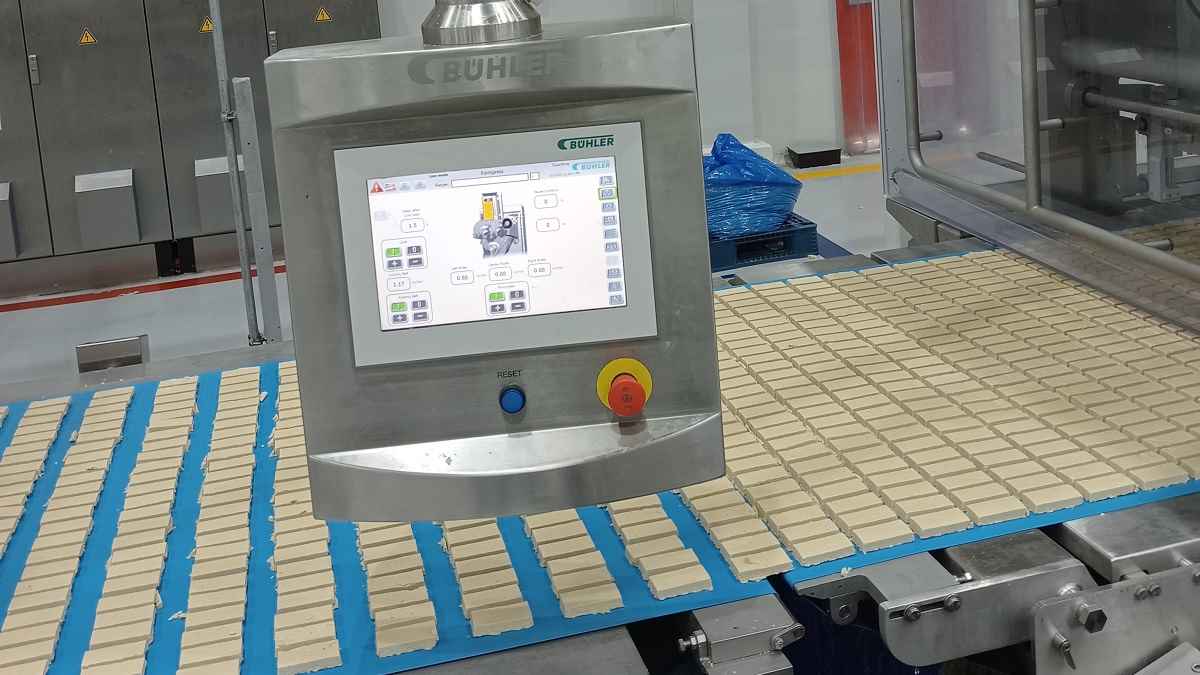
The tahini halva line is part of the second stage at Silo Foods Industries, which was officially opened by Egyptian President Abdel Fattah El Sisi in early February
NEW CAIRO, Egypt, May 24, 2023/APO Group/ —
Swiss technology group Bühler (https://www.BuhlerGroup.com/) has completed a processing line for tahini halva, from receiving and handling raw sesame seeds to the finished product, at Silo Foods Industries in Sadat City, Egypt. The food processing complex is an affiliate of the National Service Projects Organisation (NSPO). The tahini halva line is part of the second stage at Silo Foods Industries, which was officially opened by Egyptian President Abdel Fattah El Sisi in early February.
This is the first complete tahini halva processing line supplied globally by a single technology provider, in one of the most advanced food complexes ever built. The project is a significant showcase of Bühler’s presence in the Middle East, Africa and India region, says Hesham Barakat, Head of Business Development and Consumer Foods, Middle East and Africa, at Bühler Group.
Silo Foods Industries contributes significantly to sustainable food processing practices in Egypt by boosting productivity, improving quality, and increasing efficiency

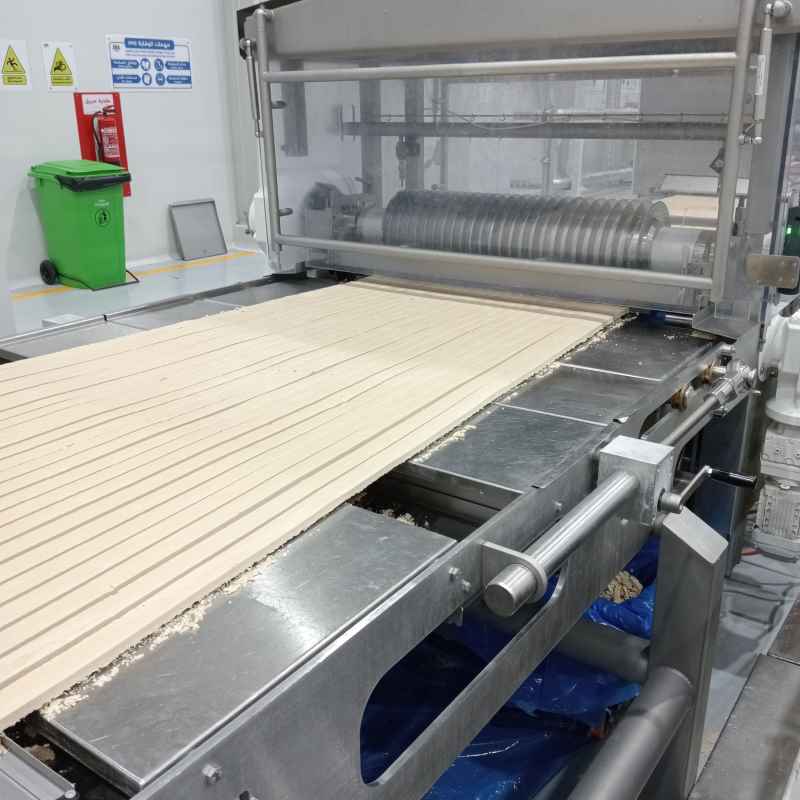
“Silo Foods Industries contributes significantly to sustainable food processing practices in Egypt by boosting productivity, improving quality, and increasing efficiency,” says Barakat. Combining all the manufacturing steps in a single site reduces the transportation time along the value chain as well as the overall manufacturing footprint. “Innovative solutions with energy-saving features were always at the core of the decision-making criteria at Silo Foods Industries,” he adds.
The scope of work for the 18-month project encompassed the sesame seed handling and cleaning process, sesame color sorting (a first for tahini), sesame storage, roasting, peeling, and grinding − another innovation thanks to Bühler’s Nova S ball mill. The scope further extended to storing the tahini, cooking the sugar, and mixing it with the tahini, as well as handling and feeding the forming line, followed by cooling, cutting, and packaging.
“We devised an innovative control system to handle all the different parameters that was quite unique,” says Barakat. The system integrated all the components of the processing line and ensured proper sequencing. Bühler oversaw the overall project management, which involved Bühler global suppliers from Switzerland, India, Germany, the US, and China.
Silo Foods Industries was established by the Egyptian government to improve nutrition for children and students in the Upper Nile region. The state-of-the art food complex is expected to transform the food system in Egypt, supplying safer and secure nutrition, especially for young people. The second stage of the project aims to improve the school nutrition system with the establishment of a factory for dairy, biscuits, halva, and tahini products.
Bühler develops solutions for multiple aspects of the food processing sector, ranging from handling and milling of grains to sorting, extruding, and drying among others. It contributes to enhancing food security worldwide by providing solutions that increase food safety and quality. Bühler is committed to having solutions ready to multiply by 2025 that reduce energy, waste, and water by 50% in the value chains of its customers.
Distributed by APO Group on behalf of Bühler Holding AG.















Business
Enlit Africa seeks contributions that move the conversation from strategy to execution: ensuring a Future Fit Africa


Business
CEM Africa Awards 2026 set to recognise Africa’s leading Customer Experience (CX) talent and innovation

The 2025 awards attracted more than 80 entries and 31 finalists, culminating in eight award winners


The calibre of organisations and individuals recognised through the CEM Africa Awards demonstrates just how much extraordinary CX work is being done across the continent
JOHANNESBURG, South Africa, September 25, 2026/APO Group/ –Customer experience professionals, teams and organisations across Africa have just days remaining to enter the 2026 CEM Africa Awards, with free applications closing on 30 September 2026.
Taking place on 10 November 2026 at the NH Hotel in Sandton, Johannesburg, the Customer Experience Africa Awards form part of the CEM Africa platform and recognise the individuals, teams, technologies and initiatives raising the standard of customer experience across the continent.
For organisations considering whether to enter, the company they could be keeping provides a compelling indication of the calibre of the awards.
A growing roll call of African CX leaders
The 2025 awards attracted more than 80 entries and 31 finalists, culminating in eight award winners. Finalists represented organisations spanning financial services, technology, telecommunications, retail, insurance, public services and social impact.
Among them were Absa, Capitec Bank, Santam, Telesure Investment Holdings, Equity Bank, Takealot.com, NTT DATA, Frogfoot, Telviva, Harambee Youth Employment Accelerator, the University of Pretoria and South Africa’s Department of Social Development.
The 2025 winners included Serisha Iyer of Absa Corporate and Investment Banking, named Rising Star in CX; Alma Angela Olela of Jubilee Health Insurance, named CX Leader of the Year; and Franco Cotumaccio of Shadow Global, winner of Breaking Barriers in CX.
Corporate winners included Telesure Investment Holdings for Best Overall CX Solution, Krisp for Best Use of AI, Telviva for Best Enterprise Contact Centre Platform, Harambee Youth Employment Accelerator for Best Customer Experience Team of the Year and the University of Pretoria for Best Citizen Experience Initiative.
That follows a 2024 edition in which winners included NCBA Bank, MultiChoice, Digital Solutions Group, Absa Bank and Telviva, alongside individual CX leaders from across the continent.
More than a trophy
For entrants, recognition through the CEM Africa Awards puts their work in front of a wider African CX community and an independent judging panel drawn from across the industry.
The 2026 judging panel includes global CX specialist Ian Golding; Andrew (Dré) Enebeli, Head of CX & Engagement at Access Bank; Dr Oliver Museka, President and Founder of IRDM College Eswatini; Jonathan Daniels, Managing Director of CX Centric; Joven Pillay, Partner and Head of Customer Consulting at KPMG; and Qaalfa Dibeehi, Managing Partner at Human2Outcome.
This year’s awards recognise excellence across four broad pillars – People, Innovation, Transformation and Government – covering categories including CX Leader of the Year, Rising Star in CX, Breaking Barriers in CX, Best Overall CX Solution, Best Use of AI, Best Enterprise Contact Centre Platform, Best Customer Experience Team of the Year, Best Digital Transformation in Public Services and Best Citizen Experience Initiative.
“The calibre of organisations and individuals recognised through the CEM Africa Awards demonstrates just how much extraordinary CX work is being done across the continent. These awards give that work a platform. Whether it is a major transformation programme, an innovative use of technology or an individual changing how their organisation thinks about the customer, we want to make sure Africa’s best work is being seen and recognised.”
- Briteny Price, Event Manager and CEM Africa Awards Director
Final opportunity to enter
Applications for the 2026 CEM Africa Awards are free and remain open until 30 September 2026. Finalists will be announced in October, ahead of the awards ceremony on 10 November at the NH Hotel, Sandton.
Organisations, teams and individuals working to improve customer and citizen experience across Africa are encouraged to submit their entries before the deadline.
Apply for the CEM Africa Awards 2026 by 30 September 2026
Submit your application (https://apo-opa.co/4hdcimx)
Explore the CEM Africa Awards
Visit the CEM Africa Awards website (https://apo-opa.co/4iNXzzM)
Distributed by APO Group on behalf of VUKA Group.
Business
Emirates to bring the A350 to Nairobi, introducing next-generation cabin experiences


-

 Business4 days ago
Afreximbank, Ghana Infrastructure Investment Fund (GIIF) and Ghana’s 24-Hour Economy Authority launch project preparation partnership to accelerate 24H+ projects
-

 Events4 days ago
Huawei Cloud Rolls Out Enterprise AI Products Across the Board, Building an Open Agentic Cloud
-

 Energy4 days ago
Deals, Drilling and New Entrants Define Angola Oil & Gas 2026
-

 Business4 days ago
Hong Kong sets out strategies to enhance the appeal and add value to the city’s tourism industry
-

 Business4 days ago
Former DAMAC Senior Vice President Paulo J. Cruz Appointed Founding CEO of African Collaboration Group (ACG) to Spearhead Sports and Entertainment District Development Across Africa
-

 Business3 days ago
Frasers Hospitality unveils Fraser Suites Reserve, a new luxury serviced living brand
-

 Energy3 days ago
Building a Knowledge Hub for China-ASEAN Energy Cooperation
-

 Business4 days ago
Hong Kong sets out initiatives to secure long-term development of pillar industries