Business
Capture precious memories on the go with the Canon EOS R100 and RF 28mm F2.8 STM


With a 24.1-megapixel, APS-C sensor and Dual Pixel CMOS AF packed into its compact and lightweight body, the EOS R100 offers stunning yet effortless image quality, perfect for shooting on the go
DUBAI, United Arab Emirates, May 24, 2023/APO Group/ —
Canon’s (https://www.Canon-CNA.com) newest entry-level EOS R System mirrorless camera has been designed to effortlessly capture special moments in outstanding quality and is small enough to carry on any family adventure. Canon also demonstrates its commitment to expanding the advanced range of RF prime lenses with the launch of the RF 28mm F2.8 STM – the smallest and lightest RF lens yet.
Canon today announces the launch of the EOS R100, tailor-made for those who want to preserve quality time spent with family and friends, perfect for capturing special occasions and lasting memories. With a 24.1-megapixel, APS-C sensor and Dual Pixel CMOS AF packed into its compact and lightweight body, the EOS R100 offers stunning yet effortless image quality, perfect for shooting on the go. Accompanying the launch of the camera is the RF 28mm F2.8 STM, Canon’s smallest and lightest lens in the RF range, as well as the OC-E4A, a new off-camera shoe cord for Canon’s multi-function shoe.
Capture the moment
The EOS R100 features a 24.1-megapixel APS-C sensor which is several times larger than that found in a top of the range smartphone, providing a noticeable step up in image and video quality. This not only delivers impeccable colour and incredible detail, but also gives users the ability to shoot in low light conditions and achieve beautiful, authentic bokeh where the background is smoothly softened, allowing the subject to stand out.
With the intelligent autofocus of the EOS R range, the EOS R100 has Dual Pixel CMOS AF with fast and accurate subject detection, tracking people’s eyes when using the viewfinder or the LCD screen, keeping up with the action and focusing on what really matters. By offering up to 6.5 fps continuous shooting with One Shot AF and 3.5 fps with Continuous AF[i], the EOS R100 helps capture that special moment.
The EOS R100 has improved video performance compared to a smartphone or DSLR, offering 4K 25p video[ii], bringing the benefits of the EOS R System to this easy-to-use, entry-level camera. It is also capable of Full HD video recording at 60 fps and 120 fps at 720p resolution, ideal for smooth slow-motion videos, which is particularly useful when getting creative with holiday content. The reliable Dual Pixel CMOS AF also enables face detection and eye tracking when recording in Full HD.
Unlock your potential
The portable design of the EOS R100 – weighing just 356g[iii] – is smaller and lighter than a traditional DSLR, perfect for those who want to shoot on the move. Its comfortable grip, electronic viewfinder, intuitive controls, and guided user interface give users the tools to be the family’s very own photographer, without having to be a professional. This is supported by creative assist, making it easy to adjust background blur, brightness, contrast, and colour balance.
Users also have the option to experiment with an array of versatile accessories, such as innovative RF lenses, microphones and Speedlites, making the creative possibilities endless. Compatibility with Canon’s RF and RF-S lenses in particular means users can extend their reach and get creative with fast apertures.
Seamlessly connect and share
Wi-Fi® and always-on Bluetooth® connectivity[iv] enable users to seamlessly transfer images and videos to their smartphone using the Canon Camera Connect app for instant sharing. The app also enables users to operate the camera remotely, while Bluetooth connection allows simple control with the BR-E1 remote control or a smartphone, perfect for group photos and videos.
Introducing Canon’s smallest and lightest RF prime lens
The RF 28mm F2.8 STM is an extremely compact and lightweight full frame RF prime pancake lens. It has been carefully designed to be the perfect combination for cameras such as the recently launched EOS R8. It can easily fit into any kit bag or be used instead of a body cap, ideal for travel and street photographers on the move.
Its versatile 28mm focal length and fast F2.8 maximum aperture make it suitable for a variety of shooting scenarios. The fast aperture enables low light shooting and achieves a shallow depth of field for blurred backgrounds to make the subject stand out. The RF 28mm F2.8 STM includes a combined control and focus ring, enabling users to easily adjust settings and quickly switch to manual focus if required. What’s more, the STM motor also allows quiet autofocus and smooth transitions between subjects.
Canon’s combination of an EOS R body and RF lens enables a variety of correction options to be implemented to assist entry-level photographers and videographers, offering better image quality, and allowing for a smaller lens design. The effective placement of three high-precision plastic moulded aspheric elements achieves excellent rendering capability and compactness while also keeping the number of elements to a minimum.
As a super compact, lightweight and affordable option, the RF 28mm F2.8 STM broadens the choice of Canon’s advanced prime lenses for EOS R System users, which also includes:
- RF 16mm F2.8 STM
- RF 24mm F1.8 MACRO IS STM
- RF 35mm F1.8 MACRO IS STM
- RF 50mm F1.8 STM
- RF 85mm F2 MACRO IS STM
Additional flexibility with Canon’s new OC-E4A
EOS R100 has improved video performance compared to a smartphone or DSLR, offering 4K 25p video, bringing the benefits of the EOS R System to this easy-to-use, entry-level camera


The OC-E4A is Canon’s new cable for the multi-function shoe, featured on several EOS R System cameras, which allows the new advanced range of accessories to be placed away from the hotshoe. It allows multi-function accessories such as Speedlites to be used off camera for correct lighting when shooting vertically to prevent shadows and reduce red eye. The OC-E4A can also provide power to devices such as microphones and it has been designed to enable use with the RF 5.2mm F2.8L DUAL FISHEYE lens.
Further details about the EOS R100 are available here: https://apo-opa.info/3q9QO1R
Further details about the RF 28mm F2.8 STM are available here: https://apo-opa.info/3OCm8AA
EOS R100 key features:
- 24.1 MP APS-C sensor
- Dual Pixel CMOS AF with subject detection
- 4K video (crop, 25p)
- Full HD 60 fps and 120 fps[v] 720p
- Electronic viewfinder
- Compact and lightweight body
RF 28mm F2.8 STM key features:
- Slim and lightweight
- Affordable wide-angle prime lens
- Versatile 28mm focal length
- Fast F2.8 maximum aperture
- Optical quality and clever corrections
Pricing and availability
- The EOS R100 will be available from late June.
- The RF 28mm F2.8 STM will be available from July.
- The OC-E4A will be available from July and is compatible with Canon’s EOS R3, EOS R6 Mark II, EOS R7, EOS R8, EOS R10, EOS R50 and EOS R5 C.
[i] When using continuous shooting in silent shutter mode, 12-bit A/D conversion is applied to RAW files.
[ii] When resolution is 3840 x 2160, image is cropped around the centre of the image sensor.
[iii] Body only.
[iv] Equipped with Bluetooth® low energy technology. The Bluetooth® word mark and logos are registered trademarks owned by the Bluetooth SIG, Inc. and any use of such marks by Canon Europe Ltd. is under license. Other trademarks and trade names are those of their respective owners. Wi-Fi® is a registered trademark of the Wi-Fi Alliance. The Bluetooth® word, mark and logos are registered trademarks owned by the Bluetooth SIG, Inc. and any use of such marks by Canon Inc. is under license. Other trademarks and trade names are those of their respective owners.
[v] AF disabled during recording.
Distributed by APO Group on behalf of Canon Central and North Africa (CCNA).















Business
CIT VERICASH Recognized as Best Digital Financial Services Platform of 2026 by Global Business Outlook


Business
Comsol enters wholesale 5G home broadband market with backing from new shareholders


Business
Electra Mining Africa: Showcasing the Technologies Shaping the Future of Industry

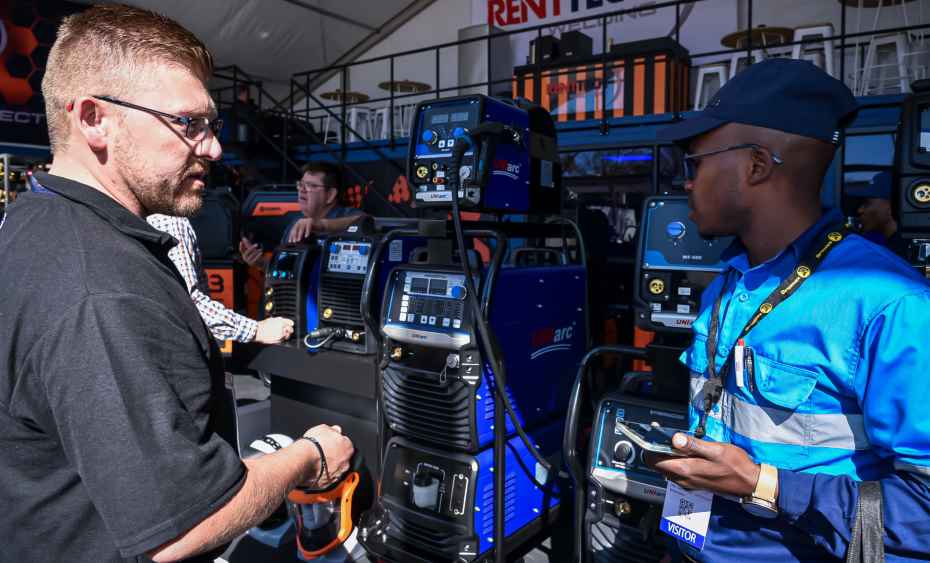
More than 1,000 exhibitors, technical seminars, industry forums and networking opportunities will bring together the people, products and ideas shaping industrial progress across Africa
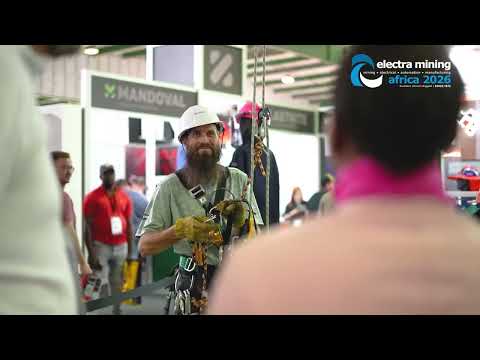

Taking place from 7-11 September at the Johannesburg Expo Centre in Nasrec, Johannesburg, Electra Mining Africa will once again provide a meeting place for industry. Recognised as one of Africa’s leading industrial exhibitions, the event will bring together more than 1,000 predominantly local exhibitors, together with international companies, country pavilions, industry organisations, technical specialists, business leaders and decision-makers from across mining, manufacturing and related industries.
By bringing together six complementary sectors—mining, manufacturing, automation, electrical and power, transport and related engineering sectors—under one roof, Electra Mining Africa enables visitors to explore how integrated technologies and solutions can improve productivity, safety and operational performance. The exhibition provides a unique opportunity to compare products, engage directly with technical experts and discover how innovations from different sectors are increasingly working together to support smarter industrial operations.
Reflecting continued industry confidence, Electra Mining Africa has expanded its footprint for the 2026 edition, growing by 4,000m² to a record 44,000m² of net exhibition space across six indoor exhibition halls and expanded outdoor display areas.
Visitors will have the opportunity to explore solutions ranging from large-scale mining equipment and industrial machinery to automation systems, artificial intelligence (AI), robotics, digital manufacturing, predictive maintenance technologies, power solutions and advanced engineering services. The exhibition also features pumps, valves, welding and fabrication equipment, safety solutions, personal protective equipment (PPE), tools, components and specialist industrial services.
Electra Mining Africa has become an important business platform for companies serving markets across Africa. At the previous edition, industry professionals from 58 countries were represented, reflecting the exhibition’s growing international reach and its role in connecting manufacturers, technology suppliers, distributors, buyers and decision-makers from across the continent and beyond. For many exhibitors, the exhibition provides opportunities to strengthen customer relationships, meet prospective buyers, appoint distribution partners and explore new business opportunities. For visitors, it offers access to both internationally recognised brands and locally developed technologies designed to address the operational requirements of African industry.
Electra Mining Africa brings together the technologies, expertise and industry relationships that help organisations make informed decisions
Beyond the exhibition floor
Electra Mining Africa offers an extensive programme of technical knowledge sharing, professional development and industry collaboration. Free-to-attend seminars hosted by the Southern African Institute of Mining and Metallurgy (SAIMM) will explore practical operational challenges and emerging technologies, while the Society for Automation Instrumentation Mechatronics and Computer Engineering (SAIMC) will present specialist workshops on advances in automation and mechatronics. WiMSA’s Women in Mining workshop will provide a forum for discussion around leadership, opportunity and professional development, and the Lifting Equipment Engineering Association of South Africa (LEEASA) will host its two-day National Conference, bringing together industry professionals to share knowledge and discuss developments affecting the sector.
New for 2026, the SA Institution of Mechanical Engineering (SAIMechE) Skills and Career Hub will strengthen collaboration between industry and the education and training sector, encouraging conversations around future workforce requirements, skills development and innovation. Visitors will also be able to experience the Geological Society of South Africa (GSSA) Explorers Pitch, where finalist student teams present their mineral exploration projects to an expert industry judging panel before the winning team is announced.
Also taking place during Electra Mining Africa are the New Products and Innovation Awards, which recognise outstanding achievements by both local and international exhibitors. Adjudicated by the South African Capital Equipment Export Council (SACEEC), entries are evaluated against a comprehensive set of criteria, including innovation, engineering excellence, research and development, product quality, technical expertise and the practical value each solution delivers to industry. The winners are announced during the exhibition, recognising companies whose products and innovations are advancing technology, performance and industrial application.
“Industrial businesses are facing increasingly complex challenges that cannot be solved in isolation. Electra Mining Africa brings together the technologies, expertise and industry relationships that help organisations make informed decisions, identify practical solutions and build partnerships that support long-term growth. That’s what makes the exhibition such an important meeting place for industry, not only in South Africa but for businesses operating across the African continent,” says Charlene Hefer, Portfolio Director at Montgomery Group, organisers of Electra Mining Africa..
Industry professionals wishing to attend Electra Mining Africa can register (https://apo-opa.co/4xthQPH) as a Standard Visitor free of charge. There is also an option to upgrade to a Diamond Select Visitor.
Distributed by APO Group on behalf of Montgomery Group Africa.