Connect with us
Anglostratits

Business

Brave Generation Academy: Pioneering the Future of Education in Africa

Published

on

Brave Generation Academy

BGA looks to further expand in the continent that they believe to be the key to the future

CASCAIS, Portugal, January 16, 2024/APO Group/ — 

In a groundbreaking stride, Brave Generation Academy (BGA) (www.BraveGenerationAcademy.com) is redefining education across Africa with its innovative and personalised approach. Having established a successful presence in four African countries so far, BGA’s expansion is gaining momentum as it introduces a transformative model that addresses the shortcomings of conventional education.

BGA’s roots run deep in the African market, founded by Tim and Lidia Vieira, entrepreneurs with a profound connection to the continent. Tim, a South African native, initiated his entrepreneurial journey in Africa, creating South Africa’s first microbrewery and later establishing one of the largest media groups in Angola. With business ties in Ghana and Mozambique, Tim and Lidia Vieira are intricately woven into the fabric of African enterprise.

Outside of their entrepreneurial roles, the Vieiras also began their family in Angola, with their first two children being born in the country.

He says of the continent, “Today Africa can leapfrog many other regions, all it needs is to have a vision and embrace technology to assist in making this a reality.”

We’re focus on creating opportunities in the changing digital world by opening doors for Learners and their new horizons

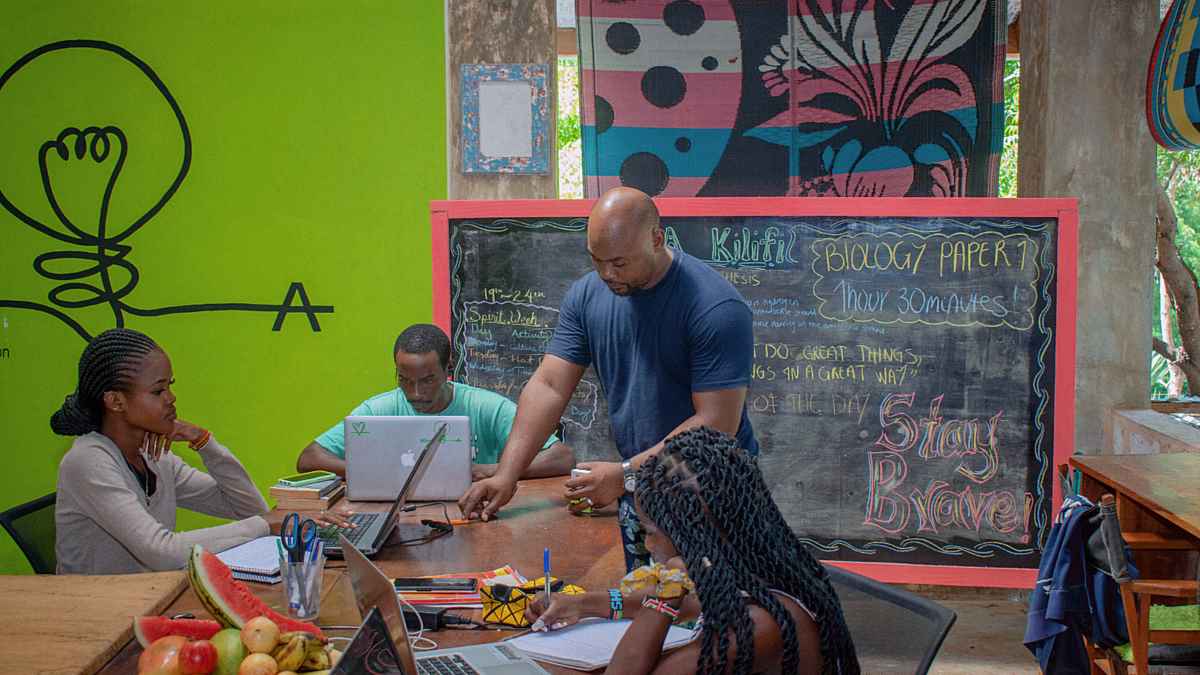
At its core, BGA is built upon three pillars: knowledge, skills, and community. Unlike traditional education, BGA’s dynamic hybrid model leverages a digital platform, empowering Learners to engage with coursework flexibly from anywhere in the world. BGA Hubs, physical spaces fostering co-learning, serve as vibrant centres where Learners grow socially, intellectually, and emotionally.

“We’re focus on creating opportunities in the changing digital world by opening doors for Learners and their new horizons.” – Lidia Vieira

What truly distinguishes BGA is its emphasis on flexibility. Learners have the unique opportunity to integrate education seamlessly with existing passions and commitments. This flexibility is further embodied in the role of educators at BGA. They deconstruct the teaching position into two distinct roles: Learning Coaches and Course Managers, each addressing the diverse needs of every Learner. As mentors, Learning Coaches ignite and guide the journey of self-directed learning, offering continuous support within our BGA Hubs. On the other hand, Course Managers are devoted curriculum experts, enhancing and elevating our online platform. They design assignments, quizzes, and offer academic feedback and face-to-face sessions, creating a vibrant and immersive learning journey.

In the past year, BGA has expanded its scope beyond secondary education to fulfil our overarching objective of lifelong learning. The introduction of BGA for Life has given rise to a dedicated branch of the academy focused on tertiary education and beyond. Notably, the initiative includes programmes like Unique Pathway, enabling Learners to seamlessly transition from the completion of IGCSEs, utilising BGA’s learning approach, to a trajectory leading to a university degree offered by partner universities globally. This innovative approach opens doors for Learners of all ages worldwide to access a high-quality university education and skillset at a significantly reduced cost compared to studying abroad.

BGA takes pride in its multiple Hubs across Namibia, Kenya, Mozambique, and South Africa. The opening of two new Hubs in Mozambique this month, with South Africa also expanding in the near future, marks the exponential growth BGA is witnessing. BGA is also looking to expand its footprint to other nations without a current Hub, such as Angola. 

“Africa will influence the future in so many ways due to its growing number of young talent, and BGA wants to play its role in contributing to this future.” The commitment to expansion goes beyond these achievements, as CEO Tim Vieira actively collaborates with the Cape Verde government to address educational challenges in the islands, envisioning a tailored BGA solution.

This innovative school envisions Learners not just as recipients of education but as active contributors to their communities, fostering real-world projects, volunteer initiatives, and practical internships. As they welcome more African countries into the fold, Brave Generation Academy is thrilled to make a meaningful impact on a continent that holds the key to the future.

Distributed by APO Group on behalf of Brave Generation Academy.

Energy

Africa Finance Corporation (AFC), Development Finance Corporation (DFC), Standard Bank and Africa50 Lead Finance Lineup at African Mining Week 2026

Published

on

Standard Bank

Leading development finance institutions, commercial banks and private investment firms will explore financing strategies that can unlock the continent’s estimated $29.5 trillion in mine-site mineral wealth at AMW 2026

CAPE TOWN, South Africa, July 17, 2026/APO Group/ –As Africa moves to unlock an estimated $29.5 trillion in mine-site mineral value, development finance institutions, commercial banks and private investment firms are expanding financial support to help transform the continent into a globally competitive mining hub.

The growing role of financiers in unlocking Africa’s mining value chain will take center stage at African Mining Week (AMW) 2026, taking place October 14–16 in Cape Town. The event will bring together leading financial institutions – including Africa Finance Corporation (AFC), the U.S. International Development Finance Corporation (DFC), the Industrial Development Corporation of South Africa (IDC), Standard Bank, Absa Bank, Trade and Development Bank (TDB), Africa50, Apeiron Investment Group and World Mining Investment – to showcase financing models supporting mining development across the continent.

AMW comes as momentum behind mining finance continues to accelerate. In July 2026, AFC, DFC and the Development Bank of Southern Africa reached financial close on the $753 million Lobito Corridor Railway Project, one of Africa’s most significant infrastructure investments supporting the mining sector. The project will rehabilitate 1,300 km of railway linking Angola’s Port of Lobito with the DRC and Zambia, creating a faster and more cost-effective export corridor for copper, cobalt and other strategic minerals.

At AMW 2026, Vibhuti Jain, Managing Director & Regional Head for Africa at DFC, is expected to discuss the institution’s growing investment portfolio and the U.S. strategy to strengthen critical mineral supply chains through Africa.

The event also comes as South Africa strengthens exploration finance through the IDC-managed Junior Exploration Fund. In June 2026, the IDC reached a new financing milestone, increasing the number of junior mining companies supported through the fund to 13. Earlier in the year, the IDC expanded the fund’s capital allocation to R600 million, advancing the country’s efforts to revive exploration, stimulate greenfield development and strengthen the participation of locally owned mining companies. Thabiso Sekano, IDC’s Head of Mining and Metals, is expected to discuss the fund’s progress alongside broader initiatives supporting the mining industry through investments in industrial infrastructure.

Infrastructure finance will also be a key focus at AMW 2026, with Simbarashe Chikarango, Head of Project and Infrastructure Finance at TDB, and Folaseto Akin-Olugbade of Africa50 expected to highlight investments aimed at addressing the energy, transport and logistics constraints that continue to limit mining productivity.


TDB recently partnered with several financial institutions to launch a $176 million energy investment platform that will accelerate private-sector electrification across sub-Saharan Africa. The bank is also providing a $150 million syndicated facility to Mota-Engil Africa to finance transport, mining and infrastructure projects across multiple African markets. Meanwhile, Africa50 is supporting Kenya’s $311 million electricity transmission public-private partnership, strengthening power infrastructure essential for mining and industrial development.

Commercial banks are likewise expanding their mining portfolios. Standard Bank and Absa Bank recently participated in a $130 million financing package for South African mining company Tharisa, supporting the company’s long-term growth strategy. Standard Bank also arranged a $150 million financing facility for Rosh Pinah Zinc Corporation in Namibia to support mine expansion, reinforcing its commitment to financing strategic mining projects across Southern Africa.

Deerosh Maharaj, Executive Head for Energy, Infrastructure and Mining at Standard Bank, and Shirley Webber, Managing Principal and Coverage Head for Resources and Energy at Absa Bank, are expected to discuss opportunities to increase capital flows into African mining projects.

Private investment firms are also stepping up efforts to channel international capital into Africa’s mining sector. Apeiron Investment Group and World Mining Investment are expanding initiatives to connect investors with the continent’s growing pipeline of mining opportunities, as Africa seeks to secure a significant share of the estimated $500 billion in global investment required by 2040 to meet soaring demand for critical minerals, including copper, lithium, graphite, nickel and rare earth elements.

Sebastian Wagner, Head of Natural Resources at Apeiron Investment Group, and Didier Rault, CEO of World Mining Investment, are expected to showcase financing strategies designed to connect global investors with Africa’s next generation of mining projects.

Distributed by APO Group on behalf of Energy Capital & Power.

Continue Reading

Energy

South Sudan Reforms Target New Investment Push as African Energy Chamber (AEC) Backs Oil Sector Revival

Published

on

African Energy Chamber

A working visit to the country by the African Energy Chamber identified opportunities to promote investment as South Sudan pursues production growth and reform

JUBA, South Sudan, July 17, 2026/APO Group/ –South Sudan is taking steps to reposition itself as a strategic destination for foreign investment, with a renewed focus on attracting capital across the oil value chain. During a working visit to Juba, the African Energy Chamber (AEC) (https://EnergyChamber.org/) – which serves as the voice of the African energy sector – engaged with government officials and industry stakeholders to identify priority reforms designed to stimulate new capital flows, increase production and advance projects across both upstream and downstream segments.

The visit reflects a shared recognition that while South Sudan remains one of the continent’s most resource-rich oil frontiers, lack of investment has disrupted the country from unlocking the full potential of its hydrocarbon reserves. The government seeks to address this challenge by implementing new reforms aimed at strengthening the investment climate, ensuring clearer regulatory frameworks and incentivizing greater participation from both international and regional operators.

South Sudan possesses the resource potential to become one of Africa’s most compelling frontier investment destinations

With proven oil reserves of 3.5 billion barrels, South Sudan is both a legacy oil producer and currently the only major oil producer in East Africa. Production is largely led by the national oil company Nilepet, alongside Dar Petroleum Operating Company, Greater Nile Petroleum Company – operated by China National Petroleum Company – and Sudd Petroleum Operating Company. South Africa’s Strategic Fuel Fund also holds a 90% stake in the Block B2 concession, with plans to advance exploration while assessing opportunities for refining development.

Current production ranges between 70,000 barrels per day (bpd) and 100,000 bpd, with approximately 8.5 million to 12.2 million barrels of production estimated between August and November 2026. The government seeks to raise these numbers by attracting investment across the entire oil value chain, facilitating greater exports while addressing key national challenges such as fuel security and power generation. Oil represents the backbone of South Sudan’s economy, and the government seeks to cement this position by introducing reforms aimed at alleviating the country’s energy crisis.

To achieve this, the government has committed to reduce barriers to investment, improve project execution and create a more predictable environment for energy companies. Discussions also explored opportunities across natural gas, power generation and associated infrastructure, recognizing that diversified energy investment will be essential to supporting long-term economic development. The AEC reaffirmed its commitment to promote South Sudan on a global stage, taking the country’s energy story to a global audience.

Beyond oil and gas production, a major focus of the working visit was strengthening local content. Parties discussed strategies to increase employment opportunities for South Sudanese workers, while developing local value chains and ensuring that future projects generate broader economic benefits beyond production revenues. By increasing international visibility, the Chamber aims to position South Sudan alongside other emerging African energy markets competing for exploration and infrastructure capital.

“South Sudan possesses the resource potential to become one of Africa’s most compelling frontier investment destinations, but attracting capital requires sustained engagement with the global investment community. The Chamber will champion South Sudan’s opportunities on the international stage, connecting investors with government and industry leaders while supporting reforms that create a stable, competitive and investable energy sector capable of delivering long-term growth,” said NJ Ayuk, Executive Chairman of the AEC.

Distributed by APO Group on behalf of African Energy Chamber.

Continue Reading

Energy

VivaJets Returns to African Energy Week (AEW) 2026 as Gold Sponsor After Rapid Fleet and Route Expansion

Published

on

African Energy Chamber

The Nigerian aviation company returns with a larger fleet, new financing and a West African hub in Abidjan

CAPE TOWN, South Africa, July 16, 2026/APO Group/ –VivaJets, the Nigerian business aviation company that served as the official Private Aviation Partner at African Energy Week (AEW) 2025, will return to the event as a Gold Sponsor at AEW 2026, taking place from October 12-16 in Cape Town. The upgrade reflects a year of rapid growth for the company, which has expanded its fleet, secured new international financing and opened its first hub outside Nigeria.

VivaJets operates under the parent company Falcon Aerospace Limited and provides aircraft charter, management and brokerage services from its base in Nigeria. Since beginning operations in 2022, the company has logged more than 2,000 flight hours serving corporate, government and energy-sector clients across domestic and international routes. It holds an Air Operator’s Certificate from the Nigerian Civil Aviation Authority, secured in March 2025, and currently operates a fleet of four aircraft including two Bombardier Challenger 604s, a Hawker 850XP and a Hawker 900XP. CEO Erika Achum has said the fleet will grow further by the third quarter of 2026.

The financing to support that growth has come quickly. In October 2025, VivaJets secured a $10 million credit facility from London-based TLG Capital, structured alongside Nigeria’s Wema Bank, in what both parties described as the first internationally structured aviation financing for a Nigerian air operator. In April 2026, the company raised a further $15 million and announced plans to open an operational hub in Abidjan, extending its reach into francophone West Africa and positioning itself closer to energy markets in Ivory Coast, Senegal and the wider MSGBC basin.

When investors and operators can move across borders without friction, deals close faster and projects move forward

Falcon Aerospace has also launched a joint venture, OrientJets, in partnership with Flybird Aircraft Management Services, based in Aruba, to serve international routes and strengthen the group’s presence beyond the continent.

The expansion is built around a thesis that private aviation in Africa is not a luxury service but an operational necessity, particularly for the energy sector. Oil and gas operations depend on moving personnel and equipment to remote field locations on short notice, investor delegations need reliable access to markets where commercial routes are limited or indirect and conference travel between African capitals often requires multiple connections on commercial airlines. According to industry data, roughly 80% of VivaJets’ charter demand comes from large corporate and government clients, with energy among the largest segments. At AEW 2025, VivaJets operated direct charter flights to Cape Town for delegates, putting the thesis into practice.

“Aviation is infrastructure for African energy, and VivaJets has shown how quickly a homegrown company can build the kind of connectivity that the sector needs,” says NJ Ayuk, Executive Chairman of the African Energy Chamber. “When investors and operators can move across borders without friction, deals close faster and projects move forward.”

VivaJets has also become a vocal advocate for the regulatory reform needed to make that connectivity easier. The company has called for the removal of restrictive visa regimes for aircrews and the harmonization of aviation rules across the continent, aligning with the African Union’s Single African Air Transport Market initiative, which aims to liberalize Africa’s airspace and lower the cost of intra-African travel.

The company’s growth from a single-aircraft startup in 2022 to a licensed, internationally financed aviation business with expanding routes across the continent has made it one of the more visible examples of African entrepreneurship in a sector long dominated by foreign operators. At AEW 2025, Achum spoke on the role of SMEs and startups in Africa’s energy economy, a theme the company is expected to carry forward at this year’s event.

Distributed by APO Group on behalf of African Energy Chamber.

Continue Reading

Trending