

Business
Banker and Regulator Agree Chat Commerce can Radically Shift Financial Inclusion in Nigeria
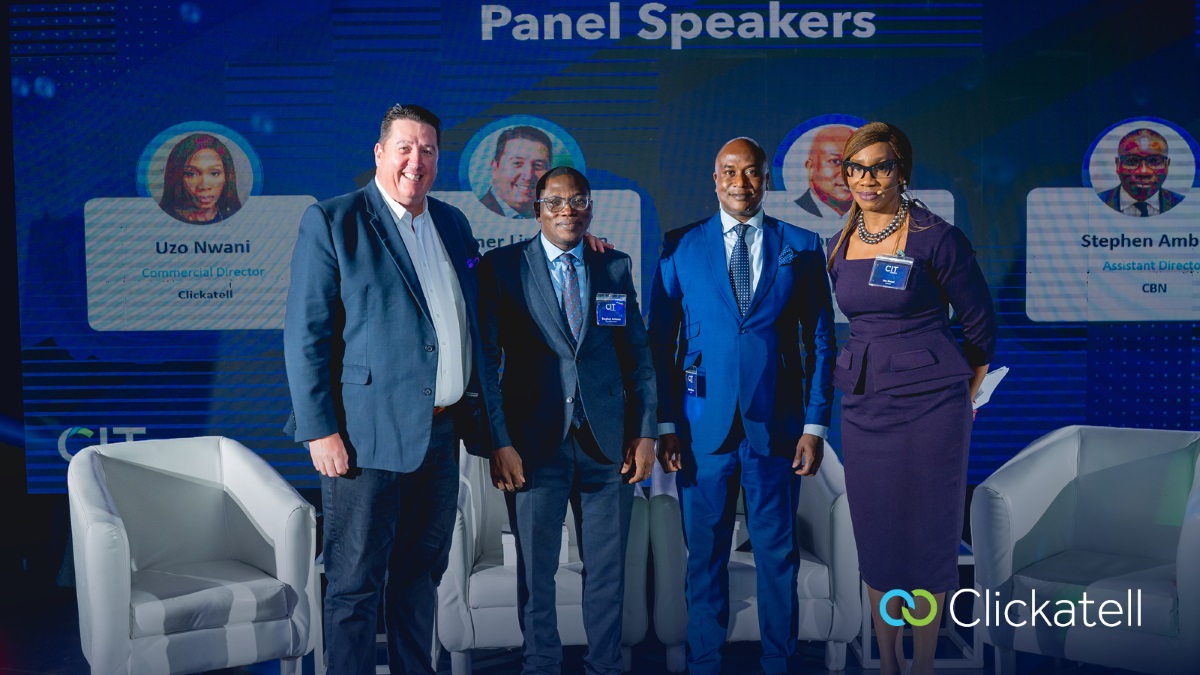
Consensus from both Ecobank and CBN guest panelists at Clickatell’s annual event underscores Chat Commerce holds huge potential to drive both inclusivity and revenue opportunities
LAGOS, Nigeria, October 26, 2022/APO Group/ —
Clickatell (www.Clickatell.com), the Chat Commerce and business messaging leader, discussed with attendees at Clickatell’s Connect Interact and Transact (CIT) annual event earlier this month how they could drive financial inclusion and reach their revenue goals by adopting Chat Commerce. The event took place at the Radisson Blu, Anchorage in Lagos with industry experts from Clickatell, Ecobank and Central Bank of Nigeria (CBN) sharing insight and tips with an audience of business and technology leaders.
Werner Lindemann, Clickatell’s Senior Vice President of Enterprise Sales, Growth Markets, kicked off by pointing out how global brands, like Amazon and Uber, have built their entire business model on convenience commerce – where businesses find ways to deliver services and products to their customers wherever they are and at a time that works for them.
Lindemann went on to share that the best way to reach customers where they are is on their phone. However, he said apps have a very limited shelf life, saying the average customer regularly uses just five apps on their phone. He advised instead of focusing on building apps, brands should be looking to leverage the power of chat, especially since WhatsApp is the most used (https://bit.ly/3Nab6Q1) social media platform in Nigeria. What’s more, when combined with USSD, companies will be able to reach almost every person in the country.
The power of Chat Commerce is especially relevant for the Nigerian banking industry and Lindemann shared that banks can now onboard new clients and conduct Know Your Customer (KYC) standards using chat, meaning banks can serve customers anywhere in the country, in real time.
Lindemann shared other use cases where Clickatell had radically changed how Southern African businesses engaged with their customers, these included:
- How a national retailer was able to cut their broadsheet print production and distribution from 5 Dollars to just 3 cents
- How that retailer now has a 40% to 70% engagement rate on their product specials using WhatsApp, compared to 3% on SMS
- How a national retailer now uses WhatsApp to enable self-service for their loyalty programme and has eliminated more than 20 000 call centre calls per month to block or replace loyalty cards
- How a national healthcare chain now allows customers to order and arrange collection of their chronic medication at their nearest outlet, no matter where they are in the country
- How a Southern African low-cost airline allows travellers to check in and receive their boarding pass on the WhatsApp channel
People are already on these chat platforms, and we aim to serve them with payments where they are
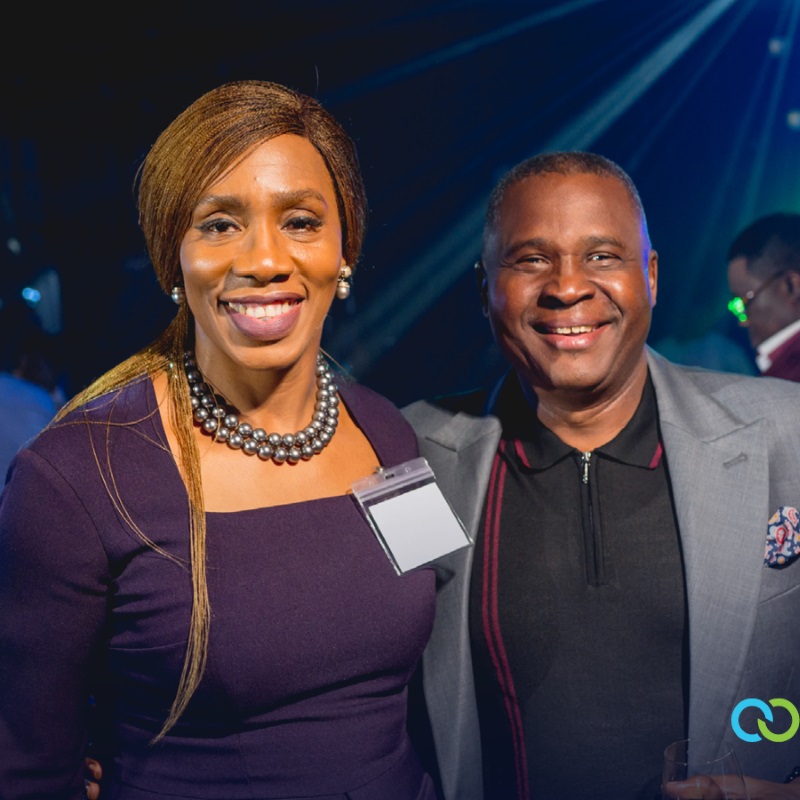
An engaging panel discussion followed the keynote, introduced by Clickatell’s West Africa Managing Director, Samson Isa and facilitated by Uzo Nwani, Commercial Director of Clickatell.
Opening the discussion, panelists highlighted how their organization had used technology to boost inclusivity. For CBN, this was achieved by its introduction of the eNaira digital currency. For Ecobank, its move to offer a WhatsApp channel allowed them to reach their customers more easily. And for Clickatell, it has been the company’s drive to help banks in Africa improve their reach by moving to the more ubiquitous chat channel.
“One out of three Nigerians are financially excluded. Therefore the work we have done with Clickatell on the eNaira USSD channel is so exciting. We are also looking to the eNaira to lower the costs of remittances as well as bring down the high costs of cash management. We believe the eNaira will drive inclusive growth and make the Central Bank, as an institution, much more effective in carrying out its mandate,” said Stephen Ambore, Assistant Director, CBN.
Osahon Akpata, Group Head of Consumer Payments at Ecobank shared the power of mobile with the audience.
“Across 33 countries, Ecobank Group processed $5.1 billion through our mobile app in 2021 and we built an agency banking network of 110,000 agents, leveraging the ubiquity of mobile devices. While Chat Commerce is still in its infancy for us, we are scaling up the platform for better customer service. We have integrated artificial intelligence into our chatbot, Rafiki, to help solve customer queries quicker and seamlessly. We also have customers using the chat channel for transactions and we plan on expanding its use to product information as well. People are already on these chat platforms, and we aim to serve them with payments where they are,” he said.
Akpata went on to share that being able to generate QR codes on the WhatsApp channel, make transfers and buy airtime have all been met with great enthusiasm by Ecobank customers, adding that chat will be a key part of the bank’s drive to reach its target of 100 million customers.
CBN will also be looking to chat to connect with people in Nigeria further in the future.
“We are looking at chat to help us deliver financial literacy and boost inclusion. When it comes to innovation, chat, including USSD, can help us reach new customers and I am excited about the future opportunities, especially at the base of the pyramid,” said Ambore.
Lindemann wrapped up the proceedings by saying: “We’ve just kicked off a project with a major bank with around 15 million active customers, and we will be building them a chat banking wallet in just six weeks. In my opinion, chat is allowing us to fast-forward innovation for enterprises. I believe every enterprise has a responsibility to deploy products that have a real impact on their customer and society, and to see this happen in six weeks is testament to the power of chat.”
For more information on how Chat Commerce will help your business connect, interact and transact with your customers visit www.Clickatell.com.
Distributed by APO Group on behalf of Clickatell.











Business
CIT VERICASH Recognized as Best Digital Financial Services Platform of 2026 by Global Business Outlook
Business
Comsol enters wholesale 5G home broadband market with backing from new shareholders
Business
Electra Mining Africa: Showcasing the Technologies Shaping the Future of Industry
More than 1,000 exhibitors, technical seminars, industry forums and networking opportunities will bring together the people, products and ideas shaping industrial progress across Africa
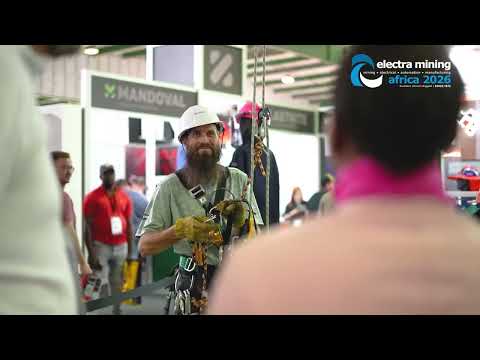
Taking place from 7-11 September at the Johannesburg Expo Centre in Nasrec, Johannesburg, Electra Mining Africa will once again provide a meeting place for industry. Recognised as one of Africa’s leading industrial exhibitions, the event will bring together more than 1,000 predominantly local exhibitors, together with international companies, country pavilions, industry organisations, technical specialists, business leaders and decision-makers from across mining, manufacturing and related industries.
By bringing together six complementary sectors—mining, manufacturing, automation, electrical and power, transport and related engineering sectors—under one roof, Electra Mining Africa enables visitors to explore how integrated technologies and solutions can improve productivity, safety and operational performance. The exhibition provides a unique opportunity to compare products, engage directly with technical experts and discover how innovations from different sectors are increasingly working together to support smarter industrial operations.
Reflecting continued industry confidence, Electra Mining Africa has expanded its footprint for the 2026 edition, growing by 4,000m² to a record 44,000m² of net exhibition space across six indoor exhibition halls and expanded outdoor display areas.
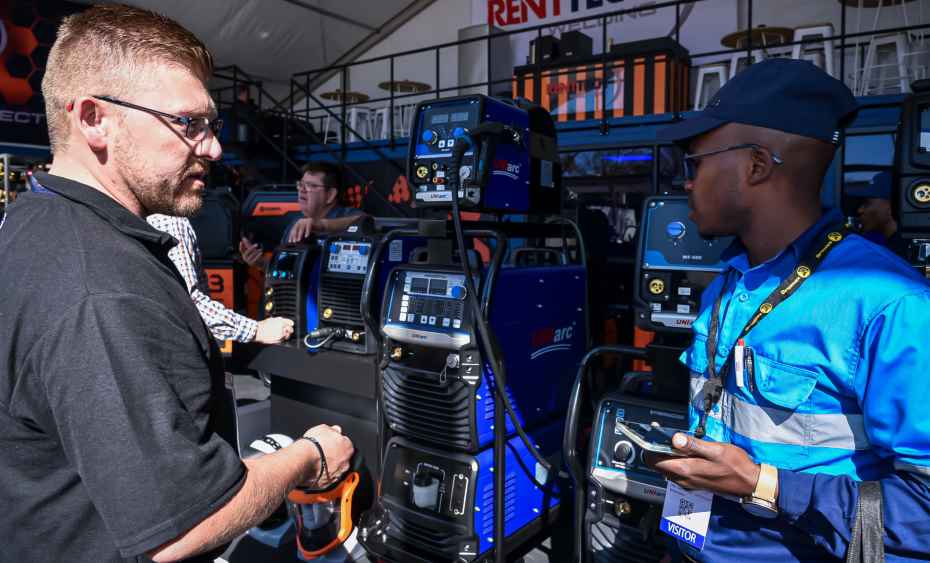
Visitors will have the opportunity to explore solutions ranging from large-scale mining equipment and industrial machinery to automation systems, artificial intelligence (AI), robotics, digital manufacturing, predictive maintenance technologies, power solutions and advanced engineering services. The exhibition also features pumps, valves, welding and fabrication equipment, safety solutions, personal protective equipment (PPE), tools, components and specialist industrial services.
Electra Mining Africa has become an important business platform for companies serving markets across Africa. At the previous edition, industry professionals from 58 countries were represented, reflecting the exhibition’s growing international reach and its role in connecting manufacturers, technology suppliers, distributors, buyers and decision-makers from across the continent and beyond. For many exhibitors, the exhibition provides opportunities to strengthen customer relationships, meet prospective buyers, appoint distribution partners and explore new business opportunities. For visitors, it offers access to both internationally recognised brands and locally developed technologies designed to address the operational requirements of African industry.
Electra Mining Africa brings together the technologies, expertise and industry relationships that help organisations make informed decisions
Beyond the exhibition floor
Electra Mining Africa offers an extensive programme of technical knowledge sharing, professional development and industry collaboration. Free-to-attend seminars hosted by the Southern African Institute of Mining and Metallurgy (SAIMM) will explore practical operational challenges and emerging technologies, while the Society for Automation Instrumentation Mechatronics and Computer Engineering (SAIMC) will present specialist workshops on advances in automation and mechatronics. WiMSA’s Women in Mining workshop will provide a forum for discussion around leadership, opportunity and professional development, and the Lifting Equipment Engineering Association of South Africa (LEEASA) will host its two-day National Conference, bringing together industry professionals to share knowledge and discuss developments affecting the sector.
New for 2026, the SA Institution of Mechanical Engineering (SAIMechE) Skills and Career Hub will strengthen collaboration between industry and the education and training sector, encouraging conversations around future workforce requirements, skills development and innovation. Visitors will also be able to experience the Geological Society of South Africa (GSSA) Explorers Pitch, where finalist student teams present their mineral exploration projects to an expert industry judging panel before the winning team is announced.
Also taking place during Electra Mining Africa are the New Products and Innovation Awards, which recognise outstanding achievements by both local and international exhibitors. Adjudicated by the South African Capital Equipment Export Council (SACEEC), entries are evaluated against a comprehensive set of criteria, including innovation, engineering excellence, research and development, product quality, technical expertise and the practical value each solution delivers to industry. The winners are announced during the exhibition, recognising companies whose products and innovations are advancing technology, performance and industrial application.
“Industrial businesses are facing increasingly complex challenges that cannot be solved in isolation. Electra Mining Africa brings together the technologies, expertise and industry relationships that help organisations make informed decisions, identify practical solutions and build partnerships that support long-term growth. That’s what makes the exhibition such an important meeting place for industry, not only in South Africa but for businesses operating across the African continent,” says Charlene Hefer, Portfolio Director at Montgomery Group, organisers of Electra Mining Africa..
Industry professionals wishing to attend Electra Mining Africa can register (https://apo-opa.co/4xthQPH) as a Standard Visitor free of charge. There is also an option to upgrade to a Diamond Select Visitor.
Distributed by APO Group on behalf of Montgomery Group Africa.