Connect with us
Anglostratits

Energy

African Energy Week October Dates Set in Stone with Exploration for Energy and Energy Poverty on Agenda

Published

on

African Energy Week October 2022

AEW 2022 represents Africa’s premier energy event and remains committed to African energy, African people and Africa’s economic development

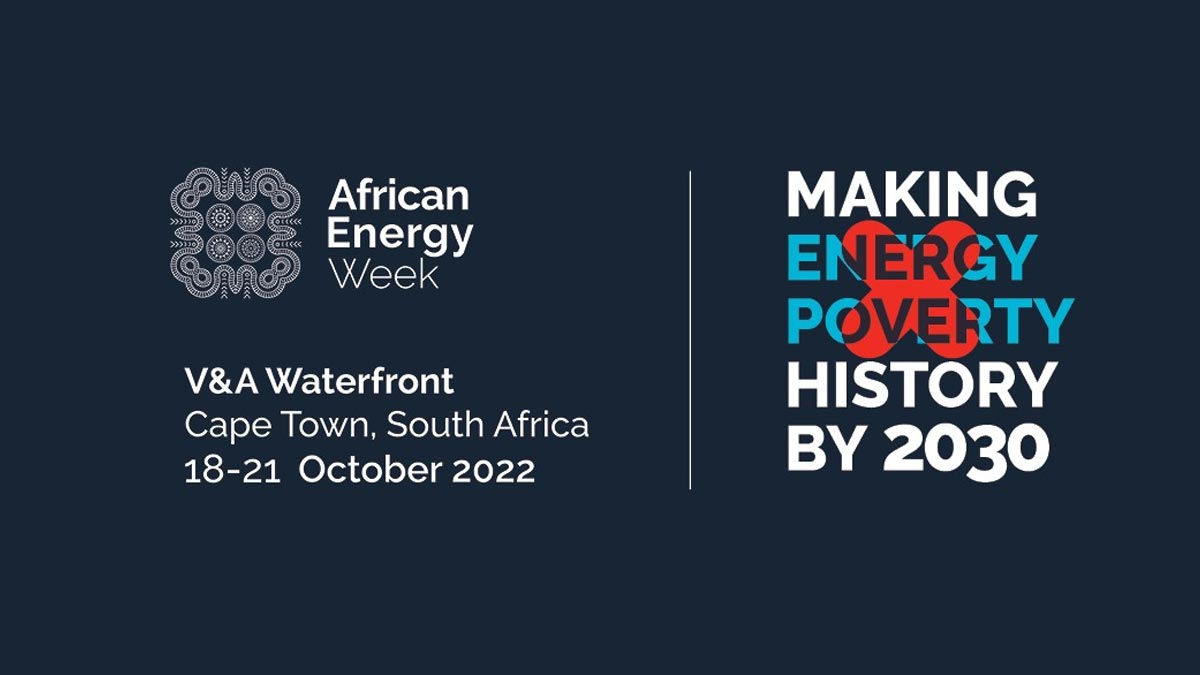
JOHANNESBURG, South Africa, March 22, 2022/ — Representing the continent’s premier energy event – and the conference of choice for Africa’s energy ministers– African Energy Week (AEW) 2022 remains committed to African oil, gas and energy, driving its strong pro-African agenda in 2022 and beyond. Following the decision taken by African Oil Week (AOW) to move its dates to October in Cape Town – after abandoning the continent during its most difficult time, COVID-19, in 2021 – AEW 2022 will continue to drive its market- and Africa-focused agenda on October 18 – 21, 2022 in Cape Town.

Last year, AOW made the decision to go to Dubai, taking the discussion on African energy out of Africa and away from African stakeholders. Now, in 2022, the event has declared that it will be returning to Cape Town, despite the fact that they have previously regarded the continent as incapable, risky and an overall bad business environment. So why does AOW and Paul Sinclair continue to misrepresent, fabricate and misguide African stakeholders?

In 2021, AOW misrepresented ministers attending their events, claiming that Africa’s energy leaders were traveling to Dubai when in fact they were attending AEW 2021 in Cape Town. In 2022, these misrepresentations have only continued, with the event claiming that H.E. Gwede Mantashe, Minister of Mineral Resources and Energy, South Africa, participated in Dubai last year. So why lie? AOW lies because they are opportunists. Rather than remain committed to Africa, AOW leaders such as Paul Sinclair simply stick their finger in the air and follow where the wind blows, chasing money rather than the development of Africa and its energy resources. In 2022, these trends are unlikely to change.

In 2021, AEW proved critics, including AOW, wrong. Organized by the African Energy Chamber (AEC), and in partnership with South Africa’s Department of Mineral Resources and Energy, AEW 2021 held the first and biggest energy event in Africa in a post-COVID-19 environment. The event demonstrated the capability of African-held and focused energy events. Now, in 2022, AEW is even more motivated, driven by the event’s continued commitment to the continent.

“We need to have a higher moral compass in this game. AOW and Paul Sinclair’s lies, misrepresentations and dirty tricks will not turn us into them. What they have done and continue to do is wrong.  AOW is all hat, no cattle. They must think Africans and the oil and gas industry are stupid,” states NJ Ayuk, Executive Chairman of the AEC.

AEW 2022, uniting Africa’s energy ministers, global investors, and policymakers and decision-makers in Cape Town, is purpose driven. The event was established with a sole mandate to make energy poverty history by 2030. This objective has not changed, but rather, the event’s participants and partners are even more driven to make this objective a reality. Unlike money driven AOW, AEW 2022 believes in a message: in Africa, for Africa. The goal of AEW 2022 is clear and the event will not be misguided or fall into the trap that AOW is laying out. AEW 2022 will keep its dates, keep its message in sight and keep its commitment to the continent.

“We are going to knock on every door. We are going to organize and make this a success. It is a challenge, but we will respond by working harder. Our position is very clear, we are NOT going to support AOW’s anti-African Energy, Pro EITI, Greenpeace and Friends of the Earth green revolution nonsense . Our goal is to ensure that Africa produces every barrel of oil and gas in the ground and we must not apologize for it,” Ayuk continued, adding that, “AEW 2022 stands for something important, and we feel that we are being vindicated daily. Africa needs better energy infrastructure and needs to drive frameworks and policies that will advance the continent’s growth and development.”

At AEW 2022 in Cape Town, discussions will not only be centered around African energy, but will be led by both public and private sector executives from across the continent. Unlike AOW, which chooses to lie about the ministers attending their event, AEW 2022 is proud to host strong delegations led by Africa’s energy ministers in Cape Town. AEW 2022, taking place in partnership with both Nigeria and Equatorial Guinea as well as the African Petroleum Producers Association, represents the platform where deals will be signed backed by a world-class program and industry-advancing conference agenda. AEW 2022 will host conversations around every energy sector in Africa – including, but not limited to, oil, gas, renewables, hydrogen, power and infrastructure – as well as the entire energy value chain. If you are committed to Africa and believe in Africa’s energy future, AEW 2022 should be your conference of choice.


Distributed by APO Group on behalf of African Energy Chamber.

Energy

African Mining Week (AMW) 2026 Puts African Mining at the Center of Global Supply Chains

Published

on

Energy Capital

African Mining Week 2026 takes place under the theme ‘Mining the Future: Unearthing Africa’s Full Mineral Value’ from October 14-16 in Cape Town

CAPE TOWN, South Africa, February 9, 2026/APO Group/ –Africa holds 30% of the world’s critical mineral reserves, positioning the continent at the center of the global energy transition and industrial supply chain realignment. With global mineral demand set to increase four-fold by 2050, this position becomes increasingly strategic – and it is within this context that African Mining Week (AMW) 2026 emerges as a critical platform to convert geological potential into investable projects, partnerships and value-chain development across the continent.


Taking place October 14-16 in Cape Town, AMW 2026 returns with a sharpened focus on partnerships and transactions that advance Africa’s mineral value chain. This year’s event takes place under the theme Mining the Future: Unearthing Africa’s Full Mineral Value, reflecting a growing emphasis on project bankability, downstream beneficiation and cross-border collaboration as Africa seeks to strengthen its position in increasingly competitive global minerals markets.

Rising Mineral Output, Strengthened Global Trade Flows

Africa hosts some of the world’s largest reserves of cobalt, platinum group metals, chrome, coltan and manganese, placing the continent at the forefront of global minerals essential to electrification, clean energy deployment and industrial expansion. As demand for these resources accelerates and commodity prices are expected to remain elevated through 2026, Africa’s role as a strategic supply partner is becoming increasingly pronounced. Within this context, AMW 2026 will examine how African producers can move beyond volume-led growth to capture greater value across mining, processing and trade.

International Partnerships Drive Production

AMW 2026 is designed to bring project developers, governments and international investors into the same room to accelerate transactions that move Africa’s mining sector

Across the continent, mineral producers are scaling-up production, leveraging international partnerships to secure capital and technical expertise. The Democratic Republic of Congo (DRC) – Africa’s largest copper producer and the world’s leading cobalt supplier – recently partnered with the U.S to leverage technical expertise and financing to unlock an estimated $24 trillion in untapped mineral potential. Speaking at AMW 2025, the country’s Minister of Mines Louis Watum Kabamba, underscored the level of opportunity that remains in the country, explaining that “Opportunities across the mining sector in the DRC are huge, with 90% of our resources awaiting greenfield exploration.”

Similarly, Guinea – home to the world’s largest bauxite reserves – is enhancing cooperation with global investors to maximize its mineral value chain under the Simandou 2040 – an international cooperation and national development strategy. Securing $20 billion in international investments for the Simandou iron ore project, Guinea is leveraging this global partnership model to expand bauxite production and processing, corelating to a 25% increase in bauxite exports in 2025.

Zambia, Africa’s second-largest copper producer, is positioning its copper sector as a catalyst for economic expansion, GDP growth and employment creation. The country is actively engaging international investors to achieve its 2031 production target of 3.1 million tons per annum, reinforcing Africa’s role in future copper supply chains.

Balancing Exports with Local Value Addition

As global mineral demand rises, African governments are increasingly prioritizing local beneficiation to retain value, deepen domestic supply chains and unlock broader economic growth. Ghana, Africa’s largest gold producer, recently signed an agreement with South Africa’s Rand Refinery to expand domestic gold processing capacity. Mali is developing a 200-ton-per-annum gold refinery in partnership with Russian investors. Meanwhile, Zimbabwe, Africa’s largest lithium producer, is working with Chinese investors to expand lithium processing capacity ahead of its 2027 ban on lithium concentrate exports. These moves signal a broader shift form export-centered development models to strategies that prioritize domestic markets.

As global competition for critical minerals intensifies, Africa’s ability to align production growth with beneficiation, investment readiness and policy coherence will define its long-term position in global supply chains. AMW 2026 will serve as a focal point for advancing the partnerships and transactions needed to translate mineral wealth into sustainable economic value across the continent.

“AMW 2026 is designed to bring project developers, governments and international investors into the same room to accelerate transactions that move Africa’s mining sector from potential to production and value creation,” stated Rachelle Kasongo, Event Director, AMW.

AMW 2026 serves as a premier platform for exploring the full spectrum of mining opportunities across Africa. Sponsors, exhibitors and delegates can learn more by contacting sales@energycapitalpower.com.

Distributed by APO Group on behalf of Energy Capital & Power.

Continue Reading

Energy

African Energy Chamber (AEC) Endorses Kigali’s Africa CEO Forum as the Continent’s Strategic Hub

Published

on

African Energy Chamber

With thousands of executives, investors and policymakers gathering in Rwanda this May, the African Energy Chamber is urging the energy industry to support African-led platforms that tackle energy poverty, mobilize investment and drive the continent’s economic future

KIGALI, Rwanda, February 6, 2026/APO Group/ –The African Energy Chamber (AEC) (https://EnergyChamber.org) has formally endorsed the upcoming Africa CEO Forum in Kigali, positioning the May 2026 gathering as a critical platform for investment, partnership and policy dialogue across the continent. Scheduled for May 14-15 in Rwanda’s capital, the forum is expected to convene approximately 2,800 CEOs, heads of state, ministers and business leaders, reinforcing its status as the largest annual meeting of Africa’s private sector.


For the AEC, Kigali represents a strategic venue where African decision-makers, global investors and industry leaders can align around practical solutions to the continent’s most pressing challenge: ending energy poverty while accelerating economic growth. By bringing together stakeholders from more than 90 countries alongside hundreds of government representatives and journalists, the forum creates a rare environment capable of translating dialogue into bankable projects and long-term partnerships.

Africa’s energy future should be defined by Africa – and platforms such as the Africa CEO Forum are strategic opportunities to advance Africa’s energy narrative

This positioning aligns with the Africa CEO Forum’s core mission: highlighting the driving role of the private sector in Africa’s development through high-level networking, deal-making opportunities and strategic analysis from leading institutions. Participants gain access to decision-makers, insight into emerging investment projects and direct engagement with public authorities seeking public-private partnerships.

Energy remains central to these discussions. Despite Africa’s vast natural resources, over 600 million still lack access to reliable electricity and 900 million to clean cooking solutions, constraining industrialization, job creation and social development. The AEC maintains that addressing this crisis will require sustained investment across oil, gas, power and emerging low-carbon technologies – supported by regulatory certainty and African financial leadership.

“Africa’s energy future should be defined by Africa – and platforms such as the Africa CEO Forum are strategic opportunities to advance Africa’s energy narrative. The Forum in Kigali provides the platform where investors, governments and industry can engage directly, mobilize capital at scale and build partnerships that deliver reliable, affordable power to African citizens,” states NJ Ayuk, Executive Chairman of the African Energy Chamber.

Kigali also reflects a broader shift in confidence toward African economic leadership. Rwanda’s rise as a hub for high-level continental dialogue shows how stable governance, investment-friendly policies and regional connectivity can position African cities at the forefront of global business discussions. Ultimately, Africa’s journey toward energy security and prosperity will be defined by partnerships forged on the continent itself.

As momentum builds toward May, the AEC is calling on energy stakeholders across the value chain to engage actively in Kigali – bringing projects, financing solutions and long-term commitment. Participation ensures that Africa’s economic and energy future is not merely discussed abroad, but designed, financed and delivered where it matters most.

Distributed by APO Group on behalf of African Energy Chamber.

Continue Reading

Energy

South Africa’s Upstream Petroleum Resources Development Act (UPRD Act): Can Legal Certainty Revive Major Investment After IOCs’ Exit?

Published

on

African Energy Chamber

South Africa’s new Upstream Petroleum Resources Development Act offers a fresh regulatory framework, but is it enough to bring supermajors back, or will independent players now dominate the landscape?

CAPE TOWN, South Africa, February 6, 2026/APO Group/ –The high‑profile exit of global energy major TotalEnergies from deepwater Blocks 11B/12B and 5/6/7 – home to the Brulpadda and Luiperd gas discoveries – was a significant setback for South Africa’s plans to use domestic resources to boost energy security and economic growth. TotalEnergies, together with partners QatarEnergy and CNR International, gave up their stakes after determining that the discoveries could not be commercially developed under the existing market conditions and regulatory framework.


The exits underscored long‑standing industry frustrations with South Africa’s legal and regulatory environment, widely seen as lacking the clarity and predictability that deepwater investors demand. That backdrop helps explain the government’s passage of the Upstream Petroleum Resources Development Act (UPRD Act) – a standalone legislative framework designed to replace the petroleum provisions embedded in the old Mineral and Petroleum Resources Development Act and provide a bespoke upstream regime.

At its core, the UPRD Act aims to accelerate exploration and production of South Africa’s petroleum resources by providing clear rules and stable rights for companies – key to attracting major investment. It combines exploration and production rights into a single petroleum right, sets out controlled licensing rounds, guarantees third-party access to infrastructure, and establishes the Petroleum Agency of South Africa as a clear regulatory authority. The law also promotes active participation by the State and previously disadvantaged South Africans, mandates local content, allows a share of output to be sold for strategic stock purposes, and separates oil and gas regulation from mining rules to reduce red tape and simplify operations.

Yet the big question remains: will this new legal certainty be enough to lure back the supermajors, or has the landscape shifted toward leaner, more aggressive independent companies seeking opportunities where majors have stepped away?

 It shows how regulatory reform is essential to restoring investor confidence

“Simply put, TotalEnergies’ exit was a blow to South Africa’s energy industry. These discoveries brought to light alternative energy solutions for a country plagued with a decade‑long energy crisis. However, without clear, predictable rules, even world‑class discoveries struggle to progress to commercial development. It shows how regulatory reform is essential to restoring investor confidence,” states NJ Ayuk, Executive Chairman of the African Energy Chamber.

The UPRD Act now provides that framework, but timing is crucial. The regulations needed to put the Act into practice are still being finalized, and until these rules – covering licensing, environmental safeguards and rights administration – are published and tested in early rounds, investor confidence is likely to remain cautious.

For supermajors, investment decisions are increasingly guided by a global strategy that prioritizes projects with clearer returns and lower regulatory risk. With growing pressure to meet climate targets and streamline their portfolios amid the energy transition, deepwater frontier projects in emerging markets are less appealing unless they come with clear, predictable terms.

This creates an opening for independent and smaller players. Companies like Africa Energy Corp. – which increased its stake in Block 11B/12B after the majors’ exit – could view South Africa’s upstream sector as a promising opportunity. With leaner cost structures and a greater tolerance for frontier risk, these players can advance projects that supermajors may avoid, potentially driving local value creation and technology transfer through a different investment model.

Looking ahead to African Energy Week (AEW) 2026 – the continent’s premier energy summit bringing together governments, investors and service companies – the UPRD Act is expected to be a central topic in discussions surrounding South Africa. AEW offers a high‑profile platform to showcase the country’s evolving policy landscape and could set the stage for the first post‑Act licensing round. Industry leaders are likely to debate whether the framework delivers on its promise of stability and what conditions might be needed to attract supermajors back.

Ultimately, South Africa’s upstream rebound will depend on execution: if the regulations foster transparency, competitive terms and confidence in governance, the UPRD Act could be a turning point. If not, the sector may settle into a new normal where ambitious independents, rather than supermajors, drive the next chapter of oil and gas development.

Distributed by APO Group on behalf of African Energy Chamber.
Continue Reading

Trending