Connect with us
Anglostratits

Business

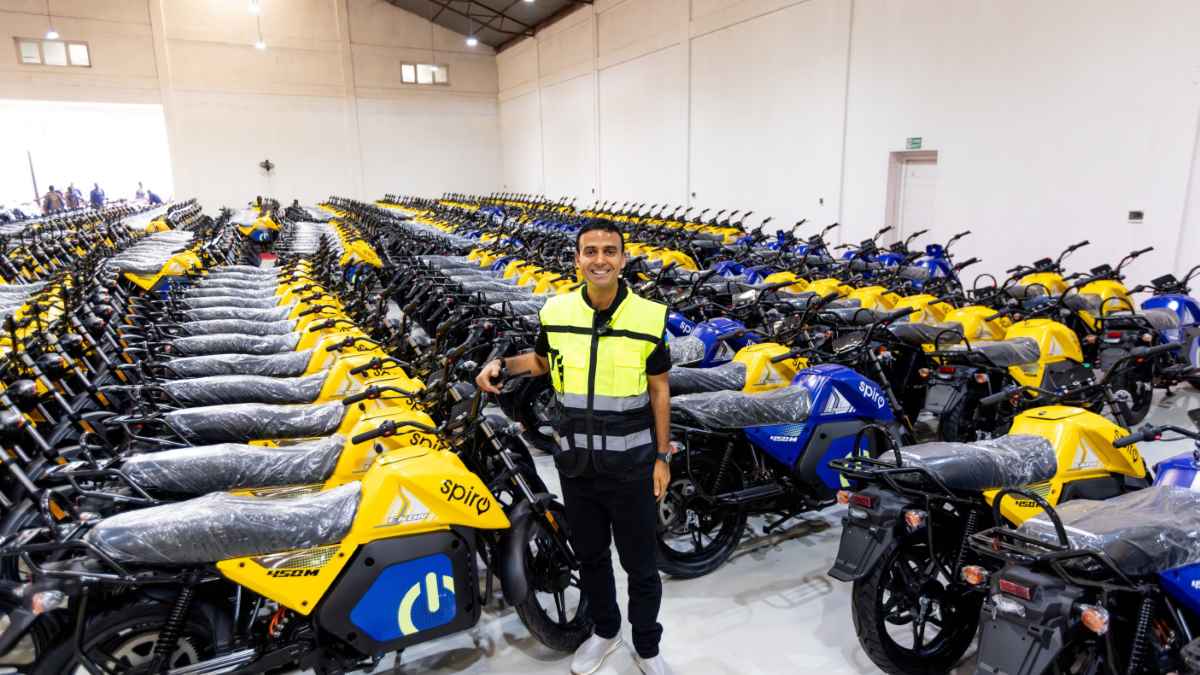
African Electric Vehicle (EV) platform Spiro raises $215M in equity to scale electric mobility and energy infrastructure across Africa

Published

on

Africa

Following years of optimization across its product portfolio, technology and energy ecosystem, Spiro has moved past the proof-of-concept phase and stands ready to execute its next chapter of pan-African expansion

NAIROBI, Kenya, June 1, 2026/APO Group/ —

  • Leading scale-up Spiro has secured a landmark $215M investment round backed by major institutional investors including Impact Fund Denmark, and Equitane.
  • With Spiro already operating across seven of Africa’s fastest-growing urban markets, this transaction positions Spiro among the continent’s leading clean infrastructure platforms. This investment will accelerate the expansion of Spiro’s battery-swapping network, industrial footprint and next-generation electric vehicles (EV) infrastructure across high-growth African markets.
  • As African economies push to reduce dependence on imported fuel, reinforce energy and industrial sovereignty, and modernize urban transport systems, global investors are increasingly turning to scalable EV infrastructure platforms.​

Scaling Africa’s next-generation mobility and energy ecosystem


Spiro (www.Spironet.com) announces a $215M investment round to accelerate the deployment of its electric mobility and battery-swapping infrastructure across Africa. Building on the support of long-standing institutional partners such as FEDA, Spiro’s latest equity round draws global capital from Europe and Africa, confirming growing global confidence in scalable infrastructure-led business models across emerging markets.


Following years of optimization across its product portfolio, technology and energy ecosystem, Spiro has moved past the proof-of-concept phase and stands ready to execute its next chapter of pan-African expansion. This investment will support the expansion of Spiro’s battery-swapping network, strengthen its industrial and assembly footprint, accelerate technology development and support the company’s entry into new high-growth African markets.


Global investors back Africa’s fast-growing mobility and energy transition


As Africa’s urban population and mobility needs continue to surge, electric vehicles and battery-swapping ecosystems are rapidly emerging as one of the continent’s most promising infrastructure and energy investment opportunities.


Reducing dependence on imported fuel, strengthening energy and industrial sovereignty and modernizing urban transport systems are becoming strategic priorities across the continent, positioning EV infrastructure as a key pillar of Africa’s economic resilience and industrial development.


Spiro has become a major driver of local industrialization, value creation and manufacturing across African markets with 6,000 sustainable direct and indirect jobs

Driven by rising fuel costs, increasing demand for affordable transportation and growing policy support for clean energy solutions, investors are increasingly backing scalable EV platforms capable of supporting Africa’s next phase of urban and industrial growth.


For riders, the economic impact is immediate: operating a Spiro electric vehicle can reduce daily mobility costs by up to 40%, generating savings of up to $2 per day compared to fossil-fuel motorcycles.


Recent third-party verified lifecycle assessment results conducted on Spiro’s operations in Kenya further highlight the environmental impact potential of EV infrastructure deployment across African cities:

  • Spiro’s electric bikes deliver a 72% reduction in climate impact compared to fossil-fuel motorcycles, equivalent to approximately 19 tons of CO₂ emissions avoided over a vehicle’s lifespan.
  • The study also identified an 80% reduction in ozone depletion potential and a 20% reduction in particulate matter emissions, underscoring the role electric mobility can play in improving urban air quality and reducing public health risks across rapidly growing cities.


Powering Africa’s mobility revolution at scale


With operations across 7 African markets (Kenya, Rwanda, Uganda, Togo, Benin, Nigeria, Cameroon) and further plans to expand local production and enter new markets such as DRC and Ethiopia, Spiro is building one of Africa’s most advanced EV and battery-swapping ecosystems.


Spiro’s industrial footprint includes flagship manufacturing plants in Kenya, Rwanda and Uganda, alongside a state-of-the-art battery recycling facility in Nigeria. Combining locally adapted vehicle design, affordable battery-swapping infrastructure and integrated maintenance ecosystems, Spiro is making electric mobility commercially viable at scale for African riders.


Spiro’s technology platform is supported by its R&D center, 150+ engineers and 30+ proprietary patents. The company is actively expanding beyond urban transport into a distributed clean-energy utility network that supports national renewable energy goals while reducing dependence on imported fossil fuels. Its innovations include IoT-enabled, solar-powered swap stations, alongside secondary-life battery applications designed for stationary renewable energy storage.


Investor quotes

“This past year marked a defining strategic milestone for Spiro. Across seven active markets, our deployment of 100,000 electric vehicles and 2,500 smart-swap stations has turned sustainable mobility into an affordable, everyday reality. Spiro has become a major driver of local industrialization, value creation and manufacturing across African markets with 6,000 sustainable direct and indirect jobs. Supported by our global pool of investors, we are entering our next growth chapter to deliver clean, cost-effective energy and transport alternatives to millions of riders across the continent”, stated Gagan Gupta, Founder of Spiro and Chairman of Equitane.


“We are investing in Spiro and bringing Danish pension capital into one of Africa’s most promising growth markets because we see potential for significant commercial growth in Spiro and electric mobility across Africa, as well as measurable climate impact. That is exactly the type of investment we want to make,” says Lars Bo Bertram, CEO of Impact Fund Denmark.

Distributed by APO Group on behalf of Spiro.


Energy

United States (U.S.) Broadens African Energy Push as Volz Brings Washington to African Energy Week (AEW) 2026

Published

on

African Energy Chamber

From LNG finance in Mozambique to grid technology and clean cooking, U.S. government agencies and companies are expanding their engagement with African energy markets as Department of Energy official Josh Volz prepares to join African Energy Week 2026

CAPE TOWN, South Africa, October 2, 2026/APO Group/ –The United States is widening its engagement with Africa’s energy sector, combining government-backed finance, technology partnerships and private-sector investment across markets from Mozambique and Nigeria to Kenya, Uganda and the Democratic Republic of the Congo. Josh Volz, Deputy Assistant Secretary for Europe, Eurasia, Africa and the Middle East at the U.S. Department of Energy, will bring that agenda to African Energy Week 2026 in Cape Town from October 12-16.


Volz returns to AEW as Washington’s engagement with African energy markets increasingly spans both hydrocarbons and electricity infrastructure. In April, the U.S. Trade and Development Agency brought energy decision-makers from the DRC, Ethiopia, Kenya and Uganda to the U.S. to meet American companies working on transmission and distribution technologies, including AI-enabled grid systems. The program was designed to connect U.S. technology providers with prospective projects and procurement opportunities in African power markets.

Mozambique illustrates the scale that U.S. financing can bring to an African gas project. In March 2025, the U.S. Export-Import Bank approved a nearly $5 billion loan for TotalEnergies’ Mozambique LNG development, reviving a financing package for the long-delayed project. The original $4.7 billion commitment had been approved during the first Trump administration but required reapproval after construction was suspended in 2021. Meanwhile, ExxonMobil and its Area 4 partners awarded approximately $1.1 billion in pre-investment contracts for long-lead equipment and early construction activities at the Rovuma LNG project in August.

Development finance is another part of the equation. The U.S. International Development Finance Corporation’s investment ceiling rose from $60 billion to $205 billion following its 2025 reauthorization, while the agency gained expanded authority covering international investments in strategic sectors including energy and critical minerals. The new authorization runs through 2031.

The DFC is better resourced than it has ever been, making this an opportune moment for African operators to make their case

The DFC has also continued to approve new transactions in Africa in 2026. On September 16, the agency announced more than $8 billion in new investments globally, including projects supporting infrastructure and resources across Africa, as part of an effort to promote U.S. exports, energy security and American technology.

U.S. companies such as GE Vernova are active across African power markets, providing generation, transmission, grid and software technologies. The company says its technology is installed in more than 50 countries across the Middle East and Africa; in Nigeria alone, its equipment is installed across more than 40 sites, while its grid technology has also supported regional integration through the West African Power Pool.

Energy access is another emerging strand of Washington’s engagement. U.S. Secretary of Energy Chris Wright co-chaired the July 2026 high-level summit on clean cooking in Africa alongside Kenyan President William Ruto, Norway and the International Energy Agency. The meeting produced $900 million in new commitments, taking total commitments since the 2024 Africa Clean Cooking Summit to more than $3.1 billion. Wright described clean cooking as a major but often overlooked energy-access challenge.

Volz has previously argued that African countries should determine their own energy pathways while the United States looks for ways to partner with them. Speaking at AEW 2025, he said: “International governments should not stand in the way of how African nations determine their energy futures. We are eager to hear how best we can, from a U.S. perspective, partner with Africa.” He also pointed to $65 billion in existing U.S. private-sector investment in Africa and a $2.5 billion U.S. government pledge to support energy expansion.

That approach will have a substantial U.S. presence at AEW 2026. The current program confirms Volz alongside U.S. Senator Ted Cruz, United States Energy Association President and CEO Mark W. Menezes and DFC Managing Director and Regional Head of Africa Vibhuti Jain, among other U.S.-linked executives and policymakers. Jain will also participate in the dedicated U.S.-Africa Energy & Investment Forum on October 14, which will bring together U.S. and African companies, investors and policymakers to discuss capital, technology and commercial partnerships.

“The DFC is better resourced than it has ever been, making this an opportune moment for African operators to make their case. This conference is about making sure the capital and the projects actually find each other,” said NJ Ayuk, Executive Chairman of the African Energy Chamber.

For African energy markets, the expanding U.S. role reaches across project finance, LNG, upstream development, electricity infrastructure, grid technology and clean cooking. Volz’s participation at AEW 2026 comes as those relationships increasingly move from broad policy discussions toward individual projects, commercial partnerships and technology deployment across the continent.

Distributed by APO Group on behalf of African Energy Chamber.


Continue Reading

Business

How Liberia’s Harper Basin Is Emerging as West Africa’s Next Deepwater Frontier

Published

on

Liberia

The Harper Basin’s advancing exploration program is de-risking Liberia’s premier frontier basin, positioning TotalEnergies and BluEnergies for frontier deepwater drilling success

CAPE TOWN, South Africa, October 2, 2026/APO Group/ –Liberia’s Harper Basin is emerging as one of West Africa’s most compelling frontier exploration opportunities, attracting investment from TotalEnergies and BluEnergies as advanced subsurface studies progressively reduce geological uncertainty across three deepwater offshore blocks.


The basin remains undrilled despite sharing geological characteristics with some of Africa’s largest and latest deepwater plays. As seismic, geochemical and seabed datasets converge, the question now is whether that technical progress will translate into a commercially viable petroleum province?

Frontier Basin Moves Toward Drill-Ready Status

The Harper Basin covers Blocks LB-26, LB-30 and LB-31 under Reconnaissance License RL-003, spanning approximately 8,924 km2 offshore Liberia. TotalEnergies operates the project with a 65% interest alongside BluEnergies, which retains 35%.

The partnership formalized in January 2026 through a joint study and application agreement after BluEnergies secured an early position in the basin during 2023 and advanced independent prospect evaluation.

An independent prospective resource assessment completed in March 2025 estimated unrisked prospective resources of approximately 17.9 billion barrels of oil and 28.8 trillion cubic feet (tcf) of natural gas across seven mapped basin-floor fan systems.

Current work centers on reprocessing 6,167 km2 of legacy 3D seismic data using energy data and intelligence firm TGS. The program recently surpassed 50% completion, delivering improved subsurface imaging and enhanced amplitude versus offset analysis to identify potential hydrocarbon-bearing reservoirs.

Parallel offshore operations began on June 19, 2026, with subsurface specialists GeoPartners deploying the research vessel R/V GYRE, operated by TDI-Brooks, to survey approximately 4,045  km2 in water depths between 500 and 3,500 meters.

The campaign combines multibeam echo sounder mapping, water-column imaging, piston coring and heat-flow measurements. These datasets identify seepage pathways, characterize source-rock maturity and improve confidence in future drilling locations before integration during Q4 2026.

The Jubilee field in Ghana,the Venus field in Namibia and the recent discoveries offshore Ivory Coast have proven the significance of basin floor fan plays along the African margin

Once economically viable anomalies are finalized, TotalEnergies and BluEnergies plan to exercise their rights to convert the reconnaissance license into long-term PSCs by late 2026 or in 2027. This step legally locks in the drilling rights, positioning the partners to advance toward exploration drilling, subject to prospect maturation, regulatory approvals and investment decisions

Geological Analogues Strengthen Exploration Case

Unlike Liberia’s historically explored offshore basin, the Harper Basin occupies a structurally confined transform-margin embayment bounded by major fracture zones that concentrate sediment delivery into thick basin-floor fan complexes.

These Cretaceous-aged Cenomanian and Turonian fan systems are considered direct geological analogues to producing and discovered deepwater plays along the West Africa Transform Margin.

BluEnergies has identified seven discrete basin-floor fan complexes interpreted from seismic data. The current technical program seeks to validate reservoir quality before progressing toward production sharing contracts and exploration drilling.

Vice President of Exploration Sergio Laura says recent licensing activity across the West African margin reinforces BluEnergies’ early entry into Harper Basin, explaining in a press release, “The Jubilee field in Ghana, the Venus field in Namibia and the recent discoveries offshore Ivory Coast have proven the significance of basin floor fan plays along the African margin.”

Unlike earlier Liberian exploration focused primarily on structural traps, the Harper Basin targets stratigraphic pinch-out reservoirs sealed beneath regional marine shales, reducing reliance on fault-dependent trapping mechanisms that limited historical exploration success.

If the current technical program confirms reservoir quality, Liberia could move from being one of West Africa’s least explored offshore jurisdictions to one of its most closely watched frontier plays. With TotalEnergies providing technical expertise and BluEnergies holding an early strategic position, the next milestone is no longer identifying prospects—but determining whether they justify Liberia’s first deepwater exploration wells.

The Harper Basin’s progress comes as Liberia seeks to attract new investment through its 2026 Offshore Direct Negotiation Licensing Round, highlighting the country’s broader offshore potential and growing exploration momentum.


The Launch of the Liberia 2026 Offshore Direct Negotiation Licensing Round – organized by Energy Capital and Power – will take place at African Energy Week (AEW) 2026 on October 14 at The Orchid, CTICC 2. Visit, https://apo-opa.co/4rMJlS7 for more information.


Distributed by APO Group on behalf of Energy Capital & Power.


Continue Reading

Business

Alamein Africa Forum 2026: Live Coverage on Africa24

Published

on

AFRICA24 Group, the continent’s leading TV and digital media group, available in 120 million households, is deploying an optimal set-up to provide full coverage of the ALAMEIN AFRICA FORUM 2026

AFRICA24 Group (www.AFRICA24Group.com) brings you full coverage, live from Al Alamein (Egypt), from 2 to 4 October 2026, of the first edition of the Alamein Africa Forum, a biennial forum co-organised by the Government of Egypt, the African Export-Import Bank (Afreximbank) and the African Union Development Agency (AUDA-NEPAD).

Al Alamein, Egypt’s fourth new city, is hosting Heads of State and Government, senior political figures, leaders of financial institutions, private sector players and institutional investors, on the sidelines of the African Union’s second 2026 annual high-level coordination meeting.


The Alamein Africa Forum is a leading economic and political event for the continent and for entrepreneurial boldness. The vision of African sovereignty championed by the Afreximbank Group, a major partner, is reflected in plenary sessions, sector panels, closed-door roundtables and B2B/B2G meetings dedicated to the key drivers of Africa’s transformation: infrastructure, energy, digital transformation, manufacturing, critical minerals, health markets and intra-African trade.

AFRICA24 GROUP, TV MEDIA PARTNER AND LEADER OF THE AFRICAN NARRATIVE TOLD BY AFRICANS

In a rapidly changing global context marked by the promotion of the African narrative by Africans, AFRICA24 Group is the exclusive TV partner and a pillar of the Alamein Africa Forum. Through its unique coverage, AFRICA24 Group showcases a strategic continental platform designed to turn the African Union’s Agenda 2063 into tangible economic results.

360° continental and global broadcasting with AFRICA24

AFRICA24 Group, the continent’s leading TV and digital media group, available in 120 million households, is deploying an optimal set-up to provide full coverage of the ALAMEIN AFRICA FORUM 2026:

  • Live broadcasts of the opening ceremonies, economic forums and thematic panels, with our special correspondents;
  • Exclusive interviews with political decision-makers, leaders of financial institutions, investors and young African leaders attending in New Alamein;
  • Immersive reports from all sessions and side events.

With AFRICA24 Group, together, let’s transform Africa

Distributed by APO Group on behalf of AFRICA24 Group.


Continue Reading

Trending