Connect with us
Anglostratits

Business

African Countries Must Oppose Measures at COP27 that Prevents Africa from Making Full Use of its Fossil Fuels (By NJ Ayuk)

Published

on

COP27

The world’s wealthy nations’ green agenda ignores Africa – or at least, it dismisses our unique needs, priorities and challenges

JOHANNESBURG, South Africa, November 4, 2022/APO Group/ — 

By NJ Ayuk, Chairman of African Energy Chamber (http://www.EnergyChamber.org).

I am going to COP27 because I believe if Africa is not on the table it will be on the menu. Let me be clear, those of us who are advocating for African countries to continue using their oil and gas resources are not “ignoring” the world’s green agenda – we’re simply not willing to embrace the world’s timetable for transitioning to renewable fuels at the expense of our own energy security and economic well-being.

The way we see it, the world’s wealthy nations’ green agenda ignores Africa – or at least, it dismisses our unique needs, priorities and challenges.

The green agenda of developed nations further ignores the tremendous role that Africa’s oil and gas industry plays in generating African countries’ revenue. Oil revenues represent at least 20% of GDP in Libya, Algeria, Gabon, Chad, Angola, and The Republic of Congo. In Nigeria, one Africa’s main oil producers, oil represents a more modest percentage of real GDP – about 6% – however, oil and gas account for 95% of foreign exchange income and 80% of government revenues.

The green agenda of wealthy nations ignores those of us who point out that natural gas has the potential to bring life-changing prosperity to the continent in the form of jobs, business opportunities, capacity building and monetization. It ignores the sustainable, logical path we’re proposing, which is  using our resources, natural gas in particular, to help us meet current needs and to generate revenue that can help pay for our transition to renewables.

The wealthy nations’ green agenda does not consider how much Africa needs natural gas to bring electricity to the growing number of Africans living without it. They do not understand that we, as Africans, are focused on growing Africa’s energy mix to include fossil fuels and renewables, instead of insisting on an all or nothing approach to our energy transition.

Around 600 million Africans lacked access to electricity before the pandemic; and it appears that this figure is growing. According to the International Energy Agency, during 2020 some gains in access were reversed, with as many as 30 million people who previously had access to electricity no longer able to afford it. 

Considering that universal access to affordable, reliable electricity is one of the UN’s sustainable development goals – meaning it’s a basic human right – the huge and growing number of Africans without electricity is morally wrong, and it cannot be ignored.

Unfortunately, climate panic and fear mongering are alive and well, and for some reason, Africa is public enemy number one. A continent that emits a negligible amount of carbon dioxide, at most, 3% of the world’s total, is being disproportionately pegged as a threat to the planet by developed nations.

In particular, the West is vilifying Africa’s energy industry because it is based on fossil fuels, even though the proportion of renewables is growing.  There’s no question that much of this anti-African oil and gas sentiment is based in fear of climate change, which is Interwoven with the sheer terror that a fossil fuel boom in Africa could be devastating to the world at large.

Africa is vulnerable to climate change.

There’s no denying that climate change is affecting Africa. One has only to look at the extended drought in the south to see how devastating things can be when customary weather patterns are disrupted.

The thing is, Africa is being affected by a crisis NOT OF ITS OWN MAKING. If contributing just 3% of global emissions could cause issues like what we’re seeing in Somalia, for example, the world’s nations that produce far more greenhouse gases should be dried up, under water, blown away, or burned to a crisp by now.

Consider this: Prominent American climate activist Bill McKibben said that the world can’t fight climate change if Total Energies and Uganda goes through with building the East African Crude Oil Pipeline. Yes, according to McKibben, that one action will derail the entire carbon reduction scheme and offset anything any of the world’s other countries are doing to reach net zero. Seems ridiculous, doesn’t it?

What’s even more perplexing—or perhaps outlandish—is that McKibben has taken aim at a pipeline that will transport just 210,000 barrels of oil per day. That’s roughly equivalent to 1.8% of the total output of the U.S., but he claims it must be stopped, or everything falls apart. What’s the point of any climate effort anywhere if it can be undone by a relatively small pipeline that might actually be a lifeline in one of the world’s most impoverished nations?

But let’s define what truly constitutes a boom in Africa. 

Energy use on the continent is still very low. So low, in fact, that researchers writing in Foreign Policy magazine estimate that if the one billion people living in sub-Saharan Africa tripled electricity using natural gas, the additional emissions would equal just 0.62% of global carbon dioxide.

Energy use on the continent is so low that the average African consumes less electricity per year than an entire American family’s refrigerator.

At the same time, authors Todd Moss and Vijaya Ramachandran, from the Energy for Growth Hub, say the world is greatly overestimating how much natural gas Africa will generate between now and 2030. They cite a study in Nature Energy that claims the forecast for new gas generation in West Africa is five times the region’s new gas potential. Obviously, there’s some mathematical mismatch in the study. 

We have to ask ourselves: Will fossil fuel development in Africa signal an end to all of the world’s good intentions and net zero ambitions?  Or is this an example of ‘green colonialism?’

I find it interesting that a Financial Times’ public poll, on the day it announced I was going to have an Oxford style debate on this issue, suggested that people are not at all convinced that African countries should abandon oil and gas – 70% of the 619 respondents took my position that Africa should make full use of its fossil fuels.

Energy use on the continent is so low that the average African consumes less electricity per year than an entire American family’s refrigerator

How can we build a successful African energy movement?

I believe the ultimate responsibility for getting there is ours and no one else’s. Yes, we need partners to walk alongside us, but the success of our energy movement rests on African shoulders. To begin with, I am happy to see African energy stakeholders speaking with  a unified voice about African energy industry goals thanks to African Energy Week. Africa Oil Week did everything to divide our voices and we stood firm and brought the Africa upstream, midstream and downstream together and we signed deals at African Energy Week.

This will be particularly important as we go into COP27 in Egypt. It is imperative that African leaders present a unified voice and strategy for African energy transitions. We must make Africa’s unique needs and circumstances clear and explain the critical role that oil and gas will play in helping Africa achieve net-zero emissions in coming decades.

Western Support to Africa

But, I would love to see Western governments, businesses, financial institutions, and organizations support our efforts.

How? They can avoid demonizing the oil and gas industry. We see it constantly, in the media, in policy and investment decisions, and in calls for Africa to leave our fossil fuels in the ground. We see it with lawsuits to stop financing of Mozambique LNG or lawsuits to prevent Shell from even carrying out a seismic survey. Actions like these, even as Western leaders have pushed OPEC to produce oil, are not fair, and they’re not helpful. Even as western countries are pushing to increase their own production and escalating coal use.

I also would respectfully ask financial institutions to resume financing for African oil and gas projects and stop attempting to block projects like the East African Crude Oil pipeline or Mozambique’s LNG projects.

Africa is already suffering.

The 600 million-plus Africans without electricity are suffering. The 890 million Africans without a means of clean cooking are suffering.

I would argue that if we want to protect Africans from harm and misery, we must embrace our natural gas resources.

Natural gas has a lower environmental impact than other fossil fuels. According to the U.S. Energy Information Administration (EIA), switching thermal power plants from coal to gas was the main reason why the U.S. power-generating sector saw carbon dioxide emissions sink by 32% between 2005 and 2019.

What’s more, natural gas is indispensable in multiple ways. It is part of modern development, used for clean cooking, process heat, transportation, and as a feedstock for fertilizers.

We can’t overlook how important fertilizers are, considering the millions and millions of people who are food insecure across the globe or “teetering on the edge of famine,” as the UN World Food Program puts it.

The rise in food insecurity is often attributed to conflict, and the battles between Russia and Ukraine prove that point. Since the conflict began between the two large producers of wheat and grain, global food prices have skyrocketed. Considering how Russia has shut down natural gas exports, it’s no surprise that fuel and fertilizer prices have also shot up.

In fact, the increase in fertilizer costs is having as much of an effect on food prices as the conflict in Ukraine. When farmers can’t afford fertilizer (which is more often the case in poor countries than rich ones), crop yield diminishes, food prices skyrocket, and more people are left hungry. Right now, the U.N. Global Crisis Response Group says, more than 60 countries are now struggling to afford food imports. It should come as no surprise that many of them are in Africa.

Using African natural gas to fill the fertilizer feedstock gap will go a long way in mitigating those problems and putting food on the table worldwide. If Africa is allowed to develop its resources, there will be plenty of natural gas to go around.

Natural gas helps the world meet its climate targets faster and can help solve the world’s hunger crisis.

And they’re not alone.

Think about Europe, which is scrambling to line up enough oil, gas, and coal for the winter— and are looking to Africa for supplies – or consider the results of a 2022 Pew Research Survey of 10,237 U.S. adults about America’s energy transition. Only 31% believed that the U.S. should phase out oil, gas, and coal completely, while 67% called for cultivating a mix of fossil fuels and renewable energy sources.

So my question is, why should we in Africa give up our fossil fuels – fuels that represent solutions to some of our most pressing needs – when so many others question the wisdom of doing the same?

We shouldn’t. And we shouldn’t be forced to.

Distributed by APO Group on behalf of African Energy Chamber.

Business

Dangote Calls on Africa to Keep its Capital at Home as Industrialization Takes Center Stage at Unstoppable Africa

Published

on

Africa

African business leaders call for a bigger share of the continent’s growth, with investment and local value creation high on the agenda

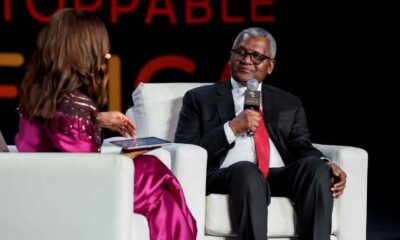
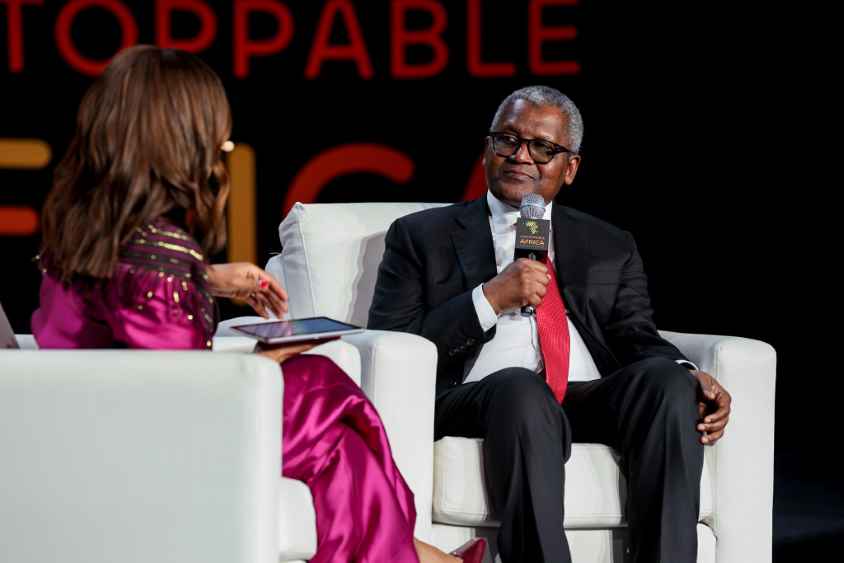
NEW YORK, United States of America, September 22, 2026/APO Group/ –Africa must stop sending its capital abroad and start investing in its own industrial future, Aliko Dangote, President and CEO of Dangote Group, told global business leaders at Unstoppable Africa 2026 today, as he set out an ambitious vision for African industrialization backed by billions of dollars in investment, new refining capacity, and broader public ownership.


Pointing to Asia’s economic rise, he argued that Africa cannot build comparable industrial strength while its own money continues to flow into foreign banks and markets. Emphasizing the importance of the African Continental Free Trade Area (AfCFTA) in creating the scale required for major industrial projects, he noted, “We must believe in our continent,” urging businesses to stay focused despite the challenges involved in building major organizations in Africa. “Once you start, it gets easier. But the more you don’t do anything, it becomes difficult.”

With more than 3,000 African and global business leaders and heads of state gathered for the two-day forum in New York, Unstoppable Africa 2026 demonstrated the scale of global interest in Africa’s economic opportunities and the appetite for stronger commercial partnerships with the continent.

Another notable highlight was the South African Business Initiative for Impact (SABII), which brought South Africa’s business, investment, and partnership proposition into sharper focus. Discussions explored how local opportunities can connect with global capital and translate into tangible economic impact.

Eine Zeidane, Director of the African Department at the International Monetary Fund, highlighted the importance of structural reforms, stronger domestic financial markets, and wider African markets through AfCFTA in attracting private investment.

The discussions also turned to the continent’s rapidly expanding digital economy. Olugbenga Agboola, CEO of Flutterwave, highlighted the opportunity presented by Africa’s young and increasingly connected population, pointing to digital payments, AI, and other technologies that can help businesses access markets and grow.

We must believe in our continent

Elly Savatia, Founder and CEO of Signverse, highlighted technology’s potential to expand inclusion through African sign languages. With U$2 million in Google funding, Signverse has developed the largest publicly documented dataset for an African sign language to date and is building a framework that can expand to multiple local sign languages.

In the sporting arena, H.E. Ndemupelila Netumbo Nandi-Ndaitwah, President of Namibia, signed a partnership agreement between the Netumbo Nandi-Ndaitwah Foundation (NNN Foundation) and the Queens of the Continent Foundation (QoTC), founded by two-time WNBA All-Star and ESPN host Chiney Ogwumike. The landmark partnership will explore opportunities to support the empowerment and development of young people in Namibia, with a particular focus on girls and young women.

African creative industries take their place on the global stage

The creative economy was another major focus, with speakers highlighting the growing ability of African brands, filmmakers, and technology innovators to build global audiences and markets.

Khanyi Mashimbiye, Manager, Creatives at Afreximbank, highlighted the Afreximbank CANEX program, which connects African fashion brands with international buyers through Tranoï in Paris and Japan and Coterie in New York. Since 2022, the initiative has secured more than 120 offtake agreements, with Zimbabwean brand Vanu Vanwerk now selling in more than 50 stores globally.

Closing the forum, UN Deputy Secretary-General, Amina J. Mohammed said, “We are entering a new age of technology and AI that will fundamentally shape the future, and Africa has a tremendous opportunity to leapfrog. Just as industrialisation transformed economies and created new forms of work, AI can open new pathways for growth, innovation and opportunity. Africa has the talent and the ideas. What we need is the opportunity, infrastructure and investment to deploy them at scale. This is a moment for Africa to shape its own AI story, combining the continent’s talent with the technology and infrastructure needed to build the future.”

As the conversations concluded, the focus turned to the practical work ahead: translating Africa’s investment momentum into initiatives that can deliver growth, jobs, and lasting economic value.

For event photos, visit HERE (https://apo-opa.co/3TJQpSP). For speakers’ video soundbites and highlights, visit HERE (https://apo-opa.co/477SpHE). The entire event can be viewed on Unstoppable Africa YouTube channel (https://apo-opa.co/4xE0FKs).

For more about GABI please visit the website GABI.UNGlobalCompact.org

Distributed by APO Group on behalf of Global Africa Business Initiative.


Continue Reading

Business

Frasers Hospitality unveils Fraser Suites Reserve, a new luxury serviced living brand

Published

on

Fraser Suites

Fraser Suites Reserve Bangkok starts welcoming guests at One Bangkok in December 2026
SINGAPORE – Media OutReach Newswire – 22 September 2026 – Frasers Hospitality, a business unit of Frasers Property, today announced Fraser Suites Reserve, a new luxury serviced living brand created for discerning global travellers seeking the privacy, ease and familiarity of home while away, complemented by the service and standards of luxury hospitality.

Building on Frasers Hospitality’s longstanding expertise and established track record in extended stays, Fraser Suites Reserve addresses a distinct segment at the luxury end of the market. Its introduction further sharpens the company’s portfolio of clearly differentiated brands.


“Fraser Suites Reserve represents the next strategic step in strengthening our portfolio,” said Eu Chin Fen, Chief Executive Officer, Frasers Hospitality. “It draws on our experience in long stays, while responding to the evolving expectations of an increasingly sophisticated segment of travellers accustomed to the world’s finest hospitality.”

Time for what matters

Fraser Suites Reserve is anchored in the belief that time is the ultimate luxury for today’s global professionals. Each property brings together refined design, intuitive service, curated wellness and lifestyle experiences intended to make life away from home easier, leaving guests free to focus on what matters most, whether their work, wellbeing, relationships or personal pursuits.

Designed as private sanctuaries within the city, its rooms are designed to offer privacy and calm. Many feature integrated kitchenettes, allowing guests to maintain familiar routines of home while away, an independence that becomes particularly valuable during longer stays. The experience is complemented by the discreet yet highly personalised service of luxury hospitality.

Beyond the rooms, guests can enjoy distinctive dining concepts, wellness and leisure experiences on property, as well as Club Frasers, a private lounge designed for conversation, connection and curated experiences.

“For guests accustomed to the highest standards, luxury service gives the assurance that every detail has been carefully thought through and every need understood,” said Chew Hang Song, Chief Operating Officer, Frasers Hospitality. “With Fraser Suites Reserve, this means providing an experience that feels immediately familiar and deeply human, supported by service that is warm and intuitive, yet respectful of their privacy.”

Wellbeing, made part of everyday

Holistic wellbeing is integrated into the Fraser Suites Reserve experience. At Fraser Suites Reserve Bangkok, the House of Rejuvenation will offer a dedicated environment for recovery and renewal, pairing therapist-led treatments with advanced wellness facilities such as thermal pools, cold plunges, compression therapy, dry flotation and red-light therapy.

Guests will also have access to The Wellness Edit, Frasers Hospitality’s proprietary global wellness programme. Through simple, repeatable everyday rituals that can be incorporated naturally into a guest’s stay, the programme is designed to integrate wellbeing with simple gestures, making wellbeing easier to sustain even amid demanding schedules and frequent travel.

Global debut at One Bangkok

Fraser Suites Reserve Bangkok, the brand’s first property, will begin welcoming guests in December 2026 as part of a phased opening. Its grand opening is planned for March 2027 when the complete range of facilities and experiences will be available.

The 255-room property will occupy the top ten floors of a 45-storey premium office and retail tower at One Bangkok, located right in the heart of Bangkok at the intersection of Rama IV Road and Wireless Road, with panoramic views of the Bangkok skyline and Chao Phraya River with easy access to Bangkok’s dining, entertainment and cultural attractions. Further details to be announced in the coming months.

Find out more about Fraser Suites Reserve at frasershospitality.com/en/our-brands/fraser-suites-reserve/

NOTE:
For more information, please visit www.frasershospitality.com.

About Frasers Hospitality
Frasers Hospitality is a leading investor-operator within the lodging sector, backed by 28 years of proven expertise. Frasers Hospitality specialises in optimising and managing hospitality assets to deliver sustainable value for its stakeholders. As a business unit of Frasers Property Limited, its presence spans Asia Pacific, Europe, the Middle East and Africa.

With a diversified portfolio of over 100 lodging assets across geographies and segments, Frasers Hospitality offers a comprehensive end-to-end ecosystem of bespoke lodging expertise and solutions to maximise performance, value and growth for its partners across the real estate value chain. Frasers Hospitality is a trusted expert and preferred partner within the lodging sector with a proven track record and a business model optimised to deliver value.

Frasers Hospitality is distinguished by its style of hospitality from their progressive mindset that fosters innovation and matched with an award-winning brand portfolio tailored to new ways of travelling, living and socialising. Recognised globally for our commitment to hospitality excellence, Frasers Hospitality has earned numerous industry accolades and awards, showcasing its leadership in delivering exemplary, quality services, and curating memorable, life-enriching experiences for its guests and residents – by people, for people.

For more information on Frasers Hospitality, please visit www.frasershospitality.com or follow us on LinkedIn.

About Frasers Property Limited
Frasers Property Limited (“Frasers Property” and together with its subsidiaries, the “Frasers Property Group” or the “Group”) is an integrated investor-developer-operator of real estate products and services. Listed on the Main Board of the Singapore Exchange Securities Trading Limited (“SGX-ST”) and headquartered in Singapore, the Group has total assets of approximately S$40.0 billion as at 31 March 2026.

Frasers Property operates across five asset classes: industrial & logistics, retail, commercial & business parks, residential and hospitality. Its businesses span Southeast Asia, Australia, Europe and China, and its well-established hospitality business owns and/or operates serviced apartments and hotels in 20 countries.

The Group is the sponsor of real estate investment trusts (“REITs”), Frasers Centrepoint Trust and Frasers Logistics & Commercial Trust, listed on the SGX-ST, as well as Frasers Property Thailand Industrial Freehold & Leasehold REIT and Golden Ventures Leasehold Real Estate Investment Trust, listed on the Stock Exchange of Thailand.

Guided by its purpose of inspiring experiences and creating places for good, the Group promotes an ESG framework that supports long-term value creation through focus areas such as transparent governance, sustainable finance, inclusive communities and reducing its carbon emissions. Frasers Property aims to deliver lasting shared value for its customers, people, investors and communities, while fostering a progressive, collaborative and respectful culture.

For more information on Frasers Property, please visit frasersproperty.com or follow us on LinkedIn.


Continue Reading

Energy

Building a Knowledge Hub for China-ASEAN Energy Cooperation

Published

on

ASEAN

NANNING, CHINA – Media OutReach Newswire – 21 September 2026 – During the 23rd China-ASEAN Expo and the China-ASEAN Business and Investment Summit, China Southern Power Grid showcased a range of innovations designed to support energy cooperation between China and ASEAN. These included the DaWatt – Lao Language Large Language Model (LLM) for the Energy and Power Sector V2.0 and the Flexible Grayscale Intelligent Monitoring & Analysis Platform for power system cybersecurity, highlighting expanding opportunities for cooperation in digitalization, intelligent technologies and green energy.

The Lao-language LLM has been deployed at Electricité du Laos Transmission Company Limited (EDL-T), where it can automatically analyze thousands of inspection images within a short period of time. After its algorithms were optimized for Laos’ mountainous and rainforest terrain, the model completed intelligent inspection analysis for four transmission lines, processing 26,000 drone inspection images and identifying more than 3,600 equipment defects.


Liu Ying, general manager of the Digitalization Department at Guangxi Power Grid Co., Ltd., said the company has been building multilingual professional corpora for the power sector, covering ASEAN countries including Laos, Vietnam and Malaysia. Drawing on the capabilities of the DaWatt foundation model, the company is developing energy and power models tailored to ASEAN languages and real-world power industry applications.

Talent development is another focus of the cooperation. The China-ASEAN Institute of Energy, jointly established by Guangxi Power Grid Co., Ltd. and Guangxi University, is exploring an industry-university training model with a strong emphasis on practical experience. So far, two cohorts totaling 53 students from ASEAN countries have enrolled.

Cooperation is also evolving from one-way training toward joint innovation. Guangxi Power Grid Co., Ltd. and the Royal Academy of Cambodia have jointly established a laboratory for artificial intelligence and safety equipment, while the company has also launched peer-to-peer exchanges with Electricité du Laos on improving power supply reliability.

To address language barriers in cross-border technical exchanges, Guangxi Power Grid Co., Ltd. has developed an AI-powered translation platform backed by a specialized database containing terminology for more than 1,800 types of power equipment. The platform supports accurate translation between Chinese and English, Chinese and Lao, and Chinese and Vietnamese.

At a recent training program for Chinese and overseas engineers, the system supported one-click generation of bilingual course materials and real-time speech translation, helping participants navigate highly specialized power-sector terminology.

To support regular international exchanges, Guangxi Power Grid Co., Ltd. has also established an international talent pool covering management, technical and skilled personnel. It has developed 24 hours of courses on international affairs as well as 20 short-form video courses.

“This year, we will also explore joint postgraduate programs with universities in ASEAN countries,” said Sun Xiaohua, deputy director of the Human Resources Department at Guangxi Power Grid Co., Ltd.

Looking ahead, Guangxi Power Grid Co., Ltd. plans to further advance a development model featuring “R&D in Beijing, Shanghai and Guangdong, integration in Guangxi, and application in ASEAN.” The company will continue expanding its multilingual power-sector corpora and explore a “Token Goes Global” model for power-sector AI, with computing resources and models based in Guangxi while knowledge services are delivered overseas. The effort is aimed at creating new forms of China-ASEAN energy cooperation and supporting the green development of the China-ASEAN Free Trade Area 3.0.


Continue Reading

Trending