Connect with us
Anglostratits

Business

Africa Skills Hub (ASH) Transitions to ASH Africa as it Marks 10 Years of Impact
Published

on

Africa Skills Hub

Over the years, the organisation has extended its reach across all 16 regions of Ghana while implementing programmes and partnerships in multiple African countries

Our goal of reaching 500,000 youth, women, and SMEs annually by 2030 is rooted in a decade of learning about what it takes to shift systems

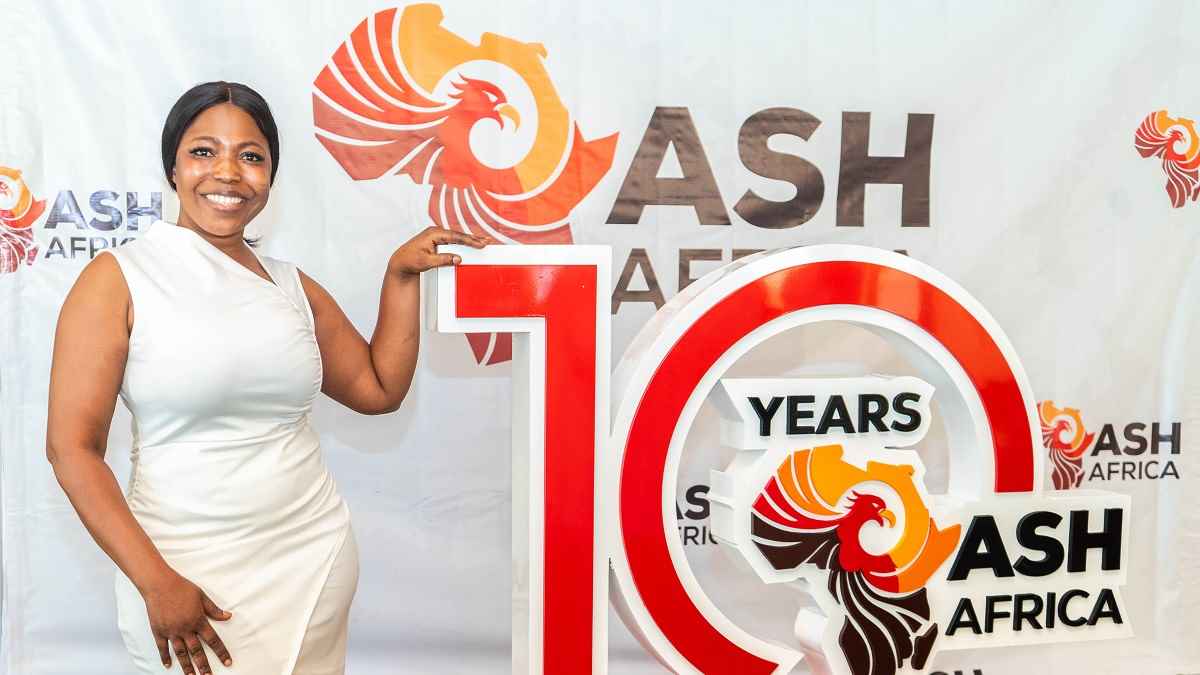
ACCRA, Ghana, June 4, 2026/APO Group/ –Africa Skills Hub (ASH), a Ghana-based enterprise support organisation focused on youth, women, and SME development, has officially transitioned to ASH Africa (www.ASH.Africa), marking a significant milestone in its 10-year journey of expanding opportunity pathways across the continent.


The rebrand reflects the organisation’s evolution from a skills development entity into a broader pan-African organisation driven by the mission: Transforming Lives. Building Communities. Building Africa.

Founded in 2016 as the Africa Internship Academy (AIA), the organisation initially focused on improving youth employability and access to internship opportunities in Ghana. In 2020, the organisation transitioned into Africa Skills Hub (ASH), expanding its work across enterprise development, financial inclusion, SME support, digital skills, and market systems strengthening.

Over the years, the organisation has extended its reach across all 16 regions of Ghana while implementing programmes and partnerships in multiple African countries.

The transition to ASH Africa reflects the organisation’s growing continental outlook and aligns with its newly launched 2026-2030 Strategic Plan, which outlines a vision to support more than 500,000 youth, women, and SMEs annually by 2030.

Speaking on the transition, Executive Director Daniel Amoako Antwi said:

“For ten years, we have focused on building the connective systems that link skills, capital, enterprise, and market opportunity across Africa. We have evolved from delivering standalone training programmes to building interconnected systems that link people to opportunity. The transition to ASH Africa reflects both the scale of the work we are already doing and the future we are committed to building.

Our goal of reaching 500,000 youth, women, and SMEs annually by 2030 is rooted in a decade of learning about what it takes to shift systems, not just programmes across Africa’s economies.”

According to the organisation, the rebrand does not represent a change in mission, but rather an expansion of scope, engagement, and strategic positioning.

ASH Africa will continue to focus on creating sustainable economic opportunities for youth, women, and SMEs by connecting them to skills development, enterprise support, finance, and market access.

Through its systems-driven model, the organisation aims to address what it describes as a systems challenge — the disconnect between skills acquisition, access to capital, enterprise growth, and market participation.

The new identity also reflects the organisation’s commitment to inclusive growth through partnerships, innovation, research-driven programming, and ecosystem development. Its strategic priorities include skills development, SME growth, market access, digital inclusion, and data-driven advocacy.

A Decade of Impact at a Glance (2016–2026)

Skills & Human Capital Development

  • 40,192 youth trained in employability, digital, and enterprise skills
  • 30,519 women supported through targeted training and enterprise development programmes

Economic Transition & Employment Outcomes

  • 15,753 youth transitioned into employment
  • 10,939 new jobs created across supported enterprises

Enterprise Growth & Financial Inclusion

  • 9,238 MSMEs supported to adopt sustainable business practices
  • GHS 10,789,800 in micro-loans disbursed to improve access to finance and business growth

Geographic Reach & Ecosystem Expansion

  • Programmes implemented across all 16 regions of Ghana and multiple African countries

As part of its anniversary and rebranding activities, ASH Africa will roll out a series of engagements highlighting its decade-long journey, institutional evolution, impact stories, and future vision for Africa.

Distributed by APO Group on behalf of ASH Africa, formerly Africa Skills Hub.


Business

Binance sets the global standard for compliance in digital assets and goes beyond it

Published

on

Binance has built its compliance programme to a standard that goes beyond what is expected of traditional financial institutions in many markets

OUAGADOUGOU, Burkina Faso, September 14, 2026/APO Group/ –As digital assets become part of everyday finance across  West Africa, Binance (www.Binance.com) is setting out its commitment to compliance, security and user protection.


Who is Binance?

Binance is the world’s largest platform for buying, selling and holding digital assets such as Bitcoin,  Ethereum and stablecoins. Founded in 2017, Binance serves more than 320 million users across 100+  regions, including markets across Africa.

Why compliance matters

Digital assets move fast and across borders. That means the platforms holding them need strong  rules not just to meet legal requirements, but to keep users safe and earn their trust .

Binance has built its compliance programme to a standard that goes beyond what is expected of  traditional financial institutions in many markets. Every user must verify their identity before they  can trade or withdraw. Every transaction is monitored for signs of fraud or money laundering.  Suspicious activity is flagged, investigated and reported to the relevant authorities.

In Burkina Faso, we want people to understand who we are, how we protect their assets and why our standards are built to go beyond what is expected

A globally aligned standard

Binance operates under a regulatory framework licensed by the Abu Dhabi Global Market (ADGM)  Financial Services Regulatory Authority, one of the most respected financial regulators in the world.  This framework covers exchange operations, custody of user assets and clearing and settlement, with separate regulated entities for each function.

That means Binance’s compliance standards – covering governance, risk management, anti-money-laundering controls, customer protection and asset custody – are held to the same level of scrutiny as a fully regulated financial institution, not just a technology company.

Going beyond the traditional financial sector

Many traditional financial institutions are not required to publicly prove they hold the assets they claim to hold. Binance does. Through its Proof of Reserves system, Binance publishes regular, independently verifiable reports showing that user assets are backed one-to-one or better. Users can check for themselves that their balances are included, using cryptographic tools that protect their privacy.

Binance also maintains the Secure Asset Fund for Users (SAFU) , an emergency reserve held in a public wallet and designed to protect users in the event of a security incident. Few platforms in the digital asset industry,  and few institutions in traditional finance,  offer this level of visible, user-facing protection.

What this means for Burkina Faso

As digital finance grows in Burkina Faso and across the region, users deserve to know that the platform they use is held to the highest global standards. Binance is already operating to those standards, not because regulation requires it today but because keeping users safe is the foundation of trust.

“We believe compliance is not a box to tick. It is a continuous commitment to doing the right thing for users, regulators and the communities we serve,” said Samukele Mkhize, Compliance Lead Binance Africa. “In Burkina Faso, we want people to understand who we are, how we protect their assets and why our standards are built to go beyond what is expected.”

Distributed by APO Group on behalf of Binance.


Continue Reading

Business

Pan-African Payment and Settlement System (PAPSS) targets accelerated adoption and transaction growth as network expands across Africa
Published

on

During 2026 alone, around 10 additional countries have joined the PAPSS ecosystem, with further expansion expected before the end of the year

LAGOS, Nigeria, Egypt, September 11, 2026/APO Group/ –The Pan-African Payment and Settlement System (PAPSS) is preparing to accelerate adoption and transaction growth across Africa as it enters the next phase of its strategy, following significant expansion of its network and strong growth in payment volumes and values.

Speaking at a media briefing in Lagos, Mr Mike Ogbalu III, Chief Executive Officer of PAPSS, said the platform now operates in more than 30 African countries across all five regions of the continent. It connects 24 national and regional central banks, more than 200 commercial banks and payments service providers, and 16 switches. Through strategic partnerships, PAPSS also provides a termination footprint covering more than 300 financial institutions.


During 2026 alone, around 10 additional countries have joined the PAPSS ecosystem, with further expansion expected before the end of the year.

Mr Ogbalu said: “The first phase of PAPSS has been about building, connecting and establishing trust. We have built the infrastructure, expanded our network across Africa and demonstrated that PAPSS can deliver tangible benefits. As we move into our next phase from 2027, our focus will increasingly shift towards activating that network, deepening adoption and taking transaction growth to scale.”

Usage of PAPSS has accelerated significantly. Between comparable periods in 2025 and 2026, transaction volumes across the network increased by approximately 1,000 per cent, while transaction values increased by approximately 120 per cent.

The growth we are seeing demonstrates that the infrastructure is working and that demand is increasing as more institutions and markets participate

Nigeria remains a significant contributor to that growth, recording an approximately 1,100 per cent increase in transaction volumes and a 125 per cent increase in transaction values over the same period.

PAPSS transactions have also demonstrated cost savings of between 92 and 95 per cent per transaction, a 99.99 per cent reduction in processing time and up to 80 per cent reduction in foreign exchange requirements.

Mr Ogbalu added: “The growth we are seeing demonstrates that the infrastructure is working and that demand is increasing as more institutions and markets participate. The next opportunity is to make these benefits available at much greater scale by working more closely with banks, fintechs, switches and other partners to bring PAPSS into the channels businesses and individuals use every day.”

PAPSS enables cross-border payments through participating financial institutions, including transactions using African currencies, helping connect payment ecosystems that have historically operated within national and regional boundaries.

As part of its next phase, PAPSS will focus on deeper market activation, greater customer awareness, development of priority payment corridors and wider availability of its services through participating financial institutions.

PAPSS currently provides three major solutions: the PAPSS Instant Payment System, the PAPSS African Currency Marketplace and PAPSSCARD. New solutions are also being piloted and are expected to be announced later in 2026.

The next phase of PAPSS’s growth will be discussed further at PAPSS COWRY 2026, its annual payments conference, taking place on 26 and 27 November in Addis Ababa, Ethiopia, and co-hosted with the National Bank of Ethiopia.

Mr Ogbalu concluded: “We have built the network, we have demonstrated the impact, and we are seeing usage accelerate. Our next phase is about taking all three to scale and ensuring that payments increasingly enable, rather than limit, the ability of African businesses and individuals to participate in opportunities across the continent.”

Distributed by APO Group on behalf of Afreximbank.


Continue Reading

Business

Angola’s Angolan National Agency for Petroleum, Gas and Biofuels (ANPG) Signs New Deepwater Deals at Angola Oil & Gas (AOG) 2026
Published

on

Angola

Angola’s national concessionaire formalizes new risk-service contracts and block entries across the Kwanza and Congo Basins while advancing further exploration and emissions-reduction initiatives

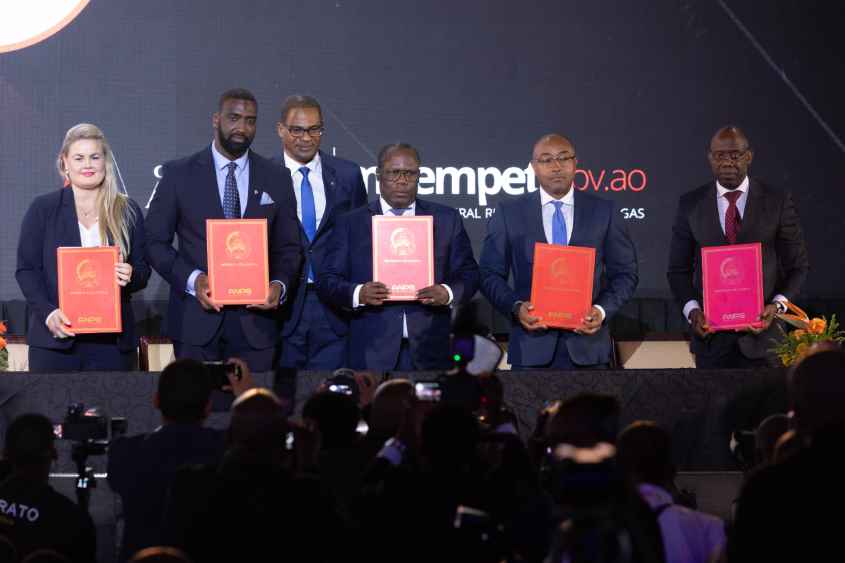
LUANDA, Angola, September 11, 2026/APO Group/ –Angola’s national concessionaire, the Angolan National Agency for Petroleum, Gas and Biofuels (ANPG), formalized a series of offshore entries, risk-service contracts and other agreements with international oil companies at Angola Oil & Gas 2026 on Wednesday, advancing exploration across the Kwanza and Congo Basins.


The first signing, overseen by ANPG Director of Negotiations Hélder Iombo, covered Risk Service Contracts for deepwater Blocks 19, 34 and 35 with Shell, Equinor and Sonangol E&P. The contracts establish terms for the exploration, appraisal, development and production of liquid and gaseous hydrocarbons.

Each contract provides for an initial exploration period of up to five years and a 30-year production period for each approved commercial discovery. Work commitments include seismic data reprocessing and the drilling of at least one exploration well.

The agreements build on a November 2025 pact covering 17 deepwater and ultra-deepwater blocks across Angola’s Kwanza and Congo Basins, advancing several concessions into formal exploration.

ANPG also signed Heads of Terms with Shell, QatarEnergy and Sonangol covering Blocks 8 and 22 in the Kwanza Basin. The agreement sets the framework for exploration, appraisal, development and production, including minimum work commitments, exploration periods, bonuses, contributions, penalties and applicable fiscal and contractual terms.

In the Congo Basin, ANPG signed a Risk Service Contract for Block 33/24 with Chevron, Shell and Sonangol. The agreement provides for a five-year exploration period and a 30-year production period for each commercial discovery. The work program includes reprocessing 2,000 square-kilometers of additional 3D seismic data, followed by at least one exploration well if the project advances to the next phase.

Separately, ANPG signed Risk Service Agreements for Blocks 17, 27, 32 and 21 in the Congo Basin with TotalEnergies as operator alongside ExxonMobil and Sonangol. ANPG and TotalEnergies also signed an agreement setting the terms and conditions for Block 32, supporting an extension of the existing operation and further investment.

Alongside the upstream agreements, ANPG and TotalEnergies signed a Memorandum of Understanding focused on reducing emissions from oil and gas production, improving methane measurement and exploring opportunities to monetize emissions.

The initiative builds on Sonangol and TotalEnergies joining the Oil and Gas Decarbonization Charter in 2023. Under the MoU, the companies will share technical experience and assess technologies including TotalEnergies’ AUSEA drones, which were deployed in 2022 to detect, measure and monitor methane emissions at a Block 3 field. The companies will also work to develop national expertise in greenhouse-gas management and assess international climate funds that could support decarbonization projects.

The initiative also aligns with Sonangol’s recent decision to join the UN-backed Oil and Gas Methane Partnership 2.0, of which TotalEnergies is already a member.

In a separate agreement, ANPG, the Moxico Provincial Government, Chevron and the Instituto Nacional de Gestão Ambiental (INGA) established indicative terms for assessing, structuring and preparing land access for a project in Moxico Province.

The initiative will begin with a 20-hectare pilot phase lasting two to three years, with potential expansion to 20,000 hectares based on its results. The project is intended to link emissions reduction with job creation, economic development and sustainable land use.

Distributed by APO Group on behalf of Energy Capital & Power.


Continue Reading

Trending