Connect with us

Business

Afreximbank to avail US$10 billion under its Gulf Crisis Response Programme (GCRP) to shield African and Caribbean Community (CARICOM) economies from the ongoing conflict

Published

on

Afreximbank

Through GCRP, Afreximbank has already begun taking proactive steps through partnerships with banks and corporates to secure fuel, other energy supplies, fertilizers and essential food imports

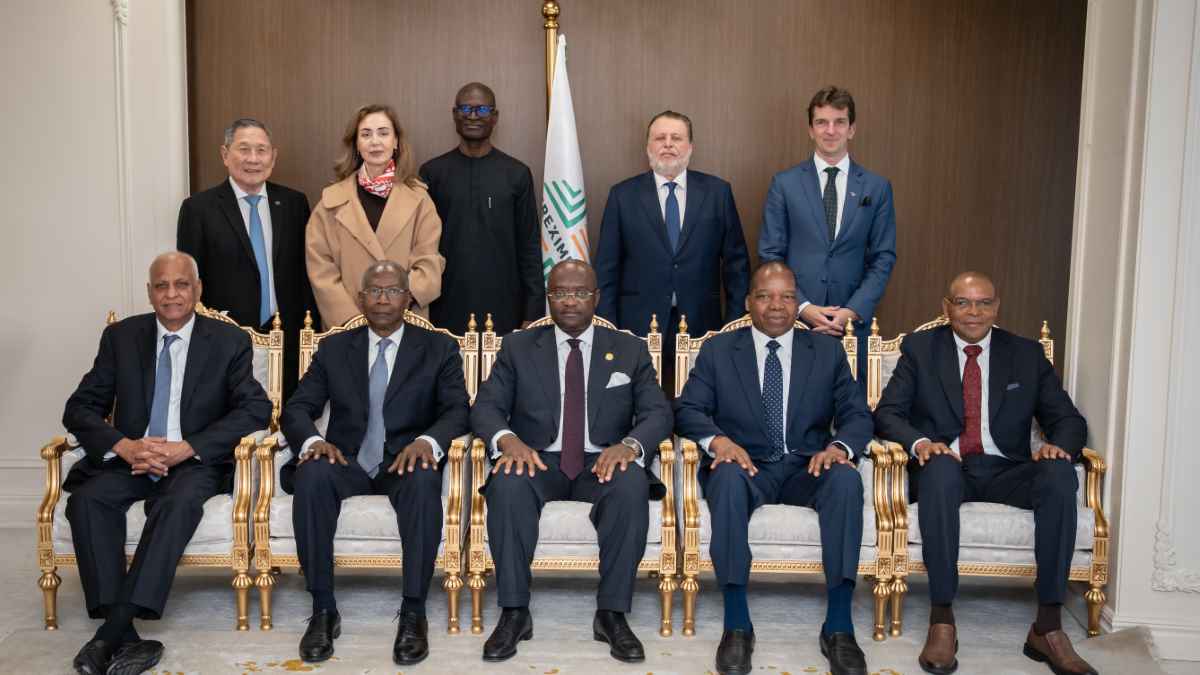
CAIRO, Egypt, April 7, 2026/APO Group/ –To counter the severe economic shocks triggered by the escalating conflict in the Middle East, the Board of Directors of African Export-Import Bank (Afreximbank) (www.Afreximbank.com) has approved a US$10 billion Gulf Crisis Response Programme (GCRP) to insulate African and Caribbean economies, financial institutions and corporates from the impact of the ongoing Gulf crisis.

The conflict, which escalated on 28 February 2026, has sent shockwaves through the global economy, with African and Caribbean economies bearing the largest share of the brunt. Given the significance of the Gulf region as a primary global source of oil, Liquid Nitrogen Gas (LNG), fertilisers, as well as the critical role of the Strait of Hormuz, the outbreak has triggered wider repercussions at a global scale, including adversely affecting African and CARICOM economies. These impacts specifically affect nations that heavily rely on fuel, fertiliser, and food imports, alongside those exposed to Gulf shipping corridors, investment flows, tourism and remittance inflows.

GCRP is designed to, among others   sustain essential imports – including fuel, LNG, food, fertiliser, pharmaceuticals – by providing vital short-term Foreign Exchange (FX) and liquidity to support vulnerable member states. It further aims to empower African energy and minerals exporters to capitalise on elevated prices and rerouted trade flows, by scaling productive capacity in strategic commodities, through pre-export finance, working capital, and inventory financing. Additionally, it provides short term relief to African and Caribbean member states whose tourism and aviation industries have been adversely impacted by the crisis. The programme is also designed to build the medium to long-term resilience of African and Caribbean economies against future shocks by scaling productive capacities for producers and exporters of energy, minerals while accelerating the completion of critical energy, port, and logistics infrastructure projects in African and Caribbean member states, delayed by the conflict.

Commenting on the facility, launched on March 31, 2026, Dr. George Elombi, President and Chairman of the Board of Directors at Afreximbank said: “This crisis response programme is in tune with our DNA. We understand how our economies work and the pain points associated with these transitory crises. The programme will support African countries in adjusting smoothly to the crisis while strengthening their resilience to future shocks through interventions that transform the structure of their economies. I commend the Board of Directors of Afreximbank for their proactivity and fortitude in approving this intervention programme.”

I commend the Board of Directors of Afreximbank for their proactivity and fortitude in approving this intervention programme


The GCRP builds on a series of timely emergency interventions introduced by Afreximbank in recent years, which have helped to cushion most economies from the impact of recent shocks such as the commodity shock of 2015/16, the COVID-19 Pandemic of 2020/2021 and the Ukraine crisis of 2023/24. For instance, the Bank launched a US$4 billion Ukraine Crisis Adjustment Trade Financing Programme for Africa (UKAFPA) to help African countries confront the trade and economic impact of the Ukraine crisis. Under this programme, the Bank disbursed a total of US$39 billion which helped most countries in Africa to bridge gaps associated with liquidity or access to essential goods.


These historical interventions underscore Afreximbank’s ability to deploy robust and innovative risk-mitigation frameworks to help its member states navigate global volatility, with a successful track record.


Through GCRP, Afreximbank has already begun taking proactive steps through partnerships with banks and corporates to secure fuel, other energy supplies, fertilizers and essential food imports, which supplies have been interrupted by the elongation of the crisis. Beyond the financing, Afreximbank will spearhead a coordinated regional response in partnership with the UN Economic Commission for Africa (UNECA), the African Union Commission (AUC), the African Continental Free Trade Area (AfCFTA) Secretariat, and the Caribbean Community (CARICOM) Secretariat to strengthen regional coordination on energy security, trade resilience, and supply chain diversification.

Distributed by APO Group on behalf of Afreximbank.

Business

CGTN: Navigating the South China Sea Before GPS

Published

on

BEIJING, CHINA – Media OutReach Newswire – 9 July 2026 – Ten years after the South China Sea arbitration, CGTN has published an article exploring the story of the Genglubu – a handwritten navigation manual that guided generations of Hainan fishermen long before GPS, shedding light on a chapter of South China Sea history unfamiliar to many outside the region.

How did generations of Chinese sailors find their way across the South China Sea, one of the world’s busiest and most challenging waterways?

A new CGTN documentary, Genglubu: Charting the South China Sea, explores the answer through a little-known ancient navigation manual passed down for generations of fishermen in Tanmen, Hainan Province. The Genglubu recorded routes, compass bearings and sailing distances, helping fishermen navigate reefs, islands and open seas. The documentary follows the fishermen who crossed the sea, the families who preserved their knowledge and a maritime tradition that connected China with Southeast Asia and beyond.

The People Who Brought the Genglubu to Life

To outsiders, the Genglubu looks like a secret code. A single line of just fourteen Chinese characters can contain an entire sea route: the departure point, direction, destination, distance and estimated sailing time.

“Generation after generation, Hainan fishermen rode the waves – not to rule the sea, but to make their living from it.”

Xin Lixue, Curator, China (Hainan) Museum of the South China Sea

The documentary follows veteran fishing boat captains whose lives were inseparable from the sea. Wang Shitao first went to sea at the age of nine. At twelve, his fishing boat was caught in a typhoon. Everyone else on board died. Clinging to a piece of floating timber, he drifted alone for three days. Four years later, another violent storm struck. Once again, he was the only survivor. Yet each time, he returned to the sea. Late in life, reflecting on decades spent sailing the South China Sea, he summed up his feelings:

“I love the South China Sea. I hate it. I miss it.”

Wang Shitao, fishing boat captain

The sea demanded sacrifice even as it provided a livelihood. A storm or mishap could wipe out an entire crew.

“Children and brothers should never sail on the same boat.”

Wang Shubao, fishing boat captain

A Maritime Tradition Connecting Asia

The documentary challenges the common assumption that the Genglubu was only about the South China Sea. Research on the Liang Family Genglubu reveals routes extending to Singapore, Malacca and Indonesia, showing that Hainan fishermen also played a role in regional maritime trade.

“Hainan fishermen also took part in overseas trade.”

Zhao Jueqi, China (Hainan) Museum of the South China Sea

Not every route was written in words. Some Genglubu manuscripts contain mountain-and-water charts. They combine sketches of coastlines with compass bearings, water depth and sea conditions. These drawings helped sailors identify islands, reefs and coastlines and determine their position at sea.

“The Americans and the British produced their own navigational records, which identify the Chinese as being engaged very heavily in fishing on these islands and other forms of economic activity.”

Anthony Carty, International Law Sholar

Today, satellites, weather stations and lighthouses have transformed navigation across the South China Sea. But the purpose remains the same: helping sailors travel safely and return home. Genglubu: Charting the South China Sea traces a maritime tradition shaped by generations of ordinary people. It is a story of navigation, memory and resilience, one that forms part of the shared maritime heritage of Asia.


Continue Reading

Business

Renew Capital Narrows 500+ African Companies to 15 Embedded Finance Investment Candidates

Published

on

From 48 countries, selected companies are using existing customer relationships, data and distribution to expand financial access for African SMEs

The next generation of Africa’s small business banks won’t be banks

KIGALI, Rwanda, July 9, 2026/APO Group/ –Renew Capital (http://RenewCapital.com/) has selected 15 companies from more than 500 applicants across 48 African countries to advance through its inaugural Renew Venture Lab: EmFi Series.


The size and breadth of the applicant pool point to a larger shift underway across Africa: some of the continent’s most promising embedded finance opportunities may come not from traditional fintechs, but from tech companies already serving small and medium-sized enterprises (SMEs).

Africa’s SMEs are the main creators of jobs, yet they face an estimated $330B annual credit gap. However, Africa is rapidly becoming a global center for technology innovation and currently boasts the world’s largest mobile money market. Meanwhile, SMEs are becoming more tech-enabled as smartphone adoption across sub-Saharan Africa is projected to rise from 54% in 2024 to 81% by 2030 and data costs plummet.

These trends open new opportunities to embed financial products in mobile applications to reach the world’s most capital-constrained private sectors, unlocking growth and job creation. As Africa’s startup ecosystems grow, technology companies powering digital payments, organizing smart distribution, optimizing logistics, improving healthcare, and digitizing agriculture value chains have the potential to reach millions of SMEs that banks are not serving and use their customer data to underwrite financial products.

All 500+ applicants were invited to exclusive expert sessions with founders from some of Africa’s fastest-growing companies and gained advice from some of the world’s leading embedded finance and Web3 companies. Forty-seven companies were selected for a pitch competition and given a startup package valued at more than $250,000. From this group, 15 were selected to advance to deeper technical training and investment consideration. The 15 companies represented Ethiopia, Ghana, Kenya, Morocco, Nigeria, Senegal, South Africa, Togo, Uganda and Zambia.

Matthew Davis, Co-CEO of Renew Capital, said: “The next generation of Africa’s small business banks won’t be banks. They’ll be startups that already understand how SMEs operate, have their data and have earned their trust. These 15 companies are building from that advantage. That’s why we’re paying attention.”

THE TOP 15 COMPANIES

Company Country Founder Website
AgroCenta Ghana Francis Obirikorang (https://apo-opa.co/4vTsP3Q) https://apo-opa.co/4vW91No
Boost Technology Ghana Mike Quinn (https://apo-opa.co/4vWkAEm) https://apo-opa.co/4vWkE74
Dots for Africa Senegal Carlos Oba (https://apo-opa.co/4peki9h) http://DotsFor.com
Fanaka Zambia Hillary Sang (https://apo-opa.co/4h7E1oS) https://apo-opa.co/4h3rkvj
Kutana Ghana Samuel Opoku (https://apo-opa.co/4vW923U) https://apo-opa.co/4fnYapA
MajibuAfrica Uganda Janis Zicans (https://apo-opa.co/4f3YGrg) https://apo-opa.co/4aGskSe
Marakisoft Ethiopia Alemayehu Seifu (https://apo-opa.co/4eSIN8o) https://apo-opa.co/3R1TAUI
Oze Ghana Meghan McCormick (https://apo-opa.co/4paWgf9) https://apo-opa.co/4vXKbN6
Regxta Nigeria Rukayat Bello (https://apo-opa.co/4vSdMaz) https://apo-opa.co/4h28bdg
Rigo Nigeria Olukayode Odeyinde (https://apo-opa.co/4aJjcfF) https://apo-opa.co/4w2UbEP
Shiprazor South Africa Lesego Tladinyane (https://apo-opa.co/3SU3hVK) https://apo-opa.co/4aGsl8K
Solimi Togo Gael Egbidi (https://apo-opa.co/3SSjZor) https://apo-opa.co/4vWkFIa
Tradevu Nigeria Nkiru Amadi-Emina (https://apo-opa.co/4aGsadA) https://apo-opa.co/4eS7dPl
Z Systems Morocco Samer Choumar (https://apo-opa.co/4bd4PQU) https://apo-opa.co/4vUQUYf
Zendawa Kenya Wilfred Njuguna (https://apo-opa.co/4pavJyx) https://apo-opa.co/4eREuKE

Distributed by APO Group on behalf of Renew Capital.

Continue Reading

Energy

Makor Resources CEO to Speak at African Mining Week (AMW) 2026 Amid $30M Copper Strategy and Artisanal and Small-Scale Miners Formalization Drive

Published

on

Brooke Bibeault’s participation at African Mining Week will highlight Makor Resources’ Zambia strategy, its approach to ASM formalization and the role of copper projects in supporting long-term critical minerals growth

CAPE TOWN, South Africa, July 9, 2026/APO Group/ –Brooke Bibeault, CEO of copper-focused exploration and development company Makor Resources, has been confirmed as a speaker at African Mining Week (AMW) 2026, taking place October 14–16 in Cape Town. The event brings together global mining investors, developers and policymakers to discuss opportunities shaping Africa’s next generation of critical minerals projects.


Bibeault will participate in a panel discussion on Accelerating the Formalization of Artisanal Miners, where industry stakeholders will explore pathways to integrate artisanal and small-scale miners (ASM) into formal mining value chains while improving productivity, environmental standards and community development outcomes.

The discussion aligns with Makor Resources’ approach in Zambia, where the company is supporting ASMntegration through its MineHive program. The initiative provides funding and technical support to ASM operators, strengthening local participation in the copper sector while creating structured pathways into formal supply chains.

Alongside its ASM-focused initiatives, Makor Resources is advancing a district-scale copper exploration strategy across Zambia, supporting the country’s long-term ambition to significantly increase annual copper output. The company is progressing the Muli Copper Project in Central Zambia, while also advancing exploration at the Kangili Copper Project in the Mkushi District.

In early 2026, Makor Resources announced plans to invest up to $3 million by the end of the year to enhance geological understanding across its asset portfolio. The program includes integrated geophysical surveys, remote sensing and systematic sampling campaigns designed to support target definition and resource delineation. These activities form part of a broader investment framework estimated at between $20 million and $30 million over the medium term.

With global copper demand projected to rise significantly in the coming decades, attention is increasingly turning to new supply sources. At AMW 2026, Bibeault is expected to outline how Makor Resources’ Zambia portfolio is positioned to contribute to both national economic development and the broader global energy transition through expanded copper supply.

Distributed by APO Group on behalf of Energy Capital & Power.

Continue Reading

Trending

Exit mobile version