Connect with us
Anglostratits

Business

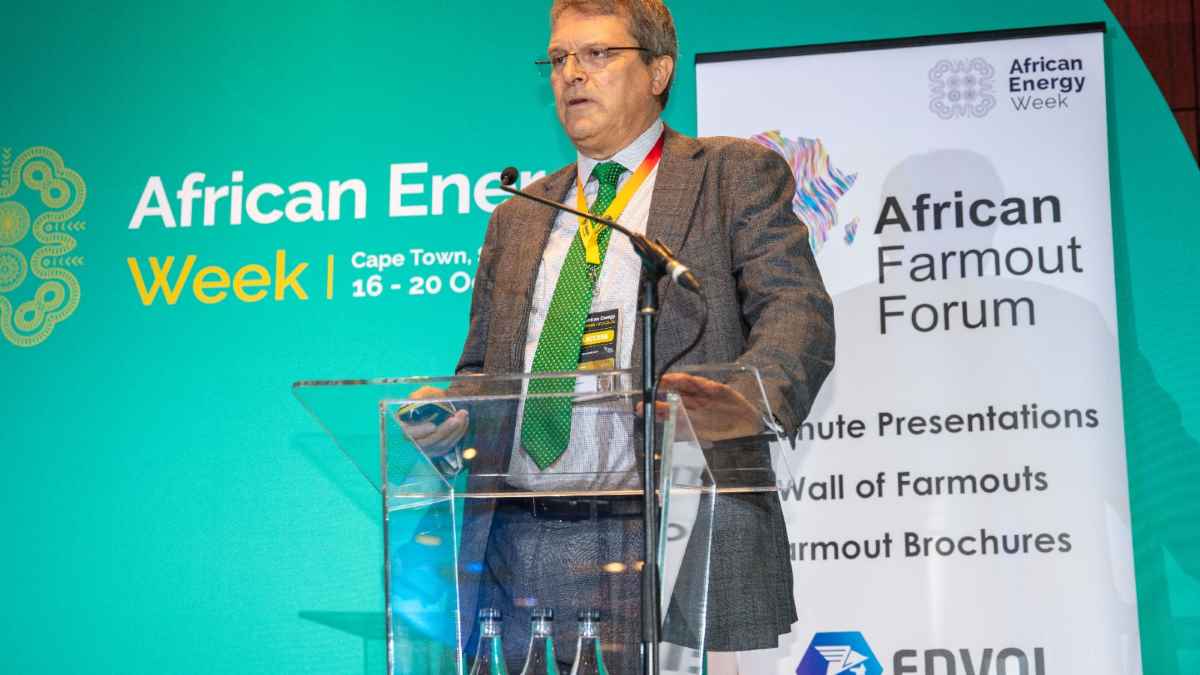
#AEW2023 Farmout Forum Connects Investors to African Blocks

Published

on

African Energy Week

Financial services company Moyes & Co, global acquisition and divestment advisor Envoi, and oil and gas deal listing platform FarmoutAngel hosted the African Farmout Forum at this year’s African Energy Week conference

CAPE TOWN, South Africa, October 18, 2023/APO Group/ — 

The African Energy Week (AEW) 2023 conference and exhibition – organized by the African Energy Chamber (http://www.EnergyChamber.org) – is centered on facilitating investment across the entire African energy value chain. This year’s conference featured the inaugural African Farmout Forum, a dedicated investment platform spearheaded by financial services company Moyes & Co; global acquisition and divestment advisor Envoi; and oil and gas deal listing platform FarmoutAngel.

The Farmout Forum served as a premier platform to sign deals while gaining first-hand insight into emerging E&P opportunities in Africa. Mike Lakin, Managing Director of Envoi, kicked off the forum by stating, “We will have a major problem in the world if we are not drilling.” Presentations were delivered on various exploration opportunities.

PetroQuest: Somalia

PetroQuest is offering an investment opportunity for three blocks – PSA Blocks 131, 190 and 206 – offshore Somalia. Somalia has only had two deepwater wells drilled to date. PetroQuest has 15,000 km² of seismic data; a new Production Sharing Agreement has been set up and the company is now looking for suitable partners.

Tower Resources: Cameroon

Representing a short-cycle opportunity, Tower Resources presented on the Thali Block located in the Rio del Rey Basin in Cameroon. The appraisal well will be drilled next year which aims to unlock the opportunity to drill a further three wells. Tower Resources is targeting first production at 2025.

Tower Resources: Namibia

In Namibia, Tower Resources offers an opportunity for Blocks in the Northern Walvis and Dolphin Graben Basin. Wells have been drilled at the basin, but previous activities were conducted between 25 and 30 years ago. While the company is not ready to farmout yet, Tower Resources is looking at engaging with prospective companies.

ProdOil: Benin

Angolan company ProdOil is exploring onshore Angola in the Lower Congo Block. Awarded to ProdOil in a bid round closed in 2022, work is underway to reprocess 2D seismic data and the company is looking for someone to take on the work commitment.

Atlas Oranto Petroleum International: Senegal

Atlas Oranto holds two licenses in Senegal, Cayar Shallow and St. Louis Shallow, adjacent to one another. The company is seeking to farm-down interest in those two licenses and believes that it is a highly attractive opportunity. The licenses have been extended to 2026.

Atlas Oranto Petroleum International: Equatorial Guinea

Atlas Oranto is also offering an opportunity in Block P; Block EG-02; and Block EG-H in Equatorial Guinea. The Ministry of Mines and Hydrocarbons has already approved the development plan and they believe to have between 17 and 38 million barrels of oil in place. Licenses have been extended to 2026.

Atlas Oranto Petroleum International: Namibia

In Namibia, Atlas Oranto Petroleum has an exciting opportunity in PEL 106: Blocks 2011B and 2111A. Located in the Walvis Basin, the blocks have been extended with a nine-year exploration timeline. The company is selectively looking for partners to farm-down and farm-in.

DAJO Group: Nigeria

DAJO Group is offering a 40% working interst in OPL 322, offshore Nigeria. The Block has two fields within it, the Bobo and Ago Structure.

With the opportunities on the table, the African Farmout Forum provided attendees the chance to join exciting new plays, thereby opening up new basins across the continent

Sierra Leone License 202a

Awarded under the country’s fourth licensing round to Innoson Oil and Gas Ltd, the prospect comprises nine ‘whole’ blocks comprising 8,035km². There is 2D seismic survey available with wildcats having been drilled following data acquisition. There is additional a CPR report available for any company interested in the farm-in opportunity.

Kariya Energy: Nigeria

Kariya Energy is offering an opportunity offshore Nigeria in OML 109. Currently, there are two near-term prospects which have the same geology as neighboring Ejulebe field. There is a CPR on the block which was completed in 2022. The central processing facility has been revamped and the license has been extended to 2037.

Tetracore Group: Nigeria

In Nigeria’s OML 53, Tetracore Group is looking for $50 million investment for Phase 1 of the field development to redevelop the marginal field. They have an early production plan and a lot of historic work.

Coastline Exploration: Somalia

Coastline Exploration holds interests in Blocks 129-130, 141, 143, 191, 192, 205 and 221 and has 2D seismic data on the area. The company is looking for a partner to part-fund a 3D seismic survey over some of the most prospective blocks.

ReconAfrica: Namibia

Onshore Namibia, ReconAfrica has over six million acres while in Botswana, over two million acres. The company has shot 27,000km of 2D seismic and they have 20 prospects and leads identified so far. They are approved to drill 12 prospects in the area and are going through a basin modelling.

CoMiCo: DRC

CoMiCo has an investment opportunity in the frontier Cuvette Centrale Block in the Democratic Republic of the Congo.

Africa Fortesa Corp: Senegal

Africa Fortesa Corp is seeking partners for Sadiaratou and Diender Permits in Senegal. The company is looking for capital to hook-up upcoming wells to markets. They have a right to deliver oil and gas directly to customers, making it an ideal investment opportunity.

Biogas Unite: Africa

Biogas Unite is developing a biogas project in Africa. The project comprises gas that is not immediately flammable and can easily be transported, therefore ideal for domestic use. The company is looking for $750,000 investment to upscale what they have and expand across Africa.

Further opportunities were provided in blocks in Guyana and Australia, with presenting companies including Eco Atlantic, Petro Australis Energy and Liberty.

In addition to company presentations, insight was provided into the DRC’s ongoing licensing round. Blocks are on offer in the Cuvette Centrale Basin; Albertine Graben Basin; and Lake Tanganyika Basin, with deadlines for submissions of interest January 2024; October to December 2023; and September to October 2023, respectively.

With the opportunities on the table, the African Farmout Forum provided attendees the chance to join exciting new plays, thereby opening up new basins across the continent.

#AEW2023 takes place this week in Cape Town under a mandate to make energy poverty history by 2030. Keep following www.AECWeek.com for more exciting information and updates about Africa’s premier energy event.

Distributed by APO Group on behalf of African Energy Chamber.

Business

The Supply Blockchain of Trust (By Viv Muthan Pr Eng)

Published

on

Blockchain

A blockchain is commonly described as a shared, tamper-resistant record of events that allows participants to trust the history of an asset without having to blindly trust one another

JOHANNESBURG, South Africa, August 17, 2026/APO Group/ —By Viv Muthan Pr Eng, Head of Export Sales and Operations.

Trust has been the invisible infrastructure of supply chains for decades. Maintenance engineers trusted procurement teams to source from credible suppliers, while procurement professionals trusted manufacturers to uphold the engineering integrity of the products they supplied. In the last two decades, this reality has dramatically shifted with counterfeiters becoming more sophisticated, technology becoming more accessible, and imitation products becoming increasingly difficult to distinguish from the genuine article. The result is that trust has fragmented and the onus of verification is falling back onto the shoulders of the product users. The problem is that even the most experienced engineer will struggle to verify a genuine product under these conditions because they are no longer competing against opportunistic non-expert counterfeiters making products that are ostensibly cheap and nasty. They are competing with networked operations with access to advanced manufacturing technologies, digital design tools and increasingly sophisticated methods of replication.

Many years ago, the humble bearing became one of the first industrial products to be widely counterfeited. Initially, identifying a fake was relatively straightforward. Products carried obvious tell-tale signs: dye marks instead of genuine heat-treatment discolouration, spelling mistakes in product markings, poor packaging quality, unreliable documentation and no verifiable connection to an authorised source of supply. Bearing original equipment manufacturers (OEMs) responded quickly. They launched awareness campaigns, strengthened distributor accreditation programmes and introduced anti-counterfeiting measures such as holographic labels, serialisation and QR-code verification systems. Packaging quality improved and traceability became more robust.

Within a few years, counterfeiters adapted. They started attending trade shows, copied packaging standards and used crude optical character recognition (OCR) technology to improve the visual appearance of their products. They invested in moving from copying to manufacturing replicas at scale, learning through the process, refining and getting better with each run. It became almost impossible even for a trained application engineer to spot the differences without a lab test and an electron microscope inspection of the raceways to verify surface finishes. In fact, copies became so good that one OEM actually bought production capacity at the counterfeiting facility and after implementing some standards, started mass production of some of its high-volume SKUs at that plant. This was all before the mass market availability of machine vision and deep learning tools.

So how might modern engineers respond to the very clear and present danger of counterfeit products that potentially jeopardise the lives and livelihoods of millions of people around the world? One useful way to think about the challenge is through the concept of a blockchain. A blockchain is commonly described as a shared, tamper-resistant record of events that allows participants to trust the history of an asset without having to blindly trust one another. It can be thought of as a digital chain of custody, recording the purchase transaction, handoffs, inspections, certificates or movements resulting in a single source of truth that all participants can verify. The value of a blockchain is not the technology but in its ability to preserve history. Once events are reliably recorded, they become difficult to alter without leaving evidence behind.

It can be argued that supply chains require precisely the same capability. Authenticity depends on provenance. Provenance depends on history. And history is only valuable when it can be trusted. A supply blockchain is not necessarily a technology platform but rather the accumulation of verified events across a product’s journey, from manufacture to point of installation or use. Every authorised transaction, inspection, storage movement, quality check and customer delivery contributes another link in the chain of trust.

Every verified event strengthens the supply blockchain and every authenticated transaction reinforces customer confidence

Trusted suppliers have always maintained such records. Historically, trust was established through reputation. Customers bought from suppliers they knew and relied on brands that had proven themselves over decades. Today, reputation remains essential, but reputation alone is no longer enough. Customers increasingly require evidence. The most trusted suppliers will therefore be those that combine reputation with verification. They will be able to demonstrate where products originated, how they moved through the supply chain and whether they remained within authorised channels throughout their journey.

In this sense, every verified event strengthens the supply blockchain and every authenticated transaction reinforces customer confidence. As it always has been, trust is built one memory at a time. The difference today is that digital technologies can make those memories visible, auditable and resistant to manipulation.

For engineers tasked with keeping people safe, equipment operational and production running, that may be the most valuable innovation of all. Not because it eliminates risk, but because it makes trust verifiable. And perhaps that will help them sleep a little better at night, when they are not on standby or working shift.


References:

Zheng, Z., Xie, S., Dai, H., Chen, X., & Wang, H. (2018). Blockchain challenges and opportunities: A survey. International Journal of Web and Grid Services, 14(4), 352-375.

Saberi, S., Kouhizadeh, M., Sarkis, J. and Shen, L., 2019. Blockchain technology and its relationships to sustainable supply chain management. International journal of production research, 57(7), pp.2117-2135.

Staake, T., Thiesse, F. and Fleisch, E., 2009. The emergence of counterfeit trade: a literature review. European Journal of Marketing, 43(3-4), pp.320-349.

RS South Africa (https://Africa.RSDelivers.com) is a trading brand of RS Group plc (LSE: RS1) and a leading provider of industrial product and service solutions.


Distributed by APO Group on behalf of RS South Africa.


Continue Reading

Business

CEM Africa 2026: Africa’s CX Leaders Meet in Cape Town

Published

on

Final programme brings together senior CX leaders, practical workshops, technology showcases and high-value industry conversations from 18–20 August 2026

CAPE TOWN, South Africa, August 14, 2026/APO Group/ –CEM Africa 2026 will return to the Century City Conference Centre in Cape Town from 18–20 August, bringing together senior customer experience, marketing, digital, customer service, technology and transformation leaders for the 14th edition of Africa’s leading customer experience summit.

With organisations across the continent under growing pressure to improve customer outcomes while navigating AI adoption, automation, rising expectations, fragmented journeys and commercial scrutiny, the 2026 programme has been built around a central question: how can businesses use technology to improve customer experience at scale without losing trust, relevance or the human connection?

Across three days, CEM Africa will combine strategic conference discussions, hands-on workshops, technology demonstrations, an exhibition, networking activations and peer-to-peer exchange, giving delegates the opportunity to move from big-picture industry questions to practical frameworks they can apply inside their organisations.

A speaker line-up rooted in real CX leadership

The 2026 speaker faculty brings together leaders working directly across customer experience, marketing, digital transformation, customer service, commerce, technology and organisational change.

Among those joining CEM Africa 2026 are:

  • Bruce Whitfield, business journalist and best-selling author
  • Khensani Nobanda, Group Chief Marketing Officer, Nedbank
  • Francois Retief, Head of Customer Experience, FNB
  • Martin Urrutia, global toy industry leader
  • Marnitz Van Heerden, Head of Customer Experience, Discovery Limited
  • Grace Brown, Head of Customer Experience and Client Services, JSE
  • Khwaṱhelani Tshikovhi, Head: Santam Experience and Client Care, Santam Insurance
  • Shaun Edmeston, Director of Customer Experience, Absa Bank Mauritius
  • Job Thomas, Chief Customer Officer, WooCommerce
  • Richie Sobayeni, Group Head of Customer Experience Design, Equity Group Holdings
  • Julia Ahlfeldt, Customer Experience Strategist and Business Advisor
  • Rashid Toefy, Deputy Director-General, Department of Economic Development and Tourism
  • Katie Stabler, Founder and Director, CULTIVATE Customer Experience by Design
  • Charlie Stewart, CEO, Rogerwilco
  • Omowunmi Akingbohungbe, Executive Director, WIMBIZ
  • Wavi Mungala, Board Director, Institute of CX – Kenya

The wider faculty spans financial services, retail, technology, insurance, e-commerce, public sector, consulting and customer operations, reflecting the increasingly cross-functional nature of customer experience.

From AI experimentation to measurable outcomes

Artificial intelligence will be one of the defining conversations at CEM Africa 2026, but the programme moves beyond broad speculation about AI to focus on where organisations are seeing – or still struggling to achieve – real operational and commercial value.

Day One will examine how African organisations can move from AI pilots to production, including governance, data readiness, agent co-pilots, voice AI, speech analytics, conversational AI and AI-driven personalisation.

The agenda also tackles the questions surrounding responsible adoption. Sessions will examine AI governance and ethics, privacy, POPIA, customer consent and the challenge of automating at scale without damaging trust.

A dedicated discussion, “Will AI Make Your Brand More Trustworthy?”, will explore whether increased automation strengthens customer confidence or risks undermining it, before the day closes its content programme with the audience-led town hall “Will Humans Still Matter in a World of AI-Driven Customer Experience?”

Data, insight and the business case for CX

For leaders under pressure to demonstrate the commercial return on customer experience investment, CEM Africa will put measurement firmly on the agenda.

Workshops will address customer data quality, real-time insight, first-party data strategy, predictive analytics and Voice of Customer, alongside practical sessions on building an end-to-end CX scorecard, customer lifetime value and mapping journey costs.

Delegates will also be able to explore how to prove CX ROI to executive teams, connecting customer experience activity to revenue uplift, churn reduction, operational efficiency and cost-to-serve.

The emphasis throughout is on turning customer insight into decisions and measurable business outcomes rather than collecting more data without action.

Designing customer journeys that work in African markets

The programme will also address the practical realities of customer engagement across diverse African markets.

Topics include omnichannel journey design, mobile-first experiences, WhatsApp as a service channel, self-service, proactive CX and reducing friction across high-volume journeys such as onboarding, billing, claims and fulfilment.

Sessions will examine how organisations can create accessible experiences for customers with different levels of digital literacy, connectivity and channel preference, while maintaining consistency between physical, digital and human-assisted interactions.

African market realities also feature in discussions on sentiment analysis, conversational AI, language, code-switching and customer behaviour.

The people behind customer experience

Technology is only one side of the CX equation.

CEM Africa 2026 will look closely at employee experience, organisational culture and the changing capabilities required of customer-facing teams.

Sessions will cover customer-centric culture, employee resilience, burnout, hybrid CX teams, human-centred service, AI upskilling, cross-functional collaboration and change management.

The programme will also explore the relationship between employee experience and customer outcomes, recognising that organisations cannot sustainably improve CX without equipping and engaging the people responsible for delivering it.

What the three days will look like

Tuesday, 18 August – Day Zero

CEM Africa begins with an afternoon dedicated to registration, community engagement and relationship-building ahead of the main conference programme.

Delegates can expect networking activities and activations, including tastings, community conversations, the CEM Networking Padel Tournament and sponsored welcome drinks.

The format is designed to give speakers, delegates, partners and industry leaders an opportunity to begin making connections before the formal summit gets underway.

Wednesday, 19 August – Day One

Day One opens with a strong focus on trust, relevance and measurable customer experience outcomes.

The main stage begins with Deshnie Govender’s opening keynote, “The Culture-Led Customer: The Emerging Markets Playbook for Building Trust, Relevance and Loyalty”, followed by sessions examining the future of AI-powered customer experience, journey-led CX orchestration and business journalist and best-selling author Bruce Whitfield’s keynote, “The Trust Advantage”, exploring how trust can reduce friction and unlock better business results.

From late morning, the programme moves into a series of parallel workshops and panels built around some of the most pressing issues facing CX leaders today.

The first sessions explore building trust in the AI era, with discussions on whether AI investments are delivering measurable business outcomes, the changing role of the CX leader, enterprise AI agents, frictionless customer journeys and lessons from CEM Africa Awards-winning teams.

The afternoon broadens the conversation into customer intelligence, Voice of Customer, Agentic AI, digital trust and human reassurance, alongside a dedicated discussion on how African contact centres and BPO operators are positioning themselves to compete globally.

Later sessions place the human experience firmly back at the centre of CX. Leaders will explore employee wellbeing, emotionally intelligent journey design, empathy in an AI-enabled environment, customer-centric culture and how to lead CX teams through continuous change.

The final workshop block tackles the commercial realities of CX, including moving from NPS to P&L, improving checkout conversion, connecting customer, employee and digital experience, driving loyalty through hyper-personalised research and the realities of stepping into senior CX leadership.

Day One closes with Matchmaking and Happy Hour, followed by the CEM Engage Party, creating further opportunities for delegates, speakers, partners and solution providers to continue conversations and build meaningful industry relationships.

Thursday, 20 August – Day Two

Day Two turns the focus towards human impact, business value and the future direction of customer experience in Africa.

The main stage opens with Zahirah Variawa’s motivational keynote, “The Moments People Remember: Why the Experiences We Create Matter More Than We Think”, followed by Rashid Toefy on designing better citizen experiences and building trust through public services.

A QuestionPro and Metropolitan fireside chat explores the use of AI within Voice of Customer programmes, while Katie Stabler and Debi Potgieter’s “What the Fluff?” challenges the industry to examine whether CX initiatives have genuine substance when put under pressure.

The morning also features the CEM 2026 Advisory Board Panel, bringing together leaders from across Africa to examine the future of CX through the lenses of trust, technology, business value and human connection, before Martin Urrutia, Head of Global Retail Experience at The LEGO Group, takes to the stage for the keynote “Experience Is the Brand.”

The afternoon workshop programme moves from strategy into execution.

Sessions will explore AI-powered WhatsApp journeys, voice AI in the South African market, the point at which brand promises break down, self-improving human and AI service models and how CX leaders can prove ROI in language that resonates in the boardroom.

The final workshop block looks further ahead. Delegates can explore CX designed for measurable ROI, the Future African Customer 2030, organisational trust, scalable experience design, the risks of poor AI, emerging CX research and Human First experience design.

The programme then closes with WiN CX Africa: Women Shaping Excellence in Every Experience, bringing together female leaders to explore how cultures of safety, trust and inclusion shape stronger customer and employee experiences.

Across both days, the programme reflects the central theme of CEM Africa 2026: Trust, Technology and the Human Future of CX in Africa, with a clear emphasis on moving beyond theory towards customer experience strategies that create stronger relationships, better operational outcomes and measurable business value.

More than a conference programme

Alongside the conference and workshops, attendees will have access to the CEM Africa exhibition, Expo Spotlight Stages, technology demonstrations, networking functions and opportunities to engage directly with CX solution providers and peers facing similar transformation challenges.

For senior leaders, the value lies not simply in hearing what is changing, but in comparing approaches with peers, interrogating technology choices, finding practical solutions and building relationships across Africa’s customer experience community.

CEM Africa’s broader 2026 positioning – “Excellence in Every Experience: Shaping the Future of Customer Engagement Across Africa” – reflects an industry that is increasingly being asked to connect customer experience directly to business growth, loyalty, trust and resilience.

With the event now days away, CEM Africa 2026 offers organisations a timely opportunity to understand where customer experience is heading next — and what leaders need to do now to stay relevant.

CEM Africa 2026 takes place from 18–20 August 2026 at the Century City Conference Centre in Cape Town, South Africa.

For the latest programme, speaker line-up and delegate availability, visit https://apo-opa.co/4zgt0bJ.

Distributed by APO Group on behalf of VUKA Group.

Continue Reading

Business

KoçSistem Leads Türkiye’s Information Technology (IT) System Integrator for the Eighth Consecutive Year as KoçDigital Wins Top Artificial Intelligence (AI) Award

Published

on

KoçSistem

KoçSistem ranked first in ICT 500’s main system integrator category for an eighth consecutive year, while KoçSistem and KoçDigital recorded 10 category wins as KoçSistem expands its MENA operations through Dubai and Riyadh

ISTANBUL, Türkiye, August 9, 2026/APO Group/ –KoçSistem (www.KocSistem.com.tr), a Türkiye-based technology company, ranked first in the main Information Technology Systems Integrator and Business Partner category of the 27th ICT 500, the country’s most comprehensive ICT (information and communication technology) sector research.


The company announced that the eighth consecutive category lead, as well as 10 combined category wins for KoçSistem and KoçDigital, support its MENA growth through offices in Dubai and Riyadh.

“Securing this leadership for an eighth consecutive year in ICT 500 is a strong reference for our leadership position in Türkiye,” said Mehmet Ali Akarca, General Manager of KoçSistem. “It also supports our objective of growing in international markets. We are pleased to take the technology expertise and operational capabilities we developed over many years in Türkiye to the MENA region.”

Ten category wins across two companies

KoçSistem’s eight first-place results covered the main system integrator category and areas including consulting, cloud, hosting management, cybersecurity, managed services and data backup and storage hardware.

With over 80 years of experience, we aim to create long-term value for the region’s digital ecosystem

KoçDigital added two first-place results in data warehousing and business intelligence software, and artificial intelligence under the “Contribution to Türkiye’s Economy” category.

ICT 500 ranks Türkiyes largest ICT companies

ICT 500 is BThaber’s annual ranking of Türkiye’s 500 largest ICT companies by revenue, with additional tables covering operating categories. The latest edition assessed 2025 data and marked the study’s 27th year.

The research reported that the combined 2025 revenue of the 500 ranked companies reached TRY 1.6 trillion, up 40 per cent from 2024.

MENA growth through Dubai and Riyadh

KoçSistem opened offices in Dubai and Riyadh in 2024 and continues to develop its MENA business in AI, cloud, cybersecurity, data analytics and managed services.

The offices extend a regional initiative outlined at GITEX Dubai 2024, when KoçSistem described Dubai as a base for developing customer and partner relationships across the Gulf and wider MENA markets.

“With over 80 years of experience, we aim to create long-term value for the region’s digital ecosystem,” Akarca concluded.

Distributed by APO Group on behalf of KoçSistem.


Continue Reading

Trending