While women’s participation in leadership roles globally has been minimal for centuries, a new wave of female leaders promise change, inclusion and overall equality
The election of Her Excellency Francia Márquez as Colombia’s first Black Vice President is a testament to the increasing role women play in leadership positions globally, and both the international and African community should support her as she tackles her new role with drive, innovation and a people-centric approach.
While women’s participation in leadership roles globally has been minimal for centuries, a new wave of female leaders promise change, inclusion and overall equality. In June 2022, Colombia elected its first Black Female Vice President, H.E. Francia Márquez, an environmental activist who has emerged as a powerful spokesperson for black Colombians and various marginalized communities. With H.E. Márquez’ election, a new era of equality and inclusion awaits the country, and the African continent and diaspora as well as the international community needs to rally their support, both of her and other female leaders around the world. (https://nbcnews.to/3Ag0avE)
Driving Equality
For her part, H.E. Márquez has and continues to be a representative of the people of Colombia and her election is considered a historic step towards strengthening equality both in Colombia and globally. As Andes bureau chief for The New York Times (https://nyti.ms/3zKKFu8) Julie Turkewitz stated in an article “the rise of Ms Márquez is significant not only because she is black in a nation where Afro-Colombians are regularly subject to racism and must contend with structural barriers, but because she comes from poverty in a country where economic class so often defines a person’s place in society.” A strong advocate for tackling social disparities, environmental challenges and ineffective policies, H.E. Márquez is an example of what female leaders are capable of, representing an important figurehead both in Colombia and worldwide. Just as H.E. Márquez has done, a number of female leaders around the world are taking up their rightful place at the leadership table.
H.E. Márquez represents someone who has seized opportunities and fought for her role in society
The Rise in African Female Leaders
Africa itself is a global leader in women’s public leadership, with five African countries in the top 20 nations for women’s parliamentary representation, four of which have 45% women representation in cabinets. Like H.E. Márquez will in the coming years, these women have been trailblazers, leading their respective countries through economic, social and health crises, driving socioeconomic growth and development and pioneering initiatives to improve the participation of women economically. Notable examples (https://bit.ly/3dsvr5B) include H.E. Ellen Johnson Sirleaf, Former President of the Republic of Liberia and Founder of the Ellen Johnson Sirleaf Presidential Center for Women and Development; H.E. Sahle-Work Zewde, the fifth President and first woman President of the Federal Democratic Republic of Ethiopia; Aja Fatoumata Jallow-Tambajang, Former Vice President of The Gambia; Saara Kuugongelwa-Amadhila, Prime Minister of Namibia; and H.E. Joyce Banda, Former President of Malawi, among many others.
https://bit.ly/3CjansL
Despite the continent’s progress towards equality in leadership, disparity continues to exist in a number of economic sectors. The energy industry, for example, a sector recognized as the backbone of every economy, shows women accounting for merely 22% of oil and gas employees, with 17% represented in senior and executive roles and only 1% in CEO positions. Therefore, despite progress made, a lot more needs to be done to support women in leadership.
Rallying Global Support
As H.E. Márquez takes on her new position it has become even more prevalent for the African and global community to support her, as well as other women taking on leadership positions. For the African diaspora, H.E. Márquez represents someone who has seized opportunities and fought for her role in society, while for the global African community, she represents the future of leadership. As such, in a world where women have had to and continue to fight for their rightful place at the leadership table, leaders such as H.E. Márquez serve as instrumental figures. However, such support must transcend Colombia’s borders, as women increase their presence in leadership on a global basis.
As the leading investment platform for the African energy sector, Energy Capital & Power (ECP) www.EnergyCapitalPower.com centers each and every one of its large-scale events around rallying support for women in energy and leadership. Dedicated women in energy seminars, networking events and forums emphasize the critical role women continue to play in improving energy access, driving innovative solutions and positioning the African continent as a globally leading energy market. Women led and founded, ECP is focused on helping increase the participation and leadership of women in African energy, thereby rallying the support current and emerging female stakeholders need to thrive.
Despite being Africa-focused, ECP is committed to driving investment in energy on a global basis, and South America is not exempt in this regard. Over the years, South American companies, including Latin American oil and gas company Pluspetrol, have participated in ECP events, driving dialogue and strengthening Africa-global energy relations. In 2022, ECP is eager to improve relations further, inviting South American stakeholders to participate in the company’s 2022 event lineup, https://bit.ly/3SMJXVL and help drive the discussion on women in energy and strengthening female leadership. For both Africa’s and the global economy to thrive, women need to be at the forefront of decision-making, and while H.E. Márquez is not the first female in political leadership worldwide, she most certainly will not be the last.
Distributed by APO Group on behalf of Energy Capital & Power.
The upcoming African Mining Week 2026 – taking place from October 14-16 in Cape Town – will connect global investors with prospects within the lithium industry amidst an anticipated resource supply deficit by 2028
CAPE TOWN, South Africa, April 9, 2026/APO Group/ –Rising demand for lithium is positioning Africa to attract foreign investment, accelerate local beneficiation and strengthen its role in securing the global battery supply chain. A recent forecast by Wood Mackenzie projects that global lithium demand could exceed 13 million tons by 2050 under an accelerated energy transition scenario. This surge is expected to place significant pressure on supply, with deficits emerging as early as 2028. Without substantial new investments, existing lithium projects will struggle to meet demand beyond the mid-2030s.
Against this backdrop, Africa’s growing pipeline of greenfield and development-stage lithium projects positions the continent as an increasingly important contributor to global supply security. In 2025, Africa ranked as the largest source of new lithium supply globally, with new output from the region exceeding that of the rest of the world combined. This milestone underscores the continent’s potential to scale production and strengthen its role in the global battery minerals market.
Even under a slower energy transition scenario, Wood Mackenzie projects that lithium markets will remain adequately supplied until 2037, before entering deficit. This outlook reinforces Africa’s strategic role as new projects across Mali, Zimbabwe, Ghana and Namibia advance toward production.
In the Democratic Republic of the Congo (DRC), Zijin Mining, AVZ Minerals and KoBold Metals are expected to begin operations at the Manono lithium project in mid-to-late 2026, marking the country’s first lithium output. Ranked among the world’s largest hard-rock lithium deposits, Manono is expected to begin exports shortly after commissioning, diversifying DRC’s mineral output while strengthening the continent`s contribution to the global electric vehicles and battery supply chain.
Mali Emerges as a Regional Lithium Hub
Mali is also rapidly positioning itself as a key lithium producer. The Bougouni Lithium Project, commissioned in 2025, currently produces approximately 125,000 tons per annum of concentrate, with Phase Two expansion plans underway that could nearly double production capacity.
Meanwhile, the Goulamina Lithium Project, one of the largest spodumene deposits globally, is producing around 506,000 tons of spodumene concentrate annually, with expansion plans targeting one million tons per year. Together, these projects are expected to significantly strengthen Mali and Africa’s position within the global lithium market.
Ghana and Zimbabwe Expand Lithium Production and Value Addition
In Ghana, the Ewoyaa Lithium Project, developed by Atlantic Lithium, is set to become the country’s first lithium-producing mine, with production targeted for late 2027. The project is expected to produce 3.58 million tons of spodumene concentrate grading 6% and 5.5%, alongside approximately 4.7 million tons of secondary product, further strengthening Africa’s contribution to global lithium supply.
Meanwhile, Zimbabwe – currently Africa’s largest lithium producer – is accelerating efforts to move up the value chain. Government policies restricting the export of raw lithium are encouraging investment in local processing and beneficiation facilities, supporting the production of higher-value lithium products and positioning the country as a key supplier to the global battery materials market.
Investment Momentum Builds Ahead of African Mining Week
With an estimated $276 billion in new investment required to avoid the forecast supply deficits beginning in 2028, Africa’s lithium-rich countries are well positioned to attract the capital needed to expand production and downstream processing.
In this context, African Mining Week 2026 – scheduled for October 14–16 in Cape Town – will serve as a key platform for global investors, project developers and policymakers to engage on opportunities within Africa’s lithium sector. As the continent’s premier mining investment event, the conference will feature high-level discussions, project showcases and strategic networking sessions aimed at accelerating partnerships across the lithium value chain.
Distributed by APO Group on behalf of Energy Capital & Power.
Total assets and contingencies rose by 21% to US$48.5 billion, up from US$40.1 billion as at 31 December 2024, underscoring the Bank’s consistent growth trajectory
The Group’s balance sheet is at its strongest level ever, with liquidity levels and capitalisation well above target and good asset quality
CAIRO, Egypt, April 9, 2026/APO Group/ –African Export-Import Bank (“Afreximbank” or the “Bank”) (www.Afreximbank.com) and its subsidiaries (the “Group”) has announced strong results for the year ended 31 December 2025, underscoring sustained financial resilience, increased market confidence and strategic execution.
Total assets and contingencies rose by 21% to US$48.5 billion, up from US$40.1 billion as at 31 December 2024, underscoring the Bank’s consistent growth trajectory.
Net loans and advances for the Group closed the year at US$33.5 billion (FY’2024: US$29.0 billion), an increase of 16%, supported by continued disbursements across the continent and the Caribbean through various product offerings. The Group funded strategic priorities areas such as manufacturing, infrastructure, food security and climate adaptation.
The Group’s non-performing loan (NPL) ratio remained stable at 2.43% (FY’2024: 2.33%), demonstrating consistent portfolio quality.
The Group’s liquidity position remained robust, with cash and cash equivalents at US$6.0 billion (FY’2024: US$4.6 billion). Liquid assets accounted for 14% of total assets, above the Bank’s strategic minimum level of 10%. Shareholders’ funds grew by 17% to US$8.4 billion as at 31 December 2025, driven by net income of US$1.2 billion, and new equity inflows of US$299.4 million raised under the General Capital Increase II.
Gross Income increased by 6.06% reaching US$3.5 billion in FY’2025 from US$3.3 billion achieved in FY’2024.
Operating expenses increased to US$459.2 million (FY’2024: US$367.7 million), reflecting strategic staff expansion, and inflationary pressures with the Group maintained strong cost efficiency resulting in a cost-to-income ratio of 21% (FY’2024: 18%) well below the strategic ceiling of 30%.
Contrary to concerns raised by some rating agencies during the year, the Bank accessed international bond markets by successfully raising over US$800 million from Japan and China, courtesy of the Samurai and Panda bonds in 2025. This demonstrated the Group’s fund-raising capabilities and the solid nature of the Bank’s DNA as a pan-African multilateral financial institution committed to ensuring that Africa’s full and sustainable self-reliance remain firm.
Net income increased by 19% to US$1.2 billion in 2025, up from US$973.5 million in the prior year. These results were achieved through the expanded delivery of tailored financial and advisory solutions that supported trade, fostered industrialisation and enhanced economic self-reliance.
Highlights of the results for Afreximbank Group are shown below:
Financial Performance Metrics
FY’2025
FY’2024
Gross Income (US$ billion)
3.5
3.3
Net Income (US$ million)
1,156.8
973.5
Return on average equity (ROAE)
15%
15%
Return on average assets (ROAA)
3.04%
2.96%
Cost-to-income ratio
21%
18%
Financial Position Metrics
FY’2025
9M’2024
Total Assets (US$ billion)
42.3
35.3
Total Liabilities (US$ billion)
33.9
28.1
Shareholders’ Funds (US$ billion)
8.4
7.2
Non-performing loans ratio (NPL)
2.43%
2.33%
Cash/Total assets
14%
13%
Capital Adequacy ratio (Basel II)
23%
24%
Mr. Denys Denya, Afreximbank’s Senior Executive Vice President, commented:
“Despite continuing global geopolitical challenges and disruptions caused by some rating actions, the Group delivered excellent financial performance in 2025, a fitting tribute to a decade of consequential leadership under Professor Oramah, with total assets and contingencies reaching $49 billion. Pleasingly, the Group is way ahead on most of it targets in delivery on its 6th Strategic plan that ends on 31 December 2026. With recently established subsidiaries such as FEDA and AfrexInsure becoming profitable, Net income grew by 19% to stand at US$1.2 billion, underpinned by a strong capital base of US$8.4 billion. The Group’s balance sheet is at its strongest level ever, with liquidity levels and capitalisation well above target and good asset quality. These results are a testament to the unwavering execution by the Group’s hard working human capital. We entered 2026 financial year with significant momentum, ready to scale the Group’s impact, accelerate trade integration and value addition across Global Africa, and deliver greater value to our shareholders.”
Distributed by APO Group on behalf of Afreximbank.
HONG KONG SAR – Media OutReach Newswire – 9 April 2026 – Marking yet another milestone as the World’s Meeting Place, Hong Kong became the first city outside Chinese Mainland to host the nation’s largest conference on chest pain centres – the 15th China Chest Pain Centers Congress (CCPCC 2026), thanks to the effort of Hong Kong Convention Ambassador (HKCA) appointed by the Hong Kong Tourism Board (HKTB).
Together with two other high-profile and hugely successful medical congresses – the 41st Asia Pacific Academy of Ophthalmology Congress in February and the 17th Asian Congress of Oral & Maxillofacial Surgery in March, Hong Kong’s medical science events space was off to a strong start in 2026.
Ms Marilyn Tham, General Manager of Mega Events, MICE & Cruise of the HKTB said, “Hong Kong’s leading edge in medical sciences coupled with the city’s world-class venues and destination appeal have enabled notable success for internationally significant medical events. CCPCC 2026 is one of the large-scale medical conventions confirmed for 2026. Such robust lineup reflects event organisers’ confidence in Hong Kong as a premier hub for advancing global exchanges on medical sciences.”
Over 10 medical conventions have secured a spot in Hong Kong this year, spanning diverse disciplines, from cytology to oncology, antimicrobial resistance and more (see full list below). The breadth and depth of the events reflects Hong Kong’s growing appeal as the premier convention hub where global medical minds meet.
Globalising Chest Pain Leadership from Hong Kong
Held on 3-4 April 2026 at the Hong Kong Convention and Exhibition Centre with a concurrent venue in Shenzhen, CCPCC 2026 converged 3,000 healthcare leaders, physicians, nurses, researchers, policymakers and industry experts from Hong Kong, Chinese Mainland, the Belt and Road countries and beyond. The rich topics explored across two days encompassed cutting-edge healthcare innovations, AI-assisted clinical decision-making, intelligent emergency response systems and international accreditation standards.
Co-organised by Hospital Authority (HA) of Hong Kong, the National Clinical Research Center for Interventional Medicine, the Guangdong Chest Pain Centers Association, the Chinese Cardiovascular Association (CCA) and Oriental Huaxia Cardiovascular Health Research Institute (OHCHRI), Suzhou Industrial Park, CCPCC 2026 showcased conducive partnership.
Mr. Wenming Zeng, Secretary-General of OHCHRI, remarked, “The global influence of CCPCC has been growing over the years. Thanks to Hong Kong’s strategic location, leading medical standing and its unique role bridging Chinese Mainland and the world, this year’s congress has drawn even wider global participation, giving the event greater international significance. Hong Kong has helped showcase our event to the world, taking cardiovascular emergency intervention to a new height globally.”
A Launchpad for Mainland-spearheaded International Standards
Capitalising on Hong Kong’s strengths as a super-connector for fostering globalisation, CCPCC 2026 released for the first time the “International Standards on Chest Pain Center Construction and Accreditation”, marking Mainland’s global leadership in cutting-edge cardiovascular emergency intervention. Leveraging Hong Kong’s internationalisation, the efforts to foster global policy support and implementation of the standards will contribute to fair, accessible and timely intervention for cardiovascular emergencies around the world.
Another Significant Win for HKCA Programme on its 5th Anniversary
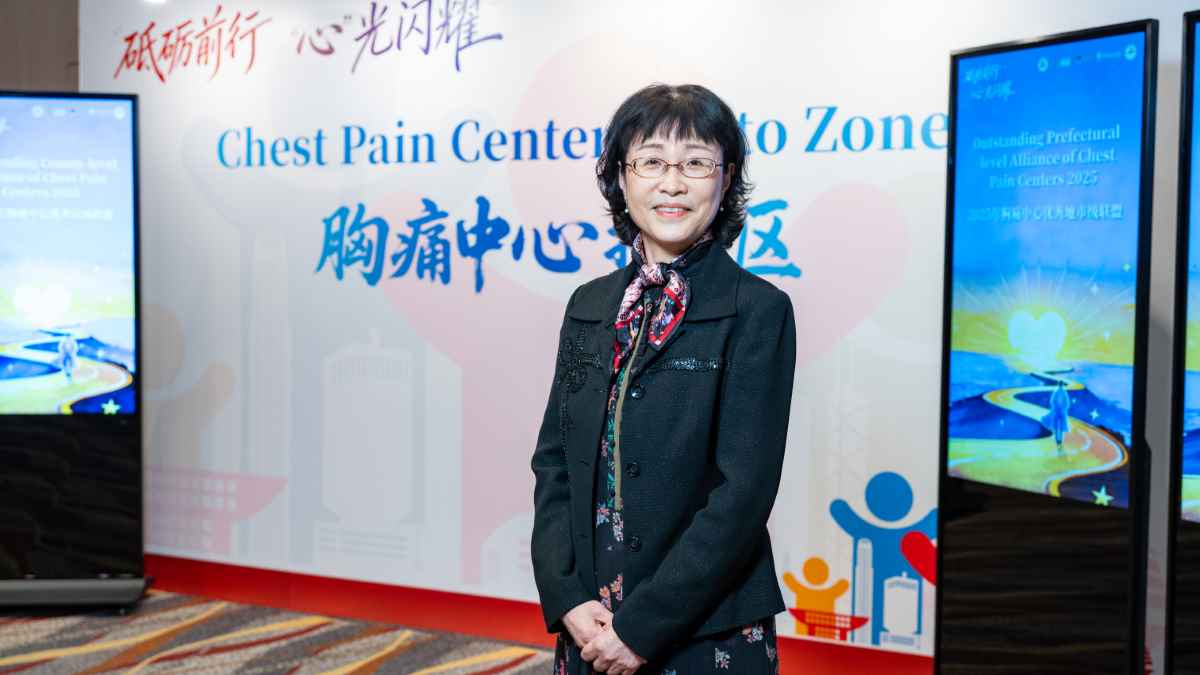
As a HKTB-appointed HKCA, Prof Lu Shi-Juan, who is a Member of Hainan Medical Association Cardiovascular Professional Committee, played an instrumental role in bringing CCPCC 2026 to Hong Kong. This marked the latest success story of the HKCA programme, as HKTB celebrated the programme’s milestone 5th anniversary with a HKCA Networking Cocktail Event on 31 March, 2026.
Prof Lu noted, “As a Hong Kong International Convention Ambassador, I have worked closely with the HKTB to bring CCPCC to Hong Kong, which is a gateway to the global stage. Hosting the conference here showcases how Hong Kong can elevate Mainland conferences internationally, foster cross‑border knowledge exchange and help shape the future development of the broader medical and professional community.”
The HKCA programme bands together over 170 local and mainland sector leaders of 13 industries and academics to champion Hong Kong as the World’s Meeting Place. Their initiative and connections have helped Hong Kong secure 50 convention wins that have brought in nearly 100,000 high-value overnight MICE visitors.
Strong Medical Events Lineup in 2026
Over 10 medical conventions will be held in 2026 across various disciplines, including ophthalmology, oncology, antimicrobial resistance and cytology.
Event
(*first-ever in Hong Kong)
Date / Venue
Highlights
The 41st Asia-Pacific Academy of Ophthalmology Congress 2026
5-8 Feb,
HKCEC
The largest and most authoritative ophthalmology congress in APAC, returning to HK for the fifth time, with record-breakingattendance of 11,000+ participants from 111 countries and regions.
The 17th Asian Congress on Oral and Maxillofacial Surgery 2026
27-29 Mar,
HKCEC
Held in Hong Kong for the second time, bringing together internationally acclaimed speakers, globally renowned experts and young surgeons to foster academic exchange and professional development.
The 15th China Chest Pain Centers Congress
3-4 Apr,
HKCEC
Chinese Mainland’s largest conference on chest pain centres, hosted for the first time outside Chinese Mainland.
*Asian Federation of Cytology Societies Conference 2026
8-10 May,
Postgraduate Education Centre, Prince of Wales Hospital
First edition in Hong Kong, bringing together regional and international cytology experts for academic exchange and collaboration.
International Symposium on Antimicrobial Agents and Resistance 2026
12-14 Jun,
HKCEC
A key international platform for academic exchange on infectious diseases and antimicrobial resistance.
European Society of Medical Oncology Targeted Anticancer Therapies Asia 2026
12-14 Jun,
Kerry Hotel
A key Asia-Pacific platform for showcasing the latest advances in early-phase oncology drug development, targeted therapies and precision oncology.
Federation of Asian and Oceanian Biochemists and Molecular Biologists Conference 2026
10-13 Aug,
Cheung Kung Hai Conference Centre, The University of Hong Kong
A major regional scientific meeting in biochemistry and molecular biology, bringing together researchers, educators and professionals from across Asia and Oceania for academic exchange and collaboration.
* 2026 World Cancer Congress
24-26 Sep,
HKCEC
A leading global forum advancing cancer control and research.
2026 Asia-Pacific Longevity Medicine International Summit
1-4 Oct,
TBC
A leading international platform and regional collaborative hub dedicated to longevity medicine and innovation, attracting top longevity scientists, medical experts, cross-industry entrepreneurs and investors from over 50 countries.
10th Asia Cornea Society Scientific Meeting 2026
11-13 Dec,
TBC
A key regional forum for cornea specialists to exchange the latest clinical insights, diagnostics and treatments, and to strengthen collaboration across the Asia-Pacific ophthalmology community.
Association of Pacific Rim Universities (APRU) Global Health Conference 2026
7-9 Dec,
Henry Cheng International Conference Centre, CUHK
Third time in Hong Kong, convening leading academics, policymakers and practitioners to address critical global health challenges through interdisciplinary collaboration and innovation.
We use cookies on our website to give you the most relevant experience by remembering your preferences and repeat visits. By clicking “Accept”, you consent to the use of ALL the cookies.
This website uses cookies to improve your experience while you navigate through the website. Out of these, the cookies that are categorized as necessary are stored on your browser as they are essential for the working of basic functionalities of the website. We also use third-party cookies that help us analyze and understand how you use this website. These cookies will be stored in your browser only with your consent. You also have the option to opt-out of these cookies. But opting out of some of these cookies may affect your browsing experience.
Necessary cookies are absolutely essential for the website to function properly. These cookies ensure basic functionalities and security features of the website, anonymously.
Cookie
Duration
Description
cookielawinfo-checkbox-analytics
11 months
This cookie is set by GDPR Cookie Consent plugin. The cookie is used to store the user consent for the cookies in the category "Analytics".
cookielawinfo-checkbox-functional
11 months
The cookie is set by GDPR cookie consent to record the user consent for the cookies in the category "Functional".
cookielawinfo-checkbox-necessary
11 months
This cookie is set by GDPR Cookie Consent plugin. The cookies is used to store the user consent for the cookies in the category "Necessary".
cookielawinfo-checkbox-others
11 months
This cookie is set by GDPR Cookie Consent plugin. The cookie is used to store the user consent for the cookies in the category "Other.
cookielawinfo-checkbox-performance
11 months
This cookie is set by GDPR Cookie Consent plugin. The cookie is used to store the user consent for the cookies in the category "Performance".
viewed_cookie_policy
11 months
The cookie is set by the GDPR Cookie Consent plugin and is used to store whether or not user has consented to the use of cookies. It does not store any personal data.
Functional cookies help to perform certain functionalities like sharing the content of the website on social media platforms, collect feedbacks, and other third-party features.
Performance cookies are used to understand and analyze the key performance indexes of the website which helps in delivering a better user experience for the visitors.
Analytical cookies are used to understand how visitors interact with the website. These cookies help provide information on metrics the number of visitors, bounce rate, traffic source, etc.
Advertisement cookies are used to provide visitors with relevant ads and marketing campaigns. These cookies track visitors across websites and collect information to provide customized ads.











 Hospitality4 days ago
 Business4 days ago
 Energy4 days ago
 Business4 days ago
 Business4 days ago
 Energy4 days ago
 Business2 days ago
 Business4 days ago