Connect with us
Anglostratits

Business

The BEAC and CEMAC’s Monetary and Economic Harakiri (By Leoncio Amada NZE)

Published

on

BEAC

Despite potentially being an important market of approximately 59 million inhabitants and abundant natural resources, the CEMAC zone continues to be the least developed with the worst fiscal and monetary policies on the African continent

JOHANNESBURG, South Africa, September 30, 2022/APO Group/ — 

By Leoncio Amada NZE, Executive President of the African Energy Chamber (www.EnergyChamber.org) CEMAC zone, President of APEX INDUSTRIES SA

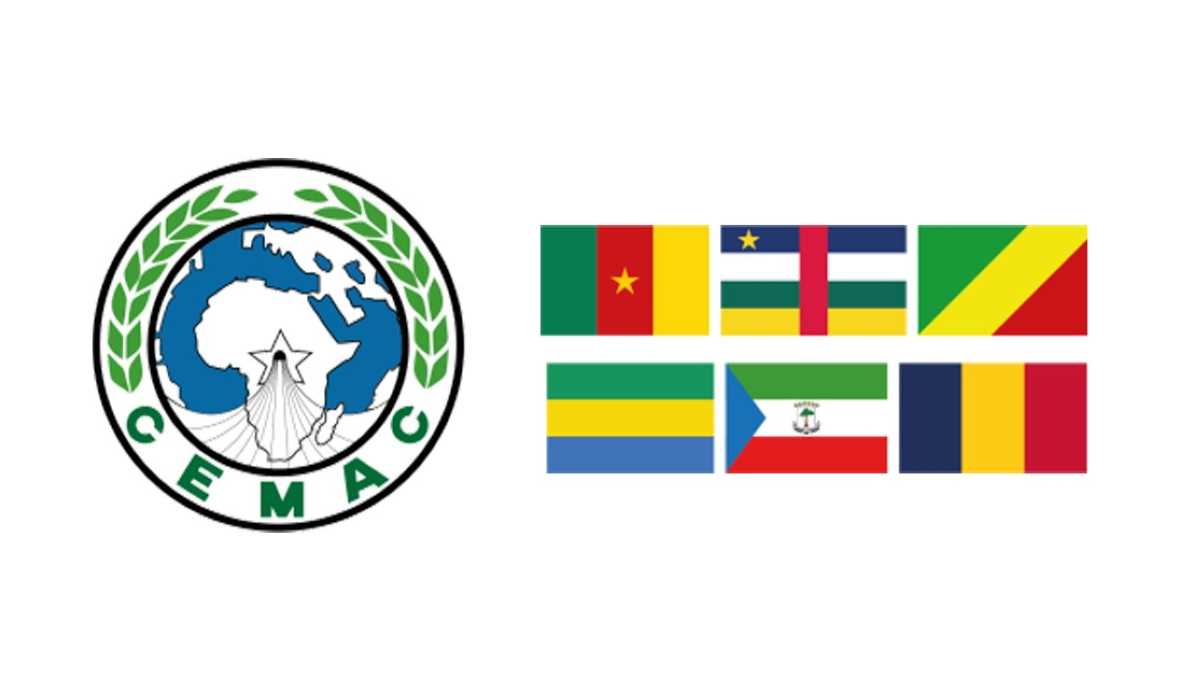
The global health and economic crisis caused by the COVID-19 pandemic impacted the economic foundations of the CEMAC zone in an unprecedented way due to the limited integration and economic diversification of the region. The six countries from the union – Cameroon, Equatorial Guinea, Gabon, Chad, the Central African Republic and the Republic of Congo – share a regional economy dominated mainly by hydrocarbons, which represent 80% of export revenues and 75% of tax revenues, according to the World Bank and the International Monetary Fund. From the six member states, only Cameroon is a net importer of oil. However, Chad, Congo-Brazzaville, Equatorial Guinea and Gabon are more dependent on oil than Cameroon.

The Promised Economic Diversification that has Never Arrived

For decades, governments from CEMAC countries have been talking about economic diversification programs that have not been as successful as we all hoped. The reason: excellent economic diversification plans and programs have been prepared on paper, but the private sector’s development has not kept pace: one cannot speak of diversification and economic growth in the absence of a strong national or regional business fabric that generates employment and business opportunities for nationals and foreigners. In short, the private sector must have the weight it deserves; it must be the thermometer with which the temperature and vigor of economic activity is measured; and, above all, it must be the master of the orchestra in the design and articulation of any macroeconomic program in the medium and long term for it to has a minimum chance of prospering.

Despite potentially being an important market of approximately 59 million inhabitants and abundant natural resources, the CEMAC zone continues to be the least developed with the worst fiscal and monetary policies on the African continent.

Out of 190 countries in the World Bank’s “Doing Business” index in 2020, the six CEMAC countries are in the worst positions with Cameroon in position 167; Gabon at position 168; Equatorial Guinea in position 178; Chad at position 182; Central African Republic in position 184; and Republic of the Congo at position 180. With the scenario described above, it is not surprising that the flow of foreign investment to the region has decreased exponentially in recent years.

A Sinking Ship

There are moments when it becomes necessary to call things by their name, moments when the silence is not an option, moments when it is necessary to denounce and expose the bad actors that are holding back the development of the African continent, moments when we must put the general public interest above anything else.

The time has come for the BEAC to remove its suffocating boot from the neck of the small entrepreneur and businessman from the CEMAC area

The time has come for Mr Abbas Mahamat Tolli, Governor of the BEAC, to respond to regional and international public opinion on certain issues related to the implementation of his disastrous #BEACForex Regulation in the CEMAC zone.

The regional business community, foreign investors, partners in development and the general population of the CEMAC region are experiencing unbearable pain because of irresponsible monetary policies that are ruining thousands of lives and businesses. The excuse for the implementation of clearly disastrous and Neanderthal-style monetary policies to safeguard the parity of a currency whose economy is in free fall no longer convinces anyone.

Does BEAC’s Governor work for the strengthening and development of CEMAC’s business ecosystem, or is he at the service of certain interests whose geostrategic objective could be to see the region totally financially destroyed and indefinitely in the economic mess in which the six countries find themselves?

The African Energy Chamber (AEC) invites the Governor of BEAC and his team to participate in the upcoming African Energy Week (AEW) 2022 that will take place from October 18 to 21 in Cape Town, where, among other things, issues related to the economic and financial spectrum of the CEMAC area will be addressed, to give him the possibility of using a powerful platform such as #AEW2022 to give explanations to the African and global business community about the monetary and financial objectives pursued in the medium and long term with the implementation of disastrous policies that the BEAC is enforcing for the macroeconomic interests of the subregion.

Need for an Urgent Intervention of Public Authorities

The AEC invites the Heads of State and Finance Ministers of the #CEMAC zone to adopt corrective measures that would mitigate the unnecessary economic damage caused in the region by the implementation of the disastrous and irresponsible BEAC’s Foreign Exchange Regulation – an issue that has become a true nightmare for businessmen and women who generate national wealth and employment in the subregion. A monetary policy that constitutes today the main obstacle for the attraction of foreign direct investment into the region and blocks any attempt or maneuver of economic recovery.

A monetary and financial system conceived and created more than four decades ago and that has not been adapting itself to the economic realities of a globalized, dynamic and increasingly interconnected and interdependent world, cannot respond or face the complexities that derive from the interaction between economic actors of the subregion with the outside world.

The time has come for the BEAC to remove its suffocating boot from the neck of the small entrepreneur and businessman from the CEMAC area.

The time has come for CEMAC economies to take advantage of incentives offered by the African Continental Free Trade Agreement for their development and diversification.

And, above all, the time has come for Mr. Abbas Mahamat Tolli to step aside from his position as Governor of the BEAC and allow people with the macroeconomic vision that the current times require and that the CEMAC zone deserves.

CEMAC businessmen and women are simply crying out: “We want to breath.”

Distributed by APO Group on behalf of African Energy Chamber.

Business

CEM Africa 2026: Africa’s CX Leaders Meet in Cape Town

Published

on

Final programme brings together senior CX leaders, practical workshops, technology showcases and high-value industry conversations from 18–20 August 2026

CAPE TOWN, South Africa, August 14, 2026/APO Group/ –CEM Africa 2026 will return to the Century City Conference Centre in Cape Town from 18–20 August, bringing together senior customer experience, marketing, digital, customer service, technology and transformation leaders for the 14th edition of Africa’s leading customer experience summit.

With organisations across the continent under growing pressure to improve customer outcomes while navigating AI adoption, automation, rising expectations, fragmented journeys and commercial scrutiny, the 2026 programme has been built around a central question: how can businesses use technology to improve customer experience at scale without losing trust, relevance or the human connection?

Across three days, CEM Africa will combine strategic conference discussions, hands-on workshops, technology demonstrations, an exhibition, networking activations and peer-to-peer exchange, giving delegates the opportunity to move from big-picture industry questions to practical frameworks they can apply inside their organisations.

A speaker line-up rooted in real CX leadership

The 2026 speaker faculty brings together leaders working directly across customer experience, marketing, digital transformation, customer service, commerce, technology and organisational change.

Among those joining CEM Africa 2026 are:

  • Bruce Whitfield, business journalist and best-selling author
  • Khensani Nobanda, Group Chief Marketing Officer, Nedbank
  • Francois Retief, Head of Customer Experience, FNB
  • Martin Urrutia, global toy industry leader
  • Marnitz Van Heerden, Head of Customer Experience, Discovery Limited
  • Grace Brown, Head of Customer Experience and Client Services, JSE
  • Khwaṱhelani Tshikovhi, Head: Santam Experience and Client Care, Santam Insurance
  • Shaun Edmeston, Director of Customer Experience, Absa Bank Mauritius
  • Job Thomas, Chief Customer Officer, WooCommerce
  • Richie Sobayeni, Group Head of Customer Experience Design, Equity Group Holdings
  • Julia Ahlfeldt, Customer Experience Strategist and Business Advisor
  • Rashid Toefy, Deputy Director-General, Department of Economic Development and Tourism
  • Katie Stabler, Founder and Director, CULTIVATE Customer Experience by Design
  • Charlie Stewart, CEO, Rogerwilco
  • Omowunmi Akingbohungbe, Executive Director, WIMBIZ
  • Wavi Mungala, Board Director, Institute of CX – Kenya

The wider faculty spans financial services, retail, technology, insurance, e-commerce, public sector, consulting and customer operations, reflecting the increasingly cross-functional nature of customer experience.

From AI experimentation to measurable outcomes

Artificial intelligence will be one of the defining conversations at CEM Africa 2026, but the programme moves beyond broad speculation about AI to focus on where organisations are seeing – or still struggling to achieve – real operational and commercial value.

Day One will examine how African organisations can move from AI pilots to production, including governance, data readiness, agent co-pilots, voice AI, speech analytics, conversational AI and AI-driven personalisation.

The agenda also tackles the questions surrounding responsible adoption. Sessions will examine AI governance and ethics, privacy, POPIA, customer consent and the challenge of automating at scale without damaging trust.

A dedicated discussion, “Will AI Make Your Brand More Trustworthy?”, will explore whether increased automation strengthens customer confidence or risks undermining it, before the day closes its content programme with the audience-led town hall “Will Humans Still Matter in a World of AI-Driven Customer Experience?”

Data, insight and the business case for CX

For leaders under pressure to demonstrate the commercial return on customer experience investment, CEM Africa will put measurement firmly on the agenda.

Workshops will address customer data quality, real-time insight, first-party data strategy, predictive analytics and Voice of Customer, alongside practical sessions on building an end-to-end CX scorecard, customer lifetime value and mapping journey costs.

Delegates will also be able to explore how to prove CX ROI to executive teams, connecting customer experience activity to revenue uplift, churn reduction, operational efficiency and cost-to-serve.

The emphasis throughout is on turning customer insight into decisions and measurable business outcomes rather than collecting more data without action.

Designing customer journeys that work in African markets

The programme will also address the practical realities of customer engagement across diverse African markets.

Topics include omnichannel journey design, mobile-first experiences, WhatsApp as a service channel, self-service, proactive CX and reducing friction across high-volume journeys such as onboarding, billing, claims and fulfilment.

Sessions will examine how organisations can create accessible experiences for customers with different levels of digital literacy, connectivity and channel preference, while maintaining consistency between physical, digital and human-assisted interactions.

African market realities also feature in discussions on sentiment analysis, conversational AI, language, code-switching and customer behaviour.

The people behind customer experience

Technology is only one side of the CX equation.

CEM Africa 2026 will look closely at employee experience, organisational culture and the changing capabilities required of customer-facing teams.

Sessions will cover customer-centric culture, employee resilience, burnout, hybrid CX teams, human-centred service, AI upskilling, cross-functional collaboration and change management.

The programme will also explore the relationship between employee experience and customer outcomes, recognising that organisations cannot sustainably improve CX without equipping and engaging the people responsible for delivering it.

What the three days will look like

Tuesday, 18 August – Day Zero

CEM Africa begins with an afternoon dedicated to registration, community engagement and relationship-building ahead of the main conference programme.

Delegates can expect networking activities and activations, including tastings, community conversations, the CEM Networking Padel Tournament and sponsored welcome drinks.

The format is designed to give speakers, delegates, partners and industry leaders an opportunity to begin making connections before the formal summit gets underway.

Wednesday, 19 August – Day One

Day One opens with a strong focus on trust, relevance and measurable customer experience outcomes.

The main stage begins with Deshnie Govender’s opening keynote, “The Culture-Led Customer: The Emerging Markets Playbook for Building Trust, Relevance and Loyalty”, followed by sessions examining the future of AI-powered customer experience, journey-led CX orchestration and business journalist and best-selling author Bruce Whitfield’s keynote, “The Trust Advantage”, exploring how trust can reduce friction and unlock better business results.

From late morning, the programme moves into a series of parallel workshops and panels built around some of the most pressing issues facing CX leaders today.

The first sessions explore building trust in the AI era, with discussions on whether AI investments are delivering measurable business outcomes, the changing role of the CX leader, enterprise AI agents, frictionless customer journeys and lessons from CEM Africa Awards-winning teams.

The afternoon broadens the conversation into customer intelligence, Voice of Customer, Agentic AI, digital trust and human reassurance, alongside a dedicated discussion on how African contact centres and BPO operators are positioning themselves to compete globally.

Later sessions place the human experience firmly back at the centre of CX. Leaders will explore employee wellbeing, emotionally intelligent journey design, empathy in an AI-enabled environment, customer-centric culture and how to lead CX teams through continuous change.

The final workshop block tackles the commercial realities of CX, including moving from NPS to P&L, improving checkout conversion, connecting customer, employee and digital experience, driving loyalty through hyper-personalised research and the realities of stepping into senior CX leadership.

Day One closes with Matchmaking and Happy Hour, followed by the CEM Engage Party, creating further opportunities for delegates, speakers, partners and solution providers to continue conversations and build meaningful industry relationships.

Thursday, 20 August – Day Two

Day Two turns the focus towards human impact, business value and the future direction of customer experience in Africa.

The main stage opens with Zahirah Variawa’s motivational keynote, “The Moments People Remember: Why the Experiences We Create Matter More Than We Think”, followed by Rashid Toefy on designing better citizen experiences and building trust through public services.

A QuestionPro and Metropolitan fireside chat explores the use of AI within Voice of Customer programmes, while Katie Stabler and Debi Potgieter’s “What the Fluff?” challenges the industry to examine whether CX initiatives have genuine substance when put under pressure.

The morning also features the CEM 2026 Advisory Board Panel, bringing together leaders from across Africa to examine the future of CX through the lenses of trust, technology, business value and human connection, before Martin Urrutia, Head of Global Retail Experience at The LEGO Group, takes to the stage for the keynote “Experience Is the Brand.”

The afternoon workshop programme moves from strategy into execution.

Sessions will explore AI-powered WhatsApp journeys, voice AI in the South African market, the point at which brand promises break down, self-improving human and AI service models and how CX leaders can prove ROI in language that resonates in the boardroom.

The final workshop block looks further ahead. Delegates can explore CX designed for measurable ROI, the Future African Customer 2030, organisational trust, scalable experience design, the risks of poor AI, emerging CX research and Human First experience design.

The programme then closes with WiN CX Africa: Women Shaping Excellence in Every Experience, bringing together female leaders to explore how cultures of safety, trust and inclusion shape stronger customer and employee experiences.

Across both days, the programme reflects the central theme of CEM Africa 2026: Trust, Technology and the Human Future of CX in Africa, with a clear emphasis on moving beyond theory towards customer experience strategies that create stronger relationships, better operational outcomes and measurable business value.

More than a conference programme

Alongside the conference and workshops, attendees will have access to the CEM Africa exhibition, Expo Spotlight Stages, technology demonstrations, networking functions and opportunities to engage directly with CX solution providers and peers facing similar transformation challenges.

For senior leaders, the value lies not simply in hearing what is changing, but in comparing approaches with peers, interrogating technology choices, finding practical solutions and building relationships across Africa’s customer experience community.

CEM Africa’s broader 2026 positioning – “Excellence in Every Experience: Shaping the Future of Customer Engagement Across Africa” – reflects an industry that is increasingly being asked to connect customer experience directly to business growth, loyalty, trust and resilience.

With the event now days away, CEM Africa 2026 offers organisations a timely opportunity to understand where customer experience is heading next — and what leaders need to do now to stay relevant.

CEM Africa 2026 takes place from 18–20 August 2026 at the Century City Conference Centre in Cape Town, South Africa.

For the latest programme, speaker line-up and delegate availability, visit https://apo-opa.co/4zgt0bJ.

Distributed by APO Group on behalf of VUKA Group.

Continue Reading

Business

KoçSistem Leads Türkiye’s Information Technology (IT) System Integrator for the Eighth Consecutive Year as KoçDigital Wins Top Artificial Intelligence (AI) Award

Published

on

KoçSistem

KoçSistem ranked first in ICT 500’s main system integrator category for an eighth consecutive year, while KoçSistem and KoçDigital recorded 10 category wins as KoçSistem expands its MENA operations through Dubai and Riyadh

ISTANBUL, Türkiye, August 9, 2026/APO Group/ –KoçSistem (www.KocSistem.com.tr), a Türkiye-based technology company, ranked first in the main Information Technology Systems Integrator and Business Partner category of the 27th ICT 500, the country’s most comprehensive ICT (information and communication technology) sector research.


The company announced that the eighth consecutive category lead, as well as 10 combined category wins for KoçSistem and KoçDigital, support its MENA growth through offices in Dubai and Riyadh.

“Securing this leadership for an eighth consecutive year in ICT 500 is a strong reference for our leadership position in Türkiye,” said Mehmet Ali Akarca, General Manager of KoçSistem. “It also supports our objective of growing in international markets. We are pleased to take the technology expertise and operational capabilities we developed over many years in Türkiye to the MENA region.”

Ten category wins across two companies

KoçSistem’s eight first-place results covered the main system integrator category and areas including consulting, cloud, hosting management, cybersecurity, managed services and data backup and storage hardware.

With over 80 years of experience, we aim to create long-term value for the region’s digital ecosystem

KoçDigital added two first-place results in data warehousing and business intelligence software, and artificial intelligence under the “Contribution to Türkiye’s Economy” category.

ICT 500 ranks Türkiyes largest ICT companies

ICT 500 is BThaber’s annual ranking of Türkiye’s 500 largest ICT companies by revenue, with additional tables covering operating categories. The latest edition assessed 2025 data and marked the study’s 27th year.

The research reported that the combined 2025 revenue of the 500 ranked companies reached TRY 1.6 trillion, up 40 per cent from 2024.

MENA growth through Dubai and Riyadh

KoçSistem opened offices in Dubai and Riyadh in 2024 and continues to develop its MENA business in AI, cloud, cybersecurity, data analytics and managed services.

The offices extend a regional initiative outlined at GITEX Dubai 2024, when KoçSistem described Dubai as a base for developing customer and partner relationships across the Gulf and wider MENA markets.

“With over 80 years of experience, we aim to create long-term value for the region’s digital ecosystem,” Akarca concluded.

Distributed by APO Group on behalf of KoçSistem.


Continue Reading

Energy

Venezuela Global Investment Forum to Showcase Major Investment Opportunities at African Energy Week (AEW) 2026

Published

on

African Energy Chamber

The forum will strengthen investment ties between Venezuela and Africa while advancing South-South energy cooperation

CAPE TOWN, South Africa, August 7, 2026/APO Group/ –The Venezuela Global Investment Forum will take place during African Energy Week (AEW) 2026 in Cape Town from October 12 -16, bringing together senior Venezuelan government officials, national oil company leadership, international energy executives, financiers and commodity traders to showcase one of the world’s most significant energy market reopening while creating a direct pathway for global investment into Venezuela’s rapidly evolving hydrocarbons sector.


Organized as a flagship feature of AEW 2026, the Venezuela Global Investment Forum underscores the growing momentum behind the country’s energy sector reforms and its renewed engagement with international investors. More than a traditional conference session, the Forum will connect investors directly with bankable upstream, natural gas, infrastructure and power opportunities by showcasing Venezuelan projects alongside some of Africa’s largest energy developments in the AEW Deal Room.

Following sweeping reforms to the country’s Organic Hydrocarbons Law earlier this year, Venezuela has introduced one of its most comprehensive investment overhauls in decades. The reforms expand opportunities for private operators, establish new production participation contracts, introduce more competitive fiscal terms and strengthen international arbitration mechanisms aimed at reducing investment risk and restoring confidence among international capital providers.

Venezuela is opening a new chapter for its energy industry

“Venezuela is opening a new chapter for its energy industry. The reforms underway are creating a more competitive and attractive investment environment and the Venezuela Global Investment Forum at AEW 2026 provides the ideal platform for international investors to engage directly with decision-makers and explore the opportunities emerging across the country’s oil, gas, infrastructure and power sectors,” says NJ Ayuk, Executive Chairman, African Energy Chamber.

These reforms are already reshaping the investment landscape. The government is targeting crude production of 1.4 million barrels per day (bpd) by the end of 2026 after output recovered to approximately 1.2 million bpd during the first half of the year. Beyond oil production, Venezuela is advancing a broader strategy centered on natural gas monetization, offshore development, infrastructure rehabilitation and power sector modernization, creating opportunities across the entire energy value chain.

Throughout the Forum, delegates will hear directly from ministers, senior government officials, national oil company executives, international operators, development finance institutions, commodity traders and technical leaders responsible for implementing Venezuela’s new investment framework. Discussions will focus on expanding upstream investment, accelerating natural gas development, modernizing infrastructure and creating long-term partnerships that support Venezuela’s renewed role in global energy markets.

The forum also reinforces the strategic relationship between AEW 2026 and Venezuela Energy Week, which will take place in Caracas from February 22-25, 2027. Together, the two events form a coordinated international investment campaign that begins by introducing global investors to Venezuela’s reformed investment environment in Cape Town before continuing in Caracas, where commercial negotiations, technical engagement and project execution will move toward final investment decisions.

As global energy markets continue to prioritize supply security, infrastructure investment and new sources of production growth, Venezuela is positioning itself to re-establish its role as a major international energy supplier. Through the Venezuela Global Investment Forum at AEW 2026, investors will gain an unparalleled opportunity to engage with the country’s new investment framework, evaluate commercially attractive projects and build partnerships that support Venezuela’s return to global energy markets while strengthening cooperation between Africa and Latin America.

Distributed by APO Group on behalf of African Energy Chamber.

Continue Reading

Trending