Connect with us
Anglostratits

Business

Why Now is the Time to Enter Venezuela’s Energy Market

Published

on

Etu Energias

New contracts, rising output and surging rig demand position Venezuela’s energy market for 2027 growth

CARACAS, Venezuela, November 26, 2026/APO Group/ –Venezuela’s oil and gas sector has officially moved past regulatory reform and into active capital deployment, opening an immediate window for global industry players. With 61 definitive contracts already signed out of a 105-deal year-end target, the industry’s focus has shifted squarely from negotiations to field execution.


Taking place in Caracas from February 22–25, Venezuela Energy Week (VEW) 2027 offers international companies a direct path into this fast-moving market. The event will bring global operators, suppliers and Venezuelan officials together to forge partnerships across the Orinoco Belt, Maracaibo Basin and offshore gas blocks.

Recent deal flow shows major operators moving fast to secure acreage, led by ExxonMobil’s November evaluation pact across seven upstream areas and TotalEnergies’ September re-entry agreement. Earlier in September, Chevron committed over $7 billion to reach 600,000 barrels per day (bpd); GeoPark signed a deal for the Bare block, backed by a planned $7 billion; and Eni took sole operatorship of Junín 5.

Operators are rapidly turning those signatures into physical field work to lift national output from 1.2 million bpd in September toward 1.5 million bpd by late 2027. Meanwhile, Shell, bp, XRG and UCC Oil and Gas are advancing the Loran offshore gas field, while Maurel & Prom and Repsol are running mature-field workovers.

Surging activity is sparking urgent demand for drilling rigs and infrastructure. Ensign Energy Services announced in November plans to expand its fleet from two to 15 rigs within two years. Tenaris is scaling from five to 18 rigs in 2027, alongside major November hiring drives by SLB, Halliburton and Baker Hughes.

Local firms are positioning themselves to capture this wave, highlighted by Venezuelan engineering firm Inelectra signing a November 4 alliance with Fluor Corporation. Domestic peer VEPICA has also teamed up with KBR and Baker Hughes on Shell’s offshore gas projects, while local contractors gear up for civil works and U.S.-dollar supply chains.

International companies are actively seeking vetted local partners to navigate procurement and midstream upgrades, such as Baker Hughes, Lindsayca and Fulcrum LNG’s October gas pipeline and LNG alliance. In the wake of this massive momentum for the country, VEW 2027 stands as the premier forum to facilitate partnerships and secure the capital needed to drive a surge in energy market activity.

Organized by Energy Capital & Power and taking place under the patronage of Acting President Delcy Rodríguez, PDVSA and the Ministry of Hydrocarbons, Venezuela Energy Week 2027 will convene in Caracas on February 22–25. To register, visit www.VenezuelaEnergyWeek.com.

Distributed by APO Group on behalf of Energy Capital & Power.


Business

Intra-African trade reaches $213.8bn while only 15% of the continent’s trade stays within Africa, Starks’ report finds

Published

on

Starks Associates

Banks’ share of African trade has fallen from 40% to 23%, and a shortage of foreign currency is the constraint they cite most often

ADDIS ABABA, Ethiopia, November 26, 2026/APO Group/ —

  • Instant payments across Africa have more than tripled to 64.6 billion transactions a year, while gaps in currency, identity and data keep that growth largely within national borders


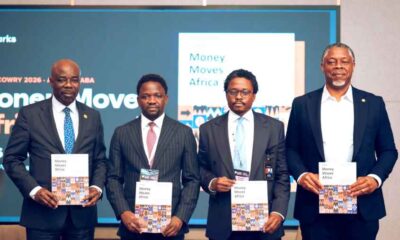
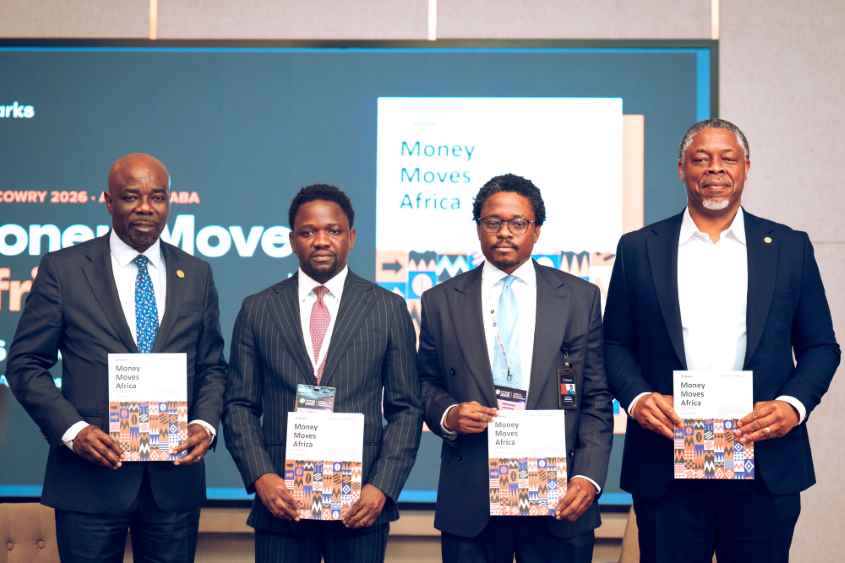
Starks Associates (www.StarksAssociate.com) today released How Money Moves Across Africa at PAPSS COWRY 2026, a report on how payments between African countries work and what holds them back. Drawing on Afreximbank (www.Afreximbank.com) data, the report finds that trade between African countries reached $213.8 billion in 2025 and still accounts for only about 14.6% of the continent’s total trade.

Instant payment systems within African countries handled 64.6 billion transactions worth $1.98 trillion in 2024, more than three times the 2020 volume, according to AfricaNenda (www.AfricaNenda.org). Payments across borders have not kept pace. A business in Lagos paying a supplier in Accra needs cedis in the right amount, a rate its bank can execute and a bank that can verify the counterparty, and the report finds shortfalls at each step.

Of the banks surveyed by the African Development Bank (www.AfDB.org), 36% cited limited foreign currency liquidity as their main constraint on trade finance, and banks’ share of African trade fell from 40% between 2011 and 2019 to 23% between 2020 and 2024. Where no direct market exists between two African currencies, banks route payments through the US dollar, which means two conversions and two spreads.

We have published our desk prices so that treasurers, banks and regulators can work from the same numbers

Identity checks add further friction. Nigeria had only 541 active Legal Entity Identifiers (www.GLEIF.org) in September 2025, which leaves banks to verify most corporate counterparties from scratch for each cross-border payment.

Starks Associates supplies the foreign currency and settlement liquidity that, according to the report, decides whether a cross-border payment goes through, converting African currencies directly into one another without a dollar leg. It is a liquidity partner to PAPSS (www.PAPSS.com).

With no public price series for business payments of this size, the report includes indicative quotes from the Starks desk. A naira to cedi payment costs 0.80% at $10,000 and 0.64% at $250,000. Naira to Kenyan shilling payments cost 0.72% and 0.58%, and Mozambican metical to Botswana pula payments 0.49% and 0.40%.

“Moving money across Africa has always needed three things: a currency people accept, someone they trust to honour it, and a safe route for it to travel,” said Oreoluwa Adeyemo, Co-CEO of Starks Associates. “The route is far stronger than it was five years ago. Our role is to make sure the currency is available when a business needs it, so that a supplier in Accra or Nairobi is paid in its own currency.”

Adewole Adedeji, Co-CEO of Starks Associates, said: “We have published our desk prices so that treasurers, banks and regulators can work from the same numbers. A business paying a supplier in another African country should know what that payment will cost before it sends it, and we would welcome other providers sharing their prices too.”

The report calls on banks to quote rates they can execute, on corporate treasurers to compare providers on the amount the supplier receives, on regulators to make access to foreign currency for trade predictable, on payment system operators to publish indicative costs, and on development finance institutions to provide guarantees and local-currency liquidity lines.

Starks plans to act on several of the report’s findings in 2027. The company intends to extend its liquidity to more African payment corridors, expand its Private Credit product for businesses that trade across borders, and work more closely with central banks, payment system operators, banks and development finance institutions on the gaps the report identifies. Its aim is to make trade between African countries as straightforward as trade within them.

PAPSS COWRY 2026 takes place in Addis Ababa on 26 and 27 November, co-hosted by PAPSS and the National Bank of Ethiopia (www.NBE.gov.et), which joined the system in October. Starks, a sponsor of the summit, joins its main-stage panel on foreign exchange, treasury and settlement on Friday 27 November. The full report, How Money Moves Across Africa, is available to download at https://apo-opa.co/4AZt0Nq.

Distributed by APO Group on behalf of Starks Associates.


Continue Reading

Energy

South Sudan to Launch Five-Block Licensing Round to Boost Crude Output

Published

on

South Sudan

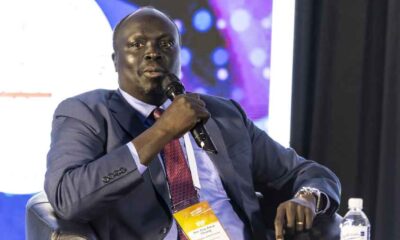
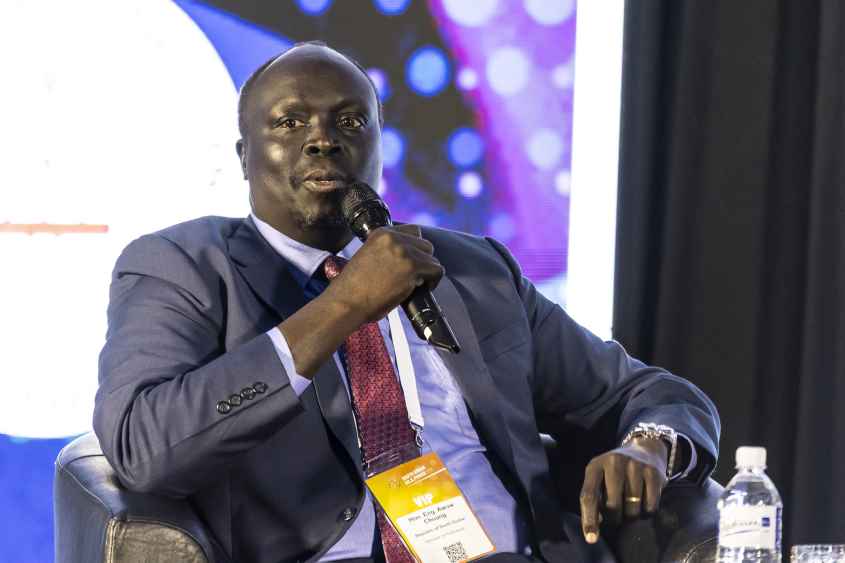
Hon. Eng. Awow Daniel Chuang, Caretaker Minister of Petroleum, announced plans to launch a licensing round during the opening of South Sudan Oil & Power 2026 in Juba

JUBA, South Sudan, November 26, 2026/APO Group/ –South Sudan plans to launch a new licensing round featuring five blocks as the country seeks to accelerate exploration, unlock greenfield potential and increase crude production, Hon. Eng. Awow Daniel Chuang, Caretaker Minister of Petroleum, announced during the opening of South Sudan Oil & Power 2026.


We are planning to have the first licensing round and, after two to three years, have another with five additional blocks and the last with more blocks

The upcoming round is part of a broader push to commercialize the country’s 14 available greenfield blocks and increase national crude output from just under 170,000 barrels per day (bpd) to 200,000 bpd within the next two to three years. According to the minister, preliminary technical studies on the initial five blocks were completed in 2020, but plans to launch the round were delayed by the COVID-19 pandemic.

“We are planning to have the first licensing round and, after two to three years, have another with five additional blocks and the last with more blocks,” stated Caretaker Minister Chuang.

Alongside new exploration, South Sudan is prioritizing the optimization of existing producing fields and brownfield assets to improve recovery rates, supporting the country’s longer-term ambitions of reaching 400,000 bpd. Technology will play a central role in this strategy.

“Moving to 400,000 bpd is an ambition but it is doable. We need to challenge ourselves to use the right technologies to enhance the recovery of oil,” Caretaker Minister Chuang said. He added that only 10-15% of the country’s acreage has been explored, highlighting a strategic opportunity for upstream companies.

Distributed by APO Group on behalf of Energy Capital & Power.


Continue Reading

Energy

South Sudan to Revise Block B2 Terms as Operators Call for Committed Investors

Published

on

SSOP 2026

The closing session of SSOP 2026 drew together two days of production targets, project commitments and investor protections into one message for global capital

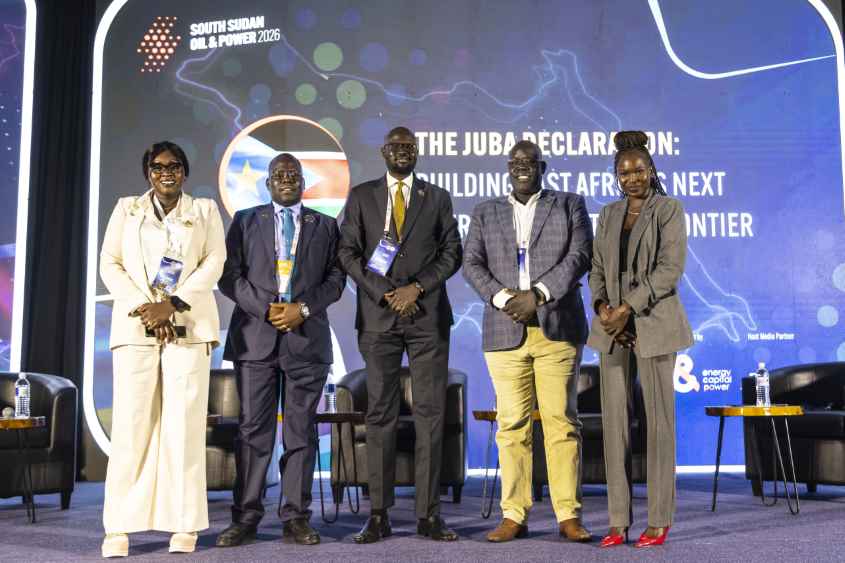
South Sudan will revise the exploration and production sharing agreement (EPSA) for frontier Block B2 and expects the South African National Petroleum Company (SANPC) to begin drilling or assessment immediately afterward, Eng. Lual Chol Dak, Director General of the Petroleum Authority, said on Wednesday at the closing session of South Sudan Oil & Power (SSOP) 2026 in Juba.


The session brought together the public and private-sector commitments made over the two days of the conference. It also laid out the contract terms, regulatory structure and financial conditions the government is offering to establish South Sudan as a secure destination for long-term capital. “I want you to be the first investor to encourage the others,” Dak told SANPC’s delegation.

The commitments presented at the close were made throughout SSOP 2026. Dar Petroleum Operating Company (DPOC) accepted a Ministry of Petroleum target of 120,000 barrels per day (bpd) by August 2027, while Sudd Petroleum Operating Company plans to reach 20,000 bpd in 2027. Greater Pioneer Operating Company reported three hydrocarbon discoveries in 2026, and Nilepet’s engineering subsidiary set out a three-year plan to build the capability to design and construct a refinery. Taken together, the commitments support the government’s goal of lifting national output beyond 200,000 bpd within two to three years.

We need real committed investors that can come and negotiate with us

Dak set out the protections the government is offering in return. Under the Petroleum Act 2012, policy sits with the Ministry of Petroleum, commercial participation with Nilepet and technical regulation with the Petroleum Authority. EPSAs run 25 to 37 years, subject to extension. Every upstream phase requires an environmental and social impact assessment. The ministry has pipeline, depot, refinery and central laboratory projects ready for negotiation. “We need real committed investors that can come and negotiate with us,” he said.

Dr. Jacob Dut Chol, Manager for Audit at DPOC, said the joint operating companies have internal audit and compliance systems in place, and the ministry reviews procurement awards and work program budgets.

“The JOCs are open for investment,” he said, adding that he expects a new joint operating company to emerge in the coming months.

Alam Chaat Paul, Head of the Diversified Sector at Stanbic Bank, said regional financial integration and simpler rules for moving money in and out of South Sudan would make investment decisions easier. Henry Kissinger Silvio, Acting Director General for Planning, Training and Research at the Ministry of Petroleum, said South Sudan’s regulatory frameworks must stay competitive with those of Kenya, Uganda and Ethiopia.

The ministry plans to offer five of the country’s 14 open blocks in an initial licensing round, with five more two to three years later. Investors entering the round will be able to weigh the revised Block B2 terms and the production commitments made at SSOP 2026 before they bid.

Distributed by APO Group on behalf of Energy Capital & Power.


Continue Reading

Trending