Connect with us
Anglostratits

Tech

Huawei releases world’s slimmest and largest foldable smartphone

Published

on

Mate XT 2

First smartphone to run HarmonyOS 7 and include chip design breakthrough LogicFolding
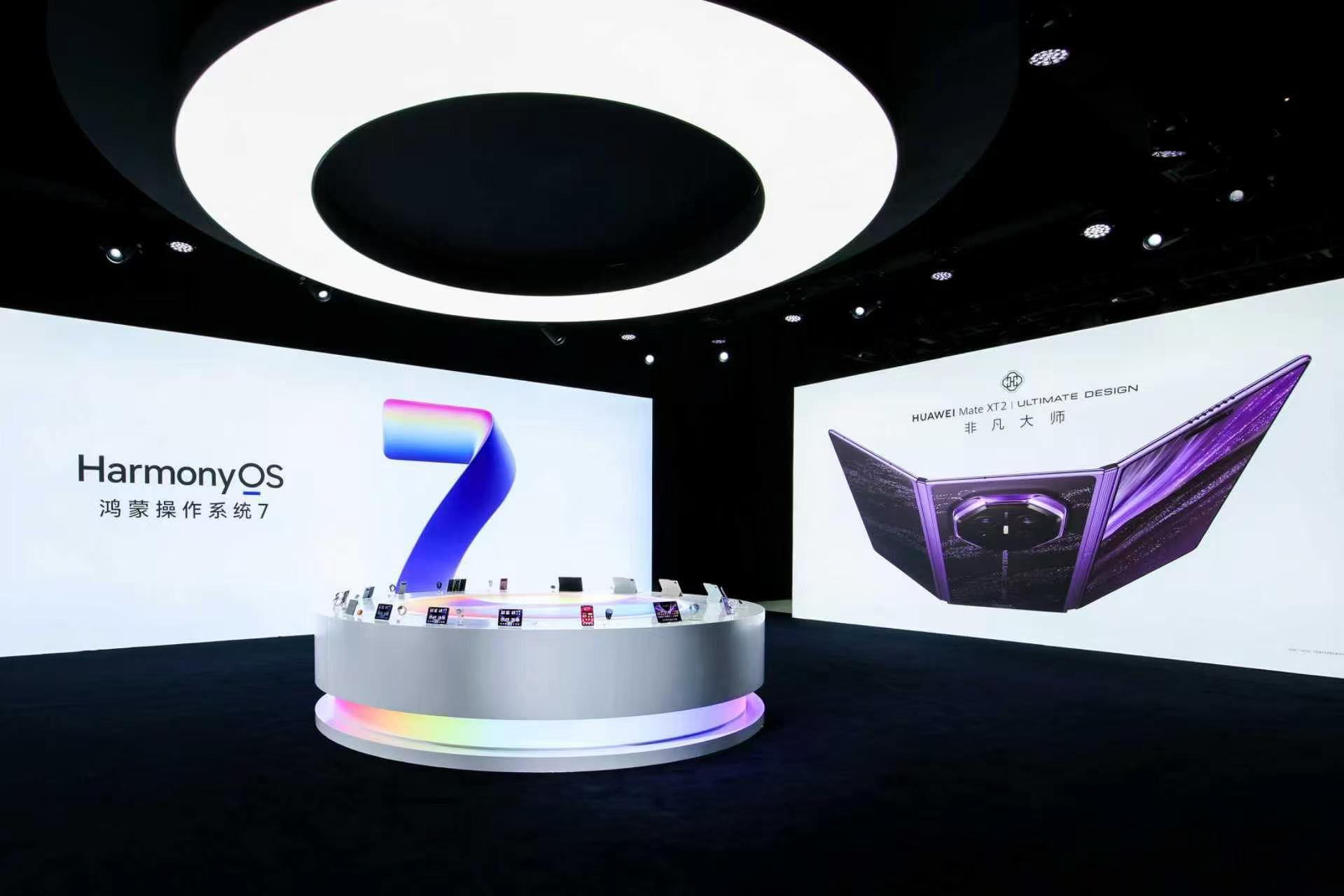
SHENZHEN, CHINA – Media OutReach Newswire – 28 September 2026 – Huawei released the HUAWEI Mate XT 2 | ULTIMATE DESIGN trifold smartphone on September 7. The phone is the first to run HarmonyOS 7, and is the slimmest and largest foldable smartphone in the industry. The Mate XT 2’s Kirin 9050 chip also includes a major breakthrough in semiconductor design. As the first smartphone to feature the LogicFolding Tau (τ) Chip, the Mate XT 2 marks the chip’s official entry into mass commercialization.


World-class engineering and design

The device is proving popular with consumers due to its foldable wing-like form, which means it can be opened up, transforming the phone into a tablet.

The engineering to make this possible is unprecedented. The glass screen must be tough enough to withstand daily use, whilst being able to fold thousands of times. The hinge to allow the screen to fold is the first of its kind. Once open, the handset is just 3.5mm thick. However, the screen is not the only remarkable folding technology in the device.

The first chip with semiconductor design breakthrough, LogicFolding

The Mate XT 2 Ultimate Design includes a major breakthrough in semiconductor design. The phone is the first to use Huawei’s LogicFolding Tau chip Kirin 9050 Pro. Designed by engineers in Huawei’s HiSilicon team, the chip offers a solution to the problem of geometric scaling.

With Moore’s law (the historical observation that the number of transistors on a microchip doubles approximately every two years) believed to be reaching its physical limit, making chips smaller is becoming more challenging and costly.

For Huawei, faced with external restrictions, the need to find a solution came sooner than expected.


In May this year, He Tingbo, President of Huawei’s HiSilicon division, unveiled a new way of designing and making chips, alongside a new law to measure their performance, the τ (Tau) Scaling Law. The work led to Ms He being recently named one of the world’s leading AI innovators by Time Magazine.

The point of shrinking transistors was never the smallness itself, it’s what the smallness delivered. Shoppers looking to buy the latest smartphone don’t care if the chips inside have 7, 5 or even 2-nanometer nodes, they care about the performance of the device in their hands. What matters to consumers is the time it takes for a task to be completed, a video to be shared or a game to load. The performance of the chip should be measured in the same way: by time, not size. This is why Huawei proposed τ (Tau) Scaling Law as an alternative to Moore’s Law.

Breaking through barriers to improve performance

The Kirin 9050 Pro uses 3D integration to boost performance. Traditional chip advancement focussed on packing more and more transistors into a linear plain by making each one smaller. LogicFolding uses 3D integration to reduce the distance between transistors by stacking them on top of one another, increasing the number of transistors whilst reducing the distance between them.

In fact, in the Kirin 9050 Pro transistor density has risen from approximately 155 to 238 million transistors per square millimetre. That’s an equivalent increase to what was achieved in the previous three years using geometric shrinking.

It was thought that stacking active transistors on top of each other and sealing them inside a solid mobile device would present an engineering challenge. Power turns into heat, which in a confined space would raise the temperature and ultimately break the device.

The key to the solution came in recognising that integrated chips have both transistors and circuits. As He Tingbo explains in her IEEE article, Huawei’s τ Chip Was Supposed to Melt?, the inner workings of a chip can be compared to an office worker’s day of work. Many office workers will use more energy on their commute to and from the office than they do at their desk because they are moving around more on the road. The ‘work’ part of their day is not the most energy intensive part as they are often seated at their desk.

The same is true for chips. The most energy intensive part of the process is the ‘commute’, moving data from point A to point B, not processing it. Integrated circuits use power in two main ways. The first is switching, flipping a transistor gate to change a bit from 0 to 1 and back. The second is the transmission of that data, moving the bits from one part of the chip to another.

This is important in mobile phones where a lot of performance requirements are asked of a single chip. Equally, however, in a large AI cluster 80% of the energy is used in the moving the data, not processing it. In both cases, LogicFolding reduces the space between transistors which in turn reduces the power used. The previous assumption that packing transistors on top of one another would increase the heat turned out to be false. In fact, even with a higher transistor density per millimetre, LogicFolding chips run cooler per unit of work. The result is Huawei’s most powerful smartphone ever.

The first phone to run HarmonyOS 7

The Mate XT 2 is the first smartphone to run HarmonyOS 7. Forty-two percent more powerful than the previous generation, it remains the slimmest and largest foldable display in the industry when open. The cover screen spans 6.5 inches, boosting the screen-to-body ratio from 86.4% to 92.8%. Enhanced with 70% better anti-reflection, the screen exhibits a deeper, cleaner black when off, and pure, crystal-clear transparency when lit.

The Huawei Mate XT 2 also introduces the world-first Smart Shield Privacy Screen on a foldable screen. Two independent pixel sets co-exist within the 10.2-inch display at a micro-pitch of just 9 μm. When Privacy Mode is activated, the screen seamlessly switches from a wide viewing angle to a narrow one while maintaining identical resolution and clarity, protecting your privacy in public spaces without compromising your view.

Industry first ECG analysis

Health tech is increasing important to consumers, and so the Mate XT 2 is the industry’s first smartphone to introduce ECG analysis. Capitalising on the innovative tri-fold form factor, users can simply hold both side frames with both hands while unfolded to capture a 30-second ECG signal. Paired with the medically certified analysis software, it generates detailed ECG reports to help identify Sinus Rhythm, Atrial Fibrillation, and Premature Beats.

The launch of the Mate XT 2 marks a significant moment in Huawei’s journey. The company’s R&D has delivered industry leading, and industry changing innovation. More than half of Huawei’s employees work in R&D. That’s over 100,000 people. The company currently holds 160,000 active patents worldwide. In the first half of 2026 alone, Huawei’s R&D investment was over RMB 121 billion, accounting for 25.94% of revenue, up 25.2% year on year.

The HUAWEI Mate XT 2 | ULTIMATE DESIGN starts at RMB 19,999 and is now available for purchase, along with a stylus set, following its official sales launch at 10:08 on September 12th.


Tech

Huawei Launches LUTERRA® S2, Redefining the Future of Residential Energy Systems with Three Ultimate Innovations

Published

on

Huawei

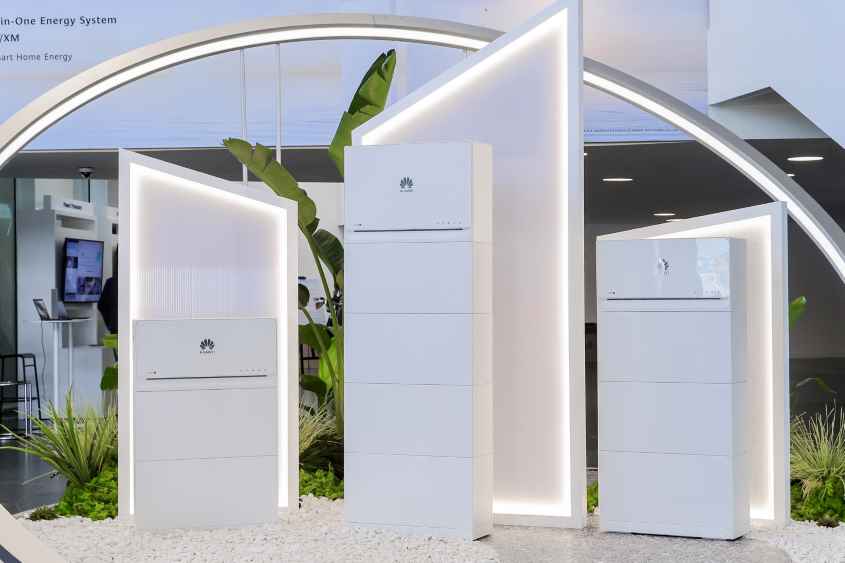
PALMA, SPAIN – Media OutReach Newswire – 11 November 2026 – Huawei announced the launch of HUAWEI LUTERRA S2, an all-in-one residential energy system that integrates a hybrid inverter, storage, and AI-powered energy management in one stackable unit. Designed for easy deployment, LUTERRA S2 can be installed and commissioned in minutes. Available in single-phase (3-10 kW) and three-phase (5- 20 kW) configurations, LUTERRA S2 is the industry’s first all-in-one residential energy system built on Huawei’s proprietary full-SiC (silicon carbide) architecture, delivering exceptional efficiency, power density, and reliability.


“We are thrilled to introduce HUAWEI LUTERRA S2, our next-generation all-in-one residential energy system,” said Steve Zhang, President of Huawei Distributed PV & BESS Business. “By combining full-SiC architecture, AI-driven energy management, and industry-leading safety, LUTERRA S2 is designed to be smaller, lighter, quieter, safer, smarter and more powerful than ever before.”

As solar, storage, EV charging, and home energy management continue to converge, homeowners are looking for solutions that go beyond power and capacity to deliver greater intelligence, efficiency, and safety.

To meet these evolving needs, Huawei introduces HUAWEI LUTERRA S2, a breakthrough residential energy system built on three defining pillars: Ultimate Experience, Ultimate Intelligence, and Ultimate Safety.

Ultimate Experience: From Core Technology to Everyday Experience

LUTERRA S2 combines high power density and compact design, delivering 20 kW-class power in a streamlined form factor. Powered by Huawei’s proprietary full-SiC architecture and ANPC topology, it achieves up to 99% efficiency. Built-in energy optimizers enable up to 5.0 MWh/kWh of lifetime usable energy and a design lifespan of more than 15 years.

Beyond technical performance, LUTERRA S2 is designed to integrate naturally into modern homes. Its art-inspired design, Red Dot Award-winning hardware, App 3.0, and intelligent breathing light create a seamless blend of technology and lifestyle.

The industry’s first 20 kW-class all-natural cooling design eliminates the need for external fans and maintains operating noise below 29 dB.

Ultimate Intelligence: From Automation to Active Decision-Making

Through the AI Energy Management 2.0 platform, LUTERRA S2 brings intelligence to energy planning, operation, and value optimization.

By integrating weather forecasts, electricity prices, household loads, and energy status, the platform intelligently coordinates photovoltaic systems, energy storage, EV charging, heat pumps, and virtual power plants (VPPs). This coordination maximizes the value of every kilowatt-hour generated, stored, and consumed.

For homeowners, the AI Assistant turns complex energy management into simple, conversational interactions, enabling users to make informed energy decisions with ease. For installers, AI 3D modeling simplifies planning and design by identifying roof structures and installation environments. AI-powered diagnostics and remote support further enhance operation and maintenance efficiency.

Ultimate Safety: From Cell-Level Protection to End-to-End Safety

Safety is built into every layer of LUTERRA S2, from battery cells to system-level operations.

Each battery cell incorporates an independent protective isolation structure, supported by Huawei-developed safety components and localized non-propagation design to help contain thermal risks. An intelligent smoke-duct design enables directional pressure relief, smoke evacuation, and cooling, while continuous AC and DC terminal temperature detecting provides proactive detection and protection of critical connections.

LUTERRA S2 has been validated against relevant EU Battery Regulation requirements and complies with key international standards, including IEC 63027 AFCI. It has also undergone TÜV Rheinland safety testing, including a cell thermal runaway test, a 20-minute fire test at 1,000°C, and a 20% hydrogen explosion test, as well as UL 9540A validation.LUTERRA S2 has received the highest-level Safety Mark certification from TÜV Rheinland, backed by the industry’s first cell-level thermal insulation design, safety venting design, and full-link terminal over-temperature protection.

Leading the Future of Residential Energy Systems

More than an energy storage system, LUTERRA S2 connects intelligent technology, enhanced quality of life, and sustainable living. Huawei is setting a new benchmark for next-generation residential energy and accelerating the transition toward a smarter, more sustainable future.

Technical highlights:

Inverter
Up to 3 inverters in parallel, 60kW (20*3) max
Battery
Up to 48 packs in parallel, 336kWh (4*4*3*7) max
Efficiency
Maximum efficiency of 99%
Backup
Switchover under 10 ms; up to 20 kW off-grid load
Cooling and noise
Fanless natural cooling; below 29 dB
Operating range
–25°C to +60°C; IP66; up to C5-M corrosion protection
Connectivity
EEBUS, SG-Ready, OCPP, Modbus-TCP
Safety validation
TÜV Rheinland testing; UL 9540A; AFCI to IEC 63027

More information is available at https://solar.huawei.com/en/products/luterra-s2-xl-xm/


Continue Reading

Business

GITEX World RobotiX 2026 brings humanoid debuts and next-gen embodied Artificial Intelligence (AI) to Dubai

Published

on

GITEX

New launch showcase at GITEX GLOBAL advances the Physical AI phenomenon as global humanoid robot shipments surpass 22,000 in H1 2026

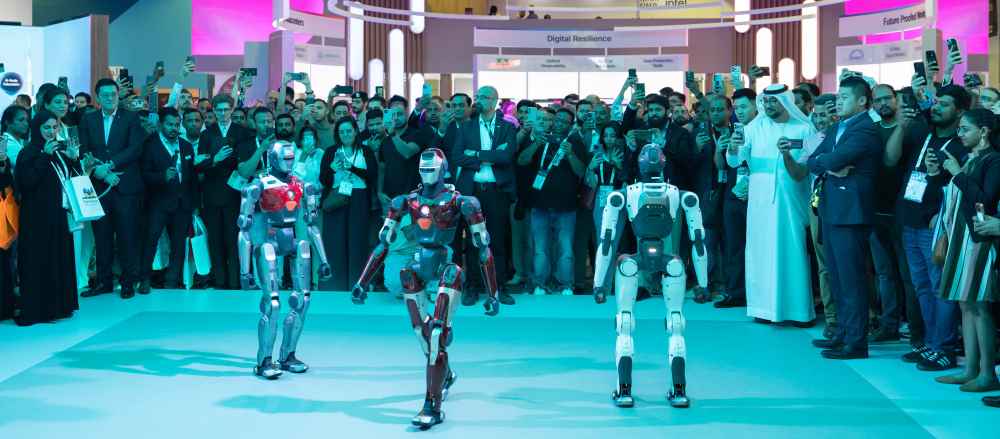
DUBAI, United Arab Emirates, November 10, 2026/APO Group/ –From interactive humanoids and intelligent machines undertaking industrial tasks to multilingual robot assistants and wearable exoskeletons, the latest advances in the Physical AI phenomenon will take centre stage at the world’s largest tech and AI event next month in Dubai.


GITEX World RobotiX, a new launch event at GITEX GLOBAL, will converge the world’s robotics pioneers and leaders in embodied AI from 8-11 December at Dubai Exhibition Centre, Expo City Dubai, to show how machines that perceive, reason and act in the physical world are transforming manufacturing, logistics, healthcare, hospitality and smart infrastructure. GITEX GLOBAL 2026 will kick off with the GITEX Summit on 7 December at Dubai World Trade Centre, ahead of the exhibition at Expo City Dubai.


The showcase arrives as robot demand surges; more than 22,000 humanoid robots were shipped globally in the first half of 2026, a 300 percent year-on-year increase (https://apo-opa.co/4kHlnGe), according to Counterpoint Research, with shipments expected to exceed 50,000 units by year-end. Dubai is also advancing its robotics ambitions through its Robotics and Automation Program, targeting the deployment of 200,000 robots over 10 years to 2032 (https://apo-opa.co/4j7b5y2).


Unitree, one of the world’s largest humanoid makers with 31 percent (https://apo-opa.co/4sNVwhW) global market share, spearheads participation this year, alongside other headliners including UBTECH, whose humanoids are deployed in car factories and being tested by Airbus; AiMOGA, Chery Auto’s embodied AI robotics brand; DEEP Robotics, a global leader in quadrupeds; and the UAE’s Micropolis Robotics, which provides autonomous patrol robots for Dubai Police.


Robots take on real-world tasks


UAE-based Mangobot, a robotics solutions provider specialising in deploying and integrating intelligent machines, will present a robotic workforce featuring autonomous general-purpose robots, patrol robots, multilingual robot receptionists and live robotic performances. Visitors can also experience wearable exoskeleton technology firsthand. “It’s less ‘come look at robots’ and more ‘come see what working alongside robots actually feels like,’” said Mazen El-Kurdi, CTO of Mangobot.


Making its Middle East debut, MOS 2, developed by Chinese embodied intelligence innovator Lumos Robotics, is a wheeled ‘AI Worker’ with dual arms capable of handling payloads of up to 50 kg and operating for more than eight hours.


According to Lumos Robotics, its first-generation MOS robots completed over 1,000 hours of continuous, failure-free operation at Mitsubishi Electric’s Changshu factory, undertaking material handling, quality inspection and screwdriving tasks. The company will also showcase NIX S3, which will deliver a live dance performance demonstrating its 21 degrees of freedom, high-torque joints, agility and dynamic motion capabilities.


Cecile Wei, PR Director, Lumos Robotics, said: “Our demonstrations are designed to show the philosophy behind our products: robots need to do more than move. They need to perform useful tasks reliably in real environments.”


UAE-based Lootah Robotics, a robotics solutions and systems integration company, will showcase humanoid, quadruped, service, cleaning and telepresence robots from manufacturers including Unitree, AGIBOT, Pudu Robotics, UBTECH and EngineAI.


“We are not simply supplying individual robots; we are building an integrated robotics ecosystem,” said Hazem Ghazal, General Manager of Lootah Robotics. “Our stand will showcase how organisations can select different robots for different requirements while maintaining centralised visibility and control.”


The next frontier of embodied AI and human-robot interaction


Advances in embodied AI – where AI models are brought into a physical body or hardware system – are creating opportunities for robots to interact more naturally with people across consumer services, education, entertainment and domestic environments.

We are not simply supplying individual robots; we are building an integrated robotics ecosystem


China’s Light Origins, which develops humanoid robots and intelligent robotic systems, will make the first public appearance of its ‘bunny-shaped’ robot, with live demos of household scenarios offering visitors hands-on interaction. “We believe our bunny-shaped robot is ready to enter consumers’ homes,” said Tingxiang Fan, Co-founder and CTO, Light Origins.


Meanwhile, Raydiculous, a bionic robotics innovator from the Chengdu Humanoid Robot Innovation Centre, will make its Middle East debut with two innovations. Its TP01 humanoid, designed for commercial interaction and public services, can communicate in English and Arabic and perform synchronised movements. Alongside it, DINOBOT, described by Raydiculous as the world’s first intelligent bipedal walking bionic dinosaur, will demonstrate realistic movement and interactive capabilities.


Sandy Liu, Overseas Sales Manager, Chengdu Humanoid Robot Innovation Centre, said: “With its integrated capabilities of walking, interaction, performance, and education, our solutions turn Physical AI into a visible and usable business tool.”


Supporting future robotics talent, UAE-based technology and robotics education company Besomi will introduce six humanoid and mobile robots known as the ‘Besomi Rangers’. Unitree, Seeed Studio, Arduino and Qualcomm will be joining Besomi on the stand. The showcase will feature the latest humanoid robot from Unitree, a global leader in humanoid robotics. A live Robotics & AI Lab will allow visitors to explore how robots are engineered, programmed and trained, with hands-on engineering training using the latest Arduino VENTUNO platform, developed in collaboration with Qualcomm.


“We want young engineers and innovators to ask, ‘How does this work?’

and then go build the next generation of robotics technologies right here in the UAE. Showcasing the latest Unitree humanoid robot gives visitors a look at the forefront of robotics. Our hands-on training with Arduino and Qualcomm gives engineers practical experience to turn their own ideas into working robotics and AI applications. We are also pleased to welcome Seeed Studio to our stand as part of this focus on building engineering capabilities,” said Mohammad Hani, CEO, Besomi Robotics & AI.


Building the intelligence behind autonomous machines


JWIPC, a Chinese developer of AI computing hardware and industrial computing solutions, will launch robotic controllers built on NVIDIA’s Thor module, which the company says delivers up to 2,070 TFLOPS of FP4 computing performance. Designed for humanoids, robotic arms and autonomous mobile robots, the controllers enable AI processing and real-time decision-making.


“The NVIDIA Thor module provides a high-compute edge brain for embodied intelligence, running multi-modal models locally to integrate sensor fusion, task planning, and millisecond motion control,” said Nick Zhang, Regional Sales Manager, JWIPC.


Meanwhile, Physical AI software developer Songying Technology will demonstrate ORCA OS and ORCA Lab, integrating simulation, synthetic data generation, AI training, validation and deployment into a connected robotics development environment. Taiwan-based embedded computing specialist Vecow will unveil advanced, rugged Edge AI and robotics platforms powered by NVIDIA, Intel, AMD, Qualcomm, and NXP, while officially introducing its dedicated UAE team to accelerate mission-critical regional deployments


The 46th edition of GITEX GLOBAL, organised by inD, opens with The GITEX Summit at Dubai World Trade Centre (DWTC) on 7 December, before the four-day GITEX GLOBAL Expo begins at Dubai Exhibition Centre alongside Expand North Star, its startup and investor event.


The dual-blockbuster showcase converges 6,000-plus enterprise and startup exhibitors with tens of thousands of government leaders, C-suite executives, investors and buyers from 180 countries, reaffirming Dubai’s status as an epicentre of tech collaboration.


More information is available at www.Gitex.com and (https://apo-opa.co/4iyQ67d)

*Sources: https://apo-opa.co/4kHlnGe

https://apo-opa.co/4j7b5y2

Distributed by APO Group on behalf of GITEX Global.


Continue Reading

Business

2 million hacking tool detections in six months: Kaspersky reveals the most used lateral movement utilities

Published

on

For the period of 6 months, April to September 2026, the solution detected 2,171,513 hacking tool usage attempts

JOHANNESBURG, South Africa, November 9, 2026/APO Group/ –Recent statistics compiled from detection alerts within Kaspersky Anti Targeted Attack (KATA)* reveal the hacking tools most often used for lateral movement across enterprise infrastructures, highlighting the pressing need for reliable network security solutions to protect corporate environments.


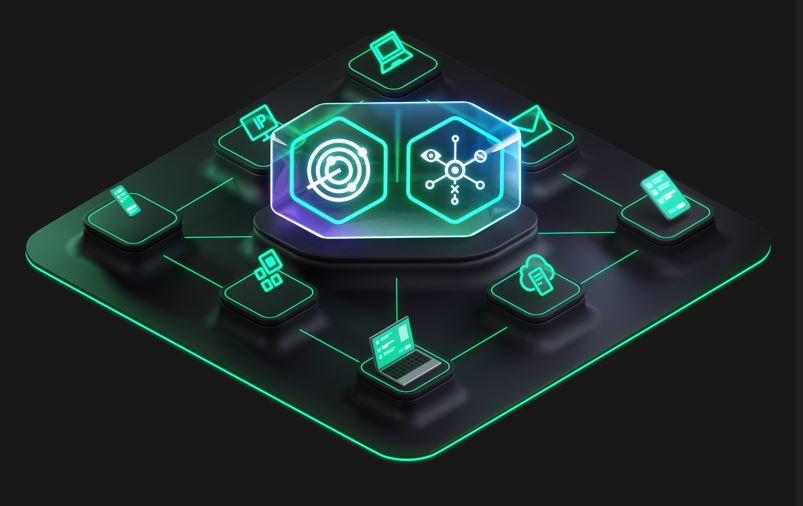
Recent investigations into cyber-espionage groups show that attackers increasingly avoid detectable malware, choosing instead to blend into legitimate corporate network traffic (https://apo-opa.co/4BWK3AY). By weaponising dual-use tools and administrative utilities already present in the system, they move laterally across the domain undetected to harvest credentials and locate high-value assets. In this era of silent intrusion, Kaspersky shares insights into the most frequently used hacking tools to help organisations defend their networks.

For a decade, KATA, Kaspersky’s mature NDR solution, has been delivering comprehensive anti-APT protection. It features advanced threat detection, in-depth network traffic analysis, and centralised incident response to ensure full visibility across the entire network. Equipped with nearly 12,500 network detection rules in its database, KATA detects an average of 312,705 potential attacks daily.

For the period of 6 months, April to September 2026, the solution detected 2,171,513 hacking tool usage attempts. The following types of tools were detected most frequently:

This year, we are proudly celebrating the 10th anniversary of KATA

HackTool.Cobalt – 136,084 detections. While designed for security assessments, Cobalt Strike is also frequently used by malicious actors across various attack stages, including post-exploitation, lateral movement, and similar activities.

HackTool.NetExec – 129,560 detections. NetExec is used for automated network security assessments and discovering poorly secured network services. Its capabilities can also be exploited by attackers for reconnaissance and gaining system access.

HackTool.SQLMap – 107,697 detections. The SQLMap tool is used to automate the detection and exploitation of SQL injection vulnerabilities, which can allow unauthorised access to databases via web applications.

“Since advanced hacking tools may bypass endpoint defences, deploying Network Detection and Response (NDR) solution is critical to exposing silent anomalies and neutralising advanced attacks,” says Aren Torosyan, Product Manager at Kaspersky. “This year, we are proudly celebrating the 10th anniversary of KATA. Over this decade of innovation, backed by deep infrastructure expertise and rigorous research, KATA has established itself as a highly effective solution, helping clients worldwide protect their environments from even the most advanced, hidden threats across networks and endpoints. With the transition to the Open Single Management Platform planned for next year, advanced NDR capabilities will become even more comprehensive and accessible to security teams”.

To get full information about Kaspersky Anti Targeted Attack and request a demo, please visit the website (https://apo-opa.co/4BStEgE).

*Statistics are based on detection alerts from Kaspersky products, collected from users who consented to provide statistical data to Kaspersky Security Network. Some of the detections may be attributed to authorised security assessments.

Distributed by APO Group on behalf of Kaspersky.


Continue Reading

Trending