Connect with us
Anglostratits

Business

From Hydrocarbons to Hyperscale: Oil and Gas Must Power Africa’s Data Center Boom

Published

on

Hydrocarbons

African Energy Week’s AI and Data Center Track will position oil and gas as a critical enabler of Africa’s data center expansion, linking energy development with AI deployment, data localization and large-scale power generation

In April this year, Angola’s Ministry of Telecommunications, Information Technologies and Social Communication launched a national data center and government platform, marking a significant step in its digital transformation strategy. The facility is designed to enhance cybersecurity by localizing sensitive data, reduce operational costs across government systems and expand access to digital public services, while strengthening investor confidence and positioning the country as an emerging digital hub in southern Africa.


The move highlights a broader continental shift in which Africa’s oil and gas sector is increasingly supporting data center expansion by providing reliable power, capital investment and industrial infrastructure. This convergence between energy and digital systems will be a central theme at African Energy Week (AEW) 2026, taking place from October 12–16 in Cape Town, where a dedicated AI and Data Center Track will examine how energy resources can unlock scalable digital growth.

Angola’s rollout builds on a series of large-scale infrastructure investments aimed at strengthening connectivity and digital inclusion. Since launching the ANGOSAT-2 satellite in October 2022, the country has expanded its national fiber-optic backbone to approximately 22,000 km and enhanced international bandwidth through connections to submarine systems including 2Africa, WACS, SACS and SAT-3/WASC. Broadband coverage now exceeds 85% of the population, with roughly 17.7 million subscribers and mobile penetration approaching 75%, reflecting steady gains in digital adoption.

At the industrial level, the hydrocarbons sector is playing an increasingly central role in anchoring digital infrastructure. Angola’s state-owned Sonangol inaugurated a 920m2 corporate data center in Luanda on February 27, consolidating previously fragmented systems into a unified, high-security platform. The facility enables AI-driven applications such as reservoir simulation, predictive maintenance and emissions monitoring, allowing operators to optimize production efficiency while aligning with global standards for lower-carbon oil and gas development.

International energy companies are accelerating this shift by embedding advanced digital tools across offshore and onshore operations. Energy major ExxonMobil has deployed autonomous drones in Block 15, reducing inspection times by up to 60% while improving safety and continuity of production. Meanwhile, multinational energy corporation TotalEnergies is leveraging AI-enabled seismic processing and airborne methane detection technologies across Blocks 17 and 32, increasing data processing speeds by roughly 30% and improving environmental oversight.

Beyond upstream operations, private capital is scaling Africa’s data center footprint to meet rising enterprise and cloud demand. Data center operator and developer Raxio Group has commissioned Angola’s first Tier III facility through a $30 million investment, aimed at retaining data traffic locally and supporting hyperscale and enterprise clients. In Nigeria, MainOne launched the Lekki II data center in May 2025, reinforcing Lagos’ position as a premier digital infrastructure hub in West Africa. Meanwhile, in South Africa, TotalEnergies and data center operator Teraco are pioneering wheeling agreements by building a 120 MW solar plant in the Free State province to power facilities in Johannesburg.

These developments are unfolding alongside broader industrial expansion plans that link energy production director to digital growth. Aliko Dangote’s conglomerate is targeting $100 billion in annual revenue by 2030, backed by at least $40 billion in investment across sectors including gas, power and data centers. As demand for compute capacity rises, gas-to-power projects and integrated energy systems are expected to provide the stable electricity required to sustain large-scale digital infrastructure.

As Africa’s digital economy expands, the intersection of hydrocarbons, power generation and data infrastructure are becoming increasingly strategic, particularly in markets where grid stability remains a constraint. Through the AI and Data Center track, AEW 2026 is expected to position this energy-digital nexus as a cornerstone of future investment. The AI- and data center-focused track is further expected to highlight how oil and gas resources can support AI deployment, strengthen data sovereignty and accelerate the continent’s transition toward a more connected, technology-driven economic model.

Distributed by APO Group on behalf of African Energy Chamber.

Business

ACG CEO Paulo J. Cruz to Speak at the Leadership Summit 2026 in Luanda on How Sport and Entertainment Districts Can Accelerate Africa’s Productive Economy
Published

on

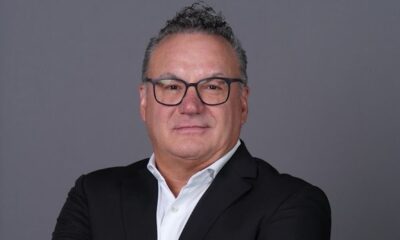
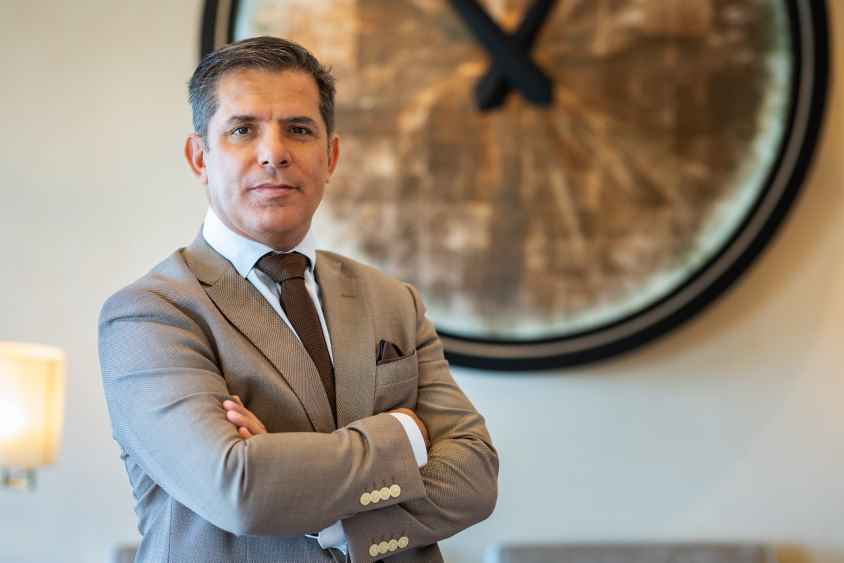
Paulo J. Cruz

Paulo J. Cruz joins CEOs from Angola’s telecoms, energy, data infrastructure, and technology sectors on the Productivity and Productive Economy panel at one of the country’s leading executive summits

LUANDA, Angola, November 10, 2026/APO Group/ –African Collaborations Group (ACG) (www.ACGafrica.com), the leading strategic project origination and collaboration platform focused on the industrialisation of sport in Africa through the origination of bankable sport and entertainment district ecosystems, today announced that its Founding CEO, Paulo J. Cruz, will speak at the 2nd Edition of the Leadership Summit 2026 (Cimeira de Liderança 2026) in Luanda, Angola, on 19 November 2026.


Mr Cruz will participate in Panel 3, “Productivity and Productive Economy,” alongside CEOs from Angola’s telecoms, energy, data infrastructure, and technology sectors, including the leaders of TVCABO Angola, Raxio Data Centres, Angola Cables, TIS, and EWT – Energy Water Telecom. The panel will be moderated by Kussi Bernardo, CEO of Multitel.

The Leadership Summit, held under the theme “Leadership that Generates Results: Strategy, Execution and Value,” convenes Presidents of Boards of Directors, CEOs, CFOs, and senior executives from Angola’s most strategic sectors, including oil and gas, mining, banking, telecoms, energy, industry, and agriculture. The event takes place at the Palmeiras Suite Hotel in Talatona, Luanda.

A Victory District™ generates revenue from 15 to 20 different asset types, creates thousands of permanent jobs, and operates 365 days a year

Mr Cruz will address how ACG’s origination of integrated sport and entertainment districts across Africa contributes directly to the transformation of the productive economy. His intervention will focus on how sport infrastructure, when conceived as a financially self-sustaining urban ecosystem rather than a standalone stadium, becomes a catalyst for job creation, tourism, diversified revenue generation, and long-term economic development.

“Sport infrastructure is not a social cost. It is a productive asset,” said Paulo J. Cruz, Founding CEO of ACG. “A Victory District™ generates revenue from 15 to 20 different asset types, creates thousands of permanent jobs, and operates 365 days a year. That is not a stadium. That is a contribution to the productive economy. I am honoured to share that vision alongside some of Angola’s most influential business leaders.”

ACG’s Victory District™ framework is designed to originate integrated, mixed-use sport and entertainment districts that move beyond single-venue development models. Each district combines stadiums, indoor arenas, training academies, hotels, conference centres, retail, entertainment, residential, and commercial space within a single masterplanned development, financed by private and institutional capital without reliance on public subsidy.

Mr Cruz brings more than 25 years of experience across Africa, the Middle East, and Europe in originating, structuring, and delivering large-scale infrastructure, urbanisation, and real estate development initiatives. Prior to ACG, he served as Senior Vice President at DAMAC Group, the largest private real estate developer in the Middle East, and as Group CEO of LandAfrique, a pan-African development platform focused on industrial parks, infrastructure, housing, and power projects across Sub-Saharan Africa.

The Leadership Summit 2026 is an initiative of Clube De Valor™, focused on leadership, strategy, execution, and value creation across Angola’s business landscape.

Distributed by APO Group on behalf of African Collaborations Group (ACG).


Continue Reading

Energy

South Sudan, Uganda, Kenya and Djibouti to Headline South Sudan Oil & Power (SSOP) 2026 Ministerial Panel
Published

on

SSOP

The Ministerial Panel will feature ministerial representatives from South Sudan, Kenya, Djibouti and Uganda

JUBA, South Sudan, November 10, 2026/APO Group/ –Senior energy and government representatives from South Sudan, Uganda, Kenya and Djibouti will participate in a ministerial panel at South Sudan Oil & Power (SSOP) 2026, taking place November 24-25 in Juba. The discussion will focus on strengthening regional energy cooperation, advancing cross-border infrastructure and attracting investment into East Africa’s petroleum sector.


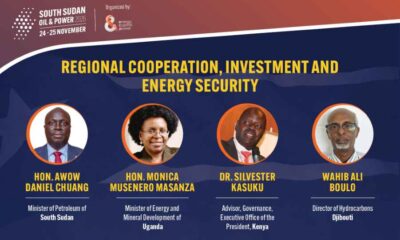
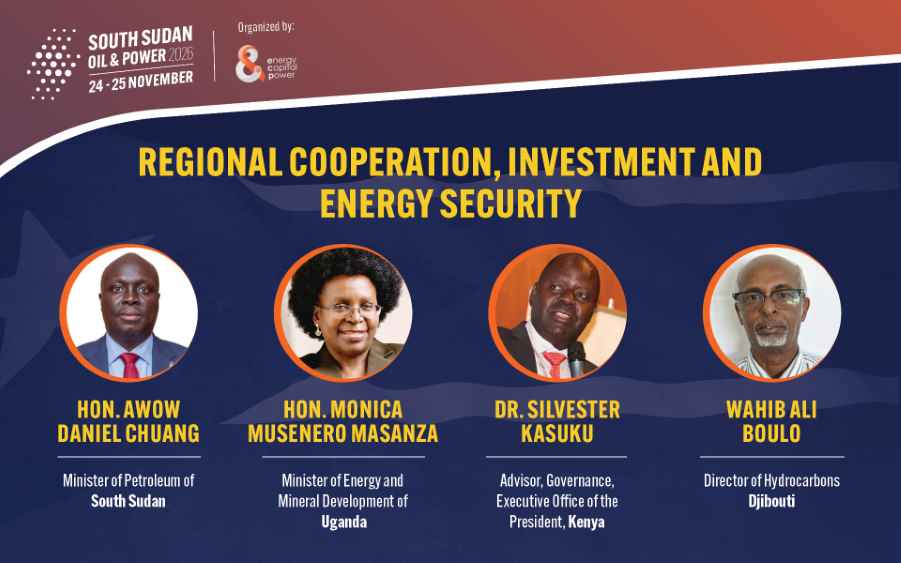
Titled Regional Cooperation, Investment and Energy Security, the panel will feature Awow Daniel Chuang, Minister of Petroleum of South Sudan; Monica Musenero Masanza, Minister of Energy and Mineral Development of Uganda; Silvester Kasuku, Advisor, Governance, Executive Office of the President, Kenya; and Wahib Ali Boulo, Director of Hydrocarbons, Djibouti.

Their participation comes as East Africa enters a new exploration and production cycle, backed by the start of upstream projects in Uganda and Kenya, a drive to strengthen cross-border trade by Djibouti and efforts to increase crude production in South Sudan. Regional cooperation is supporting these activities and SSOP 2026 will provide a platform to explore East Africa’s broader energy renaissance.

Minister Chuang joins the event as South Sudan opens its upstream market to international investors. Under efforts to raise production from 174,000 barrels per day (bpd) to around 230,000 bpd in the near term, the country is inviting investors to support brownfield development, accelerate exploration and expand refining capacity. Around 14 blocks are currently available.

Uganda is also promoting investment in exploration as the country prepares to start oil production from the Kingfisher and Tilenga oilfields in June 2027. The fields represent the country’s entry into commercial oil production. Crude will be exported via the East African Crude Oil Pipeline, currently 92% complete, which connects the fields to Tanzania’s Port of Tanga. To sustain upstream investment, the country also plans to launch a licensing round in 2026/2027.

https://apo-opa.co/4kJJLXP

https://apo-opa.co/4sOQOQW

Kenya is preparing to join East Africa’s oil producers as the country prepares for first production from the South Lokichar Basin in December 2026. Developed by Gulf Energy, the project targets 20,000 bpd in its first phase and 50,000 bpd in its second. The project coincides with investments in the downstream sector. In late-September 2026, Nigeria’s Dangote Group launched construction activities at a 700,000-bpd refinery in Lamu. A South Sudanese delegation, led by Minister Chuang, attended the groundbreaking ceremony.

https://apo-opa.co/4kJ16QA

https://apo-opa.co/4BV1kKL

As regional neighbors prepare for commercial oil production, Djibouti continues to strengthen its cross-border partnerships. The country signed an agreement with South Sudan in 2025 to develop the White Nile Trade Corridor, which aims to establish river and dry-port infrastructure in Juba, Bor, Malakal and Renk, connecting South Sudan to international trade routes through Djibouti. Boulo’s participation at SSOP 2026 creates new pathways for strengthened regional ties.

https://apo-opa.co/3WvoZ4h

Returning for its seventh edition under the theme Resource Renaissance – Energy-Fueled Growth for a New Generation, SSOP 2026 will provide a platform for policymakers, national oil companies, investors and infrastructure developers to examine how regional partnerships can strengthen energy security and accelerate project development.

For more information, visit www.SouthSudanOilPower.com.

Distributed by APO Group on behalf of Energy Capital & Power.


Continue Reading

Business

Merec Industries, a subsidiary of Invictus Investment Company PLC, builds first pasta manufacturing plant in northern Mozambique
Published

on

Merec

The plant will significantly expand Mozambique’s pasta production capacity and bring production closer to consumers in the north, while increasing the availability of high-quality fortified pasta in line with the country’s national food fortification requirements

Today, pasta is part of the basic food basket of Mozambicans

DUBAI, United Arab Emirates, November 10, 2026/APO Group/ —

  • Merec Industries, Mozambique’s largest flour milling company, is building the first pasta manufacturing plant in the north of the country, taking its coverage countrywide
  • Once complete, Merec’s plants will have the capacity to meet Mozambique’s domestic pasta demand and export the surplus, contributing to the country’s food security
  • The investment comes as Merec Industries prepares for its next phase of growth, with Helios Investment Partners set to become a minority shareholder in the business alongside Invictus Investment
  • Governor of Nampula Province visited the site in Nacala to view construction progress


Invictus Investment Company PLC (https://InvictusInvestment.ae/) (ADX: INVICTUS), a leading holding company specialised in agro-food commodities across the Middle East and Africa, today announced that its subsidiary Merec Industries (“Merec”) is building the first pasta manufacturing plant in the northern region of Mozambique, in Nacala. Once the plant is complete, Merec will be the only company in Mozambique with pasta manufacturing facilities in all three regions of the country: the north, central and south. Together with the expansion of its Machava industrial facility in the south, the new plant will take Merec’s total pasta production capacity beyond Mozambique’s national demand, enabling the country to meet its pasta demand from local production and export the surplus. Nacala is home to a deep-water port and is the gateway to the Nacala Logistics Corridor, which links Mozambique to Malawi and Zambia.

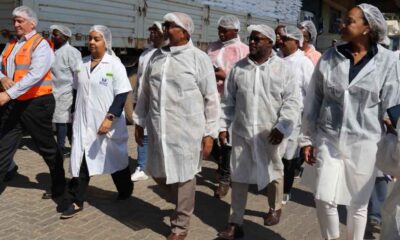
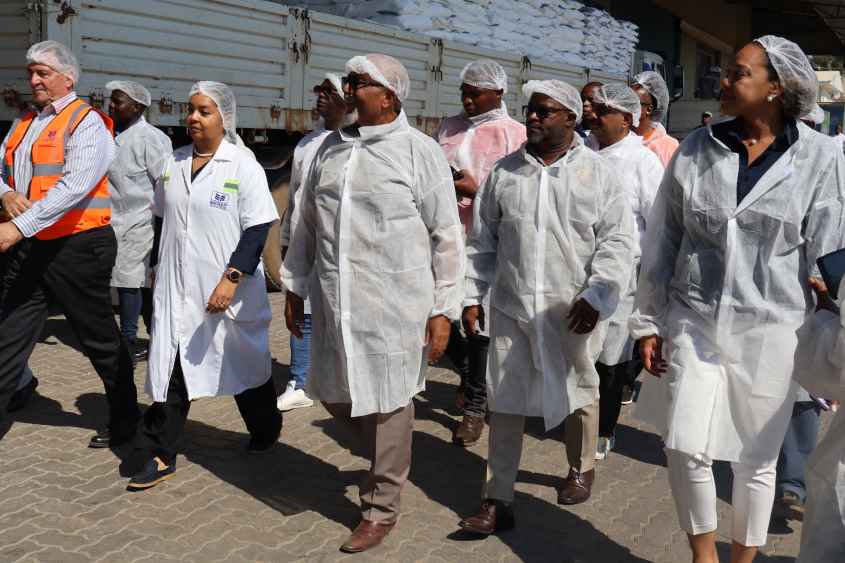
The Governor of Nampula Province, His Excellency Eduardo Abdula, visited Merec’s facilities to view construction progress and learn more about the developments of this investment. The plant will significantly expand Mozambique’s pasta production capacity and bring production closer to consumers in the north, while increasing the availability of high-quality fortified pasta in line with the country’s national food fortification requirements. It will also create direct and indirect jobs, develop local skills and involve businesses across the value chain, from production and logistics to distribution and sales.

Merec’s operating performance has improved significantly since it joined Invictus Investment in January 2025, prompting a more ambitious growth strategy to expand it beyond its core operations into new food categories in Mozambique and across the wider Southern African Development Community (SADC) region. In October 2026, Invictus Investment and Helios Investment Partners announced that Helios Fund V had entered into an agreement to acquire up to a 49% interest in Merec’s holding company, with Invictus Investment remaining the majority shareholder. The transaction is expected to close by the end of 2026, subject to customary closing conditions, including regulatory approvals.

Merec and Invictus Investment also signed cooperation agreements with the International Finance Corporation (IFC), a member of the World Bank Group, at the Lusophone Africa Investment Forum in Cabo Verde last month, to advance agribusiness in Mozambique and across Africa.

Commenting on the announcement, Amir Daoud Abdellatif, CEO of Invictus Investment, said: “Completing Merec’s pasta manufacturing footprint across Mozambique brings production closer to consumers and provides the local capacity needed to build a more resilient food business. This investment is part of our wider approach to growth, which involves taking majority positions in strong businesses, investing in their expansion and bringing in partners who can help take them further. Our ambition is to develop Merec into a regional food platform for Southern Africa, and this plant is an important part of the foundation for that.”

Eng. Luís Aveleira, Executive Board Member at Merec, added: “Today, pasta is part of the basic food basket of Mozambicans. Through this investment, we want to help ensure that Mozambique has the capacity to meet the needs of its own market, reducing its dependence on imported products. With industrial facilities in the north, central and south regions, we are strengthening our ability to supply the national market and contributing to the country’s objectives of promoting local production and import substitution. Beyond ensuring the supply of the domestic market, we also aim to build the capacity to generate production surpluses for export, contributing to foreign currency earnings and the growth of the national economy. We believe that investing in domestic production means investing in food security, industrialisation and the future of Mozambique.”

In addition to strengthening Mozambique’s food security and reducing its reliance on imports, the project reflects Invictus Investment’s focus on midstream and downstream assets across key African markets in support of its aim of becoming a fully integrated agro-food enterprise.

*Please refer to https://apo-opa.co/4sT7DdG for more information. 

Distributed by APO Group on behalf of Invictus Investment Company PLC.


Continue Reading

Trending