Connect with us
Anglostratits

Energy

Investment Delays, Supply Risks Put Africa’s Gas Opportunity in Focus at Paris Forum

Published

on

Investment

Delayed projects and persistent underinvestment raise the risk of prolonged LNG tightness, as Africa continues working to convert abundant reserves into production

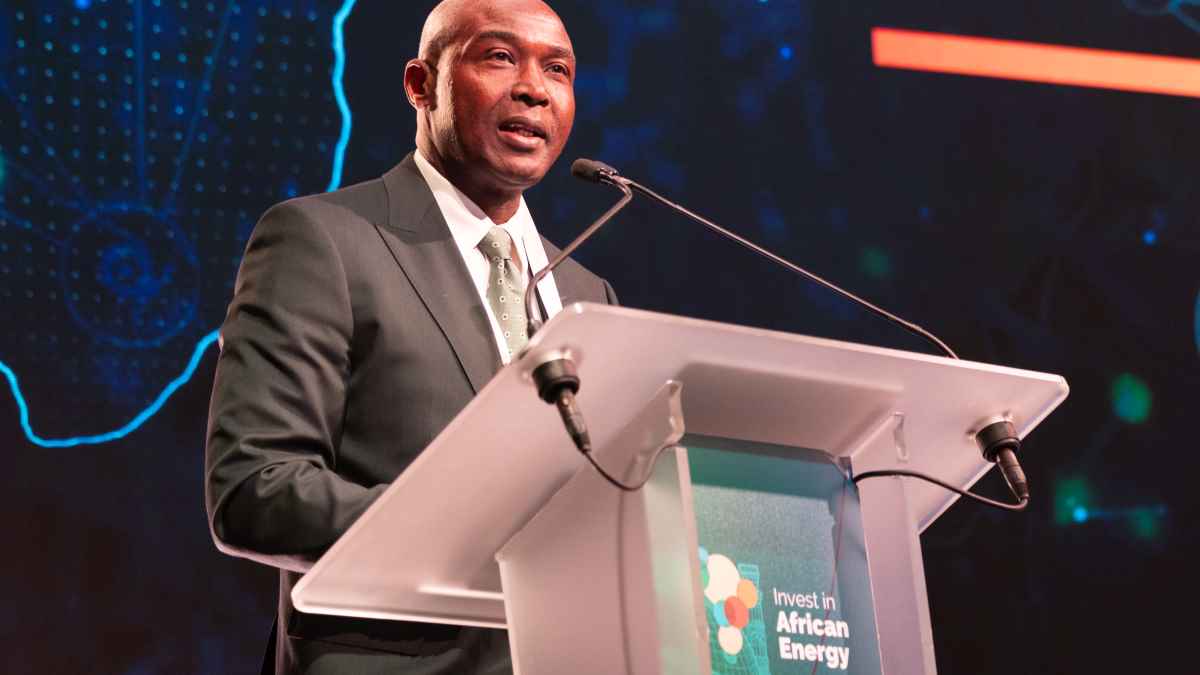
PARIS, France, April 22, 2026/APO Group/ –Delays to new gas projects and continued underinvestment in upstream development are raising the prospect that global LNG markets will remain tighter for longer than previously expected, industry leaders said at the opening of the Invest in African Energy Forum in Paris on Wednesday.


The discussion was shaped by a shared concern: that shifting geopolitics, capital discipline and deferred final investment decisions (FIDs) are converging to slow new supply just as demand continues to evolve.

Gas Exporting Countries Forum (GECF) Secretary General Dr. Philip Mshelbila said the market had been widely expected to tip into oversupply by 2026, but that outlook is now being reassessed as volatility persists and investment timelines stretch.

“The current energy crisis touches every corner of the globe,” he said, pointing to sustained disruption driven by geopolitical tensions and supply uncertainty. If instability continues, he added, the market risks a more structural reordering rather than a near-term correction.

That uncertainty is already feeding through into investment decisions, with companies increasingly prioritizing risk management over expansion, leading to deferred FIDs across several gas developments.

For Africa, the implications are particularly acute. Despite holding significant gas reserves and export infrastructure – including LNG capacity and pipeline links to Europe via Libya and Algeria – much of the continent’s potential remains constrained by weak upstream development.

“There is a material gap between capacity and reserves, and actual production,” Mshelbila said, stressing that closing that gap will require sustained and large-scale upstream investment. He estimated global gas investment needs at $11–12 trillion over the coming decades, with the majority directed toward exploration and production.

There is a material gap between capacity and reserves, and actual production

That investment gap is also being felt further down the value chain. Anibor Kragha, Executive Secretary of the African Refiners and Distributors Association (ARDA), pointed to Africa’s continued dependence on imported refined products and limited strategic buffers, exposing structural fragility across the downstream sector.

“Africa remains heavily dependent on refined petroleum products,” he said, noting that some countries operate with as little as 20 days of strategic fuel reserves. “We’ve come to realize how fragile the global supply chain is.”

He argued that addressing these vulnerabilities will require a rethink of refinery development models, with future projects needing to be more flexible and integrated in order to attract long-term capital.

NJ Ayuk, Executive Chairman of the African Energy Chamber, framed the broader energy debate around rising demand rather than transition, arguing that Africa is entering a period of structural energy expansion driven by industrial growth and emerging technologies.

“We believe Africans deserve more, not less energy,” he said, describing the coming decade as “an African decade of energy additions, not energy transitions.”

Ayuk pushed back against what he described as disproportionate global climate narratives around Africa, noting that the continent contributes less than 3% of global emissions. “No other industry has matched our industry’s ability to produce more energy with fewer emissions,” he said.

Ayuk also highlighted accelerating demand from new sectors, including data infrastructure and artificial intelligence, which he said will require “historic amounts of new energy,” reinforcing the need to accelerate gas development and monetize existing discoveries.

Rounding out the discussion, Foday Mansaray, Director General of Sierra Leone’s Petroleum Directorate, emphasized that project delivery will depend increasingly on alignment between governments, investors and operators, particularly in frontier markets.

“The future of energy is being negotiated in rooms like this,” he said, underscoring the importance of partnership-driven development as Africa seeks to convert resources into production.

Distributed by APO Group on behalf of Energy Capital & Power.

Energy

Venezuela Energy Week to Host Houston Industry Showcase, Unlocking United States (U.S.) Commercial Engagement Ahead of October Summit

Published

on

African Energy Chamber

Ahead of Venezuela Energy Week 2026, U.S. exploration companies, independent operators, oilfield service providers and investors are invited to explore commercial opportunities across Venezuela’s upstream sector at the Houston Industry Showcase next month

HOUSTON, United States of America, July 23, 2026/APO Group/ –Venezuela Energy Week will host an Industry Showcase in Houston on August 18, 2026: a targeted industry roadshow designed to engage U.S. energy stakeholders ahead of the October summit. Held at The Post Oak Hotel, the showcase will convene senior representatives from across the U.S. upstream ecosystem – including exploration and production companies, Texas-based independents, oilfield service companies, engineering and technology firms, commercial banks, private equity firms and family offices – to assess commercial pathways for participation in Venezuela’s energy sector.


As Venezuela looks to expand production, U.S. companies remain well positioned to contribute technical expertise, capital and operational capabilities across the upstream value chain. Chevron’s longstanding presence in the country highlights the continued importance of U.S. industry participation, while the scale of Venezuela’s resource base continues to attract interest from major international energy companies, including ExxonMobil and ConocoPhillips. Opportunities extend across exploration, field development, production optimization, infrastructure rehabilitation and digital modernization as Venezuela seeks to strengthen its energy sector.


Demand is also expected to grow for oilfield service companies, engineering firms, technology providers and financial institutions that can support upstream investment and project execution. Companies including SLB, Halliburton and Baker Hughes have been identified as potential partners in advancing production optimization and infrastructure rehabilitation, while commercial banks, private equity firms and family offices will play an important role in financing future investment opportunities.


Against this backdrop, the Houston Industry Showcase will provide a structured engagement platform at a time when select international operators continue to operate under U.S. Treasury-authorized frameworks, and where policy considerations in the U.S. continue to shape engagement parameters in Venezuela’s energy sector.


The event will enable U.S. exploration companies, independent operators, oilfield service providers and investors to assess technical and commercial pathways across exploration, field services, project delivery and broader supply chain opportunities, while supporting early-stage dialogue between international investors and Venezuela-focused stakeholders in a structured commercial environment ahead of the October summit.


To register for the Houston Industry Showcase on August 18, visit www.venezuelaenergyweek.com/rsvp-houston. To learn more about delegate, sponsorship and partnership opportunities for the showcase or to secure your place at Venezuela Energy Week 2026 in Caracas this October, contact info@venezuelaenergyweek.com.


Supporting Venezuela’s Earthquake Recovery


Our thoughts are with the people and communities affected by the recent earthquakes in Venezuela. As the country begins the long process of recovery, we encourage members of the global energy community to support relief and reconstruction efforts through the CAF Recovery and Reconstruction Fund for Venezuela, which channels contributions from individuals, companies and organizations to emergency assistance, essential services and long-term rebuilding efforts.


To learn more or make a contribution, please visit the CAF Recovery and Reconstruction Fund for Venezuela (https://apo-opa.co/4fM0rLr).


Distributed by APO Group on behalf of Energy Capital & Power.

Continue Reading

Business

Africa Trade Gateway Delivers US$5.3-Million Cross-Border Transaction in First Energy Sector Trade in Southern Africa

Published

on

Afreximbank

The transaction represents an important milestone for both the participating institu-tions and the ATG ecosystem as it marked Innbucks Microbank’s first completed transaction through the platform and the ATG’s first recorded energy-sector transac-tion in Southern Africa

HARARE, Zimbabwe, July 23, 2026/APO Group/ –A US$5.3-million cross-border fuel (gasoil) trade transaction has been successfully completed with support of the Africa Trade Gateway (ATG), African Export-Import Bank’s (Afreximbank’s) (www.Afreximbank.com) flagship digital trade ecosystem, demonstrating the value and efficacy of the Gateway in powering African trade.

The transaction, which saw Zimbabwean fuel importer Witeva Trading source a gasoil shipment from a leading commodity trader and supplier in Switzerland, with Innbucks Microbank Ltd. participating as the local issuing financial institution and Afreximbank providing confirmation support under agreed trade finance structure, demonstrates how African businesses can leverage one connected ecosystem to identify opportunities, access finance and complete international trade more efficiently.

The ATG made it possible for the commercial opportunity to be connected to the right ecosystem participants, bringing together the buyer, supplier and participating financial institutions to support a successful execution of the transaction.

The transaction represents an important milestone for both the participating institutions and the ATG ecosystem as it marked Innbucks Microbank’s first completed transaction through the platform and the ATG’s first recorded energy-sector transaction in Southern Africa.

This transaction demonstrates the value of bringing African businesses and financial institutions together through one connected trade ecosystem

It also demonstrates how African Businesses can use a single digital ecosystem to identify commercial opportunities, connect with verified counterparties, access trade-finance support and execute cross-border transactions more efficiently.

Peter Olowononi, Director, Regional Operations, Southern Africa, at Afreximbank, said:

“This transaction demonstrates the value of bringing African businesses and financial institutions together through one connected trade ecosystem. By creating a digital ecosystem to expand access to trade finance, Afreximbank is enabling more businesses to participate easily in regional and international trade.”

Emeka Onyia, Director, Digital Business, at Afreximbank, added:

“The Africa Trade Gateway is more than a mere digital platform; it is the ecosystem that helps trade happen. We help businesses discover opportunities, connect with trusted buyers, suppliers and financial institutions, and facilitate the journey from commercial opportunity to completed transactions. Every successful deal strengthens the network, attracts new participants and creates more opportunities for African trade.”

“As more businesses, banks and trade partners join the ecosystem, every successful transaction expands the marketplace, strengthens trust across the network and increases opportunities for future trade,” Mr. Onyia added.

Distributed by APO Group on behalf of Afreximbank.

Continue Reading

Energy

Gold Fields, Moore Global and Mali Chamber of Mines to Lead Gold Growth Dialogue at African Mining Week (AMW) 2026

Published

on

Gold Fields

As record prices reshape investment priorities, industry leaders will examine the strategies, partnerships and financing needed to expand Africa’s gold production

CAPE TOWN, South Africa, July 23, 2026/APO Group/ –As African governments and mining companies accelerate efforts to expand gold production and capitalize on strong global demand, African Mining Week (AMW) 2026, taking place October 14–16 in Cape Town, will spotlight the policies, partnerships and investments driving the continent’s next phase of growth in the gold sector.


The event will feature a dedicated panel, Expanding Africa’s Gold Output, exploring strategies to increase gold production, formalize artisanal and small-scale mining and strengthen investment across the value chain.

The session will be moderated by Matt Banton, Head of Mining at Moore Global, and feature Fousseni Togola, President of the Mali Chamber of Mines, and Benford Mokoatle, Executive Vice President: South Africa at Gold Fields.

The discussion comes as the global gold market continues to strengthen. Gold prices have remained above $4,000 per ounce throughout 2026, supported by sustained central bank demand as countries increase gold reserves to diversify foreign exchange holdings and strengthen financial resilience. Across Africa, central banks in Tanzania, Kenya, Ghana, Uganda, Egypt and Namibia have expanded gold purchase programs, reinforcing demand while creating new opportunities for domestic producers.

African gold-producing nations are responding by introducing reforms aimed at increasing production and improving sector governance. In Mali, the government is strengthening the artisanal and small-scale gold mining sector as part of its strategy to maintain annual gold production above 60 metric tons. In July 2026, the country established the Malian Office of Precious Substances, a new state institution responsible for regulating and formalizing artisanal gold production across approximately 400 mining sites employing nearly two million people. At the same time, Mali continues to strengthen partnerships with major mining companies, including Barrick, B2Gold, Toubani Resources and Cora Gold, to sustain long-term production growth and attract additional investment.

At AMW 2026, Togola is expected to discuss how the Mali Chamber of Mines is supporting these reforms while highlighting the investment opportunities emerging across the country’s gold sector. His participation will explore the role of chamber members in expanding production, strengthening local participation and positioning Mali among Africa’s leading gold producers.

South Africa is also advancing initiatives to revitalize its gold industry through increased exploration and long-term mine investment. Earlier this year, the government expanded the Junior Mining Exploration Fund to R600 million, improving access to exploration capital for emerging mining companies and supporting efforts to unlock new gold discoveries.

Complementing these national initiatives, Gold Fields is investing R1.714 billion through 2027 to deepen its flagship South Deep Mine, positioning the operation as a long-life production hub well beyond 2030. Gold Fields’ Mokoatle is expected to provide an update on the company’s long-term investment strategy, highlighting how innovation and sustained capital investment are supporting South Africa’s efforts to strengthen gold production.

As investment accelerates across Africa’s gold sector, AMW 2026 provides a premier platform to connect governments, producers, investors and service providers, advancing the partnerships and capital needed to unlock the continent’s next phase of gold production growth.

Distributed by APO Group on behalf of Energy Capital & Power.

Continue Reading

Trending