Connect with us
Anglostratits

Business

Hong Kong 2026-27 Budget: Driving High-quality, Inclusive Growth with Innovation and Finance

Published

on

Paul Chan

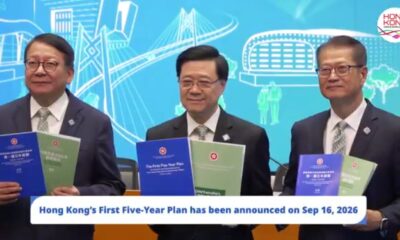
HONG KONG SAR – Media OutReach Newswire – 25 February 2026 – Paul Chan, Financial Secretary of the Hong Kong SAR Government, delivered his 2026-27 Budget today (February 25), with a range of initiatives to support and diversify Hong Kong’s economic growth, boost innovation and technology (I&T), speed up development of the Northern Metropolis and proactively align with China’s National 15th Five-Year Plan.

The theme of the 2026-27 Budget, the fourth Budget of the current-term Government, is “Driving High-quality, Inclusive Growth with Innovation and Finance”.

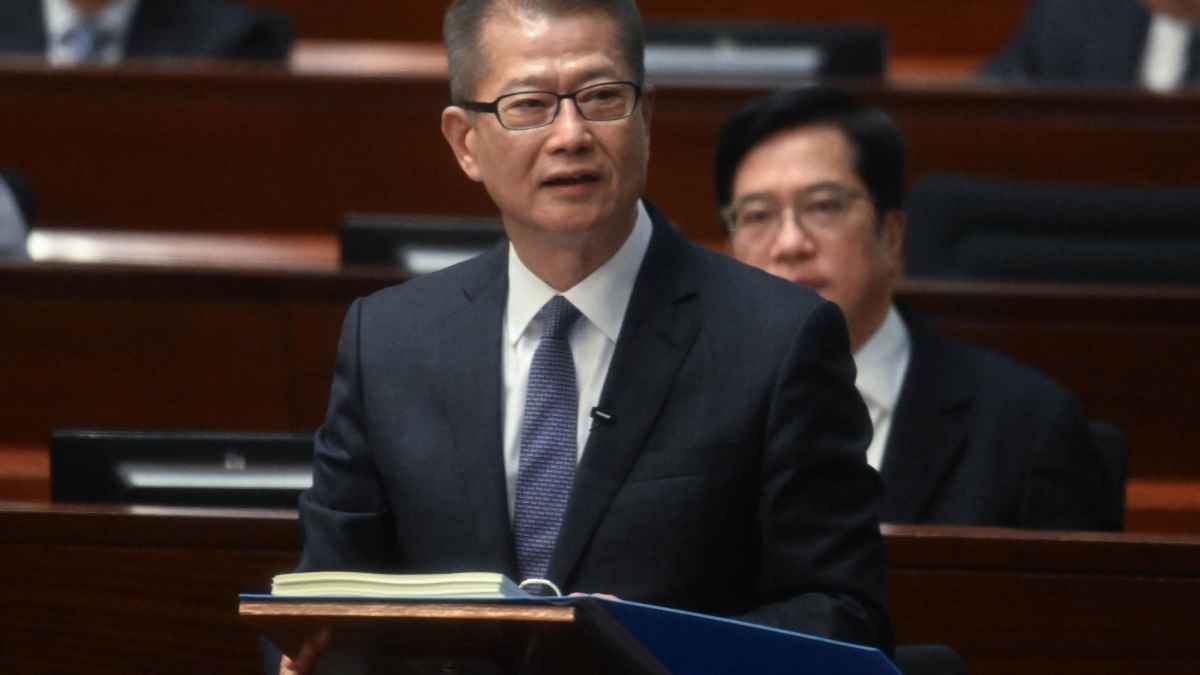
Hong Kong SAR’s Financial Secretary, Paul Chan, delivers the 2026-27 Budget today (February 25)

“Over the past year, as a result of the booming economy and capital market, our tax revenue has increased. Coupled with the reinforced fiscal consolidation programme gradually bearing fruit, our public finances have improved sooner than expected,” Mr Chan said.

The Financial Secretary revealed that Hong Kong’s Consolidated Account was expected to register a surplus of $2.9 billion in the current fiscal year, instead of a deficit of about $67 billion as originally estimated. The Operating Account for 2025-26, which was originally estimated to record a deficit of about $3 billion, will register a surplus of $51.3 billion, he said.

It was also confirmed that Hong Kong’s economy expanded by 3.5% in 2025, with growth forecast to be between 2.5% and 3.5% for 2026.

Mr Chan noted that this year marks the beginning of the National 15th Five-Year Plan, and he stressed the need for Hong Kong to actively align with the Plan.

“Our country’s sustained high-standard two-way opening-up, coupled with scientific and technological innovation, have presented us with new opportunities,” he said. “We must embrace the 15th Five-Year Plan with an innovative mindset, fostering new quality productive forces in accordance with local conditions.”

Mr Chan set out a series of measures to drive I&T development, including establishing the Committee on AI+ and Industry Development Strategy; taking forward the Sandy Ridge data facility cluster project; promoting AI training; and accelerating digital intelligence transformation of the Government.

“We are pressing ahead with the industrialisation of AI and deepening its integration across various industries, while encouraging wider AI application, thereby achieving the target of adoption and utilisation by all,” he said.

The International Clinical Trial Academy will, he said, also be established to help enable the Chinese Mainland’s biomedicine technology to go global, attract foreign investment, and help develop Hong Kong into an international health and medical innovation hub.

To facilitate the development of new industrialisation, the Budget has earmarked resources for establishing in Hong Kong the first national manufacturing innovation centre outside the Mainland, and the New Industrialisation Elite Enterprises Nurturing Scheme will be launched.

The Government will promote the full integration of technological innovation and industrial innovation through key infrastructure, including the Hong Kong Park of the Hetao Shenzhen-Hong Kong Science and Technology Innovation Co-operation Zone, and the San Tin Technopole in the Northern Metropolis.

To support financial services, Hong Kong will proactively align with national development strategies, advance the internationalisation of the Renminbi, and continuously reform the securities market.

The Government will legislate this year to enhance tax regimes for family offices and funds, as well as establish licensing regimes for digital asset dealing and custodian service providers.

“Despite the complex and ever-changing external environment, Hong Kong’s financial market has performed strongly and our financial system remains robust,” Mr Chan said. “We will continue to consolidate our existing strengths, tap into emerging fields, strengthen market systems and risk control and deepen financial co-operation in the GBA (Guangdong-Hong Kong-Macao Greater Bay Area).”

Noting that Hong Kong saw a year-on-year 12 per cent increase in visitor arrivals last year, which had created business and job opportunities for related sectors, the Budget will allocate $1.66 billion (US$212 million) to the Hong Kong Tourism Board (HKTB).

“The HKTB will scale up its flagship events and promotion, introducing new elements and extending event duration, and organise more signature festive events to highlight Hong Kong’s East-meets-West uniqueness,” Mr Chan said.

The Budget also earmarks an additional funding of $1 billion (US$128 million) for the Built Heritage Conservation Fund to enrich city culture. Elsewhere, the Government will launch the Northern Metropolis Urban-rural Integration Fund as a pilot scheme to support rural tourism projects.

To further promote sports development in Hong Kong, the Financial Secretary will inject $1.2 billion (US$154 million) to the sports portion of the Arts and Sports Development Fund.

Mr Chan said that the global environment has remained volatile over the past year, and Hong Kong has continued to undergo economic transformation.

“Technological innovation, in particular the development of AI, has brought us a mix of opportunities and challenges. Yet, Hong Kong has always thrived amid changes and progressed through innovation. We must make full use of our strengths and leverage the resolute support of our country to speed up and scale up our economic development sustainably for creating better development opportunities for the people and enhancing their quality of life,” Mr Chan said.

Business

Africa’s first full-stack hydrogen hub powers up in Namibia

Published

on

Namibia

The CMB.TECH Namibia facility in Walvis Bay brings together solar power generation, green hydrogen production, and energy storage in a single operational ecosystem

CAPE TOWN, South Africa, August 24, 2026/APO Group/ –Namibia is demonstrating what is possible in Africa’s energy transition with the continent’s first fully integrated green hydrogen facility.


The CMB.TECH Namibia facility in Walvis Bay brings together solar power generation, green hydrogen production, and energy storage in a single operational ecosystem, demonstrating how clean energy can be produced at industrial scale while supporting industrial decarbonisation and long-term energy resilience.


This landmark project marks a key step in sustainable energy infrastructure. It integrates solar power generation, green hydrogen production, and energy storage within one ecosystem. This shows how clean energy can be produced at scale to support industrial decarbonisation and long-term energy resilience.

“Africa’s first fully integrated green hydrogen facility demonstrates that large-scale clean energy production is not a future ambition, but a present-day reality. Operating successfully in one of the world’s most demanding environments, it showcases the viability of green hydrogen as a cornerstone of the continent’s energy transition,” Sabine Dall’Omo, CEO, Siemens Sub-Saharan Africa, tells ESI Africa (https://apo-opa.co/4d0HFy3), part of VUKA Group.

Hydrogen for local industrialisation in Namibia

The hydrogen produced at CMB.TECH will initially power local industrial applications, like dual-fuel trucks, generators and Namibia’s first hydrogen-powered freight locomotive. In the future, the plant will expand and integrate more with port infrastructure, transforming maritime decarbonisation by refuelling ships with ammonia from green hydrogen.

This will boost Namibia’s renewable energy use and reduce dependence on fossil fuels, especially in the hard-to-decarbonise shipping sector.

As the technology partner underpinning the operation, Siemens provides the integrated electrical, automation and safety infrastructure that enables seamless coordination across the site, creating a high-availability platform that supports the future of green industrial development.

Namibia is one of the sunniest countries in the world, with about 300 sunny days a year, and solar power can be harnessed in abundance. In Walvis Bay, that solar power drives an electrolyser that splits water into hydrogen and oxygen. To produce marine fuel, the hydrogen will be combined with nitrogen from the air to create ammonia, which is then liquefied.

Africa’s first fully integrated green hydrogen facility demonstrates that large-scale clean energy production is not a future ambition, but a present-day reality

“In a region where reliable energy is essential for economic growth and social development, what matters most is a system that simply works,” says Dall’Omo. “The CMB.TECH plant can only deliver on its promise if all technologies operate seamlessly as one. That is where Siemens makes the decisive difference. Working as a ONE tech company and serving as the unified interface for automation, control, and power distribution, we ensure the facility runs reliably from day one.

“Our long presence in the region, deep understanding of local conditions, and close collaboration across our businesses help reduce complexity, solve issues quickly, and keep operations stable. In short, we bring the entire system to life, enabling the plant to become a dependable, future-shaping asset for the customer and the wider community.”

Integrated hydrogen economy

CMB.TECH is a “Living Lab” for an integrated hydrogen economy. “The facility includes a solar-powered off-grid electrolyser for renewable hydrogen production, a refuelling station for hydrogen-powered vehicles and industrial applications, and an on-site Hydrogen Academy for local talent development,” says Roy Campe, Chief Technology Officer at CMB.TECH.

The plant’s 5MWp solar park covers 6.5 hectares and feeds a hydrogen production facility with a 5MW Proton Exchange Membrane electrolyser and a 5.9MWh battery. The fully off-grid electrolyser produces green hydrogen using electricity from the solar park and energy stored in the Battery Energy Storage System (BESS).

CMB.TECH built the facility and is using the green hydrogen for its local industrial applications, making the company its own first customer and ensuring a guaranteed buyer from day one. “Many green hydrogen projects are stalling because, while they invest heavily in solar energy and green hydrogen production, there is often no commercial offtake agreement in place to secure demand for the hydrogen produced,” says Dall’Omo.

“Beyond its role as an energy production facility, the project illustrates how green hydrogen can accelerate the decarbonisation of transport and logistics value chains. From supporting local mobility solutions to enabling future maritime refuelling infrastructure, it provides a tangible pathway toward lower-carbon industrial and shipping ecosystems,” says Wiebke Polomka, Senior Manager: Southern Africa, Afrika-Verein der deutschen Wirtschaft.

Hydrogen Academy in Namibia

In addition to ecological and economic effects, knowledge transfer is central. The Hydrogen Academy on site trains drivers, technicians, and scientists and strengthens the labour market. Today, 24 of the facility’s 25 employees are Namibian and received training through the Hydrogen Academy.

“By partnering with local universities and institutions like the Namibia Institute for Mining Technology, the project is training a new generation of engineers and technicians. This creates a sustainable pipeline of local expertise, positioning Namibia as an exporter of not just green molecules, but also the technical knowledge required to operate and maintain a hydrogen economy,” says Johannes Shimbilinga, Municipal Mayor of Walvis Bay.

The plant also provides a model for collaborative energy transformation. “The project underscores the importance of ecosystem-led execution in delivering complex energy transitions,” Dall’Omo concludes. “By bringing together developers, systems integrators, technology partners, and cross-border industry stakeholders, it demonstrates how strategic collaboration can unlock sustainable industrial growth and long-term economic resilience.”

The current 5MWp solar park occupies only a fraction of the available land. “The next step is to increase capacity to 250MW, then to 500,” says Campe. “We want to turn Namibia into a global energy hub and export energy to Europe and the rest of the world. Today we have 7,000 solar panels. In the future, there could be millions.”

Distributed by APO Group on behalf of VUKA Group.


Continue Reading

Business

Africa Finance Corporation launches Infrastructure Climate-Resilient Fund Nigeria to mobilise domestic institutional capital

Published

on

Africa Finance Corporation

ICRF Nigeria forms part of ACP’s US$750 million Infrastructure Climate-Resilient Fund (ICRF), a pioneering vehicle designed to strengthen the resilience of Africa’s infrastructure

LAGOS, Nigeria, August 24, 2026/APO Group/ –AFC Capital Partners (ACP), the asset management subsidiary of Africa Finance Corporation (AFC) (www.AfricaFC.org), has launched the Infrastructure Climate-Resilient Fund Nigeria (ICRF Nigeria) as a dedicated platform to mobilise domestic institutional capital for investment in climate-resilient infrastructure projects across Nigeria and the wider African continent.


Registered with the Securities and Exchange Commission (SEC) as a closed-end fund, ICRF Nigeria is designed to channel capital from pension fund administrators (PFAs), insurers, asset managers and other Nigerian institutional investors towards a diversified portfolio of commercially viable high-impact infrastructure opportunities.

ICRF Nigeria forms part of ACP’s US$750 million Infrastructure Climate-Resilient Fund (ICRF), a pioneering vehicle designed to strengthen the resilience of Africa’s infrastructure by embedding climate considerations throughout the asset lifecycle—from planning and design to construction and operation. The Fund addresses a critical challenge for the continent: ensuring that the infrastructure underpinning Africa’s growth can withstand increasingly severe and unpredictable climate impacts.

ICRF has attracted participation from leading global and African institutional investors, including a US$253 million first-loss commitment from the Green Climate Fund (GCF)—its largest equity investment in Africa to date—alongside the European Investment Bank (EIB), Development Bank of Southern Africa (DBSA), Cassa Depositi e Prestiti (CDP), the Nigeria Sovereign Investment Authority (NSIA), and several African pension funds. ACP expects to mobilise up to US$3.7 billion in total financing through ICRF and build a diversified portfolio of 10 to 12 infrastructure projects across Africa.

Samaila Zubairu, AFC’s President and CEO, commented: “Africa is not short of capital. The continent holds more than US$4 trillion in domestic resources, including significant pools of long-term capital in pensions, insurance and sovereign wealth funds. Yet too much of this wealth remains invested in low-risk, short-term instruments rather than being channeled into productive sectors such as infrastructure, industry and innovation.

ICRF Nigeria gives Nigerian institutional investors a dedicated route into high-quality, climate-resilient infrastructure investments across Nigeria and Africa

“The opportunity before us is to create investment vehicles that connect Africa’s long-term savings with its long-term development needs. ICRF Nigeria is an important step in that direction, enabling Nigerian institutional capital to participate in the infrastructure that will drive more resilient and sustainable growth across Nigeria and the continent.”

Ayaan Adam, CEO of ACP, said: “ICRF Nigeria gives Nigerian institutional investors a dedicated route into high-quality, climate-resilient infrastructure investments across Nigeria and Africa. By combining institutional capital with AFC’s infrastructure expertise and the catalytic power of blended finance, we can address both the financing needs of critical infrastructure and the growing risks posed by climate change.

“Importantly, this creates an avenue for Nigeria’s long-term savings to contribute to infrastructure development while giving investors access to a diversified portfolio of opportunities across the continent.”


ICRF combines concessional and commercial capital to overcome barriers that have historically constrained investment in climate adaptation across Africa. Through blended finance and targeted de-risking mechanisms, the Fund integrates climate resilience into infrastructure from the outset, helping to unlock private capital for investment in projects that might otherwise be difficult to finance.


The Fund’s target sectors are critical to Africa’s economic transformation, including renewable energy, transport and logistics, digital infrastructure and industrial development. Its investment approach considers both physical and transition climate risks, including exposure to extreme weather, emissions pathways and climate governance. Each investment undergoes climate risk screening and assessment to embed resilience throughout the infrastructure lifecycle.

The Green Climate Fund plays a catalytic role through its provision of first-loss capital and technical assistance for climate risk assessment and monitoring, helping to de-risk investments and crowd in additional institutional capital.

Distributed by APO Group on behalf of Africa Finance Corporation (AFC).


Continue Reading

Business

Dentons, Clifford Chance to Spotlight Legal Pathways to Mining Investment at African Mining Week (AMW) 2026

Published

on

African Mining Week

Senior legal experts will explore how regulatory certainty, financing structures and strategic partnerships can help move Africa’s mineral projects from investment opportunity to production

CAPE TOWN, South Africa, August 25, 2026/APO Group/ –Africa’s mining sector is entering a new investment cycle, driven by growing demand for critical minerals, efforts to expand domestic processing and a push to develop the infrastructure needed to move projects from discovery to production. As governments revise mining codes and seek greater local value creation, the legal and regulatory frameworks underpinning these projects are becoming increasingly important to investors.


That dynamic will be explored at African Mining Week (AMW) 2026, taking place in Cape Town from October 14–16, where legal and advisory specialists will join industry leaders to examine how regulatory frameworks, financing structures and strategic partnerships can accelerate mineral development.

As part of the “Accelerating Mineral Production: The Energy, Water & Waste Nexus” panel, Iyunola Adekanye, Partner at Dentons, and Ope Osinubi, Senior Associate at Clifford Chance, are expected to discuss the legal and policy considerations shaping investment across Africa’s mining value chain. The session comes as mining companies and governments increasingly look beyond resource development itself to address the energy, water and infrastructure constraints that can determine whether projects reach production.

Dentons has been expanding its mining and natural resources capabilities as activity grows across Africa’s critical minerals sector. In June 2026, the firm opened a new office in Kolwezi, the mining hub of the DRC, strengthening its presence in one of the continent’s most important copper and cobalt markets. The move gives the firm a closer base from which to support mining companies and investors navigating the DRC’s regulatory environment, transactions and project development.

The expansion comes as the DRC seeks to attract greater investment into exploration, mining and downstream processing while increasing the domestic value captured from its mineral resources. Dentons’ wider African mining practice spans 17 countries and provides legal support across mining transactions, regulatory matters, project development and investment, reflecting the increasingly cross-border nature of Africa’s mineral supply chains.

Clifford Chance, meanwhile, advises mining companies, financiers and strategic investors on transactions spanning project finance, acquisitions, infrastructure and resource development. Its work across Africa includes advising financial institutions such as Deutsche Bank, the African Development Bank, Banque Ouest Africaine de Développement, Standard Bank and Stanbic IBTC Bank on financing transactions supporting infrastructure and resource-sector development.

The firm has also advised on major energy and mining-related financings, including a $250 million financing for Aradel Energy in Nigeria, highlighting the growing intersection between resource development, energy infrastructure and access to capital.

At AMW 2026, Adekanye and Osinubi will examine how stronger regulatory frameworks and well-structured partnerships can help reduce investment risk, mobilize capital and address the infrastructure gaps holding back mineral production.

As Africa seeks to move further up the mineral value chain, the ability to align government policy, investor protections, financing structures and infrastructure development will be critical. The discussion at AMW 2026 will highlight the legal architecture behind that investment push – and the role advisors can play in turning ambitious mining strategies into bankable projects.

Distributed by APO Group on behalf of Energy Capital & Power.


Continue Reading

Trending