Connect with us
Anglostratits

Business

RS Group Partners with SolarAid to Bring Safe Solar Light to 150,000 People across Africa

Published

on

SolarAid

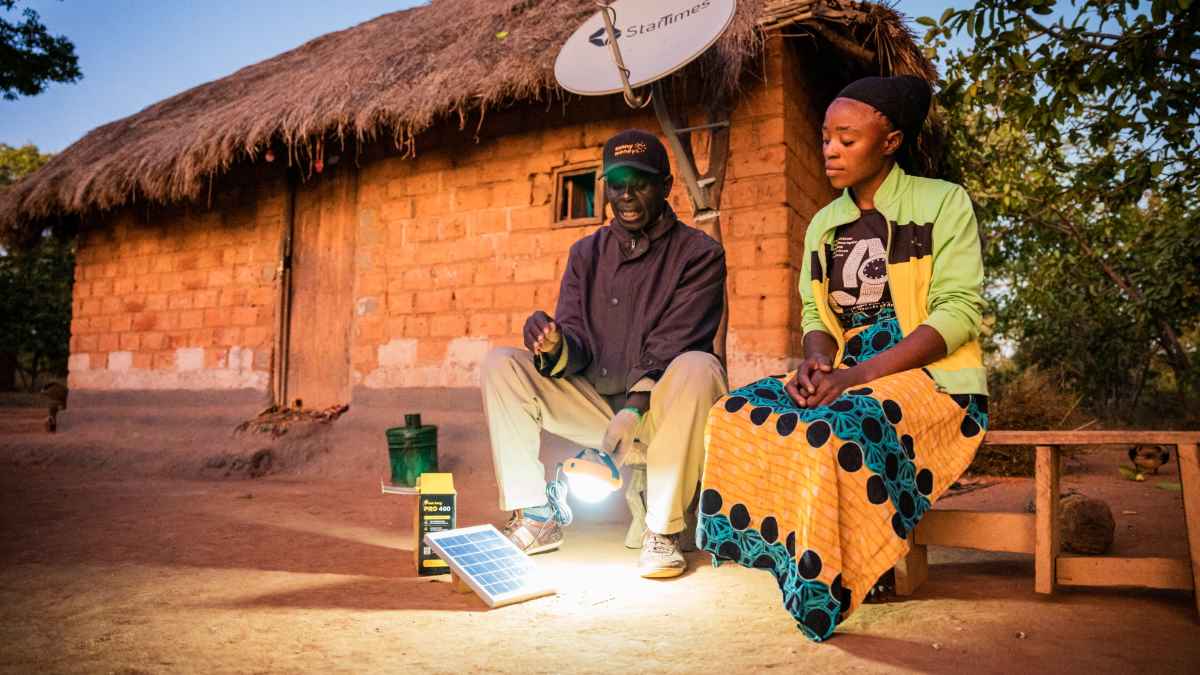
RS Group plc (LSE: RS1) (https://Africa.RSDelivers.com), a high-service global product and service solutions provider for industrial customers, today announces a new three-year partnership with international development charity SolarAid. Together, RS Group and SolarAid aim to raise £1 million to deliver clean, safe solar lights to 150,000 people living in rural communities across Africa without access to electricity.

The partnership forms a central part of RS Group’s 2030 ESG action plan and champions the shared ambition to “make amazing happen for a brighter world.” By combining corporate donations, matched funding, RS PRO product contributions, employee fundraising, and gifts in kind, RS Group will help accelerate SolarAid’s mission to create thriving solar businesses that tackle poverty and climate change.

Just one solar light benefits every member of the household leading to a 90% reduction in kerosene, candles or torches, with a 95% saving on their energy spend and enabling a child to study safely for the first time after sunset. It also reduces carbon emissions in the transition to renewable energy.  A paraffin candle emits three times its weight in CO2 and a kerosene lamp emits over a tonne of carbon over 3 years.

Employee engagement at the heart of the partnership

RS and SolarAid are closely aligned as providers of products and solutions that support the low-carbon transition with a focus on renewables. As a leader in industrial MRO services, the RS team’s expertise will directly support SolarAid’s global and local repair programmes, helping build a circular solar economy in off-grid communities. RS employees worldwide will be encouraged to get involved through skills-based volunteering, fundraising challenges, and awareness-raising activities. Planned initiatives include:

Access to clean, safe solar light is a powerful catalyst for education, safety, and opportunity

  • Skills-based volunteering: RS experts will seek to support SolarAid projects, such as improving its Repair App, which helps communities extend the life of solar lights and reduce waste through simple repairs.
  • On-the-ground engagement: Opportunities to visit SolarAid-supported communities in Malawi and Zambia, as well as welcoming SolarAid representatives to RS markets for live demonstrations.
  • Active for Change: A global fundraising challenge where employees raise money by logging physical activity in teams.

RS employees are entitled to two annual volunteering days, and the company aims to inspire 50% of colleagues to use this time to support their communities and the SolarAid partnership.

Bridging ambition with proven impact

SolarAid’s recent remarkable achievement in Kasakula, Malawi underscores the partnership’s potential. On 26 August 2025, 100% of households, all local schools, and the health clinic in Kasakula gained solar access through the Light a Village initiative—highlighting what’s possible when communities, charities, and partners align around a bold, shared goal.

A brighter future through collaboration

Andrea Barrett, Chief Sustainability Officer at RS Group, said “We are proud to partner with SolarAid on this important mission. Access to clean, safe solar light is a powerful catalyst for education, safety, and opportunity. By combining the passion of our people with the innovation of our customers and suppliers, we can make amazing happen for communities that need it most. The success in Kasakula is a living proof point: achieving 100% access in one of the world’s poorest and most remote regions shows that universal energy access is not just achievable, but scalable.”

John Keane, CEO of SolarAid, said,“We are delighted to be working in partnership with RS Group. From the very start our shared purpose and alignment has been clear. Like RS Group, we strive to innovate the best solutions for our customers, so that we can deliver sustainable energy access. We are incredibly excited by the huge opportunity we have together, to progress our mission and bring clean, safe light and power to those living in the most remote, hardest to reach communities. Together, we really will make amazing happen for a brighter world”.

Driving long-term impact

The partnership builds on RS Group’s track record of impactful collaborations, including raising nearly £1 million for The Washing Machine Project since 2020. By focusing on engagement opportunities for employees, customers, and suppliers, RS Group and SolarAid aim to create a movement of shared purpose and innovation. To amplify the collective impact, RS Group will match donations and funds raised by employees, further reinforcing its commitment to empowering communities.

Distributed by APO Group on behalf of RS South Africa.

Business

Puma Energy and Hass Petroleum Group announce lubricant distribution partnership

Published

on

Puma Energy

Puma Energy, a leading downstream energy company, and Hass Group (https://HassPetroleum.com), a leading oil marketing company in Africa, today announced a lubricant distribution partnership covering the Democratic Republic of Congo (DRC). The agreement was signed at the Investing in African Mining Indaba conference in Cape Town.

The agreement marks the introduction of the Puma Energy lubricants brand into the DRC for the first time. Under the agreement, Hass Group will distribute and market Puma Energy’s high-performance lubricants, supporting key sectors including mining and industrial operations in one of Africa’s most strategic growth markets.

Our strong experience and knowledge of the region, combined with Puma’s product quality, makes this one of our most significant partnerships this year

Ben Ouattara, Head of Africa, Puma Energy, commented: “This collaboration represents an important milestone in the expansion of our lubricants business across Africa, expanding distribution into 11 markets. By leveraging an export model and partnering with a strong regional player like Hass Petroleum, we are able to efficiently extend the Puma Energy brand and our high-quality products into new growth markets such as the DRC.”

Solomon Osundwa, Regional Managing Director, Hass Group, added: “We are pleased to partner with Puma to deliver premium lubricants to customers in the DRC. Our strong experience and knowledge of the region, combined with Puma’s product quality, makes this one of our most significant partnerships this year. As part of our regional growth strategy, we are also looking to enter Mozambique and Angola.”

Distributed by APO Group on behalf of Hass Group.

Continue Reading

Business

Namibia’s Onshore Drive: Emerging Opportunities Beyond the Deepwater Frontier

Published

on

African Energy Chamber

With onshore drilling results in hand and key production tests planned for 2026, Namibia’s frontier basins are moving into sharper focus – creating new openings for investors at this year’s Namibia International Energy Conference

WINDHOEK, Namibia, February 12, 2026/APO Group/ –Namibia’s upstream narrative has, until recently, been defined by deepwater success in the Orange Basin, where major offshore discoveries have transformed perceptions of the country’s hydrocarbon potential. Galp’s Mopane discovery, estimated to hold up to 10 billion barrels of oil equivalent, alongside TotalEnergies’ Venus find, has firmly positioned Namibia on the global exploration map and underpinned expectations of first offshore oil before the end of the decade. Alongside this offshore momentum, however, a parallel story is unfolding onshore, where frontier basins, lower entry costs and improving geological understanding are drawing increased attention from explorers and investors alike.


What Makes Onshore Namibia Attractive?

Onshore Namibia presents a compelling proposition, particularly in the current global investment climate. Compared with deepwater developments, onshore exploration offers significantly lower drilling and operating costs, shorter project timelines and greater flexibility during appraisal. These advantages help reduce risk while allowing companies to test frontier plays more efficiently – a key factor given that Namibia’s onshore basins remain underexplored by international standards.

The most advanced onshore exploration activity is currently taking place in the Kavango Basin, led by ReconAfrica. In December 2025, the company completed drilling at its Kavango West 1X well to a depth of approximately 4,200 meters. Data collected during drilling confirmed the presence of hydrocarbons across a substantial section of the well, including several zones that could potentially support future production. Additional hydrocarbon indications were identified at deeper levels, pointing to the possibility of multiple viable targets within the basin. While the well was not immediately placed into production, the results marked one of the most significant onshore milestones achieved in Namibia to date and confirmed the existence of a working petroleum system.

Building on these findings, ReconAfrica plans to return to Kavango West 1X in early 2026 to conduct a production test. The results of this program will be critical in determining whether the hydrocarbons identified can be produced at commercial rates and whether the Kavango Basin can progress from exploration concept to viable development. Beyond this initial well, the company controls a substantial onshore acreage position across Namibia and neighboring Angola, providing considerable scope for follow-up drilling and potential farm-in opportunities should results prove encouraging.

Further west, the Owambo Basin represents another onshore frontier attracting growing interest. Exploration efforts led by joint ventures involving Monitor Exploration, 88 Energy and Legend Oil Namibia have focused on gravity, magnetic and environmental surveys under Petroleum Exploration Licence 93. These studies have identified several structural leads, including large closures capable of supporting hydrocarbon trapping within a rift-related petroleum system. While seismic acquisition and interpretation are expected to continue through 2026, the basin is increasingly viewed as a medium-term opportunity that could complement progress in the Kavango Basin.

Exploration and Activity Outlook

Looking ahead, 2026 is shaping up to be a defining year for Namibia’s onshore ambitions. In addition to the planned Kavango West production test, operators are expected to expand geochemical sampling and subsurface studies across multiple lisence areas, both within Namibia and along its onshore extension into Angola. These programs are aimed at reducing exploration risk and supporting investment decisions at a time when African onshore oil and gas spending is forecast to rise, driven by demand for lower-cost, shorter-cycle developments.

As this onshore momentum builds, the Namibia International Energy Conference (NIEC) is emerging as a key forum for engagement between government, operators and investors shaping the country’s upstream future. Scheduled to take place in Windhoek from 14–16 April 2026 under the theme “The Road to First Oil and Beyond,” NIEC brings together policymakers, regulators, explorers, financiers and service providers at a critical point in Namibia’s development trajectory. While offshore projects continue to dominate global headlines, the conference provides onshore explorers with a platform to showcase progress, advance partnerships and engage investors seeking diversification beyond deepwater plays.

For onshore licence holders, NIEC creates tangible opportunities to progress farm-in discussions, secure technical and financial partners and align exploration timelines with national development priorities. As Namibia advances both offshore and onshore, NIEC ensures that policy, investment and technical planning move forward in step.

The African Energy Chamber serves as the strategic partner of NIEC 2026, working alongside government and industry to advance investment, local content and responsible energy development in Namibia.

Distributed by APO Group on behalf of African Energy Chamber.

Continue Reading

Business

Gabon and South Africa deepen mining ties through new geoscience collaboration agreement

Published

on

mining

The agreement reflects Gabon’s broader strategy to diversify its economy and unlock the full commercial potential of its mining industry

LIBREVILLE, Gabon, February 11, 2026/APO Group/ –Gabon has taken a significant step toward strengthening its mining sector by signing a new collaboration agreement between the Ministry of Mines and Geological Resources of Gabon (www.Mines.Gouv.ga) and South Africa’s Council for Geoscience. The partnership is designed to enhance geological research, build technical capacity, and accelerate the sustainable development of Gabon’s mineral resources.

The agreement reflects Gabon’s broader strategy to diversify its economy and unlock the full commercial potential of its mining industry. While the country is widely known for its oil production, it also possesses significant untapped deposits of iron ore, manganese, gold, and other strategic minerals. By collaborating with one of Africa’s leading geoscience institutions, Gabon aims to modernize its geological knowledge base and strengthen the institutional foundations of its mining sector.

At the core of the agreement is a commitment to conduct comprehensive geological assessments across Gabon to identify new potential. The Council for Geoscience will work alongside Gabonese experts to review existing geological data, carry out new surveys where necessary, and develop updated resource maps. These efforts are expected to provide a clearer picture of Gabon’s mineral endowment and help the government design more effective strategies for resource commercialization. The agreement was signed in Cape Town by Mr Alain Manzanza, Director General of Geology in the Ministry of Mines of Gabon and Mr Mosa Mabuza, CEO of the Council of geoscience South Africa under the watchful eyes of HE Sosthene Nguema Nguema, minister of Mines and Geological Resources of Gabon and HE Rod Rembendambya Gabon’s ambassador to South Africa.

Another key pillar of the partnership is capacity building. The agreement includes provisions for training programs, technical exchanges, and joint research initiatives aimed at developing the skills of Gabonese mining professionals. Through workshops, internships, and collaborative projects, Gabonese geologists and engineers will gain exposure to advanced exploration techniques and international best practices in mineral resource management.

This is as a timely initiative in line with the directives of our head of State, President Brice Clotaire Oligui Nguema

Minister Nguema Nguema emphasized that the partnership is not limited to technical cooperation. It is also intended to strengthen economic ties between Gabon and South Africa by encouraging South African mining companies to explore investment opportunities in Gabon. By improving geological transparency and regulatory capacity, the agreement is expected to make Gabon a more attractive destination for foreign investment in the mining sector.

Environmental and technological standards form another important dimension of the collaboration. Both parties have committed to sharing knowledge on modern mining technologies and evolving environmental regulations. This includes promoting responsible mining practices, improving environmental monitoring, and integrating sustainability considerations into project planning. Such measures are increasingly important as global investors place greater emphasis on environmental, social, and governance (ESG) standards.

The agreement also aligns with regional efforts to promote intra-African cooperation in the extractive industries. By leveraging South Africa’s long-standing experience in mining and geoscience, Gabon is positioning itself to benefit from African expertise while contributing to the continent’s collective development. The partnership demonstrates how African countries can collaborate to build stronger institutions and more competitive resource sectors.

According to Minister Nguema Nguema, “this is as a timely initiative in line with the directives of our head of State, President Brice Clotaire Oligui Nguema who has pledged to increase the contribution of the mining sector to the national economy. Ultimately, we will have to work in collaboration with advanced mining economies like south Africa to achieve this.”

Global demand for minerals is rising, driven in part by the energy transition and the growing need for materials used in renewable technologies and infrastructure. With improved geological data and stronger technical capacity, Gabon is better placed to participate in these emerging markets and capture greater value from its natural resources.

In the coming months, joint working groups from both institutions are expected to outline a detailed implementation roadmap. Early priorities will likely include data integration, training schedules, and the identification of priority regions for geological surveys. As the partnership moves from agreement to action, it has the potential to play a transformative role in shaping the future of Gabon’s mining industry.

By combining expertise, technology, and institutional support, the Gabon – South Africa collaboration marks an important milestone in Gabon’s efforts to build a modern, transparent, and sustainable mining sector.

Distributed by APO Group on behalf of Ministry of Mines and Geological Resources of Gabon.

Continue Reading

Trending