Connect with us
Anglostratits

Business

African Energy Week (AEW) 2024 to Shine Spotlight on Angolan Blocks, Project Progress Ahead of 2025 Bid Round

Published

on

African Energy Week

Sponsored by the ANPG, Sonangol, Azule Energy, ACREP and Alfort Petroleum, the roundtable discussion serves as a premier platform to gain insight into emerging investment opportunities in sub-Saharan Africa’s second largest oil producer

CAPE TOWN, South Africa, October 23, 2024/APO Group/ — 

The African Energy Week (AEW): Invest in African Energy conference – slated for November 4-8 in Cape Town – will once again host an Invest in Angola Energies country spotlight session. Sponsored by the country’s regulator the National Oil, Gas & Biofuels Agency (ANPG) and its national oil company Sonangol as well as energy companies Azule Energy, Alfort Petroleum and ACREP, the session will outline strategic investment opportunities and available blocks ahead of the country’s 2025 licensing round.

Angola offers a wealth of block opportunities for upstream players, featuring proven petroleum plays in shallow and deepwater acreage as well as promising deposits in onshore basins. The country launched its first-ever marginal fields for exploration this year, offering five blocks across acreage with proven reserves and commercial potential. The marginal fields not only support production growth at active assets but offers market access to companies of various sizes and capacities. In tandem, Angola offers 11 blocks via its permanent offer program. The program enables investment outside of the confines of traditional licensing rounds, supporting investment through flexibility. These opportunities will be outlined during the AEW spotlight session, with Angola’s Minister of Mineral Resources, Petroleum and Gas Diamantino Pedro Azevedo set to open the session with a fireside chat.

AEW: Invest in African Energy is the platform of choice for project operators, financiers, technology providers and government, and has emerged as the official place to sign deals in African energy. Visit http://www.AECWeek.com for more information about this exciting event.

Angola is not only focused on bringing new projects online by promoting exploration but maximizing output at producing fields

Following a successful 12-block tender which concluded in 2024, Angola is preparing to launch its next upstream licensing round in Q1, 2025. A 10-block bid round offering blocks for exploration in the Kwanza and Benguela Basins, the round forms part of the country’s multi-year licensing program – launched in 2019 – which aims to award up to 50 blocks throughout a six-year period. As of 2023, 27 blocks have been awarded. A senior representative from the ANPG will provide an update on Angola’s block opportunities, unpacking exploration prospects across the country’s onshore, offshore and marginal fields.

On the back of rising opportunity in Angola, a slate of upstream-focused oil and gas companies have either entered or are strengthening their presence across the market. Amidst its privatization – set to be complete by 2026 – Sonangol is gradually transforming into a competitive upstream operator. The company aims to boost national production by investing in projects in collaboration with upstream partners. Sonangol CEO Sebastião Gaspar Martins joins the country spotlight to shed light on projects and partnerships. Meanwhile, Afentra finalized the acquisition of non-operating interests in two offshore blocks this year from upstream company Azule Energy. With the transaction, Afentra increases its stake in Block 3/05 to 30% and in Block 3/05A to 21.33%. The company also qualified as a non-operator in Angola’s 2023 bid round, with a formal agreement already signed for the KON 19 license. Afentra COO Ian Cloke returns to AEW: Invest in African Energy to discuss the company’s exploration agenda in Angola.

As Angola’s largest private oil producer, Etu Energias aims to produce 50,000 barrels per day (bpd) by 2025. The company recently secured $60 million to support asset acquisition in Angola, enabling the acquisition of a 20% stake in Block 14 and a 10% stake in Block 14K. Edson R dos Santos, CEO of Etu Energias, will unpack the company’s acquisition goals during the AEW: Invest in African Energy 2024 spotlight session. Additionally, Gianni Gaspar-Martins, Managing Director of Alfort Petroleum, will join the discussion, detailing the role Angolan operators play in driving national output. Having qualified as an operator under Angola’s 2020 bid round, Alfort Petroleum is striving to boost production at KON 8, serving as the block’s operator.

Amid this exploration drive, numerous large-scale oil and gas projects are rapidly gaining momentum in Angola, with recent project milestones underscoring IOC commitment to bringing production online. Energy major ExxonMobil made an oil discovery at the Likember-01 well this year – the first as part of Angola’s broader incremental production initiative. The company could inject as much as $15 billion in exploration and production in the Namibe basin, following commercial drilling success. ExxonMobil’s Lead Country Manager and General Manager Katrina Fisher joins the AEW: Invest in African Energy 2024 conversation to discuss the company’s Angolan operations. Additionally, Azule Energy will provide a project update at the country spotlight, with CEO Adriano Mongini leading the discussion. Azule Energy aims to produce 250,000 bpd by 2026 and is accelerating gas monetization through projects such as Quiluma and Maboqueiro fields – Angola’s first non-associated gas project, set to come online in 2026. The country spotlight will also feature Mahesh Swaminathan, Senior Vice President – Global Business Vertical Head at McDermott International. The company secured a contract for the TotalEnergies-led Begonia field development in 2022.

“Angola is not only focused on bringing new projects online by promoting exploration but maximizing output at producing fields. Through its multi-year licensing strategy and proactive approach to marginal field development, the country sets a strong example for other oil and gas producers in Africa,” states NJ Ayuk, Executive Chairman of the African Energy Chamber.  

Distributed by APO Group on behalf of African Energy Chamber.

Business

South Africa’s water challenges are reshaping how businesses plan for resilience

Published

on

Supply disruptions, ageing infrastructure, water reform and rising investment needs are changing how organisations manage water risk

JOHANNESBURG, South Africa, September 21, 2026/APO Group/ –South Africa’s water landscape is entering a critical period. Ageing infrastructure, increasing supply disruptions and pressure on municipal water systems are forcing businesses to reassess how water is managed as part of operational continuity and long-term investment planning.


The challenge is particularly visible in Johannesburg, where more than a third of the city’s water supply – approximately 655 million litres a day – is reportedly being lost through ageing and damaged infrastructure.

At the same time, government has launched the National Water Action Plan, which prioritises infrastructure investment, regulatory reform, improved municipal water services and greater private-sector participation. Government has also allocated R156 billion to water and sanitation infrastructure over the next three years.

[Quote from Webber wentzel – WSA Sponsor]

These issues will form part of the discussion at Water Security Africa Johannesburg, taking place 28–29 October 2026 at The Maslow Hotel, Sandton, Johannesburg.

Water security is becoming a business strategy

Water security is no longer only an operational or sustainability concern. Reliable supply increasingly affects business continuity, investment decisions, ESG performance and long-term competitiveness.

The Executive Leadership Forum: “Water Security is Now a Boardroom Issue” will examine how organisations are integrating water resilience into enterprise risk and business strategy.

Discussions will explore protecting operations against supply interruptions, strengthening collaboration between business, municipalities and government, and investing in solutions that can build long-term resilience.

Building water resilience into South Africa’s cities

As infrastructure comes under increasing pressure, businesses and developers are also reconsidering how buildings, precincts and critical facilities are designed.

The session “Designing Water-Resilient Cities” will explore how decentralised water systems, onsite treatment, storage, alternative water sources and smarter infrastructure can help commercial property, healthcare facilities, logistics hubs and data centres become more resilient to disruption.

The discussion will also examine how Green Building standards, ESG requirements, digital technologies and climate-resilient planning are influencing future development.

Using digital technology to improve water performance

South Africa’s water challenge is not only about developing new infrastructure. Improving the performance of existing assets is equally important.

The Digital Water Forum: “Smart Water Systems” will examine how AI, digital twins, predictive analytics, digital asset management and real-time data can help organisations reduce losses, improve maintenance and optimise infrastructure performance.

The focus will be on practical applications and case studies demonstrating measurable improvements in efficiency, resilience and business performance.

From water risk to water resilience

The wider programme will also address water reform, infrastructure financing, industrial water independence, reuse and recycling, alternative supply and public-private partnerships, providing organisations with a practical view of how South Africa can move from identifying water risks to implementing solutions.

As government increases its focus on reform and infrastructure investment, the role of business, investors, municipalities and technology providers in strengthening South Africa’s water resilience is becoming increasingly important.

Water Security Africa Johannesburg 2026 will bring these stakeholders together to examine how organisations can secure supply, improve efficiency and build resilience in an increasingly water-constrained environment.

28–29 October 2026 | The Maslow Hotel, Sandton, Johannesburg

South Africa’s next water challenge is not simply securing more water – it is building systems, businesses and cities that can withstand disruption.

Find out more:
Water Security Africa Johannesburgwww.WaterSecurity-Africa.com

Distributed by APO Group on behalf of VUKA Group.


Continue Reading

Business

Hong Kong sets out initiatives to secure long-term development of pillar industries

Published

on

Hong Kong

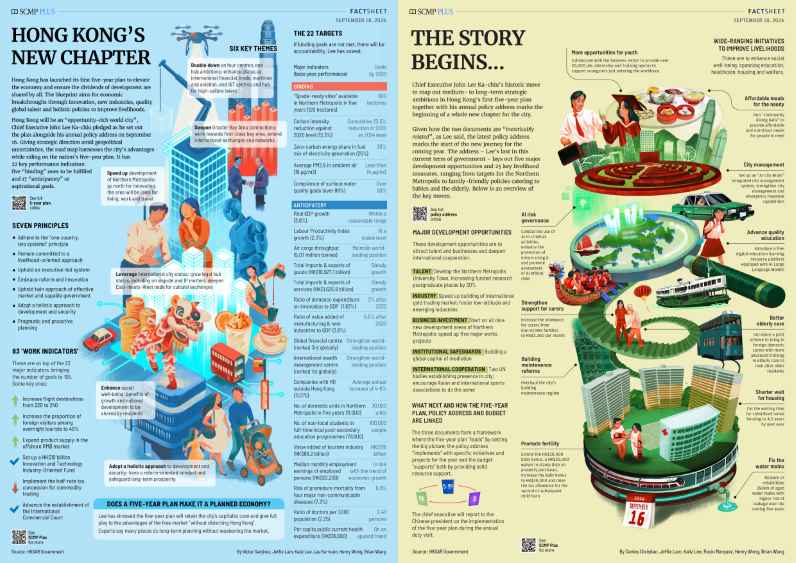
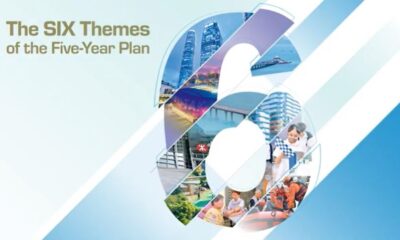
HONG KONG SAR – Media OutReach Newswire – 19 September 2026 – Hong Kong’s Chief Executive John Lee rolled out various measures to develop Hong Kong’s key economic centres when he unveiled the First Five-Year Plan for Economic and Social Development of the Hong Kong Special Administrative Region (HKSAR) (2026-2030) and his fifth Policy Address on September 16.

Under Hong Kong’s First Five-Year Plan, Hong Kong will focus on strengthening the four centres, developing the hub for high-calibre talent, consolidating and enhancing its competitive edge as an international city.


Hong Kong’s status as world-renowned international financial, maritime and trade centres as well as an international aviation hub underpin the city’s high-quality development and provide a firm foundation for the city’s long-term stability and prosperity.

“We will consolidate and enhance Hong Kong’s status as an international financial centre, and stay committed to our global positioning,” Mr Lee said. “Hong Kong will deepen the development of its global offshore Renminbi business and capital market, develop an international asset and wealth management centre and international risk management centre, enhance the securities market and expand fixed income and commodity trading.”

Hong Kong has become the world’s largest cross‑boundary wealth management centre this year, and the HKSAR Government will continue to develop a more attractive asset and wealth management ecosystem, Mr Lee said.

Hong Kong will develop a commodity trading ecosystem with gold as an entry point by driving the development of the clearing system, storage, supply, and infrastructure related to gold trading. The city’s central clearing and settlement system for gold will be officially launched in the first quarter of 2027.

“The significance of the First Five-Year Plan for Hong Kong lies in a mindset shift; we must plan Hong Kong’s financial development with a longer-term vision and broader perspective to adapt with flexibility and diversity,” said Christopher Hui, Hong Kong’s Secretary for Financial Services and the Treasury. “Each of our initiatives centres around one objective, which is to elevate Hong Kong from a ‘corridor of capital’ to a ‘destination of choice’.”

Hong Kong was ranked the world’s fifth‑largest entity in merchandise trade in 2025. The HKSAR Government announced plans to consolidate and enhance Hong Kong’s status as an international trade centre, playing a greater role in the high‑level opening up of the Chinese Mainland.

Since the Task Force on Supporting Mainland Enterprises in Going Global was established last October, it has provided assistance, including listing and raising capital in Hong Kong, aligning with overseas standards, acquiring industry certifications and fulfilling compliance requirements for more than 340 Mainland enterprises.

The Task Force will strengthen collaboration with professional organisations to train talent for the GoGlobal initiative and enhance professional services, among other areas.

“In alignment with the National 15th Five-Year Plan’s call to advocate and practise true multilateralism, the First Five-Year Plan proposes to continue expanding international economic and trade network,” said Algernon Yau, Hong Kong’s Secretary for Commerce and Economic Development.

“We will actively forge free trade agreements and investment agreements with economies that are of development potential or strategic locations. Meanwhile, we will expand our network of overseas offices, and leverage the combined networks of our overseas Economic and Trade Offices, InvestHK, and the Hong Kong Trade Development Council offices globally to deepen overseas ties and step up trade and investment promotion.”

As an international maritime centre, Hong Kong has ranked fourth globally in maritime comprehensive strength for seven consecutive years. The Five-Year Plan will drive a “volume to value” transformation of the Hong Kong Port, capitalising on its strengths in high value‑added maritime services, to develop Hong Kong into a “Global Maritime Capital”.

To promote high value-added services, the industry will develop “Finance + Shipping”.

Taking advantage of the city’s well‑established maritime finance, insurance and maritime arbitration under common law, Hong Kong will build an integrated ecosystem under which Hong Kong‑invested enterprises adopt Hong Kong law, take out Hong Kong insurance and choose for arbitration to be seated in Hong Kong.

Regarding aviation, Hong Kong’s passenger throughput recorded a year‑on‑year increase of 15% last year, to 61 million, with flights to over 220 destinations. The city’s air cargo throughput reached 5.07 million tonnes, making its airport the world’s busiest cargo airport for the 15th year since 2010.

To strengthen development as international aviation hub, Hong Kong will expand its aviation network, and diversify business opportunities.

The HKSAR Government will continue to take the initiative to visit South America, Africa, Central Asia, the Middle East and the Caucasus to expedite the conclusion of new air services agreements and the expansion of traffic rights, thereby assisting the industry in exploring new passenger and cargo sources.

As for building Hong Kong as an international innovation and technology centre, the HKSAR Government will step up its efforts to promote artificial intelligence (AI) applications across various trades, and continue to strike a balance between encouraging innovation and protecting security, thereby enhancing Hong Kong’s international competitiveness in AI development.

In alignment with the national strategic technology areas, Hong Kong will focus on core technologies such as life and health, AI and robotics, microelectronics, new energy, advanced manufacturing and new materials. It will also continue to raise the ratio of Total Domestic Expenditure on Innovation Activities to Gross Domestic Product, striving to reach 3% after 2030.



Continue Reading

Business

Hong Kong’s Chief Executive takes to the airwaves to discuss his strategic vision for development under the city’s First Five-Year Plan

Published

on

Chief Executive

HONG KONG SAR – Media OutReach Newswire – 18 September 2026 – Hong Kong’s Chief Executive, John Lee, took part in a radio phone-in programme this morning (September 18), fielding questions about the First Five-Year Plan for Economic and Social Development of the Hong Kong Special Administrative Region (HKSAR) (2026-2030) and his fifth Policy Address, which were unveiled on Wednesday (September 16).


Quizzed on various aspects of the HKSAR Government’s new blueprint for economic and social development, Mr Lee said the inaugural Five-Year Plan set out five main objectives for Hong Kong: better livelihoods for all; breakthroughs in economic development; expanding global competitiveness and influence; faster development of the Northern Metropolis; and to better serve the country.

“The strength of Hong Kong is its international status, and we have been emphasising on how we ensure the internationalism or the ‘internationalness’ of Hong Kong. We are expanding to cover every part of the world where we can reach,” Mr Lee said, noting that the Government had offices, including Economic and Trade Offices, and the offices of Invest Hong Kong and the Hong Kong Trade Development Council, in countries around the world. “I’m very serious about expanding our network.”

Since taking office four years ago, Mr Lee has led delegation visits to regions, including ASEAN Member States, the Middle East, and recently Central Asia. “And my colleagues really go more often to different parts of the world, so for South Africa, and also Kenya and these are the very popular African places that my colleagues go to visit,” he added.

To boost Hong Kong’s influence in overseas markets, Mr Lee highlighted the example of the International Organization for Mediation (IOMed).

“We are very proud to have the headquarters of IOMed set up in Hong Kong, because this is an organisation which is of United Nations status,” Mr Lee said. He added that an international office would be set up in Hong Kong under the global network of corruption prevention authorities. “Hong Kong is an international city, which not just is very good at doing business, but is exercising its responsibility as a global participator, and also, we really can contribute.”

“And this is also very important, because it just means how, in different areas, Hong Kong is doing very well, and also very connected to the world. And not just being a member, but being a contributor, being really a driver, and we want to share our good experiences, and also learn from other experiences.”

The First Five-Year Plan and the 2026 Policy Address placed strong focus on speeding up the development of the Northern Metropolis (NM) project, so as to boost long-term economic development, improve people’s livelihoods and help the city to further integrate into overall national development.

“The Northern Metropolis represents about one third of our geographical area. So it is a big piece of land that gives us new opportunities. An opportunity to upgrade ourselves, both from the accommodation angle as well as development angle,” Mr Lee said.

Beyond the city’s core economic strengths such as finance, shipping and trade, Mr Lee said the NM would provide room for diversifying local industries, creating new jobs and a brighter future as more development opportunities emerge from different kinds of industries as well as closer alignment with national development.

“The NM is actually mentioned in our country’s 15th Five-Year Plan. That means it is not just a Hong Kong development, it has been elevated as a state-driven project. And with the elevation of position, we will have to work hard. And I am sure that the Central Government will also help us to ensure that this will be a success story.

“And so, doing the Five-Year Plan has this advantage. We will capitalise on all the opportunities that the state can give us. At the same time, we will remain very fully connected to the international world. So we have the beauty of both worlds.”

Asked about Hong Kong’s approach to adopting artificial intelligence (AI), Mr Lee stressed the need to take advantage of the opportunities brought by AI, while also protecting against the risks of AI, in areas such as crime, fraud, sexual abuse and potential negative impacts on younger people.

“Last year, we talk very much about how we should benefit from the application of AI, how it will do things faster, and how it will also do things more correctly,” Mr Lee said.

“So while we develop and ensure people understand and use it, we also need to tell everybody the potential risks that it will bring.”

Mr Lee said the Government would create a post of Commissioner for AI, with a mandate that he is “the chief for the whole government, in terms of AI. It means setting the policy. It means coordinating resources, identify problems for them, setting the best practices, issuing guidelines. And also, very importantly, is developing AI for the whole of government with a view to, after we have developed our experience, let the world also learn from these experiences.”


Continue Reading

Trending