Connect with us
Anglostratits

Business

African Development Bank and OCP Group provide $188 million for green investment in Morocco
Published

on

African Development Bank

$150 million from the African Development Bank, $18 million from the Canada – African Development Bank Climate Fund and $20 million from the Clean Technology Fund

Egalement disponible en FrançaisTambém disponível em Portuguêsتتوفر أيضا في العربية

RABAT, Morocco, February 20, 2024/APO Group/ — 

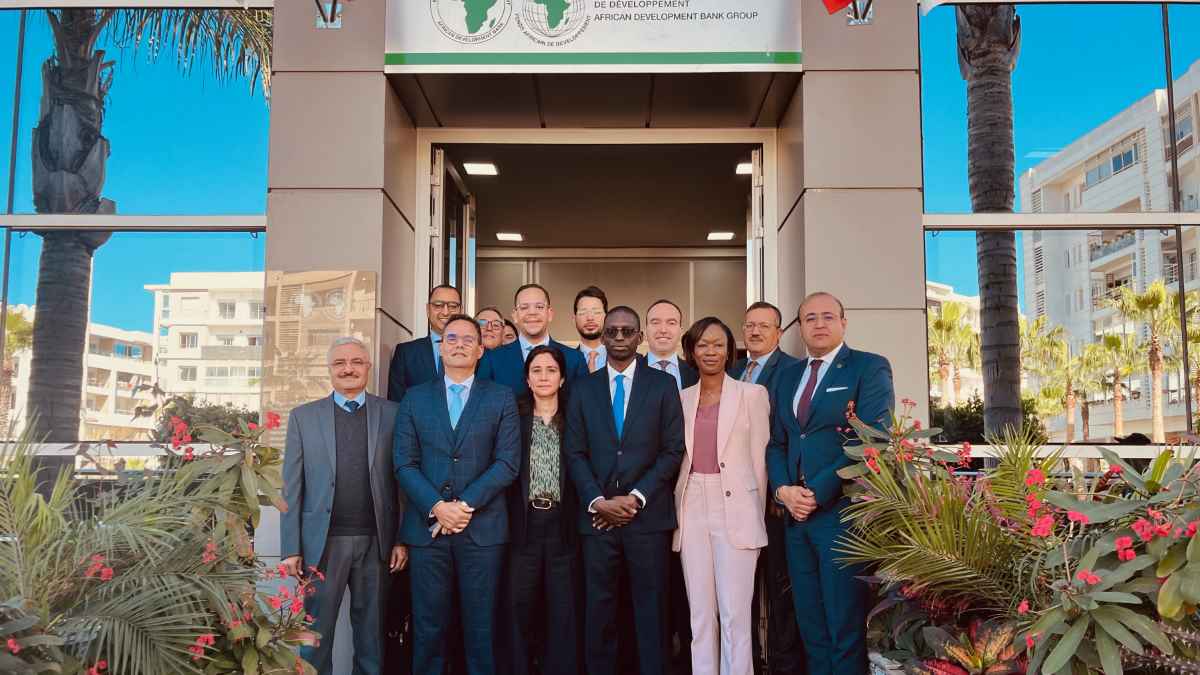
The African Development Bank (www.AfDB.org) and the OCP Group signed three loan agreements in Rabat totalling $188 million to help fund the OCP Group’s Green Investment Program supplying clean drinking water to the towns around three new desalinisation plants.

The construction of the new modular seawater desalination plants will be funded by the first loan of $150 million from the African Development Bank and the second loan of $18 million from the Canada – African Development Bank Climate Fund (CACF). Owned by the OCP Group, a global leader in soil fertility and plant nutrition solutions, the plants will have a total annual capacity of 110 million m3, and will provide an autonomous source of unconventional water to the OCP Group’s industrial and mining sites. Up to 75 million m3 of drinking water will be provided for the towns of Safi and El Jadida and the areas around the OCP Group’s Safi and Jorf plants, and over 1.5 million people will benefit.

The third loan of $20 million from the Clean Technology Fund (CTF), will be used to fund storage systems for energy generated from renewable sources, supplying the desalination plants and other OCP Group production units.

This funding is an example of the support that the African Development Bank, the CACF, and the CTF intend to contribute to combating climate change, both for adaptation and mitigation. It also aims to support the most vulnerable populations, among others, by supplying drinking water and creating jobs, including for young people and women, and in rural areas.

We greatly appreciate these loans, which represent a significant contribution to our 2023-2027 investment program of $13 billion

Key components of the OCP Group Green Investment Program, the projects form part of the Moroccan government’s Emergency Plan for Drinking Water Supply.

Director of the Industrialization and Trade Development Department at the African Development Bank, Mr Ousmane Fall, and Mr Karim Lotfi Senhadj, Finance Director of the OCP Group signed the agreements. Canadian government representatives were also present at the signing, acknowledging the CACF’s contribution and strengthening the shared commitment to combating climate change and women’s empowerment. Moreover, the finalization of this transaction represents the first non-sovereign funding signed by the CACF. It consolidates the long-term partnership between the African Development Bank and the Kingdom of Morocco in its efforts to confront the challenges of climate change.

“We are proud to be associated with this ambitious project, which provides a strategic response to the increase in hydric stress in Morocco. The project will also help to optimize water-resource management in the OCP Group’s industrial activities by using desalinated seawater,” explained the African Development Bank’s Country Office manager for Morocco, Achraf Tarsim.

“We greatly appreciate these loans, which represent a significant contribution to our 2023-2027 investment program of $13 billion. Our sustainability objectives aim to achieve 100 percent unconventional water by 2024, 100 percent renewable energy by 2027, self-sufficiency in green ammonia by 2032, and full carbon neutrality by 2040,” declared Karim Lotfi Senhadji, Finance Director of the OCP Group.

“We are pleased to see that this fund is being deployed effectively in Morocco to contribute to the response to climate challenges. We are delighted to be involved alongside our partners, the African Development Bank and the OCP Group,” commented Jean Touchette, adviser and head of cooperation at the Canadian Embassy in Morocco.

Over 180 operations in various sectors have been deployed by the African Development Bank in Morocco since 1978, totalling over EUR 12 billion.

Distributed by APO Group on behalf of African Development Bank Group (AfDB).

Business

WARC reveals insights from the winners of the Cannes Creative Effectiveness Lions 2026

Published

on

Cannes Creative Effectiveness Lions 2026
Cultural insights, interactive experiences, strategic creator partnerships and platform-native ideas lead to commercial success
12 August 2026 – Strategically integrating cultural insights, interactive experiences, strategic creator partnerships, and platform-native ideas into campaigns are key drivers of commercial success, according to a new report by WARC, the global authority on marketing effectiveness.

‘Creative Effectiveness Lions – Insights from the 2026 winners’, identifies trends and themes common to the winners of this year’s Cannes Creative Effectiveness Lions awards category, which rewards creativity that has also met business goals and driven sustainable impact over time.

Based on WARC’s exclusive access to the jury deliberations and analysis of the entries, the report unearths insights into what makes a campaign both creative and effective, offers a behind-the-scenes view on the strategies that led to success, and provides takeaways for advertisers, agencies, media owners, people and planet.

Commenting on the report, John Bizzell, Content Lead, WARC, said: “This year’s winning Creative Effectiveness campaigns offer valuable insights for marketers, demonstrating how creative excellence can address genuine business and social issues while delivering meaningful growth.”

On the winners, jury president Bertille Toledano, CEO, BETC, Havas Creative Middle East and President of Havas Creative Network, commented: “The jury sought to award Lions to campaigns that delivered genuine impact on real people – the kind of campaigns you would discuss with your mother over lunch. We kept in mind the Creative Effectiveness Ladder to select the most effective creative work that embodied a cultural vision and a clear sense of what the brand stands for. These are the ones I’ll be telling my mother about.”

The three key themes of the Creative Effectiveness Lions 2026 winners are:

  • Rewrite cultural rules, don’t just reflect them

Cultural insight is a strategic business tool that helps brands actively focus on what connects people, and how to respond and innovate. Brands that move beyond surface-level understanding and instead use cultural analysis strategically can unlock new opportunities for growth, relevance and differentiation.


Brands should prioritize activation over observation, position themselves as cultural solutions, and focus on value exchange rather than transactional relationships.

Creative Effectiveness Grand Prix winner, Three Words for insurance brand AXA by Publicis France, transformed its home insurance offering to support victims of domestic violence in France by adding the clause ‘and domestic violence’ to its contracts, enabling emergency relocations for those in need.

Gold winner Pedigree’s Caramelo campaign by AlmapBBDO São Paulo, redefined the concept of ‘pedigree’ and increased the adoption of mixed-breed dogs in Brazil, particularly the culturally significant Caramelo, expanding its total addressable market.

  • Interactive experiences foster deeper brand involvement

Turning brand assets into interactive tools enables brands to deepen engagement, foster participation and create memorable moments for audiences.

Brands should embrace direct consumer participation utilising assets, leverage data to build credibility, and implement meaningful reward mechanisms to drive engagement.

Vaseline, the trusted skin healer’s silver-winning Vaseline Verified campaign by Ogilvy Singapore, engaged directly with creators to address misinformation about its product on social media to ensure safe usage among consumers.

Furniture retailer IKEA’s Hidden Tags silver campaign in Portugal by Uzina, Lisbon, encouraged customers to discover the hidden production dates on their products to build consumer trust and reinforce long-term brand commitment.

  • Strategic creator partnerships and platform-native ideas build brands

Creators are more than paid promoters; they can be authentic advocates who add real value. Platform-specific features earn community buy-in and mean reach continues when spend stops.

Brands should focus on integration rather than interruption, look beyond simple amplification, and meet audiences where they naturally engage.

Uber Easts, the food delivery platform’s silver-winning campaign Football is for Food, by Special US, transformed its NFL sponsorship into a purchase opportunity by embedding itself into the sport, linking football with food.

Bronze-winning campaign ‘U Up?’ by Rethink Canada for IKEA leveraged multiple touchpoints to create unexpected brand interactions into points of purchase for mattresses by turning consumer insomnia into immediate conversation.

WARC’s John Bizzell added: “This year’s jury talked a lot about context, from sourcing to metrics and culture. The jury wanted to see work that included well-sourced, credible data and metrics on what was the business impact. They also wanted to see cultural context – on an international jury, not everyone may understand why an insight is so important for a brand or category. Entrants should bear these factors in mind for next year.”

The full report is available to WARC Strategy subscribers. An upcoming WARC Podcast available from 20 August will discuss the findings.


Continue Reading

Energy

ExxonMobil’s Artificial Intelligence (AI) Breakthrough Signals New Era of Digital Exploration in Guyana Ahead of Caribbean Energy Week (CEW) 2027

Published

on

Etu Energias

As artificial intelligence transforms upstream decision-making, Guyana’s energy sector continues to attract investment and innovation ahead of the Caribbean Energy Week 2027 In-Country Launch in Georgetown on 1 September 2026

CAPE TOWN, South Africa, August 12, 2026/APO Group/ –ExxonMobil’s announcement that artificial intelligence has identified four new exploration opportunities within Guyana’s prolific Stabroek Block marks a significant milestone in the country’s digital transformation. By applying AI to historical discoveries, drilling results and subsurface data, the company is demonstrating how advanced analytics, machine learning, high-performance computing and next-generation seismic imaging can accelerate exploration, reduce costs and improve discovery success rates.


The breakthrough comes as Guyana targets crude oil production of 1.3 million barrels per day by 2027 and 1.7 million barrels per day by 2030, underscoring the growing role of digital technologies in maximizing resource development alongside continued investment in drilling and infrastructure.

Against this backdrop, the Caribbean Energy Week (CEW) 2027 Guyana In-Country Launch, taking place on 1 September 2026 at the Guyana Marriott Hotel in Georgetown, will bring together operators, technology providers, geoscience companies, investors and regulators to examine the latest developments shaping Guyana’s energy sector and build momentum ahead of CEW 2027 next July. Returning for its second edition, CEW provides a premier platform for advancing investment, showcasing new projects and highlighting the technologies driving the country’s next phase of upstream growth.

Momentum behind AI adoption continues to build. In May 2026, ExxonMobil Vice President of Exploration John Ardill confirmed the company was expanding its use of deep learning, machine learning and high-performance computing to analyze seismic data and identify hydrocarbon-bearing prospects that were previously more difficult to evaluate.

The company is simultaneously advancing an ambitious offshore drilling program. This month, ExxonMobil commenced new drilling activities in Guyana’s Exclusive Economic Zone, including the Whiptail development well and Rockhead-1 exploration well. Earlier this year, the company also sought environmental authorization for the Haimara gas-condensate development and has proposed a 35-well drilling campaign between 2028 and 2033, reinforcing confidence in Guyana’s long-term exploration potential.

These developments are creating growing opportunities for AI developers, digital technology providers, seismic specialists, engineering firms and oilfield service companies that can support increasingly data-driven exploration and field development activities.

As the first official milestone on the road to Caribbean Energy Week 2027, the Georgetown launch will provide a platform for industry leaders to examine the technologies, partnerships and investment strategies driving Guyana’s next phase of growth while strengthening collaboration across the Caribbean energy sector.

Distributed by APO Group on behalf of Energy Capital & Power.

Continue Reading

Business

SOKOYO Advances Global Solar Street Lighting Capabilities

Published

on

SOKOYO

BEIJING, CHINA – Media OutReach Newswire – 12 August 2026 – SOKOYO, a top manufacturer of solar street lights, has installed 252 sets of lighting units in QatarEnergy’s solar power project in Ras Laffan and Masaieed in Qatar.

Installation of SOKOYO’s split solar street lights for the project being built by Samsung C&T Corp. was completed in July. The arrangement of solar panels was customized at the customer’s request for ease of maintenance.

“SOKOYO provided us with a specially customized solution for our power station,” said Ms. Kathy, senior procurement manager for Samsung. “The entire solar street lighting system consistently met our expectations for brightness, battery life and overall reliability.”

SOKOYO, founded in 2008, has manufactured more than 1 million lighting units installed in a wide range of settings across SoutheastAsia, Africa, the Middle East and Central Asia.

The company manufactures its own LED modules, solar panels, batteries, light housings and light poles. They have third-party certification for European Union and other safety and reliability standards, which qualifies them for export to global markets.

SOKOYO is regularly appointed to bodies that establish national and industry standards.

SOKOYO’s product line includes all-in-one solar street lights, all-in-two solar street lights and split-type solar street lights. They can be controlled remotely with IoT technology to improve safety and efficiency. Using solar power makes them immune to disruptions in supplies of oil and gas.

As the industry evolves to focus on “system-level R&D,” SOKOYO is reducing customer costs by enhancing reliability and resistance to heat and cold. To improve efficiency, it is developing smart lighting and IoT applications. It is promoting modular production, intelligent manufacturing and standardized process management.

The research team has seven engineers, some with more than two decades of industry experience. They develop technology for a wide range of environments and customer needs.

SOKOYO has experience in markets including Thailand, thePhilippines, Pakistan, Saudi Arabia and Nigeria. It has developed technology to cope with heat, humidity, sandstorms and low light during extended rains, a challenge in central Africa and other areas.

In Uganda, SOKOYO supplied 1,000 light sets to help improve safety on a busy expressway between the capital, Kampala, and the eastern industrial center of Jinja. They provide the first nighttime lighting on a 22-kilometer section of road crowded with trucks, buses and motorcycles.

In Yemen and the United Arab Emirates, SOKOYO lights use LED modules developed to cope with heat, sun and sand.

The company supplied more than 2,000 light units to Saudi Arabia’s planned high-tech city of NEOM as part of the Saudi 2030 Vision plan.

Customers can use SOKOYO’s test facilities to try out different light configurations. Lights can be tested on roads of up to four lanes in an1,100-square-meter darkroom. Designers and urban planners can ensure light is distributed effectively, eliminating dark areas on the road and improving safety.

Batteries are tested to confirm they resist crushing, heat and cold, vibration, overcharging or being dropped. LED modules are drenched in salt spray for up to 72 hours to make sure they resist corrosion.

SOKOYO has been chosen for bodies that formulated eight national and industry standards including the “General Technical Specification for Solar Photovoltaic Lighting Devices” in 2025 with definitions and standards for split-type and integrated solar devices.

SOKOYO products have third-party certification that they meet standards of the International Electrotechnical Commission (IEC) and other bodies.Its batteries meet the requirements of the CB scheme under the IEC, recognized in more than 50 countries. Tests confirm they withstand overcharging, high temperature, vibration, impact and short circuit.

The company’s solar panels received IEC certification that they meet standards for electric shock protection, temperature changes, damp, heat, humidity, hail impact and other factors.

SOKOYO participates in efforts to improve the industry’s reputation by promoting “zero false labeling” and reliable products that refuse to cut corners.

SOKOYO pays attention to the environment. Its products are designed to minimize light pollution and limit disruption for wildlife, stargazers and the public.
The issuer is solely responsible for the content of this announcement.


Continue Reading

Trending