Connect with us
Anglostratits

Business

African Energy Week (AEW) 2023 Shines a Spotlight on Equatorial Guinea’s Regional Gas Ambitions

Published

on

African Energy Week

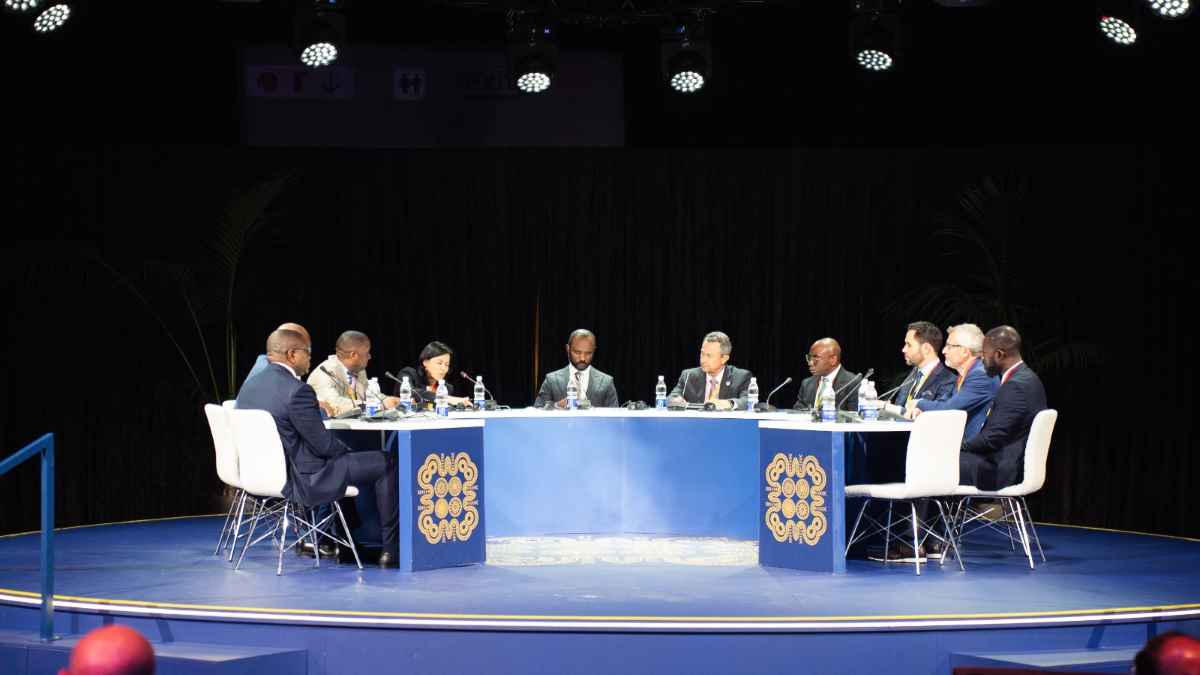
An Invest in Equatorial Guinea Energies session at African Energy Week 2023 examined the country’s current partnerships and future investment needs, with an emphasis on natural gas monetization

CAPE TOWN, South Africa, October 19, 2023/APO Group/ — 

African Energy Week (AEW) 2023 featured an Invest in Equatorial Guinea Energies strategic session on Thursday, examining the West African country’s partnerships and investment needs, while showcasing the success of its energy sector to date.

Sponsored by national oil company (NOC), GEPetrol, the session commenced with opening remarks from Equatorial Guinea’s Minister of Mines and Hydrocarbons, Antonio Oburu Ondo, who emphasized the country’s ongoing investment drive and receptive operating environment.

“We are open for business, we are open to host new investors and we are inviting you to be very pragmatic when you approach Equatorial Guinea,” said Minister Ondo.

The session discussed Equatorial Guinea’s burgeoning role as a regional hub for gas liquefaction and distribution. Under its flagship Gas Mega Hub development, the country has laid the foundation to monetize stranded gas resources in both domestic and regional basins, supported by both public and private sector actors. 

“Our main objective is to do business and maximize the profitability of our company, but on the other hand, as the NOC, we have to make sure that the policies are successfully implemented. Therefore, we are acting as an intermediary between companies and the government,” stated Teresa Isabel Nnang Avomo, Managing Director for GEPetrol.

“We work to support oil and gas and we work to support the government,” stated Dr. Nosa Omorodion, Director of National Directorates and Independents for West Africa at SLB.

The speakers discussed the favorable business and investment environment in Equatorial Guinea, highlighting its comprehensive and energy-specific legislative and regulatory frameworks as key pillars for exploration and production activities in the country.

“Kosmos is part of the success of the oil and gas industry in Equatorial Guinea,” stated Fidel Envo, Vice President and Country Manager of Equatorial Guinea for Kosmos Energy. “We are committed to Equatorial Guinea and have long-term plans for the exploration sector.”

When service companies want to come to Equatorial Guinea, they should not be worried that they are meeting the right companies

“We have operated in Equatorial Guinea since the 2000s and have seen a lot of pragmatism in the country,” affirmed Sebastian Wagner, Managing Director for Atlas Petroleum.

“Our objective is to narrow the gap between Final Investment Decisions and Annual Operating Income,” stated Serafin Ncogo Eyang, Strategic Planning Manager for Liquefied Natural Gas company, EG LNG.

With over five trillion cubic feet of proven natural gas reserves and a strong infrastructure base, Equatorial Guinea has been making significant strides towards establishing itself as a regional gas processing hub. Under the country’s GMH initiative, the government has partnered with a strong slate of foreign energy firms to scale-up project developments and unlock untapped reserves across West Africa.

“In Equatorial Guinea, we are well known for flexibility,” stated Oscar Garcia Berniko, Director of Equatorial Guinea’s Ministry of Mines and Hydrocarbons. “We are also open to consider special fiscal terms depending on the particular block an investor might be interested in.”

“The key component of our role is to put together a project that is going to work, where the capital is understood and where the whole system is well understood,” stated Scott Childres, Director of Mid-Africa for Chevron. “This helps partners engage in bilateral agreements.”

Positioned as a sustainable energy solution, natural gas has taken on a pivotal role as a catalyst for diversified and industrialized growth in Equatorial Guinea. The panel highlighted local content development, value addition and localization as imperatives when it comes to natural gas exploration and development. 

“We are the product of local content in Equatorial Guinea,” stated Pablo Memba, CEO of Grupo Memba. “When service companies want to come to Equatorial Guinea, they should not be worried that they are meeting the right companies. They should be confident in the country as an established and secure investment decision.”

As global interest in African gas heightens, Equatorial Guinea’s strong regulatory foundation, commitment to mutually beneficial investment terms and wealth of opportunities are poised to unlock further development prospects for the country. Additionally, with local content, regional cooperation and technology development at its core, the country’s ambitions to become a regional energy hub are set to drive the next wave of sustainable growth in West Africa.

#AEW2023 takes place this week in Cape Town under a mandate to make energy poverty history by 2030. The conference and exhibition serves as the biggest gathering of energy stakeholders and policymakers on the continent and is organized by the voice of the African energy sector, the African Energy Chamber. Keep following www.AECWeek.com for more exciting information and updates about Africa’s premier energy event.

Distributed by APO Group on behalf of African Energy Chamber.

Business

The Islamic Corporation for the Development of the Private Sector (ICD) Signs 13 Landmark Agreements to Promote Private Sector Growth in its Member Countries

Published

on

Islamic Corporation

The signing of these agreements underscores ICD’s unwavering commitment to fostering prosperity through strategic partnerships and promoting access to finance and financial inclusion in its member countries

BAKU, Azerbaijan , June 25, 2026/APO Group/ –The Islamic Corporation for the Development of the Private Sector (ICD) (www.ICD-PS.org), a member of the Islamic Development Bank (IsDB) Group, is pleased to announce the signing of 13 significant financing and strategic cooperation agreements with various counterparts aimed at catalyzing economic development and bolstering private sector growth and initiatives across several member countries in diverse regions around the world. These agreements were signed during the 2026 Annual Meetings of the IsDB Group, held in Baku, Azerbaijan, under the theme “Regional Integration for Sustainable Prosperity”, which provided a platform for member countries to advance dialogue and cooperation on regional connectivity, resilience and inclusive growth. The signing of these agreements underscores ICD’s unwavering commitment to fostering prosperity through strategic partnerships and promoting access to finance and financial inclusion in its member countries.


In line with its mandate to support private sector growth in its member countries, the ICD and the Azerbaijan Business Development Fund (ABDF) signed a framework agreement to launch a managed Shariah-compliant line of financing program for SMEs during the opening ceremony of the IsDB Group 2026 Annual Meeting’s Private Sector Forum in Baku. Under this framework, the parties are to collaborate in deploying up to AZN 200 million within the next two years. The program introduces a local currency (AZN) financing channel by which, ICD, acting as ABDF’s agent, will blend ABDF’s AZN funds with ICD’s USD, EUR, and AZN resources to support SMEs and private sector growth in Azerbaijan. Through this initiative, the ICD, acting on its own behalf and on behalf of ABDF, will provide either single or multi-currency line of financing facilities to selected partner financial institutions in Azerbaijan for on-ward financing of eligible companies in the country. This arrangement is expected to help mitigate foreign exchange risk that has long hindered the growth of  Azerbaijani SMEs, especially those operating outside major cities in the country.

In a further attempt to explore bankable financing opportunities in Azerbaijan and facilitate the realization of its mandate of supporting private sector development in its member countries, the ICD also signed a Memorandum of Understanding (MoU) with the State Oil Company of the Azerbaijan Republic (SOCAR), establishing strategic cooperation between the two institutions to collaborate in financing  of infrastructure and energy projects in Azerbaijan and other member countries within existing public private partnership (PPP) frameworks. Under the Memorandum of Understanding, the parties will identify and evaluate financing opportunities for project companies established by SOCAR and its joint venture partners. Within this framework, ICD will provide financing solutions tailored to the specific requirements of the projects.

Further, the ICD signed a Mandate Letter with Azerconnect for a USD 20 Million financing facility for capex financing and an Expression of Intent Letter for a USD 15 Million Line of Financing Facility with Turan Bank for onward financing of SMEs and eligible companies in Azerbaijan.

In an effort to strengthen and deepen its operations in Nigeria, the ICD also signed a Mandate Letter with the Nigerian Export-Import Bank (NEXIM) for a USD 50 Million syndicated line of financing facility to be arranged by ICD to be used by NEXIM for financing eligible private sector entities in Nigeria.

In line with its mandate of promoting economic development in its member countries, the ICD also signed an Expression of Intent  Letter for a proposed EUR 50 million Line of Financing Facility with  Afriland Bank (Cameroon),  and a Final Term Sheet for Euro 20 Million line of finance facility with AFG Bank (Cameroon), each for the purpose of onward financing of SMEs and other eligible private sector companies in Cameroon. Under these facilities,  the ICD will be leading and supporting the arrangement and mobilization of resources and private capital to support the operations of these Cameroonian banks and thus contributing to fostering economic growth and prosperity in the country.

Consistent with its objective of having a diversified portfolio across its member countries, the ICD also signed a Murabaha Facility Agreement with Al Salam Bank of Bahrain (ASB) for a USD 50 million Line of Finance Facility for the purpose of  onward financing of eligible companies in Bahrain whose operations contribute or have the potential of contributing significantly to the  growth and development of SMEs and the private sector in general in Bahrain.

ICD has also signed a strategic Memorandum of Understanding  with DAMU Entrepreneurship Development Fund of Kazakhstan to establish framework for cooperation aimed at identifying and developing financing and guarantee opportunities for Lines of financing in Kazakhstan, with a focus on supporting SMEs and private‑sector entities.

To further its support to the growth of the private sector in Kazakhstan, the ICD also signed a strategic Memorandum of Understanding with KAZAGROFINANCE JSC of Kazakhstan (KAF) to establish a common ground for partnership between the parties and the Ministry of Agriculture of Kazakhstan to extend thematic agri-sector linked line of finance facilities  to KAF under the Ministry’s subsidy program to farmers in Kazakhstan.

Additionally, Leveraging on ICD’s recent and first successful credit enhancement transaction with the African Solidarity Fund (FSA) in Mauritania in partnership with Banque Mauritanienne de l’Investissement (BMI),  the ICD signed a strategic Expression of Intent Letter with FSA as a demonstration of their intent to upscale their partnership in the use of FSA’s guarantees as credit enhancement for ICD’s line of financing operations in selected common member countries of the Parties.

Finally, the ICD also signed a Strategic MOU with the Texel Group of UK to establish a platform of cooperation on credit portfolio enhancement through insurance. Through this MOU the parties are aiming to combine ICD’s origination and development financing capabilities with Texel Group’s structuring and placement expertise in the use of Non Payment Insurance to enhance risk management, optimize capital allocation, and mobilize additional financing into priority sectors, while enabling ICD to upscale its financing activities and efficiently manage portfolio concentration and credit exposure in its member countries.

All these signed agreements represent a major step forward in ICD’s efforts to promote sustainable economic growth and financial inclusion across its member countries. By strengthening partnerships with key financial institutions and development partners, ICD continues to play a vital role in supporting private sector growth and development in its member countries.

Distributed by APO Group on behalf of Islamic Corporation for the Development of the Private Sector (ICD).

Continue Reading

Energy

African Mining Week (AMW) to Unlock Zimbabwe’s $12B Mining Vision Through Direct Investor Partnerships

Published

on

Etu Energias

A dedicated country spotlight at African Mining Week 2026 will showcase regulatory reforms and project developments across Zimbabwe’s mining value chain

CAPE TOWN, South Africa, June 25, 2026/APO Group/ –African Mining Week 2026 – The Most Influential Mining Conference in Africa – will connect Zimbabwean regulators and mining stakeholders with global investors to advance partnerships, as the country accelerates efforts to build a $12 billion mining industry by 2030.

Taking place from October 14 – 16 in Cape Town, AMW 2026 will feature a dedicated Zimbabwe Country Spotlight, showcasing lucrative opportunities across the country’s mining value chain. The country spotlight will feature high-level panel discussions, exclusive networking sessions and project showcases, connecting global investors and service providers with senior decision-makers from the Ministry of Mines and Mining Development of Zimbabwe, the Chamber of Mines of Zimbabwe and leading mining companies operating across the country.

The spotlight comes at a pivotal moment for Zimbabwe, as the country seeks fresh capital to unlock value from more than 60 known mineral occurrences spanning gold, lithium, platinum group metals, chrome, coal and rare earths.

https://apo-opa.co/43Z71HR

In a major move to improve investment competitiveness, Zimbabwe reduced mining-related license and permit fees in May 2026, lowering operational costs for investors while streamlining market participation. Registration fees for dealing in precious stones have been reduced from $15,000 to $10,000, while export permit fees have been cut from $1,875 to $500. New licensing categories – including permits for gold jewellery manufacturing and lithium processing plants – have also been introduced as part of a broader strategy to promote investments across in-country value addition projects. The reduction in fees for beneficiation projects follows the April 2026 introduction of export quotas for lithium concentrates ahead of a planned 2027 ban on concentrate exports. The shift is already reshaping the country’s lithium industry, with Zhejiang Huayou Cobalt achieving Zimbabwe’s first export shipment of lithium sulphate salts in April 2026.

https://apo-opa.co/4w3X7R3

https://apo-opa.co/4uTlYpG


https://apo-opa.co/44ziVZ3


Coming into this picture, AMW 2026’s Zimbabwe Country Spotlight will provide investors with direct insights into these evolving regulatory frameworks, highlighting emerging investment and partnership prospects in lithium processing and across the mining value chain.

Zimbabwe’s gold sector is also positioned for renewed growth amid sustained high global gold prices (averaging $5,000 per ounce). In line with this momentum, Zimbabwe’s sovereign wealth fund, Mutapa Investment Fund, is seeking $250 million to expand gold mining operations. Against this backdrop, AMW 2026 offers a timely platform for investors to engage with one of Africa’s most prospective brownfield gold markets and explore opportunities across exploration, mine expansion and processing infrastructure.

https://apo-opa.co/4eCDMiU


AMW 2026’s strong emphasis on artisanal and small-scale mining (ASM) formalization also aligns closely with Zimbabwe’s national mining development strategy. In May 2026, Zimbabwe certified 300 small-scale miners following completion of training programs safety, compliance and productivity. Supported by funding from Mutapa Gold Resources – a subsidiary of Mutapa Investment Fund – the initiative aims to train and formalize 1,500 ASM players.


https://apo-opa.co/44rhsUH

As the official platform where Africa’s mining opportunities are discussed and maximized, AMW 2026 will provide stakeholders with market intelligence on Zimbabwe’s evolving mining landscape and investment outlook.

Distributed by APO Group on behalf of Energy Capital & Power.

Continue Reading

Business

Afreximbank Africa Trade Report shows Africa can turn geopolitical disruptions into long-term growth opportunity

Published

on

Afreximbank

The report highlights Africa’s continued growth resilience despite significant headwinds occasioned by escalating geopolitical tensions and ensuing economic shifts

CAIRO, Egypt, June 24, 2026/APO Group/ –African Export-Import Bank (Afreximbank) (www.Afreximbank.com) has launched the 2026 edition of its flagship African Trade Report themed “Leveraging Geopolitics for Trade and Industrialisation in Global Africa.” The report presents a comprehensive review of trade and economic developments across Africa and globally in the context of the 2025 operating environment, while outlining available strategic options for Africa to transform ongoing geopolitical tensions and associated supply chain disruptions into long-term resilience for growth and shared prosperity across the continent.


The report highlights Africa’s continued growth resilience despite significant headwinds occasioned by escalating geopolitical tensions and ensuing economic shifts. Reflecting the continent’s growth resilience, the report shows that while global economic growth slowed to 3.4 percent in 2025 and is projected to further ease to 3.1 percent in 2026, Africa’s real GDP growth strengthened from 3.4 percent in 2024 to 4.5 percent in 2025. This performance not only surpasses the global average but also highlights the continent’s improving economic fundamentals in a fractured world economic order.

Africa’s merchandise trade also delivered strong performance, expanding by 6.1 percent to reach approximately US$1.5 trillion, while aggregate inflation declined sharply from 21.6 percent in 2024 to 13.1 percent 2025. These outcomes reflect the stabilising effects of prudent macroeconomic management, ongoing policy and institutional reforms, and the countercyclical interventions of development finance institutions across the continent.

Commenting on the Africa Trade Report’s findings, Dr Yemi Kale, Group Chief Economist and Managing Director of Research and Trade Intelligence at Afreximbank, said:

By strategically leveraging these shifts, Africa can build a more resilient, competitive and inclusive economic future

Africa stands at a critical juncture. Geopolitical tensions and economic fragmentation are reshaping global trade patterns, but they also present a historic opportunity for the continent. By strategically leveraging these shifts, Africa can build a more resilient, competitive and inclusive economic future.

Afreximbank

“It is imperative for the continent to act decisively to strengthen regional value chains, deepen industrial capacity, expand access to trade finance, and accelerate continental integration. Through coordinated policy action, strategic infrastructure investment, and stronger development finance institutions, Africa can build a more resilient, inclusive, and value-added trade ecosystem. Africa cannot afford to delay.”

The report further highlights that Africa’s export performance remains constrained by a persistent trade finance gap, estimated at approximately US$74 billion in 2025. The challenge is exacerbated by limited foreign exchange liquidity and the continued decline in correspondent banking relationships, factors that restrict the continent’s capacity to fully realise its trade and industrial potential.

At the same time, evolving shipping routes and prolonged disruptions to global logistics networks continue to extend delivery timelines and increase freight and trading costs. These pressures are particularly acute for African economies that remain heavily reliant on imported inputs and external markets, even as global supply chains increasingly reconfigure toward resilience, diversification, and emergence of alternative production hubs.

The report also outlines several strategic priorities, including the accelerated implementation of the African Continental Free Trade Area (AfCFTA), the expansion of digital payments infrastructure through the Pan-African Payment and Settlement System (PAPSS), and coordinated reforms to the global financial architecture. It further underscores the growing role of African financial institutions in strengthening economic resilience. Afreximbank, a founding member of the Alliance of African Multilateral Financial Institutions (AAMFI), disbursed US$17.5 billion in 2024 and is working to double intra-African trade finance by 2026. Meanwhile, Pan African Payment and Settlement System (PAPSS) is already helping to reduce transaction costs and lessen reliance on foreign currencies across the continent.

As geopolitical tensions continue to reshape global supply chains and trade patterns, the continent’s ability to leverage these shifts will depend on strengthening industrial ecosystems, expanding intra-African trade, and sustaining coordinated financial support. Ultimately, a combination of adaptive policy frameworks, strategic trade positioning, and robust direct foreign investment interventions will be central to driving a resilient, inclusive, and sustainable industrialisation pathway for Global Africa. The imperative now is to act with ambition and urgency. This would require accelerating the implementation of the African Continental Free Trade Area (AfCFTA), expanding intra-African trade finance, strengthening transport and logistics infrastructure, and deepening digital payment systems through the Pan-African Payment and Settlement System (PAPSS).

The full report can be downloaded here:  https://apo-opa.co/4xNkbFx

Distributed by APO Group on behalf of Afreximbank.


Continue Reading

Trending