Connect with us

Business

$2.1 Billion and Counting: African Real Estate Is Executing

Published

on

Africa

Ahead of the 17th Africa Property Investment (API) Summit in Cape Town, investment pipelines are converting into a record number of transactions as the continent’s real estate and hospitality sectors move from potential into real momentum

CAPE TOWN, South Africa, July 21, 2026/APO Group/ –Verified data gathered from across Africa’s real estate investment landscape reveals that the continent’s leading property and hospitality roleplayers completed more than $2.1 billion worth of transactions over the past 18 months, representing one of the most concentrated periods of institutional real estate deal activity in the continent’s history.


Download Document: https://apo-opa.co/3TraTiH

The 28 transactions (across nine countries and eight asset classes) were closed by API Summit stakeholders from across the institutional property ecosystem – spanning listed capital markets, commercial, residential, hospitality, logistics and alternatives.

The full African Deals Index report – compiled in collaboration with Broll, the data and insights partner for API Summit 2026 – will be unveiled on the opening day of the event, taking place at the Cape Town International Convention Centre on 17 and 18 September.

Talk turning to investment action

The deal-making activity is a signal of the much-spoken-about potential for Africa converting into tangible action, driven by enhanced investor confidence.

“This isn’t a forecast – it’s a balance sheet. $2.1 billion in completed transactions tells you African real estate has moved past the conversation about potential and into the discipline of execution,” said Malcolm Horne, Group CEO of Broll Property Group.

Horne highlighted several key shifts reflected in the data.

“What’s notable is where the conviction is coming from: domestic pension capital acting as a structuring investor, not a passive landlord, and green-linked financing becoming a board-level decision, not a marketing line. At Broll, we see this in our own data every day – across the assets we manage, the cost of capital is increasingly tied to the quality of the asset, not just its location.

“That’s the market maturing in real time, and it’s exactly the momentum my team and I are looking forward to presenting and unpacking at API this year.”

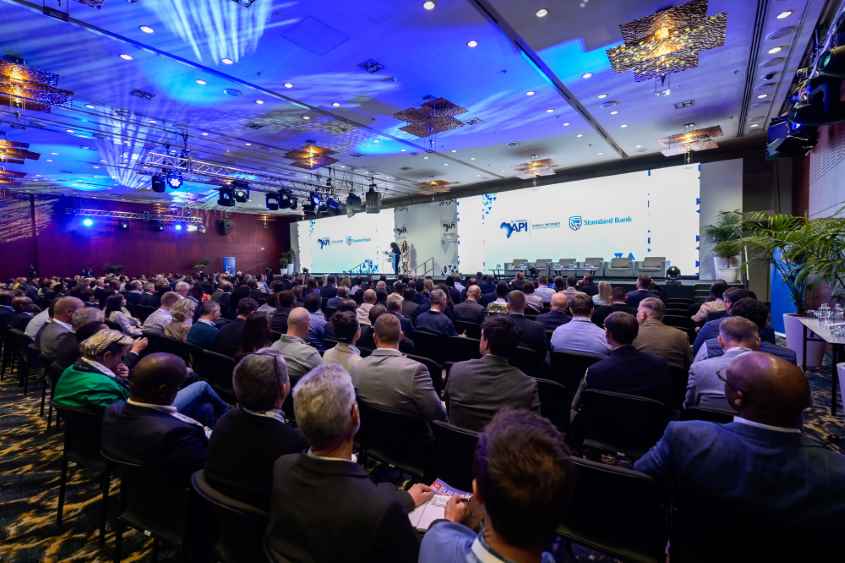
The 17th Annual API Summit takes place under the theme Bold Capital. Real Momentum. and is expected to attract over 600 delegates from more than 30 countries.

Niyi Adeyele, Head of Real Estate Finance, Africa Regions at Standard Bank Group, commented on the evolution of real estate sector funding across Africa.

“It remains interesting to track the resilience and the evolution of activities in the sector, from growing capital market activities, to the rapidly increasing participation of domestic capital sources within the African continent from domestic focused institutional capital sources such as pension funds and family offices to pan-African investor platforms that tend to operate across multiple countries.”

He said that accordingly, sectoral activity levels remain positive, with the “growing pace of green field projects in key markets” providing “early indications of a new growth cycle for the sector”.

Investors now have listed, liquid exposure to African real estate, and issuers have a repeatable route to permanent capital

Major moves from domestic capital and DFIs

Domestic pension capital has moved decisively beyond its traditional role as a passive landlord, emerging as an active, structuring investor in African real estate – a shift that will be central to discussions at the summit.

The charge was led by South Africa’s Government Employees Pension Fund (through the Public Investment Corporation and retail property powerhouse Pareto), which concluded commercial, residential and industrial transactions valued at over $343.5 million since the start of 2025.

“Through the Standard Bank Group’s franchise operations across multiple countries, there are observed increase deployment of institutional capital to across key markets driving increased primary and secondary market activities,” said Adeyele, pointing to examples such as Grene Capital’s raising of $100 million from Nigerian pension for property investments in Nigeria and beyond.

Sustainability-linked deal leads the way

Sustainability remains a critical factor in real estate financing considerations – evidenced by the largest transaction completed over the past 18 months.

Standard Bank and its African Regions brand Stanbic (along with Rand Merchant Bank) acted as co-lender on a $300 million green financing facility to facilitate Lango’s bid to become Africa’s first Green Pure Play real estate company, with 90% of its portfolio certified according to international standards.

Amongst several other milestones, the Africa Logistics Property (ALP) Industrial REIT listing on the Nairobi Stock Exchange in March 2026 was notable as East Africa’s first listing featuring entirely IFC EDGE-certified green buildings.

Listed capital makes major moves

REIT capital markets were the second largest asset class by value across the period, accounting for $568.5 million of activity, with the action extending well beyond South Africa’s established counters.

East Africa welcomed ALP’s Industrial REIT (marking the region’s first industrial and first USD-denominated security); Centum’s TRIFIC Dollar I-REIT (the first green, income-distributing USD-denominated) and Acorn Holdings’ build-to-rent D-REIT.

On Zimbabwe’s Victoria Falls Stock Exchange, the Pfuma Fund REIT and Eagle REIT both listed, deepening a hard-currency capital market that scarcely existed five years ago.

“Seeing multiple REITs listing on exchanges in one cycle tells you the asset class has crossed from novelty to norm. Investors now have listed, liquid exposure to African real estate, and issuers have a repeatable route to permanent capital,” said Raghav Gandhi, CEO of ALP.

API Summit 2026 – ushering in the next wave of deals

The unprecedented commitment of capital into Africa’s real estate sector takes centre stage when the 17th Annual API Summit convenes. Welcoming the investors, developers, financiers and policymakers behind the continent’s most prominent deals, this year’s event features a new Multifamily Forum alongside the popular Hospitality and Proptech Forums; an impactful main plenary, workshops, deals and meetings rooms and investment showcases, and the 10th edition of the prestigious API Awards.

For more information and to register, visit www.APISummit.co.za

Distributed by APO Group on behalf of API Events.

Business

African Energy Leaders Call for Action on South-South Oil and Gas Partnerships

Published

on

At AEW 2026, industry representatives from Africa and the Caribbean say joint ventures, enforceable local-content rules and regional financing are needed to turn petroleum resources into domestic industrial growth

CAPE TOWN, South Africa, October 17, 2026/APO Group/ –African and Caribbean energy leaders called for stronger cross-border investment, technology transfer and enforceable local-content requirements to ensure emerging oil and gas producers capture more value from their resources during the session South-South Energy Partnership: Advancing Africa’s Oil and Gas Future in 2026 at African Energy Week (AEW) 2026 in Cape Town.


Ndapwilapo Selma Shimutwikeni, CEO, RichAfrica Consultancy, said partnerships could accelerate skills development.

“From a business perspective, we need to build partnerships that encourage joint ventures between experienced countries and emerging countries like Namibia,” she said. “We need to look beyond just oil production and actually look at the entire value chain.”

Building on Shimutwikeni’s remarks, Gilbert Yevi, Lead Consultant, Grenada Hydrocarbon Technical Working Group, called for partnerships that share risks and benefits rather than simply replace one source of financing with another.

We want cooperation and a collaboration in risk sharing, skill sharing, and sharing in the benefits

“We want cooperation and a collaboration in risk sharing, skill sharing, and sharing in the benefits,” he said.

Yevi also advocated regional training centers to pool expertise and help emerging producers access established industry capabilities.

Expanding on the topic of local content, Eric Williams, Principal Consultant and President, Royal Triangle Energy Solutions, said policies must be linked to a broader national development strategy, using petroleum resources to build domestic industries rather than focusing solely on exports.

“The Trinidad model is about using the molecules to develop the country,” he said, arguing that this vision should shape negotiations with upstream investors and the terms of petroleum contracts.

Omar Farouk Ibrahim, Regional Chair for Africa, World Energy Council, said national sovereignty concerns continued to limit practical regional cooperation, despite public commitments to collaboration.

“The first question they ask is: ‘Will the industry be in my territory?’ If it’s not, why should I? And for as long as we have this mentality, believe me, this cooperation and collaboration we’re talking about will just be theory,” he said.

Across the discussion, speakers emphasized that cooperation must translate into financing, enforceable commitments and local capabilities that endure beyond individual projects.

Distributed by APO Group on behalf of African Energy Chamber.


Continue Reading

Business

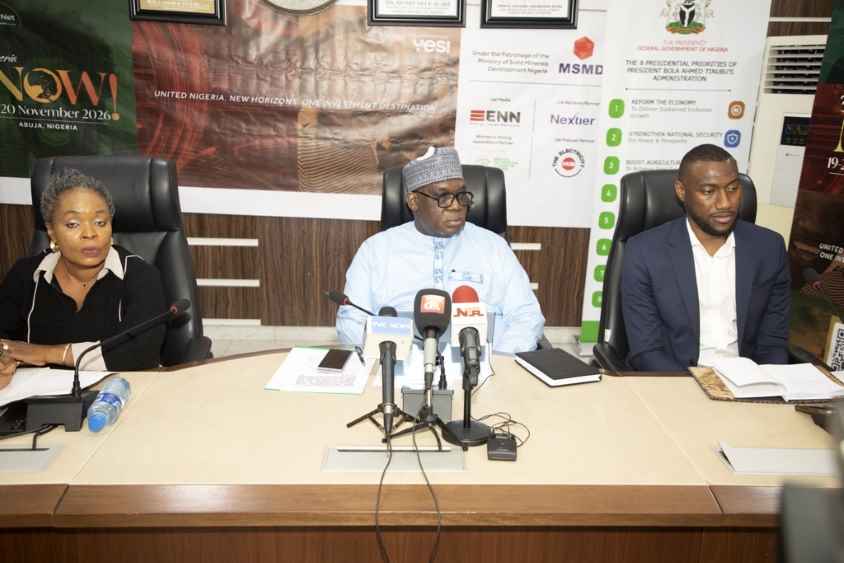
Nigeria NOW! opens its project boardrooms to global investors in Abuja

Published

on

With Nigeria’s annual mining revenue up more than tenfold to above N70bn, Nigeria NOW! brings global investors to Abuja on 19 and 20 November, where the Minister of Solid Minerals Development is Chief Host

First and foremost all international investors coming to Abuja should understand that Nigeria is ready and open for business

LONDON, United Kingdom, October 21, 2026/APO Group/ –Platinum group metals, gold, nickel, copper, lithium and rare earth elements lie together in one mineral province in Kaduna State, which the Minister of Solid Minerals Development announced in June as world-class and the Nigerian Geological Survey Agency has verified. The Ministry opens its doors to global investors at Nigeria NOW!, held at the Bola Ahmed Tinubu International Conference Centre in Abuja on 19 and 20 November.


Processing is following the discoveries, as lithium facilities of $600m in Nasarawa State and $200m near Abuja sit alongside a $400m rare earth processing project in Nasarawa, and mining lease applicants must now submit value-addition plans. Annual mining revenue has risen from about N6bn before the current administration to more than N70bn by the end of 2025.

The routes to export markets are moving too, as the Federal Executive Council has approved deep seaports at Bakassi and Ondo as public-private partnerships, with the Bakassi port alone valued at $2.27bn.

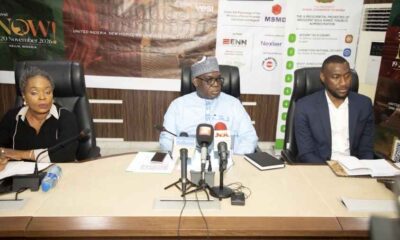
With a month to go, investors and developers travelling to Abuja will meet these projects at close quarters. In investor boardrooms, the Government of Nigeria will review specific projects in depth, from large-scale infrastructure to multilateral programmes such as Mission 300.

Speaking to Energy News Network in September, Tunde Arisekola, Senior Advisor, Geological and Minerals Information at the African Minerals Development Centre, who joins the minerals session on the first day, said that “first and foremost all international investors coming to Abuja should understand that Nigeria is ready and open for business”. In the same interview he described Nigeria’s economy as “stable, safe, peaceful and welcoming to all international investors”.

The programme opens with a welcome from the Chief Host, H.E. Dr Oladele Henry Alake, Minister of Solid Minerals Development, followed by sessions on how the Ministry of Power will drive capacity into Nigeria’s industrial hubs and on the policies opening the minerals sector to foreign investment, including domestic processing and value addition. The second day turns to the pipeline of transport and port infrastructure and the $1bn Domestic Green Bond, and closes with an investors’ clinic on the 2025 Tax Act.

Lagos State Government, a Nigeria NOW! partner, now regulates its own electricity market after NERC transferred oversight to the Lagos State Electricity Regulatory Commission. Hon. Biodun Ogunleye, Lagos State Commissioner for Energy and Mineral Resources, told Energy News Network that “capital follows bankable cashflows”. The state’s job, he said, is “to create both the infrastructure plan and the commercial architecture that makes that plan financeable”.

On Friday 20 November, YES! Nigeria runs alongside the main programme under the theme “Empowering Today’s Entrepreneurs, Building Tomorrow’s Industrialists”. Abuja University and Philomath University are partners, and the Youth Sustainable Development Network is Community Partner. Its opening session hands the stage to young Nigerians already at work in the sector, among them Damilola Hamid Balogun of YSDN and Emmanuel Terwase of Boost Power.

Nigeria NOW! is held under the patronage of the Minister of Solid Minerals Development, with the Lagos State Government, the Nigerian Indigenous Women in Mining & Natural Resources Organisation, Women in Mining, Nextier and The Electricity Hub as partners.

Distributed by APO Group on behalf of EnergyNet Ltd..


Continue Reading

Business

Global Islamic finance industry assets to reach US$10.5 trillion by 2030 as adoption broadens

Published

on

The report draws on the Islamic Finance Development Indicator (IFDI), a global benchmark that assesses the development of the Islamic finance industry across 140 countries through five key areas, Financial Performance, Governance, Sustainability, Awareness, and Knowledge

For ICD, these developments reinforce the importance of ensuring that Islamic finance serves as a practical instrument for inclusive and sustainable economic transformation

KUALA LUMPUR, Malaysia, October 21, 2026/APO Group/ –LSEG, in collaboration with the Islamic Corporation for the Development of the Private Sector (ICD) (www.ICD-ps.org), the private sector arm of the Islamic Development Bank (IsDB) Group, today announced the results of the 2026 edition of the Islamic Finance Development Report at the Kuala Lumpur Islamic Finance Forum (KLIFF) in Malaysia.


Key findings of the report include:

  • The global Islamic finance industry maintained a strong growth trajectory in 2025, with total assets reaching US$6.5 trillion, up 9% year-on-year. Growth was supported by the continued expansion in Islamic banking, record sukuk issuance, strong Islamic fund performance, and new regulatory frameworks.
  • Malaysia, Saudi Arabia, the United Arab Emirates, Indonesia, and Pakistan retained their positions as the world’s most developed Islamic finance markets. These countries continued to benefit from comprehensive regulation, strong institutional development, active financial markets, and well-established knowledge ecosystems.
  • Several markets recorded notable gains in performance, including Türkiye, Tanzania, Kenya, Benin, Azerbaijan, and Uzbekistan, highlighting the growing momentum across both established and emerging Islamic finance markets.

The report also identified several structural trends that are shaping the industry’s development. Regulatory reforms and stronger market infrastructure are supporting growth beyond core markets, particularly across Africa and Central Asia. Sustainability guidelines are increasingly prioritised, although activity remains concentrated in developed markets. Digitalisation is also advancing, with FinTech, open banking, and tokenised sukuk influencing financing, issuance, and settlement while widening access to financial products. However, talent development is lagging industry expansion, emphasising the need for stronger specialist education.

Khalid Khalafalla, Acting Chief Executive Officer of ICD, said: “For ICD, these developments reinforce the importance of ensuring that Islamic finance serves as a practical instrument for inclusive and sustainable economic transformation. ICD remains committed to advancing private-sector development across its member countries through targeted financing and the promotion of Islamic financial solutions.”

Mustafa Adil, Head of Islamic Finance, LSEG, added: “Looking ahead, global Islamic finance assets are projected to exceed US$10.5 trillion by 2030, supported by continued Islamic banking expansion, growing sukuk issuance momentum, emerging-market adoption and demand for sustainable and digital financial solutions.”

The report draws on the Islamic Finance Development Indicator (IFDI), a global benchmark that assesses the development of the Islamic finance industry across 140 countries through five key areas, Financial Performance, Governance, Sustainability, Awareness, and Knowledge. It provides a holistic view of the global Islamic finance landscape, measuring progress in alignment with Islamic principles and supporting stakeholders in identifying opportunities for growth and reform.

Read full report: Link (https://apo-opa.co/3TTw9yq)

Distributed by APO Group on behalf of Islamic Corporation for the Development of the Private Sector (ICD).


Continue Reading

Trending

Exit mobile version