Connect with us

Energy

Algeria’s Hydrocarbons Minister Joins MSGBC 2026 as Sonatrach Eyes Senegal Partnerships

Published

on

Etu Energias

Algiers and Dakar are preparing an energy agreement as Sonatrach pursues partnerships across the MSGBC basin

DAKAR, Senegal, October 19, 2026/APO Group/ –Mohamed Arkab, Algeria’s Minister of State and Minister of Hydrocarbons, will join the speaker lineup at MSGBC Oil, Gas & Power 2026 in Dakar this December, bringing one of the continent’s most senior energy ministers to a forum focused on investment and regional cooperation. His confirmation serves as a bridge between one of Africa’s longest-standing oil and gas producers and one of its newest, paving the way for greater collaboration across upstream exploration, infrastructure and power.


Algerian cooperation with MSGBC nations has already gained momentum. Minister Arkab hosted Senegal’s Minister of Energy and Petroleum, Dr. El Hadji Abdourahmane Diouf, in Algiers on October 4. The two-day visit produced a cooperation agreement between Senegalese utility Senelec and Algeria’s Sonelgaz, while Petrosen and Sonatrach held discussions on a potential partnership spanning upstream exploration and infrastructure.

Senegal’s government has said the visit sets the stage for an intergovernmental agreement to be signed in Dakar during MSGBC Oil, Gas & Power 2026. The two national oil companies first signed a memorandum of understanding in 2022, and Minister Arkab discussed putting it into effect with Senegal’s Minister of Foreign Affairs Cheikh Niang in July.

The potential partnership comes as MSGBC countries look toward the next phase of upstream development following the start of production at Senegal’s Sangomar oil field and the cross-border Greater Tortue Ahmeyim (GTA) LNG project. Regional priorities are now shifting toward advancing the next generation of projects, including Senegal’s Yakaar-Teranga gas development and Mauritania’s BirAllah discovery, while attracting fresh exploration investment across the wider basin. Moving these opportunities toward development will require capital, technical expertise and partnerships with established producers – creating scope for deeper cooperation with countries such as Algeria and companies such as Sonatrach.

Minister Arkab’s participation at the upcoming conference also arrives as Algeria advances its own exploration strategy. The event convenes shortly after bidding closes for the Algeria Bid Round 2026, which the National Agency for the Valorization of Hydrocarbon Resources launched in April with seven exploration blocks on offer. Submissions are due November 26, and Sonatrach expects to finalize contracts with successful bidders by the end of January 2027. Exploration and production will absorb three-quarters of the $60 billion Sonatrach intends to spend between 2026 and 2030, as the company works toward lifting annual gas output to 200 billion cubic meters within five years.

With a bilateral agreement potentially headed for signature on the conference sidelines, Minister Arkab’s participation promises to be one of the defining moments of the 2026 edition and reinforces MSGBC Oil, Gas & Power’s standing as the region’s leading meeting point for governments and investors.

Organized by Energy Capital & Power and held under the High Patronage of Senegalese President Bassirou Diomaye Faye, MSGBC Oil, Gas & Power 2026 takes place December 1–3 in Dakar and will convene heads of state, ministers, investors, operators and development partners from Mauritania, Senegal, The Gambia, Guinea-Bissau and Guinea-Conakry. Explore opportunities and secure your participation at www.MSGBCOilGasandPower.com.


Distributed by APO Group on behalf of Energy Capital & Power.


Business

The Digital Webinar Series builds momentum towards the full Democratic Republic of the Congo (DRC) Critical Minerals & Industrialisation Forum 2027

Published

on

“In Four live sessions, one goal: turning mineral wealth into industrial growth

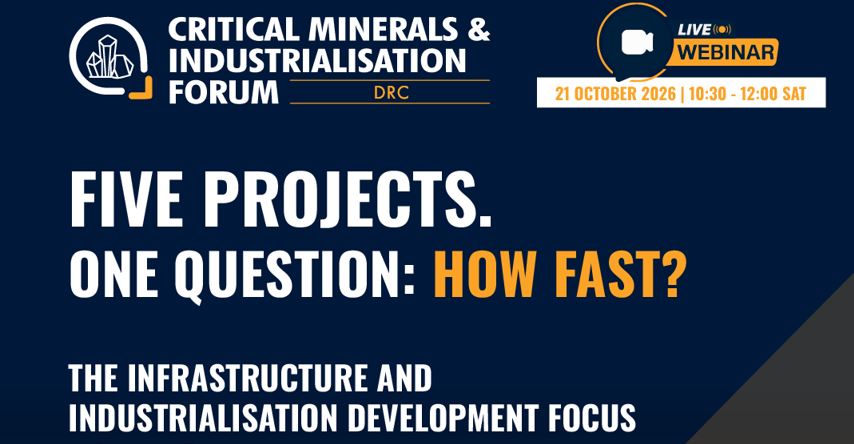
CAPE TOWN, South Africa, October 16, 2026/APO Group/ –The organisers of the DRC Critical Minerals & Industrialisation Forum, co-located with the DRC-Africa Battery Metals Forum, have announced a four-part digital webinar series running from September to November 2026. Bringing together government, industry and investment leaders, the series will examine the opportunities, challenges and partnerships shaping the DRC’s next phase of economic development.


Across four live sessions, the discussions will explore the policies, infrastructure, technologies and investment models needed to unlock greater value from the country’s critical mineral resources. Speakers will share market intelligence, practical case studies and perspectives on how the DRC can strengthen local value creation, attract investment and build a more competitive and sustainable minerals economy.

The webinar series also provides a platform for continued engagement ahead of the full in-person Forum in Kinshasa in 2027. VUKA Group RDC rescheduled the Forum to align with the DRC Government’s evolving national policy frameworks and allow the revised roadmaps for the $58 billion Master Plan for Industrialisation (Plan Directeur d’Industrialisation, PDI) to further develop.

The first four editions of the digital webinar series will focus on the following:

Webinar 1: 23 September 2026, 10h30–12h00 (https://apo-opa.co/4zwms7Z)

UNLOCKING THE DRC’S INDUSTRIAL POTENTIAL:  The A-to-Z masterclass strategy

The DRC masterclass examines how the nation can harness its mineral wealth for sustainable growth and industrialization. Experts will discuss policies to move beyond raw exports, enforce security and strengthen ESG standards. Priorities include local beneficiation, human capital development and tailored financing to balance global markets. By defining collaborative actions and investment pathways, the session seeks to accelerate value addition, enhance competitiveness and position the DRC as a responsible global leader in the minerals value chain. VIEW ON DEMAND (https://apo-opa.co/4zHqbjn)
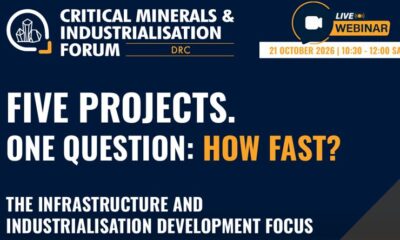
Webinar 2: 21 October 2026, 10h30–12h00   (https://apo-opa.co/4zwms7Z)

FOCUS ON INFRASTRUCTURE & INDUSTRIALISATION DEVELOPMENT

The panel on infrastructure and industrialisation highlights the DRC’s need to move beyond raw material extraction by focusing on local transformation. Building resilient industries will drive job creation and strengthen the economy. Experts will examine how transport, energy and logistics projects accelerate industrialisation, with case studies such as ports, railways and cross‑border initiatives. By prioritising strategic development and leveraging mineral revenues, the DRC can unlock sustainable growth and position itself as a competitive hub within the African Continental Free Trade Area.

Key discussion points

–  Understanding the DRC’s industrial strategy to capitalise on the African Continental Free Trade Area (AfCFTA)

–  The Lobito Corridor project: now or tomorrow?

–  Prioritising development projects in energy, transport linkages (road and railway rehabilitation), maritime infrastructure and port networks by utilising mineral revenues

Case studies

–  The Banana Port (developers: DP World and Mota-Engil contractors)

–  The Matadi Multipurpose Terminal, the DRC’s maritime gateway (AD Ports Group and the DRC Ministry of Transport)

–  Port of Boma maritime project

–  Banana–Matadi–Kinshasa railway

–  DRC–RSA Industrialisation Project, linking South Africa and the DRC and establishing 12 Economic Zones

Speakers

–  Chairperson: Bob Bononge, President, Caplaine Consulting, DRC

–  Popaul Madiana, Managing Partner, Prime Mineral Consulting, DRC

–  Serge Nawej, Partner, ADNA ALN, DRC*

REGISTER TO ATTEND (https://apo-opa.co/4dKfbsZ)

Webinar 3: 11 November 2026, 10h30–12h00   (https://apo-opa.co/4zwms7Z)

NEW TECHNOLOGIES DRIVING THE GLOBAL ENERGY TRANSITION

This session explores how technology and ESG‑aligned investment can transform the DRC’s critical minerals sector. With global demand for lithium, cobalt, nickel and copper rising, responsible sourcing and compliance are essential to build investor confidence. Discussions will focus on local processing, advanced metallurgical methods, renewable energy and automation to accelerate industrialisation. By shifting from raw exports to in‑country beneficiation, the DRC can strengthen sustainability, unlock long‑term value and position itself as a competitive player in the global energy transition.

Webinar 4: 25 November 2026, 10h30–12h00   (https://apo-opa.co/4zwms7Z)

STRATEGIC PARTNERSHIPS: BUILDING A STRONGER AND MORE SUSTAINABLE CRITICAL MINERALS VALUE CHAIN

This discussion explores how strategic partnerships can strengthen the DRC’s critical minerals value chain. By fostering collaboration between governments, regional integration systems and investors, the focus is on building resilience and supporting sustainable growth. Key themes include industrialisation through global partnerships, prioritising sectors for development and aligning with international partners. With effective models of cooperation, the DRC can unlock socio‑economic benefits, enhance competitiveness and establish a stronger foundation for a sustainable and inclusive minerals sector.

DRC’s transition
DRC Critical minerals & Industrialisation forum unites government, industry and investors to accelerate the country’s transition from raw‑material extraction to high‑value manufacturing, underscoring the nation’s opportunity to convert mineral wealth into infrastructure, jobs and sustainable economic growth.

The DRC’s Ministry of Mines (https://apo-opa.co/4jZPwjF) and the DRC’s Ministry of Industry (https://apo-opa.co/3UpRU98) as well the Federation of Enterprises of Congo (FEC) (https://apo-opa.co/4dHvFC4) are official partners of the event.


Distributed by APO Group on behalf of VUKA Group.


Continue Reading

Business

Liberia Launches 2026 Offshore Licensing Round, Offering 15 Blocks to Investors

Published

on

The Liberia Petroleum Regulatory Authority is inviting qualified companies to negotiate offshore exploration opportunities, with submissions closing April 15, 2027

CAPE TOWN, South Africa, October 15, 2026/APO Group/ –Liberia has launched its 2026 Offshore Direct Negotiation Licensing Round, offering 15 offshore blocks across the Liberia and Harper basins as the country seeks to attract exploration investment and advance the development of its petroleum sector.


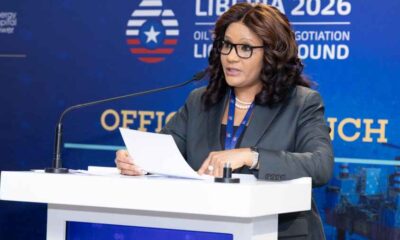
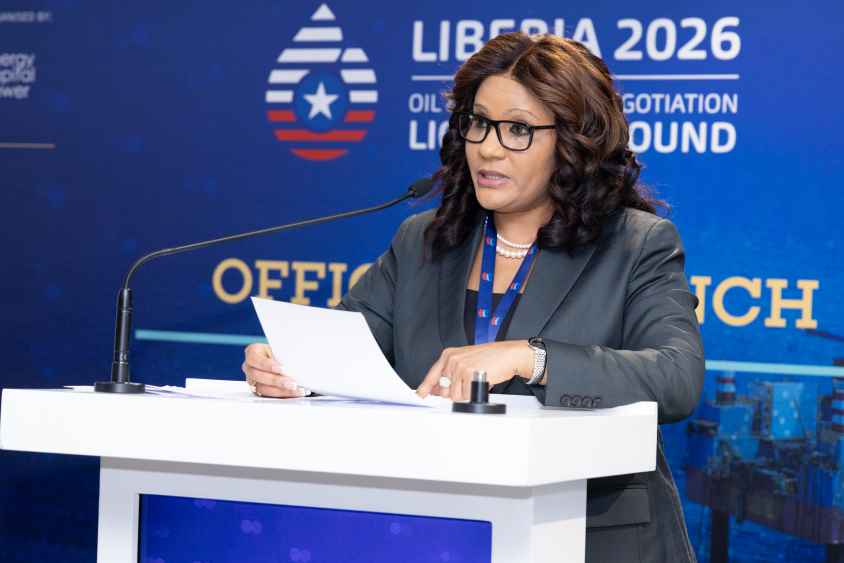
Announced on October 14 in Cape Town alongside African Energy Week 2026 and African Mining Week, the round was launched by the Liberia Petroleum Regulatory Authority (LPRA) and organized by Energy Capital & Power (ECP). The campaign invites qualified companies to pursue individual blocks through direct negotiations, with the licensing process closing on April 15, 2027.

LPRA Director General Marilyn T. Logan called on investors to submit letters of intent and highlighted the potential for exploration success to shape Liberia’s petroleum industry.

“Our petroleum system works,” Logan said. “Whichever company makes the first discovery will play a significant role in the history of our country.”

15 Offshore Blocks Available for Negotiation

The licensing round comprises twelve blocks in the Liberia Basin – LB-1, LB-2, LB-3, LB-7, LB-12, LB-13, LB-14, LB-18, LB-19, LB-20, LB-21 and LB-23 – and three in the Harper Basin – LB-25, LB-28 and LB-33.

The acreage targets Cretaceous structures, deepwater basin-floor fans and structural closures along Liberia’s Atlantic margin. The offering provides investors with opportunities to evaluate frontier exploration prospects in a region with established petroleum system indicators and potential for further discoveries.

The round is supported by more than 80,000 km of seismic data, including over 50,000 line-km of 2D seismic and 31,000 km² of 3D surveys, alongside gravity, magnetic and well-log datasets.

Geophysical data company TGS has reprocessed 12,000 km of 2D seismic using Pre-Stack Depth Migration, as well as 5,100 km² of 3D seismic data, to improve subsurface imaging and support prospect evaluation.

“There’s a working petroleum system offshore Liberia,” said Jason Robinson, Managing Director at ENARJI and former Director of Business Development at TGS. “It’s been a prolific system across the margin and there are significant fan-plays that go out into the very deepwater.”

There’s a working petroleum system offshore Liberia

Direct Negotiations Offer Flexible Entry

Under the direct negotiation framework, qualified companies can pursue individual blocks and negotiate proposed exploration programs with the LPRA. Applicants must demonstrate technical capability, financial strength and relevant offshore experience.

The process is governed by Liberia’s 2014 Petroleum Exploration and Production Act and its 2019 amendments. The framework is designed to provide investors with a route to acreage access while maintaining qualification requirements and regulatory oversight.

Fiscal terms and regulatory predictability were highlighted as important considerations for prospective investors. LPRA Deputy Director General for Finance Robert Sonkarlay said the authority is prepared to accommodate changing market conditions and the needs of participating companies.

“Investors are not just looking to find attractive fiscal terms; they’re also looking for fiscal predictability,” Sonkarlay said. “We can assure that our terms are flexible and benchmarked. We will ensure that our terms adapt to changing markets and the needs of interested participants.”

LPRA Board Member Kau Dorilae also emphasized the importance of investor engagement and consistency in the country’s investment framework. She noted that prequalification remains valid for five years, allowing companies to establish eligibility before pursuing specific block opportunities.

Government Backs Offshore Exploration Campaign

Liberian President Joseph Nyuma Boakai reaffirmed the government’s support for the licensing round in a prerecorded address delivered during the launch.

“Today, I assure you that the journey you are about to begin with Liberia through the LPRA carries the full support of the Liberian government and is guided by principles that this administration is dedicated to stand for,” Boakai said.

Preparations for the campaign included an investor day in Houston on August 19, 2026, followed by the opening of prequalification on August 28. The campaign forms part of Liberia’s efforts to engage international exploration companies and attract investment into its offshore petroleum resources.

With 15 blocks available through direct negotiations, the 2026 licensing round provides a structured pathway for qualified companies to assess Liberia’s offshore potential and advance discussions on exploration opportunities.

For information on the licensing round and prequalification requirements, visit the LPRA’s official licensing round page (https://apo-opa.co/47kJzXe) or contact lpra2026submission@lpra.gov.lr.

Distributed by APO Group on behalf of Energy Capital & Power.


Continue Reading

Business

International Oil Companies (IOCs) Call for Regulatory Interventions to Streamline Upstream Investment in South Africa

Published

on

TotalEnergies has called for faster resolution of offshore licensing appeals as government outlines plans to unlock domestic resources and industry players push for regulatory certainty to accelerate upstream and downstream investment

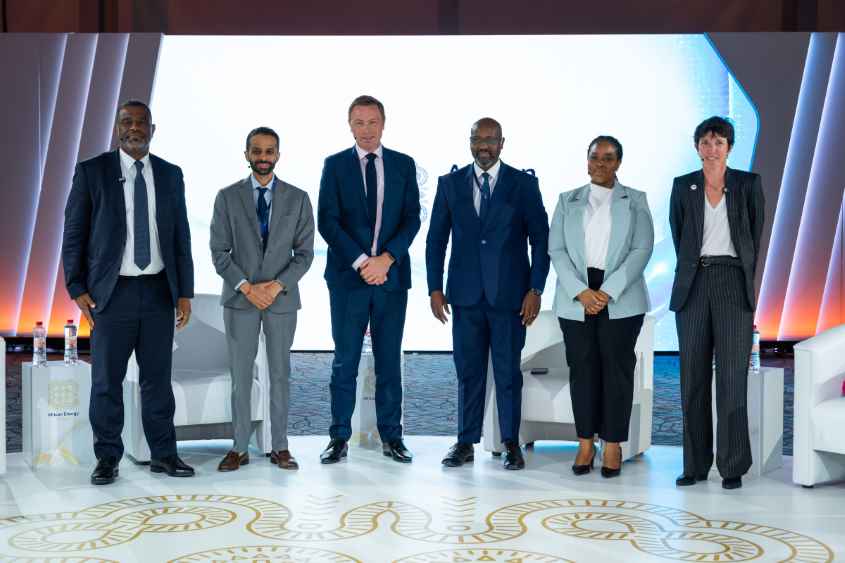
CAPE TOWN, South Africa, October 15, 2026/APO Group/ –International oil companies active in South Africa have called for government intervention to streamline regulations and address appeal-related licensing delays that continue to constrain investment in the country’s upstream sector. Speaking during a panel discussion sponsored by the South African National Petroleum Company (SANPC) at African Energy Week (AEW) 2026, industry leaders highlighted the need for predictable policy, infrastructure investment and faster project approvals to unlock South Africa’s petroleum potential.


Magali Pailhé, Managing Director of TotalEnergies EP South Africa, identified regulatory appeals as a major obstacle to offshore exploration, contrasting South Africa’s limited drilling activity with neighboring Namibia.

“Today, we have blocks offshore in the Orange Basin that TotalEnergies has proven in Namibia, but are blocked in various stages of appeal. We need to unblock these so the potential can be realized,” she said. “In Namibia, 25 wells have been drilled since 2022, while in South Africa, only three since 2014. The industry is here, but the appeals need to be addressed to allow investment to flow.”

TotalEnergies holds exploration interests across the Orange Deepwater Basin, Deep Western Orange Basin and Block 3B/4B. Pailhé emphasized that unlocking domestic oil and gas production could stimulate job creation, infrastructure development and industrial growth.

Responding to the broader investment challenge, Phumzile Mgcina, South Africa’s Deputy Minister of Mineral and Petroleum Resources, emphasized the government’s commitment to strengthening regulatory frameworks and converting resource discoveries into commercial production.

“We have the resources but have not yet converted enough of them into energy, economic opportunities and improved livelihoods. We need investment, infrastructure and policy incentives,” she stated, identifying SANPC as a key instrument for advancing petroleum development and energy security.

Policy is a non-negotiable and is absolutely required to unlock the investment needed in the downstream and fuels market

Godfrey Moagi, CEO of SANPC, outlined the company’s integrated strategy spanning upstream exploration, gas development, refining and distribution. He pointed to estimates of 27 billion barrels of crude resources and 260-300 trillion cubic feet of gas, alongside potential production of 1.3 million barrels per day, underscoring the scale of the country’s undeveloped resource base.

Downstream investment emerged as another priority as South Africa’s reliance on imported fuels continues to rise. According to the Central Energy Fund, imports now meet approximately 61% of domestic fuel demand, compared with 22% in 2019.

Funlola Abe Folukoya, Head of Trading & Origination at bp Southern Africa, highlighted the importance of infrastructure connecting coastal import terminals with inland markets, alongside consistent policy implementation.

“Policy is a non-negotiable and is absolutely required to unlock the investment needed in the downstream and fuels market,” she said, noting that implementation delays and regulatory misalignment continue to affect long-term investment decisions. bp recently secured a 25-year agreement covering operations at Durban’s Island View Terminal.

Bader Al Lamki, CEO of ADNOC Distribution, similarly called for transparent, investment-friendly policies that reflect changing market conditions. His remarks follow ADNOC Distribution’s agreement to acquire Shell Downstream South Africa in a transaction valued at approximately $1 billion, subject to regulatory approvals.

Anish Patel, South Africa Business Development Executive at ExxonMobil, warned that declining pipeline gas supplies from Mozambique and growing gas-to-power demand could significantly widen South Africa’s supply deficit. With national gas demand potentially more than tripling by 2050, he identified LNG imports as a critical solution.

ExxonMobil recently signed a heads of agreement with Zululand Energy Terminal to advance a proposed LNG import facility at Richards Bay, with Patel emphasizing that predictable policy frameworks are essential to securing investment.

Andrew Masuwa, Client Relations – Southern Africa at Afreximbank, closed the discussion by highlighting the bank’s $14 billion South Africa country program as an opportunity to mobilize financing for refining and infrastructure development. Citing refinery investments in Nigeria and Angola, he emphasized that South Africa has significant scope to rebuild domestic processing capacity and reduce import dependence.

Distributed by APO Group on behalf of African Energy Chamber.


Continue Reading

Trending

Exit mobile version