Connect with us

Sports

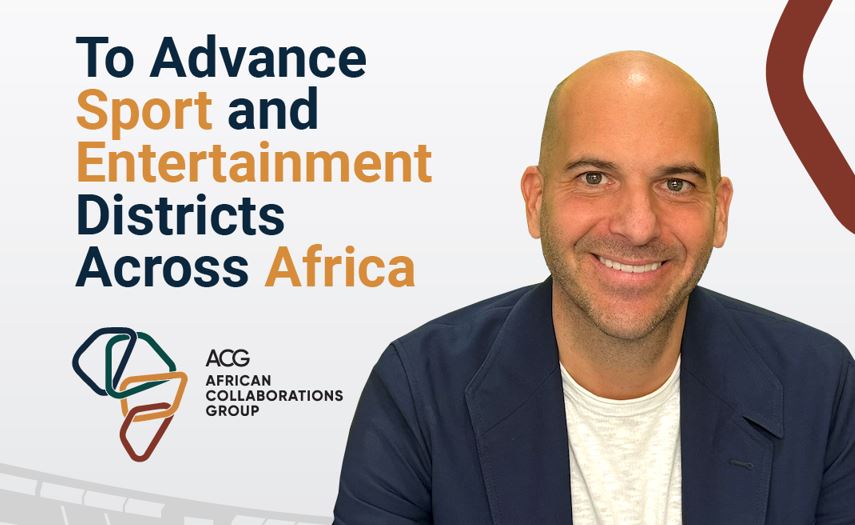
World Football Summit (WFS) Co-Founder and Managing Director Jan Alessie Joins African Collaborations Group (ACG) Advisory Board to Advance Sport and Entertainment Districts Across Africa

Published

on

Now in its tenth year, WFS has grown into the leading global convening platform for the football industry

LONDON, United Kingdom, September 24, 2026/APO Group/ –African Collaborations Group (ACG) (www.ACGafrica.com), the leading strategic project origination and collaboration platform focused on the industrialisation of sport in Africa through the origination of bankable sport and entertainment district ecosystems, today announced the appointment of Jan Alessie to its Advisory Board.


Mr Alessie is Co-Founder and Managing Director of the World Football Summit (WFS), which he founded in Madrid in 2016 alongside Marian Otamendi. Now in its tenth year, WFS has grown into the leading global convening platform for the football industry, connecting club executives, federations, leagues, sponsors, media, technology providers, investors and public authorities across the ecosystem.

Under Mr Alessie’s leadership, WFS has hosted more than 30 events in 11 countries, built a network of over 150,000 industry members, and expanded its footprint across Europe, the Americas, Asia, the Middle East and Africa. Its 2026 global series includes WFS Mexico City (June 2026, gathering more than 1,700 professionals from 43 countries ahead of the FIFA World Cup), the 10th Anniversary Edition of WFS Madrid (September 2026), and WFS Riyadh, reflecting the platform’s positioning at the intersection of regional football markets and the global industry.

At WFS, Mr Alessie works directly with major brands and sports organisations to bring them into the platform’s events, manages relationships with local partners and public administrations in each region where WFS operates, and leads the international expansion of the platform — analysing markets, evaluating opportunities, and deciding where and how to grow. His work sits at the intersection of commercial partnership development, institutional relationship management, and geographic and strategic expansion.

His presence on our Advisory Board significantly strengthens the depth of expertise we are assembling around ACG

Prior to co-founding WFS, Mr Alessie spent 18 years as a consultant and strategic advisor, bringing to his current role a rare depth of analytical, commercial and strategic experience that shaped his approach to building WFS as a global platform.

His appointment to the ACG Advisory Board brings to the platform an unmatched combination of expertise in convening the global sport industry, structuring international expansion strategies, and managing the interface between commercial stakeholders, sport bodies and public institutions across multiple regions and continents — capabilities directly relevant to originating and structuring large-scale sport and entertainment district projects across the African continent.

“Jan Alessie has built one of the most respected global platforms in world sport. Over a decade, he has demonstrated exactly what it takes to originate, structure and scale a convening platform that connects commercial actors, sport institutions and public authorities across markets and continents. That is precisely the analytical, commercial and diplomatic capability ACG requires as we originate sport and entertainment district projects across Africa. His presence on our Advisory Board significantly strengthens the depth of expertise we are assembling around ACG,” said Nicolas Pompigne-Mognard (www.Pompigne-Mognard.com), Founder and Executive Chairman of ACG.

The ACG Advisory Board provides strategic guidance as ACG originates and structures large-scale sport and entertainment district projects across the continent, aligning governments, development finance institutions (DFIs), investors, sport bodies and infrastructure partners to support the development of financially sustainable, mixed-use district ecosystems.

Africa’s sport economy is projected to reach $20 billion by 2035, yet the continent continues to lack the integrated district ecosystems required to support large-scale development. ACG addresses this gap by originating bankable sport and entertainment district projects, moving beyond single-venue development models towards mixed-use, revenue-generating and financially sustainable district ecosystems.

Through its collaborative model, ACG convenes governments, PPP authorities and regulators, development finance institutions, private investors, developers, designers and engineers, legal and transaction advisors, operators, sport federations and leagues, event promoters, media and broadcast partners, academic institutions and host communities, creating structured pathways from concept to feasibility, bankability and delivery.

Distributed by APO Group on behalf of African Collaborations Group (ACG).


Sports

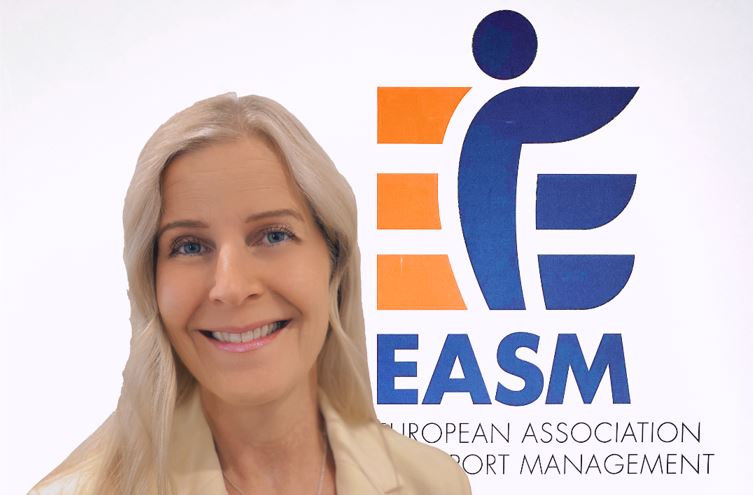
President of the European Association for Sport Management (EASM) Dr Aila Ahonen Joins African Collaborations Group (ACG) Advisory Board to Advance Sport and Entertainment Districts Across Africa

Published

on

Head of Europe’s leading academic and professional body for sport management, Fulbright scholar, and sport entrepreneurship researcher brings institutional bridge between academia and industry to ACG’s Advisory Board

DUBAI, United Arab Emirates, November 12, 2026/APO Group/ –African Collaborations Group (ACG) (www.ACGafrica.com), the leading strategic project origination and collaboration platform focused on the industrialisation of sport in Africa through the origination of bankable sport and entertainment district ecosystems, today announced the appointment of Dr Aila Ahonen, President of the European Association for Sport Management (EASM), to its Advisory Board.


Dr Ahonen leads EASM, Europe’s foremost academic and professional body for sport management, which brings together academics, students, and practitioners from nearly 40 countries across every continent. Under its mission to connect academia and industry in sport management, EASM hosts an annual conference attracting over 600 delegates, publishes the European Sport Management Quarterly (ESMQ), one of the leading academic journals in the field, and runs summer schools, PhD seminars, and professional development programmes. She also serves as EASM’s representative to the World Association for Sport Management and EPAS (Enlarged Partial Agreement on Sport).

Dr Ahonen is a Principal Lecturer and Team Leader at JAMK University of Applied Sciences, School of Business, in Jyväskylä, Finland, where she leads the Sport Business programme. Her research focuses on sport entrepreneurship, sport event management, city branding through sport, and the commercialisation of sport organisations. She is co-author of the “Routledge Handbook of International Sport Business” and has published research on entrepreneurial growth in elite sport, sport city branding, and the impact of COVID-19 on the sport industry.

A Fulbright scholar (ASLA-Fulbright Mid-Career Professional Development Grant, University of Florida, 2019), Dr Ahonen brings a distinctly applied and international perspective to sport management. She serves on the editorial boards of Managing Sport and Leisure and Frontiers in Sport and Active Living, and is a member of the Finnish Sports Ethical Affairs Advisory Board. She holds degrees from Coventry University Business School (United Kingdom), Jyväskylä University (Finland), LUT University (Finland) and has completed Pedagogical Studies for Adult Education at Jyväskylä University.

Dr Ahonen brings to our Advisory Board something that no individual scholar can: an institutional role at the head of Europe’s leading sport management body

Her appointment to the ACG Advisory Board is strategically significant. EASM’s explicit mission to connect academia and industry in sport management is directly aligned with what ACG is building. ACG’s projects require applied research, knowledge exchange, and collaboration between academic institutions and the sport infrastructure industry. Dr Ahonen’s presidency of EASM gives ACG an institutional bridge to the entire European sport management academic community: researchers, programmes, and institutions across nearly 40 countries that can contribute to the evidence base, feasibility analysis, and impact measurement that Victory District™ projects require.

Her expertise in sport entrepreneurship and the commercialisation of sport organisations is also directly relevant. Every Victory District™ must function as a commercially sustainable enterprise, not a publicly subsidised facility. Dr Ahonen’s research on how sport organisations achieve entrepreneurial growth and financial sustainability in Nordic and European markets provides a framework that ACG can adapt to the African context.

“Dr Ahonen brings to our Advisory Board something that no individual scholar can: an institutional role at the head of Europe’s leading sport management body,” said Nicolas Pompigne-Mognard (www.Pompigne-Mognard.com), Founder and Executive Chairman of ACG. “EASM’s mission is to connect academia and industry in sport management. ACG’s mission is to industrialise sport in Africa through bankable infrastructure. Those two missions are natural partners. Aila’s presence on our Advisory Board strengthens that connection and gives ACG access to a network of researchers and practitioners across nearly 40 countries who can contribute to the rigour and credibility of our projects.”

The Advisory Board provides strategic guidance as ACG originates and structures large-scale sport and entertainment district projects across the continent, aligning governments, development finance institutions (DFIs), investors, sport bodies and infrastructure partners to support the development of financially sustainable, mixed-use district ecosystems.

Africa’s sport economy is projected to reach USD 20 billion by 2035, yet the continent continues to lack the integrated district ecosystems required to support large-scale development. ACG addresses this gap by originating bankable sport and entertainment district projects, moving beyond single-venue development models towards mixed-use, revenue-generating and financially sustainable district ecosystems.

Through its collaborative model, ACG convenes governments, PPP authorities and regulators, development finance institutions, private investors, developers, designers and engineers, legal and transaction advisors, operators, sport federations and leagues, event promoters, media and broadcast partners, academic institutions and host communities, creating structured pathways from concept to feasibility, bankability and delivery.

Distributed by APO Group on behalf of African Collaborations Group (ACG).


Continue Reading

Sports

More Than a Trophy: Africa’s Moment to Champion Women’s Football (By Isha Johansen)

Published

on

Global revenues from women’s sports are expected to reach at least $3 billion in 2026, an increase of 340% in four years

ABIDJAN, Côte d’Ivoire, October 19, 2026/APO Group/ —By Isha Johansen, former CAF (www.CAFonline.com) Executive Committee Member and the first West African woman to serve on the FIFA Council.

For years, Africa has been known for its growth story. Investment has flowed, new tech has been  growing fast, and a young, active population has inspired hope for the future.  Women’s football now offers another lens through which to consider that progress.  Following the conclusion of the TotalEnergies CAF Women’s Africa Cup of Nations in Rabat, Casablanca and Fez, the question is what happens next: whether the momentum generated by the tournament can translate into sustained investment in women’s football, stronger structures and more opportunities for the next generation of players. This tournament was much more than sport. It was a moment to spotlight gender equality, inclusion, and the changing role of women in African sports.


For too long, women’s sports have been seen as charity projects or CSR boxes to tick; not real investments. That’s changing. Stadiums are filling, fans are showing up, and real money is finally coming in. The message is clear: women’s football is no longer a side issue; it’s a huge opportunity Africa can’t afford to ignore.

Global revenues from women’s sports are expected to reach at least $3 billion in 2026, an increase of 340% in four years (https://apo-opa.co/3U7pm41). In Africa, the true value is still unknown. Most of the investment comes from sports associations, governments, and a handful of sponsors. Ticket sales and big broadcast deals are exceptions, not the rule. So women’s sports here are half-in, half-out: there’s new investment, but plenty of hurdles remain.

Some progress has been made, however. This year, the Confederation of African Football doubled Women’s Africa Cup of Nations prize money to $5.8 million, with $2 million for the winners. Last year, Nigeria’s NWFL Premiership landed its biggest private investment, a ten-year, ₦20 billion partnership, while South Africa’s Women’s League secured a R17 million naming rights deal.

The final whistle will pick a winner, but what happens next will show whether Africa is ready to make women’s football central to its future

The Women’s Africa Cup of Nations featured 16 teams, and money from TV and sponsors went up by 40%. Matches were shown on more than one hundred channels. Real interest grew across the continent. Africa’s fans,  young and energetic, followed their teams on platforms like TikTok and Instagram.

Despite the progress and growing support from fans,  challenges remain. Top female players are leaving for Europe or the US, where their skills are valued and rewarded. Without money from TV deals or steady support from local fans, women’s sports here will keep relying on outside help and quick fixes.

In South Africa, a few years ago, women’s national team players earned just a tenth of what the men did. The gap is closing, but it’s not gone. Women are still few in sports leadership roles, and coaching jobs mostly go to men. But pioneers like South Africa’s Desiree Ellis and Kenya’s Beldine Odemba show what’s possible when women get a real shot: excellence follows.

Mentorship is central to that possibility. Behind every player and coach who broke through, there was almost always someone who opened a door, offered guidance, or made room at the table. Formal mentorship programmes, pairing rising talent with experienced players, coaches, and administrators, gave young women a clearer path into leadership roles that had long been closed to them. To turn potential into progress, more is needed than just a few stars. Governments, sports bodies, and private investors must team up by building partnerships, investing in training grounds, leadership, mentorship, and the kind of infrastructure that lasts.

The private sector can’t afford to sit this out. New models like sportswomen-driven content, streaming platforms, and direct fan engagement can break old barriers. Organisations like Tibu Africa, a leading NGO empowering young people through sport, show how football can drive wider social change by building opportunities and breaking down barriers. Their work reminds us that every girl deserves a shot at the game and demonstrates the impact that partnerships between the private sector, government, and civil society can have.

Governments must make investing in women’s sports worthwhile, guarantee fairness, and keep things transparent. Regional bodies should align standards, share resources, and channel funds into grassroots development. And media matters too: having more women on camera or working behind the scenes changes opinions and gives new role models the chance to shine.

TotalEnergies’ partnership with the Confederation of African Football (CAF) is more than a sponsorship. It’s a commitment to building African football from the grassroots up, creating lasting opportunities for players, fans, and communities. Supporting CAF helps raise the visibility of women’s football and strengthens the sport as a force for unity and inclusion across the continent. This investment reflects an alignment of values: sustainable development, community empowerment, and celebrating Africa’s potential.

If Africa misses this window, old gaps will widen, and the chance to lead in women’s sports could be lost. But if we step up now, the rewards are huge: jobs, tourism, and growth everywhere you look. This tournament is more than a trophy. It’s a test of whether Africa will build up its talent or watch it leave. The final whistle will pick a winner, but what happens next will show whether Africa is ready to make women’s football central to its future.


Distributed by APO Group on behalf of Confederation of African Football (CAF).


Continue Reading

Sports

How the “Dual Olympic City” Activates the Sports Event Economy

Published

on

BEIJING, CHINA – Media OutReach Newswire – 9 October 2026 – On the evening of October 6, after Djokovic won the first set of the men’s singles final, his opponent Alex de Minaur retired due to injury, giving Djokovic his seventh China Open title.

During the tournament, the excitement of the China Open extended from the courts to the entire park. The “second venue” with big-screen viewing, a rich variety of officially licensed merchandise, and food and beverage outlets full of everyday bustle blended the passion of sports competition with the city’s relaxed atmosphere, creating a diverse holiday viewing experience.


“After entering through the two ticket gates—north and south—of the National Tennis Center, there are officially licensed merchandise stores at both locations. During the National Day holiday, each of these two stores received over 10,000 visitors a day. Nearly a thousand products give everyone’s tournament memories a tangible carrier,” said Yin Xufei, head of the China Open officially licensed merchandise store.

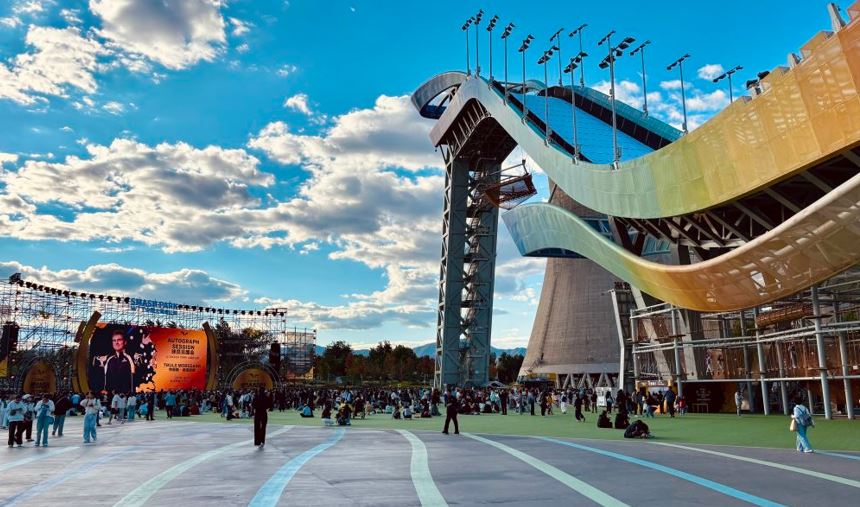
Also thriving thanks to the events is Shougang Park in Shijingshan, Beijing. The World Table Tennis (WTT) China Grand Smash held in this industrial-style park echoed the China Open during the National Day holiday for the third consecutive year, giving the most vivid footnote to the “Golden Week of Sports Events.”

“People can spend a whole day wandering around Shougang Park—dining, markets, and souvenirs are all available. Besides going into the venue to watch matches and cheer for the athletes, you can also feel the festive atmosphere of table tennis, China’s national sport, blending with the National Day holiday at the Grand Smash Park,” said Gao Yize, a fan from Xinjiang.

At the WTT China Grand Smash official licensed store, visitors and tourists stopped to learn about the tournament-themed T-shirt that lets you “Explore Shijingshan in One T-Shirt.” For those familiar with the “ticket stub economy,” this T-shirt is a “walking ticket stub.” Wearing the benefits during the tournament gives you access to exclusive discounts on dining, accommodation, and sightseeing at hundreds of partner merchants in Shougang Park, Yongdingheji, Moshikou Historical and Cultural Street, and other locations.

The “Golden Week of Sports Events” ignited a city. Led by high-level international events such as the China Open and the WTT China Grand Smash, competitive sports, mass sports, and youth sports events at all levels covered the north, south, east, and west of the “Dual Olympic City” and integrated into its streets and alleys.

During the National Day holiday, the Beijing Yizhuang GT World Challenge attracted over 26,000 spectators. By Tongming Lake, engines roared, and speed and passion were set against the lake and city scenery. The automobile-themed carnival, integrating race viewing, car culture, technology interaction, and leisure consumption, drove significant growth in surrounding dining, retail, and accommodation spending. In Miyun on the outskirts of Beijing, the China Men’s 3×3 Basketball League Championship linked cultural tourism resources and key commercial districts, opening the “Chao San” Market that brought together over 30 merchants offering Miyun’s Three Roasts, intangible cultural heritage “loufen” (starch noodles), and other specialties, allowing fans to enjoy food and buy local products after watching the games…

The “Dual Olympic City” has made holiday cultural tourism scenarios a standard feature of sports events, expanding event consumption scenarios and enhancing the event consumption experience, further demonstrating the enormous potential of the sports event economy.


Continue Reading

Trending

Exit mobile version