Connect with us
Anglostratits

Events

WomenIN Festival 2025 Culminates in Two Days of Holistic, Transformative and Unapologetic Empowerment

Published

on

WomenIN Festival

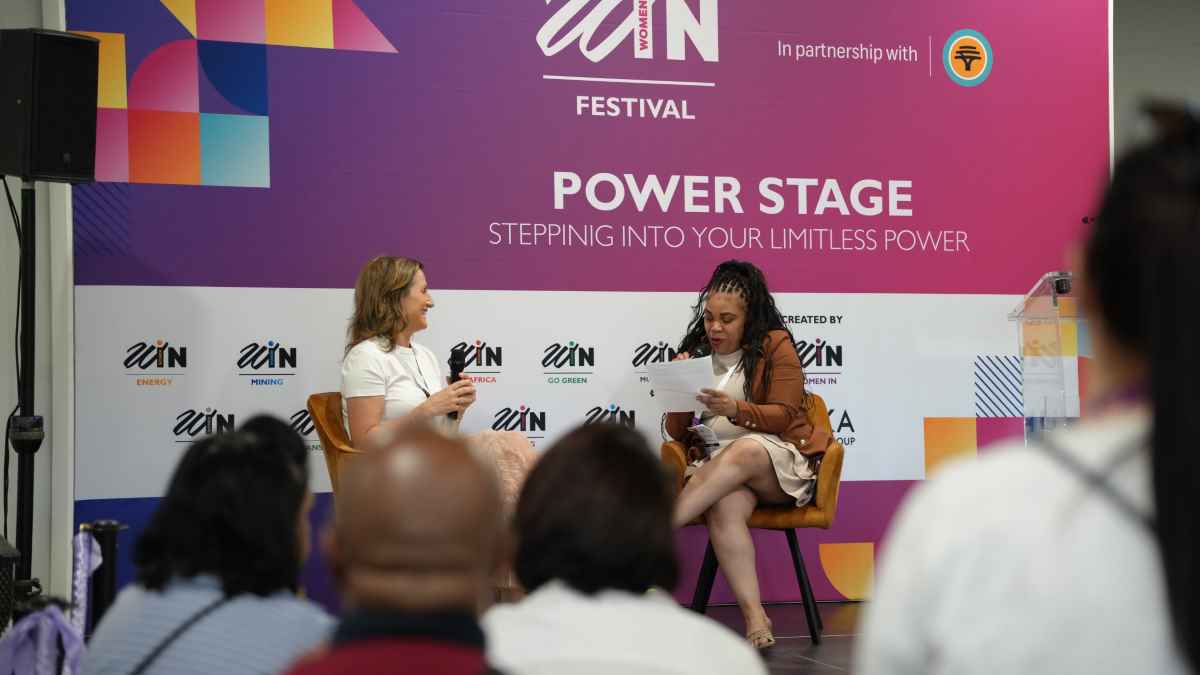
The WomenIN Festival 2025 (http://WeAreWomenIN.com/) wrapped up a powerful two-day celebration at Newlands Cricket Ground on 13–14 November, bringing together hundreds of women from across South Africa for an immersive programme focused on empowerment, leadership development, wellbeing, entrepreneurship, financial literacy, creativity and social impact.

Guided by the theme “Limitless: No Labels. No Limits. No Apologies,” the festival created space for meaningful conversations, real connections and practical tools designed to support women across every dimension of their lives.

The curated programme included panel discussions, interactive dialogues, wellness conversations, entrepreneurship sessions, financial literacy masterclasses and storytelling-focused engagements. Each segment was designed to explore identity, leadership, resilience, innovation and holistic wellbeing.

Leigh-Anne Williams, acclaimed Radio & TV Presenter, guided the programme as MC. Her vibrant personality, dynamic delivery and warm connection with the audience created an atmosphere of energy and unity, anchoring the festival’s flow across the two days.

With the event taking place during South Africa’s national Entrepreneurship Month, the festival placed a strong emphasis on business and economic empowerment. Women were equipped with practical tools for starting and scaling businesses, understanding financial behaviour and navigating the realities of entrepreneurship.

Empowerment partner FNB led key sessions on financial literacy and business growth. Reflecting on the festival’s impact, Nicole Sykesthe Head of Women in Business, FNB shared: “WomenIN brings together courage, collaboration and practical tools in a way that genuinely empowers women. The women who attended left with financial knowledge, business skills, emotional resilience and personal safety strategies that will continue to uplift them long after these two days.”

Raksha Naidoo, Chair of Women in Mining South Africa and CEO of the Particle Group, offered an important perspective on women transforming one of the country’s most male-dominated industries. Her insights centred on structural change, decisive leadership and expanding real influence for women across the sector.

Thando Hopa, Cultural Leader for the African Albinism Network, lawyer, activist, fashion model and UN Ambassador for Diversity and Inclusion, delivered a profound session exploring representation, identity and the power of narrative — highlighting how culture, policy and media shape society’s understanding of women.

WomenIN brings together courage, collaboration and practical tools in a way that genuinely empowers women

Joni Peddie, Vice President of the Global Speakers Federation and behavioural strategist, shared insights on emotional agility, resilience and intentional leadership. Her contribution reminded women of the importance of leading from self-awareness and authenticity.

The women in sport conversation featuring Babalwa Latsha highlighted the rise of women’s rugby and the resilience of female athletes breaking new ground. She spoke about investment gaps, visibility, cultural perceptions and the importance of creating pathways that allow young women to see sport as a viable, respected career.

In the Wellness Resolution session, Dr. Kate Klaasen and Dr. Simone Silver explored burnout as a growing concern for women, emphasising an integrated approach to wellbeing across physical, emotional, social and spiritual spheres.

The festival also featured a powerful gender-based violence session titled Breaking the Silence, Rebuilding Lives. Moderated by GBV Advocate & COO – Women For Change (https://apo-opa.co/44ok8ms), Merlize Jogiat, the discussion brought together MOSAIC and Women For Change to address the silence that often surrounds the trauma of GBV in South Africa. The session amplified survivor voices, called for systemic change and shared practical tools for healing, safety and support — offering clear pathways toward empowerment and justice.

Marketplace: A Celebration of Women-Owned Brands

The marketplace added a vibrant dimension to the festival, showcasing a wide range of women-owned brands across beauty, wellness, fashion, jewellery, food, homeware and lifestyle essentials. It created a lively space where entrepreneurs shared their stories and connected with customers. The marketplace reinforced WomenIN’s commitment to uplifting women economically and supporting small businesses.

The festival concluded with a personal safety session led by Fight Back SA, offering practical awareness tools that supported the festival’s broader mission to empower women mentally, emotionally, economically and physically.

Festival Founder Nazlee Fredericks-Maharaj, Founding Portfolio Director of WomenIN Festival stated: “This year reminded us of the power that unfolds when women gather with purpose and without apology. When women refuse to be boxed and boldly own their space — holistically and phenomenally — systems shift. WomenIN 2025 brought that vision to life in the most powerful and authentic way. We are already shaping something extraordinary for WomenIN 2026. For those who missed it this year — this wasn’t just a festival, it was a revolution. In 2026, it’s coming back louder, bolder and more unapologetic than ever.”

The event concluded with the prestigious 2025 Good Hope FM Warrior Women Awards, recognising women whose leadership and impact continue to shape industries, communities and national narratives.

Distributed by APO Group on behalf of VUKA Group.

Home  Facebook

Energy

High-Level Minister Roundup to Headline African Energy Week 2026

Published

on

African Energy Chamber

African Energy Week 2026 will convene ministers from Algeria, Ghana, Senegal, Zambia and Niger to spotlight oil, gas expansion, reforms and investment opportunities continentwide

CAPE TOWN, South Africa, March 13, 2026/APO Group/ –A high-level ministerial roundup will take center stage at this year’s African Energy Week (AEW) 2026 – taking place in Cape Town from 12–16 October –, convening some of the continent’s most influential energy leaders at a defining moment for Africa’s oil, gas and power sectors. As hydrocarbon expansion converges with accelerating energy transition strategies, the gathering is set to spotlight real-time project execution, regulatory reform and cross-border infrastructure that are actively reshaping Africa’s energy future.


Confirmed ministers to date include Algeria’s Minister of Energy and Renewable Energies Mourad Adjal, Ghana’s Minister for Energy and Green Transition Dr. John Abdulai Jinapor, Senegal’s Minister of Energy, Petroleum and Mines Birame Soulèye Diop, Zambia’s Minister of Energy Makozo Chikote and Niger’s Minster of Petroleum Hamadou Tinni.


Fresh from a March OPEC+ decision to lift output to 977,000 barrels of oil per day (bpd), Algeria enters AEW 2026 amid a $60 billion sector transformation. The country is also advancing a 500-well exploration drive and accelerating its 1.48 GW “Project of the Century” solar rollout. Gas exports to Europe remains central to the country, supported by hydrogen corridor planning and refinery expansion aimed at boosting capacity to 50 million tons by 2029.


Following license extension for Jubilee and TEN to 2040 and the late-2025 restart of the Tema Oil Refinery, Ghana is pushing a $3.5 billion upstream reinvestment plan while settling $500 million in gas arrears. A 1,200 MW state thermal plant and expanded gas processing at Atuabo anchor its gas-to-power shift, alongside a renewed upstream push in the Voltaian Basin.

The participation of these distinguished ministers underscores the scale of opportunity unfolding across Africa’s energy landscape and the urgency of aligning policy with capital


Senegal’s delegation comes on the back of strong production momentum, with the Sangomar oil field delivering 36.1 million barrels in 2025, outperforming forecasts, while the Greater Tortue Ahmeyim LNG development ramped up to 2.9 million tons per annum following first gas. Dakar is now prioritizing domestic gas through refinery upgrades at the SAR refinery and preparations for Sangomar Phase 2 to push output beyond 100,000 bpd.


Zambia is redefining its power mix after drought-induced hydro shortfalls. New solar capacity – including the 200 MW Chisamba expansion and 136 MW Itimpi Phase 2 – is part of a broader 2,500 MW diversification drive. Cabinet has approved major regional fuel pipelines, while the Energy Single Licensing System fast-tracks approvals. Lusaka targets 10 GW generation by 2030, with solar and wind rising to one-third of supply.

Niger’s presence reflects its emergence as a serious oil exporter, with the fully operational 1,950-km Niger-Benin pipeline now moving up to 90,000 bpd to international markets. Alongside uranium expansion and renewed cooperation with Algeria on upstream assets, Niamey is advancing digital oversight reforms and reinforcing energy sovereignty amid evolving geopolitical dynamics.


“The participation of these distinguished ministers underscores the scale of opportunity unfolding across Africa’s energy landscape and the urgency of aligning policy with capital,” says NJ Ayuk, Executive Chairman, African Energy Chamber. “Their leadership reflects a continent moving decisively from strategy to execution, creating a platform where investors can engage directly with the policymakers shaping Africa’s next wave of oil, gas and energy growth.”


At AEW 2026, this ministerial cohort will be well-positioned to offer investors direct insight into Africa’s most dynamic energy markets – where new barrels, new pipelines and new megawatts are reshaping regional growth trajectories in real time.

Distributed by APO Group on behalf of African Energy Chamber.

Continue Reading

Business

From ESG Reporting to Real Impact: Africa Global Logistics (AGL) Turns Commitment into Action Ahead of African Energy Week (AEW) 2026

Published

on

African Energy Chamber

Africa Global Logistics’ sustainability strategy highlights how logistics companies are translating ESG commitments into tangible outcomes

CAPE TOWN, South Africa, March 19, 2026/APO Group/ –Africa Global Logistics (AGL) is positioning sustainability at the center of its operations across Africa – but the real value of its ESG performance is not in reporting frameworks but in the impact the company delivers on the ground. Through a strategy built around three pillars – enabling logistics decarbonization, fostering inclusive trade and addressing social challenges – the company is aligning its corporate commitments with the practical realities of operating across one of the world’s fastest-growing logistics markets.


As a Diamond Sponsor and Logistics Partner of African Energy Week: Invest in African Energies (AEW) 2026 – taking place October 12-16 in Cape Town – AGL will join governments, investors and industry leaders to explore how ESG strategies can translate into measurable economic and social outcomes across the continent. By bridging reporting and reality, the event offers companies the chance to demonstrate how ESG and local content goes beyond compliance to deliver impactful projects across the continent.

Africa’s energy future depends on strong infrastructure, resilient supply chains and responsible business practices

AGL’s CSR strategy is rooted in enabling logistics decarbonization and protecting the blue planet. Under this pillar, the company has committed to reducing emissions and environmental impact across the logistics sector. It’s latest sustainability report identified nine priority areas to reduce greenhouse gas emissions, including the gradual replacement of fossil fuels with low-carbon energy as well as broader electrification. This commitment has already yielded tangible results. Two of the company’s depots in Zambia are fully powered by solar energy while 100% of the terminal equipment in Ivory Coast is electric. Up to 13 AGL-operated terminals have also been awarded ‘Green Terminal Status’ – in recognition of efforts undertaken by the company to support the energy transition and reduce emissions.

The company’s second sustainability pillar – fostering inclusive trade – is particularly relevant in Africa, where logistics infrastructure remains a major barrier to economic integration. The company has committed to addressing this challenge, with outcomes already evident. AGL is developing and operating more than 40 logistics corridors and 66 dry ports across the continent, connecting inland production basins to export markets and domestic consumption centers. These include the launch of the Kribi Industrial Zone (KPIZ) in Cameroon in March 2026 – a 520 billion FCFA project featuring vital infrastructure networks such as transport, energy, water and telecommunications. The company also operates the Lobito Corridor Terminal – an export facility linking the Lobito Railway to international markets.

“Africa’s energy future depends on strong infrastructure, resilient supply chains and responsible business practices. Companies like AGL are helping shape that future by investing in logistics systems that support trade, create opportunities for communities and reduce environmental impact. The company’s sustainability strategy reflects a broader commitment to ESG – moving beyond compliance to delivery,” said NJ Ayuk, Executive Chairman of the African Energy Chamber.

AGL’s third pillar – addressing social challenges – showcases a commitment to capacity building and workforce development. The company aligns its policies with international frameworks such as the UN Global Compact and has introduced initiatives aimed at strengthening entrepreneurship and youth innovation across Africa. One example is a hackathon initiative launched in Ivory Coast with the MSC Foundation and the Horn Foundation, designed to support young entrepreneurs working on solutions for sustainable development and logistics challenges. The company also partnered with the French African Foundation in 2024 to identify and support a new generation of committed African and French talents and leaders who are creating a positive and lasting impact.

As AGL’s sustainability strategy continues to take shape across the continent, platforms such as AEW: Invest in African Energies 2026 will play a key role in accelerating the shift from ESG reporting to tangible impact. Convening policymakers, operators and service companies across the energy and logistics chains, the event provides a platform to align sustainability frameworks with Africa’s developmental priorities.

Distributed by APO Group on behalf of African Energy Chamber.

Continue Reading

Events

Smartphone For All wins the Pinnacle Awards (Platinum) and Merit Awards (Gold) for Digital Inclusion, Accessibility and bridging the Digital divide

Published

on

Smartphone

Less than one year after launch, the vision of Empowering Millions with Affordable Smartphones and Digital Access Across the Continent just got recognized

JOHANNESBURG, South Africa, March 18, 2026/APO Group/ –Smartphone For All (www.SmartphoneForAll.ai), a business committed to digital inclusion, has won the 2025 Pinnacle Awards (Telecoms and Wireless Category) Digital Inclusion & Accessibility Champion and the 2026 Merit Award (Telecoms and Wireless) Digital Divide. The Pinnacle Awards is a reputable global program honoring innovation and excellence across industries. According to Katie Lang, Executive Director of the Pinnacle Awards, “The Telecom and Wireless Sector continue to set the pace for innovation, connecting people and businesses worldwide. We are proud to recognize the organizations that exemplify ingenuity, reliability and impact in one of the most dynamic industries on the planet”.

In the same vein, Marie Zander, Executive Director of Merit Awards states that “this year’s winners reflect excellence across the ecosystem—demonstrating the technologies and strategies that are shaping the future of communications”.

Smartphone For All had earlier in the year 2025 unveiled an ambitious campaign to bridge Africa’s digital divide by providing affordable, high-quality smartphones and connectivity and AI at the edge to consumers who are excluded from the digital world across the continent.

The pathway to growth for Africa is to bring more Africans into the digital ecosystem spanning financial, educational, public health, trade and other streams of innovation

Established on the belief that exclusion from the digital ecosystem locks people out of opportunities and lifestyle enhancements. Smartphone For All aims that every individual—regardless of income, geography, or background- can fully participate in the digital economy and the evolving AI transformation.

According to Mr. Babatunde Osho, Founder/CEO of Smartphone For All, “The digital divide is not just a technology gap—it’s an opportunity gap. When someone does not have access to a smartphone, they are cut off from education, jobs, healthcare, financial services, and even their own voice. Our mission is to close that gap, one device at a time and build Africa’s largest digital inclusion platform. We are glad that the Pinnacle and Telecom & Wireless Awards have recognized what we are doing to improve digital inclusion and accessibility in Africa”

Smartphone For All partners with MNOs to provide smartphones to 2G/3G subscribers who cannot afford 4G smartphone across Africa. The initiative was launched with MTN in South Africa in May 2025 for an initial period of one year with a smartphone device at ZAR 99 or $5. The plan is targeting about 1.2m devices. The vision of Smartphone for All is to take the offering to other African countries like Cote D’Ivoire, Nigeria, Ghana, Kenya, Tanzania and other markets.  Apart from the benefits for the subscribers, there are obvious MNO benefits of better spectrum utilization with 4G+ networks over legacy 2G/3G networks. For regulators and government, the benefits include productivity enhancements and digital inclusion among citizens.

According to a report from the Economist Intelligence Unit, 10% growth in broadband connectivity results in 1.4% growth in GDP in low- and middle-income countries and 1.2% growth in high income countries. African countries like South Africa are actively incentivizing this growth through policies like a ban on new 2G/3G device activations starting from December 31, 2024, and a complete shutdown by December 31, 2027. The government has also reduced taxes on certain classes of smartphones to drive adoption.

According to Jeff Miller, Director at Smartphone for all, ‘Smartphone For All is not just a business, it is a movement powering Africa into the next phase of development. Digital access is the foundation of inclusion in commerce, wellbeing and civic engagement. The pathway to growth for Africa is to bring more Africans into the digital ecosystem spanning financial, educational, public health, trade and other streams of innovation.’

Distributed by APO Group on behalf of Smartphone For All.

Continue Reading

Trending